








Fast Shipping
Carrier information

20k products
Payment methods

24/7 Support
Unlimited help desk

2-day Delivery
Track or off orders
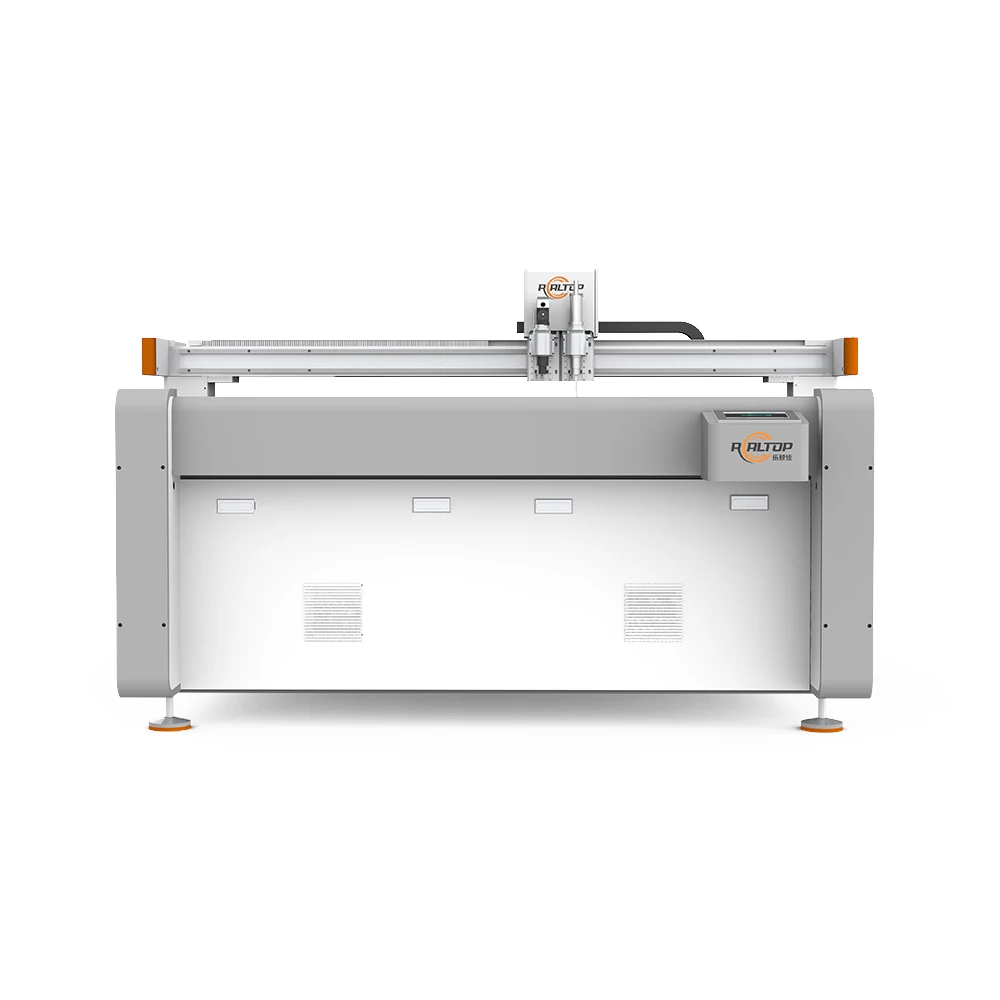
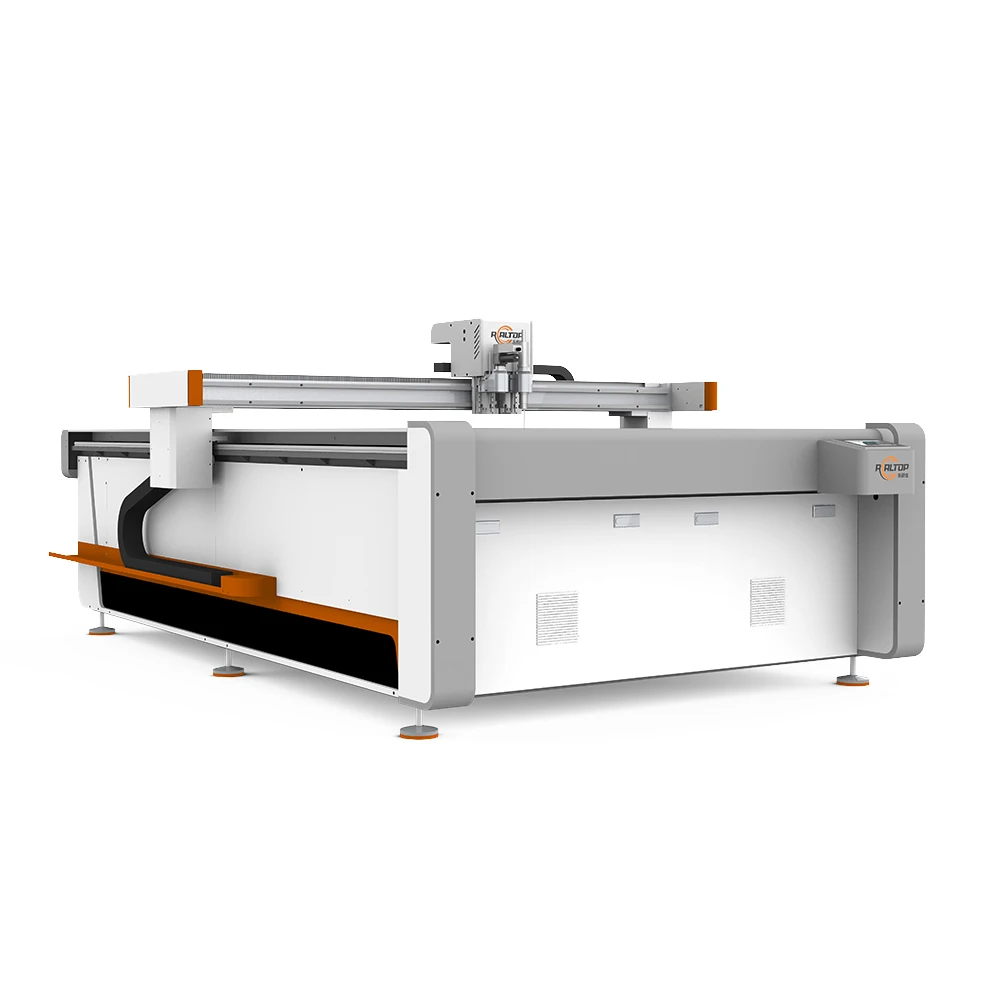
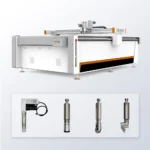
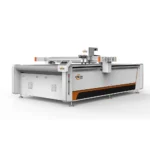
Tool head configured per material — The 1625 CNC oscillating knife cutting machine is set up with specific blades, creasing wheels and vacuum zoning based on your actual corrugated flute profile and board grade, verified by sample cutting before order confirmation.
Technical Specifications
| Parameter | Value |
|---|---|
| Model | 1625 |
| Product Type | CNC Oscillating Knife Cutting Machine for Packaging |
| Working Area | 1600×2500 mm |
| Tools Available | Oscillating knife, Driven rotary knife, Creasing wheel, Kiss cutting tool, Pneumatic knife, Milling tool, V groove knife |
| Cutting Speed | 0-1500 mm/s |
| Cutting Thickness | ≤ 40 mm |
| Cutting Accuracy | ±0.1 mm |
| Vacuum Pump | 9 kW |
| Voltage Options | 110V, 220V, 380V |
| Control System | PLC control panel |
| Software & File Formats | PLT, DXF, AI, PDF; Dedicated packaging box structure design software included |
| Servo Motor Options | Panasonic, Delta, Dorna |
| Vacuum Table | Aluminum bellows vacuum table (source value — verify against manufacturer catalog for zoning details) |
| Safety Features | Infrared sensor device, emergency stop device |
| Overall Dimensions | 3300×2100×1350 mm |
| Language Options | English, Russian, Italian, Chinese, custom languages available |
| Certification | CE |
Application Suitability
| Application | Material or Output |
|---|---|
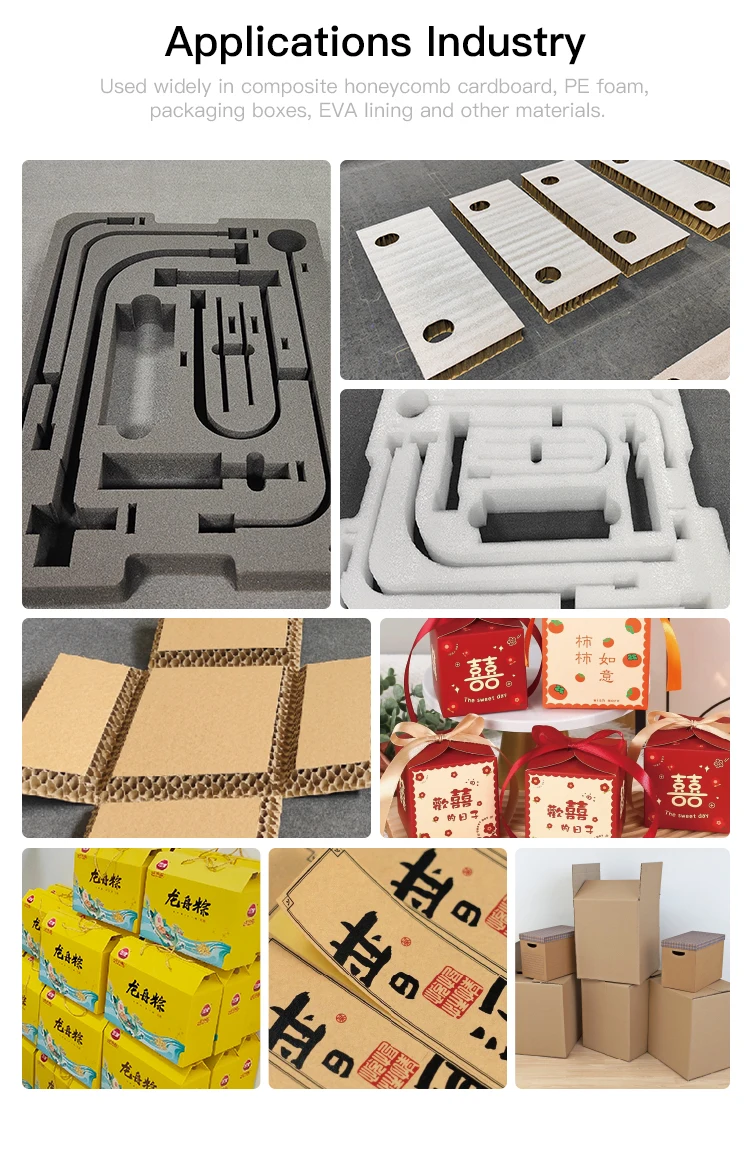
| Corrugated packaging sample making | E-flute, B-flute, BC-flute cardboard without die-cut molds |
| Greyboard and art paper prototyping | Rigid box structures, luxury packaging inserts |
| Small-batch customized carton production | Short-run corrugated and specialty paper packaging |
| Foam protective packaging fabrication | EVA, EPE, PU foam inlays and cushioning inserts |
| Gasket and non-metal flat cutting | Rubber mats, PVC/PET sheets, composite adhesive-backed materials |
| Leather and synthetic material cutting | Non-woven fabric, leather, synthetic leather for packaging accessories |
Why Board Grade Matters More Than Working Area on a CNC Oscillating Knife Cutting Machine
The cutting depth and tool head selection must match your actual board density, not just the sheet dimensions you provide.
I have seen packaging operations specify a flatbed cutter based purely on table size, only to discover that their recycled-core honeycomb board varies in density across the sheet. The oscillating knife that slices cleanly through virgin kraft corrugated at 1500 mm/s chatters and tears when it hits a dense patch of recycled honeycomb core. The result is ragged edges on half the day’s output and tool replacements far earlier than planned [NEED_CITE: material density variation in recycled corrugated board]. Specifying CNC oscillating knife cutting machine specifications without confirming your real-world board grade, flute type and moisture content leaves a gap that only shows up once the machine is on your production floor.
Tool Head Selection for Corrugated and Packaging Materials
The 1625 platform supports seven interchangeable tool heads, and choosing the right one depends on what you actually cut most days. An oscillating knife handles standard E-flute and B-flute corrugated cleanly at full cutting speed, while a driven rotary knife suits continuous long cuts on thinner art paper and cardstock. For BC-flute or double-wall board approaching the 40 mm thickness limit, a pneumatic knife provides the downward force needed to push through without compressing the flute structure. The creasing wheel scores fold lines without cutting through, and the V groove knife produces chamfered edges for rigid box assembly.
Vacuum Hold-Down and Material Behavior
Holding corrugated and honeycomb board flat during high-speed cutting requires consistent vacuum pressure across the entire 1600×2500 mm work surface. The aluminum bellows vacuum table paired with the 9 kW pump delivers the suction needed to prevent material lift, especially on warped or moisture-affected sheets [NEED_CITE: vacuum hold-down requirements for corrugated board digital cutting]. When cutting small packaging inserts or narrow gasket profiles, insufficient vacuum zoning allows lightweight pieces to shift mid-cut, producing scrap rather than finished parts. Confirming your typical sheet size and part geometry before the table is configured prevents this mismatch.
How Core Parameters Affect Packaging Cutting Output
Cutting accuracy at ±0.1 mm matters directly when packaging structures must fold and slot together without manual adjustment. A deviation beyond this tolerance on a complex carton design means crease lines miss their intended position, and the box does not close square. The PLC control panel manages the tool path across all seven head options, maintaining this tolerance whether the machine runs a single sample or repeats the same nesting pattern across multiple sheets. Software compatibility with PLT, DXF, AI and PDF files means your existing packaging design workflow transfers without re-drawing. The included dedicated packaging box structure design software generates box templates and fold patterns directly, removing a separate design step for sample makers. Servo motor selection from Panasonic, Delta or Dorna options allows buyers to align motion components with local service availability and spare parts supply in their market.
The Hidden Cost of Wrong Configuration Choices
Selecting a kiss cutting tool when your primary work involves thick EVA foam inserts leads to incomplete cuts that require manual trimming afterward, doubling labor on every sheet [NEED_CITE: tool selection impact on cutting completeness for foam packaging materials]. Running the vacuum pump at full capacity for small parts on a table without adequate zoning wastes energy while still failing to hold pieces flat. Choosing a servo motor brand with no local service network in your region means a drive fault could halt production for weeks while replacement parts ship internationally. These configuration errors do not appear on a specification sheet — they surface only after the machine arrives and your operator loads real material.
Why Procurement From This Source Works for Packaging Converters
In-house design covers both the mechanical table structure and the tool head configurations, so the cutting method is matched to your packaging material rather than forced into a single setup. Every order includes a sample cutting report run on your actual board grade, flute profile or foam density before you commit to production terms. The tool head and table configuration list is confirmed item by item against your material list and daily volume, not left as a generic default. Software licenses and file format compatibility are verified with your existing design files before the order is finalized, preventing a situation where your artwork cannot import. Voltage, control language and safety device configuration are documented and confirmed for your facility’s electrical standards before shipment.
Documentation & Verification
- Machine specification sheet listing confirmed tool heads and table configuration for your material
- Electrical schematic with voltage and frequency matched to your facility supply
- Sample cutting report on your corrugated flute type and board grade
- Software license and file format compatibility note for PLT, DXF, AI, PDF workflows
- Factory test record showing cutting accuracy and vacuum performance before dispatch
- Operation and maintenance manual with spare parts list and safety device procedures
Installation, Commissioning & Support
- Floor space planning for the 3300×2100×1350 mm overall dimensions including material feed clearance
- Dedicated electrical circuit matching confirmed 110V, 220V or 380V supply with proper grounding
- Assembly of aluminum bellows vacuum table and 9 kW pump connection on arrival
- First-run calibration of cutting accuracy to ±0.1 mm using your actual packaging materials
- Operator training on tool head changeover and PLC control panel functions in confirmed language
- Scheduled maintenance intervals for oscillating knife blades, vacuum pump filters and servo motor inspection
What to Provide With Your Inquiry
To get an accurate configuration for your packaging operation, share your primary material types with board grade or flute designation, typical sheet dimensions and the range of part sizes you cut most often. Include your facility voltage and frequency, preferred control language, and whether your current design workflow uses DXF, AI or other file formats. If you run both corrugated samples and foam inserts, specify the approximate volume split between the two. Sending a sample of your actual material allows a cutting test before the machine configuration is finalized.
Frequently Asked Questions
Q: How do I choose the right tool head for my corrugated flute type or board thickness?
A: The tool head depends on your specific material. Oscillating knives suit standard E-flute and B-flute at full speed. BC-flute or thicker board approaching 40 mm may need a pneumatic knife for adequate downward force. Creasing wheels handle fold lines, and V groove knives produce chamfered edges. We confirm the tool head selection after testing your actual board sample.
Q: What cutting thickness can the oscillating knife achieve on my specific material?
A: The maximum rated cutting thickness is 40 mm, but real achievable depth depends on material density and flute structure. Virgin kraft corrugated cuts cleanly at greater thickness than recycled-core honeycomb of the same nominal measurement. We run your specific material to confirm practical cutting depth and edge quality before finalizing the configuration.
Q: Which servo motor brand and vacuum zone setup is recommended for my sheet size?
A: Servo motor selection from Panasonic, Delta or Dorna options depends on local service availability and your maintenance preferences. Vacuum zoning should match your typical part sizes — cutting many small inserts requires finer zone control than processing full sheets of carton blanks. We confirm both based on your production profile.
Q: Does the software import my existing DXF and AI files and support nesting?
A: The system accepts PLT, DXF, AI and PDF formats, and the included packaging design software generates box templates directly. File format compatibility is verified with your actual design files before order confirmation to ensure your existing workflow transfers without modification. Any import issues are resolved before the machine ships.
Q: What voltage and control language options are confirmed before shipment?
A: Voltage is configurable across 110V, 220V and 380V options, confirmed against your facility electrical supply. Control panel language options include English, Russian, Italian, Chinese and custom languages. Both are documented in the electrical schematic and specification sheet before production begins to prevent mismatches on delivery.


商品评价
Clear filtersThere are no reviews yet.