

Fast Shipping
Carrier information

20k products
Payment methods

24/7 Support
Unlimited help desk

2-day Delivery
Track or off orders
Material-Matched Tooling — Each RT-D2516/RT-S2516 is configured with oscillating knife parameters tuned to the buyer’s specific carpet or mat stack, avoiding the generic setup that leaves bottom layers uncut.
Technical Specifications
| Parameter | Value |
|---|---|
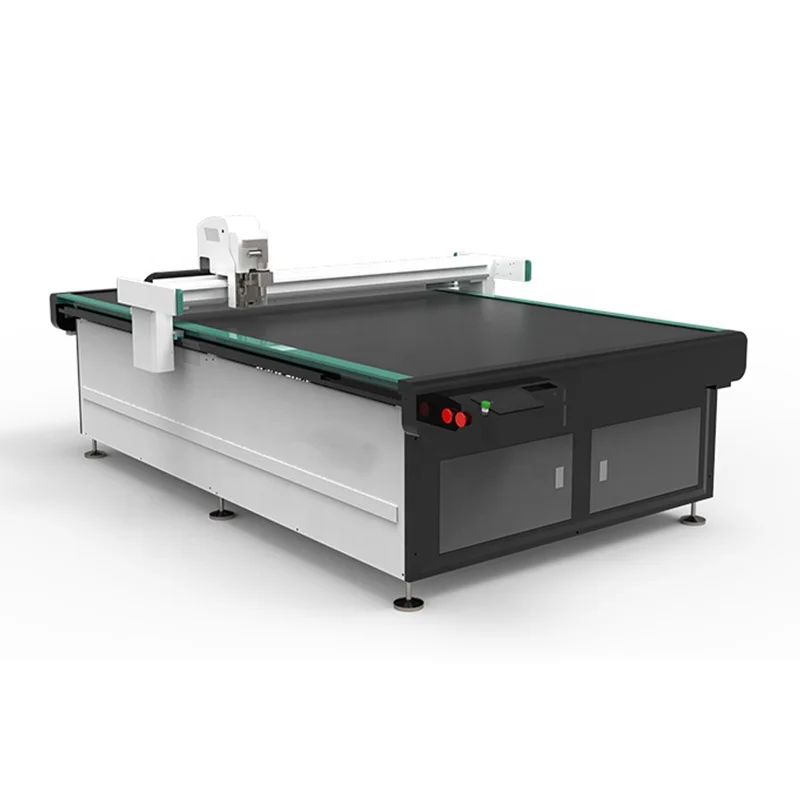
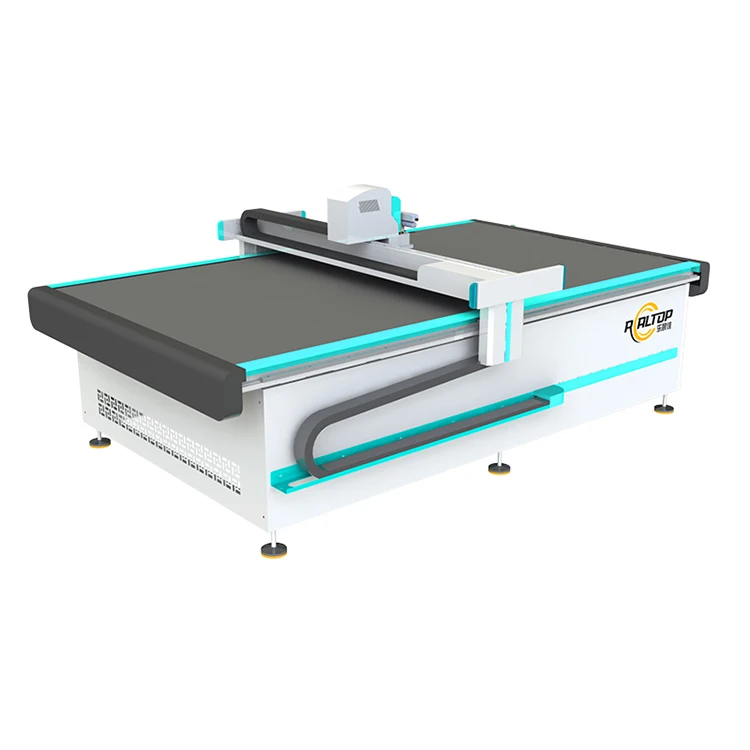
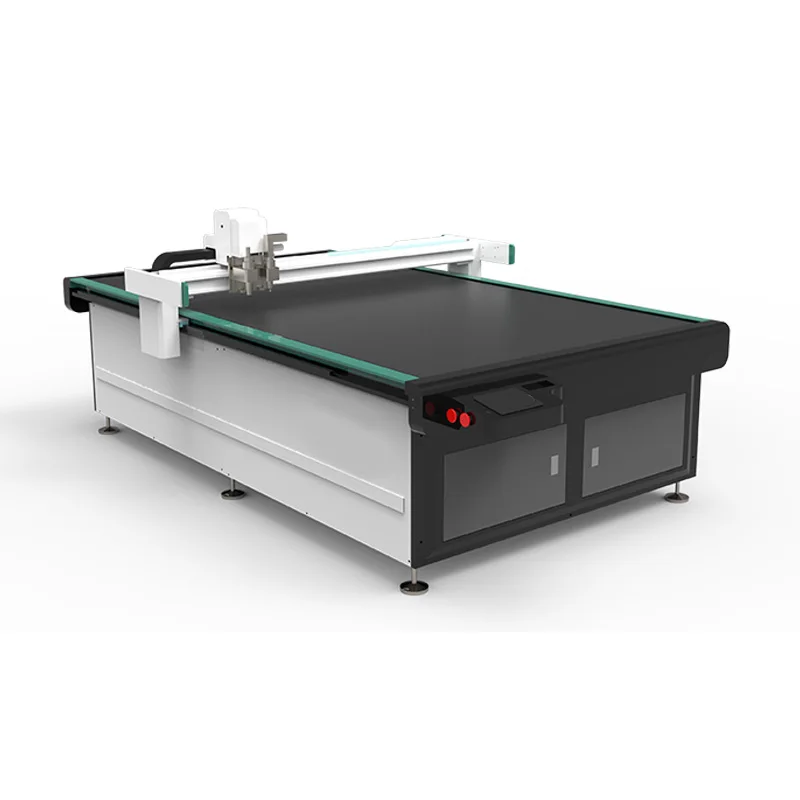
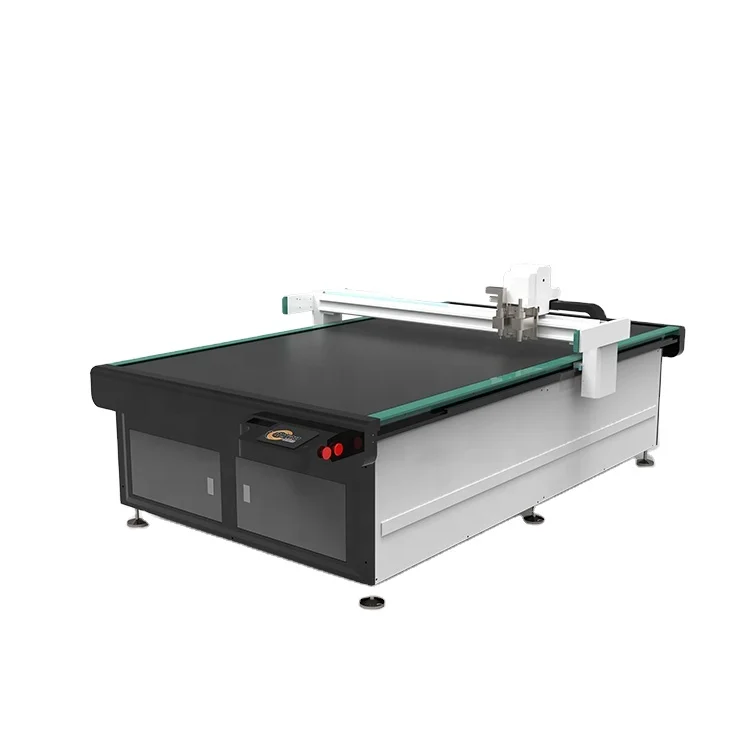
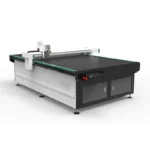
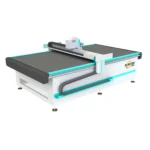
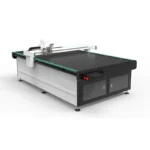
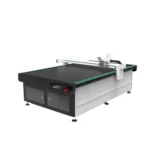
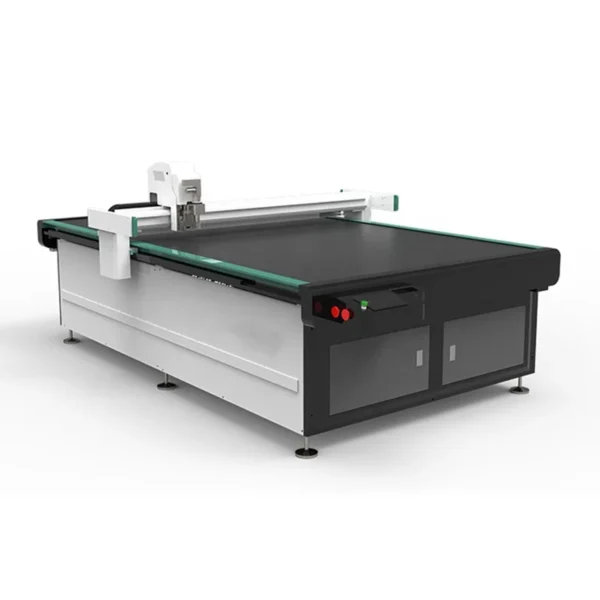
| Product Type | CNC Oscillating Knife Cutting Machine |
| Model | RT-D2516/RT-S2516 |
| Working Area | 1600 × 2500 mm |
| Overall Dimensions (L×W×H) | 3450 × 2300 × 1250 mm |
| Rated Power | 9 kW |
| Table Type | Flat working table with vacuum hold-down |
| Tool Head | Swiss imported knife with vibration full cutting, vibration half cutting, and cursor location |
| Safety Device | Infrared sensors |
| Translational Velocity | 800–1200 mm/s |
| Cutting Speed | 200–800 mm/s (material-dependent) |
| Repeatability | ≤0.1 mm |
| Transmission System | Digital servo motor, linear guide, synchronous belt, ball screw (imported) |
| Servo Motor | Japanese Yaskawa |
| Linear Guide | Taiwan Hiwin rail |
| Conveyor Belt | Germany imported |
| Vacuum Pump | 7.5 kW |
| Auto Feeding | Included |
| Instruction System | HP-GL compatible format |
| Voltage | 380V ±10% |
| Warranty | 12 months for whole machine |
Application Suitability
| Application | Material or Output |
|---|---|
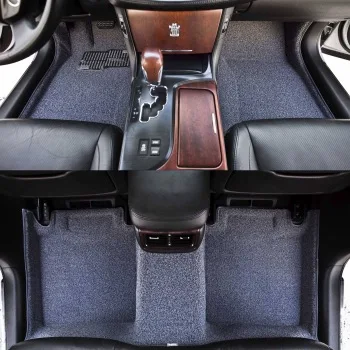
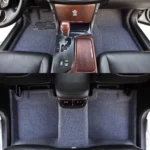
| Automotive floor mat production | TPE-backed nylon, rubber composite, foam-laminated carpet |
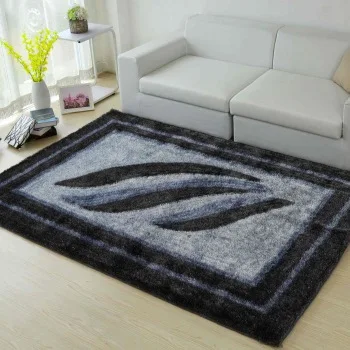
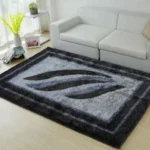
| Carpet tile and broadloom cutting | Woven wool, polypropylene, tufted synthetics on felt or PVC backing |
| Gasket and seal fabrication | Sponge composite leather, silicone, rubber sheet, PTFE |
| Footwear and leather goods | PU, EVA, genuine and synthetic leather, non-woven fabrics |
| Packaging sample making | Corrugated paper, paper honeycomb, cardboard, foam board |
Why the Material Stack Decides Your CNC Oscillating Knife Cutting Machine Specifications
The machine’s cutting depth and oscillation frequency must be validated against your exact laminate — not a showroom sample.
I once watched a car mat line stall for two days because the vibration head was dialed in for standard fleece, while the customer ran TPE-bonded nylon that demanded a different stroke frequency and blade penetration depth. The RT-D2516/RT-S2516 addresses this through pre-order sample cutting on the buyer’s own material, with oscillation parameters and blade selection locked in before the machine enters production. [NEED_CITE: material-specific oscillation tuning for multi-layer composites]
Oscillating Knife Configuration for Layered Mat Stock
The Swiss imported knife head on this platform supports vibration full cutting, vibration half cutting, and cursor location within a single cycle. Full cutting drives the blade through the entire carpet-and-backing stack in one pass, while half cutting scores the face without penetrating the carrier layer — useful for kiss-cutting carpet tiles on a continuous web. The CNC oscillating knife cutting machine specifications here are not a fixed package; the tool head is specified against the buyer’s material before the order is confirmed, which prevents the ragged edge or crushed foam problem that arises when a generic head meets a dense composite.
Vacuum Hold-Down and Porous Material Behavior
Carpet and foam-backed mats are porous, meaning a vacuum table must move enough air through the material to generate clamping force at the surface. The 7.5 kW vacuum pump paired with the flat working table is sized to maintain hold-down across the full 1600 × 2500 mm area, but small parts near the table edge can still lift if zoning is not adjusted. This is where per-job vacuum zone configuration — blocking off unused sectors to concentrate suction under the active cutting window — becomes essential for floor mat producers running mixed part sizes. [NEED_CITE: vacuum table zoning strategies for flexible porous materials]
Reading the Drivetrain Against Cutting Tolerance
The ≤0.1 mm repeatability figure rests on the combination of Japanese Yaskawa digital servo motors, Taiwan Hiwin linear guides, and an imported synchronous belt and ball screw transmission. In carpet and mat cutting, repeatability governs how closely the knife tracks the CAD path when it re-enters a cut after a tool lift — critical for interior corners of car mat heel pads where a deviation shows as a visible gap after the part is pressed into the vehicle floor pan. The 800–1200 mm/s translational velocity handles rapid moves between cut paths, while the 200–800 mm/s cutting speed range lets the operator slow down for tight radii on thick foam composites without stalling the blade.
The Cost of Skipping the Sample Cut
When a buyer specifies a machine on working area alone and skips sample validation, the first production run reveals problems that are expensive to fix on site: blade chatter marks on TPE surfaces, incomplete cuts through rubber backing that require manual trimming, or vacuum lift on small gasket parts that shifts the entire nest. These issues trace back to tool head selection, oscillation frequency, and vacuum zoning — all configurable on the RT-D2516/RT-S2516 but only if the material is tested before the configuration is finalized. [NEED_CITE: on-site reconfiguration costs for unvalidated cutting parameters]
Why Source This Platform Here
In-house design covers both the knife cutting head and the table frame, so oscillation stroke, blade geometry, and vacuum zoning are engineered as one system rather than bolted on from separate suppliers. The CCD camera positioning option addresses printed contour cutting for logo-bearing mats, confirmed at production speed before shipment. Software compatibility is verified against the buyer’s existing nesting workflow and HP-GL file output, preventing format translation delays on the shop floor. Voltage, control language, and plug type are confirmed at order — the 380V ±10% supply is standard, but local configurations are documented in the electrical schematic before the machine ships. Every unit ships with a factory test record run on the buyer’s own material, so cutting accuracy and edge quality are documented, not promised.
Documentation & Verification
- Machine specification sheet covering RT-D2516/RT-S2516 working area, drivetrain, and servo configuration
- Electrical schematic with voltage and frequency confirmed for the destination country
- Tool head and vacuum table configuration list matched to the buyer’s carpet or mat material
- Sample cutting report documenting edge quality and penetration depth on buyer-supplied stock
- HP-GL software licence and file format compatibility note for existing nesting workflows
- Factory test record covering repeatability, vacuum hold-down, and cutting accuracy before dispatch
Installation, Commissioning & Support
- 3450 × 2300 mm footprint requires level concrete floor with clearance for the 7.5 kW vacuum pump exhaust
- Dedicated 380V three-phase circuit rated for 9 kW machine load plus vacuum pump draw
- Flat working table and gantry ship assembled; conveyor belt tensioned and tracked on site
- First-run parameter tuning on buyer’s carpet stock, adjusting oscillation frequency and blade depth
- Operator training covering HP-GL file import, nest layout, vacuum zone setup, and blade change procedure
- Spare blade and consumable list provided with recommended reorder intervals based on material abrasiveness
Preparing Your Inquiry
To move from general interest to a firm configuration, share the material stack you run — face fiber type, backing composition, and total thickness — along with your typical sheet dimensions and daily part volume. Specify your workshop voltage and frequency, preferred control language, and whether your current nesting software outputs HP-GL or requires file conversion. If printed contour cutting is part of your workflow, send a sample printed mat with registration marks so the CCD tracking can be validated at line speed.
Frequently Asked Questions
Q: How is cutting thickness and speed confirmed for my specific carpet or mat material?
A: The buyer ships a sample of the actual material stack — face fiber, adhesive layer, and backing — to the factory. A cutting test is run on the RT-D2516/RT-S2516 with different oscillation frequencies and blade depths, and a sample report documents edge quality, penetration completeness, and achievable speed before the machine configuration is locked in.
Q: What tool head is recommended for multi-layer floor mats versus single-layer carpet tiles?
A: Multi-layer mats with foam or TPE backing typically require the vibration full cutting mode at higher oscillation frequency, while single-layer carpet tiles may use half cutting to score without damaging the conveyor belt beneath. The tool head configuration is finalized after the sample cutting test, not assumed from a general spec sheet.
Q: Is CCD camera contour recognition available, and does it track printed marks at production speed?
A: CCD camera positioning is an available option on this platform. When printed contour cutting is required, the buyer supplies printed material samples with registration marks, and the system is tested at the target cutting speed to confirm the camera tracks accurately before the machine ships.
Q: How is the vacuum table zoned for small mat parts that tend to lift during cutting?
A: The flat vacuum table is divided into zones that can be individually activated or blocked off. For small parts, unused zones are sealed so the 7.5 kW pump concentrates suction under the active cutting area, preventing porous carpet or foam material from shifting during knife engagement.


商品评价
Clear filtersThere are no reviews yet.