



Fast Shipping
Carrier information

20k products
Payment methods

24/7 Support
Unlimited help desk

2-day Delivery
Track or off orders
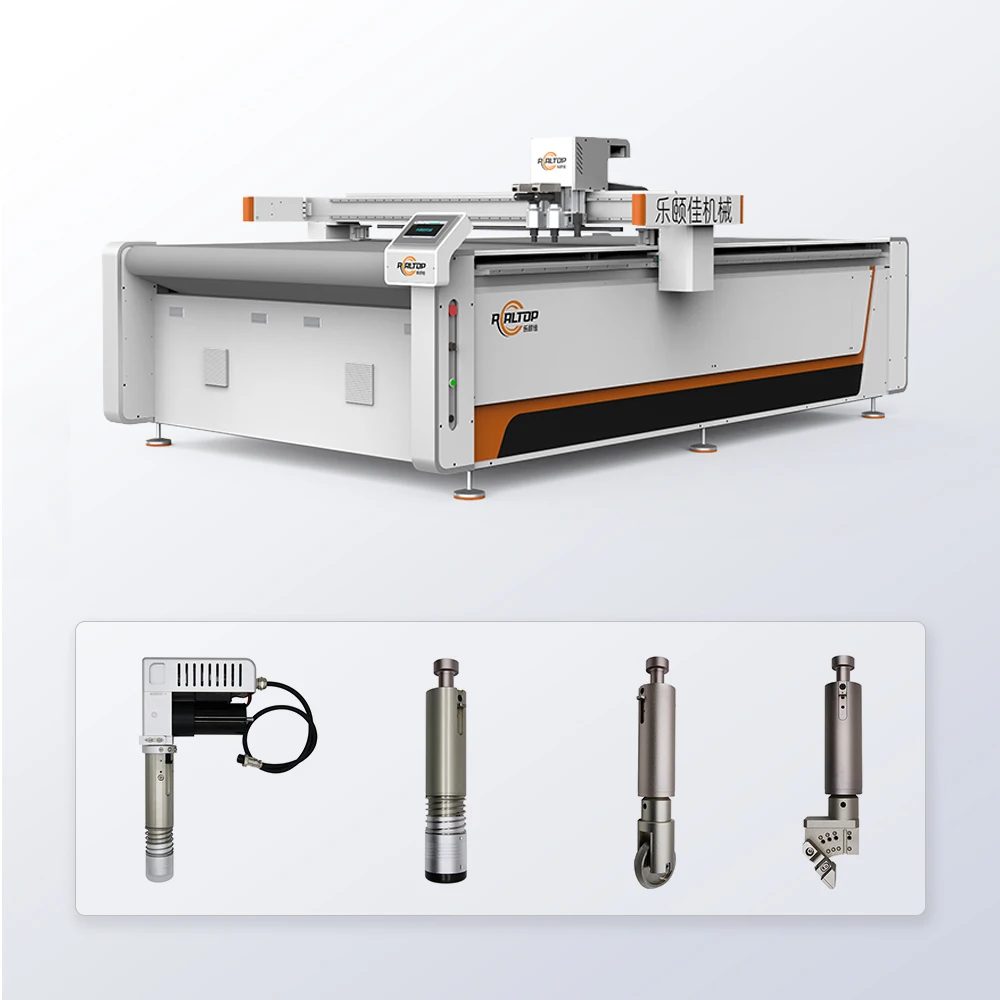
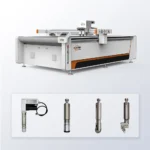
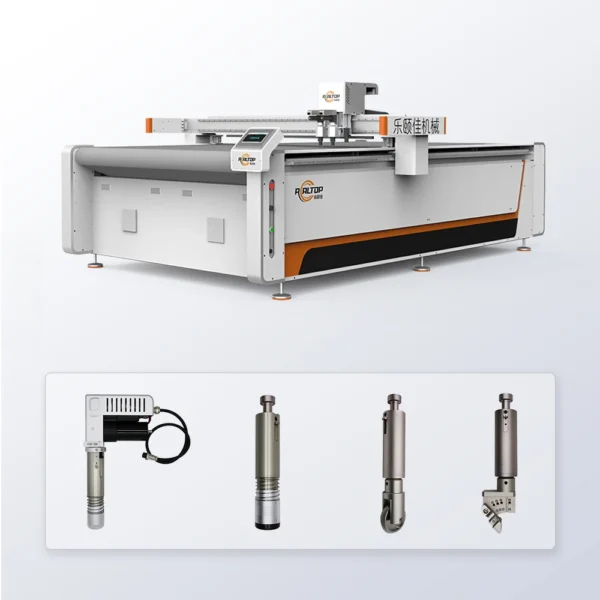
Tool Head Matched to Material — oscillating knife, creasing wheel and kiss cutting tools specified per corrugated flute type and foam density before order, not forced into one method.
Technical Specifications
| Parameter | Value |
|---|---|
| Model | 1625(std.) |
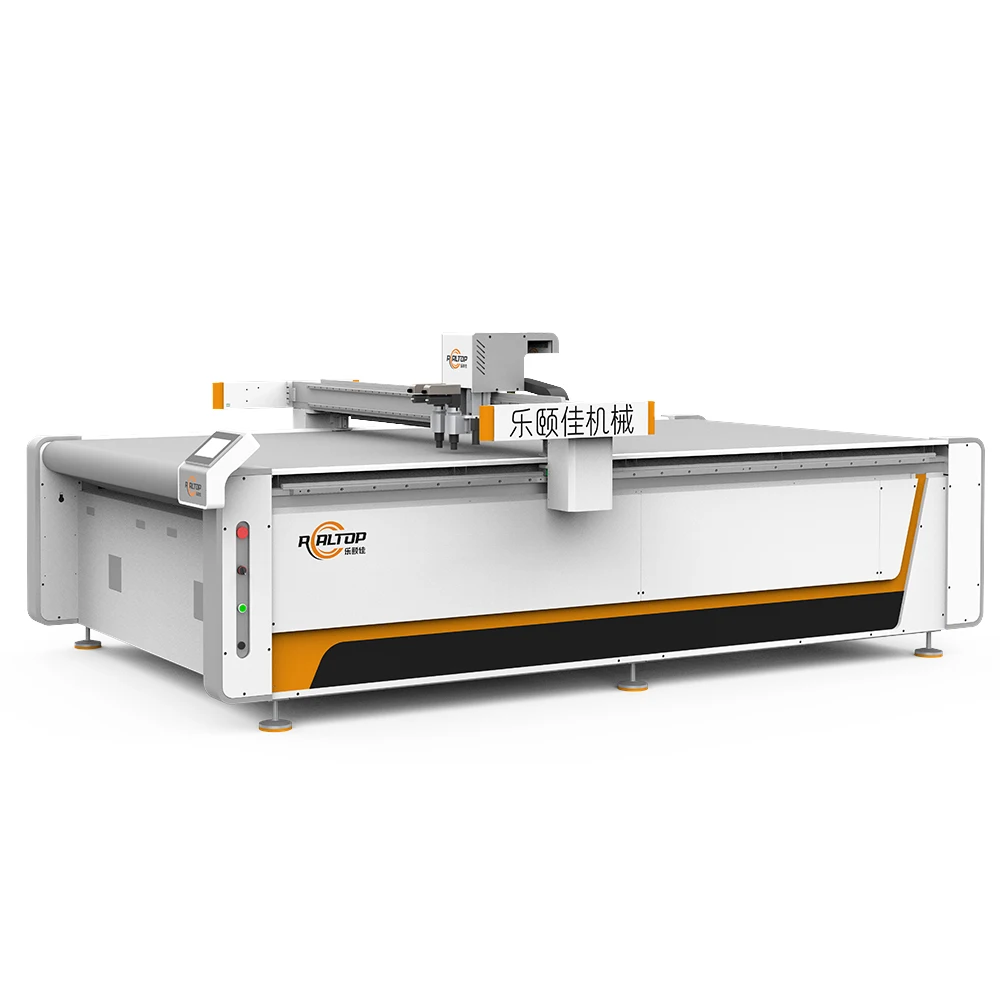
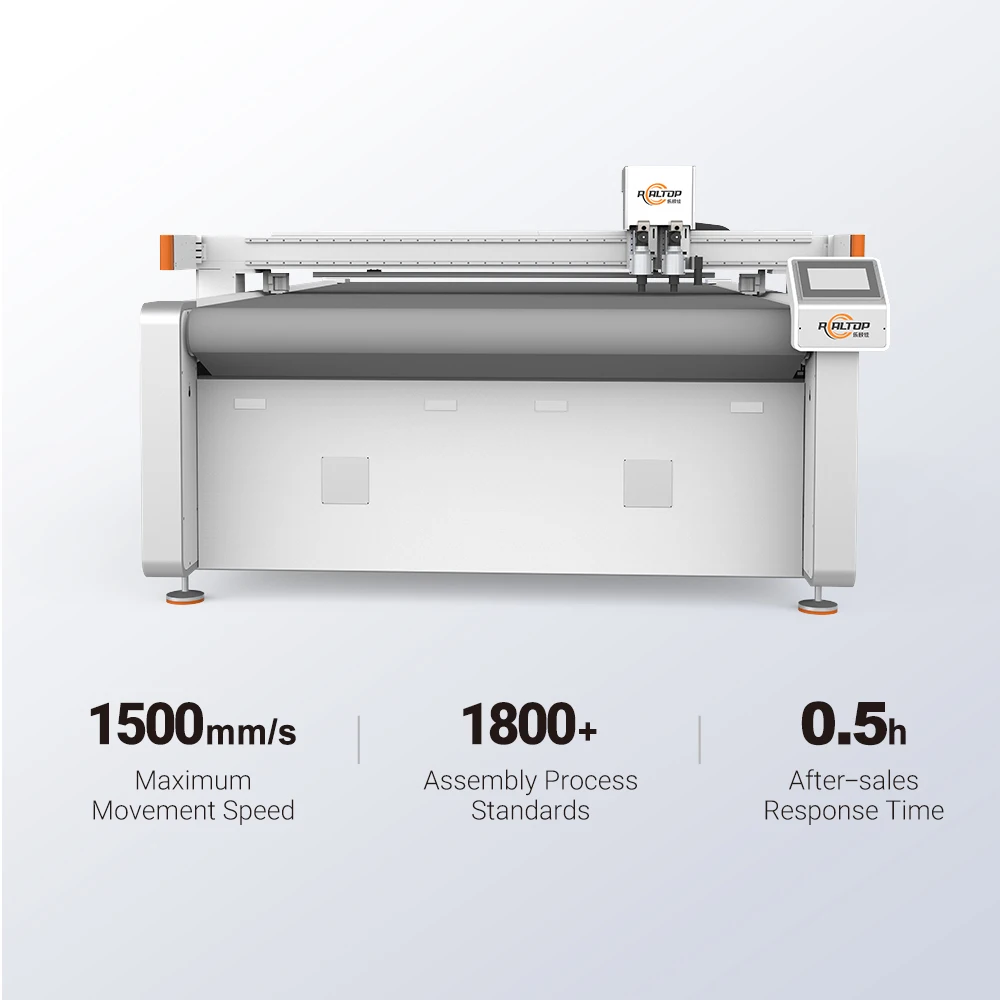
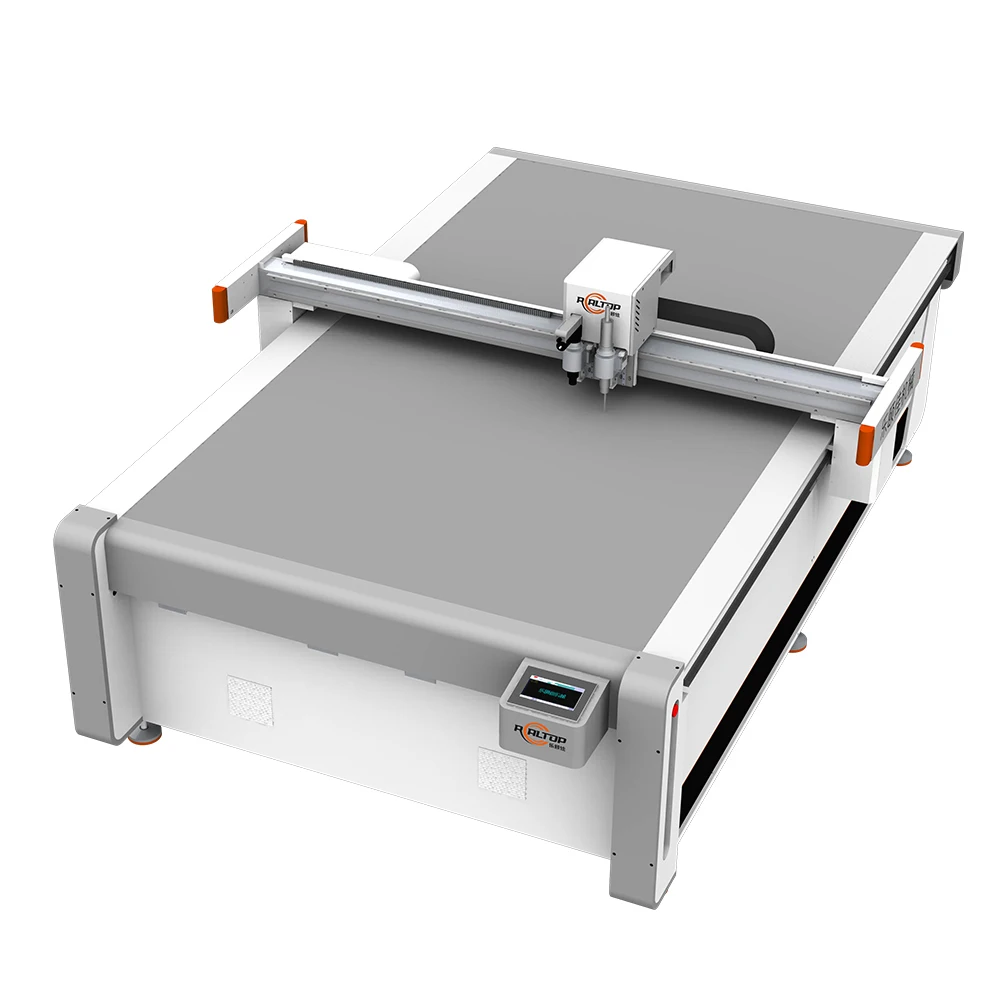
| Product Type | CNC Oscillating Knife Cutting Machine |
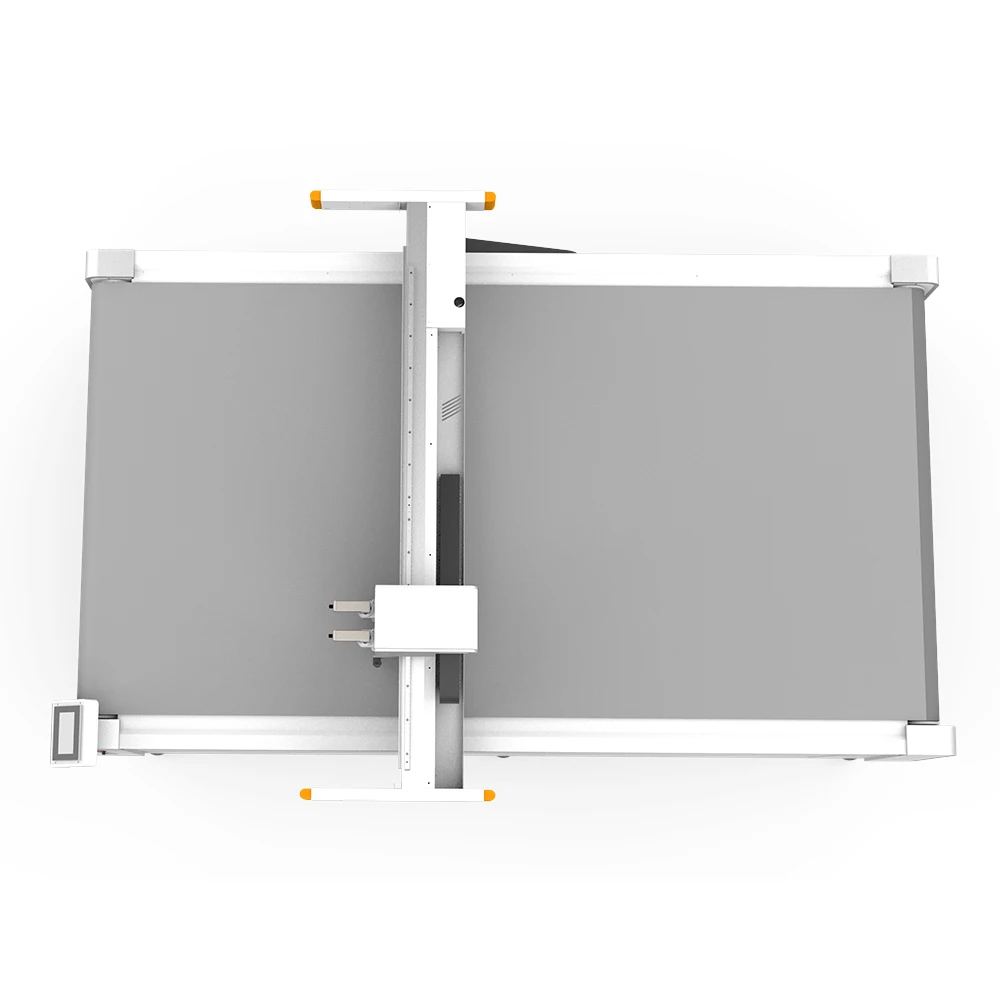
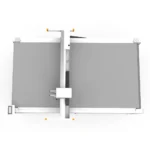
| Working Area | 1600 × 2500 mm |
| Cutting Thickness | ≤ 40 mm |
| Cutting Accuracy | ±0.1 mm |
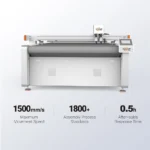
| Cutting Speed | 0–1500 mm/s |
| Tools Available | Oscillating knife, Driven rotary knife, Creasing wheel, Kiss cutting tool, Pneumatic knife, Milling tool, V groove knife |
| Vacuum Table | Aluminum bellows vacuum table |
| Vacuum Pump | 9 kW |
| Control System | PLC control panel |
| Servo Motors | Panasonic, Delta, Dorna options |
| Voltage Options | 110V, 220V, 380V |
| Profile Format | PLT, DXF, AI, PDF |
| Software | Dedicated packaging box structure design software |
| Language Options | English, Russian, Italian, Chinese (custom languages available) |
| Safety Device | Infrared sensor device and emergency stop device |
| Machine Size | 3300 × 2100 × 1350 mm |
| Certification | CE |
Application Suitability
| Application | Material or Output |
|---|---|
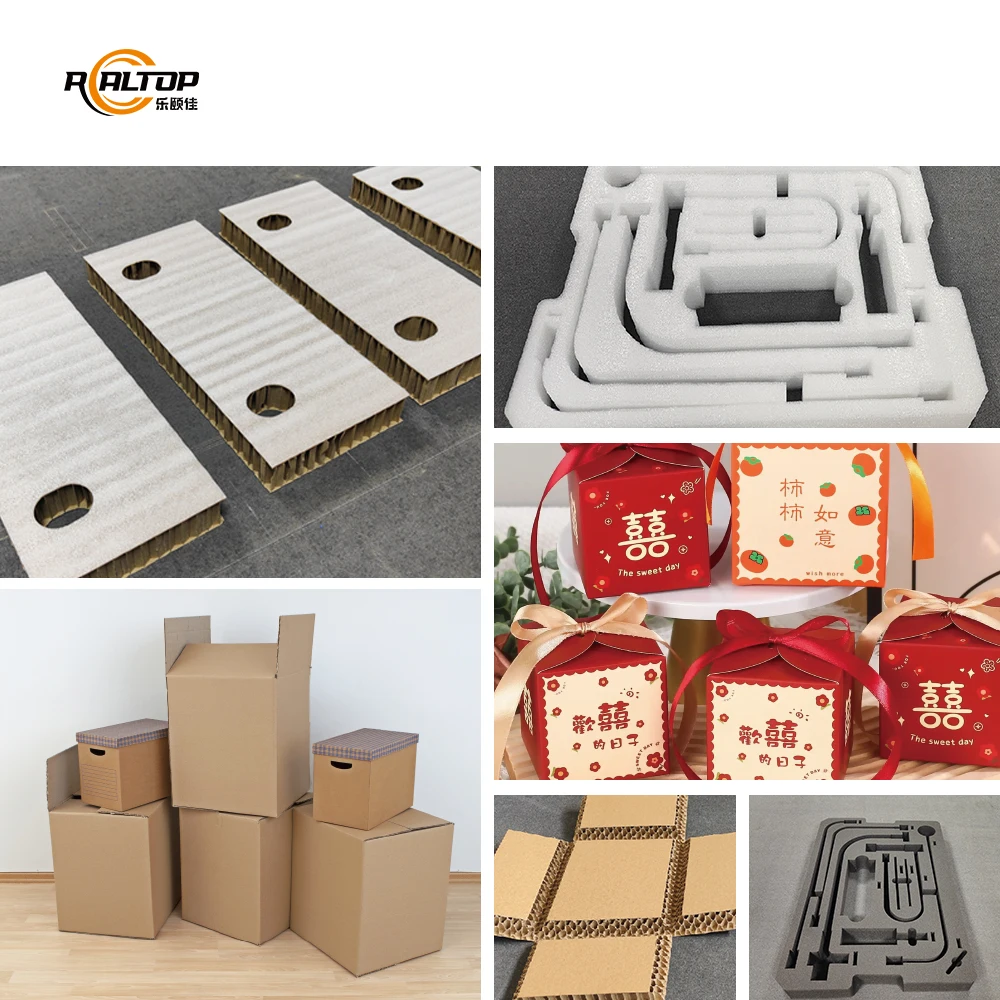
| Corrugated cardboard sample cutting | E-flute, B-flute, BC-flute corrugated board |
| Greyboard and art paper prototyping | Greyboard, cardstock, specialty paper |
| Foam insert cutting for protective packaging | EVA foam, EPE foam, PU foam |
| Gasket and seal cutting for industrial packaging | Rubber mats, PTFE, composite materials |
| Short-run carton production without die-cut molds | Corrugated cardboard, cardstock |
| Textile and leather packaging inlays | Velvet, fleece, non-woven fabric, leather, synthetic leather |
Why the Wrong Tool Head Costs You More Than the Machine
A packaging sample maker in Jinan once specified a cutter based on working area alone. The 1625(std.) CNC oscillating knife cutting machine specifications looked right on paper, but the tool head was wrong for BC-flute corrugated — ragged edges on every cut, crushed flutes on the crease lines, and a secondary finishing step that halved throughput. The fix is never a better blade; it is the correct tool head matched to flute type and ply count before the order is placed.
That mismatch happens more often than buyers expect. A creasing wheel on 3mm greyboard produces clean fold lines; an oscillating knife on the same material leaves micro-fractures along the crease. Kiss cutting on adhesive-backed labels requires depth control within fractions of a millimetre — too deep cuts the liner, too shallow leaves the matrix attached. Each material demands a different tool, and the CNC oscillating knife cutting machine specifications mean nothing if the tool head selection is left to chance. [NEED_CITE:]
Matching Oscillating, Rotary and Creasing Tools to Packaging Substrates
The 1625(std.) ships with seven interchangeable tool options. Oscillating knife handles single and double-wall corrugated cardboard up to 40mm thick, slicing through flutes without crushing the structure. Driven rotary knife suits continuous cuts on fabric and non-woven inlays used in premium packaging. The creasing wheel scores fold lines on greyboard and cardstock without penetrating the surface, leaving a clean hinge for box assembly. Selecting the right tool for each substrate is the single most important decision in the CNC oscillating knife cutting machine specifications review.
Vacuum Table Zoning and Small-Part Stability
The aluminum bellows vacuum table on this machine delivers full-surface adsorption with high flatness. For packaging sample makers cutting small gussets, corner inserts or latch tabs from EVA foam, the vacuum must hold parts flat at cutting speeds up to 1500 mm/s without lifting. Insufficient zoning causes material shift, which shows up as dimensional drift on parts under 50mm. The 9 kW vacuum pump maintains suction across the 1600 × 2500 mm bed, keeping thin cardstock and adhesive-backed sheets in place during intricate contour work. [NEED_CITE:]
Reading the Core Parameters Against Your Production Reality
Cutting thickness of ≤ 40 mm covers most packaging substrates — E-flute at roughly 1.5 mm through BC-flute approaching 8 mm, plus foam inserts up to the full 40 mm range. The ±0.1 mm accuracy matters most on interlocking tab-and-slot box structures where cumulative error across six panels causes assembly misalignment. Servo motor options (Panasonic, Delta, Dorna) let buyers balance cost and motion precision; higher-resolution servos reduce corner rounding on tight radii common in carton design. The dedicated packaging box structure design software accepts PLT, DXF, AI and PDF imports, which means most existing design files load without conversion — a detail often overlooked until the first production day. PLC control with language options in English, Russian, Italian and Chinese ensures operators read parameters in their working language, reducing setup errors during job changeover.
The Hidden Cost of Skipping a Material Trial
I watched a carton shop accept a machine based on greyboard sample cuts, then run it on high-density corrugated in production. The knife could not penetrate the liner at rated speed, forcing a second pass that doubled cycle time. Edge quality dropped, tool wear increased, and the shop blamed the machine instead of the missing material trial. A sample cutting report on the buyer’s actual corrugated ply count, foam density and sheet size removes this risk entirely. Every CNC oscillating knife cutting machine specifications sheet should be validated against a physical cut on the exact material the buyer will run. [NEED_CITE:]
Why Buyers Source This Machine Here
The in-house design team covers both knife tooling and vacuum table engineering under one roof, so the 1625(std.) configuration is built around the buyer’s material rather than adapted from a standard catalog. Tool head and table zoning are specified per substrate and daily volume before production begins. CCD camera positioning is available for printed contour work on pre-printed packaging samples. Software file format compatibility is confirmed against the buyer’s existing design workflow before the order is locked. Voltage, plug type and control panel language are verified against the destination facility, so the machine arrives ready to power on without transformer or rewiring work.
Documentation & Verification
- Machine specification sheet listing every configured tool head and option
- Electrical schematic with confirmed voltage and plug type for destination
- Sample cutting report on buyer-supplied corrugated and foam materials
- Factory test record documenting accuracy and cut quality before dispatch
- Software licence and file format compatibility note for packaging design files
- Spare parts list matched to the selected tool heads and servo configuration
Installation, Commissioning & Support
- Requires level concrete floor for the 3300 × 2100 × 1350 mm machine footprint
- Dedicated circuit matching confirmed 110V, 220V or 380V supply before connection
- Arrives partially assembled; vacuum table and gantry require on-site alignment
- First-run parameter tuning on buyer material with operator present during setup
- PLC control panel configured in selected language before operator training begins
- Consumable blade and creasing wheel inventory matched to initial production volume
Before You Request a Quote
Send the exact material type, flute count or foam density, maximum sheet size and the daily volume you plan to cut. Confirm your facility voltage, frequency and preferred control panel language. If your existing packaging designs use a specific file format or nesting software, share a sample file so compatibility is verified before the configuration is finalised.
Frequently Asked Questions
Q: How is cutting thickness verified for my specific corrugated flute type or foam density?
A: We run a sample cutting test on your actual material before the order is confirmed. The test covers your corrugated flute type or foam density at production speed, and you receive a cutting report documenting edge quality, dimensional accuracy and cycle time. This removes guesswork from the CNC oscillating knife cutting machine specifications.
Q: Which tool head is specified for my material and what edge quality does it produce?
A: Each tool head is matched to your substrate. Oscillating knife handles corrugated board without crushing flutes, creasing wheel scores greyboard for clean folds, and kiss cutting tool cuts adhesive labels without damaging the liner. The configuration list in your quotation specifies which tools are included for your materials.
Q: Does the vacuum table zoning hold small packaging parts flat during high-speed cutting?
A: The aluminum bellows vacuum table with the 9 kW pump maintains full-surface adsorption across the 1600 × 2500 mm bed. Small inserts and tabs stay flat at cutting speeds up to 1500 mm/s. Zoning configuration is confirmed during the material trial to ensure adequate hold-down for your smallest part geometry.
Q: Can the software import my existing packaging design files and nesting workflow?
A: The dedicated packaging box structure design software accepts PLT, DXF, AI and PDF formats. Before order confirmation, we verify compatibility with your existing design files and nesting workflow. If conversion is needed, we test the output and confirm dimensional integrity before shipment.
Q: What voltage, plug type and control panel language will be configured for my facility?
A: Voltage is configurable at 110V, 220V or 380V to match your facility supply. Plug type is specified per destination market standards. The PLC control panel is set to English, Russian, Italian, Chinese or a custom language before dispatch, so operators can read all parameters in their working language from day one.


商品评价
Clear filtersThere are no reviews yet.