







Fast Shipping
Carrier information

20k products
Payment methods

24/7 Support
Unlimited help desk

2-day Delivery
Track or off orders
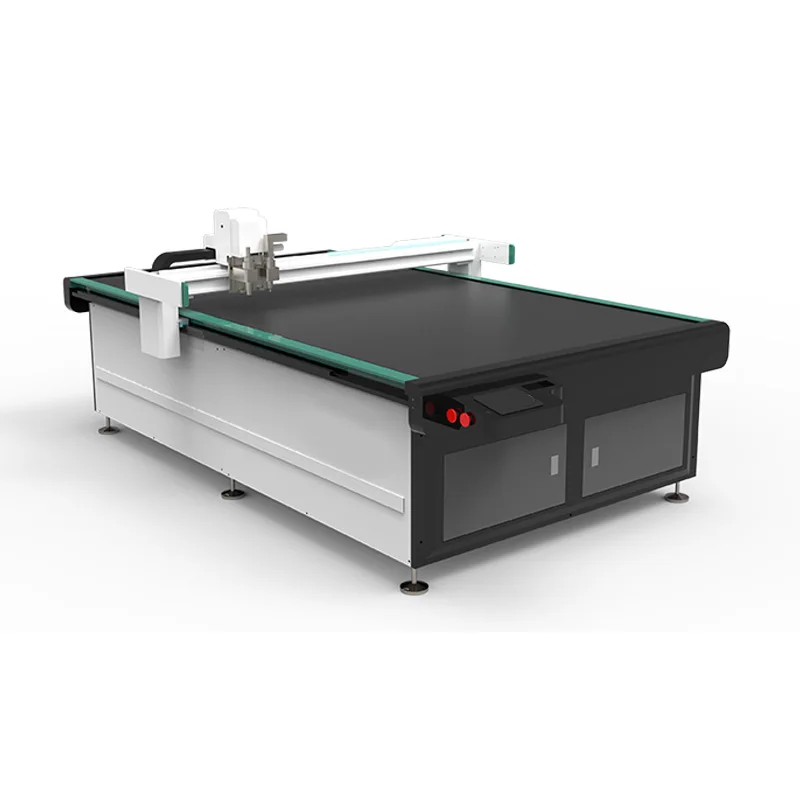
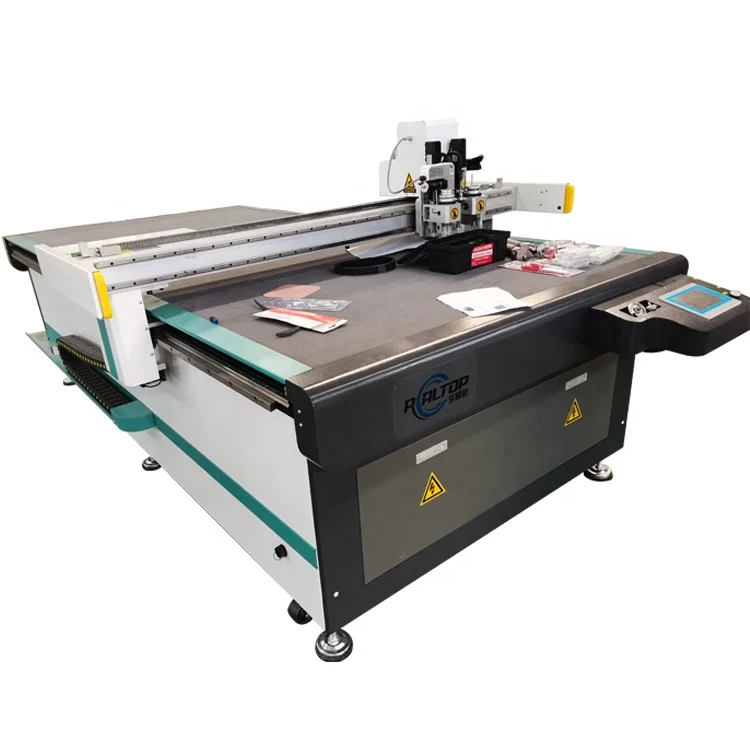
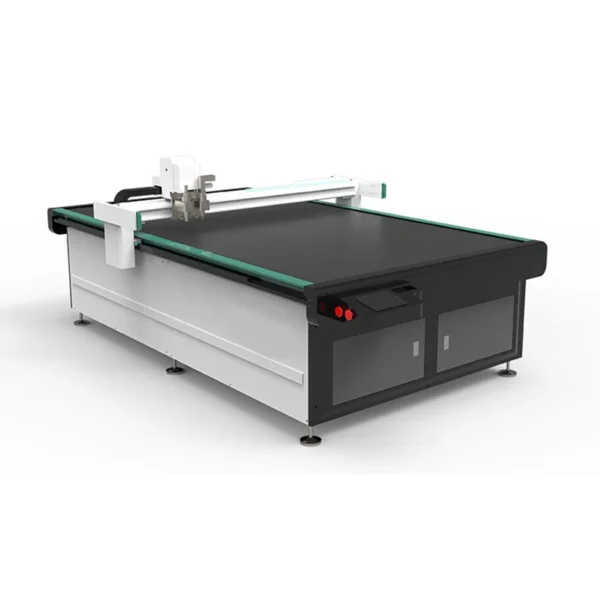
Vibration cutting matched to board grade — Swiss-imported oscillating blade and zoning vacuum table configured after sample cutting on your corrugated, foam or PVC stock, so carton edge quality holds at production speed rather than degrading on first contact.
Technical Specifications
| Parameter | Value |
|---|---|
| Model | RT-D2516/RT-S2516 |
| Product Type | CNC Oscillating Knife Cutting Machine |
| Working Area | 1600×2500mm |
| Overall Dimensions (L×W×H) | 3450×2300×1250mm |
| Rated Power | 9 kW |
| Voltage | 380V±10% |
| Tool Head Type | Oscillating knife with vibration full cut, vibration half cut and cursor location (Swiss imported blade) |
| Table Type | Flat vacuum table, 7.5 kW vacuum pump |
| Translational Velocity | 800–1200 mm/s |
| Cutting Speed | 200–800 mm/s (according to different cutting materials) |
| Repeatability | ≤0.1 mm |
| Transmission System | Yaskawa digital servo motor, Hiwin linear guide, synchronous belt, ball screw |
| Instruction System | HP-GL compatible format |
| Feeding System | Auto feeding with German imported conveyor belt |
| Safety Device | Infrared sensors |
Application Suitability
| Application | Material or Output |
|---|---|
| Packaging and carton sample making | Corrugated board, solid board, honeycomb cardboard |
| Signage and display fabrication | Foam board, PVC sheet, honeycomb panels |
| Gasket and composite cutting | Rubber, silicone, sponge composite leather, soft glass |
| Flexible material processing | Leather, clothing textiles, non-woven fabrics |
What "Working Area" Tells You About Vacuum Hold-Down
A 1600×2500mm CNC oscillating knife cutting machine specifications sheet rarely shows the vacuum zone map, yet small carton patterns lift and drift when zoning ignores part geometry.
You can quote a flatbed cutter on footprint alone and watch it fail on a short-run box sample where the smallest flap is 80mm wide. If the vacuum zone grid is too coarse, air bleeds past the part edge and the board shifts mid-cut. I have seen sample rooms burn through a stack of corrugated sheets before anyone thought to ask how many independent zones sit under the table. [NEED_CITE: vacuum zone count and small-part hold-down in flatbed digital cutters]
Tool Head Selection for Board Grade and Flute Profile
Choosing an oscillating knife head with Swiss-imported blade stock matters less than matching the vibration frequency and stroke to your actual flute profile. A B-flute corrugated board at 3mm needs a different blade angle and stroke amplitude than an E-flute at 1.5mm, and the half-cut creasing function must be set against the liner thickness rather than the total caliper. When the wrong combination runs at production speed, the top liner tears before the knife reaches the bottom ply.
CCD Contour Recognition on Printed Packaging Stock
Printed carton sample work depends on whether the vision system can track registration marks at the machine’s translational velocity of up to 1200 mm/s. A camera specified in a brochure does not guarantee tracking speed; what matters is the frame rate and the mark contrast your printer can reliably produce. If your sample workflow involves pre-printed sheets, confirm the recognition cycle time against your mark size before the CNC oscillating knife cutting machine specifications are finalized. [NEED_CITE: CCD frame rate and mark tracking on corrugated packaging substrates]
Reading the Specs That Decide Edge Quality
The Yaskawa servo and Hiwin rail combination delivering ≤0.1mm repeatability governs how cleanly an oscillating knife exits a cut on multi-layer corrugated. When servo response lags at direction changes, the blade drags and leaves a burr on the bottom ply. The 7.5 kW vacuum pump rating tells you suction capacity but not whether the table zones can isolate a 100mm carton flap from adjacent bleed areas. HP-GL instruction compatibility determines whether your existing nesting software exports clean paths or forces you into a proprietary workflow. Auto feeding with a German conveyor belt keeps sheet registration across successive cuts, provided the belt tension is matched to the board weight you run most often.
The Cost of Skipping Material Trials
A vibration full-cut setting dialed for standard E-flute will crush and delaminate a board with higher adhesive content, leaving ragged edges that your client notices before you do. I watched a packaging sample shop spend a week re-tuning a machine that had tested perfectly on supplier stock, because the customer’s own corrugated sheet had a different moisture profile. Without a pre-shipment sample cut on your declared material, the machine arrives calibrated for someone else’s production. [NEED_CITE: corrugated moisture content and oscillating knife cutting parameters]
Why This Configuration Matters for Your Floor
The tool head and vacuum table are specified per your declared material and daily volume rather than locked to a single catalog setup. Sample cutting runs on your actual board before the order is confirmed, so the vibration frequency, blade angle, and hold-down zoning are documented rather than guessed. The Yaskawa and Hiwin motion components are standard industrial-grade parts with global availability, keeping your spare parts sourcing local. Voltage, plug type, and control panel language are written into the production order. Software and file format compatibility is verified against your existing nesting workflow before the machine ships.
Documentation & Verification
- Machine specification sheet listing tool head type, vacuum pump rating, and working area
- Electrical schematic with voltage and frequency confirmation matching your workshop supply
- Sample cutting report on your corrugated or foam board at declared thickness
- Tool head and table configuration list matched to your material and production volume
- Software licence and HP-GL file format compatibility note for your nesting workflow
- Packing photographs showing machine condition and accessory inventory before dispatch
Installation, Commissioning & Support
- Floor space allocation for the 3450×2300×1250mm frame with clearance for sheet loading on both sides
- Dedicated 380V±10% circuit rated for the 9kW system load plus the 7.5kW vacuum pump
- Machine shipped fully assembled; conveyor belt tensioning and vacuum zone mapping verified on site
- First-run calibration of oscillating knife stroke and half-cut creasing depth against your board stock
- Operator training covering HP-GL file import, nesting setup, and blade replacement intervals
- Spare blade and conveyor belt segment kit provided for initial production months
Before You Request a Quotation
Send us your typical board type, flute profile, maximum sheet size, and the smallest carton pattern you run. If your workflow includes pre-printed sheets, share a sample with your registration mark size and color density. State your workshop voltage and frequency so the electrical configuration matches your supply before the machine leaves the factory.
Frequently Asked Questions
Q: How do I confirm cutting thickness against my specific flute profile?
A: Provide your board type, flute designation, and measured caliper. We run a sample cut on that exact stock and document the blade angle, stroke amplitude, and cutting speed that produce a clean edge without delamination. The sample report ships with the machine so your operator has a verified starting point.
Q: Is CCD camera contour recognition available for printed carton work?
A: CCD positioning is offered as a configuration option. Share your registration mark size, color, and printer resolution so we can verify tracking reliability at production speed before the order is confirmed. [NEED_CITE: CCD camera option availability for printed packaging substrates]
Q: How many vacuum zones are under the table, and will they hold small parts?
A: Zone count is configured based on your typical part geometry. Send your smallest carton pattern and we verify hold-down on that footprint during the sample cutting stage, adjusting zone layout if air bleed compromises edge accuracy.
Q: How are voltage, plug, and control language confirmed before production?
A: Your workshop voltage, frequency, plug type, and preferred control panel language are written into the production order and shown on the electrical schematic. A confirmation document is signed off before the machine enters assembly.
Q: Can the machine import my existing DXF, PLT, or AI nesting files?
A: The instruction system accepts HP-GL compatible format. Send a sample file from your current nesting software and we test import, nesting, and path output before shipment, documenting any conversion steps your workflow requires.


商品评价
Clear filtersThere are no reviews yet.