

Fast Shipping
Carrier information

20k products
Payment methods

24/7 Support
Unlimited help desk

2-day Delivery
Track or off orders
Tool Head Matched to Material — We confirm oscillating knife, drag knife or creasing wheel selection only after sample cutting on your actual fabric, preventing ragged edges or crushed layers on the production floor.
Technical Specifications
| Parameter | Value |
|---|---|
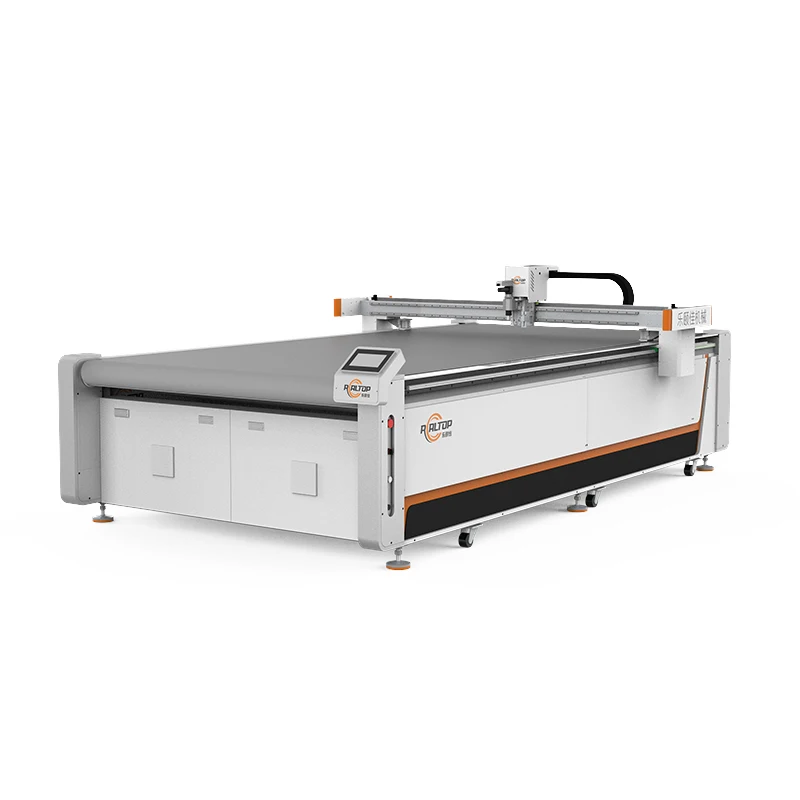
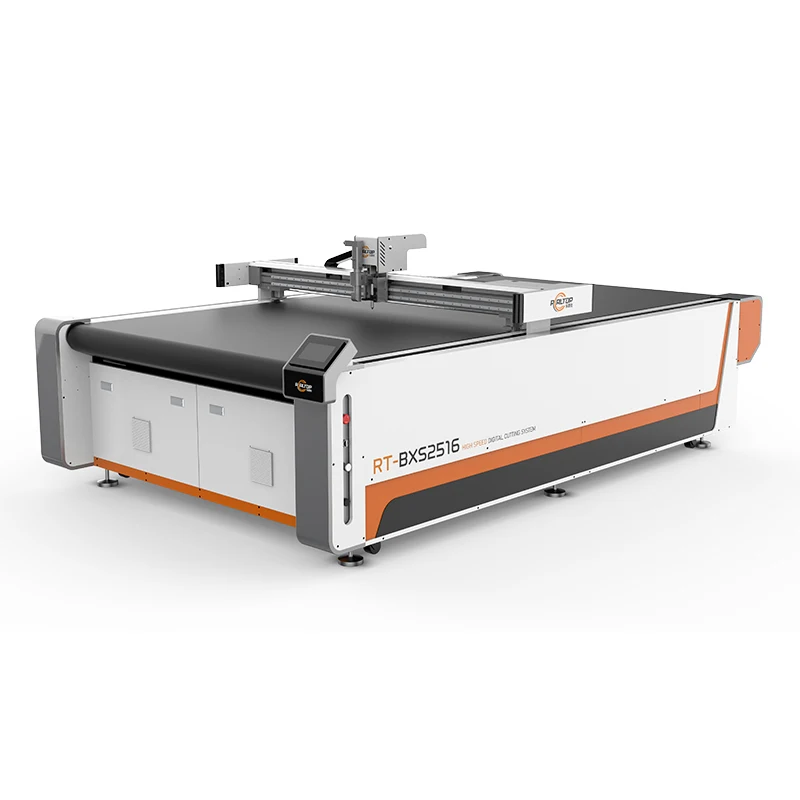
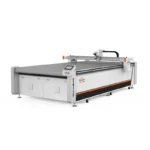
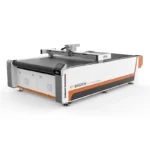
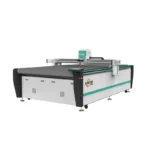
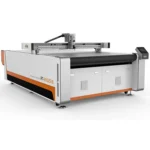
| Model | RT-D2516/RT-S2516 |
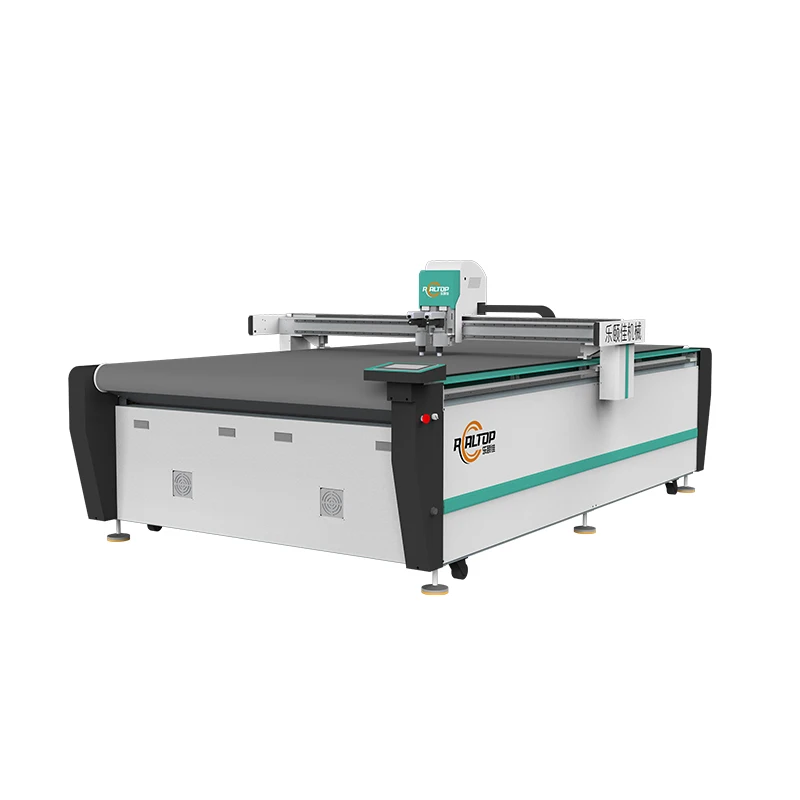
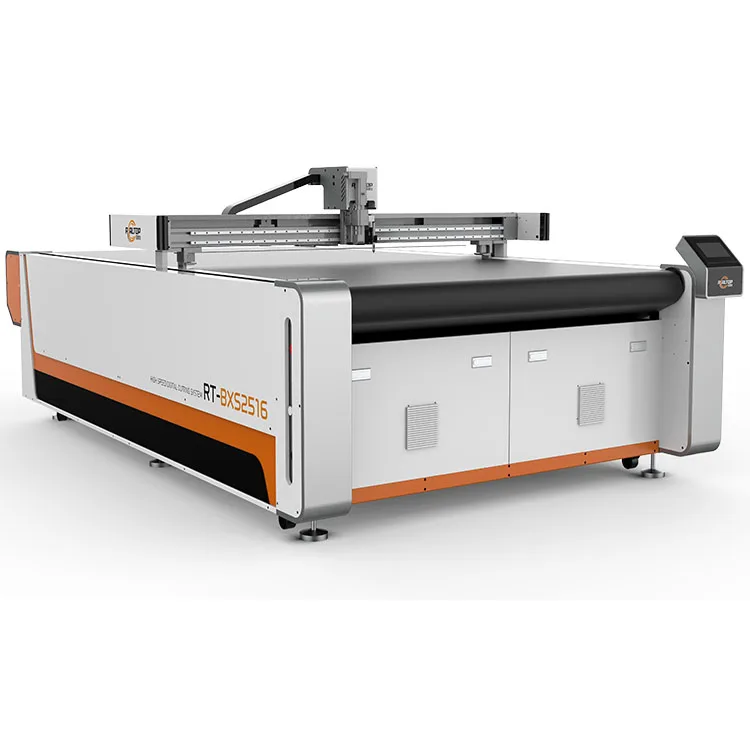
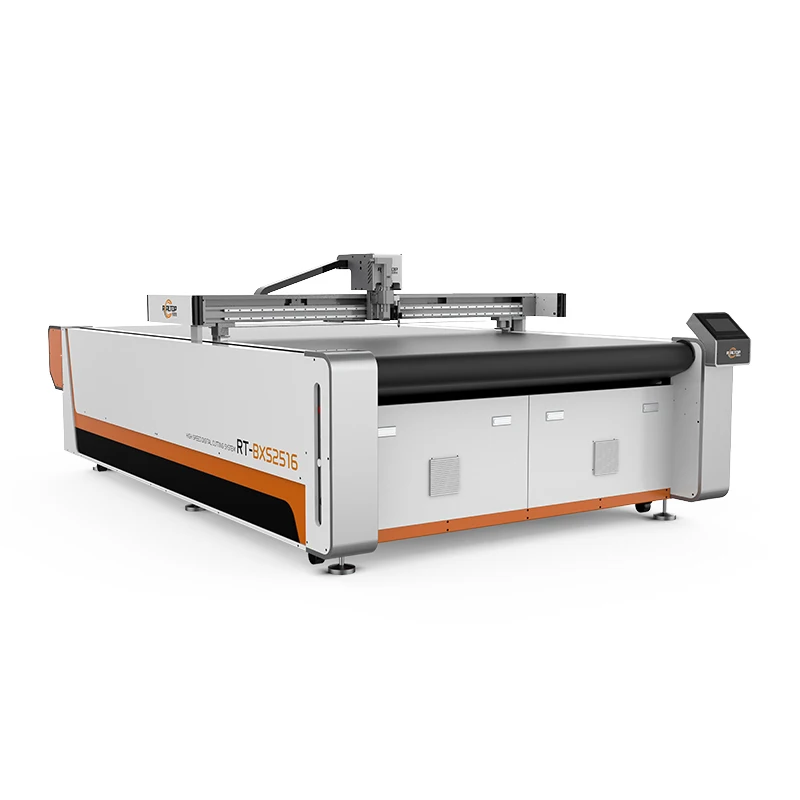
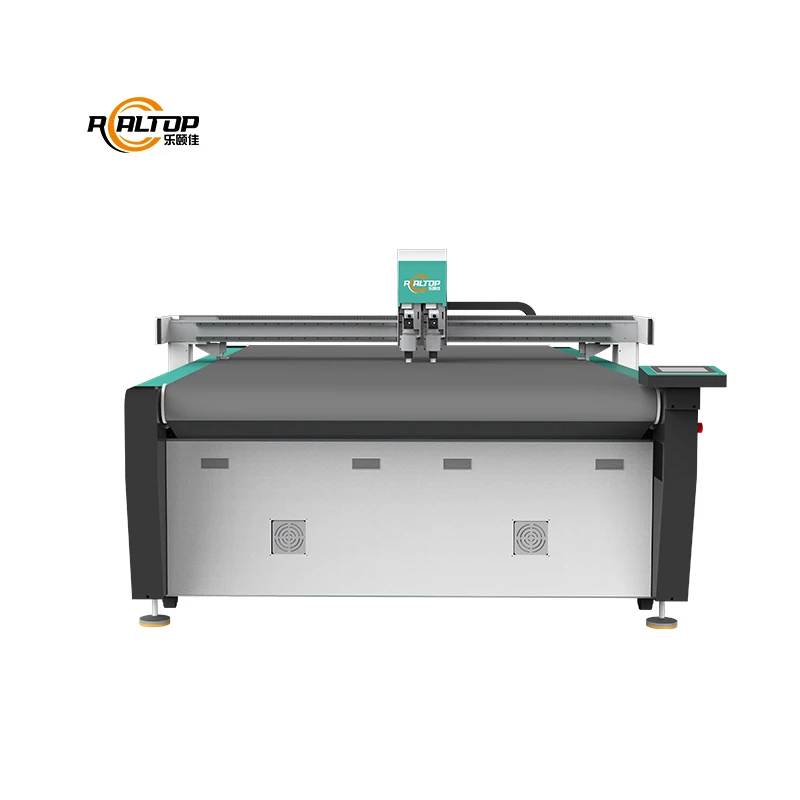
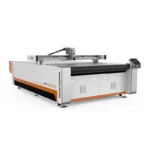
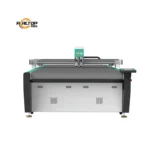
| Product Type | CNC Oscillating Knife Cutting Machine |
| Working Area | 1600 × 2500 mm |
| Machine Size | 3450 × 2300 × 1250 mm |
| Rated Power | 9 kW |
| Table Type | Flat working table / Auto feeding table (configurable) |
| Multifunctional Head | Swiss imported knife with vibration full cutting, vibration half cutting, cursor location |
| Translational Velocity | 800–2000 mm/s |
| Cutting Speed | 200–800 mm/s (varies by material type and thickness) |
| Cutting Thickness | ≤100 mm (varies with material) |
| Repeated Accuracy | ≤0.1 mm |
| Transmission System | Digital servo motor, linear guide, synchronous belt, ball screw |
| Instruction System | HP-GL compatible format |
| Voltage | 380V ± 10% |
| Servo Motor | Delta (Panasonic optional) |
| Vacuum Pump | 7.5 kW |
| Guide Rail | Taiwan Hiwin |
| Conveyor Belt | Germany imported |
| Safety Device | Infrared sensors, anti-collision, emergency stop |
| Control Panel | Touch screen, multiple language supported |
| Software | Auto typesetting; supports PLT, DXF, AI formats |
| Language Options | English, Russian, Italian, Chinese (special languages customizable) |
| Standards | CE declaration where applicable |
Application Suitability
| Application | Material or Output |
|---|---|
| Garment and footwear production | Leather, textile, clothing cloth, shoe material, non-woven fabric |
| Automotive interior components | PU, synthetic leather, carpet, headliner, gasket material |
| Luggage and bag manufacturing | Luggage material, PVC, EVA, XPE, composite panels |
| Packaging and sample making | Corrugated cardboard, foam board, sticker, film |
| Sealing and industrial gaskets | Rubber, PTFE, ETFE, fiberglass, composite gasket sheets |
| Soft furnishings and carpets | Carpet, sponge, foam, multi-layer fabric |
Why Cutting Thickness Claims Fail on the Factory Floor
A machine specified on working area alone, then found unable to handle the material thickness — this mismatch causes more production downtime than any other configuration error in CNC oscillating knife cutting machine specifications reviews. The real question is not how thick the machine can cut, but which tool head and blade profile can hold an edge on your specific fabric at your required speed.
I once set up a line for an automotive interior supplier who sent standard PU leather samples for testing. The cuts were clean, the edges flat, and the order was placed. When production started on their actual material — a glass-fiber reinforced composite three times harder than the sample — the blade dulled within two hours and the entire line stopped. We had to swap to a high-frequency oscillating head and retune every parameter before throughput stabilized [NEED_CITE: material hardness variation across composite grades in automotive interiors]. That experience shaped how we handle every inquiry now: no material sample, no configuration lock.
Tool Head Selection by Fabric and Foam Type
Different fabrics demand different cutting actions. An oscillating knife handles multi-layer garment cloth and dense foam by vibrating at high frequency to slice through without dragging or fraying. A drag knife works better on thinner textiles and sticker films where a continuous drawn cut produces the cleanest edge. The RT-D2516/RT-S2516 multifunctional head accommodates Swiss imported blades configured for full cutting, half cutting and cursor location, so a single machine can process garment patterns and packaging samples without a head change. CNC oscillating knife cutting machine specifications mean little if the blade profile does not match the fiber density and backing of your actual roll stock.
Vacuum Table Zoning for Small Garment Pieces
A 7.5 kW vacuum pump provides strong hold-down across the full 1600 × 2500 mm bed, but small pattern pieces like collar stays or pocket flaps require zoned suction to prevent lift during high-speed passes. Without proper zoning, fabric shifts mid-cut and the nesting yield drops. We configure vacuum zones based on the smallest piece in your production mix, not the largest sheet. This is why sharing your nesting layout before order confirmation matters as much as confirming the working area [NEED_CITE: vacuum zoning standards for flatbed digital cutting tables].
What the Specification Sheet Actually Tells You
The 9 kW rated power covers both the cutting head drive and the conveyor feed system, meaning continuous operation on dense composites does not starve the servo motors. Taiwan Hiwin guide rails paired with Delta servo motors deliver the ≤0.1 mm repeated accuracy required for multi-layer nesting where cumulative error across a full lay can push pieces out of tolerance. The auto-feeding table option with Germany imported conveyor belt supports roll-to-roll processing, letting garment manufacturers load fabric rolls and run continuous cuts without manual repositioning. Cutting speed ranges from 200 to 800 mm/s depending on material — a figure that only becomes meaningful once your specific fabric is on the table. The software accepts PLT, DXF and AI files with auto typesetting, which reduces the gap between your design department’s output and the machine’s execution. Voltage is set at 380V ± 10%, but confirming your local supply before shipment avoids transformer costs on arrival [NEED_CITE: industrial voltage compatibility requirements for exported CNC equipment].
The Hidden Cost of a Wrong Configuration Choice
Choosing a machine based only on bed size and price leads to problems that surface weeks after installation. A vacuum table without adequate zoning causes small leather pieces to lift, producing scrap instead of finished uppers. A circular knife specified for woven fabric tears through non-woven interlining, generating fuzzy edges that require secondary trimming. Software that cannot import your existing DXF nesting files forces operators to redraw patterns, adding hours to every shift. These are not defects — they are configuration mismatches that a proper material sample test would have caught before the machine left the factory [NEED_CITE: tooling mismatch causes in flexible material cutting operations].
Why Source This Machine Here
In-house design covers both knife and laser cutting technologies, so your material dictates the method rather than the catalog pushing one solution. Every tool head and table configuration is specified against your fabric type and daily volume, not a default package. CCD camera positioning is available for printed contour work on garment and textile applications where registration accuracy matters. Software compatibility with your existing PLT, DXF or AI workflow is confirmed before the order is locked. Sample cutting on your own material runs before commitment, producing a cutting report that documents edge quality, speed and blade life under real conditions. Voltage, plug type and control panel language are verified against your facility requirements before shipment.
Documentation & Verification
- Machine specification sheet with tool head and table configuration matched to your fabric type
- Electrical schematic and voltage confirmation aligned to your local supply standard
- Sample cutting report on your own material documenting edge quality and blade wear
- Software licence with PLT, DXF, AI file format compatibility confirmation
- Factory test record on your specified material before dispatch
- Operation and maintenance manual in your selected control language
Installation, Commissioning & Support
- 3450 × 2300 × 1250 mm footprint requires level concrete floor with clearance for roll loading on the feeding side
- 380V ± 10% three-phase supply with dedicated circuit for 9 kW rated power plus 7.5 kW vacuum pump
- Machine ships partially assembled; guide rails and servo motors calibrated at factory and verified on site
- First-run parameter tuning on your fabric type with operator training on tool head changes
- Spare parts list includes Swiss imported blades, conveyor belt sections and vacuum seals
- Touch screen control panel configured in your chosen language before delivery
What to Share Before Requesting a Quote
Send your material type, maximum thickness, sheet or roll width and the daily volume you need to process. Confirm your local voltage and frequency, preferred control language, and whether your nesting workflow uses PLT, DXF or AI files. If your production includes printed contour cuts, share a sample print so CCD tracking can be evaluated at production speed.
Frequently Asked Questions
Q: How do I verify the cutting thickness for my specific fabric and layer count?
A: Send a sample of your actual material including the full lay-up thickness you plan to cut. We run it on the RT-D2516/RT-S2516 with the recommended tool head and produce a cutting report documenting edge quality, achievable speed and blade wear rate. The ≤100 mm maximum varies significantly by material density, so only a physical test confirms real capability.
Q: Which tool head is correct — oscillating knife, drag knife or circular knife?
A: Oscillating knives suit dense foam, multi-layer fabric and composites where vibration prevents dragging. Drag knives work best on thin textiles, films and stickers requiring a clean drawn cut. We determine the correct head by cutting your material sample and comparing edge quality across options before finalizing the configuration.
Q: Does the CCD camera track printed marks reliably at full production speed?
A: CCD contour recognition is available as a configuration option for printed textile and garment applications. We test tracking accuracy using your actual printed material at the target cutting speed to confirm registration holds across the full 1600 × 2500 mm bed before including it in your specification.
Q: What vacuum zoning do I need for small garment pattern pieces?
A: Zoning depends on your smallest piece size and nesting layout. Share your typical pattern file so we can configure the 7.5 kW vacuum table with zones that hold collar pieces, pocket flaps and other small parts without lift during high-speed cutting passes.
Q: How do I confirm the software works with my existing nesting workflow?
A: The system supports PLT, DXF and AI file formats with auto typesetting. Send a sample nesting file from your current workflow and we verify import accuracy, kerf compensation and output compatibility before the order is confirmed.


商品评价
Clear filtersThere are no reviews yet.