


Fast Shipping
Carrier information

20k products
Payment methods

24/7 Support
Unlimited help desk

2-day Delivery
Track or off orders
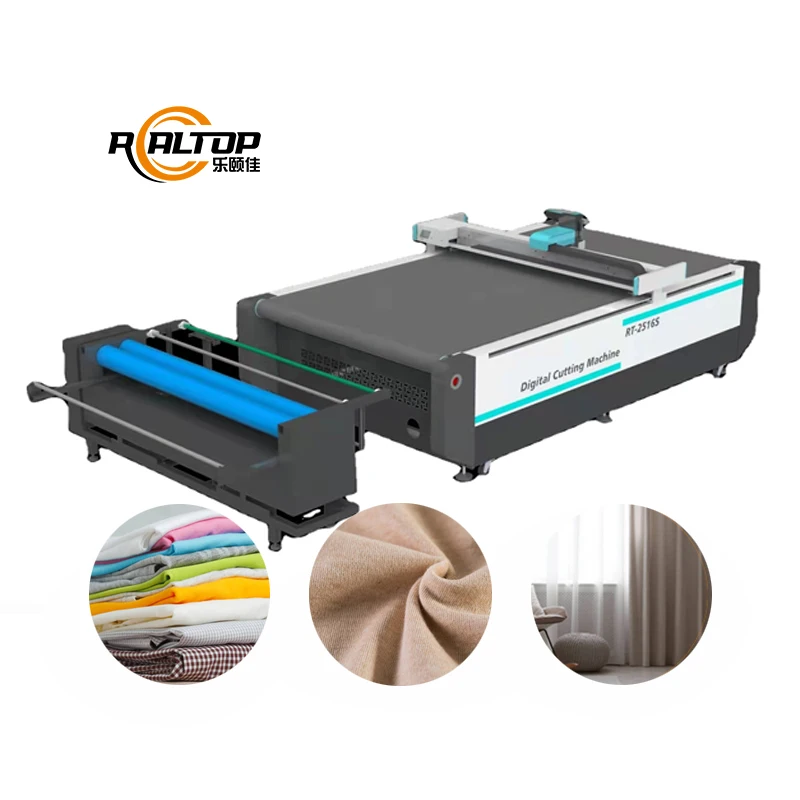
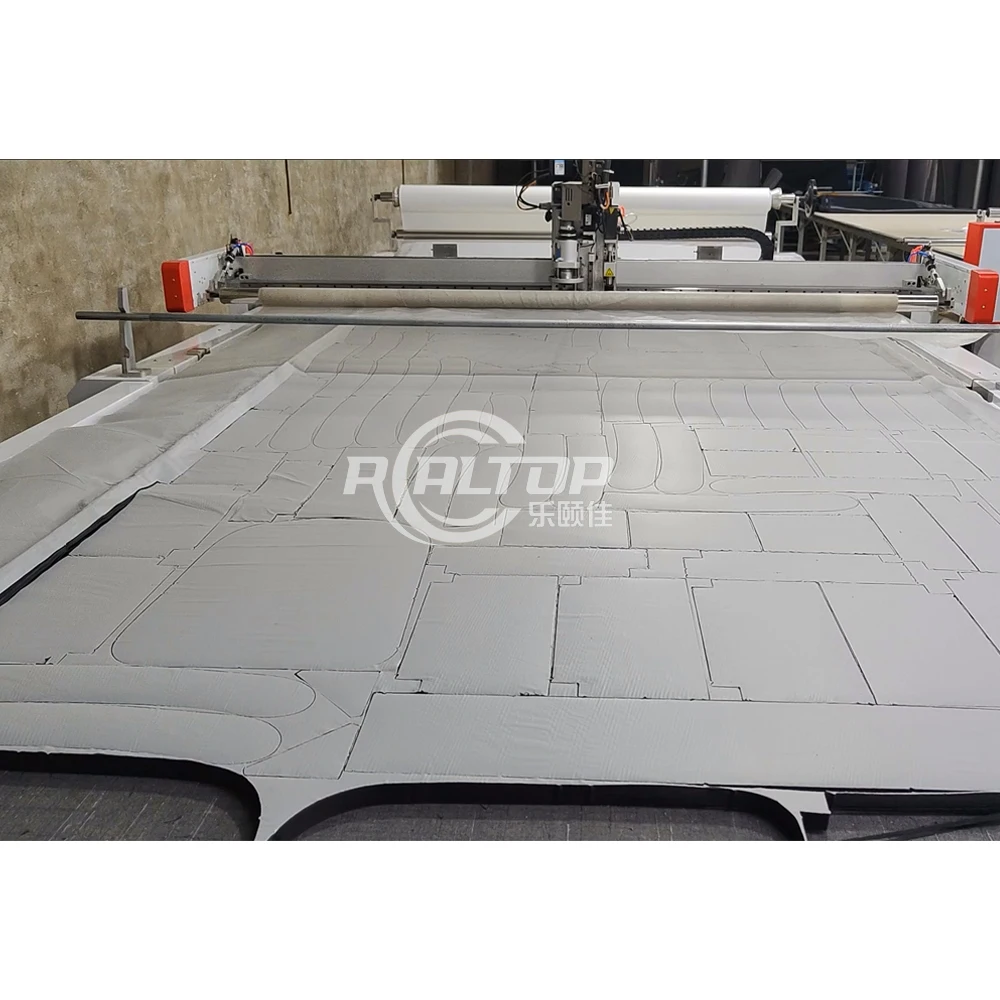
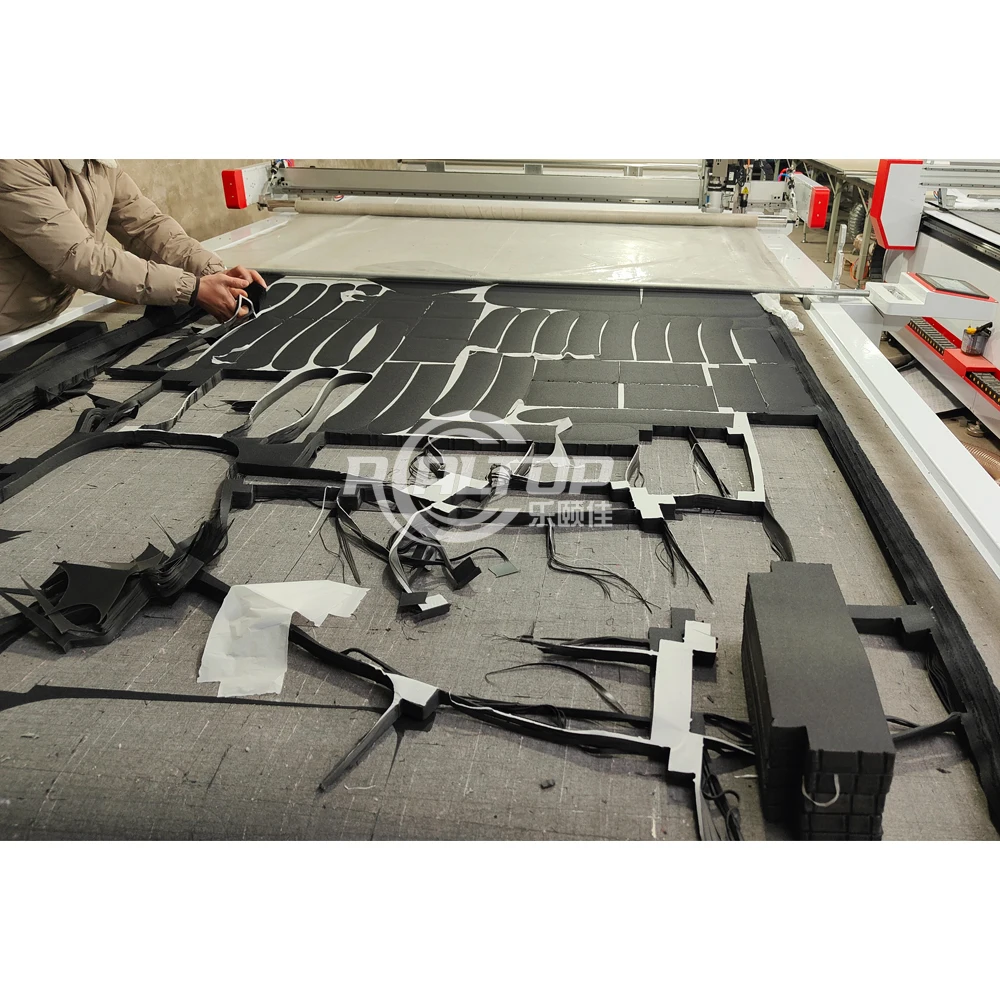
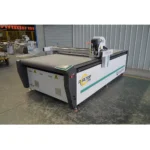
Modular Tooling Adaptability — The RT-D2516/RT-S2516 platform lets fabric and composite shops swap between oscillating, round and drag knife modules instead of forcing one cutting method across incompatible materials.
Technical Specifications
| Parameter | Value |
|---|---|
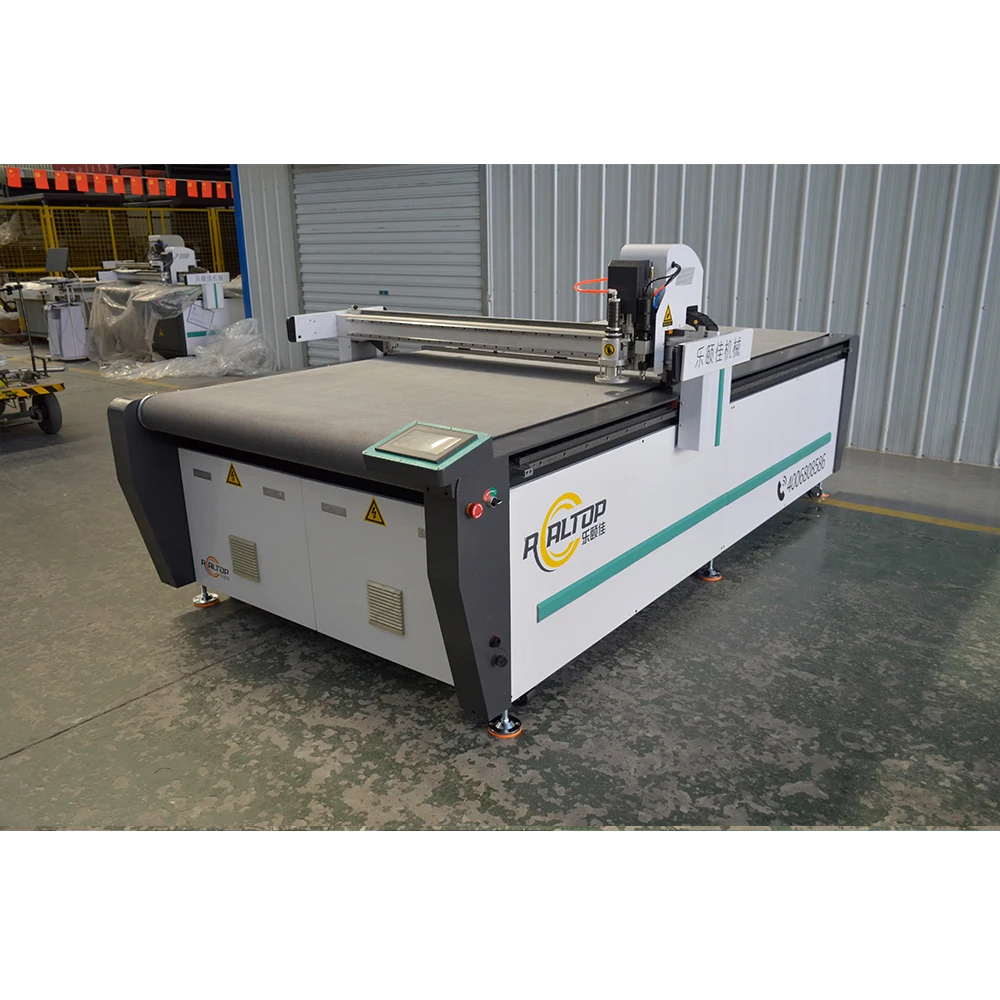
| Product Type | CNC Oscillating Knife Cutting Machine |
| Model | RT-D2516/RT-S2516 |
| Working Area | 1600 × 2500 mm |
| Machine Size | 3450 × 2300 × 1250 mm |
| Rated Power | 9 kW |
| Vacuum Pump | 7.5 kW |
| Table Type | Flat working table with vacuum and auto feeding |
| Multifunctional Tool Head | Vibration full cutting, vibration half cutting, cursor location |
| Compatible Tools | Round knife, marking pen, auto feeder (modular tool holder) |
| Translational Velocity | 800–1200 mm/s |
| Cutting Thickness | ≤50 mm (basis to be confirmed — varies by material type and density) |
| Repeated Accuracy | ≤0.1 mm |
| Transmission System | Digital servo motor, linear guide, synchronous belt, ball screw / rack and pinion |
| Guide Rail | Taiwan Hiwin rail |
| Servo Motor | Panasonic (Delta servo motor available in alternate configuration) |
| Conveyor Belt | Germany imported |
| Table Surface | High-density felt |
| Countertop | Aviation aluminum with internal wind structure |
| Lathe Bed | Overall welding process, imported milling machine processing |
| Control Box | Fixed on fuselage, high-flexibility cables (wear, moisture, cold and high temperature resistant) |
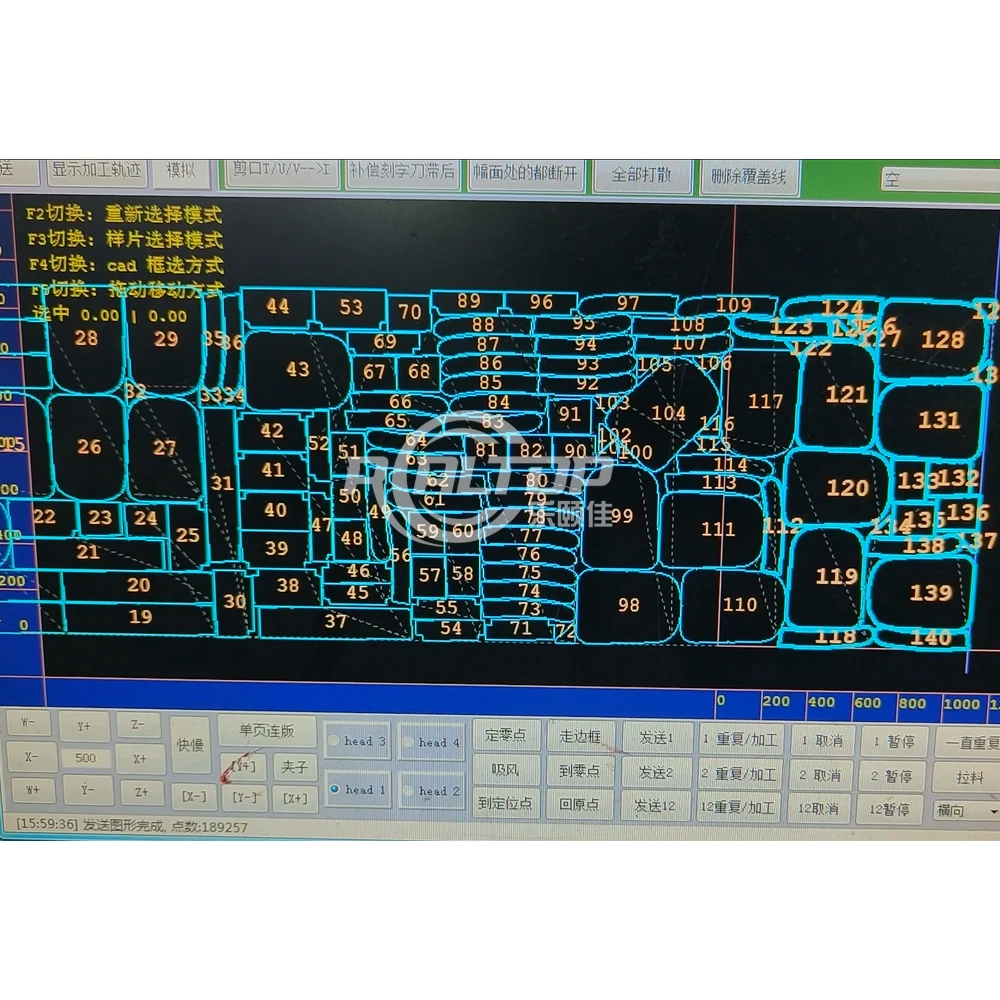
| Instruction System | HP-GL compatible format |
| Software Language Options | English, Russian, Italian, Chinese; special languages customizable |
| Voltage | 380V ±10% (frequency to be confirmed) |
| Safety Device | Infrared sensors |
| Assembly State | Fully assembled (basis to be confirmed) |
| Standards | CE |
Application Suitability
| Application | Material or Output |
|---|---|
| Garment pattern cutting | Multi-layer woven fabric, knitted textile, technical fabric with nesting |
| Leather goods production | Natural leather, synthetic leather, PU and PVC hides |
| Automotive interior trim | Sponge composite leather, gasket material, soft interior panels |
| Footwear component cutting | Upper leather, textile lining, insole board |
| Flexible industrial materials | PVC sheet, soft glass, silicon rubber, composite gasket stock |
| Home furnishing fabrication | Upholstery fabric, curtain material, foam padding layers |
Why Cutting Thickness Claims Vary So Wildly Between Sellers
The 50 mm figure only holds for specific densities — what matters is how your actual material responds under the knife.
A seller quoting maximum cutting thickness without naming the material is giving you a number that means very little on the shop floor. I once watched a buyer accept a blanket "50 mm capacity" claim, only to find the machine crushed their closed-cell foam at that depth while cutting clean through open-cell sponge of the same thickness [NEED_CITE: material density and compression behavior during knife cutting]. The oscillating knife cutting machine specifications must always pair a thickness value with a named material type and density, otherwise you are comparing numbers that were never measured the same way. Before signing anything, run your real stock through a sample cut and check edge quality at the deepest layer.
Modular Tool Holder Configuration by Material
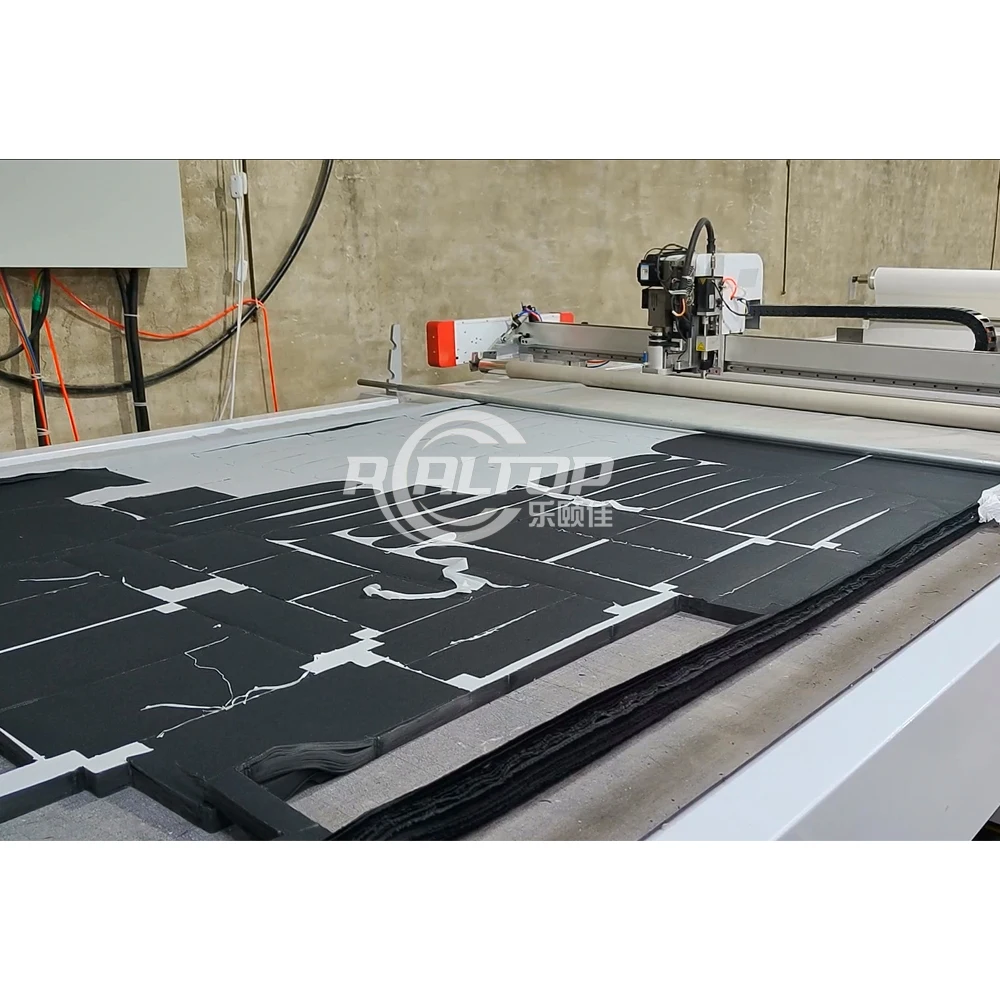
The RT-D2516/RT-S2516 uses a modular tool holder design that accepts vibration full-cut, vibration half-cut, round knife, marking pen and auto feeder modules without requiring a complete head replacement. This matters because a round knife handles continuous fabric layers differently than an oscillating blade handles dense composite gasket stock. Swapping modules on the same CNC oscillating knife cutting machine table lets a single production cell cover garment nesting runs in the morning and automotive gasket jobs in the afternoon.
Vacuum Table Zoning and Small-Part Stability
The aviation aluminum countertop carries an internal wind structure that distributes suction across the bed surface. When cutting small garment pieces or thin leather strips, uneven vacuum is the most common cause of material lift and dimensional drift. High-density felt on the table surface seals the vacuum zone against porous fabrics, and the 7.5 kW pump provides the airflow volume needed to hold multi-layer lays flat at 800–1200 mm/s travel speed [NEED_CITE: vacuum hold-down requirements for multi-layer textile cutting].
How Transmission Components Define Edge Accuracy
The ≤0.1 mm repeated accuracy figure rests on the combination of Taiwan Hiwin linear guides, Panasonic servo motors and rack-and-pinion or ball-screw drive. In oscillating knife work, the blade vibrates thousands of times per minute while the gantry moves along the cut path; any play in the guide rail or belt stretch under load translates directly into ragged edges on tight curves. A Germany-imported conveyor belt paired with the auto feeder keeps material advance consistent between cuts, which is critical for pattern matching in upholstery and footwear uppers.
The Hidden Cost of Skipping a Sample Cut
Ordering a configuration based on a working area figure alone is one of the most expensive mistakes in soft material cutting. I have seen shops receive a machine that handled their standard fabric perfectly, then fail completely when the next job involved a composite sandwich with a fiberglass scrim layer — the standard blade chipped within hours and the entire batch was scrapped. Without a sample cutting report on your exact material, you have no evidence that the chosen tool head, blade type and vacuum zoning will hold up in real production [NEED_CITE: tool wear rates on abrasive composite materials].
Why Procurement From This Facility Works
The design and production of both knife and laser cutting systems happen in-house, so the cutting method is matched to the material rather than forced into one technology. Tool head and table configuration are specified per material type and daily volume before the order is released. CCD camera positioning is available for printed contour work where registration marks must be tracked at production speed. Software compatibility and file format integration are confirmed before production starts. Voltage, plug type and control language are locked in to match the destination market, eliminating on-site electrical surprises.
Documentation & Verification
- Machine specification sheet listing every configured tool module and vacuum zone
- Electrical schematic with 380V ±10% confirmation and frequency matched to your grid
- Sample cutting report on your actual fabric or composite material before dispatch
- HP-GL file format compatibility note with your existing CAD nesting workflow
- Spare parts list covering blades, felt strips and high-flexibility cable sets
- Packing photographs documenting fully assembled or crated shipment state
Installation, Commissioning & Support
- Floor space of 3450 × 2300 mm plus operator clearance on three sides
- Dedicated 380V circuit rated for 9 kW machine load plus 7.5 kW vacuum pump
- Arrives fully assembled subject to pre-shipment confirmation of crane access
- First-run parameter setting for oscillation frequency, blade depth and vacuum zones
- Operator training on modular tool changeover and HP-GL file import workflow
- Routine blade inspection schedule and felt surface replacement interval guidance
What to Prepare Before Requesting a Quote
Send your actual material samples along with the maximum layer count and the thickest single-ply stock you plan to cut. Confirm the local voltage and frequency at your facility so the electrical package matches before production begins. If your shop already runs a nesting software or CAD system, share the file formats you need imported so the instruction system compatibility is verified up front.
Frequently Asked Questions
Q: How do I choose the right tool head for my material?
A: Oscillating blades suit dense composites and thick sponge; round knives excel on continuous multi-layer fabric lays; drag knives handle thin vinyl and leather. The modular tool holder on the RT-D2516/RT-S2516 accepts all three, so the decision is based on your dominant material type and the edge quality your downstream process requires.
Q: Will the vacuum table hold small pattern pieces securely?
A: The aviation aluminum countertop uses an internal wind structure to distribute suction evenly. For very small garment pieces or thin strips, vacuum zoning must be confirmed during configuration so that open areas do not leak suction away from the cutting zone.
Q: What electrical details must be confirmed before shipment?
A: Voltage is 380V ±10%, but frequency must match your local grid. Plug type and control panel language are set before the machine leaves the factory, preventing costly rewiring or operator confusion on arrival.
Q: Does the software work with my existing nesting workflow?
A: The HP-GL compatible instruction system accepts common plotter formats. Before the order is finalized, your CAD file format and nesting output are tested on the machine to confirm clean import and correct cut sequencing.
Q: How is real cutting thickness verified for my material?
A: A sample cutting test is run on your exact stock — measuring edge quality, layer separation and cycle time at the required depth. The 50 mm figure applies to specific densities only, so the sample report is the true confirmation.


商品评价
Clear filtersThere are no reviews yet.