




Fast Shipping
Carrier information

20k products
Payment methods

24/7 Support
Unlimited help desk

2-day Delivery
Track or off orders
Knife Cutting Method Matched to Material — We configure oscillating, drag, creasing and V-cutting tool heads based on your fabric, leather or foam type and thickness, rather than selling a single head and forcing your material to fit it.
Technical Specifications
| Parameter | Value |
|---|---|
| Model | RT-D2516 / RT-S2516 |
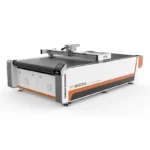
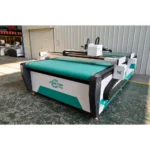
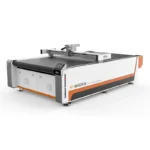
| Product Type | CNC Oscillating Knife Cutting Machine |
| Working Area | 1600 × 2500 mm |
| Machine Dimensions | 3450 × 2300 × 1250 mm |
| Rated Power | 9 kW |
| Voltage | 380V ± 10% |
| Translational Velocity | 800 – 2000 mm/s |
| Repeated Accuracy | ≤ 0.1 mm |
| Transmission System | Digital servo motor, linear guide, synchronous belt, ball screw |
| Table Options | Flat working table or auto-feeding conveyor |
| Platform | Aluminum air box adsorption with integrated or split vacuum zoning |
| Vacuum Pump | 7.5 kW |
| Tool Head Options | Oscillating knife, pneumatic knife, high-power vibrating knife, circular knife, V-cutting knife, drag knife, creasing wheel, dotted line knife, punching, brush |
| Visual Positioning | Small CCD mark point, panoramic camera recognition, projection positioning |
| Control Interface | Touch screen, multiple language support |
| Software Compatibility | PLT, DXF, AI file formats; auto typesetting |
| Instruction Format | HP-GL compatible |
| Safety Device | Infrared sensors |
| Certification | CE |
Application Suitability
| Application | Material or Output |
|---|---|
| Garment and footwear cutting | Single and multi-layer fabric, textile, shoe material, luggage material, non-woven fabric |
| Automotive interior and gasket production | Sponge composite leather, PU, EVA, XPE, rubber, sealing pad materials |
| Packaging and carton sample making | Corrugated cardboard, plastic box, sticker, film |
| Soft home furnishings and carpets | Carpet, sponge, foam board, PVC, soft glass |
| Composite material processing | Carbon fiber, PTFE, ETFE, fiberglass, PP, PE |
| Advertising and signage | Vinyl, sticker, film, corrugated board |
Why "Working Area" Alone Will Fail Your Fabric
A CNC oscillating knife cutting machine specified on bed size alone often arrives at the factory floor unable to hold down small pattern pieces or push a blade cleanly through high-density foam. The real constraint is not how much table space you have, but whether the vacuum zoning, tool head selection and cutting stroke match the material you will run on day one.
I once spent three full days in a Peru workshop re-tuning a multi-layer cutting system after the production fabric came in with a higher elastane ratio than the sample we had tested. Blade resistance changed completely, edges started fraying, and the nesting yield dropped. The machine was not wrong — the specification process was. Matching a cloth CNC cutting machine to actual material behaviour requires a sample cutting report on the buyer’s own roll, not just a brochure thickness range [NEED_CITE: cutting tool deflection on elastane-blend fabrics].
Tool Head Selection by Material and Edge Requirement
Choosing between an oscillating knife, drag knife, creasing wheel or V-cutting knife is not a catalogue exercise — it depends on the compressibility, fibre direction and layer count of your material. An oscillating knife handles dense sponge and multi-layer textile stacks by slicing with a high-frequency stroke, while a drag knife suits single-layer vinyl and sticker where a continuous draw produces the cleanest edge. The RT-D2516 / RT-S2516 supports all ten tool head types on a single multifunctional carriage, so you can switch heads as your job mix changes rather than investing in a second machine.
Vacuum Table Zoning for Small Parts and Stretch Fabrics
A 7.5 kW vacuum pump generates strong total suction across a 1600 × 2500 mm bed, but suction strength means little if the table has only one or two zones. Small pattern pieces near the edge of a large cutting area lose hold-down force, and stretch fabrics like elastane blends lift and shift mid-cut. The aluminum air box platform on this machine is available in integrated or split box configurations, allowing zones to be activated only under the material footprint. This keeps small gasket or garment pieces flat without wasting pump capacity on empty table area [NEED_CITE: vacuum hold-down principles for low-mass flexible materials].
Reading the Specs That Matter for Cutting Quality
The repeated accuracy of ≤ 0.1 mm is driven by the combination of imported digital servo motors, Taiwan Hiwin linear rails and ball screw transmission — these components determine how faithfully the tool head follows the nesting path on complex contours. A synchronous belt alone cannot maintain that tolerance over thousands of cutting cycles on abrasive materials like fiberglass or carbon fiber textile. Translational velocity ranging from 800 to 2000 mm/s gives the operator room to slow the carriage for tight radii and speed up on long straight runs, which directly affects edge quality on directional fabrics where blade drag varies with grain angle. The 9 kW rated power covers the vacuum pump, servo drives and oscillating head motor simultaneously, which matters when the machine runs continuous shifts and power draw peaks during rapid acceleration [NEED_CITE: servo motor torque curves and cutting force on composite textiles].
The Cost of Skipping Material-Specific Configuration
When a buyer specifies only bed size and skips the sample cutting step, the most common result is a tool head mismatch. A drag knife on closed-cell foam produces crushed edges instead of clean slices, while an oscillating knife on thin sticker film tears the backing paper. Voltage and control language are sometimes left to the last week before shipment, by which time the touch screen is already programmed and the electrical cabinet is wired for a different grid standard. These are not warranty claims — they are specification failures that delay production start and erode trust between the buyer and the supplier [NEED_CITE: export equipment voltage and plug standard mismatches].
Why Source This Machine From REALTOP
The in-house design team covers both knife and laser cutting technologies, so a buyer evaluating fabric, leather or foam can compare cutting methods on the same material rather than being steered toward whichever machine the factory pushes. Every RT-D2516 / RT-S2516 ships with a tool head and table configuration list matched to the buyer’s stated material and production volume, not a default setup. CCD camera positioning — available as small mark point, panoramic or projection — is tested against the buyer’s actual printed artwork before dispatch, confirming that contour tracking keeps up at production speed. Software compatibility with PLT, DXF and AI file formats is verified during the sample stage, including the buyer’s nesting workflow, so there are no surprises on the first day of operation.
Documentation & Verification
- Electrical schematic with voltage and frequency confirmation matching target market grid standard
- Tool head and table configuration list tied to your specific material type and thickness
- Sample cutting report on your own fabric or foam showing edge quality and cutting speed
- Software licence note confirming PLT, DXF and AI file format compatibility with your nesting workflow
- Spare parts list identifying blade types, vacuum seals and belt segments by part number
Installation, Commissioning & Support
- 3450 × 2300 mm footprint requires level concrete floor with clearance for auto-feeding conveyor extension
- 380V ± 10% three-phase supply with dedicated 9 kW circuit and earth bonding to machine frame
- Flat table or auto-feeding configuration bolted and aligned during on-site assembly by technician
- Vacuum zoning mapped to your typical sheet size and tested on your material during commissioning
- Touch screen language set to operator preference and cutting parameters saved per material type
- Spare oscillating blades, vacuum seals and conveyor belt segments included in first delivery
How to Specify Your Cutting System
Tell us the material type, thickness, sheet or roll dimensions, and daily volume you plan to run. Include a sample of your printed artwork if you need CCD contour recognition, and confirm the voltage, frequency and control panel language required at your facility. We will return a sample cutting report and a tool head configuration recommendation before any order commitment.
Frequently Asked Questions
Q: How do I select the correct tool head for my material?
A: Tool head choice depends on material compressibility, layer count and required edge quality. Oscillating knives suit multi-layer fabric and dense foam, while drag knives work best on single-layer vinyl and sticker. We run a sample cut on your actual material to confirm the head, blade angle and cutting speed before finalising the configuration.
Q: Will CCD contour recognition keep up at my production speed?
A: The RT-D2516 / RT-S2516 offers three CCD options: small mark point, panoramic camera and projection positioning. We test the selected camera against your printed artwork at your target cutting speed during the sample stage to verify tracking accuracy before shipment.
Q: Is the vacuum table strong enough for small parts?
A: The 7.5 kW pump and aluminum air box platform are available with split vacuum zoning. This allows suction to concentrate only under the material footprint, preventing small garment or gasket pieces from lifting during cutting even at high carriage speeds.
Q: What voltage and language options are confirmed before shipment?
A: The standard voltage is 380V ± 10%, but the electrical cabinet and touch screen are configured to match your local grid standard and operator language. We confirm voltage, plug type and control language in writing before production begins.
Q: Will the software import my existing design files?
A: The system supports PLT, DXF and AI file formats and includes auto typesetting. We verify compatibility with your current nesting workflow and file export settings during the sample cutting stage so your operators can start production without reformatting work.


商品评价
Clear filtersThere are no reviews yet.