






Fast Shipping
Carrier information

20k products
Payment methods

24/7 Support
Unlimited help desk

2-day Delivery
Track or off orders
Per-material tool head mapping — Each corrugated flute, foam density and gasket compound gets its own oscillating knife, creasing wheel or kiss cutting configuration verified on the buyer’s actual stock before the order is locked in.
Technical Specifications
| Parameter | Value |
|---|---|
| Model | 2516 |
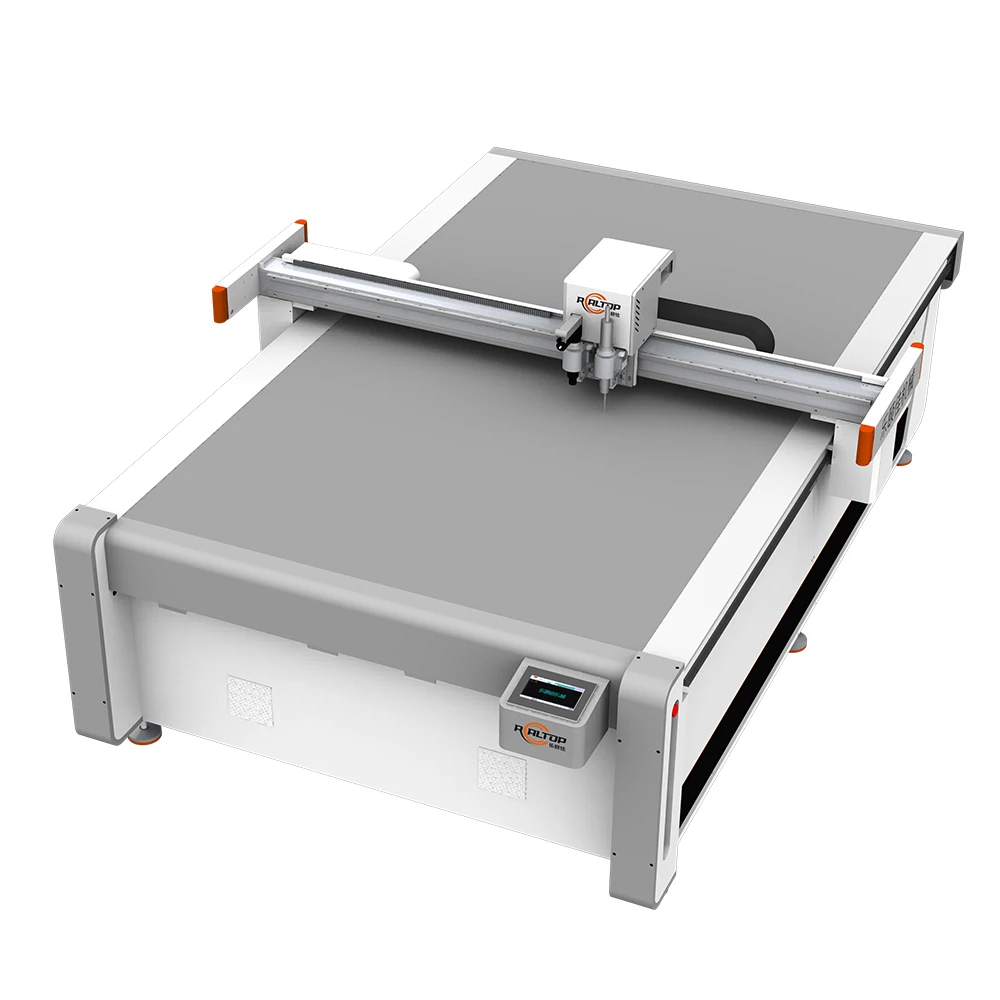
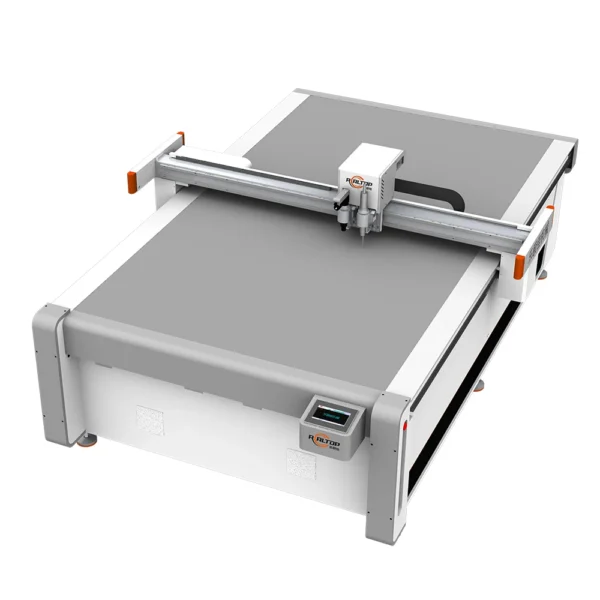
| Product Type | CNC Oscillating Knife Cutting Machine |
| Working Area | 1600 × 2500 mm |
| Machine Dimensions | 3300 × 2100 × 1350 mm |
| Tool Head Options | Oscillating knife, Driven rotary knife, Creasing wheel, Kiss cutting tool, Pneumatic knife, Milling tool, V groove knife |
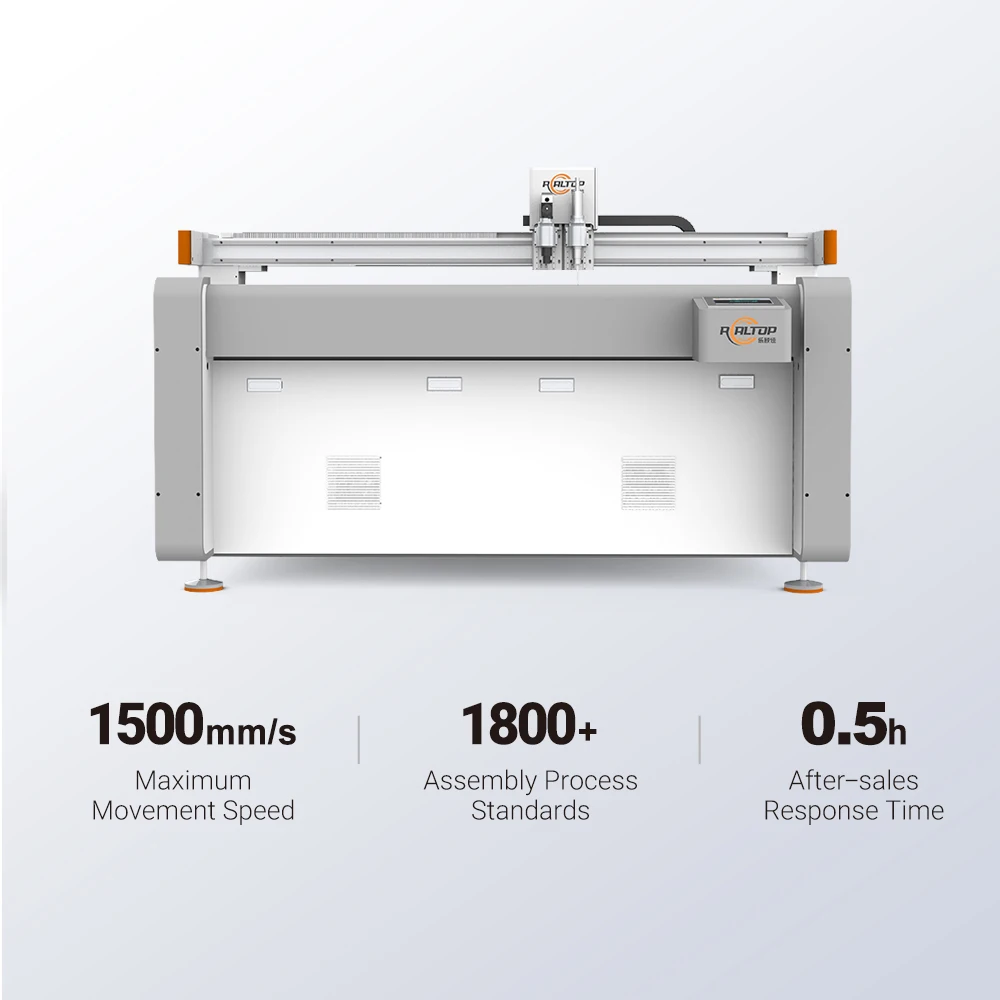
| Cutting Speed | 0 – 1500 mm/s |
| Cutting Thickness | ≤ 40 mm (basis to be confirmed per material and density) |
| Cutting Accuracy | ±0.1 mm |
| Vacuum Pump | 9 kW |
| Vacuum Table | Aluminum bellows vacuum table |
| Servo Motor Options | Panasonic, Delta, Dorna (configuration-dependent) |
| Control System | PLC control panel with optional display languages |
| Supported File Formats | PLT, DXF, AI, PDF |
| Voltage Options | 110V, 220V, 380V (frequency to be confirmed per market) |
| Software | Dedicated packaging box structure design software |
| Language Options | English, Russian, Italian, Chinese; special languages customizable |
| Safety Features | Infrared sensor device, emergency stop |
| Certification | CE |
Application Suitability
| Application | Material or Output |
|---|---|
| Corrugated carton prototyping and short-run production | E-flute, B-flute, BC-flute corrugated board with creasing and kiss-cut lines |
| Greyboard and specialty card stock cutting | Greyboard, cardstock, art paper for premium packaging structures |
| Foam insert fabrication for protective packaging | EVA foam, EPE foam, PU foam at varying densities |
| Gasket and seal cutting for industrial packaging | Rubber mats, PTFE, rubber composite sheets |
| Textile and non-woven packaging components | Velvet, fleece fabric, non-woven fabric for interior box lining |
| Thin plastic and composite packaging blanks | PVC, PET sheets, leather, synthetic leather, adhesive-backed composites |
Why the Wrong Tool Head Derails a Packaging Line Before It Starts
Configuration must follow the substrate, never the catalogue page.
A corrugated sample maker running BC-flute on an oscillating knife meant for E-flute will tear the top liner on every crease. A foam insert producer cutting high-density EVA with a standard drag knife will see crushed edges that fail drop tests. The CNC oscillating knife cutting machine tool head selection is the single decision that determines whether the machine produces sellable packaging or scrap. I have watched carton prototyping workshops go idle for days because the tooling on the bench did not match the board on the pallet [NEED_CITE: corrugated flute profiles and tooling compatibility].
Matching the Tool Head to the Flute Profile
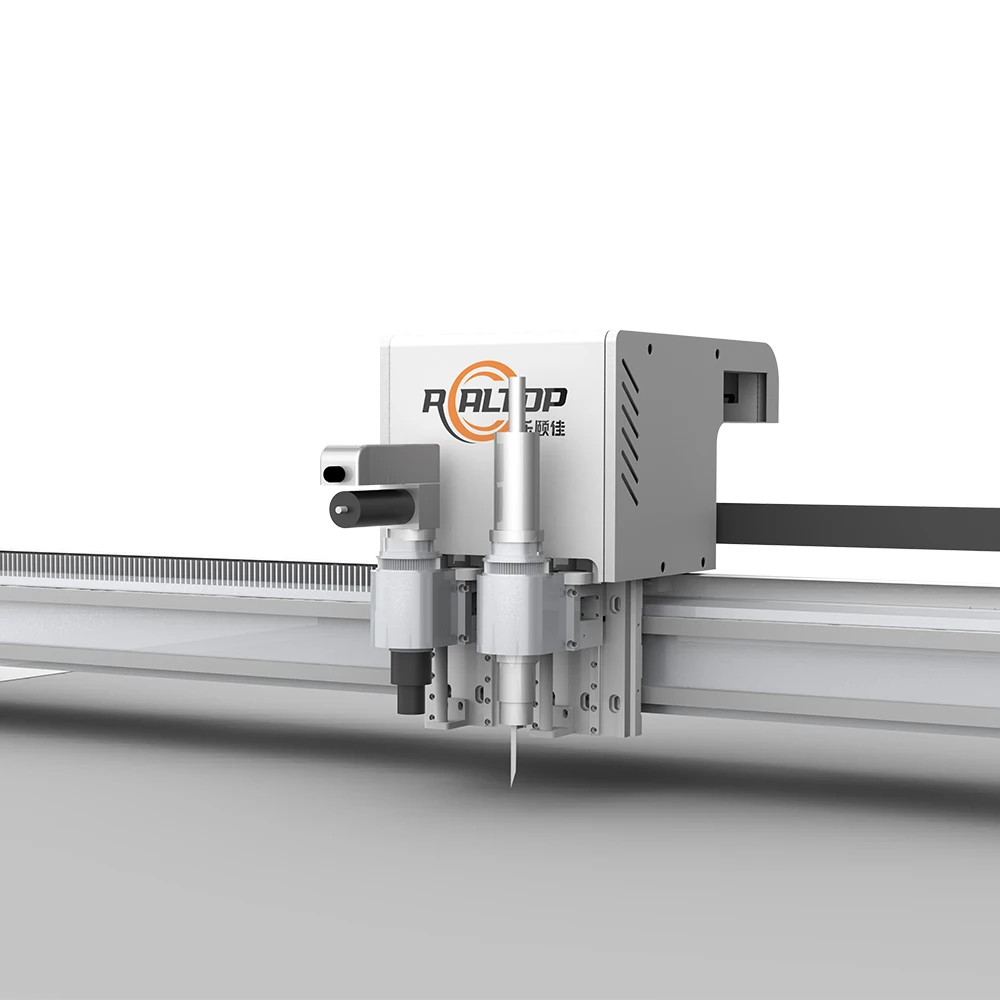
Every flute type responds differently to blade geometry and oscillation frequency. E-flute corrugated, with its thin wall and tight pitch, cuts cleanly with a standard oscillating knife at moderate speed. B-flute and BC-flute demand a wider blade angle and adjusted stroke so the knife penetrates the full thickness without dragging the liner. The 2516 carries interchangeable heads — oscillating knife, creasing wheel, kiss cutting tool, V groove knife, driven rotary knife — and the correct pairing is confirmed on the buyer’s own board before the machine leaves the factory.
Vacuum Table Zoning and Small-Part Hold-Down
Small carton blanks and intricate packaging inserts tend to lift at the trailing edge when vacuum pull is spread across the full table area. The aluminum bellows vacuum table on this unit provides full-surface adsorption with high flatness, holding corrugated sheets and thin card stock in place without edge clamps. For short-run carton work where blank sizes change every few jobs, this full-area grip removes the need to re-mask the table between orders [NEED_CITE: vacuum hold-down requirements for thin corrugated substrates].
Reading the Specs That Actually Matter
Cutting accuracy of ±0.1 mm keeps complex packaging patterns within structural tolerance, which is critical when a die-free prototype must fold into a square box without gap or overlap. The 9 kW vacuum pump provides enough suction to seat heavier BC-flute boards, while the 1600 × 2500 mm working area accommodates standard full-size corrugated sheets without re-positioning. The PLC control panel supports multiple display languages, and the dedicated packaging box structure design software imports PLT, DXF, AI and PDF files — a detail that prevents workflow dead-ends when a designer sends artwork in a format the machine cannot read.
What Happens When Configuration Is Skipped
A machine quoted on working area alone, without the buyer’s material on file, often arrives with the wrong creasing wheel for the flute in daily use. The result is scored liner on every fold line, which compromises box compression strength and triggers rejection from the packaging buyer’s QA team. Foam fabricators who skip the sample cutting step frequently discover that the specified knife crushes rather than slices their densest EVA grade, leaving compressed edges that do not rebound [NEED_CITE: foam cutting edge quality and material density]. These problems surface only after the machine is installed, when downtime costs compound.
Why Buyers Source This Unit Here
In-house design and production covers both knife cutting and laser cutting technologies, so a packaging producer can match the method to the substrate instead of forcing one process across cardboard, foam and composites. Tool head and table configuration is specified per material and production volume, documented in a configuration list before the order is placed. CCD camera positioning is available for printed contour work where registered graphics must be cut to outline. Software compatibility — file format, nesting workflow, language — is confirmed against the buyer’s existing design environment. Voltage, plug type and control panel language are matched to the destination market before shipment, and sample cutting on the buyer’s own corrugated board or foam is completed before commitment.
Documentation & Verification
- Machine specification sheet listing confirmed tool heads per material type
- Electrical schematic with voltage and frequency matched to destination market
- Tool head and vacuum table configuration list tied to buyer’s substrate samples
- Sample cutting report on buyer’s own corrugated board or foam at production thickness
- Software licence and file format compatibility note for PLT, DXF, AI, PDF workflows
- Factory test record showing cutting accuracy across the full 1600 × 2500 mm working area
Installation, Commissioning & Support
- Foundation must accommodate the 3300 × 2100 × 1350 mm machine footprint with clearance for sheet loading
- Dedicated electrical circuit rated for the 9 kW vacuum pump plus servo system draw
- Machine ships in modular sections requiring on-site assembly of the vacuum table and gantry
- First-run commissioning includes tool head calibration against buyer’s confirmed material samples
- Operator training covers PLC panel navigation in the selected display language
- Spare parts list covers blades, creasing wheels and vacuum seals specific to the configured tool heads
- Scheduled maintenance intervals documented in the operation and maintenance manual
Before You Request a Quote
Send the specific corrugated flute types, foam densities and sheet thicknesses you run in daily production, along with your target blank sizes and daily volume. Confirm your facility voltage, frequency and the control language your operators need. If you use existing packaging design software, provide the file formats and nesting workflow so compatibility can be verified before the configuration is finalised.
Frequently Asked Questions
Q: How do I select the correct tool head for my corrugated flute type?
A: E-flute, B-flute and BC-flute each need a different blade geometry and oscillation setting. We test-cut your actual board samples with oscillating knife, creasing wheel and kiss cutting tool options, then document the tooling that produces clean edges and accurate fold lines at your production speed.
Q: Will the vacuum table hold small packaging blanks without lift?
A: The aluminum bellows vacuum table provides full-surface adsorption across the 1600 × 2500 mm area. This keeps small carton blanks and intricate foam inserts seated during cutting without edge clamps, even when blank sizes change between jobs.
Q: How does the 40 mm cutting thickness limit apply across different materials?
A: That limit varies with material density and structure. Corrugated board, EVA foam and rubber each respond differently at depth. We confirm your specific material during sample cutting and document the achievable thickness before the order is placed.
Q: Is the software compatible with my existing packaging design files?
A: The dedicated packaging structure design software imports PLT, DXF, AI and PDF formats. We verify compatibility with your current design workflow and nesting process during the pre-order confirmation stage to avoid file-format dead-ends.
Q: Are voltage, plug type and control language confirmed before shipment?
A: Yes. Voltage options include 110V, 220V and 380V, and we confirm the correct frequency, plug configuration and PLC display language for your market before production begins, documented in the electrical schematic.


商品评价
Clear filtersThere are no reviews yet.