








Fast Shipping
Carrier information

20k products
Payment methods

24/7 Support
Unlimited help desk

2-day Delivery
Track or off orders
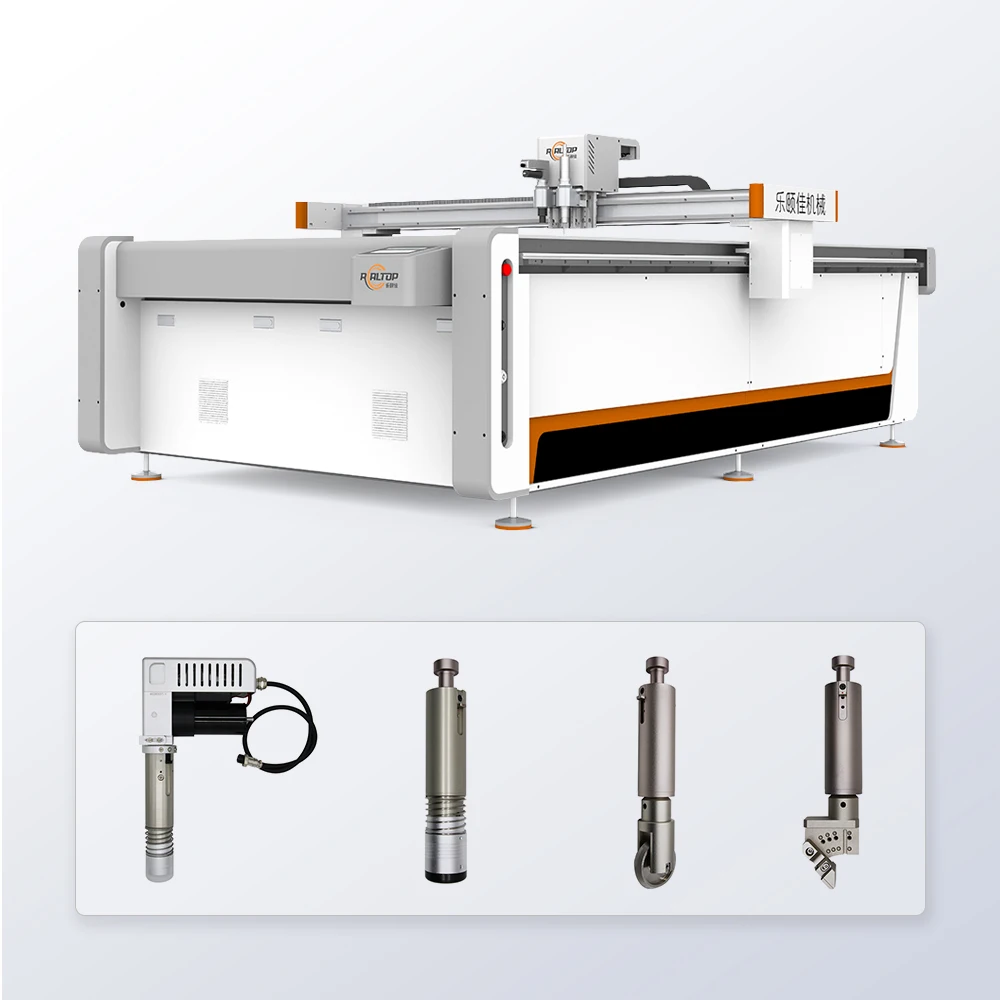
Swiss Knife Head Specified Per Stock Grade — tool pressure, oscillation frequency and vacuum zoning are matched to your actual cardboard and sticker thickness before the machine is built, not guessed from a brochure.
Technical Specifications
| Parameter | Value |
|---|---|
| Product Type | CNC Oscillating Knife Cutting Machine |
| Model | RT-D2516 / RT-S2516 |
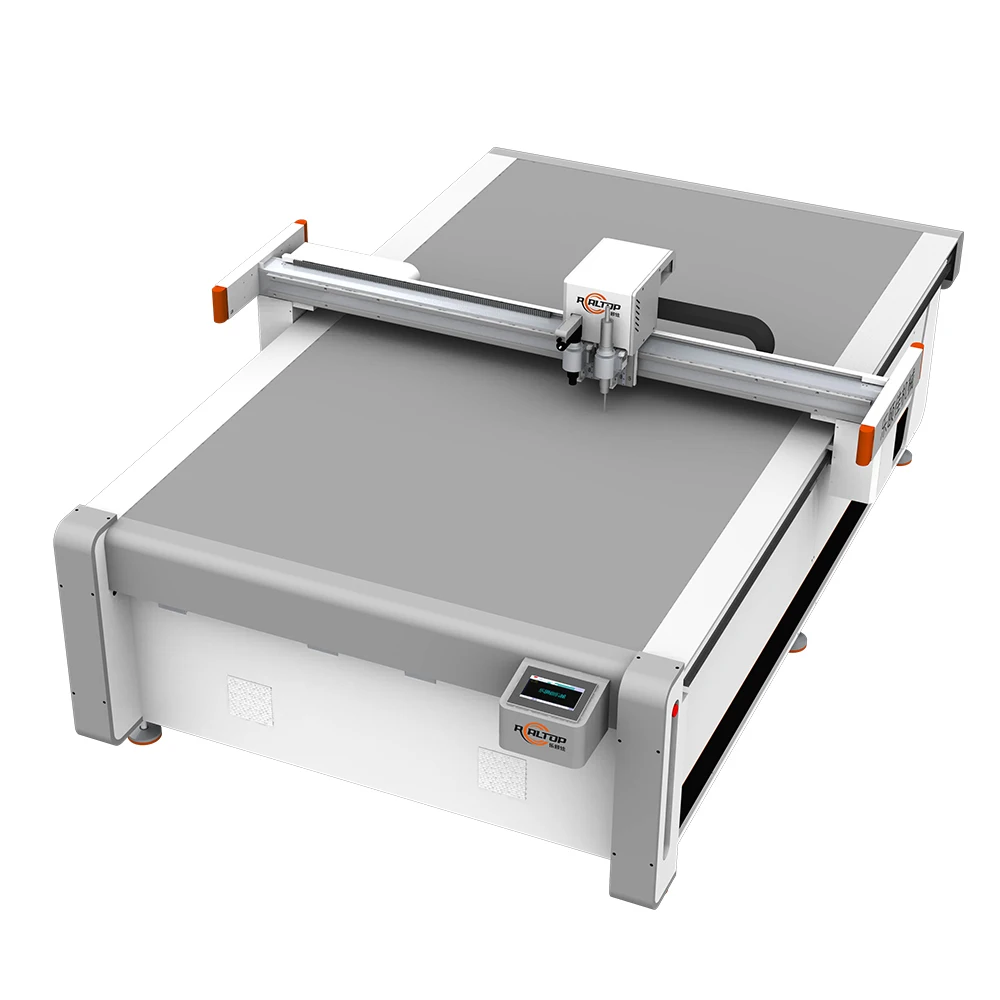
| Working Area | 1600 × 2500 mm |
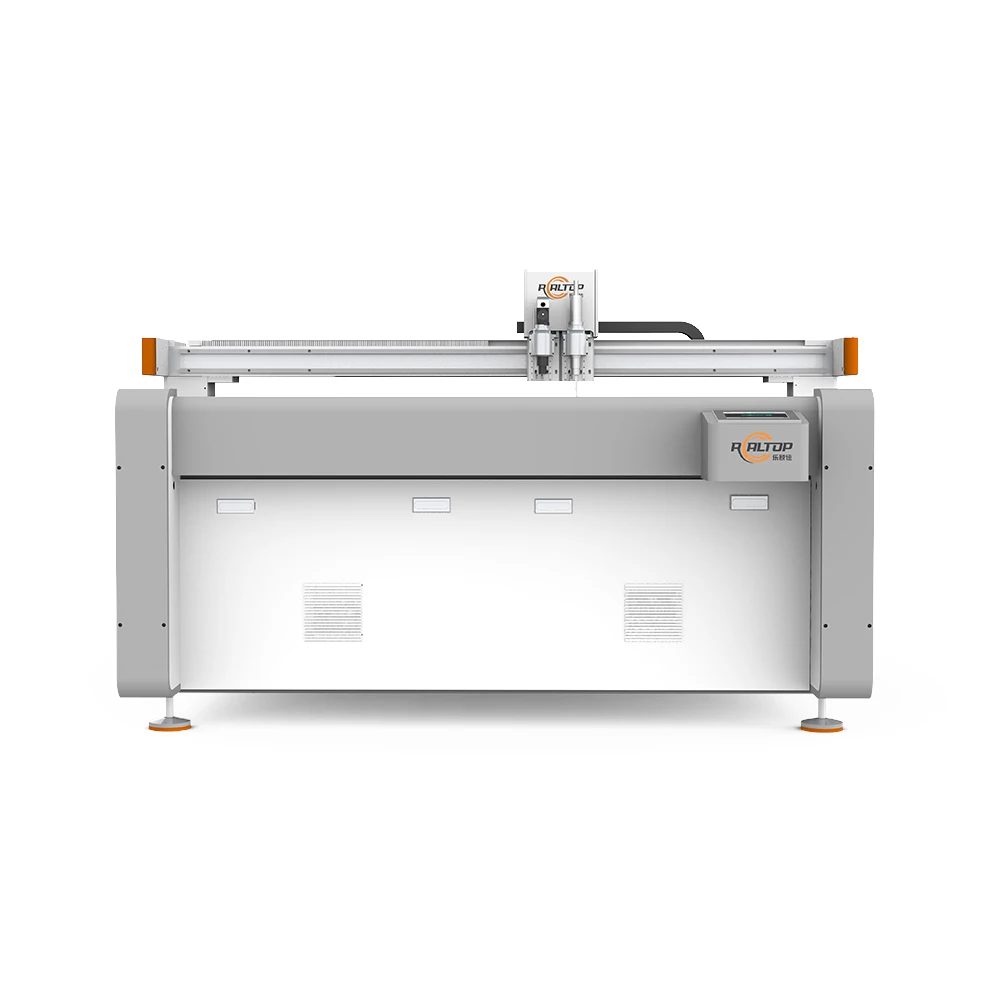
| Machine Size | 3450 × 2300 × 1250 mm |
| Rated Power | 9 kW |
| Table Type | Aluminium honeycomb flatbed with zoned vacuum adsorption |
| Tool Head | Swiss imported oscillating knife with full-cut, half-cut and cursor positioning |
| Safety Device | Infrared sensors |
| Translational Velocity | 800–2000 mm/s |
| Cutting Speed | 200–800 mm/s (basis not stated in source — confirm with material and thickness) |
| Cutting Thickness | Up to 100 mm depending on material density |
| Repeated Accuracy | ≤0.1 mm |
| Transmission System | Digital servo motor, linear guide, synchronous belt, ball screw |
| Servo Motor | Delta servo motor |
| Guide Rail | Taiwan Hiwin linear rail |
| Vacuum Pump | 7.5 kW |
| Instruction System | HP-GL compatible format |
| Software | Professional carton nesting software, multi-language, lifelong technical support |
| Voltage | 380V ±10% (configurable for export markets) |
| Auto Feeding | Included with Germany-imported conveyor belt |
Application Suitability
| Application | Material or Output |
|---|---|
| Carton sample making | Single, double and triple-wall corrugated board, greyboard, folding carton stock |
| Packaging prototyping | Short-run gift boxes, display stands and inserts without hard die tooling |
| Sticker and label cutting | Printed vinyl, adhesive card stock, contour-cut decals |
| Signage and billboard | Foam board, PVC sheet, corrugated plastic |
| Flexible material processing | Leather, composite fabric, sponge-backed textiles, soft gasket |
Why the Vacuum Zone Map Matters More Than Working Area
A 1600 × 2500 mm table only holds value when small parts stay flat during the cut.
When a buyer specifies a CNC Oscillating Knife Cutting Machine based on table size alone, the conversation often skips vacuum zoning. Small-format carton blanks and sticker sheets can lift off an un-zoned table mid-cut, producing ragged edges and scrapped material [NEED_CITE: vacuum table zoning principles for digital cutting]. The RT-D2516 and RT-S2516 address this with a multi-zone aluminium honeycomb bed driven by a 7.5 kW vacuum pump, allowing the operator to isolate suction to the active cutting area. This is particularly important when nesting irregular carton patterns where large sections of the bed are empty.
Matching the Knife Head to the Stock
The Swiss-imported oscillating knife on this platform delivers full-cut, half-cut and cursor positioning within a single tool station. Half-cut capability lets packaging sample makers score fold lines on corrugated board without penetrating the bottom liner, while full-cut handles through-cutting of greyboard and sticker stock in the same setup. For materials like sponge composite leather or PVC, the oscillation frequency prevents the blade from dragging and crushing the substrate, which is a common failure point on drag-knife-only machines. Selecting the right CNC Oscillating Knife Cutting Machine specifications means matching blade geometry and stroke length to the densest material in your production mix.
Drive Train Accuracy Across the Envelope
A 2500 mm travel length amplifies any rail or belt deflection. The Taiwan Hiwin linear guide combined with Delta servo motors and a ball screw drive delivers ≤0.1 mm repeatability from one corner of the bed to the opposite corner [NEED_CITE: linear guide deflection under dynamic load]. In carton sample making, this tolerance directly affects how cleanly flaps fold and how accurately interlocking tabs register. If repeatability drifts beyond a few tenths of a millimetre, scored fold lines land off-centre and half-cut kiss-cuts tear through the face paper.
Reading the Specs That Actually Affect Your Output
The 9 kW rated power covers the servo drives, oscillation motor and control electronics, while the 7.5 kW vacuum pump runs on a separate circuit — a detail that matters when planning workshop electrical distribution. Cutting speed is listed as 200–800 mm/s, but that range only applies once material thickness, blade type and contour complexity are confirmed; dense triple-wall corrugated demands slower travel than thin card stock. The HP-GL compatible instruction system means the machine accepts geometry from most packaging CAD platforms without proprietary translation layers. Nesting software included with the unit handles panel layout optimisation, which directly influences material yield on expensive board grades. Auto feeding via the Germany-imported conveyor belt allows continuous processing of roll-fed or sheet-fed stock without manual repositioning.
The Cost of Skipping the Sample Cut
Sending your own board grade and sticker stock for a trial cut is the only way to verify edge quality, crease definition and throughput before committing. A machine that handles single-wall corrugated cleanly may stall or crush triple-wall at the same speed settings [NEED_CITE: cutting force requirements across corrugated flute profiles]. I once saw a packaging shop accept a machine based on a brochure cutting-speed figure, only to find their specific greyboard grade produced fuzzy edges that required secondary trimming. That rework consumed more labour than the cutting step itself.
Why Procurement Runs Through Configuration, Not Catalogue
In-house design across both knife and laser platforms means the cutting method is matched to the material rather than forced into one technology. The tool head and vacuum table configuration are specified per material stack and production volume, so a buyer running mostly small carton blanks gets a different zone map than one cutting full-sheet corrugated. CCD-contour-ready architecture allows printed sticker and signage jobs to be added later without a machine swap. Software compatibility and file format import are confirmed against the buyer’s existing CAD system before the order is placed. Sample cutting on the buyer’s actual stock is standard, producing a written report that documents blade type, speed, edge quality and cycle time. Voltage, plug type and control language are locked in during specification review so the machine arrives ready to run.
Documentation & Verification
- Machine specification sheet confirming tool head, vacuum zone map and voltage for your facility
- Electrical schematic with circuit breaker ratings for the 9 kW main and 7.5 kW vacuum pump
- Sample cutting report on your specific cardboard grade and sticker stock before dispatch
- Software licence key and file format compatibility note for your CAD or PLM system
- Spare parts list with blade replacement intervals and Hiwin rail lubrication schedule
- Factory test record documenting repeatability across the 1600 × 2500 mm envelope
Installation, Commissioning & Support
- 3450 × 2300 mm footprint requires a level concrete floor with clearance for the auto-feed conveyor
- Separate 380V circuits needed for the 9 kW main supply and 7.5 kW vacuum pump
- Machine ships with bolted frame sections; on-site reassembly and rail alignment included
- First-run commissioning covers servo tuning, vacuum zone calibration and blade depth setting
- Operator training addresses nesting software, tool change and HP-GL file import workflow
- Spare oscillating blades and conveyor belt sections shipped with initial order
Structuring Your Inquiry
To configure the RT-D2516 or RT-S2516 for your line, provide the material types, flute profiles or board grades you run most often, along with typical sheet dimensions and daily cut volume. Confirm your workshop voltage and frequency, the control language your operators need, and whether your existing CAD system exports HP-GL or DXF. If you have sticker or printed carton work requiring contour tracking, flag that early so the CCD architecture is included from the build stage.
Frequently Asked Questions
Q: Which tool head configuration handles both corrugated board and vinyl sticker?
A: The Swiss oscillating knife covers both, using full-cut for vinyl contour work and half-cut for corrugated crease lines. A separate creasing wheel can be added if your carton designs require deep score channels on heavy greyboard. We confirm the tool stack after reviewing your actual material samples and fold-line depth requirements.
Q: Does the nesting software import files from our existing packaging CAD?
A: The included professional carton nesting software accepts HP-GL and common vector formats. Before order, we run a file import test using your actual design files to confirm geometry transfers cleanly without broken contours or lost layer data. Custom language packs are available for the nesting interface and the machine control panel.
Q: Can we send our own board grade for a cutting trial before ordering?
A: Yes. Ship your typical corrugated flute, greyboard and sticker stock to our facility and we run a documented sample cut. The report covers blade type, cutting speed, edge quality, crease definition and cycle time so you can evaluate throughput and finish against your production requirements before committing.
Q: How is voltage configured for markets outside China?
A: The standard supply is 380V ±10% at 50 Hz, but voltage and plug type are confirmed during specification review and adapted to your local grid. This includes matching the vacuum pump motor and servo drives to your facility frequency. We document the final electrical configuration on the schematic before production begins.


商品评价
Clear filtersThere are no reviews yet.