




Fast Shipping
Carrier information

20k products
Payment methods

24/7 Support
Unlimited help desk

2-day Delivery
Track or off orders
Tool head configuration matched to material — We cut and crease your actual cardboard, corrugated board, or sticker stock on the RT-D2516/RT-S2516 before quoting, so you know the edge quality before you commit.
Technical Specifications
| Parameter | Value |
|---|---|
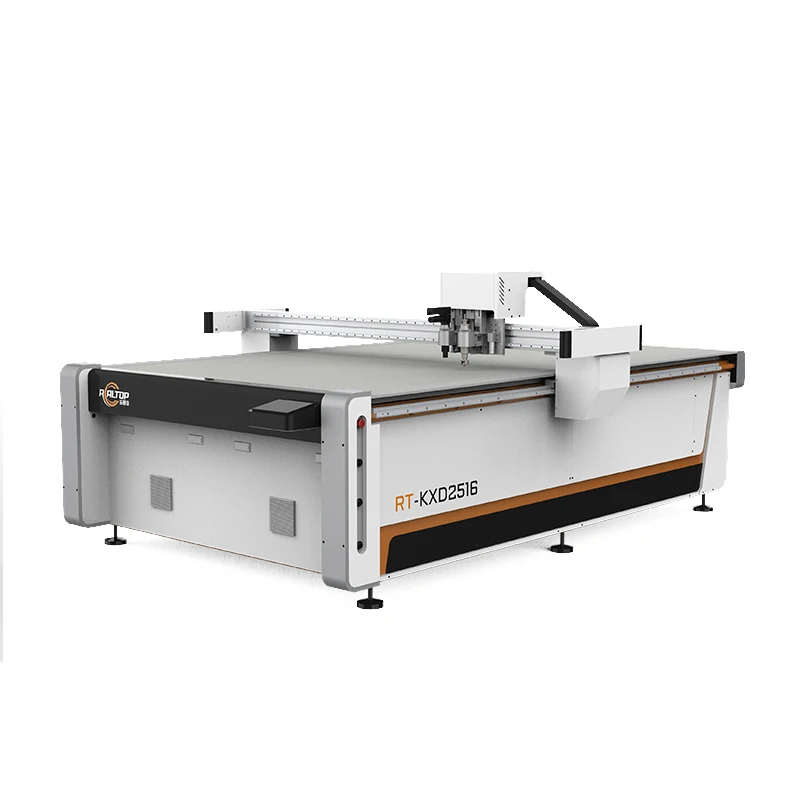
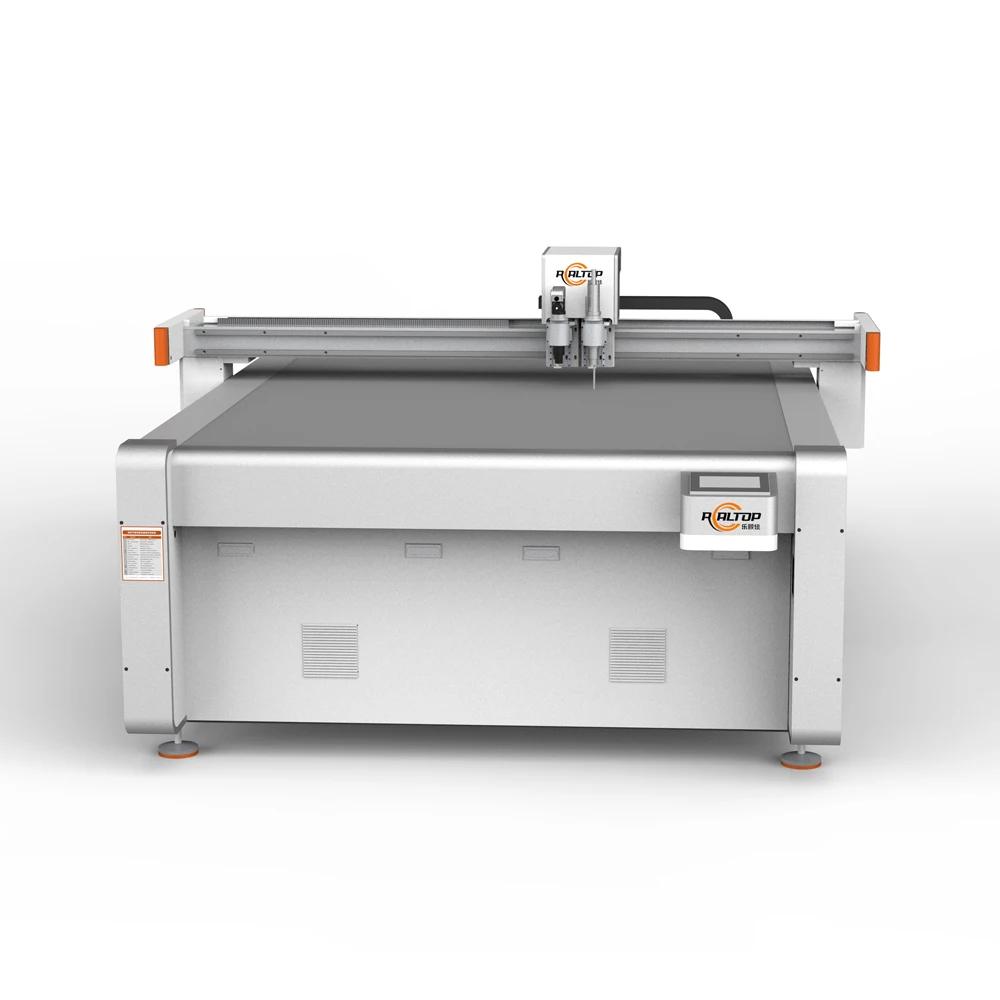
| Model | RT-D2516/RT-S2516 |
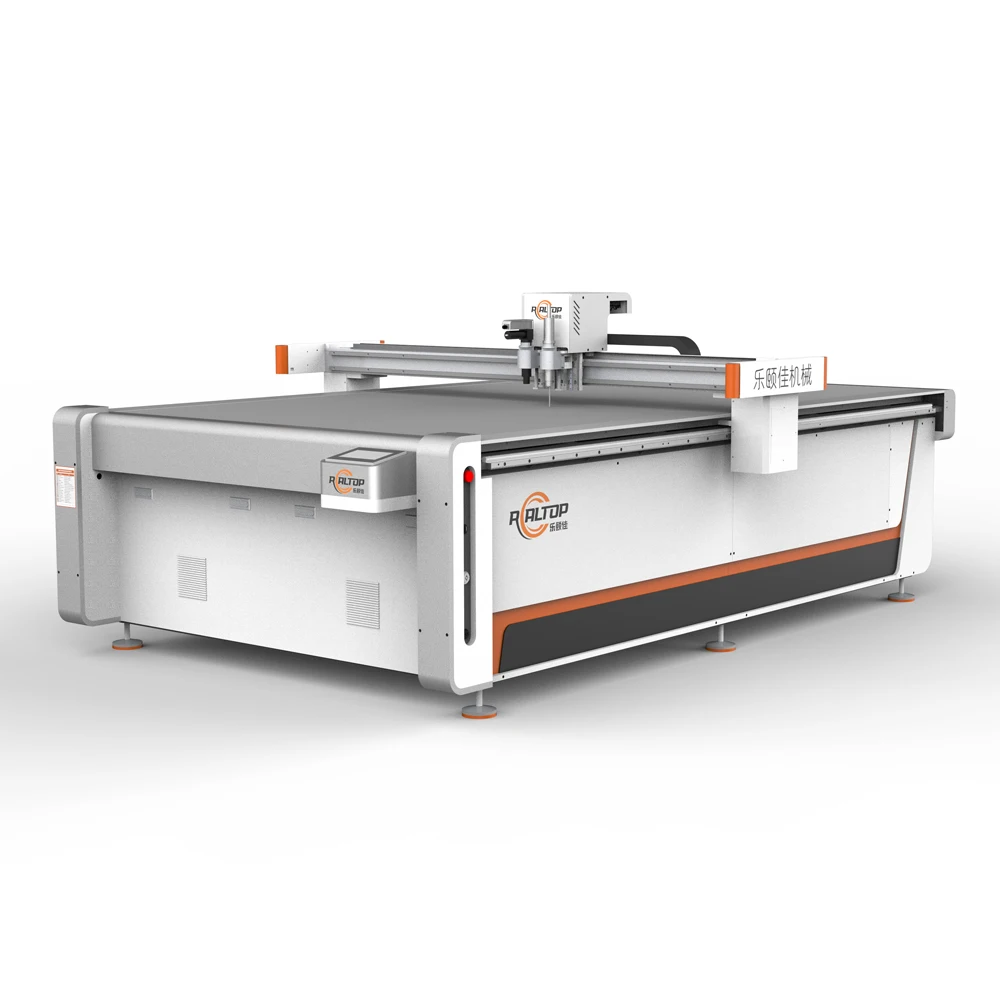
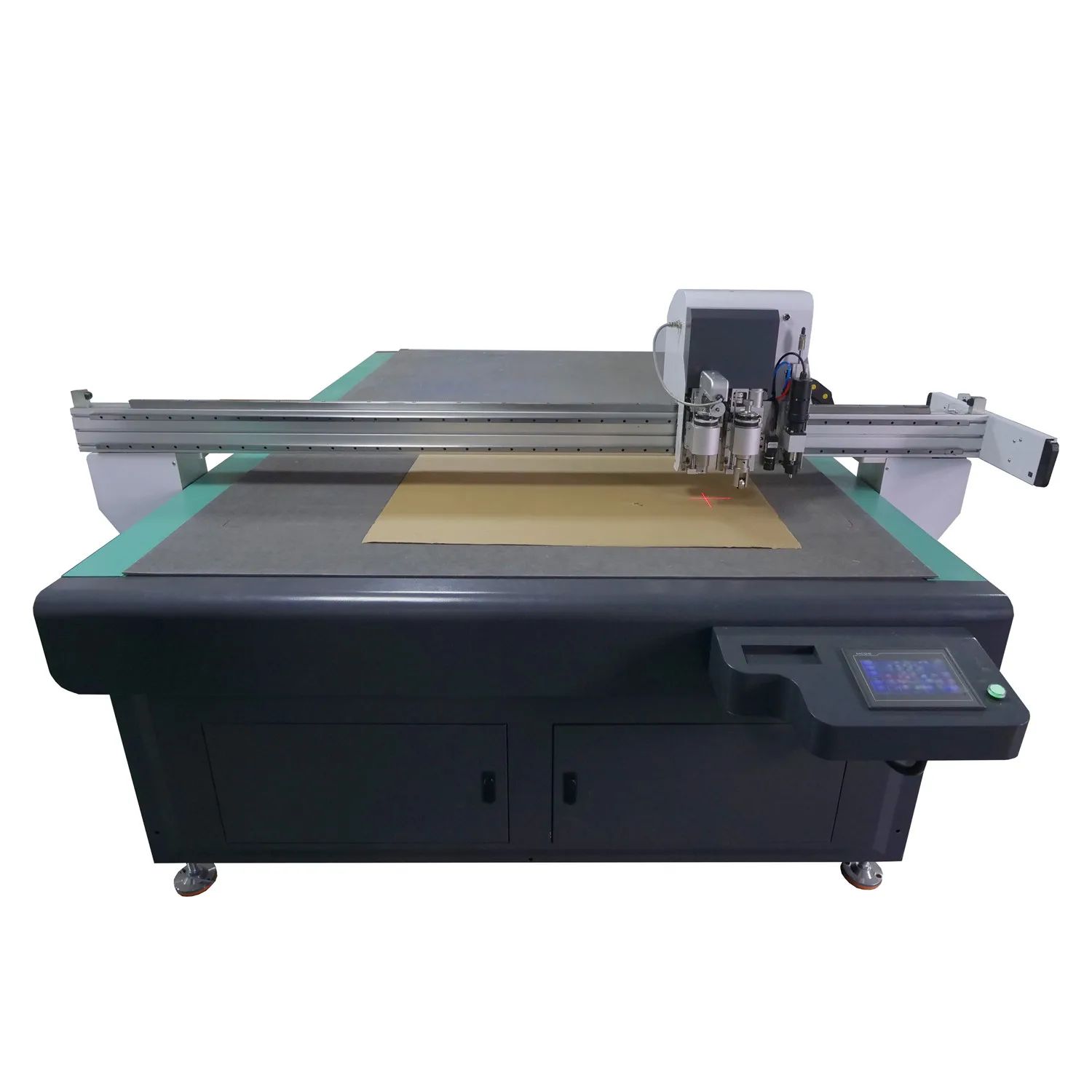
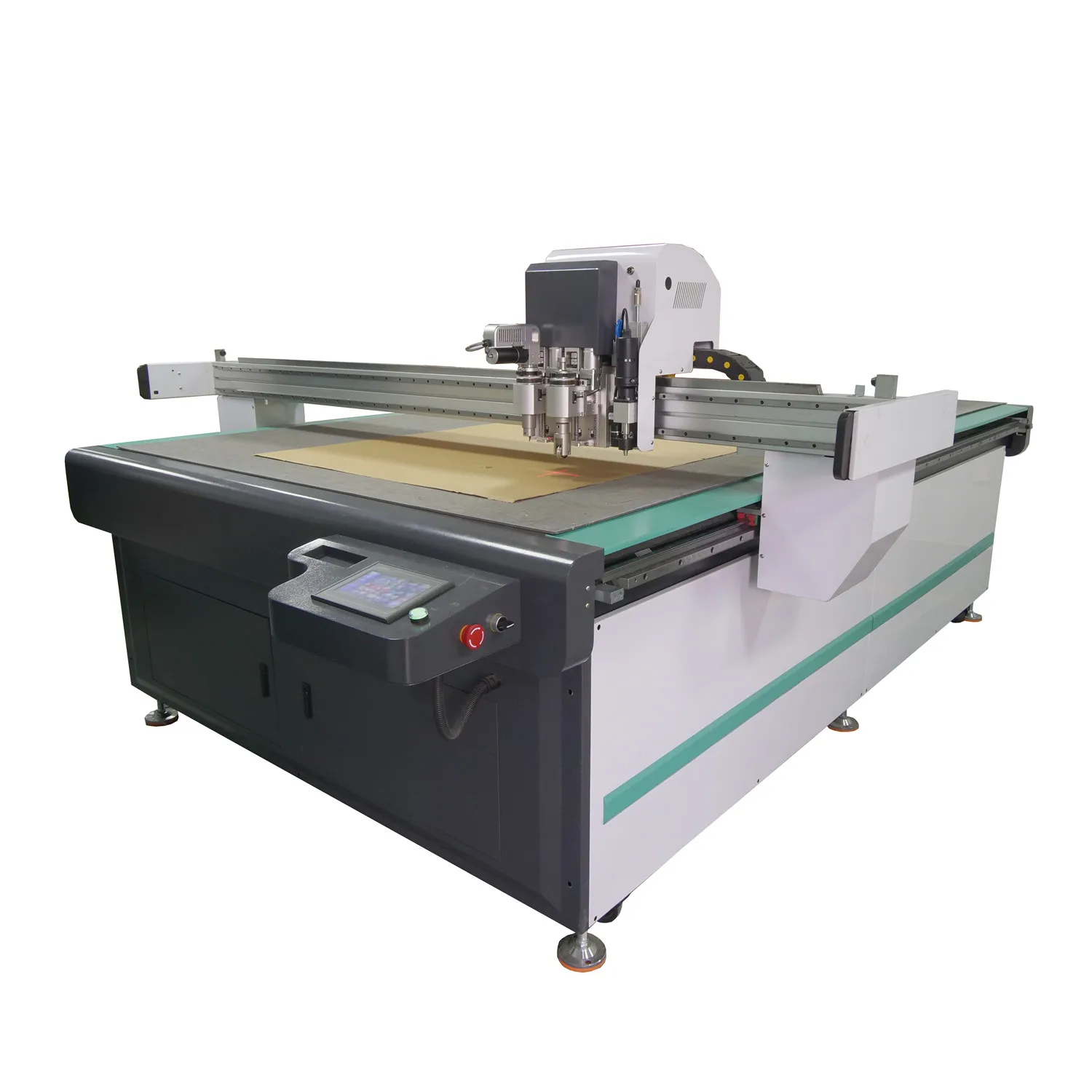
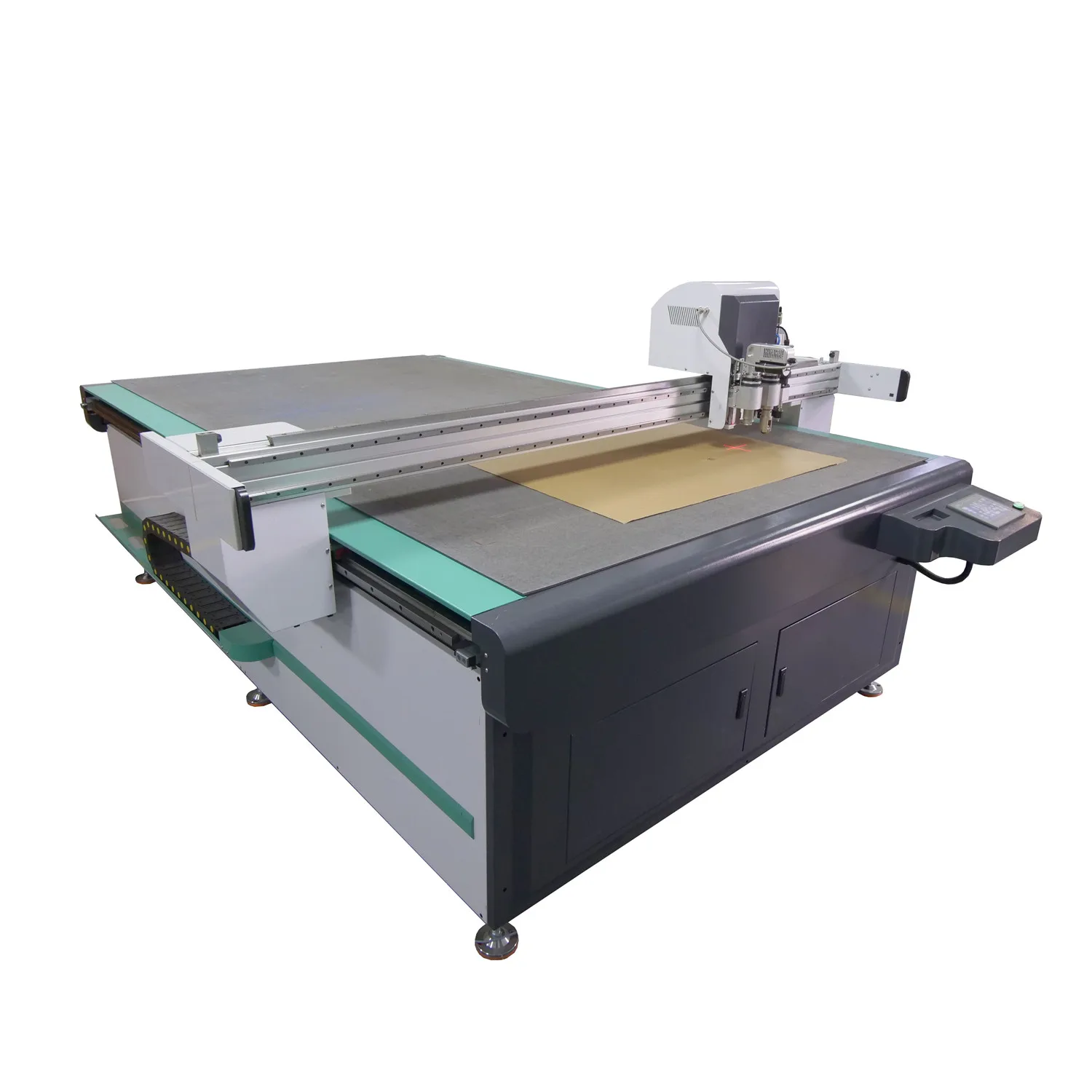
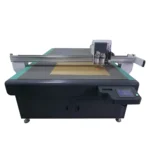
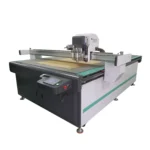
| Product Type | CNC Oscillating Knife Cutting Machine |
| Working Area | 1600×2500 mm |
| Machine Size | 3450×2300×1250 mm |
| Rated Power | 9 kW |
| Voltage | 380V±10% (50/60 Hz to be confirmed) |
| Translational Velocity | 800–2000 mm/s |
| Cutting Speed | 200–800 mm/s (varies with material density) |
| Cutting Thickness | ≤100 mm (varies with material) |
| Repeatability | ≤0.1 mm |
| Servo Motor | Delta (Taiwan) |
| Linear Guide | Taiwan Hiwin rail |
| Vacuum Pump | 7.5 kW |
| Vacuum Table | Aluminum alloy honeycomb structure with auto-follow adsorption |
| Instruction System | HP-GL compatible format |
| Safety Device | Infrared sensors and emergency stop |
Application Suitability
| Application | Material or Output |
|---|---|
| Carton sample making and short-run packaging | Corrugated board, grey board, folding carton stock |
| Sticker and label contour cutting | Vinyl, adhesive-backed paper, reflective film |
| Gift box and premium packaging | Art paper, coated board, laminated stock |
| Gasket and industrial non-metal cutting | Rubber, silicone, PTFE, fiber composite |
| Signage and display production | PVC foam board, acrylic sheet, honeycomb paper board |
What "≤100 mm Cutting Thickness" Leaves Out on CNC Oscillating Knife Cutting Machine Specifications
Actual cutting depth depends entirely on your specific material density and the tool head chosen for the job.
A machine specified on working area alone often fails when the buyer discovers the knife cannot cleanly shear their particular grade of corrugated flute or that a creasing wheel leaves ragged fibers on coated stock. I learned this after a shipment to the Middle East where the standard setup crushed the laminate on a premium box, causing the client to lose face at a trade show. Since then, we require the actual material on our floor for a test run before finalizing the configuration [NEED_CITE: importance of material sampling in CNC cutting].
Swiss Knife Dynamics for Carton and Sticker Work
The oscillating knife head on this table performs high-frequency vertical strokes while moving horizontally, allowing it to shear thick corrugated layers without dragging or tearing the top liner. For sticker contour work, the same head can be swapped or adjusted for half-cutting, leaving the backing paper intact while removing the matrix. This physical cutting action avoids the thermal edge sealing that laser systems leave on paper-based packaging, which often interferes with downstream gluing and folding operations.
Vacuum Zoning and Honeycomb Stability
The aluminum honeycomb vacuum table is divided into zones that follow the cutting head, concentrating suction only where the knife is working. This matters when you are cutting nested small carton parts or intricate sticker shapes; a full-bed vacuum would pull air through open areas and lose holding force on the pieces still being cut. The 7.5 kW pump provides enough negative pressure to keep warped corrugated sheets flat against the table, preventing the material from lifting into the knife path and causing miscuts [NEED_CITE: vacuum adsorption principles in flatbed cutting tables].
Servo Drive and Repeatability Across the Bed
The combination of Delta servo motors and Hiwin linear guides ensures that the knife returns to the exact same coordinate within 0.1 mm, cycle after cycle. In packaging sample making, this repeatability means a crease line and a cut line meet precisely at the corner, which is critical for the structural integrity of the assembled box. The synchronous belt and ball screw transmission eliminate the backlash that can occur in rack-and-pinion systems when the head reverses direction at high speed, maintaining edge quality across the full 1600×2500 mm area.
The Cost of Mismatched Tool Heads and Vacuum Pressure
Choosing the wrong tool head for a specific flute type or laminate can result in crushed edges that compromise the stacking strength of the finished carton. If the vacuum zoning is not configured for small parts, those pieces can shift during the final cut, rendering the entire sheet a write-off. These errors are rarely caught until production volume ramps up, at which point the material waste and downtime have already impacted the quarterly margin [NEED_CITE: production losses from improper tooling selection].
Why Source This Configuration Here
We build both knife and laser cutting systems in-house, which means we recommend the RT-D2516/RT-S2516 only when an oscillating knife is genuinely the correct method for your material. Every machine leaves our Jinan factory with a sample cutting report produced on your specific stock, verifying edge quality and crease depth before the crate is closed. We confirm voltage, frequency, and control language with you before production begins, ensuring the machine arrives ready to plug into your workshop’s existing power and workflow.
Documentation & Verification
- Sample cutting report on your specific cardboard grade and thickness.
- Tool head and vacuum configuration list matched to your material.
- Electrical schematic confirming voltage and frequency for your market.
- Software license and file format compatibility note.
- Factory test record showing repeatability across the full bed.
- Operation and maintenance manual in your chosen language.
Installation, Commissioning & Support
- Floor space planning for the 3450×2300 mm footprint plus material handling.
- Dedicated circuit verification for the 9 kW rated power and 7.5 kW vacuum pump.
- Assembly and leveling of the honeycomb table on your workshop floor.
- Calibration of the Delta servos and vacuum zone mapping for your material size.
- Training on the carton nesting software and HP-GL file import workflow.
- Spare parts list covering Swiss knife blades and vacuum seals.
Next Steps for Configuration
To get a quote that reflects your actual production needs rather than a generic catalog price, provide the specific type and thickness of the cardboard or sticker material you run most often. Let us know your target market’s voltage standard and the CAD software you currently use for box design. If you have daily volume targets, share them so we can advise on whether the optional auto-feeding conveyor system is necessary for your workflow.
Frequently Asked Questions
Q: How is cutting thickness verified for different cardboard grades?
A: We do not rely on catalog maximums. You send us samples of your actual corrugated flute types and coated stocks, and we run them on the machine. We then provide a sample cutting report showing the edge quality, crease depth, and cutting speed achieved with the specific tool head selected for your material.
Q: What voltage and frequency configurations are available for my market?
A: The standard configuration is 380V±10%, but we confirm the exact frequency (50 Hz or 60 Hz) and plug type required for your facility before production. This ensures the Delta servos and vacuum pump operate within their rated parameters upon arrival, avoiding the need for external transformers.
Q: How does the vacuum table handle small carton parts?
A: The table uses an auto-follow adsorption system that activates vacuum zones only where the knife is currently cutting. This concentrates the holding force on the specific area being worked, preventing small nested parts from shifting or lifting, which is a common issue with full-bed vacuum systems.
Q: Which file formats does the nesting software accept?
A: The professional carton nesting software supports HP-GL compatible formats and multiple common design file imports. We verify compatibility with your existing CAD workflow during the pre-order stage to ensure your current box designs can be processed without manual conversion.
Q: Can the control interface language be customized?
A: Yes. The system supports English, Russian, Italian, and Chinese as standard. Special languages can be customized before shipment, ensuring your operators can navigate the menu and nesting software without language barriers slowing down production.


商品评价
Clear filtersThere are no reviews yet.