


Fast Shipping
Carrier information

20k products
Payment methods

24/7 Support
Unlimited help desk

2-day Delivery
Track or off orders
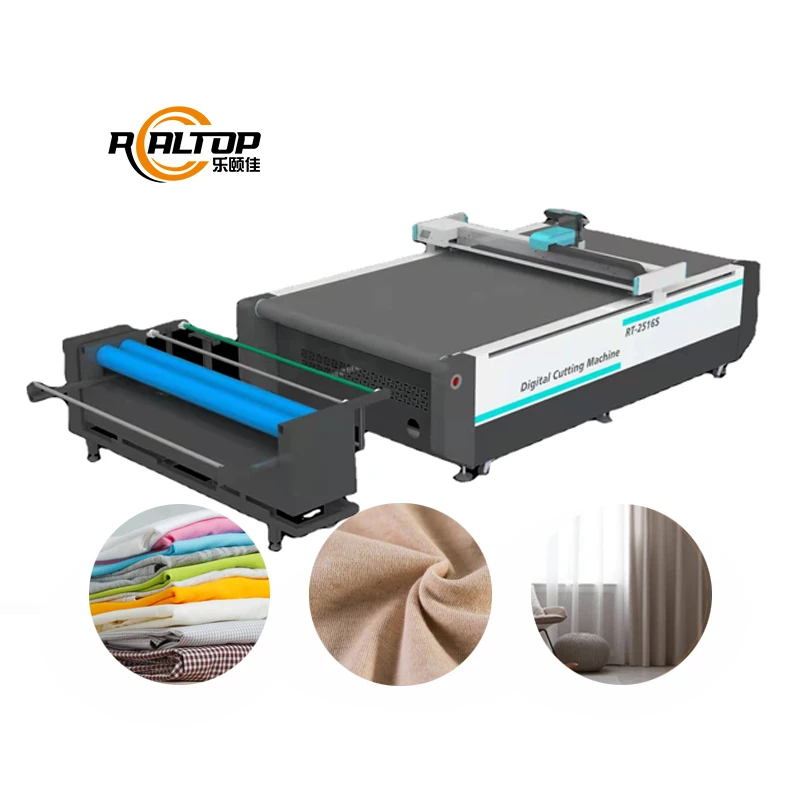
Swiss knife tooling matched to material density — the RT-D2516/RT-S2516 platform configures oscillating, round knife and drag knife heads per fabric ply and composite thickness, verified on buyer-supplied samples before order confirmation.
Technical Specifications
| Parameter | Value |
|---|---|
| Model | RT-D2516/RT-S2516 |
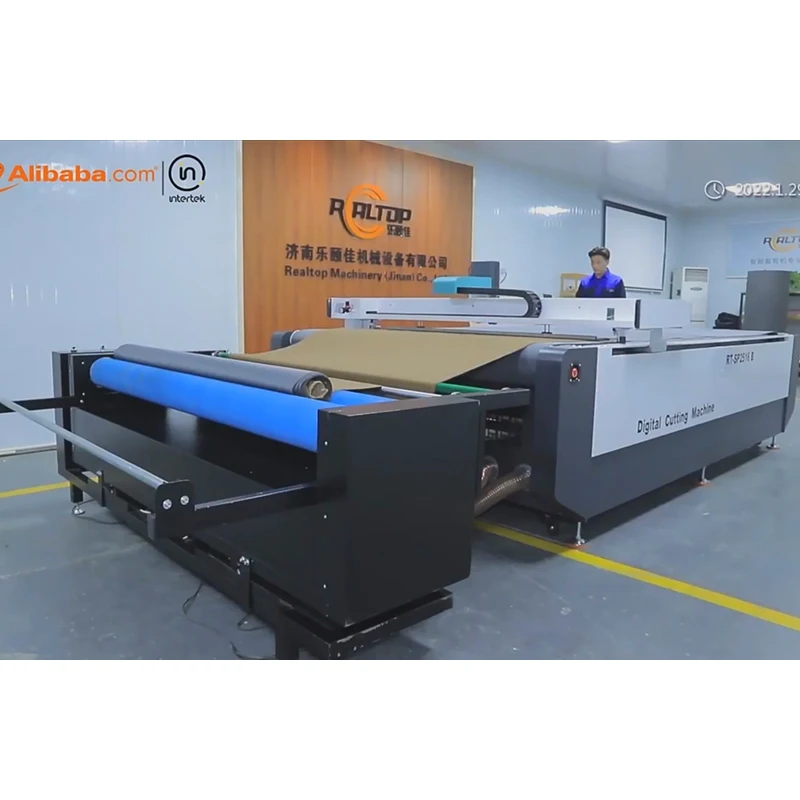
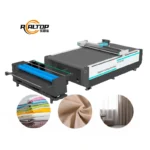
| Product Type | CNC Oscillating Knife Fabric Cutting Machine |
| Working Area | 1600 × 2500 mm |
| Machine Size | 3450 × 2300 × 1250 mm |
| Rated Power | 9 kW |
| Vacuum Pump | 7.5 kW |
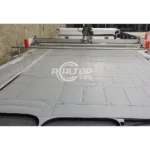
| Table Surface | High-density felt with zoned vacuum hold-down |
| Tool Head | Swiss imported oscillating knife — full cut, half cut, cursor location |
| Modular Tool Holder | Compatible with round knife, marking pen, auto feeder |
| Cutting Thickness | Up to 50 mm depending on material density (up to 100 mm for select foams per material test) |
| Translational Velocity | 800–1200 mm/s |
| Repeated Accuracy | ≤0.1 mm |
| Transmission System | Digital servo motor, imported linear guide, synchronous belt, ball screw |
| Servo Motor | Panasonic or Delta (configured per order) |
| Conveyor Belt | Germany imported |
| Instruction System | HP-GL compatible format |
| Voltage | 380V ± 10% (customizable) |
| Safety Device | Infrared sensors |
| Bed Structure | Overall welding, imported milling machine processed |
| Language Options | English, Russian, Italian, Chinese, customizable |
| Standards | CE |
Application Suitability
| Application | Material or Output |
|---|---|
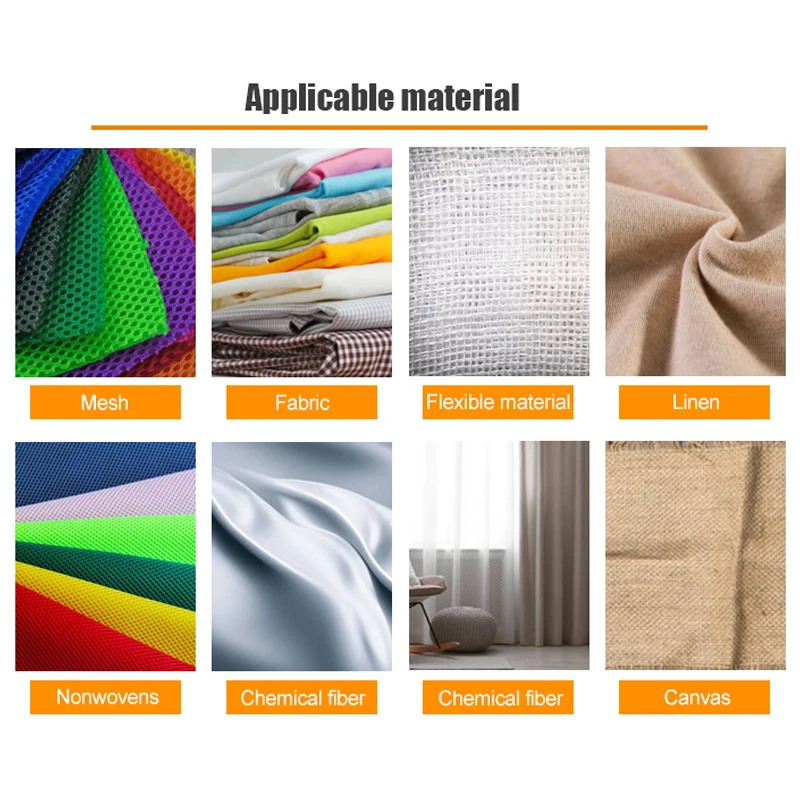
| Garment and footwear production | Single-ply and multi-ply woven fabric, knitted textile, lining material |
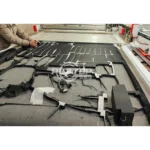
| Automotive interior trimming | Sponge composite leather, synthetic hide, flexible gasket stock |
| Leather goods manufacturing | Genuine leather, PU leather, PVC sheet, soft glass |
| Composite and foam fabrication | Silicone rubber, closed-cell foam, layered flexible composites |
| Textile contract cutting | Rolled fabric with nested pattern layouts, high-mix batch runs |
Why the CNC Oscillating Knife Cutting Machine Specifications You See Online Miss the Point
A working area figure tells you nothing about whether the tool head, vacuum zoning and cutting parameters actually suit your fabric weight and ply count.
I have watched garment factories take delivery of machines spec’d purely on bed size, then discover the oscillating frequency was too low for their six-layer composite layup. The blade drags instead of slicing cleanly, edges fray, and what was quoted as a high-speed cutting solution becomes a bottleneck requiring secondary trimming. The translational velocity range of 800–1200 mm/s on the RT-D2516/RT-S2516 only delivers its rated performance when the knife oscillation rate, vacuum hold-down pressure and material clamp strategy all align with the actual stock being processed. [NEED_CITE: relationship between oscillation frequency and multi-ply fabric cutting quality]
Oscillating Knife Mechanics for Fabric and Composite Layups
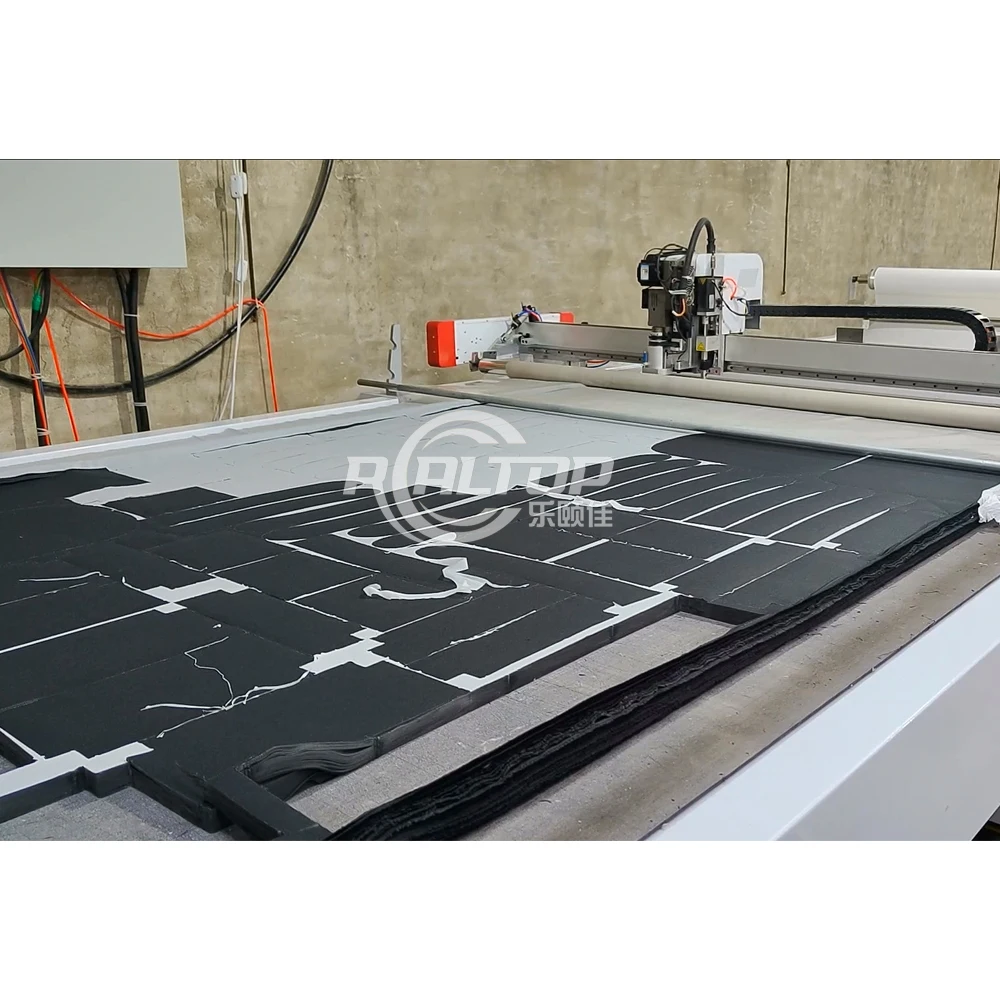
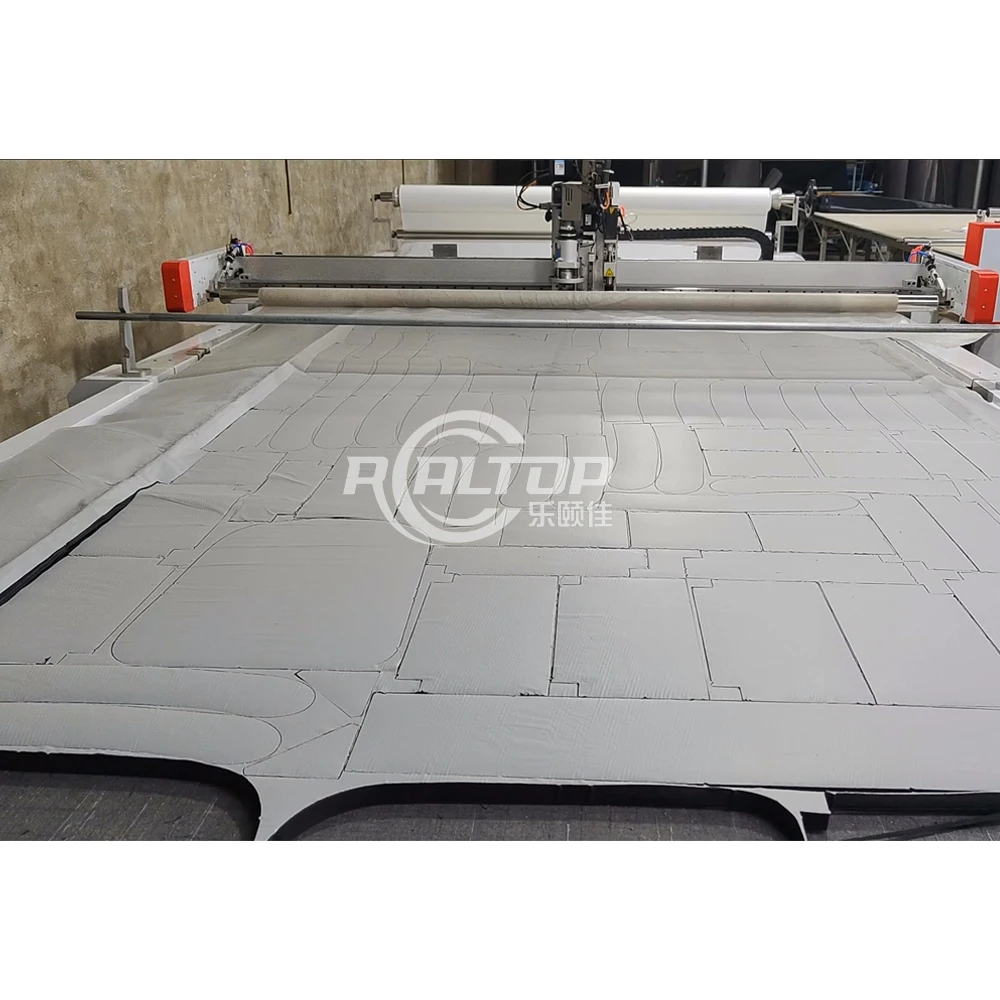
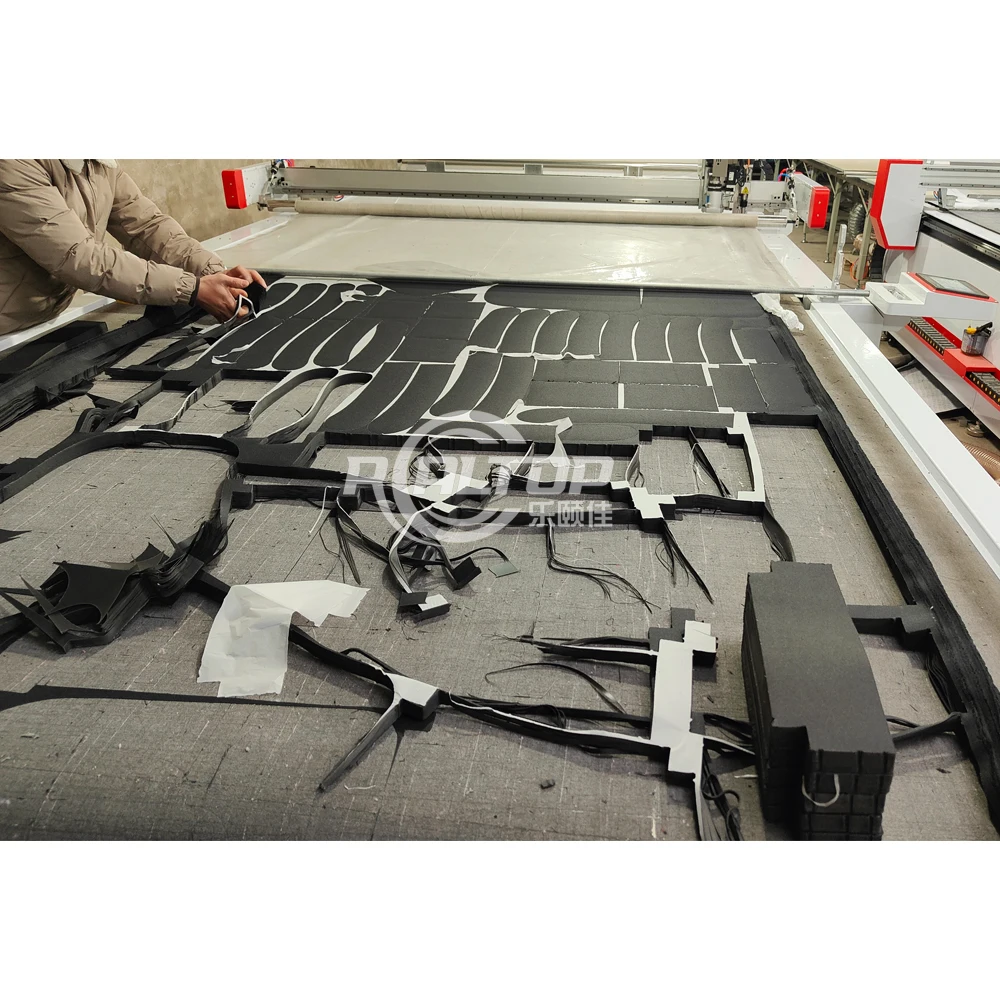
The Swiss imported knife head on this CNC oscillating knife cutting machine platform supports full-cut, half-cut and cursor location modes within a single tool holder. Full-cut mode drives the blade through the entire layup in one pass, suitable for garment panels and footwear components where edge cleanliness determines downstream sewing quality. Half-cut mode scores kiss-cut lines for fold-and-tear applications in packaging and gasket work. Cursor location uses a registration point to align the cutting path against printed marks or pre-punched reference holes. The modular tool holder accepts round knife and marking pen attachments without replacing the head assembly, letting a single machine serve both contour cutting and pattern marking tasks on the same production floor.
Vacuum Zoning and the Small-Piece Hold-Down Problem
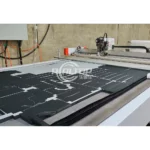
The 7.5 kW vacuum pump feeds through a high-density felt table surface that distributes suction across zoned areas. When nesting layouts include small pattern pieces — collar stays, gussets, gasket inserts — those pieces occupy only a fraction of the table and can lift under the knife’s lateral force at higher translational speeds. Zoned vacuum lets the operator isolate suction to the active cutting region, maintaining consistent material registration across the full 1600 × 2500 mm work area. [NEED_CITE: vacuum hold-down requirements for small pattern pieces in CNC fabric cutting]
Reading the Specifications That Actually Determine Cutting Quality
The repeated accuracy figure of ≤0.1 mm depends directly on the imported linear guide and ball screw transmission assembly. On long production runs cutting hundreds of identical garment panels, cumulative drift in the motion system shows up as mismatched seam allowances rather than visible machine error. The digital servo motor — specified as Panasonic or Delta per order — provides closed-loop position feedback that corrects deviation in real time. Cutting thickness ratings of up to 50 mm for standard materials and up to 100 mm for select foams are achievable only when the material has been tested on the machine; a dense six-layer automotive composite will behave differently from a 50 mm block of open-cell foam under the same blade frequency and downward pressure. The HP-GL compatible instruction system accepts nested cutting files from most mainstream pattern-making and nesting software packages, reducing the file translation step that often introduces contour errors in complex panel geometries.
The Hidden Cost of Specifying on Bed Size Alone
When a buyer selects a machine based on working area without confirming the tool head type against their material, the consequences surface after installation. An oscillating knife set at the wrong frequency for a dense PVC composite produces crushed edges rather than clean slices, sending panels to the reject pile. A vacuum table without adequate zoning forces operators to cut small pieces with the full table under suction, wasting energy and still failing to hold lightweight fabric flat. These problems do not appear in the specification sheet — they appear on the production floor, typically after the machine has been accepted and payment terms completed. [NEED_CITE: common causes of edge quality failure in CNC knife cutting of composite materials]
Why Source This Platform Through REALTOP
In-house design covers both knife and laser cutting technologies, so the cutting method is matched to the material rather than forced into one approach. The RT-D2516/RT-S2516 tool head and table configuration are specified per material density and production volume, documented in a written configuration list before production begins. Sample cutting on the buyer’s own fabric or composite stock confirms achievable thickness and edge quality before order commitment. Voltage, control language and software file format are verified against the buyer’s facility requirements, avoiding the shipment-arrives-and-doesn’t-fit scenario. The bed structure uses overall welding processed on an imported milling machine, providing the flatness baseline that the ≤0.1 mm repeatability claim depends on.
Documentation & Verification
- Machine specification sheet listing confirmed tool head type, vacuum zoning layout and servo motor brand
- Electrical schematic with voltage and frequency matched to your facility power supply
- Sample cutting report produced on your supplied fabric or composite material before order
- Factory test record documenting repeatability measurement and cutting edge inspection
- HP-GL file format compatibility note confirming integration with your nesting software
- Spare parts list identifying consumable blades, felt sections and vacuum seals
Installation, Commissioning & Support
- Floor space requires minimum 4000 × 3000 mm clearance accounting for the 3450 × 2300 mm machine footprint and material feed access
- Dedicated 380V ± 10% three-phase circuit rated for the combined 9 kW machine and 7.5 kW vacuum pump load
- Machine arrives with bed and gantry separated, requiring on-site assembly and level calibration
- First-run commissioning includes vacuum zone mapping and servo parameter tuning for your material type
- Operator training covers HP-GL file import, tool head changeover and blade replacement procedure
- Consumable spare blades, high-density felt replacement sections and vacuum seals supplied with initial shipment
What to Prepare Before Requesting a Quotation
Provide your fabric or composite material type, maximum layup thickness and typical sheet dimensions so the correct tool head and vacuum zoning layout can be specified. Confirm your facility voltage and frequency, the control language your operators require, and whether your existing nesting software exports HP-GL format. If your production includes multiple material families, identify each one — the modular tool holder allows configuration changes, but the base knife frequency and vacuum capacity must cover the most demanding stock in your range.
Frequently Asked Questions
Q: How is cutting thickness verified for my specific fabric or composite, and what is the realistic maximum?
A: Cutting thickness depends on material density and layer composition, not a single universal number. The RT-D2516/RT-S2516 achieves up to 50 mm on standard flexible materials and up to 100 mm on select foams, but your specific layup must be tested. Send a sample of your actual stock and a test cut is performed before order confirmation, with a written report documenting edge quality and achievable depth.
Q: Which tool head suits my material — oscillating knife, round knife or drag knife?
A: Oscillating knife handles multi-ply fabric and composite layups where vertical blade action prevents material shifting. Round knife suits single-ply woven textiles and continuous straight-line cuts. Drag knife works for thin vinyl and gasket sheets. The modular tool holder on the RT-D2516/RT-S2516 accepts all three, and the correct choice is confirmed during sample cutting on your material.
Q: How does vacuum table zoning work for small pattern pieces in a nested layout?
A: The 7.5 kW vacuum system divides the high-density felt table into zones that can be activated independently. Small pieces like collar stays or gasket inserts only need suction under their immediate area, preventing lift at high cutting speed without drawing unnecessary power across the full 1600 × 2500 mm surface. Zone layout is configured to match your typical nesting patterns.
Q: What control language and software file formats are confirmed before the machine ships?
A: The instruction system accepts HP-GL compatible format, which covers most mainstream pattern-making and nesting software platforms. Control language options include English, Russian, Italian and Chinese, with additional languages configurable per order. A file format compatibility note is included in the documentation package, confirming that your existing workflow files import correctly.
Q: Can I send my own material for sample cutting before committing to the order?
A: Yes. Supply your fabric, leather or composite stock along with your typical cutting pattern file. A sample cutting run is performed on the RT-D2516/RT-S2516, and a test report documents edge quality, cutting speed achieved and any tool head adjustments made. This report forms part of the order documentation so the shipped configuration matches what was tested.


商品评价
Clear filtersThere are no reviews yet.