







Fast Shipping
Carrier information

20k products
Payment methods

24/7 Support
Unlimited help desk

2-day Delivery
Track or off orders
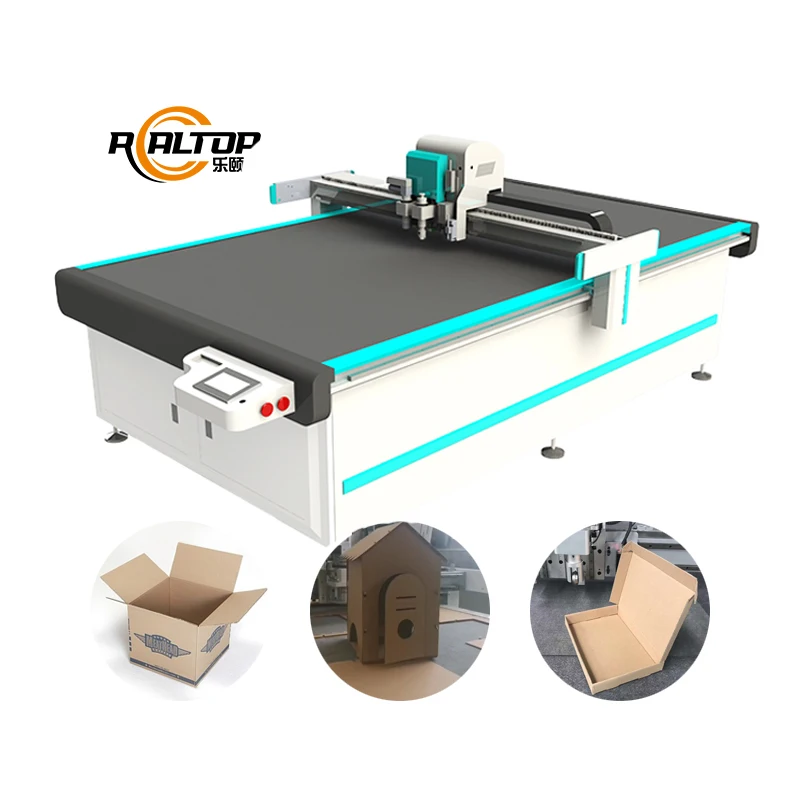
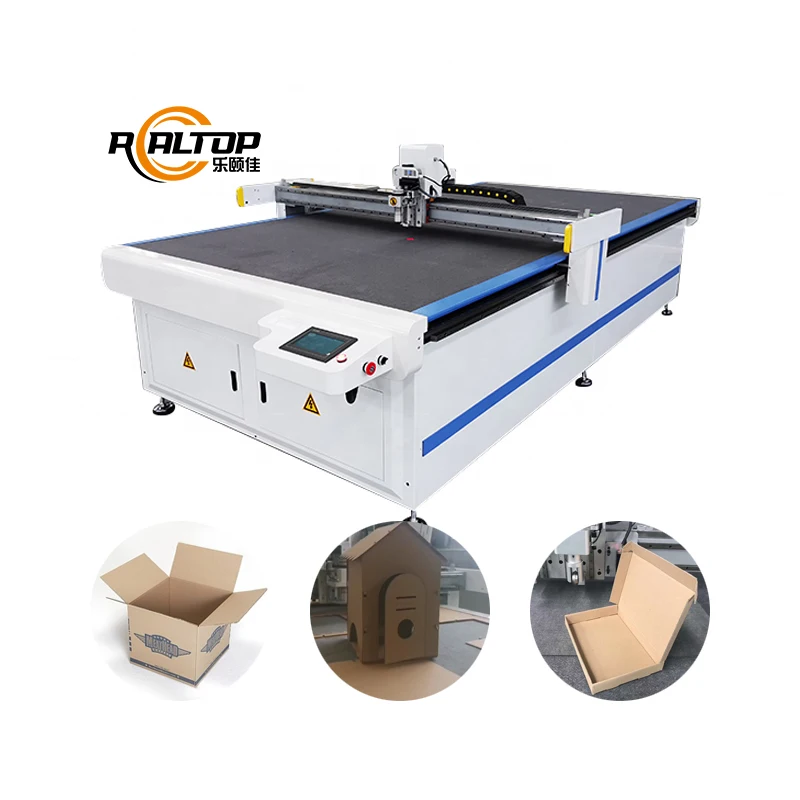
Knife and Table Configured Per Board Grade — The cutting tools, vacuum table zoning and software workflow on each flatbed carton cutter are specified against the buyer’s exact flute profile and sheet density rather than a generic working area.
Technical Specifications
| Parameter | Value |
|---|---|
| Model | RT–R2513 / RT-D2516 / RT-S2516 |
| Product Type | CNC Flatbed Carton Cutter Plotter |
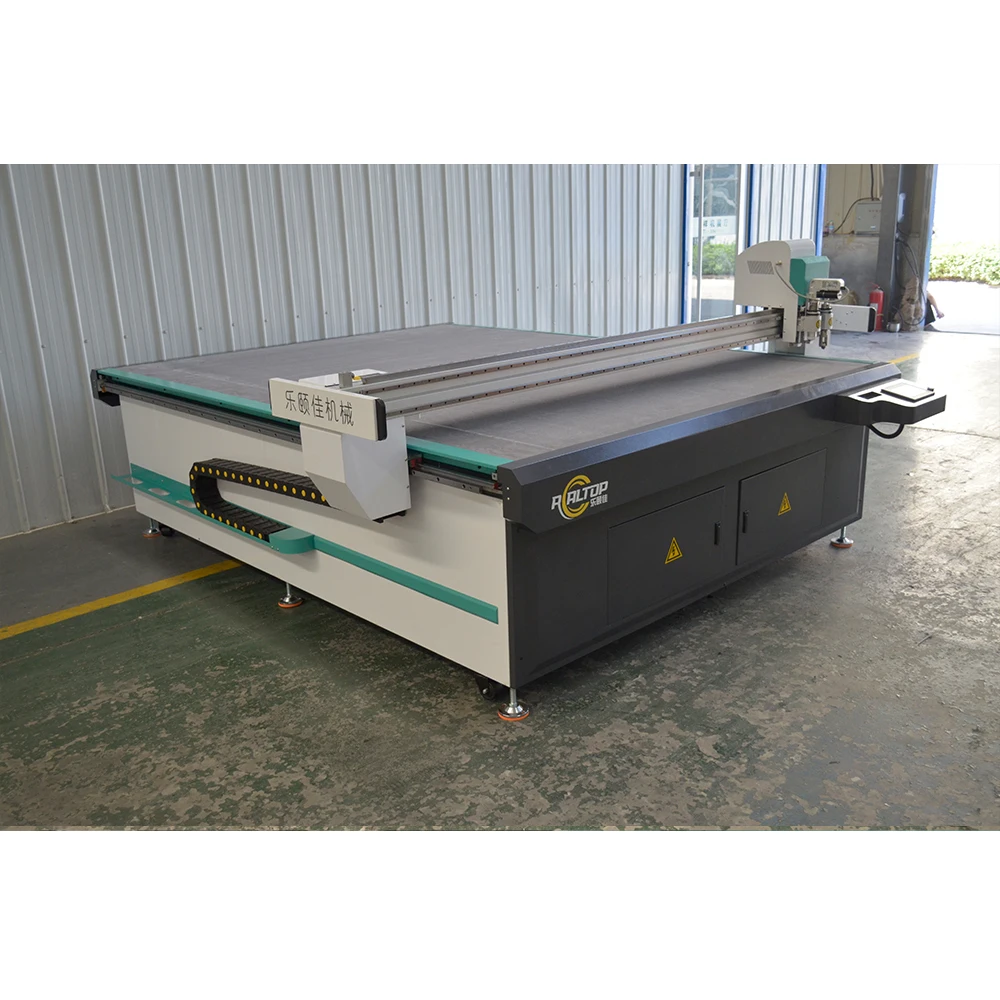
| Working Area | 2500×1300mm (RT–R2513); 1600×2500mm (RT-D2516 / RT-S2516) |
| Overall Dimensions | 3550×1910×1400mm (RT–R2513); 3450×2300×1250mm (RT-D2516 / RT-S2516) |
| Rated Power | 9 kW |
| Operating Voltage | 380V (frequency and plug configuration to be confirmed per market) |
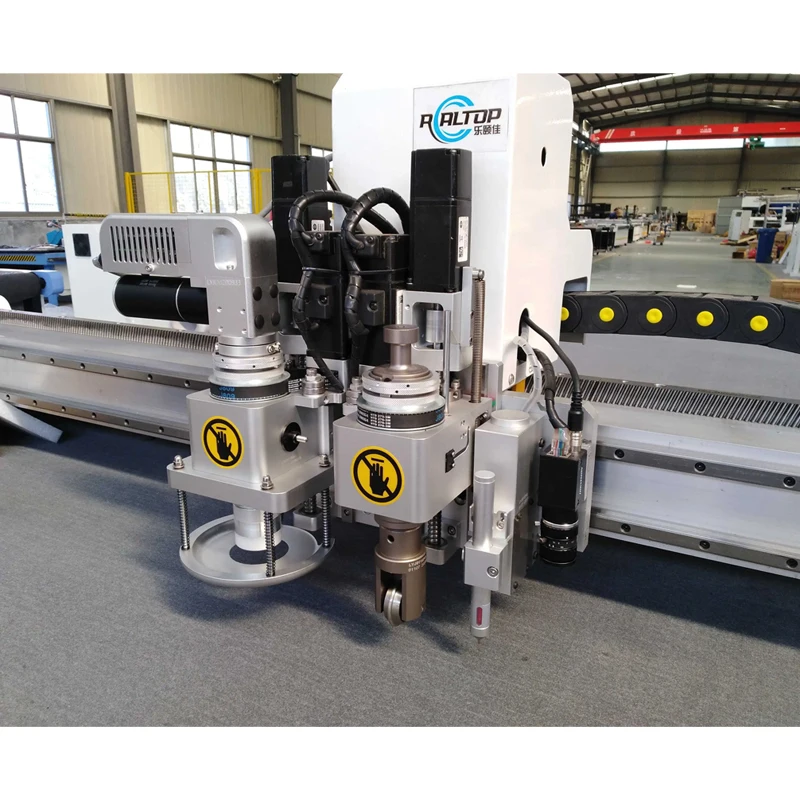
| Cutting Tool Options | Oscillating knife, creasing tool, kiss-cut knife tool, round punch |
| Maximum Cutting Thickness | Up to 18 mm (basis not stated in source — depends on material density and flute type) |
| Vacuum Pump | 7.5 kW |
| Fixing Method | Vacuum adsorption on aluminum alloy honeycomb table structure |
| Transmission | Rack transmission with imported straight-line square guide |
| Drive System | Servo motor (configuration verified prior to dispatch) |
| Repeated Accuracy | <0.05 mm |
| Accepted File Formats | DXF, OLT, PDF, AI |
| Data Transmission | Ethernet port |
| Safety Devices | Infrared sensors, emergency stop |
| Blade Supply | 10 pieces of oscillating blades included |
| Software | Professional carton nesting software with language customization |
Application Suitability
| Application | Material or Output |
|---|---|
| Packaging carton sample making | Single, double and triple-wall corrugated board for die-line verification |
| Short-run folding carton production | Coated and uncoated greyboard, kraft paper and recycled board |
| Express paper box packaging | Honeycomb paper, thick cardstock and E-flute micro-corrugated |
| Sticker and label contour cutting | Adhesive vinyl, PP paper and printed label stock with registration marks |
| Gift box prototyping | Dense rigid board requiring combined creasing and through-cutting |
Why the Cutting Thickness Number Is Only Half the Story
A quoted thickness limit means nothing until the board grade, flute profile and tool head are all matched together.
When a buyer asks about the CNC oscillating knife cutting machine specifications, the conversation usually starts with the maximum depth the blade can reach. Yet the actual depth a flatbed carton cutter can achieve depends entirely on whether the material is soft E-flute corrugated or dense greyboard. The same 18 mm limit behaves differently across material densities, and a machine pushing its limit on rigid board will leave crushed edges or require multiple passes, slowing the line [NEED_CITE: material density impact on knife cutting depth and edge quality].
Oscillating Knife Pressure and Tool Head Selection
The choice between an oscillating knife, a drag knife, a creasing wheel and a kiss-cut tool determines edge quality on corrugated and coated stocks. Oscillating knives slice through multi-layer corrugated without crushing the flute, while a creasing wheel compresses the board along fold lines rather than penetrating it. Matching the tool head to the specific board grade — and confirming the selection on the buyer’s own material sample — prevents ragged edges on short-run carton work. The CNC oscillating knife cutting machine specifications list the available heads, but the correct combination for a given production mix must be locked in before the order.
Vacuum Table Zoning for Nested Carton Parts
A 7.5 kW vacuum pump pulls air through the aluminum alloy honeycomb table to hold sheets flat during cutting. On large, uncut sheets this works predictably, but once the knife divides a sheet into many small carton blanks, the vacuum hold on individual pieces drops. Zoning the table into independently controlled sections ensures that small nested parts stay pinned to the surface while surrounding waste is removed, preventing lift and misalignment on the final cuts [NEED_CITE: vacuum table zoning principles for flatbed digital cutting].
Reading the Specs Against the Production Reality
The repeated accuracy of <0.05 mm matters most when creasing lines and cut edges must align within tight registration tolerances on printed carton artwork. Rack transmission paired with linear square guides maintains positional accuracy across the full 2500×1300mm or 1600×2500mm working area, even as the cutting head accelerates and decelerates between nested parts. Ethernet-based data transfer avoids the file corruption issues common with USB sticks on the shop floor, and the software accepts DXF, OLT, PDF and AI formats directly from common CAD and packaging design packages. The 9 kW rated power and 380V supply must be verified against the facility’s available electrical infrastructure before installation.
What Happens When the Tool Head Does Not Match the Board
Selecting an oscillating knife for a material that actually requires a creasing wheel produces cut lines where fold lines should be, ruining the carton structure. Choosing a drag knife on thick double-wall corrugated leaves the bottom liner torn because the blade drags rather than oscillates through the depth. In both cases, the machine is mechanically capable but configured incorrectly for the production job, resulting in rejected samples and lost production time during rework [NEED_CITE: tool head mismatch consequences in digital flatbed cutting].
What Goes Into Building a Cutter for Your Line
The frame uses welded thick square seamless steel with high-temperature treatment to resist deflection under the lateral forces of knife cutting. Tool head and table configurations are specified per material type and daily production volume, not quoted as a single default package. Software compatibility — including file format support and nesting workflow — is confirmed against the buyer’s existing CAD system before the order is placed. Voltage, plug type and control panel language are adapted to the destination market. Every unit runs a factory test on the buyer’s own board samples, with a cutting report documenting edge quality and dimensional accuracy before packing.
Documentation & Verification
- Machine specification sheet confirming tool head and table configuration for your board grades
- Electrical schematic and voltage confirmation matched to your facility supply
- Sample cutting report on your actual corrugated or greyboard material before dispatch
- Software licence and file format compatibility note for your existing nesting workflow
- Operation and maintenance manual with blade change intervals and vacuum pump service schedule
- Spare parts list covering oscillating blades, creasing wheels and vacuum table seals
Installation, Commissioning & Support
- Floor space planning accounting for the 3550×1910mm or 3450×2300mm footprint plus operator clearance
- Dedicated 380V circuit provision for the 9 kW machine load and 7.5 kW vacuum pump
- Assembly of the aluminum honeycomb vacuum table and conveyor belt on site after delivery
- First-run parameter tuning for oscillating knife frequency and vacuum zone pressure on your board stock
- Operator training covering tool head changes, blade replacement and nesting software workflow
- Routine maintenance schedule for rack lubrication, linear guide inspection and vacuum filter cleaning
Preparing Your Specification Request
To size the working area and tool head combination correctly, we need the specific board grades and flute profiles you cut most often, along with the maximum sheet dimensions and typical nesting layout. Confirming your facility voltage, frequency and preferred control language up front avoids rework before shipment. If your production includes printed carton work, let us know whether CCD contour recognition is required so we can verify tracking performance on your actual printed marks.
Frequently Asked Questions
Q: How do I match the tool head to my specific board thickness and flute profile?
A: The available tool heads — oscillating knife, creasing wheel, kiss-cut knife and round punch — each suit different board structures. Oscillating knives cut through multi-layer corrugated without crushing flutes, while creasing wheels compress fold lines. We confirm the correct head combination by running sample cuts on your actual board grade and thickness before the machine ships.
Q: What is the real cutting thickness limit on different packaging materials?
A: The published maximum of 18 mm applies under conditions that depend on material density. Soft E-flute corrugated cuts cleanly at greater depths than dense greyboard of the same nominal thickness. We test your specific material and provide a cutting report showing the verified depth, edge quality and pass count before you commit.
Q: Is the vacuum table zoning sufficient for small nested carton parts?
A: The aluminum honeycomb table with its 7.5 kW pump can be divided into independently controlled vacuum zones. This keeps small nested blanks pinned to the surface while surrounding waste material is cleared, preventing part lift and maintaining cutting accuracy across the full sheet layout.
Q: How does the software integrate with our existing packaging design workflow?
A: The included nesting software accepts DXF, OLT, PDF and AI files directly from standard CAD and packaging design packages. We verify file import compatibility and nesting behaviour against your existing design output before the order is finalized, and the control interface language can be customized to your operator preference.
Q: What electrical preparation does our facility need before delivery?
A: The machine draws 9 kW plus 7.5 kW for the vacuum pump at 380V. You will need a dedicated circuit with appropriate breaker capacity and the correct plug or hardwire termination for your market. We provide a full electrical schematic and confirm voltage and frequency compatibility with your local supply before production begins.


商品评价
Clear filtersThere are no reviews yet.