


Fast Shipping
Carrier information

20k products
Payment methods

24/7 Support
Unlimited help desk

2-day Delivery
Track or off orders
Specified Per Board Grade — Oscillating knife pressure, creasing wheel depth and vacuum zoning configured to your actual corrugated flute profile and grey board density, validated on your material before the machine leaves the factory.
Technical Specifications
| Parameter | Value |
|---|---|
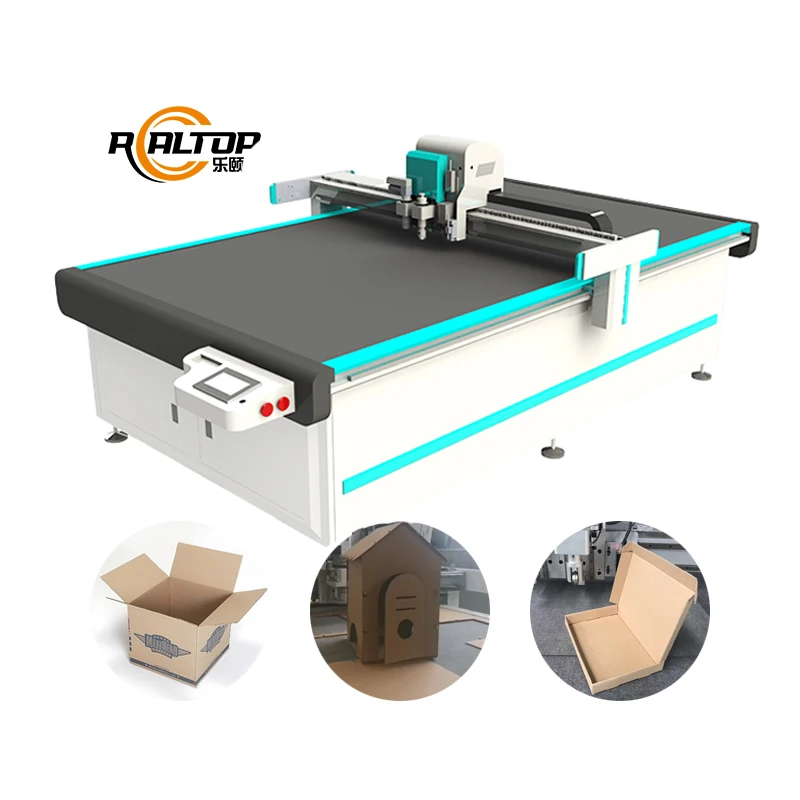
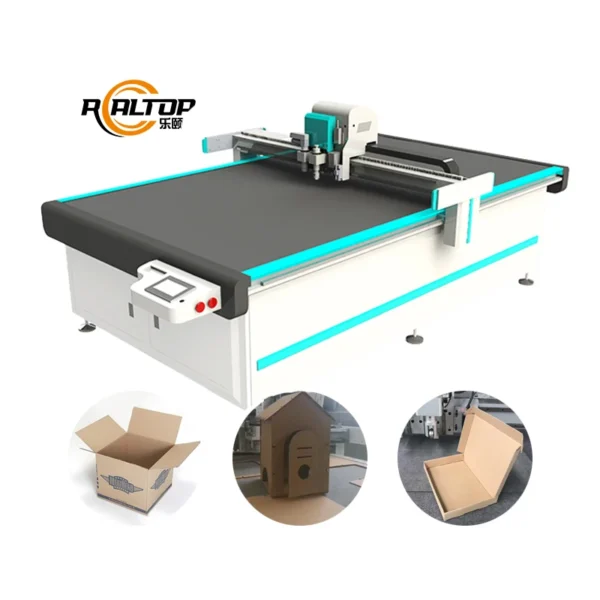
| Product Type | CNC Oscillating Knife Cutting Machine for Packaging and Carton Sample Making |
| Working Area | 1600 × 2500 mm |
| Machine Footprint | 3450 × 2300 × 1250 mm |
| Rated Power | 9 kW |
| Voltage | 380V ±10% (frequency confirm 50Hz/60Hz for destination market) |
| Control Format | CNC with HP-GL compatible import |
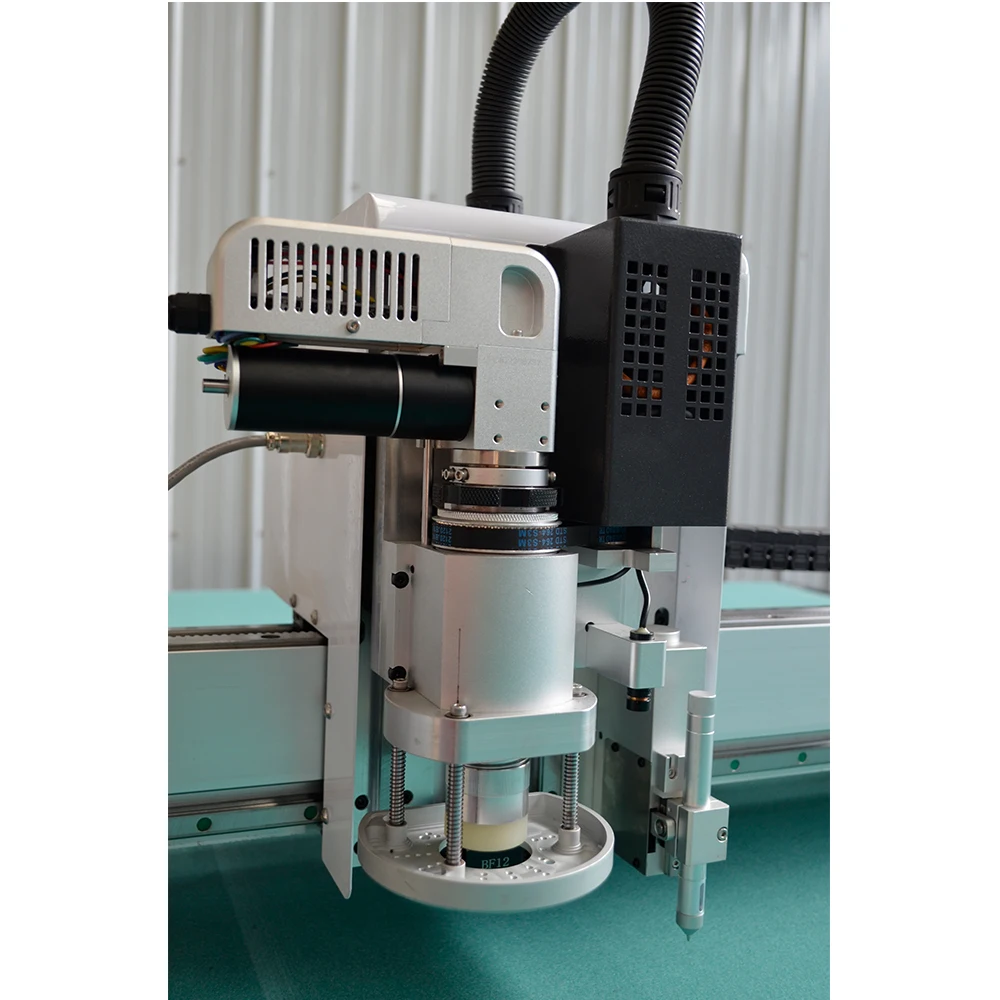
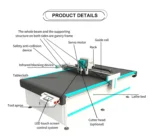
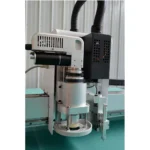
| Tool Head | Swiss-imported oscillating knife with vibration full-cut, half-cut and cursor location |
| Cutting Speed | 200–800 mm/s |
| Translational Velocity | 800–1200 mm/s |
| Repeated Accuracy | ≤0.1 mm |
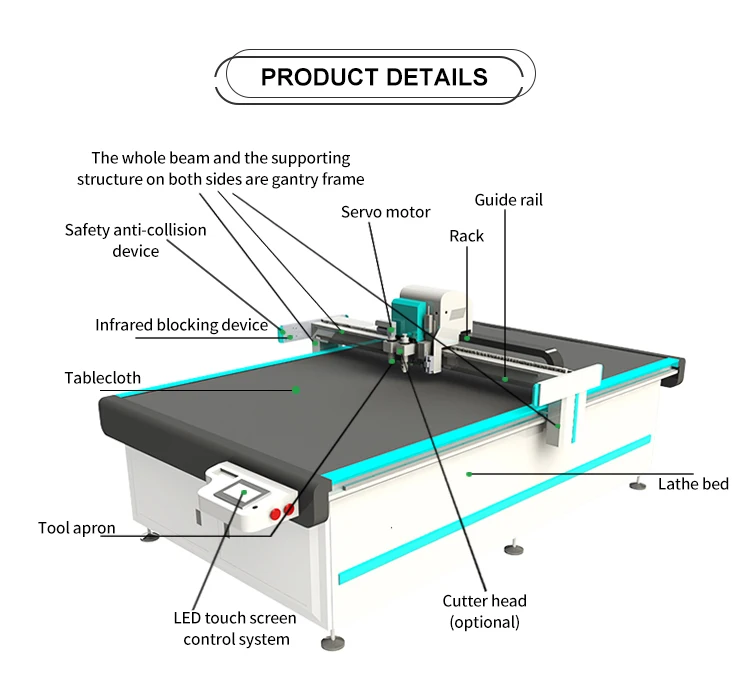
| Transmission | Digital servo motor, linear guide, synchronous belt, ball screw |
| Servo Motor | Taiwan Delta |
| Linear Guide | Taiwan Hiwin rail |
| Vacuum Table | Aluminum alloy honeycomb adsorption platform with 7.5 kW vacuum pump |
| Conveyor Belt | Germany imported |
| Safety Device | Infrared sensors and emergency stop |
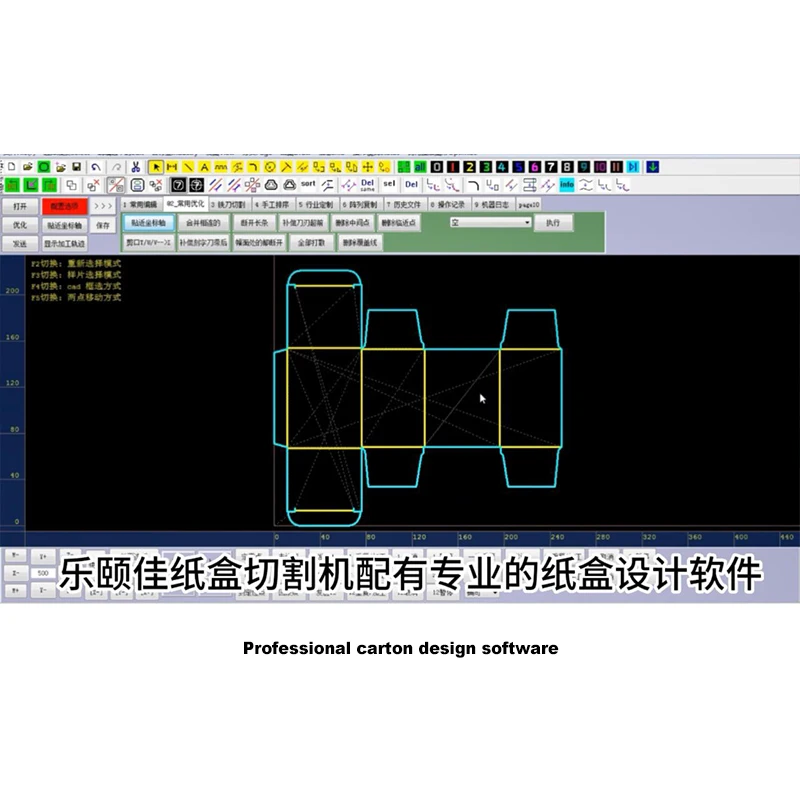
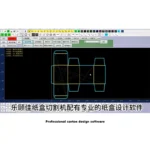
| Software | Professional carton nesting with multi-format import |
| Language Options | English, Russian, Italian, Chinese (additional languages customizable) |
| Assembly State | Fully assembled prior to dispatch |
Application Suitability
| Application | Material or Output |
|---|---|
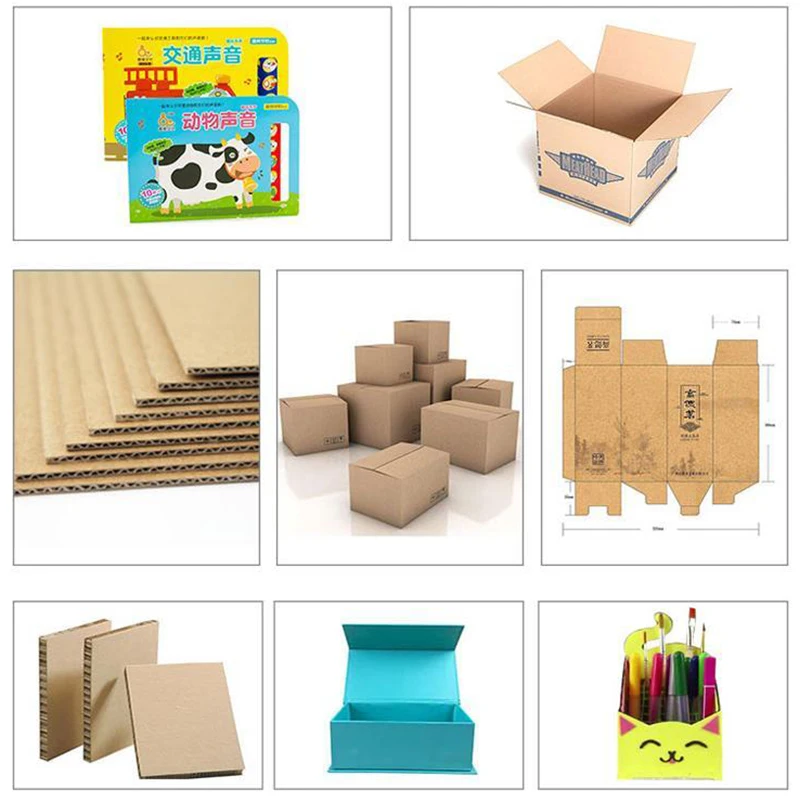
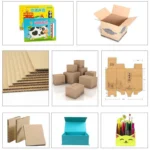
| Carton sample making and short-run prototyping | Corrugated board across single-wall, double-wall and micro-flute profiles |
| Grey board die-free cutting for premium packaging | High-density grey board for gift boxes, display stands and rigid box structures |
| Sticker and label contour cutting | Self-adhesive vinyl, coated paper and label stock on release liner |
| Express and e-commerce packaging | Single-face and single-wall corrugated for shipping cartons and mailer boxes |
| Large-format electrical appliance cartons | Heavy-duty double-wall corrugated up to the knife’s stated thickness limit |
| Gasket and soft material cutting | Leather, PVC, soft glass, silicone, rubber and sponge composite panels |
Why Board Thickness Alone Is Not Enough to Select a CNC Oscillating Knife Cutting Machine for Packaging
The tool head configuration and vacuum zoning must be matched to the actual board grade, flute profile and minimum blank size before the order is placed.
Many packaging shops specify a flatbed cutter on working area alone, only to discover that the standard oscillating knife cannot penetrate their dense grey board, or that the creasing wheel crushes the flute structure on single-wall corrugated instead of folding it cleanly. Small carton blanks lift off the table mid-cut because the vacuum zones are too large for the part footprint, producing ragged edges and scrapped material [NEED_CITE: flatbed CNC vacuum zoning principles for small part hold-down]. A machine that performs well on standard E-flute samples may fail entirely on the buyer’s daily production mix of B-flute, double-wall and laminated grey board.
Knife Tooling Matched to Flute and Board Density
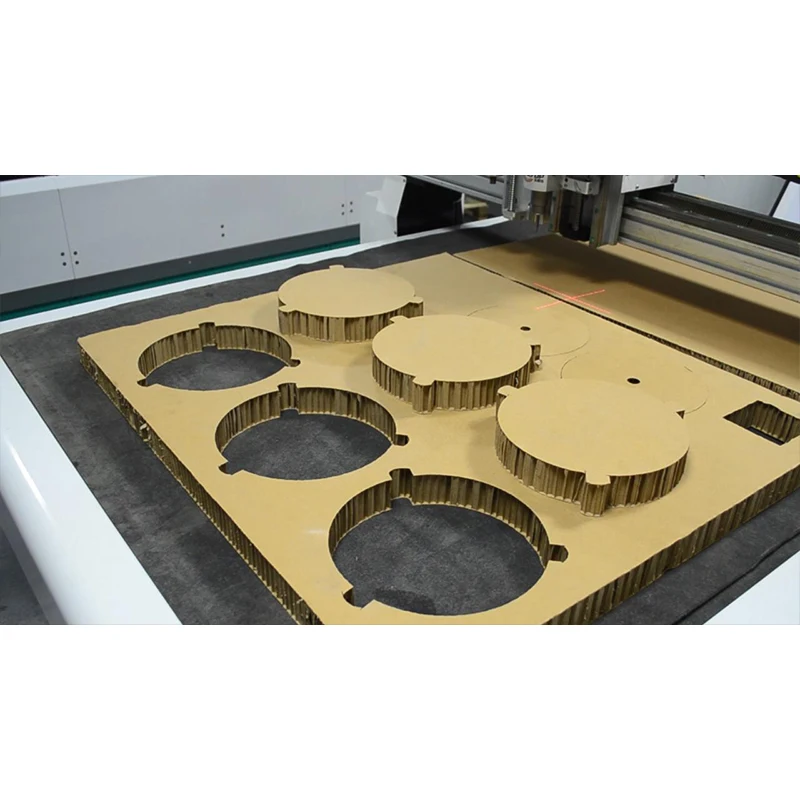
The oscillating knife head on this CNC oscillating knife cutting machine for packaging performs full-cut and half-cut operations in a single pass, allowing cut and crease to execute without a separate tooling change. Swiss-imported blade geometry is specified to reduce flute crush on corrugated stock, while the vibration half-cut function scores grey board for clean folding without fracturing the surface layer.
Vacuum Hold-Down for Mixed Blank Sizes
The 1600 × 2500 mm aluminum honeycomb table pairs with a 7.5 kW vacuum pump to hold full sheets flat during high-speed traversing. Zoning configuration should be confirmed against the buyer’s smallest blank dimensions, as undersized parts on an un-zoned table will lift at the trailing edge and produce incomplete cuts [NEED_CITE: vacuum adsorption zone sizing for nested carton blanks].
Motion Precision and Its Effect on Crease Alignment
Delta servo motors driving Hiwin linear rails deliver ≤0.1 mm repeatability across the full working envelope. In carton sample making, this repeatability determines whether a crease line lands on the correct side of a cut edge, particularly on multi-panel box structures where accumulated error across a 2500 mm sheet causes misaligned fold lines and rejected samples. Translational velocity up to 1200 mm/s keeps sample turnaround fast without sacrificing edge quality on micro-flute stock.
Reading the Spec Sheet for Your Actual Material
The stated cutting speed of 200–800 mm/s and translational velocity of 800–1200 mm/s apply across the machine’s travel, but actual cutting throughput depends on board thickness, blade wear rate and the complexity of the carton geometry. A simple four-flap shipping carton will run faster than a multi-panel lock-bottom gift box with internal partitions. The 9 kW rated power covers the combined draw of the servo drives, oscillating head and vacuum pump under continuous operation, but buyers should confirm their facility’s 380V supply can sustain this load alongside other production equipment [NEED_CITE: electrical load planning for CNC cutting installations].
The Hidden Cost of Wrong Tool Head Selection
When a creasing wheel is set too deep for the flute profile, it collapses the corrugated structure instead of creating a foldable score line, and the finished carton fails compression tests in the supply chain. When an oscillating knife is specified for dense grey board but lacks sufficient down-stroke pressure, the blade chatters through the material leaving a torn edge that requires manual trimming. These failures surface weeks after installation, once the operator has exhausted parameter adjustments and the buyer is already committed to the machine [NEED_CITE: tool head selection errors in digital carton cutting].
Why Source This Configuration Here
In-house design covers both knife cutting and laser cutting technologies, so the buyer can match the cutting method to the material rather than force one method onto every substrate. Tool head and table configurations are specified per material and production volume, not sold as a single standard package. CCD camera positioning is available for printed contour work on sticker and label overlays. Software compatibility with the buyer’s existing CAD file formats is confirmed before the order is placed, not discovered during commissioning. Voltage, control language and plug type are locked to the destination market before shipment. Sample cutting on the buyer’s own corrugated or grey board stock is performed before commitment.
Documentation & Verification
- Machine specification sheet confirming tool head and vacuum table configuration matched to your board grade
- Electrical schematic with voltage and frequency confirmation for your destination market
- Tool head and creasing wheel configuration list specifying blade type and wheel diameter
- Sample cutting report on your own corrugated or grey board material with edge and crease quality documented
- Software licence and file format compatibility note for your existing carton design workflow
- Factory test record with repeated accuracy measurement before dispatch
Installation, Commissioning & Support
- Fully assembled 3450 × 2300 × 1250 mm frame requires level concrete floor with clearance for sheet loading on all sides
- 9 kW rated power demands a dedicated 380V circuit with voltage stabilizer in regions prone to supply fluctuation
- 7.5 kW vacuum pump exhaust must be ducted outside the cutting area to prevent dust accumulation on linear rails
- First commissioning includes vacuum zone mapping and oscillating knife pressure calibration on your board stock
- Operator training covers carton nesting software import, tool change procedure and blade replacement intervals
- Spare parts list covers oscillating knife blades, creasing wheels, vacuum seals and conveyor belt sections
Preparing Your Inquiry
To configure the correct tool head and vacuum zoning, share the specific board grades you cut most frequently, including flute profile, board thickness and the smallest blank dimension in your nesting layouts. Confirm your facility voltage and frequency, preferred control panel language and the CAD file formats your design team currently uses. If you are switching from die-cutting, note your current daily sample volume and turnaround expectations.
Frequently Asked Questions
Q: What board thickness and flute profiles can the oscillating knife and creasing wheel handle cleanly?
A: The oscillating knife and creasing wheel are configured to the buyer’s specific board range. Single-wall, double-wall and micro-flute corrugated profiles along with high-density grey board are all within scope, but the exact tool head selection and down-stroke pressure must be matched to the thickness and density you run daily. A sample cutting test on your material confirms edge and crease quality before order.
Q: Does the vacuum table zoning hold small carton blanks flat without lift at cutting speed?
A: The 7.5 kW vacuum pump on the aluminum honeycomb table provides strong hold-down across the full 1600 × 2500 mm area, but small blanks require properly sized vacuum zones. The zoning layout should be specified against your smallest carton blank dimension to prevent trailing-edge lift during high-speed traversing.
Q: Can the software import my existing DXF or AI carton design files and run nesting for material yield?
A: The professional carton nesting software supports multiple file format imports including common CAD outputs. File format compatibility is confirmed before order using your actual design files, so your existing workflow transfers without conversion loss. Nesting functions optimize layout for material yield on standard sheet sizes.
Q: What voltage, plug and control panel language will ship to my market?
A: The standard configuration is 380V ±10% with frequency confirmed to your destination market, either 50Hz or 60Hz. Plug type and control panel language are locked before production. Available languages include English, Russian, Italian and Chinese, with additional languages configurable on request.
Q: Can I send my own corrugated board for a sample cutting test before placing the order?
A: Yes. Sending your actual production material allows the tool head pressure, cutting speed and creasing depth to be tuned to your specific board grade. A sample cutting report documenting edge quality, crease integrity and cutting speed is provided before you commit to the order.


商品评价
Clear filtersThere are no reviews yet.