








Fast Shipping
Carrier information

20k products
Payment methods

24/7 Support
Unlimited help desk

2-day Delivery
Track or off orders
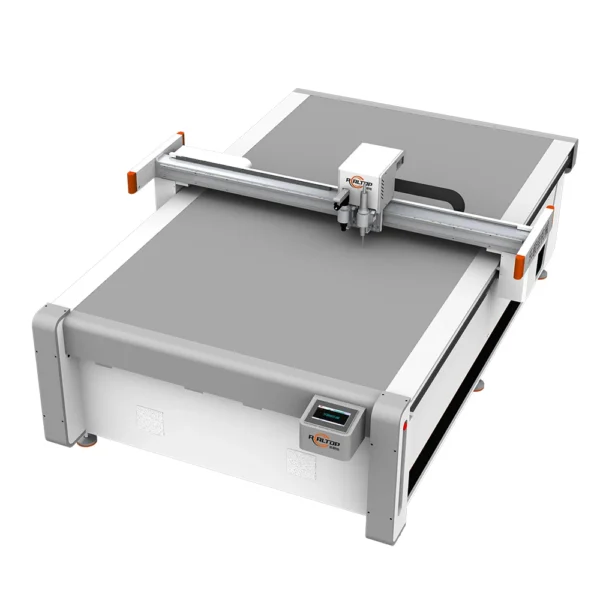
Tool Head and Table Configuration — matching oscillating knife, drag knife and creasing wheel to board weight and flute profile rather than forcing a single cutting method.
Technical Specifications
| Parameter | Value |
|---|---|
| Model | RT-D2516/RT-S2516 |
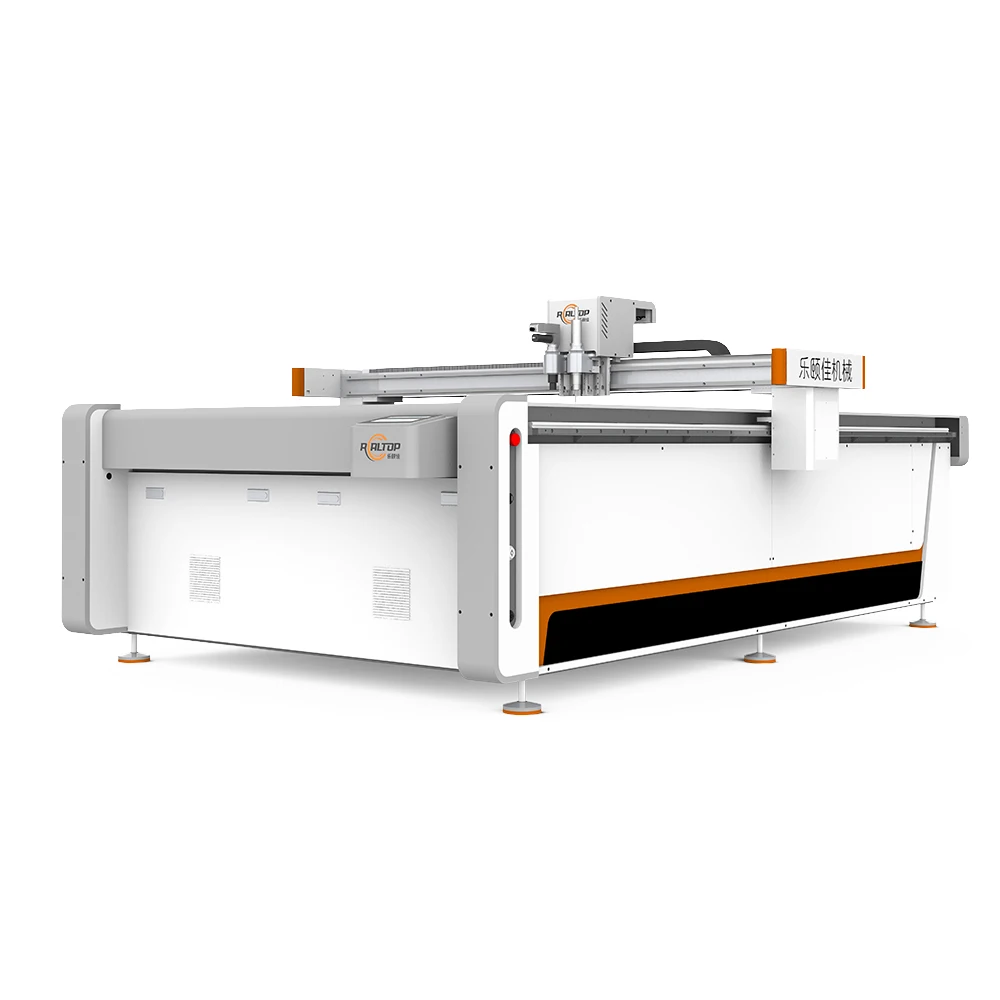
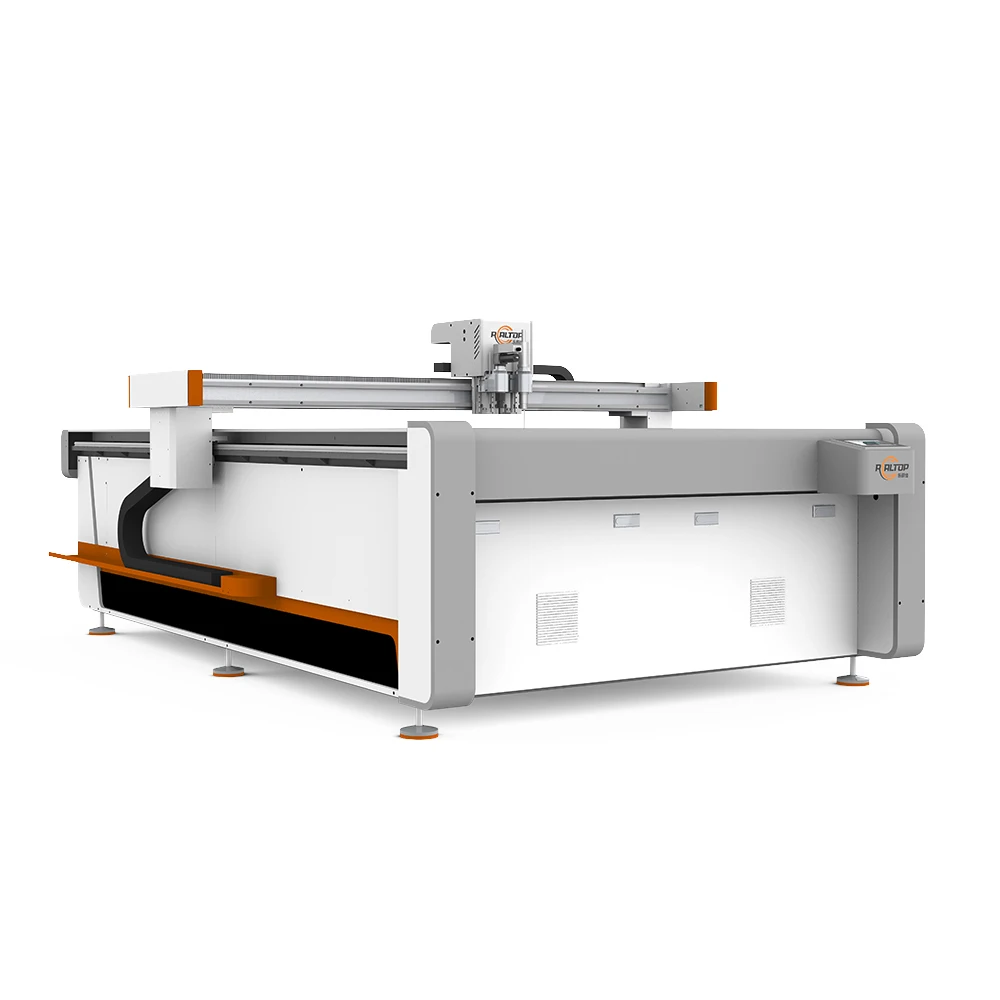
| Product Type | CNC Digital Plotter Cutting Machine |
| Working Area | 1600 × 2500 mm |
| Machine Size | 3450 × 2300 × 1250 mm |
| Rated Power | 9 kW |
| Voltage | 380V ± 10% |
| Table Type | Flat working table or auto feeding table |
| Transmission System | Digital servo motor, linear guide, synchronous belt, ball screw |
| Cutting Speed | 200-800 mm/s (according to different cutting materials) |
| Translational Velocity | 800-2000 mm/s |
| Repeated Accuracy | ≤ 0.1 mm |
| Cutting Thickness | ≤ 100 mm (varies with material) |
| Tool Head Options | Oscillating knife, pneumatic knife, high-power vibrating knife, circular knife, V cutting knife, drag knife, creasing wheel, dotted line knife, punching, brush |
| Visual Positioning | Small CCD camera mark point positioning, panoramic camera recognition, projection positioning |
| Vacuum Pump | 7.5 kW |
| Software Formats Supported | PLT, DXF, AI |
| Control Panel | Touch screen, multiple language supported |
| Safety Device | Infrared sensors, anti-collision beam sensors, emergency stop |
| Other Configuration | Delta servo motor, Germany imported conveyor belt, Taiwan Hiwin rail |
Application Suitability
| Application | Material or Output |
|---|---|
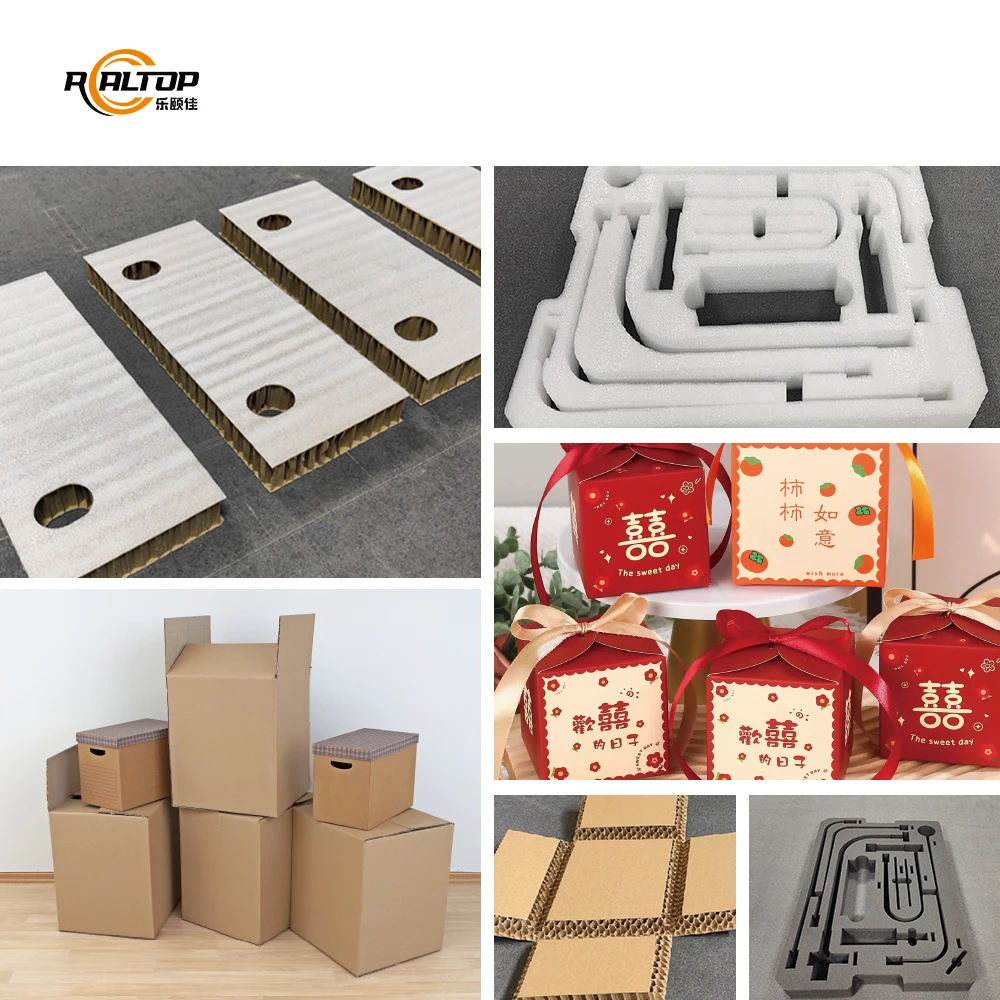
| Carton and packaging sample making | Corrugated board, honeycomb board, card stock |
| Advertising and signage production | PVC foam board, sticker, vinyl, acrylic |
| Gasket and sealing pad manufacturing | Rubber, composite, non-woven materials |
| Leather and fabric cutting | Leather, clothing flexible material, sponge composite leather |
| Automotive interior and composites | Carbon fiber, soft glass, silicon, PVC sheet |
Why Working Area Alone Is Not Enough When Choosing CNC Oscillating Knife Cutting Machine Specifications
A flatbed cutter specified only by table size often arrives at a production site and fails on the actual board grade it was bought to process.
I have watched packaging producers unbox a machine that cuts sample corrugated stock cleanly, then struggles through the high-density honeycomb board their real orders require. The working area matched the sheet, but the tool head could not handle the material density. That gap between brochure specs and shop-floor reality is where most procurement disputes start. Before locking in CNC oscillating knife cutting machine specifications, the buyer needs a sample cut on their own material, not just a generic test piece. [NEED_CITE: common buyer complaints in CNC cutting equipment procurement]
Knife, Crease, and Perforate on One Platform
The RT-D2516/RT-S2516 carries up to ten tool head options — oscillating knife, V-cutting knife, drag knife, creasing wheel, punching tool, and others — on a single multifunctional head. For a carton sample room, this means one pass can cut the outline with an oscillating knife, score the fold lines with a creasing wheel, and punch ventilation slots without a tool change. Packaging producers working short runs across multiple board grades benefit from this flexibility because swapping heads between jobs costs time they cannot absorb on sampling work.
Visual Positioning for Printed Contour Work
When cutting pre-printed packaging or signage, the machine must find registration marks that shift slightly with board feed and humidity. The RT-D2516/RT-S2516 offers small CCD camera mark point positioning, panoramic camera recognition, and projection positioning as selectable options. Each serves a different registration scenario: mark-point CCD suits jobs with consistent print placement, while panoramic recognition handles larger sheets where distortion accumulates across the print. Specifying the right vision system upfront avoids retrofitting cameras after the first production run. [NEED_CITE: CCD registration accuracy standards for digital cutting systems]
Reading the Specs That Matter Beyond Table Size
The 1600 × 2500 mm working area defines the maximum sheet, but cutting performance on honeycomb board depends on the interplay of knife stroke, cutting speed range, and vacuum hold-down. The cutting speed spans 200-800 mm/s depending on material — thicker honeycomb board requires the lower end of that range to let the oscillating knife penetrate cleanly. The 7.5 kW vacuum pump paired with the magnesium-aluminum alloy table provides the suction needed to keep board flat, but zoning matters: if the table is divided into zones, small carton samples need only their zone activated, otherwise air leaks around the sheet edges reduce hold-down force. The Taiwan Hiwin linear guides and Delta servo motors deliver ≤ 0.1 mm repeatability, which is necessary when nesting multiple small carton patterns on a single sheet and expecting each to fold identically.
The Cost of a Wrong Tool Head Choice
Selecting an oscillating knife for a material that needs a V-cutting knife produces ragged edges on honeycomb flute walls instead of clean severance. A drag knife on thick corrugated stock chatters through the cut, leaving crushed flutes that compromise box compression strength. When the tool head is wrong, the operator compensates by slowing cutting speed and making multiple passes — neither of which the machine was configured to support efficiently. That cascades into missed sample deadlines and re-cut orders. [NEED_CITE: tool head selection impact on edge quality in flatbed cutting]
Why Buyers Source This Platform Here
The design team covers both knife and laser cutting technologies in-house, so a buyer cutting honeycomb board on knife and acrylic on laser can consolidate suppliers. Every RT-D2516/RT-S2516 ships with tool head and table configuration matched to the buyer’s stated material and volume, not a default build. Sample cutting on the buyer’s own board grade happens before the order is confirmed, producing a cutting report with edge quality photographs. Software file format compatibility — PLT, DXF, AI — is verified against the buyer’s existing design workflow before production starts. Voltage, plug type, and control panel language are locked in the specification confirmation stage so the machine arrives wired for 380V ± 10% with the correct interface language.
Documentation & Verification
- Machine specification sheet listing every tool head and table option selected
- Electrical schematic with voltage and frequency confirmation for your market
- Sample cutting report on your actual board grade with edge quality photographs
- Software licence and file format compatibility note for PLT, DXF, AI import
- Factory test record showing cutting accuracy on your specified material
- Spare parts list with oscillating knife blades and creasing wheel consumables
Installation, Commissioning & Support
- Foundation must be level within tolerance to support the 3450 × 2300 × 1250 mm frame
- Dedicated 380V ± 10% circuit required for the 9 kW rated power draw
- Machine ships assembled; vacuum pump and auto feeder connect on-site
- First commissioning includes tool head calibration against your material thickness
- Operator training covers nesting software and control panel language settings
- Consumable blade and creasing wheel inventory sized to your daily cutting volume
- Routine maintenance schedule covers Hiwin rail lubrication and belt tension checks
Before You Request a Quote
Send a sample of the board or flexible material you actually cut — grade, flute profile, and thickness — along with your typical sheet dimensions and daily sample volume. Specify your local voltage and frequency, your preferred control panel language, and whether your design files are in PLT, DXF, or AI format. If your workflow includes printed contour cutting, describe the registration mark style so we can match the correct visual positioning option before building the machine.
Frequently Asked Questions
Q: How do I choose the right tool head for honeycomb board versus corrugated cardboard?
A: Honeycomb board typically requires an oscillating knife or high-power vibrating knife to cut through the cell structure cleanly, while single-face corrugated cardboard can use a drag knife for speed. The creasing wheel handles fold lines on both. The selection depends on board density and flute profile, which is why we test on your actual material before confirming the tool head configuration.
Q: What determines effective cutting thickness on this flatbed table?
A: The stated ≤ 100 mm cutting thickness varies with material density, cell structure, and knife stroke. A 50 mm honeycomb board with thick kraft faces demands more knife force than 50 mm of open-cell foam. We confirm effective cutting depth through sample testing on your specific board grade rather than quoting a single thickness number.
Q: How does vacuum table zoning affect small carton sample cutting?
A: When cutting small patterns, the vacuum pump’s suction spreads across the full table area. If the table is zoned, activating only the zone under the sheet concentrates hold-down force. Without proper zoning, small carton samples can lift during cutting, especially at higher translational velocities, producing dimensional errors in the finished fold.
Q: Can the CCD camera track printed marks on corrugated stock at production speed?
A: The CCD system must be matched to the mark style and print contrast on your specific board. Small CCD mark-point positioning works well for consistent registration marks, while panoramic recognition handles larger sheets with accumulated print distortion. We verify tracking performance during sample cutting at your intended production speed before finalizing the vision option.
Q: What voltage and language details must be confirmed before shipment?
A: The RT-D2516/RT-S2516 operates on 380V ± 10%, but the plug type, frequency, and control panel language must match your facility. We lock these in the specification confirmation stage — English, Russian, Italian, and Chinese are standard, with other languages configurable. Confirming this before production avoids rewiring or re-flashing the control panel on arrival.


商品评价
Clear filtersThere are no reviews yet.