



Fast Shipping
Carrier information

20k products
Payment methods

24/7 Support
Unlimited help desk

2-day Delivery
Track or off orders
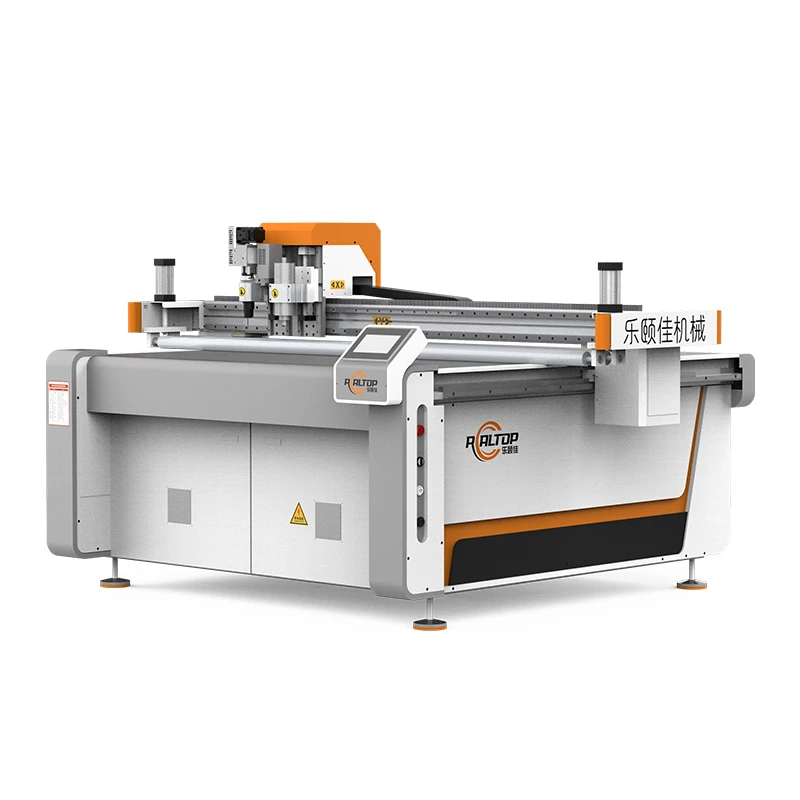
Tool-Head Match — Oscillating knife, creasing wheel and drag knife options configured per material density, validated on buyer-supplied samples before quotation.
Technical Specifications
| Parameter | Value |
|---|---|
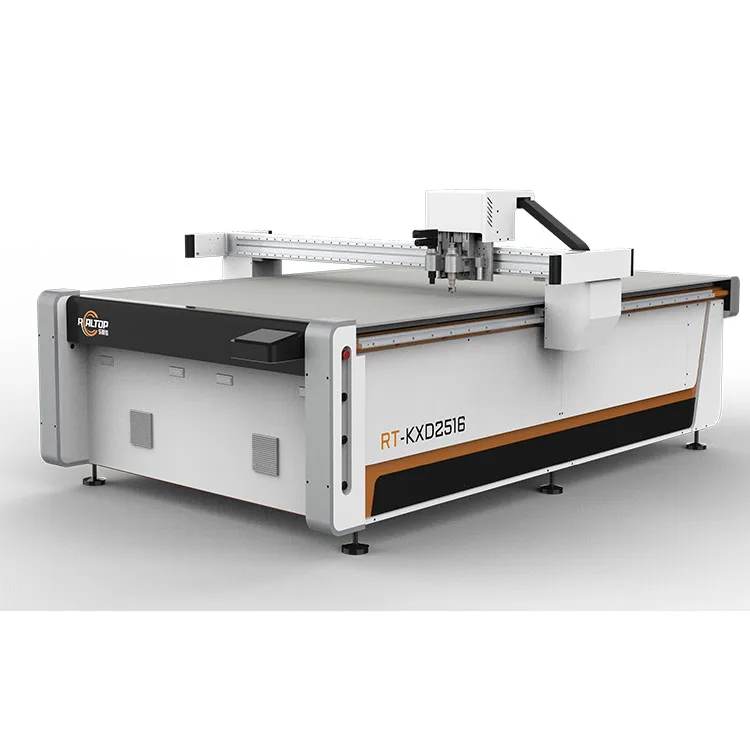
| Model | RT-D2516 / RT-S2516 |
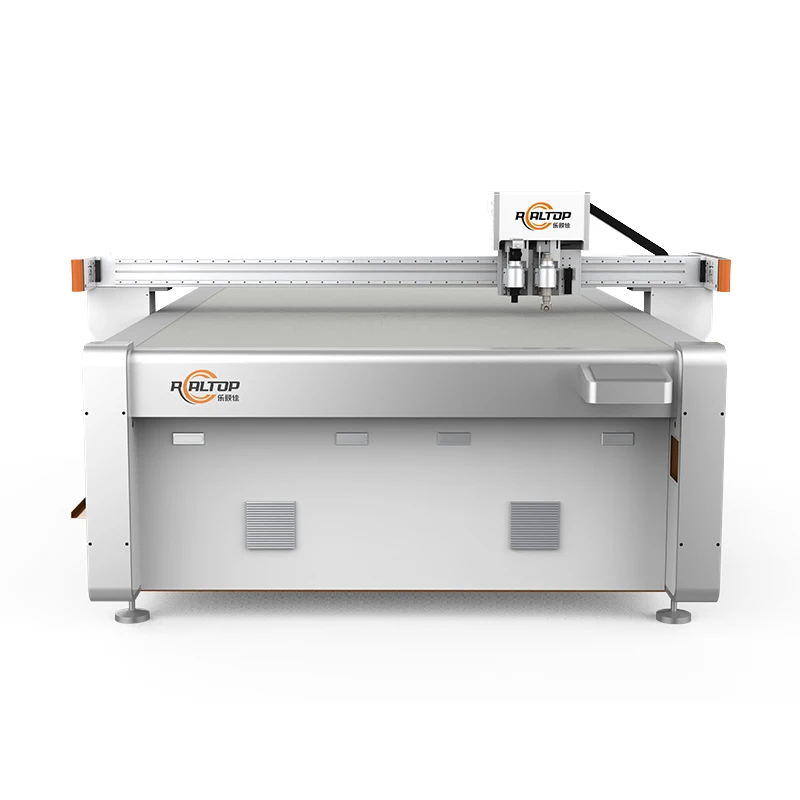
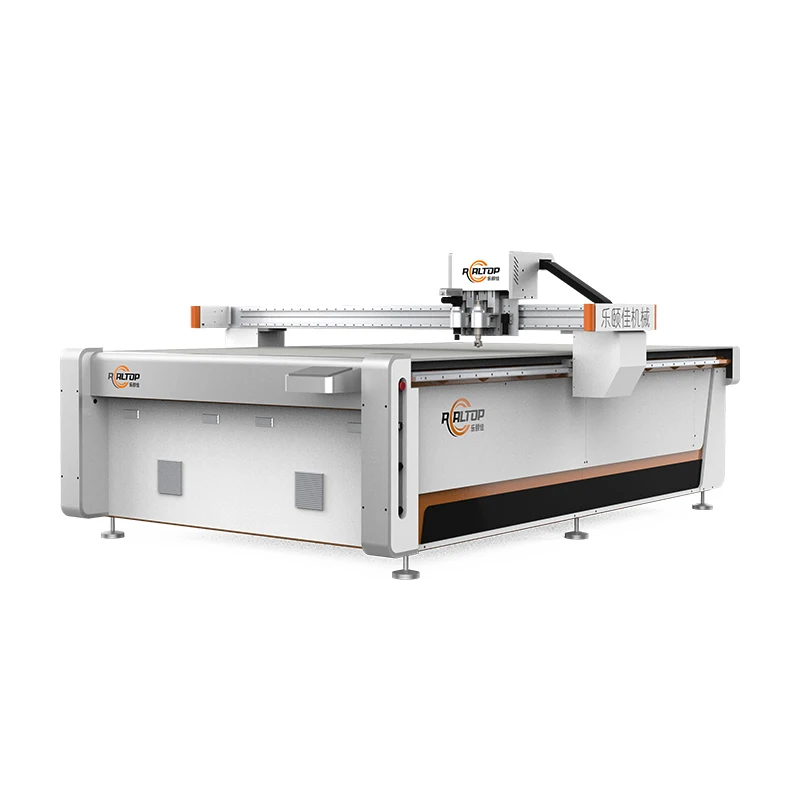
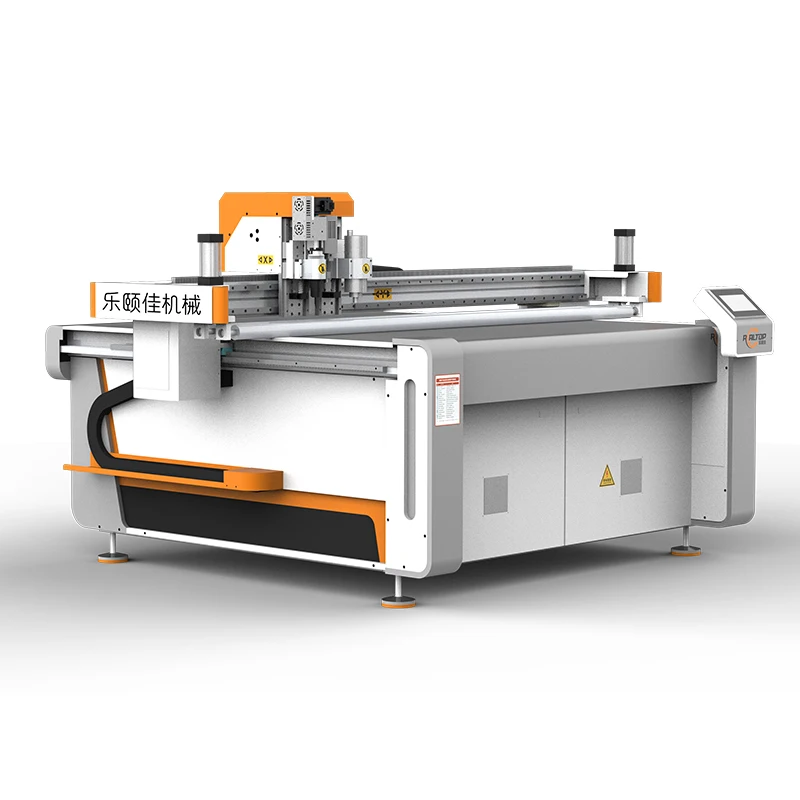
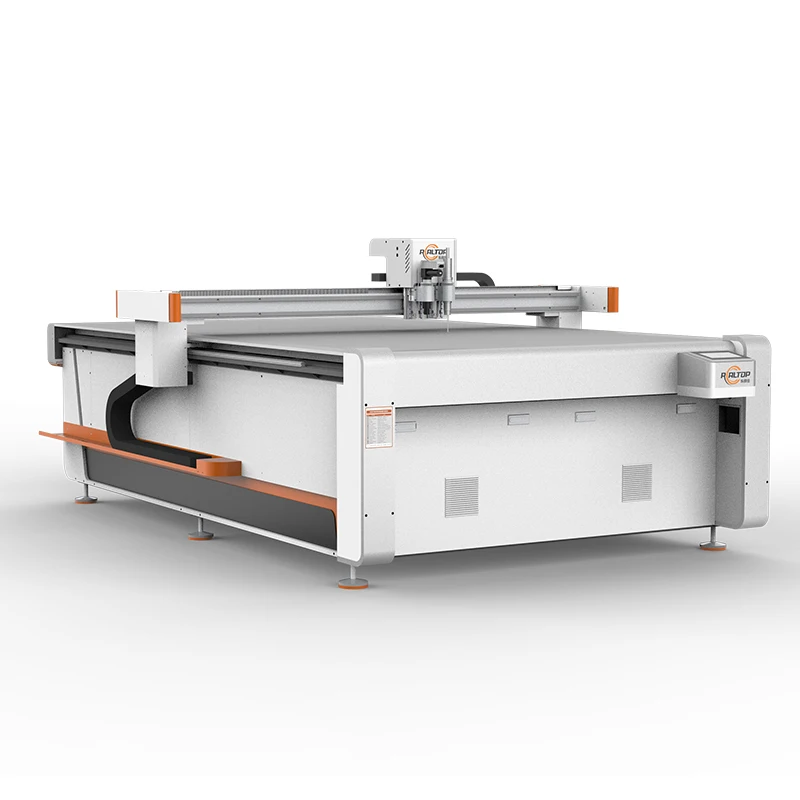
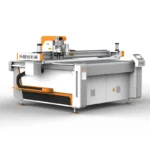
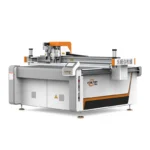
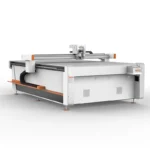
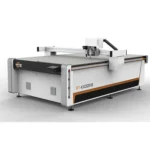
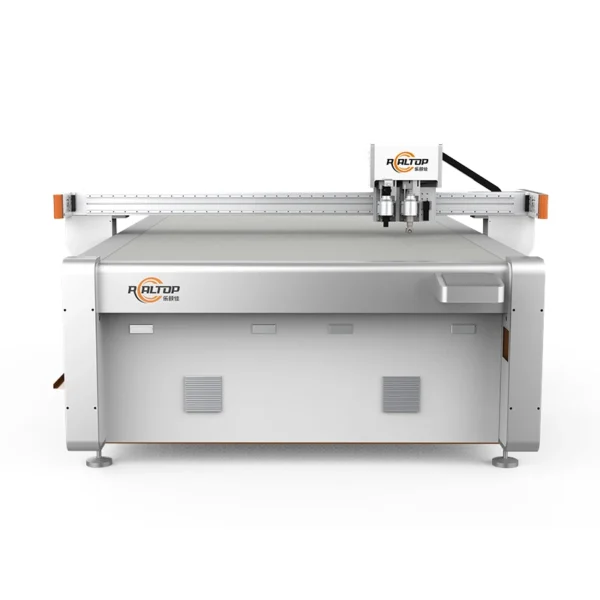
| Product Type | CNC Oscillating Knife Digital Cutting Table |
| Working Area | 1600 × 2500 mm |
| Machine Overall Dimensions | 3450 × 2300 × 1250 mm |
| Rated Power | 9 kW |
| Voltage | 380 V ±10% (frequency to be confirmed by market) |
| Control System | CNC with HP-GL compatible instruction format |
| Tool Head | Swiss imported oscillating knife with vibration full-cutting, half-cutting and cursor location |
| Maximum Cutting Thickness | ≤100 mm (varies by material density and tool head) |
| Translational Velocity | 800–2000 mm/s |
| Cutting Speed | 200–800 mm/s (according to different cutting materials) |
| Repeated Accuracy | ≤0.1 mm |
| Servo Motor | Taiwan Delta servo motors and drivers |
| Linear Guide | Taiwan Hiwin rail |
| Transmission | Synchronous belt, ball screw and rack transmission |
| Work Table | Aluminum alloy honeycomb vacuum adsorption platform with zoned auto-follow cutting area adsorption |
| Vacuum Pump | 7.5 kW |
| Conveyor Belt | Germany imported conveyor belt with auto feeding |
| Safety Device | Infrared sensors and emergency stop |
| Software | Professional carton nesting and cutting design software; supports multiple file format imports |
| Language Options | English, Russian, Italian, Chinese; other languages customizable |
| Certification | CE declaration where applicable (explicit cert numbers not stated in source) |
| Warranty | First year parts supplied free (buyer covers shipping); engineer dispatch available (buyer covers travel and accommodation) |
Application Suitability
| Application | Material or Output |
|---|---|
| Packaging carton sample cutting and creasing | Single, double and triple-wall corrugated board, honeycomb cardboard, greyboard |
| Sticker and label contour cutting | Self-adhesive vinyl, sticker stock, reflective sheeting |
| Cardboard box prototyping | Electrical appliance packaging, express logistics cartons, snack food packaging, high-end gift boxes |
| Business card and billboard cutting | Card stock, PVC foam board, corrugated plastic |
| Flexible material cutting | Leather, garment textiles, sponge composite leather, PVC, soft glass, silicone, rubber |
What the Cutting Thickness Figure Hides in CNC Oscillating Knife Cutting Table Specifications
A 100 mm rated cutting depth means nothing until the material density, tool head and vacuum hold-down are evaluated as a system.
I spent years on the assembly floor before moving to technical sales, and the pattern is always the same: a buyer sees "≤100 mm" on a spec sheet and assumes their honeycomb board will cut cleanly at production speed. Then the V-slot creasing comes out uneven, the edges crush on dense corrugated stock, and the actual throughput drops to half of what was expected. The cutting thickness number is only the starting point — the real answer depends on whether the oscillating knife frequency, the creasing wheel pressure and the vacuum zoning are all matched to your specific board grade [NEED_CITE: material density effect on oscillating knife cutting performance].
Knife Frequency and Creasing Pressure Are Not One Setting
The Swiss imported oscillating knife on the RT-D2516 / RT-S2516 delivers vibration full-cutting for through-cuts and vibration half-cutting for kiss-cuts and perforations. On standard single-wall corrugated, the knife cycles through cleanly at the upper end of the 200–800 mm/s cutting speed range. But when you switch to high-density honeycomb board or double-wall stock, the same knife frequency can leave ragged edges if the feed rate is not adjusted downward. The creasing wheel requires a separate pressure calibration — too shallow and the fold line cracks, too deep and the board fibers separate. This CNC oscillating knife cutting table specifications sheet lists the speed range, but the right combination for your material only emerges during sample cutting on your actual board stock.
Vacuum Zoning Decides Whether Small Parts Stay Flat
The aluminum alloy honeycomb table uses zoned auto-follow cutting area adsorption, meaning only the active cutting zone draws vacuum rather than the entire 1600 × 2500 mm surface. For large carton blanks this is straightforward. For small packaging components — think gift box inserts, divider panels or label sheets — the zoning must be tight enough to prevent edge lift as the knife exits the cut path. The 7.5 kW vacuum pump provides sufficient suction, but the zone configuration in the control software has to be matched to your typical part geometry [NEED_CITE: vacuum table zoning configuration for small part cutting]. When we quote a machine, we run your file on your material and check whether the smallest part in the nesting layout stays seated through the final cut.
Reading the Drive Train Against Repeatability Claims
The RT-D2516 / RT-S2516 pairs Taiwan Delta servo motors with Hiwin linear guides and a combination of rack and synchronous belt transmission. The ≤0.1 mm repeated accuracy figure reflects the mechanical loop — encoder resolution, gear mesh backlash and guide rail preload all contributing. In packaging sample making, this matters most on creasing lines that must align with printed graphics across a long sheet. If the rack segment covering the 2500 mm travel length has any pitch variation, crease lines drift relative to the print register by the end of the sheet. The translational velocity range of 800–2000 mm/s is available for rapid moves between cut paths; actual cutting speed is governed by material response, not drive capacity.
What Happens When the Configuration Is Wrong
A buyer once specified a machine purely on working area, without confirming that the vacuum zoning could handle the small die-cut windows in their gift box design. The parts lifted during the final contour pass, producing scrap on nearly every sheet until we reprogrammed the zone sequence and added a second hold-down pass. On another job, a corrugated producer ran dense honeycomb board at the standard oscillating frequency and wondered why the V-slot edges crumbled — the knife was vibrating faster than the board fibers could shear cleanly [NEED_CITE: tool head selection effect on corrugated edge quality]. These are not machine defects; they are configuration mismatches that surface only when the actual material enters the cutting zone.
Why Source This Machine From the Factory That Builds It
The design team and core factory sit under one roof in Jinan, so the oscillating knife, creasing wheel and drag knife tool heads are specified against your material rather than sold as a standard bundle. The honeycomb vacuum table zoning is programmed after reviewing your nesting layout, not left at a default setting. Software file-format compatibility is confirmed against your existing CAD output before the order is placed, avoiding the post-delivery discovery that your DXF or PLT files will not import correctly. Voltage, plug type and control language are locked in the specification sheet at quotation stage. And sample cutting on your own board stock happens before commitment, so the cutting speed, tool pressure and vacuum behavior are documented in a report you can review — not promised in a brochure.
Documentation & Verification
- Machine specification sheet listing confirmed tool head and table configuration per material
- Electrical schematic with voltage and frequency matched to your facility supply
- Sample cutting report on your board grade, thickness and file format
- Software licence with file format compatibility note for your CAD workflow
- Spare parts list covering oscillating knife blades, creasing wheels and conveyor belt sections
- Packing photographs taken at factory gate before crate closure
Installation, Commissioning & Support
- The 3450 × 2300 mm footprint requires a level concrete floor with clearance for the 7.5 kW vacuum pump exhaust routing
- A dedicated 380 V ±10% circuit with appropriate breaker rating must be in place before the 9 kW machine is energized
- The aluminum honeycomb table arrives pre-mounted; the gantry and tool head carriage are assembled and calibrated on-site
- First-run commissioning includes vacuum zone mapping on your actual packaging stock and creasing pressure calibration
- Operator training covers the HP-GL compatible control, nesting software and tool head changeover between oscillating knife and creasing wheel
- Consumable spares including knife blades and creasing wheels ship with the machine; reorder lead times confirmed at dispatch
Before You Request a Quote
Send your typical material type, board grade and thickness range along with a representative cutting file so we can run a sample on your stock. Confirm your facility voltage, frequency and plug type as well as the control language your operators need. If you have existing nesting software or an upstream CAD workflow, tell us the file formats so we verify compatibility before building your configuration.
Frequently Asked Questions
Q: How do I verify the cutting thickness capability for my specific board grade?
A: The ≤100 mm figure applies under ideal conditions on standard-density corrugated. Actual cutting depth depends on board density, fiber orientation and moisture content. We cut samples on your exact material at multiple speeds and document the clean-cut threshold in a report before you commit to an order.
Q: Which tool head should I use for corrugated board versus sticker vinyl?
A: The oscillating knife handles through-cutting on corrugated and cardboard stock. The creasing wheel scores fold lines without severing fibers. For sticker and vinyl contour cutting, a drag knife or high-frequency oscillating setting produces cleaner edges. We configure the tool head list based on your material mix.
Q: How does vacuum zoning prevent small packaging parts from lifting?
A: The honeycomb table divides the surface into independently controlled zones that follow the active cutting path. For small parts, tighter zone assignment keeps suction concentrated where the knife is working, reducing the chance of edge lift on final contour passes.
Q: What voltage and language options are available for my market?
A: The standard supply is 380 V ±10%, with plug type and frequency confirmed per destination market. Control languages include English, Russian, Italian and Chinese as standard, with additional languages configurable. All electrical details are locked in the specification sheet before production.
Q: What documentation arrives with the machine?
A: You receive the specification sheet, electrical schematic, sample cutting report, operation manual, software licence with file format note, spare parts list and factory test record. CE declaration is provided where applicable to your import requirements.


商品评价
Clear filtersThere are no reviews yet.