


Fast Shipping
Carrier information

20k products
Payment methods

24/7 Support
Unlimited help desk

2-day Delivery
Track or off orders
Blade Configuration Matched to Material — Our in-house design team pairs the oscillating knife type, vibration frequency, and vacuum zoning to your specific corrugated board, foam, or leather stock before the order is finalized.
Technical Specifications
| Parameter | Value |
|---|---|
| Model | RT-D2516/RT-S2516 |
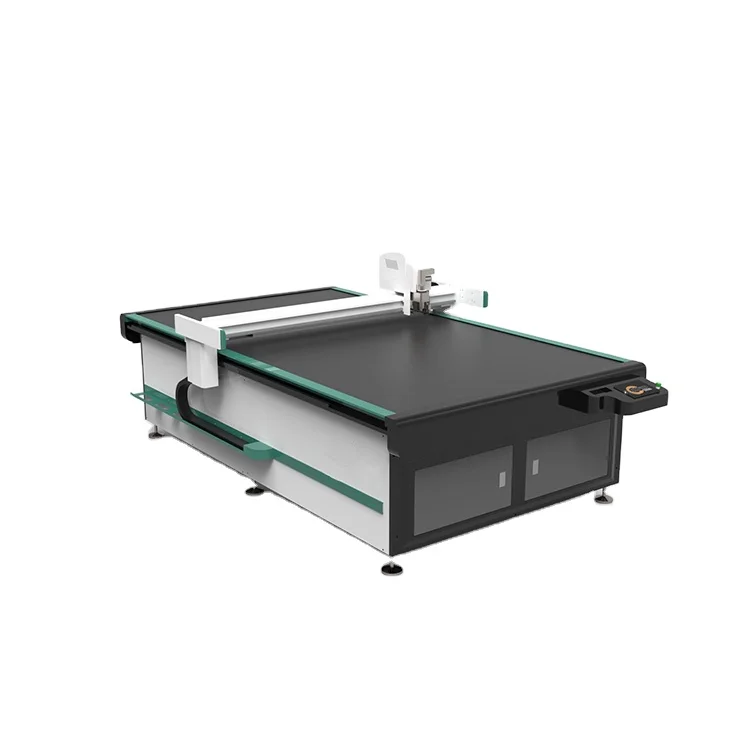
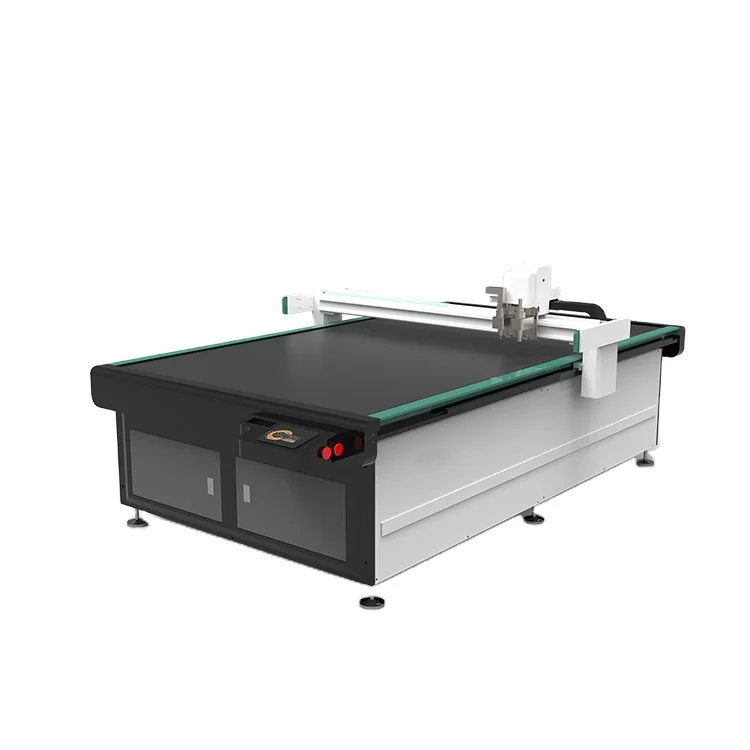
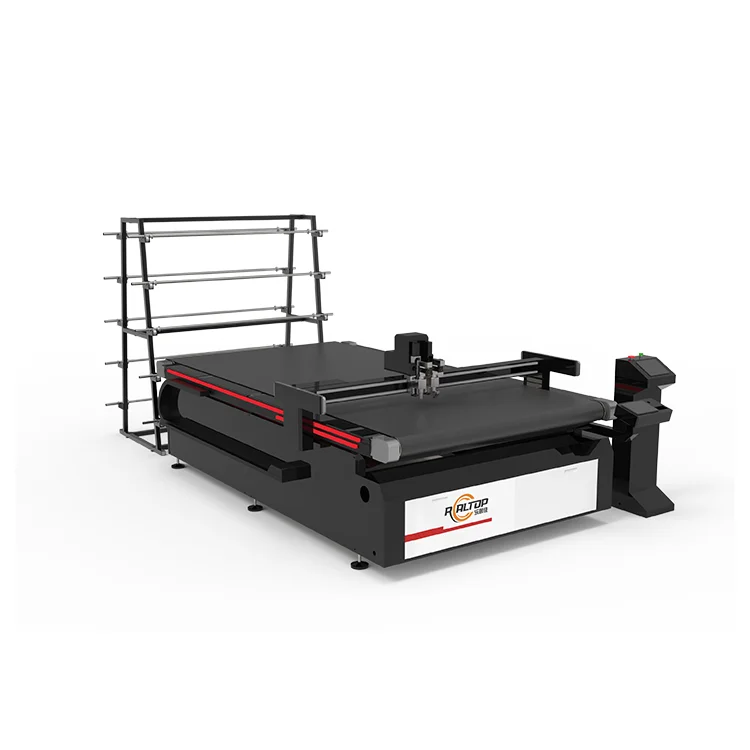
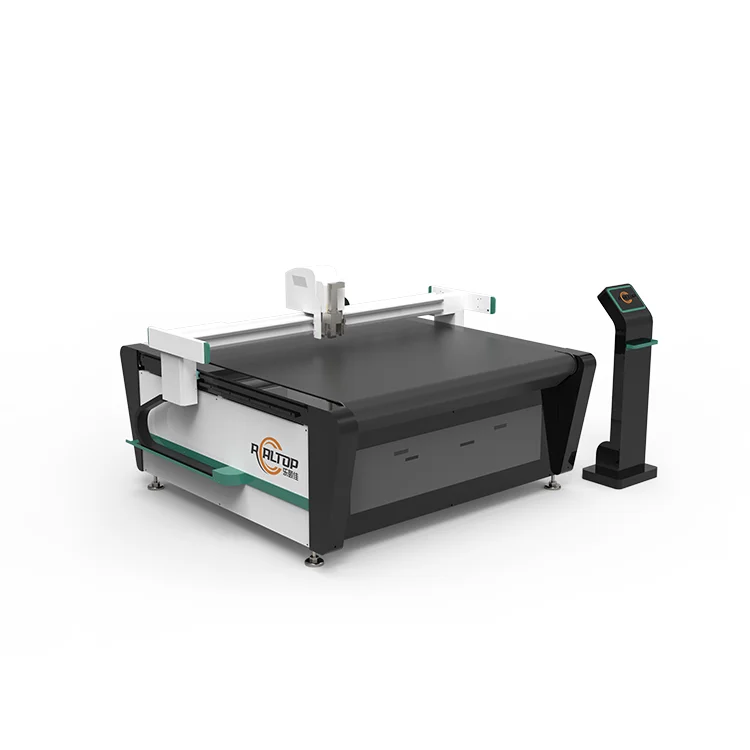
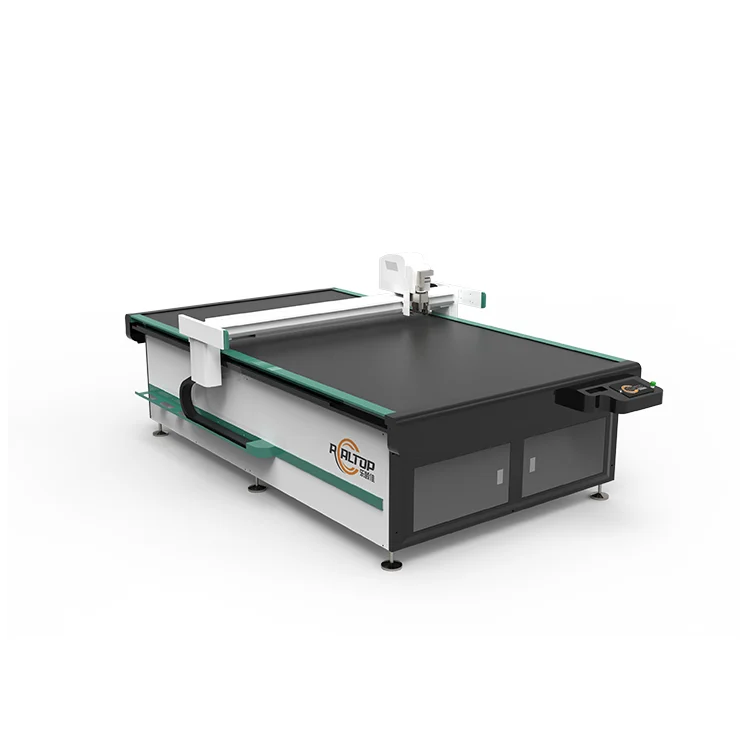
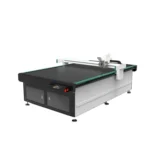
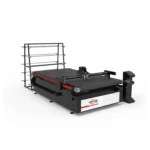
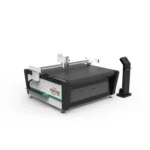
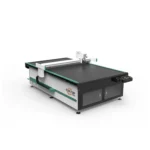
| Product Type | CNC Oscillating Knife Cutting Machine |
| Working Area | 1600×2500mm |
| Overall Dimensions (L×W×H) | 3450×2300×1250mm |
| Rated Power | 9kW |
| Vacuum Pump Power | 7.5kW |
| Working Table | Flat vacuum working table with auto feeding |
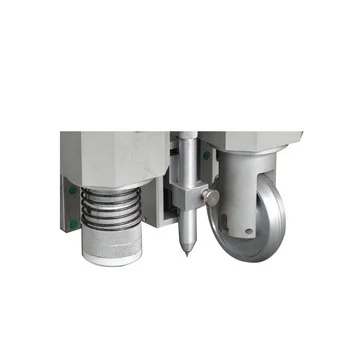
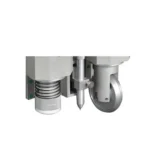
| Tool Head | Swiss imported knife with vibration full cutting, half cutting, and cursor location |
| Pneumatic Cutting Capacity | Up to 70mm thickness |
| Translational Velocity | 800–1200mm/s |
| Cutting Speed | 200–800mm/s (basis to be confirmed depending on material density) |
| Repeated Accuracy | ≤0.1mm |
| Transmission System | Digital servo motor, linear guide, synchronous belt, imported ball screw |
| Servo Motor | Japanese Yaskawa |
| Linear Rail | Taiwan Hiwin |
| Conveyor Belt | Germany imported |
| Instruction System | HP-GL compatible format |
| Voltage | 380V±10% |
| Safety Device | Infrared sensors |
| Functions | Cutting, creasing, marking |
| Assembly State | Fully assembled |
Application Suitability
| Application | Material or Output |
|---|---|
| Packaging sample making and carton prototyping | Corrugated board, grey board, folding cartons |
| Gasket and seal production | Rubber, silicone, sponge composite leather |
| Leather goods and footwear manufacturing | Genuine leather, synthetic PU/PVC leather |
| Flexible clothing and textile processing | Fabric layers, flexible composite materials |
| Sticker and label contour cutting | Vinyl, adhesive films, soft glass |
What "Up to 70mm Thickness" Leaves Out in CNC Oscillating Knife Cutting Machine Specifications
Maximum cutting depth depends entirely on material density, not just the stroke of the pneumatic tool.
Buyers often see a headline figure for cutting thickness and assume it applies across every material they run. In reality, cutting 70mm of low-density foam demands a very different blade profile, vibration frequency, and vacuum hold-down strategy compared to cutting 15mm of dense rubber gasket material. When the tool head is not matched to the actual stock, the blade either * leaves ragged, frayed edges that fail quality inspection [NEED_CITE: cutting force requirements by material density]. I have seen entire batch runs scrapped because the test used standard corrugated board while the production floor was running recycled stock with a heavy coating.
Blade Selection and Vibration Modes for Edge Quality
The Swiss imported knife system on this flatbed digital cutting table provides both vibration full cutting and half cutting modes. Full cutting is used when the blade must penetrate entirely through dense materials like rubber gaskets or multi-layer leather, ensuring a clean through-cut without leaving uncut fibers at the base. Half cutting is essential for kiss-cut applications like sticker sheets or creasing lines on carton prototypes, where the blade must score the top layer without damaging the conveyor belt underneath. Selecting the correct CNC Oscillating Knife Cutting Machine specifications requires knowing which mode dominates your daily workflow.
Vacuum Zoning and Material Hold-Down Dynamics
Holding the workpiece flat is just as critical as the cutting action itself. The 7.5kW vacuum pump paired with the flat working table generates the suction needed to keep flexible materials from shifting during high-speed passes. When processing small gasket parts or intricate carton sample geometries, an inadequately zoned vacuum table allows edges to lift, causing the oscillating knife to catch and tear the material. Properly configured zones ensure that suction is concentrated exactly where the cutting head is operating, maintaining dimensional accuracy within the ≤0.1mm repeated positioning tolerance [NEED_CITE: vacuum table zoning principles for flatbed cutters].
Translational Speed Versus Actual Cutting Speed Through the Material
The specification sheet lists translational velocity at 800–1200mm/s and cutting speed at 200–800mm/s. These two numbers describe entirely different machine behaviors. Translational velocity is the speed at which the gantry moves between cuts when the knife is retracted—essentially, how fast the machine repositions. Cutting speed is the actual travel rate while the blade is engaged with the material. Dense materials like thick PVC or silicone force the operator to run at the lower end of the cutting speed range to prevent blade deflection and maintain the ≤0.1mm repeated accuracy. Japanese Yaskawa servo motors and Taiwan Hiwin linear rails provide the mechanical rigidity needed to sustain these speeds without positional drift over long production shifts.
The Hidden Cost of Skipping Material-Specific Tooling Tests
Choosing a tool head based on a general catalog description rather than testing it on your actual production material leads to compounding problems. A knife configured for standard corrugated board will struggle with recycled stock containing adhesive residues, causing premature blade wear and crushed edges. Foam gaskets cut with the wrong vibration frequency develop compressed edges that do not seal properly when installed. These defects are often discovered only after the machine is installed and running on the factory floor, where downtime costs multiply quickly [NEED_CITE: cost impact of incorrect tooling configuration in digital cutting].
Why Sourcing from an In-House Design and Production Facility Matters
This equipment is developed by a manufacturer that designs and produces both knife and laser cutting systems, meaning the cutting method is selected based on material compatibility rather than forcing every job onto one technology. The tool head and table configuration is specified per material and production volume, supported by a sample cutting report on your exact stock before the order is confirmed. Software compatibility, including HP-GL file format import, is verified during the pre-order stage. Voltage and control language are customized to the destination facility, and the machine ships fully assembled with a complete CE declaration where applicable [NEED_CITE: CE machinery directive requirements for industrial cutting equipment].
Documentation & Verification
- Factory test record demonstrating cutting speed and repeatability on your specific material thickness range
- Tool head and vacuum table configuration list detailing knife type and zone layout
- Software licence and file format compatibility note confirming HP-GL workflow integration
- Electrical schematic with voltage confirmation matching your facility power supply
- Sample cutting report showing edge quality achieved on your supplied material stock
- Operation and maintenance manual with spare parts list for the oscillating knife assembly
Installation, Commissioning & Support
- The 3450×2300mm footprint requires a level floor with adequate clearance for the auto feeding conveyor
- A dedicated 380V±10% circuit must be provisioned to supply the 9kW rated power and 7.5kW vacuum pump
- The machine ships fully assembled, requiring only utility connections and safety system verification on arrival
- First-run commissioning includes oscillating knife parameter tuning and vacuum table zone calibration on your material
- Operator training covers tool head changes, creasing wheel setup, and nesting software workflow
- Spare parts list covers Swiss imported blades, conveyor belt segments, and infrared sensor units
Preparing Your Inquiry for a Packaging and Material Cutting Solution
To receive a configuration that actually performs on your production floor, provide the material type, maximum thickness, sheet dimensions, and daily volume you need to process. Specify your local voltage standard and required control interface language. If you are running printed materials that require contour tracking, note whether your existing workflow uses specific file formats so software compatibility can be confirmed. Sending a sample of your actual stock for cutting tests is the most reliable way to validate the tool head selection before the machine is built.
Frequently Asked Questions
Q: How do I select the right tool head for my material thickness and edge quality requirement?
A: Tool head selection depends on material density and the edge finish your product demands. The Swiss imported knife offers vibration full cutting for dense through-cuts and half cutting for kiss-cut scoring. We recommend running a sample cutting test on your actual stock to verify blade profile and vibration frequency before finalizing the configuration.
Q: What is the realistic maximum cutting thickness for corrugated board versus foam gaskets?
A: The pneumatic cutting tool handles up to 70mm thickness, but effective cutting depth varies by material. Low-density foam can be processed near the maximum stroke, while dense rubber or thick grey board requires slower speeds and may have a lower practical limit. A sample cutting report on your specific material confirms the achievable depth.
Q: How does vacuum table zoning prevent small parts from lifting during cutting?
A: The 7.5kW vacuum pump creates suction across the flat working table to hold material in place. Zoned vacuum areas concentrate hold-down force around the cutting path, preventing small parts like gaskets or carton details from lifting into the oscillating knife and causing edge tears or positional errors.
Q: Which file formats does the control software accept for packaging and gasket workflows?
A: The instruction system is compatible with HP-GL format, which covers most standard CAD outputs used in packaging sample making and gasket design. File format compatibility is confirmed during the pre-order stage to ensure the software integrates with your existing nesting workflow and design environment.
Q: Can I send my material for sample cutting to verify configuration before placing the order?
A: Yes. Sending your actual production material allows the engineering team to test the oscillating knife parameters, vacuum hold-down, and cutting speed on your specific stock. A sample cutting report is provided showing edge quality, dimensional accuracy, and achievable throughput before commitment.


商品评价
Clear filtersThere are no reviews yet.