








Fast Shipping
Carrier information

20k products
Payment methods

24/7 Support
Unlimited help desk

2-day Delivery
Track or off orders
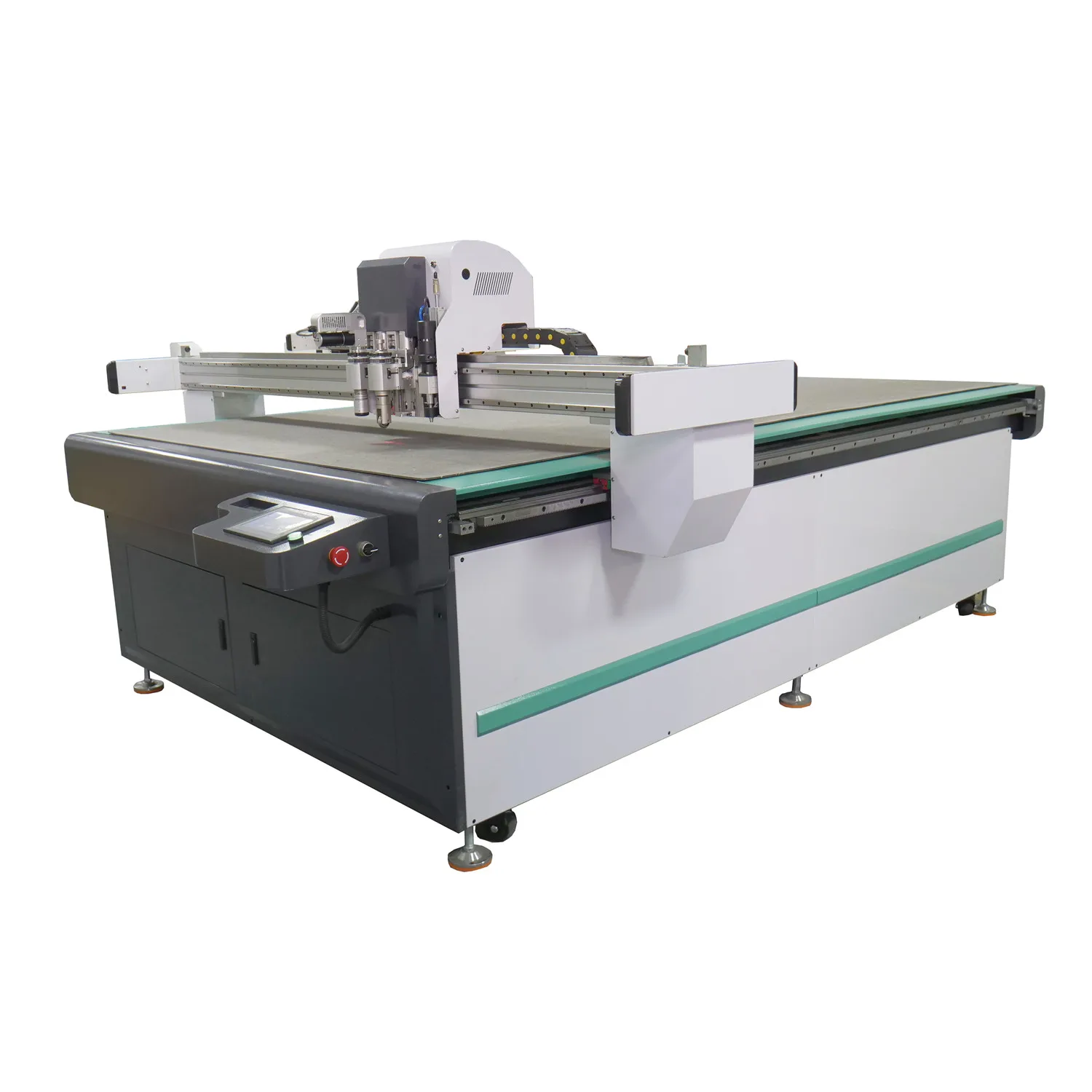
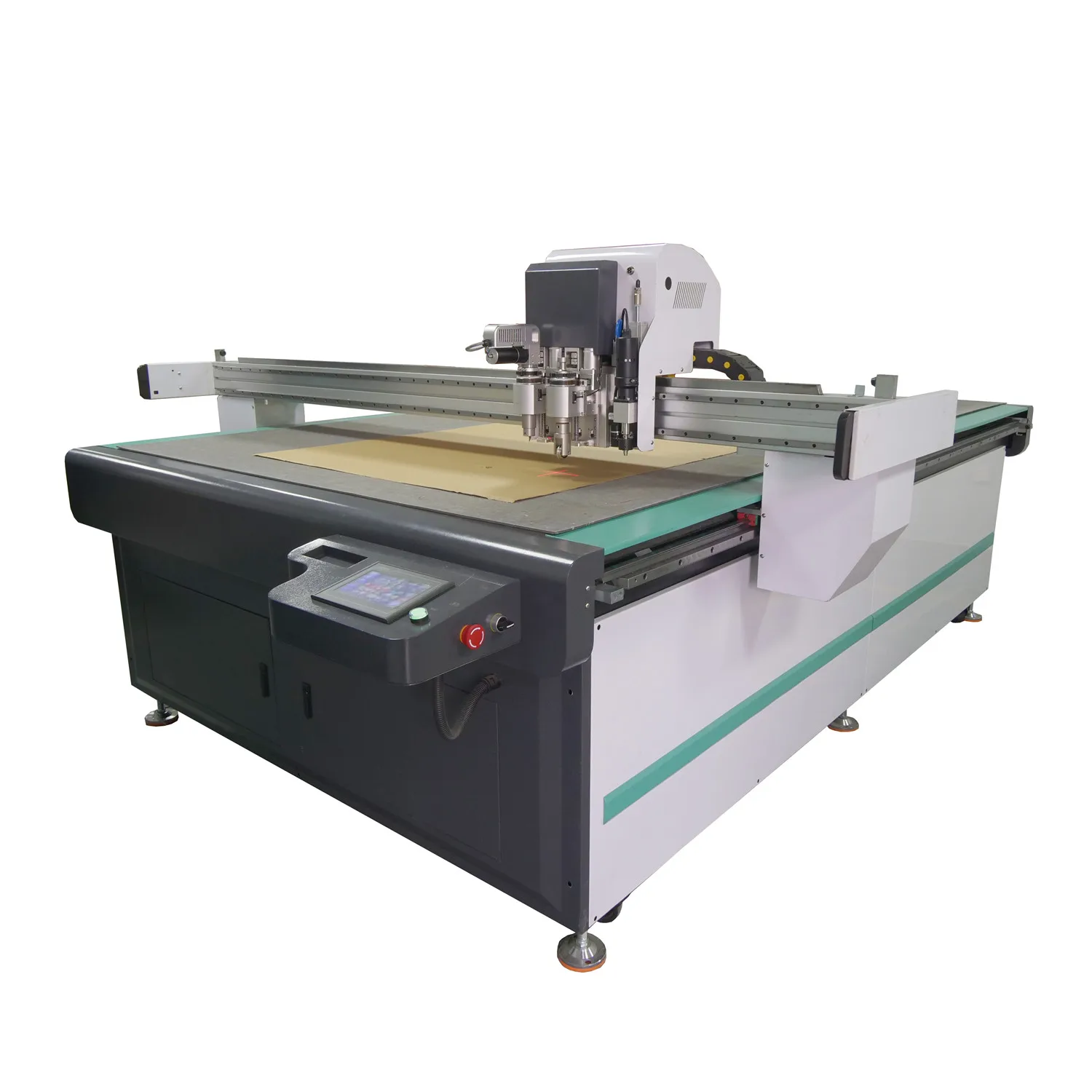
Oscillating and drag knife tool heads specified per corrugated board grade — in-house design lets us match the cutting method and crease wheel to your flute profile rather than forcing a generic setup onto packaging stock.
Technical Specifications
| Parameter | Value |
|---|---|
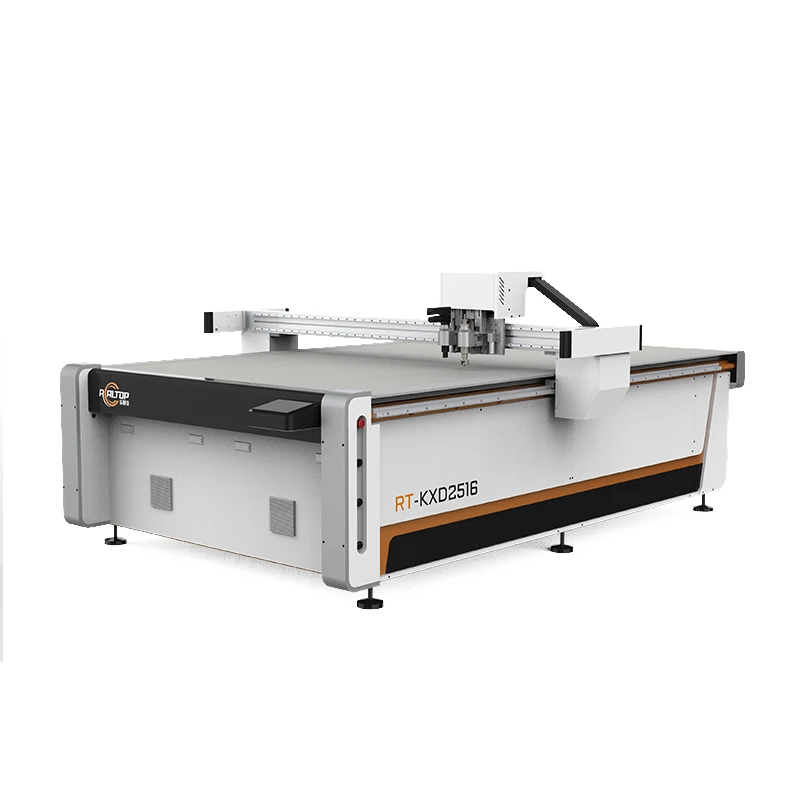
| Model | RT-D2516/RT-S2516 |
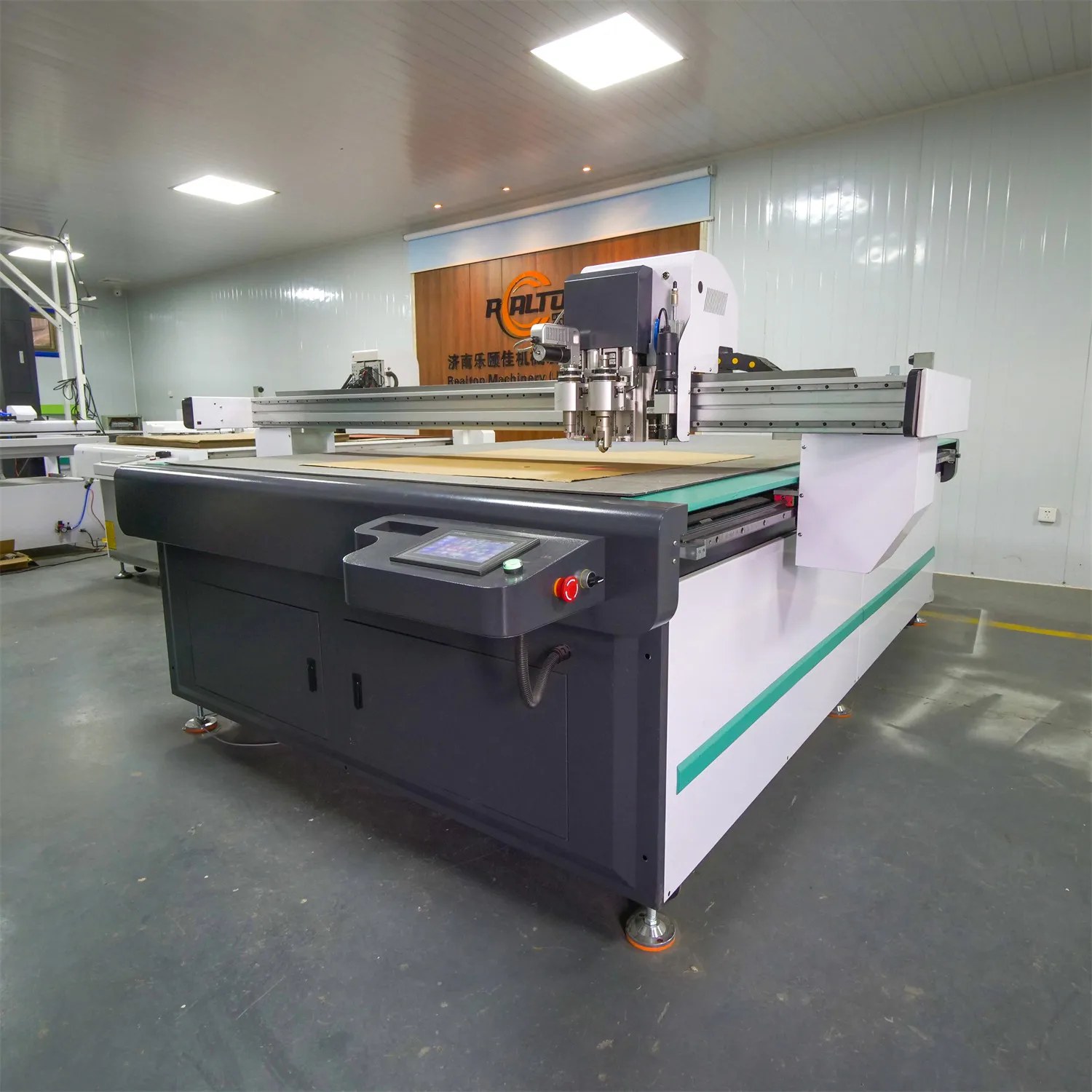
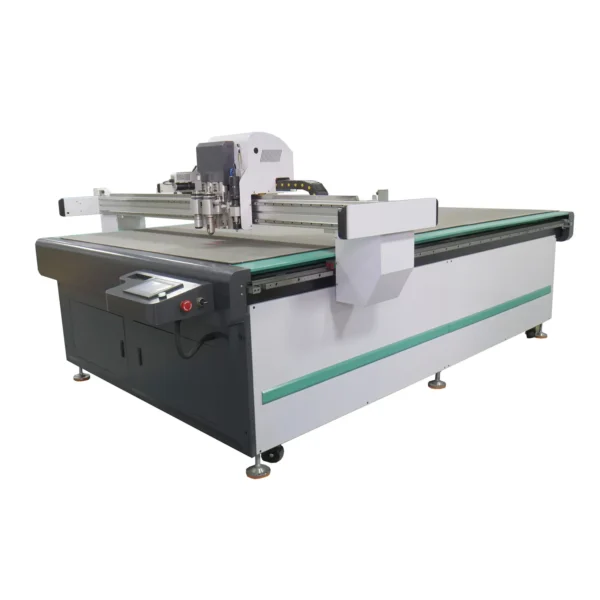
| Product Type | CNC Vibration Knife Cutting Machine |
| Working Area | 1600 × 2500 mm |
| Machine Size | 3450 × 2300 × 1250 mm |
| Rated Power | 9 kW |
| Working Table | Flat aluminum alloy honeycomb vacuum adsorption platform with automatic zone following |
| Multifunctional Head | Swiss-imported knife with vibration full cutting, vibration half cutting, and cursor location |
| Safety Device | Infrared sensors |
| Translational Velocity | 800–2000 mm/s |
| Cutting Speed | 200–800 mm/s (varies by material) |
| Cutting Thickness | Up to 100 mm (varies with material) (basis to be confirmed) |
| Repeated Accuracy | ≤0.1 mm |
| Transmission System | Digital servo motor, linear guide, synchronous belt, ball screw (imported) |
| Instruction System | HP-GL compatible format |
| Voltage | 380V ± 10% |
| Servo Motor | Delta |
| Guide Rail | Taiwan Hiwin |
| Vacuum Pump | 7.5 kW |
| Auto Feeding | Germany imported conveyor belt (basis to be confirmed) |
| Software | Professional carton nesting software, multi-language support (English, Russian, Italian, Chinese, customizable) |
| Standards | CE (basis to be confirmed) |
Application Suitability
| Application | Material or Output |
|---|---|
| Corrugated carton box cutting and creasing | Single-wall and double-wall corrugated board, E/B/C/BC flute profiles |
| Packaging sample making | Cardboard, gray board, honeycomb board for short-run prototypes without die tooling |
| Sticker and label contour cutting | Self-adhesive vinyl, sticker sheets on backing paper |
| Signage and POP display production | Foam board, PVC foam, honeycomb paper board |
| Custom box orders for consumer goods | Electrical appliance packaging, express paper box, snack food and gift box stock |
Why Board Thickness Alone Is Not Enough to Specify a CNC Knife Cutting Table
Flute profile, liner weight, and moisture content all change how the board reacts under the knife, and a cutting depth quoted in millimeters means nothing without the board grade beside it.
I watched a packaging line go down because the machine was sized on working area but the corrugated stock turned out a full grade stiffer than the sample we tested. The tool head wore out in weeks, and creases split on the fold. Specifying a CNC oscillating knife cutting table requires the actual board in hand before the configuration is locked [NEED_CITE: corrugated board grade classification and flute profiles].
Tool Head Selection by Flute and Board Weight
The Swiss-imported oscillating knife on the RT-D2516/RT-S2516 handles full-cut and half-cut modes in a single pass. For E-flute micro-corrugated used in retail packaging, the vibration frequency and blade angle produce a clean edge without crushing the flutes. When the job shifts to BC-flute double-wall for appliance shipping boxes, the drag knife or a stiffer oscillating blade takes over to push through the combined thickness. Creasing wheels pair with either setup so that fold lines compress the liner rather than cut it. This is what we confirm during the sample cutting run before any configuration is finalized.
Vacuum Zoning and Small-Part Hold-Down
How Automatic Zone Following Keeps Blanks Flat
The 7.5 kW vacuum pump feeds an aluminum alloy honeycomb platform divided into zones. When a small carton blank sits in one corner of the 1600 × 2500 mm bed, the system activates only the zones under that part. Without this, full vacuum across the entire table wastes energy and still fails to grip lightweight board at the edges. During high-speed cuts at 800 mm/s translational velocity, the automatic zone following prevents the tail end of a blank from lifting into the knife path — a problem that ruins crease accuracy and can snap a blade [NEED_CITE: vacuum table zoning principles for flatbed digital cutters].
Reading the Specs That Actually Matter for Packaging
Cutting speed on the RT-D2516/RT-S2516 ranges from 200 to 800 mm/s depending on material, and that range exists because corrugated board is not uniform. A single-wall B-flute sheet cuts fast and clean; a moisture-heavy double-wall BC sheet forces the knife to slow down or risk ragged edges. Repeatability of ≤0.1 mm across the Taiwan Hiwin linear guides and Delta servo drive means that when the nesting software lays out fifty carton blanks on one sheet, every crease lands in the same spot. The HP-GL compatible instruction system imports standard DXF files from common packaging design software, and the carton nesting engine handles multi-language output for shops running operators on different language interfaces.
What Happens When the Configuration Misses the Material
A machine ordered on working area alone arrives with a tool head that crushes C-flute instead of slicing it. Crease wheels set too shallow score the liner and the box splits at the fold line. Vacuum zones that do not match the blank size let small carton pieces drift during the final cut, pushing tolerances past what the linear guides can hold. These are not warranty claims — they are configuration mismatches that could have been caught with a sample cutting report [NEED_CITE: tooling selection for oscillating knife cutting on corrugated substrates].
Why Packaging Producers Source This Build Here
The oscillating and drag knife heads are designed in-house, so a buyer running mixed flute profiles can switch tooling without replacing the entire head assembly. The honeycomb vacuum table with zone following is specified to the blank sizes actually produced, not a one-size-fits-all grid. Software compatibility is confirmed against the buyer’s existing DXF workflow and nesting preferences before the order is placed. Voltage and control language are locked in writing — 380V ± 10% is standard, but plug type and interface language vary by destination. Every machine ships with a sample cutting report run on the buyer’s own board stock.
Documentation & Verification
- Factory test record run on your corrugated board grade and flute profile before dispatch
- Tool head and creasing wheel configuration list matched to your board thickness and crease depth
- Electrical schematic confirming 380V ± 10% wiring, plug type, and breaker rating for your facility
- Software licence and DXF file format compatibility note for your existing packaging design workflow
- Spare parts list with Swiss knife blades, creasing wheels, and vacuum pump consumables itemized
Installation, Commissioning & Support
- Floor must support the 3450 × 2300 mm footprint plus clearance for the 7.5 kW vacuum pump and conveyor feed
- Dedicated 380V ± 10% circuit with breaker sized for 9 kW rated power plus vacuum pump draw
- Machine ships assembled; Hiwin guide rails and Delta servos require level verification on-site
- First-run calibration sets oscillating knife frequency and crease wheel pressure on your board stock
- Operator training covers HP-GL file import, nesting software layout, and automatic zone following setup
- Swiss knife blade replacement interval and vacuum pump filter schedule documented in the maintenance manual
What We Need to Quote the Right Configuration
Send us the corrugated board grades and flute profiles you run most often, along with typical blank dimensions and daily sheet volume. Let us know your facility voltage and frequency, the language your operators prefer on the control interface, and whether your design team works in DXF, AI, or another file format. If you can ship a stack of your actual board, we will run a sample cutting and return the test report with the quotation.
Frequently Asked Questions
Q: How is cutting thickness verified for different corrugated flute profiles?
A: We run your actual board stock — E, B, C, or BC flute — on the RT-D2516/RT-S2516 before finalizing the configuration. The sample cutting report documents knife type, cutting speed, edge quality, and crease depth on each flute profile you supply, so the quoted cutting thickness reflects your material, not a catalog maximum.
Q: Which tool head fits my board grade and crease depth?
A: Oscillating knife suits most single-wall and lightweight double-wall corrugated. Heavier BC-flute or thick honeycomb board may need a drag knife or stiffer blade. Creasing wheels are selected by liner weight and required fold radius. We confirm the tool head combination during the sample run on your board.
Q: Is the vacuum table zoned for small carton blanks?
A: The aluminum honeycomb platform uses automatic zone following. When a small blank occupies one section of the 1600 × 2500 mm bed, only the zones beneath it activate. This prevents lift at cutting speeds up to 800 mm/s without wasting vacuum capacity on empty table area.
Q: What file formats does the nesting software import?
A: The HP-GL compatible system accepts standard DXF files from common packaging CAD tools. AI and other vector formats are confirmed during the pre-order software check. The interface supports English, Russian, Italian, Chinese, and other languages configurable before shipment.
Q: Can I send my own board for testing before ordering?
A: Yes. Ship your corrugated board samples and we run them on the machine configured to your specifications. The sample cutting report returns with your quotation, covering edge quality, crease integrity, and cutting speed for each board grade you provided.


商品评价
Clear filtersThere are no reviews yet.