







Fast Shipping
Carrier information

20k products
Payment methods

24/7 Support
Unlimited help desk

2-day Delivery
Track or off orders
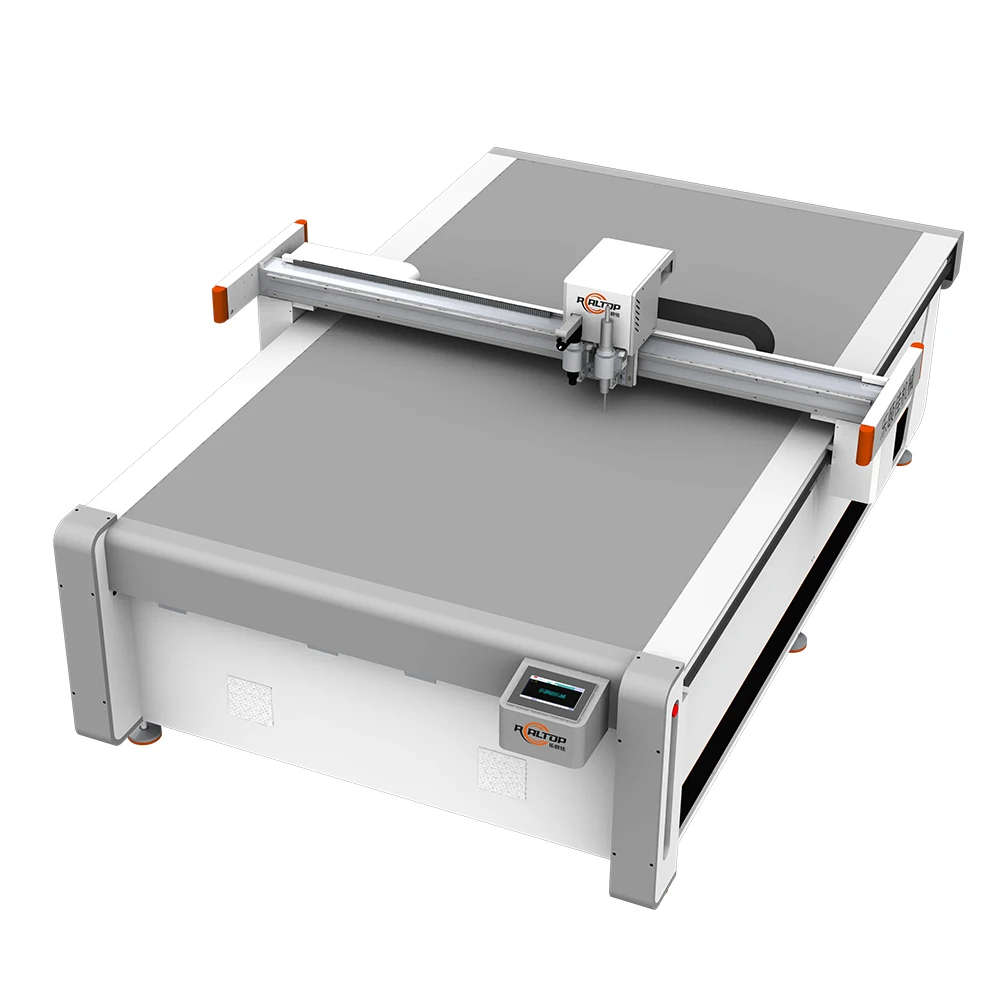
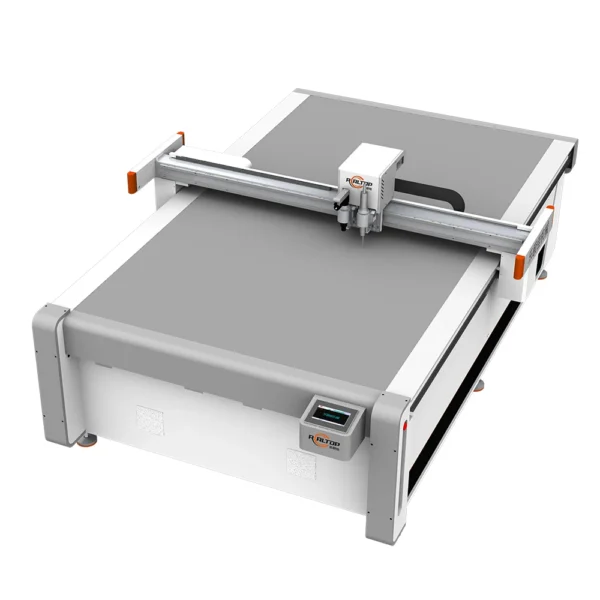
Modular Tool Head Platform — Oscillating knife, drag knife, creasing wheel, and V-cutting configurations available on a single flatbed chassis, matched to material density and fold-line requirements before shipment.
Technical Specifications
| Parameter | Value |
|---|---|
| Product Type | CNC Oscillating Knife Cutting Machine |
| Model | RT-D2516 / RT-S2516 |
| Working Area | 1600 × 2500 mm |
| Machine Dimensions | 3450 × 2300 × 1250 mm |
| Rated Power | 9 kW |
| Voltage | 380V ± 10% |
| Table Configuration | Flat working table or Auto feeding table |
| Tool Head Options | Oscillating knife, pneumatic knife, high-power vibrating knife, circular knife, V-cutting knife, drag knife, creasing wheel, dotted line knife, punching, brush |
| Vacuum Pump | 7.5 kW |
| Vacuum Table | Aluminum air box platform, integrated adsorption, split box support |
| Transmission System | Digital servo motor, linear guide, synchronous belt, ball screw |
| Servo Motor Options | Delta (China) or Panasonic (Japan) |
| Repeated Accuracy | ≤ 0.1 mm |
| Translational Velocity | 800 – 2000 mm/s |
| Cutting Speed | 200 – 800 mm/s (basis not stated in source — depends on material type and thickness) |
| Cutting Thickness | ≤ 100 mm (varies with material) |
| File Formats Supported | PLT, DXF, AI (HP-GL compatible instruction system) |
| Nesting Software | Auto typesetting software included |
| Visual Positioning Options | Small CCD camera mark point positioning, panoramic camera recognition, projection positioning |
| Control Panel | Touch screen, multiple languages (English, Russian, Italian, Chinese, customizable) |
| Conveyor Belt | Germany imported |
| Linear Rail | Taiwan Hiwin |
| Safety Devices | Infrared sensors, anti-collision, emergency stop |
Application Suitability
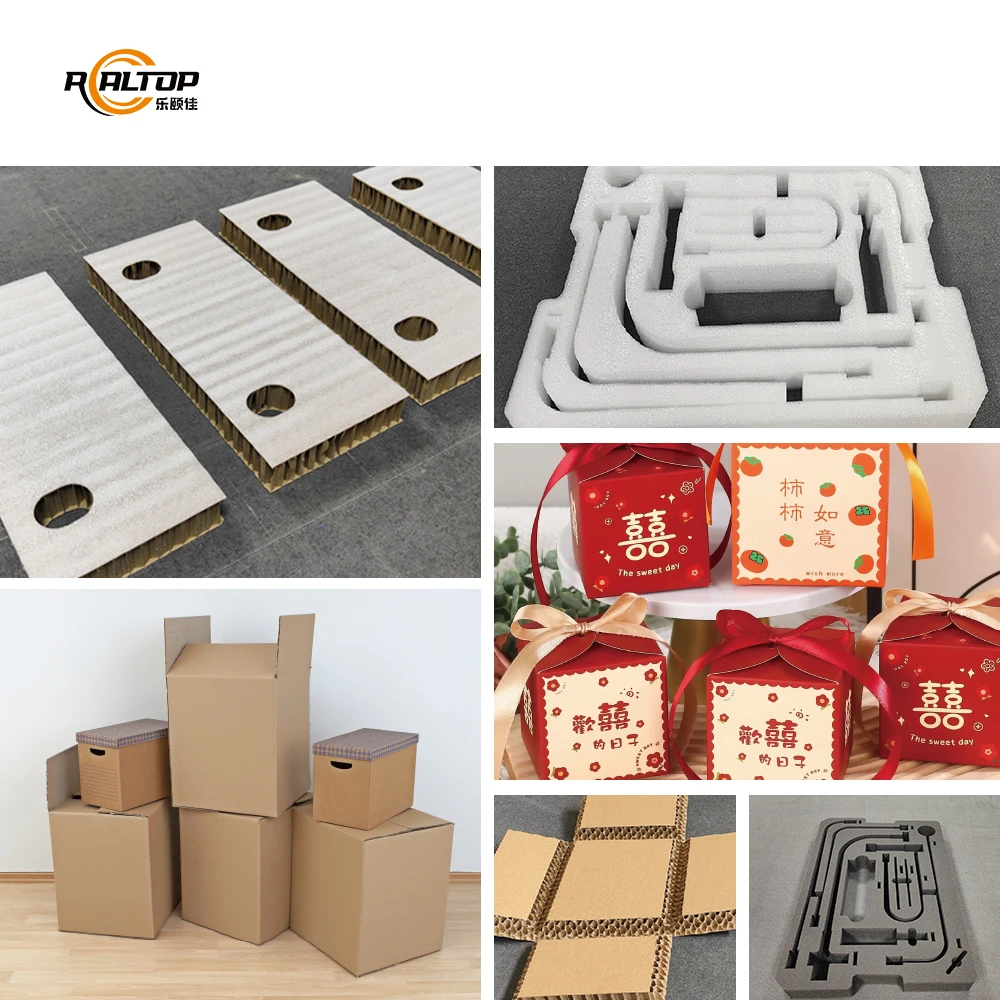
| Application | Material or Output |
|---|---|
| Carton and packaging sample making | Corrugated cardboard cutting, creasing, and slotting in one workflow |
| Corrugated display and POP production | Printed contour cutting of sheets with CCD mark-point or panoramic camera positioning |
| Honeycomb board packaging | Full-depth oscillating knife cutting with vacuum hold-down |
| Plastic box fabrication | PVC and PP sheet cutting and creasing |
| Gasket and foam fabrication | Sponge, PU, EVA, and composite material cutting |
| Textile and leather cutting | Fabric, non-woven fabric, carpet, shoe material, luggage material |
| Signage and sticker production | Vinyl, film, sticker, and foam board contour cutting |
Why "Working Area" Is Not a Complete Specification
Matching a CNC oscillating knife cutting machine to its application requires looking past table dimensions to the pairing of tool head, vacuum zoning, and material behavior under the blade.
I spent years on the assembly floor in Shandong before moving into technical sales, and the failures I see most often trace back to a single oversight: a buyer specifies a 1600 × 2500 mm bed, assumes the knife will handle any thickness within 100 mm, and discovers on day one that corrugated board with high flute density produces ragged edges at production speed. The machine is not defective — it was simply configured for a different job [NEED_CITE: tool head and material mismatch in CNC flatbed cutting]. When a packaging producer sends me their actual board samples before we lock in the configuration, the difference between a clean fold line and a crushed flute becomes obvious in the first test cut.
Tool Head Modularity Across Packaging Workflows
A corrugated sample maker rarely cuts a single material in a single way. One sheet needs full-depth oscillating knife passes, the next needs a creasing wheel for fold lines, and a display stand requires V-cutting for slot joints. This platform supports oscillating knife, drag knife, creasing wheel, V-cutting knife, circular knife, and punching tools on a single multifunctional head, so the operator swaps the tool rather than moving the job to a second machine. The Swiss imported knife assembly handles high-frequency vibration cutting while the creasing wheel scores without penetrating the liner — a combination that matters when a client runs short-flute E-board in the morning and double-wall in the afternoon.
Vacuum Zoning for Small Packaging Parts
Small carton blanks and die-cut inserts tend to lift off the table during high-speed oscillating passes, especially when the vacuum pull is spread evenly across the full bed. The aluminum air box platform on this machine supports split box zoning, which concentrates suction only under the area being cut. For packaging producers running nested layouts of small gusset boxes or retail inserts, this zoning prevents material shift without requiring a custom jig for every new SKU [NEED_CITE: vacuum table zoning and small-part stability in flatbed cutting]. The 7.5 kW vacuum pump provides the baseline suction, while the zoning valves let the operator match airflow to the blank footprint.
Reading the Specification Sheet for Real Production Conditions
Repeated accuracy of ≤ 0.1 mm depends on the linear guide and ball screw combination working under continuous directional change — Taiwan Hiwin rails carry the carriage, and the servo motor choice between Delta and Panasonic affects response during tight cornering on intricate carton outlines. Cutting speed is rated at 200 – 800 mm/s, but that range is material-dependent; a 3 mm greyboard will cut at the upper end while a 15 mm honeycomb board demands the lower end to maintain edge quality. The cutting thickness ceiling of 100 mm applies to low-density foam and sponge — corrugated cardboard in practice cuts cleanly up to roughly the thickness the selected knife stroke can penetrate per pass, which is why sample cutting on the buyer’s own material remains the only reliable way to confirm depth.
The Cost of Skipping the Sample Cut
When a buyer orders based on catalogue specifications alone, the first production run reveals whether the chosen oscillating frequency actually slices through their specific flute profile or merely compresses it. Ragged edges on corrugated board mean the carton fails the crease-and-fold test at the packaging line, and the entire batch gets scrapped. Wrong vacuum zoning shows up as micro-shifts on small inserts that accumulate across a nested sheet, pushing registration out of tolerance by the last row. These are not warranty issues — they are specification gaps that a pre-order sample cut on the buyer’s actual stock would have caught [NEED_CITE: pre-shipment material testing for CNC cutting equipment].
Why Source This Platform from Here
In-house design covers both the mechanical frame and the tool head integration, so when a packaging producer needs a non-standard V-cutting angle for a specific box joint, the engineering team adjusts the tool holder rather than pointing to a fixed catalogue option. The CCD positioning system — available as mark-point camera, panoramic camera, or projection — is matched to the buyer’s print registration method before the machine ships. Voltage, plug type, and control panel language are confirmed against the destination market’s electrical standards during the order stage, not discovered at the dock. Every machine ships with a factory test record run on the buyer’s material, documenting the tool head, knife frequency, feed speed, and edge result.
Documentation & Verification
- Factory test record documenting cut quality on your corrugated grade before dispatch
- Tool head and vacuum zone configuration list matching your material profile
- Electrical schematic confirming voltage and plug type for your market
- Software licence with PLT, DXF, and AI file format compatibility note
- Nesting workflow guide aligned with your existing typesetting setup
Installation, Commissioning & Support
- 3450 × 2300 mm footprint requires level concrete floor with anchor provisions
- 380V ± 10% supply with dedicated circuit for 9 kW rated load plus 7.5 kW vacuum pump
- Machine arrives in single-unit configuration; conveyor belt and vacuum pump connect on site
- First-run calibration covers servo tuning, knife depth offset, and vacuum zone balancing
- Operator training addresses tool head changeover, nesting software, and CCD mark-point setup
- Spare knife blades, creasing wheels, and sensor replacements included in initial parts kit
Before You Request a Quote
To give you a configuration that actually fits your production, I need to know the material type and flute profile you run most often, the maximum sheet thickness, and whether you need creasing and V-cutting alongside full-depth cutting. If your facility operates on a voltage standard other than 380V / 50Hz, tell me the local supply specification. And if you can send a sample of your board stock, I will run a test cut and return the sample with a report before we discuss anything else.
Frequently Asked Questions
Q: How do I choose between oscillating knife, drag knife, and creasing wheel for corrugated board?
A: Oscillating knife handles full-depth cutting of fluted materials by vibrating at high frequency to slice without crushing the flute structure. Drag knife works for thin, non-fluted sheets like sticker and film. Creasing wheel scores fold lines without penetrating the liner. For corrugated packaging, you typically pair oscillating knife for outlines with creasing wheel for folds on the same machine.
Q: Can the CCD camera track printed marks on my packaging sheets at production speed?
A: The system offers small CCD mark-point positioning, panoramic camera recognition, and projection positioning as options. Mark-point CCD reads registration marks on each sheet and adjusts the cut path in real time. Panoramic recognition suits larger printed layouts. Confirm which method matches your print registration standard before ordering, so the camera is calibrated to your mark size and contrast.
Q: My nested layouts include small carton inserts — will they stay flat during cutting?
A: The aluminum air box vacuum table supports split box zoning, concentrating suction under the active cutting area rather than spreading it across the full bed. This prevents small blanks from lifting during oscillating knife passes. When you share your typical nesting layout, the zone configuration is set before the machine ships.
Q: What voltage and control language options are available for my market?
A: The standard supply is 380V ± 10%, but voltage and plug type are confirmed against your facility’s electrical standard during the order stage. The touch screen control panel supports English, Russian, Italian, and Chinese as standard, with additional languages configurable. Specify your local voltage, frequency, and preferred operating language when you inquire.
Q: Will the nesting software work with my existing PLT and DXF design files?
A: The included auto typesetting software imports PLT, DXF, and AI files through an HP-GL compatible instruction system. Before order confirmation, your existing file format and nesting workflow are tested against the software to confirm compatibility — including layer recognition, cut-line assignment, and tool path sequencing — so there are no surprises on day one.


商品评价
Clear filtersThere are no reviews yet.