



Fast Shipping
Carrier information

20k products
Payment methods

24/7 Support
Unlimited help desk

2-day Delivery
Track or off orders
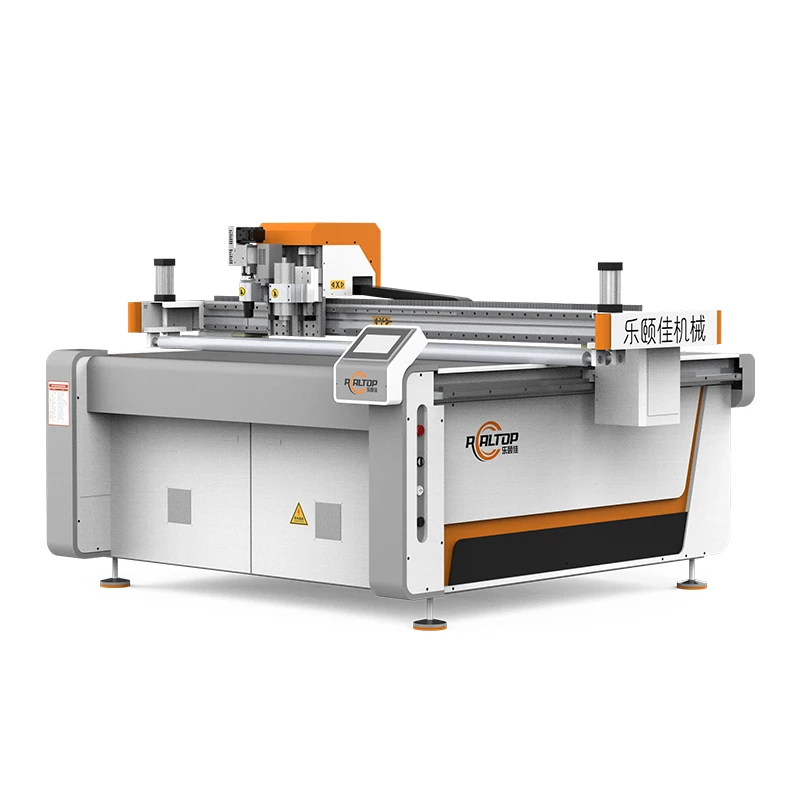
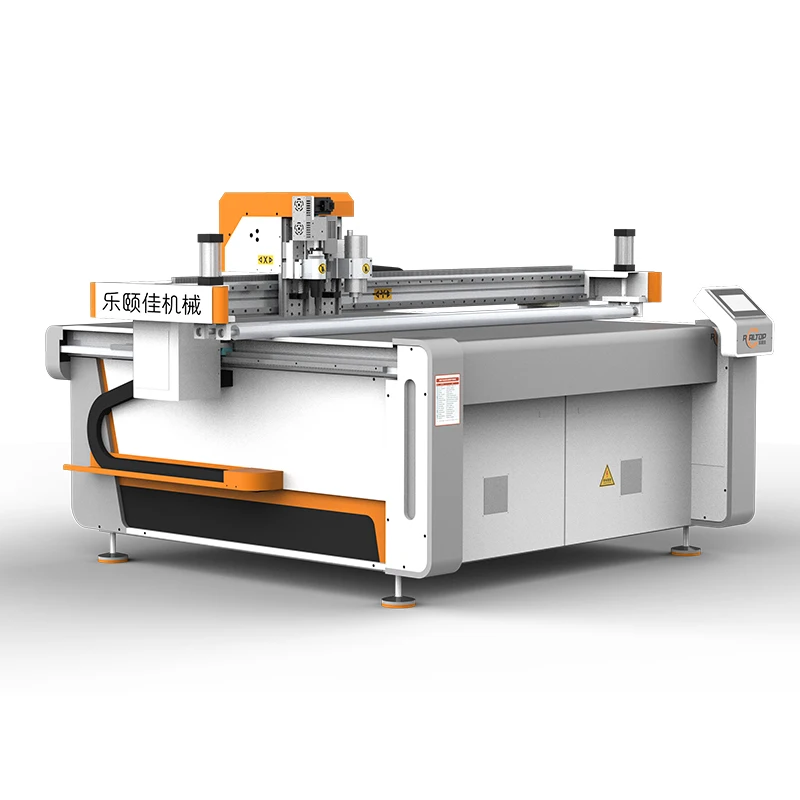
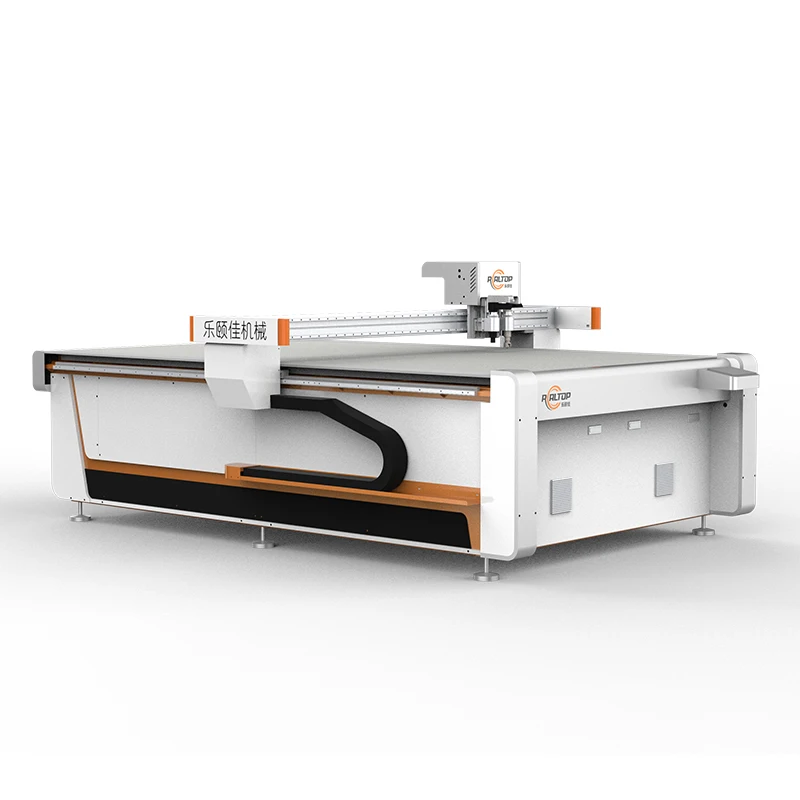
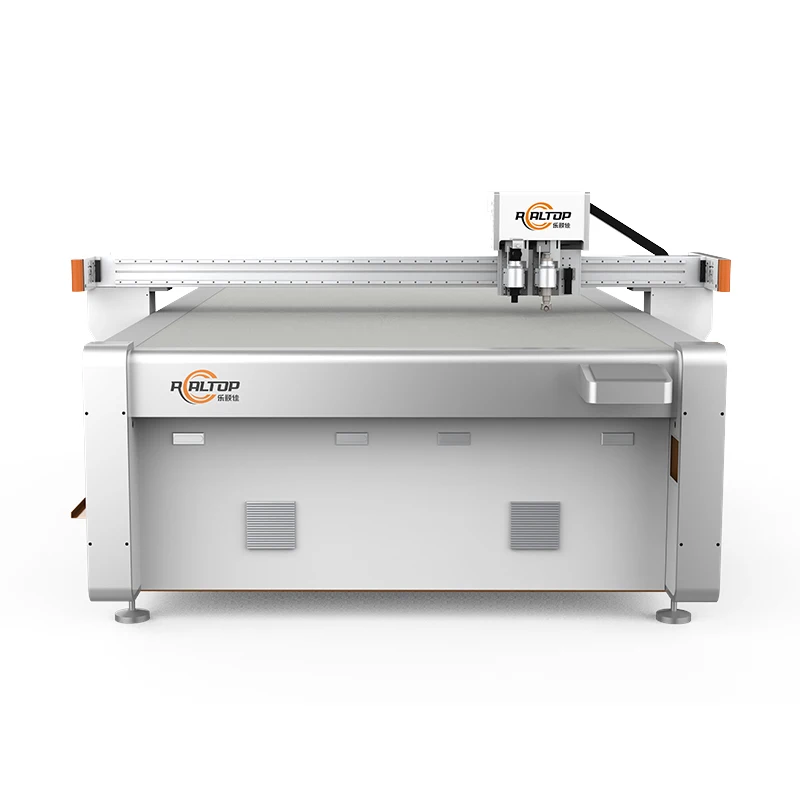
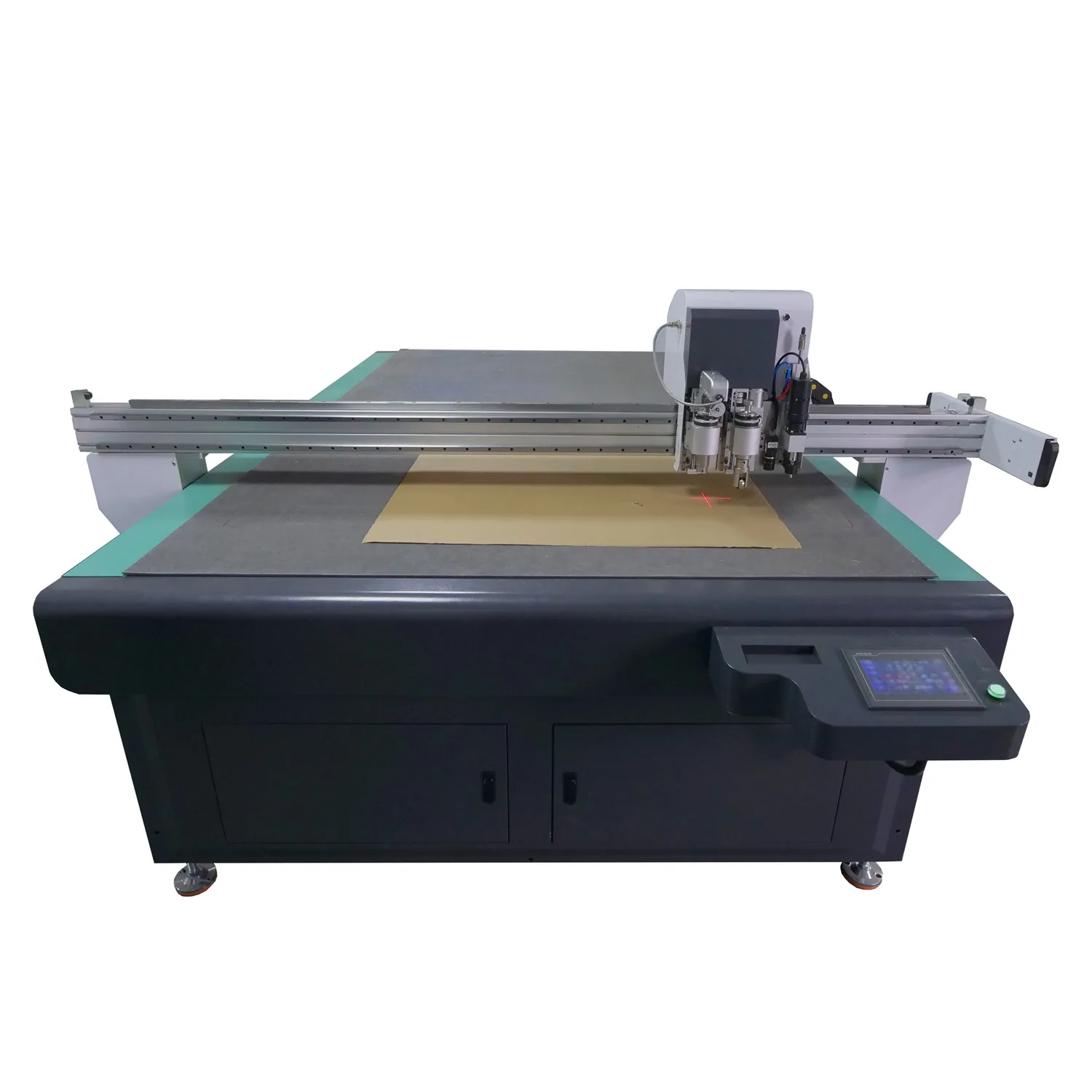
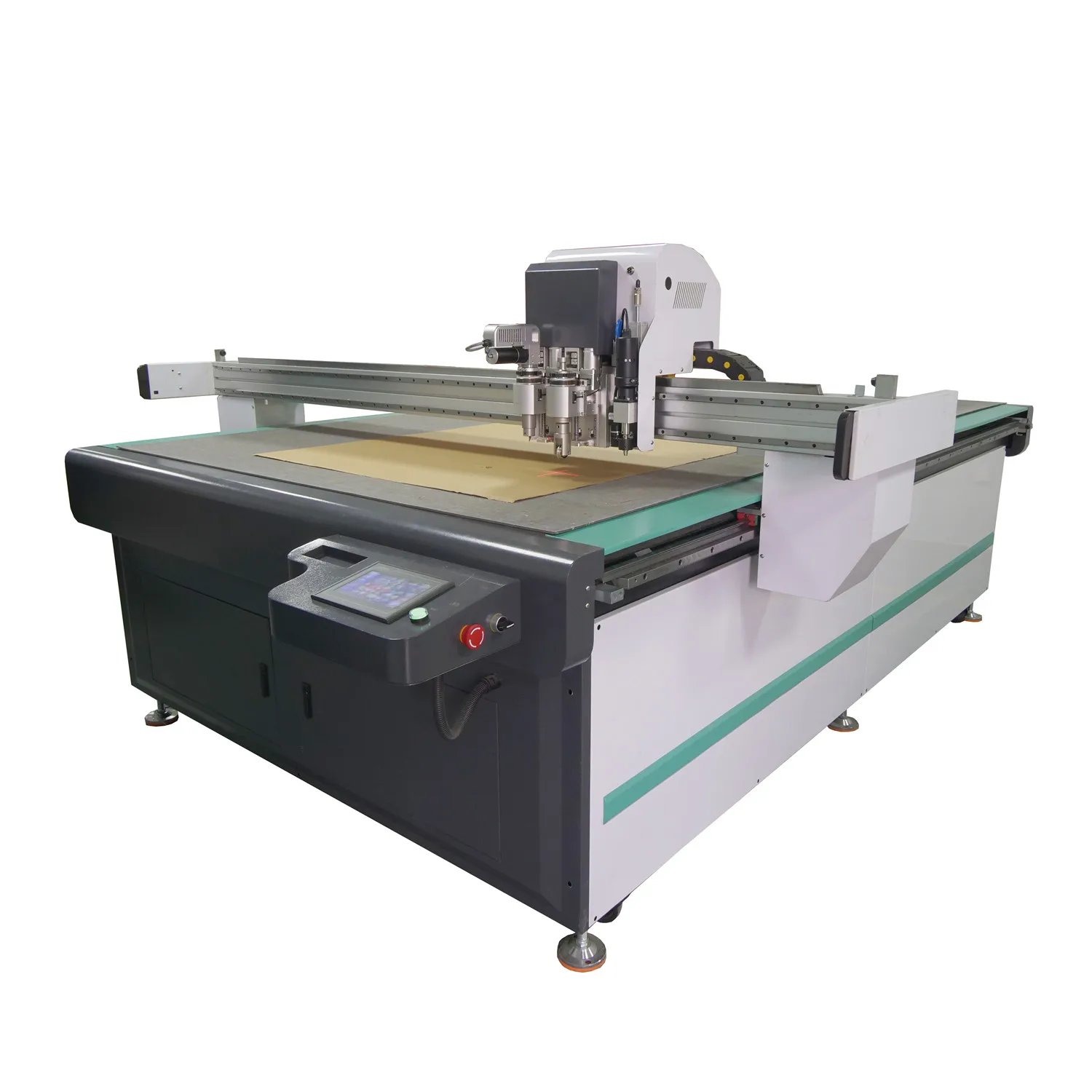
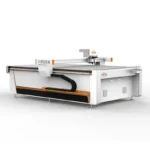
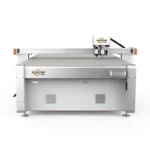
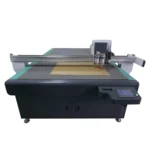
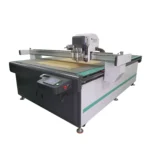
Tool Head Configuration Matched to Material — The RT-D2516 / RT-S2516 pairs oscillating knife, V-cutting, creasing wheel and drag knife options with zoned vacuum hold-down, so the cutting method follows your material rather than forcing one approach.
Technical Specifications
| Parameter | Value |
|---|---|
| Model | RT-D2516 / RT-S2516 |
| Product Type | CNC Oscillating Knife Cutting Machine |
| Working Area | 1600 × 2500 mm |
| Machine Size (L × W × H) | 3450 × 2300 × 1250 mm |
| Rated Power | 9 kW |
| Voltage | 380V ±10% |
| Control System | CNC with touch screen, HP-GL compatible |
| Transmission | Digital servo motor, Taiwan Hiwin linear guide, synchronous belt, ball screw |
| Servo Motor Options | Delta (China) or Panasonic (Japan), IP67 rated |
| Translational Velocity | 800–2000 mm/s |
| Cutting Speed | 200–800 mm/s (varies with material type and thickness) |
| Cutting Thickness | Up to 100 mm (material dependent — verify with sample test) |
| Repeated Accuracy | ≤0.1 mm |
| Tool Head Options | Swiss oscillating knife, V-cutting knife, drag knife, creasing wheel, pneumatic knife, high-power vibrating knife, circular knife, dotted line knife, punching, brush |
| Visual Positioning | CCD camera mark point positioning, panoramic camera recognition, projection positioning |
| Vacuum Table | Magnesium-aluminum alloy, fluorocarbon PVDF coating, integrated box adsorption platform |
| Vacuum Pump | 7.5 kW, aviation aluminum shell, built-in silencer sponge |
| Table Options | Flat table or auto feeding table with Germany imported conveyor belt |
| Safety Devices | Infrared induction blocking, beam anti-collision, emergency stop with in-situ resume |
| Software | Auto nesting, supports PLT, DXF, AI formats |
| Frame | Thick-walled seamless steel, high-temperature tempering, CNC machined |
| Certification | CE declaration (confirm per unit) |
| Warranty | 1 year |
Application Suitability
| Application | Material or Output |
|---|---|
| Carton and packaging sample making | Cardboard, honeycomb cardboard, corrugated board, plastic box materials |
| Garment and leather production | Natural leather, synthetic leather, woven and knit fabric |
| Gasket and sealing fabrication | Rubber, silicone, PTFE, composite gasket sheets |
| Automotive interior components | Sponge composite leather, PU foam, carpet, non-woven fabric |
| Signage and advertising | PVC sheet, sticker film, foam board, soft glass |
| Sports and outdoor products | EVA, XPE, PE foam, composite padding materials |
Why Working Area Alone Is Not Enough for CNC Oscillating Knife Cutting Machine Specifications
A cutting table sized only by bed dimensions often fails when it meets your actual material stack.
I remember a Middle East packaging client who ordered a V-groove cutter based on working area. We ran standard corrugated tests and the samples looked clean. Their production material turned out to be high-GSM double-sided laminated board. The knife pressure was not enough, and every crease line came out with torn fibers. The machines had to come back for a spindle swap. Since then I run every buyer’s actual material on the table before we confirm configuration. Cutting depth, tool head selection and vacuum zoning must be evaluated together against your daily production mix, not treated as separate line items. [NEED_CITE: oscillating knife cutting machine selection criteria for packaging and flexible materials]
Matching Tool Head to Material Density and Thickness
The Swiss imported oscillating knife on the RT-D2516 / RT-S2516 handles full cutting and half cutting on dense board stock, while the drag knife suits thin films and vinyl where edge sealing matters. The creasing wheel produces clean fold lines on carton samples without cracking coated surfaces, and the V-cutting knife cuts slots for rigid packaging structures. Choosing the wrong CNC Oscillating Knife Cutting Machine specifications for your material typically shows up as ragged edges on thick foam or crushed honeycomb cores.
Vacuum Zoning and Small-Part Hold-Down
The magnesium-aluminum alloy table uses an integrated box adsorption platform with PVDF coating and hard oxidation treatment. The 7.5 kW vacuum pump with built-in silencer maintains suction across zones. When cutting small gasket pieces or narrow fabric strips, uniform adsorption prevents lift at the cutting head. Split-box construction also allows container loading without oversize shipping frames, which matters when you are calculating landed cost.
Reading the Specs That Actually Affect Your Output
The IP67-rated servo motors — available as Delta or Panasonic — include real-time automatic gain adjustment and vibration suppression. On a cutting table, this translates to consistent ≤0.1 mm repeatability across long production runs where thermal expansion would otherwise drift accuracy. The Taiwan Hiwin linear guides paired with ball screw transmission maintain positional stability at translational velocities up to 2000 mm/s. Cutting speed ranges from 200 to 800 mm/s depending on material, meaning a single ply of leather cuts faster than a 50 mm foam stack. The CCD camera and panoramic visual positioning system tracks printed marks for contour work — essential when cutting pre-printed carton or fabric with registered graphics. The CNC touch screen control accepts HP-GL compatible formats and the nesting software imports PLT, DXF and AI files directly from most CAD workflows. [NEED_CITE: servo motor IP rating and repeatability standards for CNC cutting tables]
The Cost of Skipping Material Trials Before Order
When a buyer specifies a machine on bed size and skips the material trial, problems surface after installation. Insufficient knife pressure on high-density composites produces incomplete cuts that require manual finishing. A vacuum table without proper zoning lets small parts drift during high-speed passes, generating scrap. Wrong tool head selection on laminated materials leaves delaminated edges instead of clean cuts. These are not warranty issues — they are configuration mismatches that could have been caught with a sample cut on your actual production material. [NEED_CITE: common causes of cutting quality rejection in flexible material processing]
Why Buyers Source This Configuration From Our Facility
In-house design covers both knife and laser cutting technology, so we recommend the cutting method that fits your material rather than pushing one platform. Every tool head and table combination is specified per your material type, thickness and daily volume. CCD camera positioning is validated against your printed mark format before build confirmation. Software compatibility with your existing PLT, DXF or AI files is verified during the quotation stage. Sample cutting on your own material is standard practice — we document edge quality, cutting speed and vacuum hold-down performance in a written report before you commit.
Documentation & Verification
- Machine specification sheet confirming tool head list and working area
- Electrical schematic with voltage and frequency for your local grid
- Sample cutting report on your material with edge quality photos
- Tool head and table configuration list matched to your production job
- Software licence with confirmed PLT, DXF and AI file format support
- Spare parts list covering oscillating knife blades, creasing wheels and belts
Installation, Commissioning & Support
- 3450 × 2300 mm footprint requires level concrete floor with clearance for material feed
- 380V ±10% dedicated circuit with separate breaker for the 7.5 kW vacuum pump
- Split-box vacuum table design allows standard container loading and on-site reassembly
- First-run parameter setting on your material with cutting speed and depth calibration
- Touch screen control training in English, Russian, Italian or Chinese with customized language available
- Spare oscillating knife blades and creasing wheels included with initial shipment
What to Include With Your Inquiry
Send your material type, thickness range and maximum sheet size so we can confirm tool head and vacuum zoning. Let us know your local voltage, frequency and plug type, plus the control language your operators need. If you have existing CAD files, attach a sample so we can validate format compatibility before quotation.
Frequently Asked Questions
Q: How do I choose between oscillating knife, drag knife and creasing wheel for my material?
A: Oscillating knife suits thick and dense materials like cardboard, foam and gasket stock where a vibrating blade produces clean cuts. Drag knife works on thin vinyl, film and fabric where the blade follows contours without lifting. Creasing wheel scores fold lines on carton samples without cutting through. We recommend testing your specific material before final tool head selection.
Q: Will small parts stay flat on the vacuum table during high-speed cutting?
A: The magnesium-aluminum alloy table uses a zoned adsorption platform with a 7.5 kW vacuum pump. Zone configuration depends on your typical part size and layout. We test vacuum hold-down during sample cutting on your material and document whether small parts remain stable at the recommended cutting speed.
Q: Can the CCD camera track printed registration marks at production speed?
A: The system offers CCD mark point positioning and panoramic camera recognition. Tracking performance depends on mark contrast, size and placement on your printed material. We verify camera performance against your actual printed sheets during the sample cutting stage to confirm reliable contour recognition.
Q: What voltage and language options are available for export?
A: The standard configuration is 380V ±10% with servo motors rated for industrial three-phase supply. Control language options include English, Russian, Italian and Chinese, with special languages available on request. Voltage, plug type and frequency must be confirmed for your market before production begins.
Q: Does the nesting software work with my existing CAD files?
A: The software imports PLT, DXF and AI file formats directly. If your workflow uses a different format, send a sample file during the inquiry stage so we can confirm compatibility or recommend a conversion path before you place the order.


商品评价
Clear filtersThere are no reviews yet.