





Fast Shipping
Carrier information

20k products
Payment methods

24/7 Support
Unlimited help desk

2-day Delivery
Track or off orders
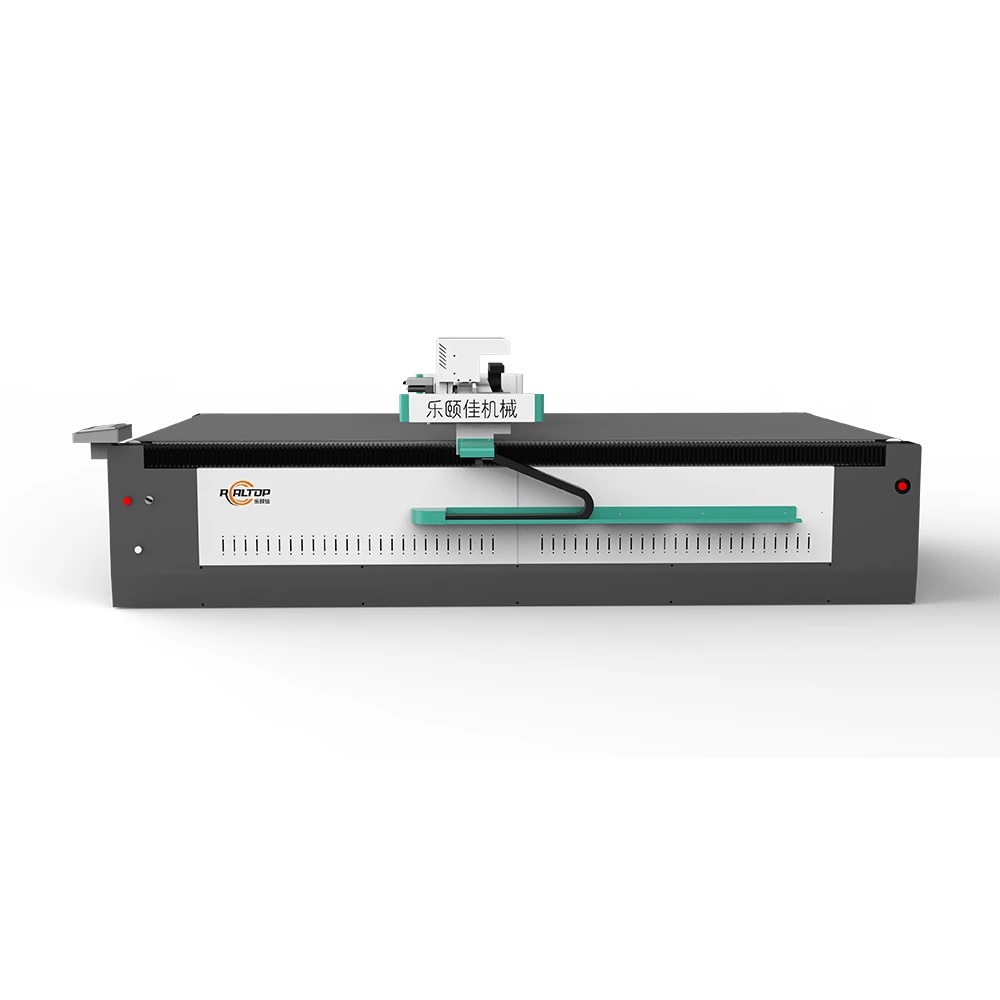
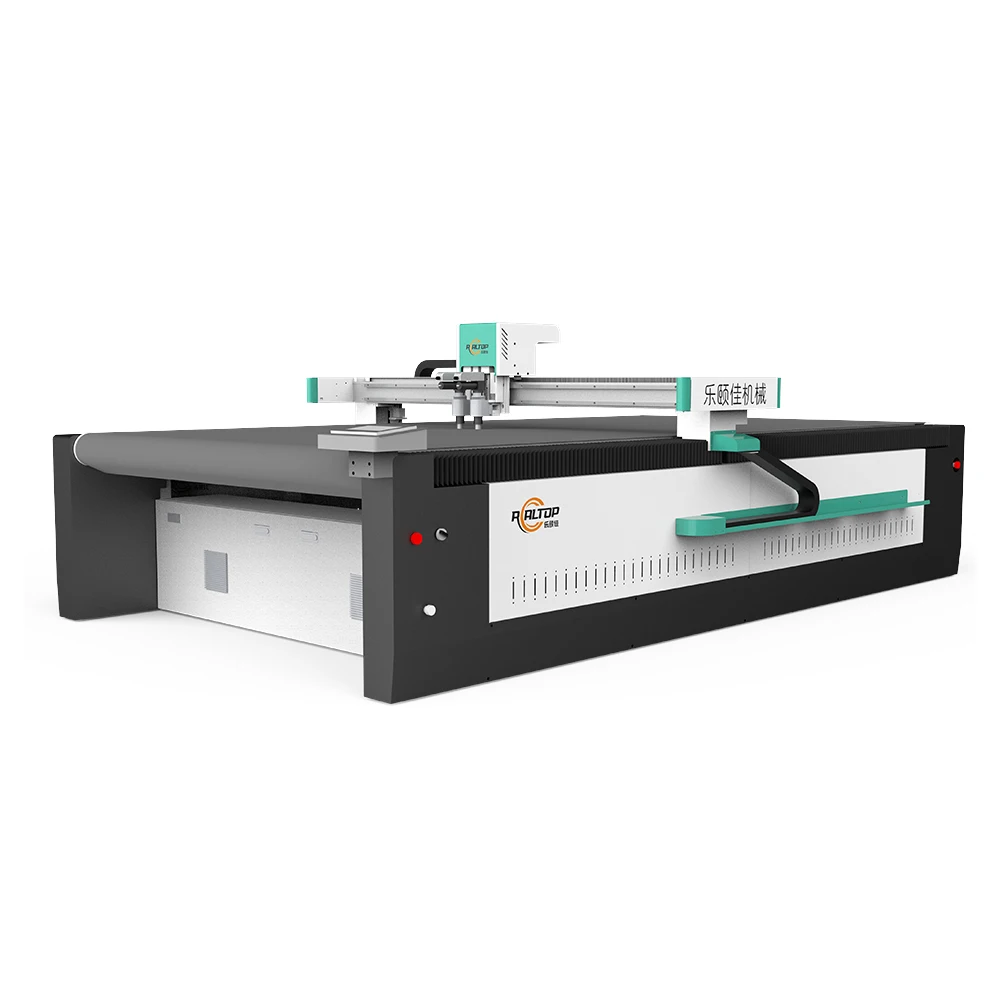
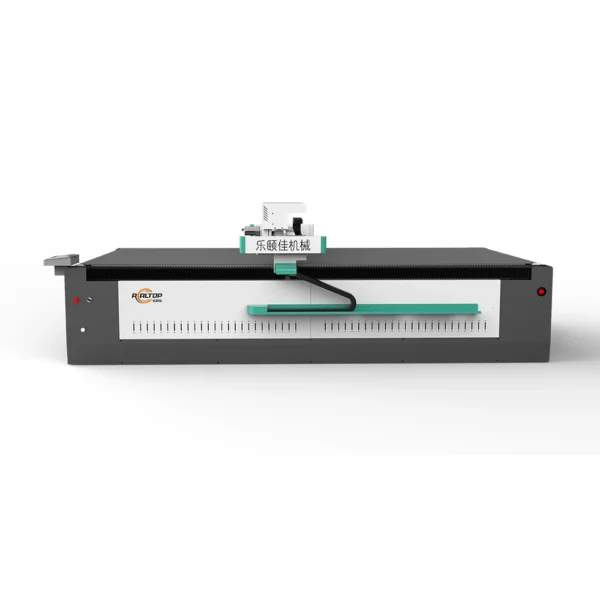
Configurable Tool Head Platform — Seven interchangeable heads paired with a 9kW vacuum system let gasket producers match the cutting action to PTFE, rubber or composite sheets rather than force a single blade through incompatible stock.
Technical Specifications
| Parameter | Value |
|---|---|
| Product Type | CNC Oscillating Knife Gasket Cutting Machine |
| Model | 1625 |
| Working Area | 1600 × 2500 mm |
| Cutting Speed | 0–2000 mm/s |
| Cutting Thickness | Up to 30 mm |
| Positioning Accuracy | ±0.1 mm |
| Tool Head Options | Oscillating knife, Driven rotary knife, Creasing wheel, Kiss cutting tool, Pneumatic knife, Milling tool, V groove knife |
| Vacuum Pump | 9 kW, custom high-efficiency aluminum casting |
| Vacuum Table | Aluminum bellows, full-surface adsorption |
| Servo Drive Options | Panasonic, Delta, or Dorna |
| Control System | PLC panel with multi-language interface |
| Voltage Options | 110V, 220V, 380V |
| File Formats | PLT, DXF, AI, PDF |
| Safety Devices | Infrared sensor, emergency stop |
| Machine Dimensions (L×W×H) | 3300 × 2100 × 1350 mm |
| Frame | Heavy-duty, precision-ground surface |
| Certification | CE declared |
Application Suitability
| Application | Material or Output |
|---|---|
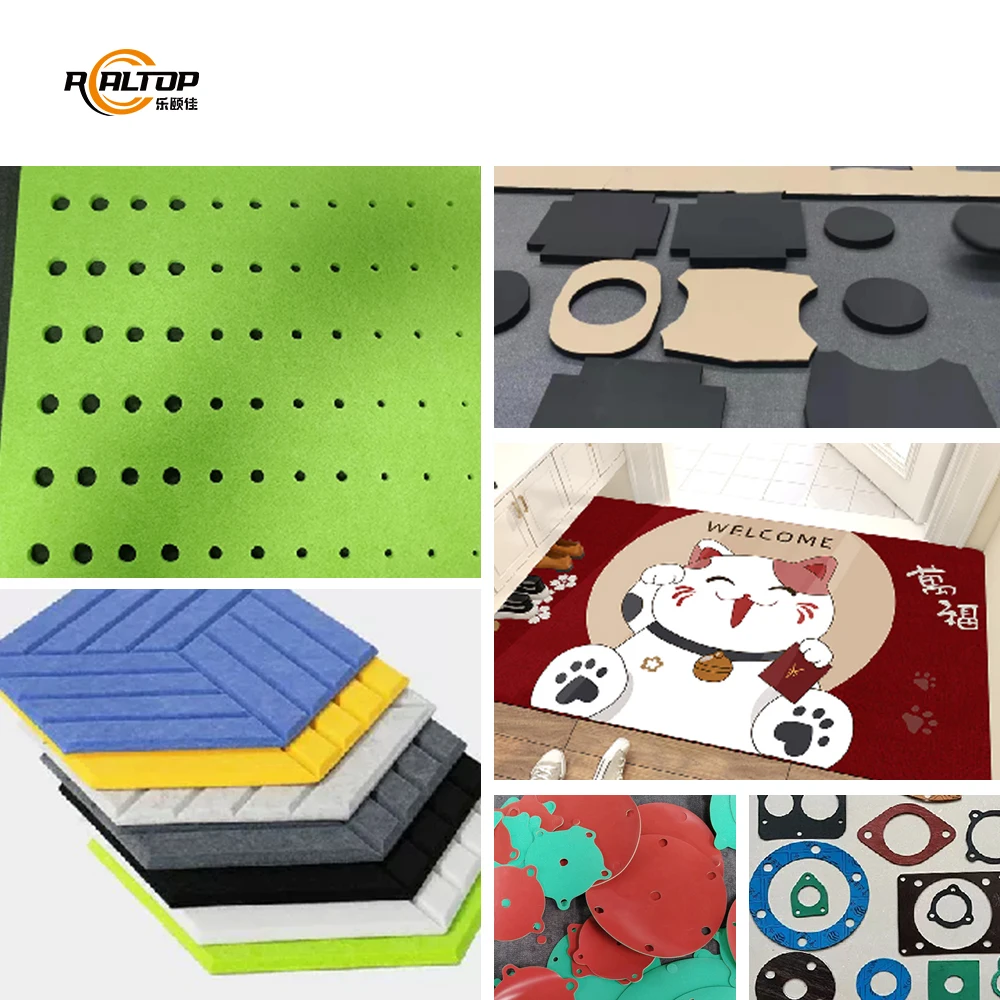
| Aerospace gasket and seal cutting | Carbon fiber prepreg, aramid honeycomb, ceramic fiber blankets |
| Automotive interior and sealing components | Acoustic felt, damping pads, battery insulation pads, headliners |
| Rail transportation insulation | Sound and thermal insulation composites |
| Wind power blade material processing | Fiberglass cloth, infusion mesh, PET and PVC foam core |
| Industrial flange and pipeline seals | PTFE sheets, rubber gasket stock, composite laminates |
| Sporting goods and leisure equipment | Helmet liners, bicycle frame prepreg, surfboard foam cores |
Why Tool Head Selection Matters More Than Working Area
Buyers often size a machine by table dimensions alone, then discover the oscillating knife cannot cleanly shear a 20 mm graphite composite without delaminating the edges. The 1625 CNC oscillating knife gasket cutting machine specifications become meaningful only when each tool head is mapped to the material it actually cuts.
A gasket shop running PTFE needs a different blade profile than one cutting aramid honeycomb for aerospace seals. Swapping the wrong head into production produces ragged edges, crushed foam cores, and tool wear that disrupts the entire batch schedule [NEED_CITE: gasket material hardness and tool wear correlation]. I once saw a buyer lose a week of output because the knife specified for asbestos-free fiberboard was fed graphite laminate — the hardness mismatch destroyed two tool sets before anyone caught the error.
Matching the Blade to the Gasket Stock
Oscillating knife heads handle most non-metallic gasket materials up to the 30 mm thickness limit, but the stroke frequency and blade angle must shift when moving from soft rubber to rigid epoxy boards like G10. The driven rotary knife option suits continuous-cut scenarios on fabric-based seals where edge fraying is a rejection criterion. For kiss-cut applications on adhesive-backed gasket sheets, the dedicated kiss cutting tool preserves the release liner underneath — something a standard oscillating blade will score through if set even slightly too deep.
Vacuum Holding for Small Seal Profiles
The aluminum bellows vacuum table paired with the 9 kW pump provides full-surface adsorption across the 1600 × 2500 mm bed. This matters most when cutting narrow flange gaskets or small O-ring profiles where a standard zoned table leaves corners lifting mid-cut. Lift on a 2 mm sealing strip at production speed means the knife catches the edge, tears the part, and forces a machine stop [NEED_CITE: vacuum table adsorption and small part holding requirements]. The custom aluminum casting pump moves enough volume to keep suction consistent even when the cutting path opens large areas of the table surface.
Reading the Specs Against Real Production Conditions
Positioning accuracy of ±0.1 mm across the full working area depends on the servo drive selected — Panasonic, Delta, and Dorna each have different response characteristics that affect corner sharpness on intricate gasket geometries. The PLC control panel supports multiple languages, but the file format compatibility list (PLT, DXF, AI, PDF) must be verified against the buyer’s existing CAD or nesting software before the order is finalized. Cutting speed reaches 2000 mm/s on straight paths, but actual throughput depends on corner density, material resistance, and the number of tool head changes required per sheet. The 30 mm thickness limit is achievable on softer foams and rubbers; denser composites like carbon fiber prepreg may require reduced speed and multiple passes to maintain edge quality within tolerance.
The Cost of Skipping a Material Sample
Configuring a machine on datasheet hardness values alone leaves room for surprises once real stock hits the table. Composite batches vary in resin content and filler density, and a blade that cuts clean through one shipment may delaminate the next if the tool head was specified at the margin of its capability. Cold-cutting avoids the thermal damage that laser processes introduce to resin-based laminates, but only if the knife geometry matches the material’s shear strength [NEED_CITE: cold cutting versus thermal cutting on composite gasket materials]. A sample cut on the buyer’s own material eliminates the guesswork before the configuration is locked in.
Why Source This Platform Here
In-house design covers both knife and laser cutting technologies, so a gasket producer can evaluate cold-cutting against thermal methods on the same factory floor rather than accept a single-method limitation. Tool head and table configuration are specified per material type and daily volume, not pulled from a default catalog page. CCD camera positioning is available for printed contour work on gasket sheets that require optical mark tracking. Software compatibility is confirmed against the buyer’s nesting workflow before the purchase order is signed. Voltage, plug type, and control panel language are customized to the destination market and documented in the electrical schematic.
Documentation & Verification
- Machine specification sheet covering all seven tool head options and their rated material ranges
- Electrical schematic with confirmed voltage, frequency, and plug type for destination market
- Tool head and vacuum table configuration list matched to buyer’s gasket material and thickness
- Sample cutting report on buyer’s own composite or seal stock before commitment
- Factory test record documenting accuracy verification across the 1600 × 2500 mm bed
- CE declaration included with operation and maintenance manual in the confirmed language
Installation, Commissioning & Support
- 9 kW vacuum pump requires a dedicated circuit separate from the 110V/220V/380V main servo supply
- Machine dimensions of 3300 × 2100 × 1350 mm need clear floor space plus operator access on three sides
- Heavy-duty frame arrives fully assembled; vacuum table and tool head carriage are calibrated on site
- First-run parameter setup includes servo tuning for the selected drive brand and vacuum zoning verification
- Operator training covers tool head changeover procedures and PLC interface navigation in the confirmed language
- Spare parts list identifies wear items for each of the seven tool head types by gasket material
Before You Request a Quote
Send a sample of the actual gasket material you run most often, including the thickest grade in your product range. Specify your local voltage and frequency, the control language your operators need, and which file formats your current nesting software exports. If your workflow relies on CCD mark tracking for printed gasket sheets, note the mark size and spacing so the camera configuration can be validated against your production speed.
Frequently Asked Questions
Q: How do I choose the right tool head for my gasket material?
A: Each of the seven tool heads suits different material behaviors. Oscillating knives handle most rubbers and foams up to 30 mm, driven rotary knives prevent fraying on fabric-based seals, and kiss cutting tools preserve adhesive backings. We run a sample cut on your actual stock before locking the configuration so the blade geometry matches your material’s shear strength and filler density.
Q: What cutting accuracy can I expect on different composite sheets?
A: The ±0.1 mm positioning specification holds across the full 1600 × 2500 mm working area, but actual edge quality varies with material density. Soft foams and PTFE sheets achieve tight tolerances at higher speeds, while carbon fiber prepreg and G10 epoxy boards may require slower feed rates. The servo drive selection influences corner accuracy on intricate gasket profiles.
Q: Will small gasket parts stay flat during cutting?
A: The aluminum bellows vacuum table with the 9 kW pump provides full-surface adsorption rather than zoned sections. This keeps narrow flange gaskets and small seal profiles held down even when the cutting path exposes large open areas of the table. If your parts are unusually small, we can verify holding performance during the sample cut stage.
Q: What voltage and language options are available for my market?
A: The machine ships in 110V, 220V, or 380V configurations with plug types matched to the destination country. The PLC control panel supports English, Russian, Italian, and Chinese by default, with custom languages available on request. Voltage, frequency, and language are all confirmed in writing before production begins.
Q: Can I test my material before placing the order?
A: Yes. Send us a sample of your gasket stock — including the full thickness range you process — and we cut it on the configured tool head. You receive a sample cutting report documenting edge quality, cutting speed, and tool wear observations so you can evaluate results before committing to the purchase.


商品评价
Clear filtersThere are no reviews yet.