




Fast Shipping
Carrier information

20k products
Payment methods

24/7 Support
Unlimited help desk

2-day Delivery
Track or off orders
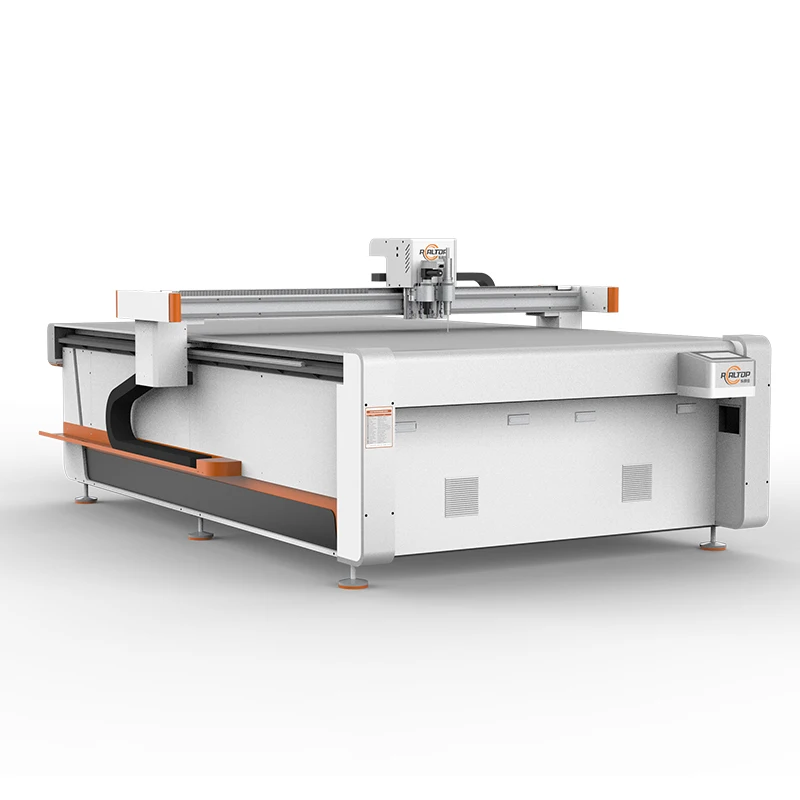
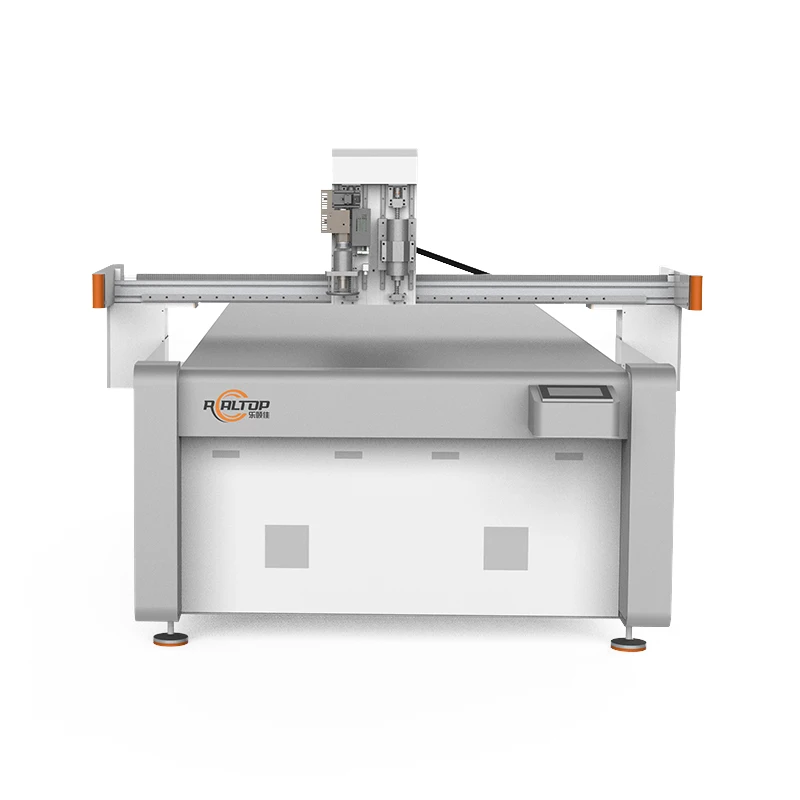
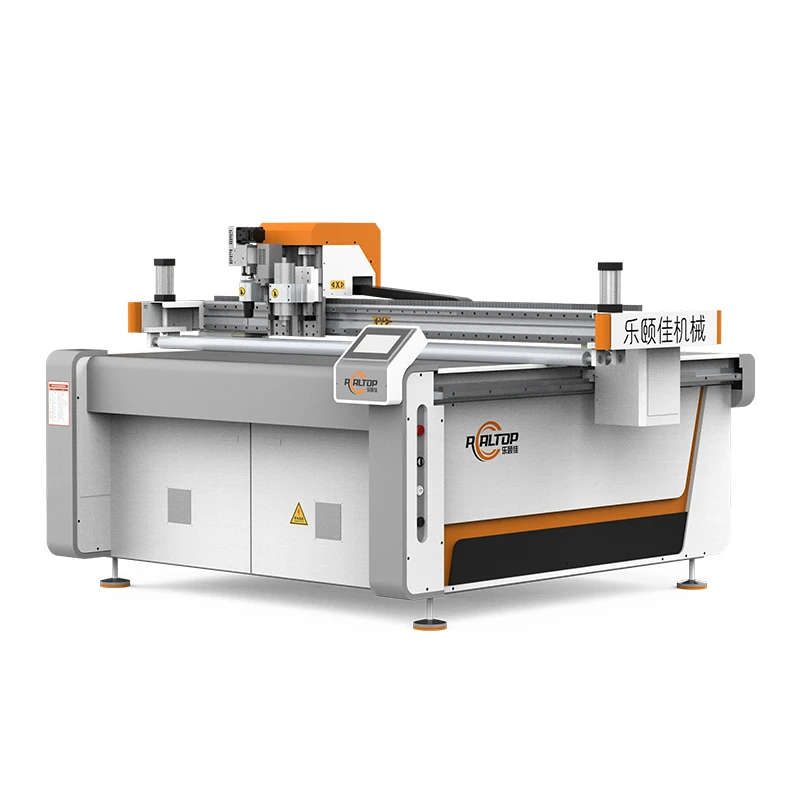
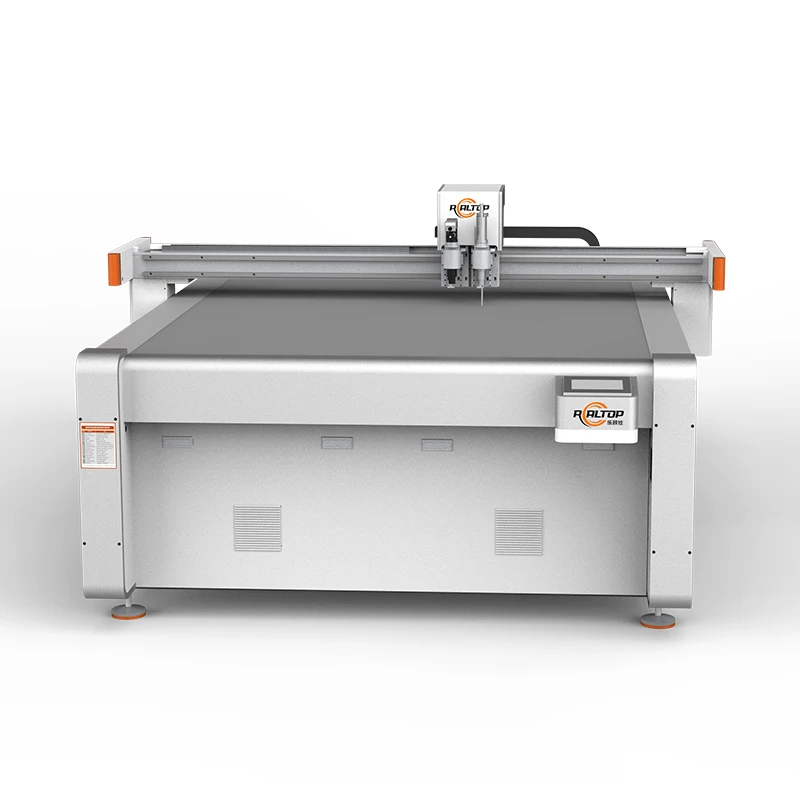
Tool Head Match — Oscillating knife, drag knife and pneumatic tool options configured against the buyer’s actual foam density and edge finish requirement before order confirmation.
Technical Specifications
| Parameter | Value |
|---|---|
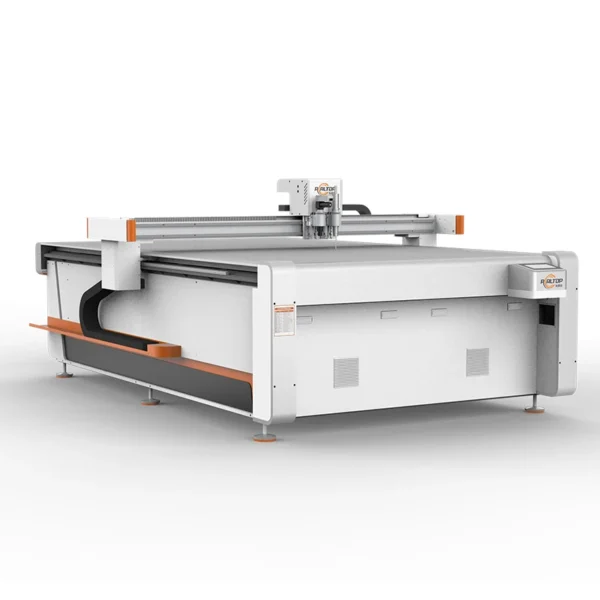
| Product Type | CNC Flexible Material Cutting Machine (Oscillating Knife) |
| Working Area | 1600×2500 mm |
| Machine Size | 3450×2300×1250 mm |
| Rated Power | 9 kW |
| Voltage | 380V ±10% (rated or peak not specified in source) |
| Working Table | Flat vacuum adsorption table, magnesium-aluminum alloy with PVDF powder sprayed surface, anodic and hard oxidation treatment |
| Vacuum Pump | 7.5 kW, aviation aluminum shell, built-in silencer sponge for noise reduction |
| Multifunctional Head | Swiss imported knife with vibration full cutting, half cutting and cursor location; optional pneumatic knife, high-power vibrating knife, circular knife, V cutting knife, drag knife, creasing wheel, dotted line knife, punching and brush tools |
| Positioning Options | Small CCD camera mark point positioning, panoramic camera recognition positioning, projection positioning |
| Translational Velocity | 800–1200 mm/s |
| Cutting Thickness | 20–80 mm (basis not stated in source — confirm block format and material density) |
| Repeatability | ≤0.1 mm |
| Transmission System | Digital servo motor, linear guide, synchronous belt, ball screw |
| Servo Motor Brand Option | Delta or Panasonic, IP67 waterproof rating |
| Instruction System | HP-GL compatible format |
| Linear Rail | Taiwan Hiwin |
| Safety Device | Infrared induction blocking, anti-collision on beam sides, emergency stop |
| Conveyor Belt | Germany imported (optional) |
| Auto Feeding | Available |
| Assembly State | Fully assembled |
| Language Options | English, Russian, Italian, Chinese (special languages customizable) |
Application Suitability
| Application | Material or Output |
|---|---|
| Packaging insert and cushioning production | EPE, EPP, cross-linked PE foam sheets and rolls |
| Automotive interior trimming | EVA, PU foam, synthetic leather, composite panels |
| Gasket and sealing pad fabrication | Rubber, PTFE, ETFE, compressed fiber sheet |
| Footwear component cutting | EVA midsole stock, sponge, shoe lining textile |
| Carpet and floor mat profiling | Tufted carpet, rubber-backed mat, non-woven underlay |
| Advertising and signage board shaping | Foam board, PVC sheet, corrugated cardboard |
Why "Cutting Thickness 20–80 mm" Means Nothing Without Your Material
The real question is whether the CNC oscillating knife cutting machine for foam holds a clean edge on your specific density and cell structure, not whether the spec sheet lists a range.
A number on a brochure tells you the stroke length of the blade. It does not tell you whether high-density EVA will crush at the bottom of the cut, or whether open-cell sponge will tear when the oscillating frequency is too aggressive. I have watched a workshop in Nairobi lose two full production days because the machine was specified against standard EPE samples, but the actual order book was packed with dense EVA gaskets that demanded completely different knife pressure, oscillation speed and blade geometry. By the time the parameters were sorted, the delivery schedule was already broken [NEED_CITE: material density effect on oscillating knife cutting quality].
Every foam family behaves differently under a vibrating blade. Cross-linked polyethylene cuts cleanly with a standard oscillating head at moderate frequency. Open-cell PU sponge needs a slower stroke and a sharper rake angle to avoid pulling fibers at the cut face. Rubber-backed flooring material often requires a pneumatic knife rather than a standard oscillating tool to push through the dense base layer without ragged edges. The cutting thickness figure is a starting point for conversation, not a guarantee of output quality on your stock.
Matching the Knife Tool to the Foam Cell Structure
The multifunctional head on this flexible material digital cutting table accepts a Swiss imported oscillating knife as the baseline tool, but the platform also carries pneumatic knife, high-power vibrating knife, circular knife and V cutting knife options. Selection depends on whether your material is closed-cell or open-cell, the shore hardness and the edge finish your downstream process demands. A packaging insert producer cutting 30 mm EPE blocks will run the standard oscillating head. An automotive interior shop profiling dense PU bolsters will likely need the high-power variant with adjusted stroke amplitude to prevent delamination at the cut boundary.
Vacuum Zoning Decides Whether Small Parts Stay Flat
The magnesium-aluminum alloy table with PVDF coating delivers a flat reference surface, but flatness alone does not hold a nested sheet of small gaskets in place. The 7.5 kW vacuum pump provides the suction volume, while the zone layout determines whether a 50 mm diameter sealing pad gets enough localized hold-down force to resist blade drag at 800 mm/s translational velocity [NEED_CITE: vacuum table zoning for small part retention on CNC flatbed cutters]. Buyers producing a mix of large panels and small irregular parts should confirm the zone grid matches their typical nesting pattern before the table is built.
Drive Train and Repeatability in Continuous Shifts
The ≤0.1 mm repeatability figure rests on the combination of Delta or Panasonic IP67 servo motors, Taiwan Hiwin linear rails, ball screw and synchronous belt transmission. In a humid workshop running two shifts, the sealed servo rating matters more than the peak speed claim. Synchronous belt drive on the long axis keeps backlash consistent over the full 2500 mm travel, while ball screw on the short axis gives the rigidity needed for accurate corner transitions on complex gasket profiles. When cutting nested automotive interior panels, accumulated positioning drift over a long sheet becomes visible at the assembly stage, so drive component specification is a production quality issue, not just a motion specification.
The Cost of Specifying by Working Area Alone
Choosing a machine based on table size without verifying tool head suitability leads to predictable failures. Ragged edges on foam mean the wrong oscillation frequency for the cell structure. Crushed cut faces on dense EVA indicate insufficient knife pressure or the wrong blade geometry. Small gasket parts lifting off the table mid-cut point to vacuum zones that are too large for the nesting layout. Each of these problems surfaces only after the machine is installed and the real material is loaded, turning a commissioning visit into a troubleshooting exercise [NEED_CITE: CNC knife cutting machine commissioning failures from incorrect tool selection]. The sample cutting report on your own stock is the document that prevents this sequence.
Why Sourcing This Platform Directly
The in-house design team covers both knife and laser cutting processes, so the cutting method recommendation is based on material behavior rather than limited to a single technology. Tool head and vacuum table configuration are written into the order specification per material type and production volume, not left as generic defaults. CCD camera positioning for printed contour work is confirmed on your actual printed stock before the machine ships. Software file format compatibility with your existing nesting workflow is verified during the pre-order stage. Sample cutting on your own foam, gasket or leather stock is completed before commitment, so cutting depth and edge quality are documented facts rather than catalogue claims.
Documentation & Verification
- Machine specification sheet listing every confirmed tool head and table zone configuration
- Electrical schematic with voltage and frequency matching your workshop supply
- Sample cutting report produced on your own foam or gasket material before shipment
- Tool head and vacuum table configuration list tied to your purchase order
- Software licence with HP-GL file format compatibility note for your nesting workflow
- Factory test record showing repeatability measurement on your specified material
Installation, Commissioning & Support
- Flat concrete floor required to support the 3450×2300 mm footprint and 9 kW rated load
- Dedicated 380V ±10% circuit with confirmed plug type and phase sequence before dispatch
- Machine ships fully assembled; positioning and utility connection handled on site
- First-run parameter tuning for oscillation frequency and vacuum zone mapping on your material
- Operator training covering tool head changeover, CCD mark point calibration and emergency stop procedures
- Spare blade and wear part list provided with recommended reorder intervals
What to Prepare Before Requesting a Quotation
Send the actual foam, gasket or composite material you will be cutting, including density grade and sheet thickness. Specify your local voltage and frequency standard along with the control panel language your operators need. If your workflow relies on an existing nesting software, share sample files so HP-GL import compatibility can be checked before the CNC oscillating knife cutting machine for foam enters production.
Frequently Asked Questions
Q: How do I choose between the oscillating knife, pneumatic knife and high-power vibrating knife for my foam?
A: Selection depends on material density, cell structure and the edge finish your downstream assembly requires. Closed-cell EPE typically runs on the standard oscillating head, while dense EVA or rubber-backed material often needs the pneumatic or high-power variant. A sample cutting test on your actual stock confirms which tool delivers a clean edge at production speed.
Q: What cutting thickness can this platform actually achieve on my material?
A: The published 20–80 mm range is a mechanical stroke reference, not a guaranteed result on every foam type. Achievable thickness depends on material density, cell structure and the selected tool head. Sample cutting on your stock before order commitment documents the real depth, edge quality and cutting speed you can expect in production.
Q: Can the CCD camera reliably track printed marks at full translational speed?
A: The platform offers small CCD mark point positioning, panoramic camera recognition and projection positioning. Reliability at 800–1200 mm/s depends on print contrast, mark size and lighting conditions on your specific material. The sample cutting stage includes a CCD tracking test on your printed stock to confirm accuracy before the machine is built.
Q: Will the vacuum table hold small gasket parts without lifting during cutting?
A: Small parts need localized vacuum zones sized to match the nesting pattern. The 7.5 kW pump delivers the suction volume, but zone layout determines hold-down effectiveness. Confirm your typical nesting layout during the specification stage so the table zone grid is configured for your smallest production part.
Q: Does the control software accept my existing nesting and CAD files?
A: The instruction system accepts HP-GL compatible format. Before order confirmation, your existing nesting workflow files are tested for import compatibility and any format conversion requirements are documented. A software licence and file format compatibility note ship with the machine for your records.


商品评价
Clear filtersThere are no reviews yet.