










Fast Shipping
Carrier information

20k products
Payment methods

24/7 Support
Unlimited help desk

2-day Delivery
Track or off orders
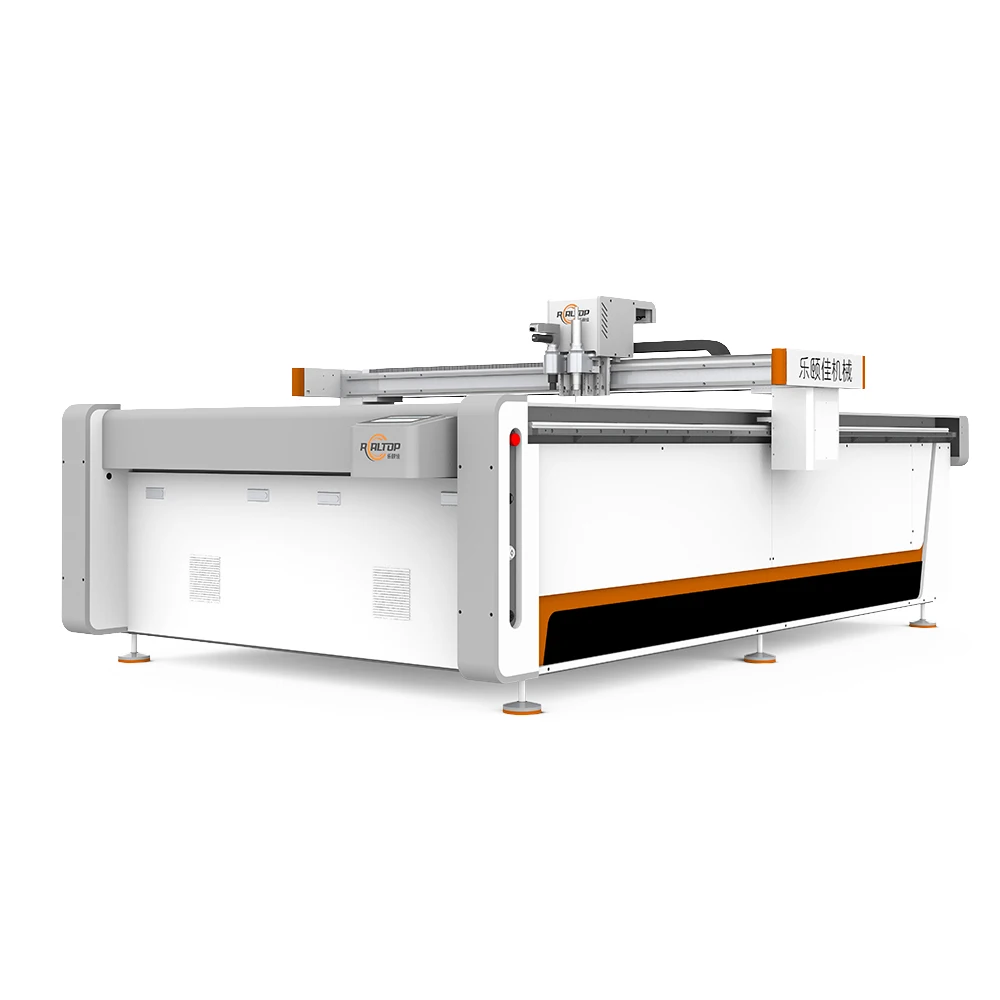
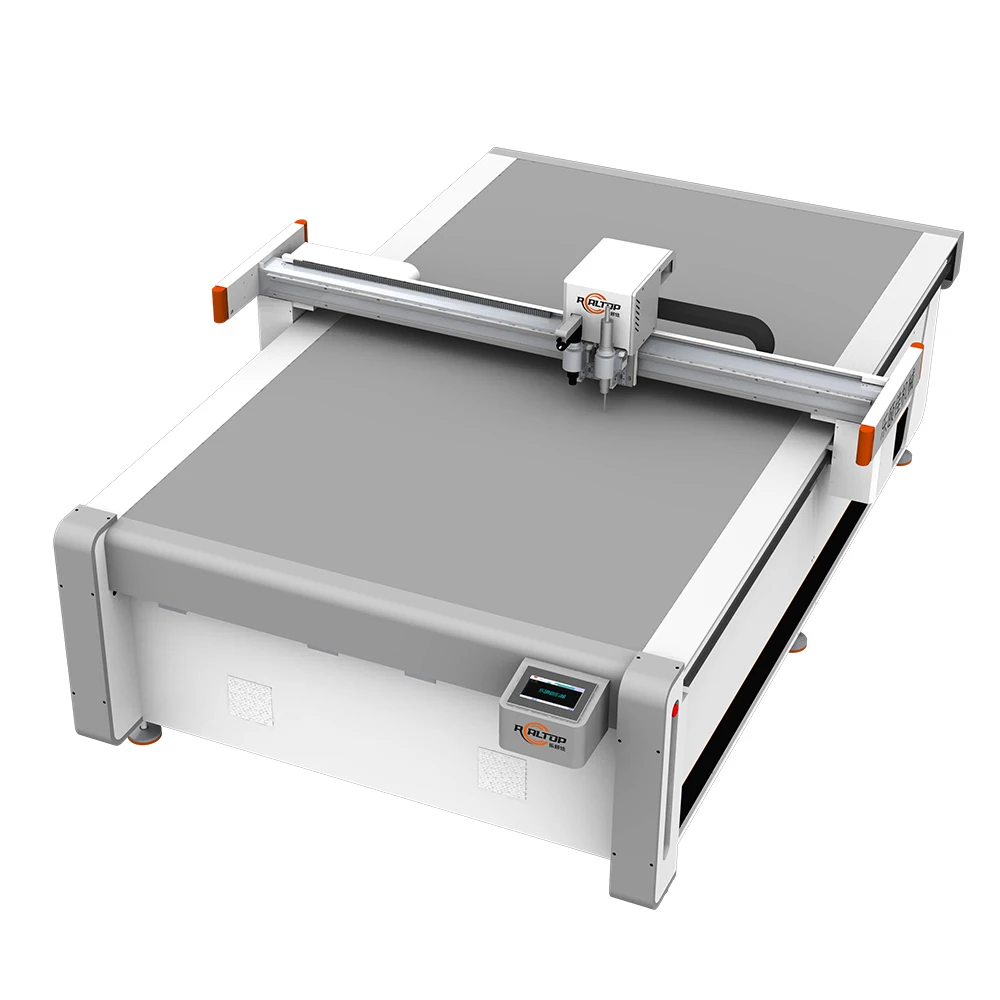
In-house tool head and table engineering — REALTOP matches oscillating knife, creasing wheel and vacuum zoning to your exact packaging substrate rather than forcing a single cutting method across every material.
Technical Specifications
| Parameter | Value |
|---|---|
| Product Type | CNC Oscillating Knife Cutting Machine |
| Working Area | 1600×2500 mm |
| Available Tool Heads | Oscillating knife, Driven rotary knife, Creasing wheel, Kiss cutting tool, Pneumatic knife, Milling tool, V groove knife |
| Cutting Speed Range | 0–1500 mm/s |
| Maximum Cutting Thickness | ≤ 40 mm |
| Positioning Accuracy | ±0.1 mm |
| Vacuum Pump Rating | 9 kW |
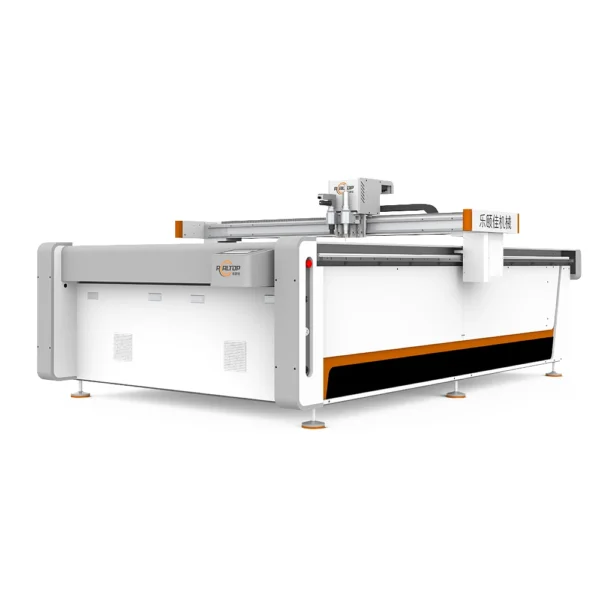
| Vacuum Table Construction | Aluminum bellows vacuum table |
| Control Interface | PLC control panel with optional display languages |
| Servo Drive Options | Panasonic, Delta, Dorna (source value — verify against manufacturer catalog) |
| Input Voltage Range | 110V, 220V, 380V |
| Compatible File Formats | PLT, DXF, AI, PDF |
| Software Package | Dedicated packaging box structure design software |
| Language Options | English, Russian, Italian, Chinese, customizable |
| Safety Systems | Infrared sensor device and emergency stop device |
| Machine Dimensions | 3300×2100×1350 mm |
| Certification | CE |
Application Suitability
| Application | Material or Output |
|---|---|
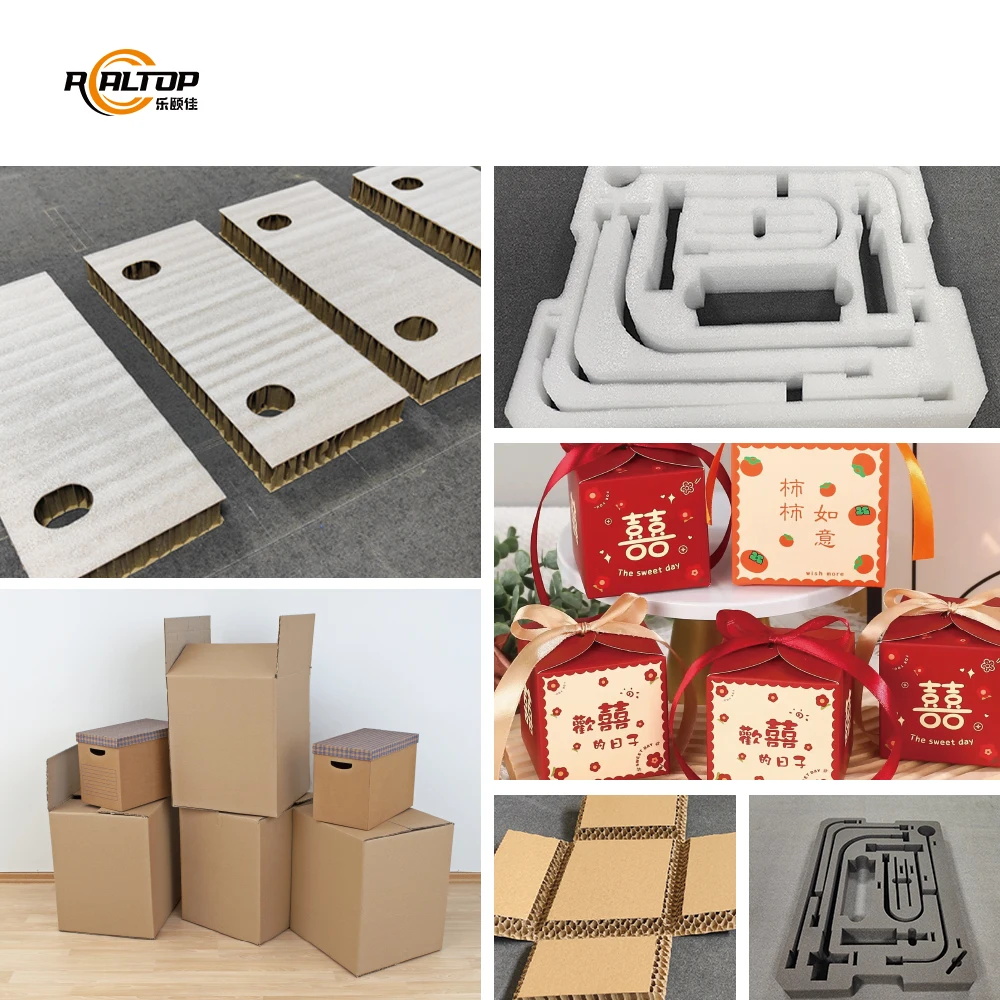
| Carton sample making and prototyping | Corrugated cardboard (E-flute, B-flute, BC-flute), greyboard, art paper, specialty paper |
| Small-batch customized packaging runs | Cardstock, non-woven fabric, velvet/fleece fabric, thin PVC/PET sheets |
| Foam insert fabrication for protective packaging | EVA, EPE, PU foam up to 40 mm thickness |
| Gasket and seal production for industrial packaging | Rubber mats, PTFE, composite and adhesive-backed materials |
| Leather and synthetic leather packaging components | Genuine leather, PU leather, synthetic leather sheets |
| Rigid box and display packaging | Acrylic sheets, PVC board, MDF-reinforced inserts |
Why the Voltage Question Should Come Before the Price
The most disruptive failure on a CNC oscillating knife cutting machine specifications checklist is not the blade — it is the electrical supply mismatch that halts production the moment the machine is powered on. A packaging facility in Southeast Asia received a 380V-configured unit for a 220V three-phase workshop, and the resulting transformer sourcing delay stalled their new box development for weeks. Specifying local voltage and plug type at the inquiry stage — not at shipment — prevents this category of downtime entirely [NEED_CITE: voltage and frequency standards by export market].
When the PLC control panel arrives wired for a voltage the workshop cannot deliver, every subsequent step — tool calibration, material loading, software testing — becomes irrelevant until the electrical supply is corrected. This is not a warranty issue; it is a specification gap that no on-site technician can resolve without external hardware.
Tool Head Selection Defines Edge Quality, Not Just Cutting Ability
Each packaging substrate responds differently to blade geometry and oscillation frequency. Corrugated board at E-flute thickness cuts cleanly with the oscillating knife, but attempting the same tool on a B-flute or BC-flute profile without adjusting amplitude produces frayed flute edges that compromise box crush strength. The creasing wheel, by contrast, does not cut at all — it compresses the board along a scored line so the carton folds precisely without cracking the outer liner. Buyers who specify a single tool head for every packaging job will find themselves choosing between ragged cuts and incomplete creases depending on which board is on the table that day.
Vacuum Table Zoning and Small-Part Stability
The aluminum bellows vacuum table on this machine provides a flat, sealed surface, but flatness alone does not guarantee that small packaging components stay in position during cutting. A 1600×2500 mm working area can hold a nested layout of dozens of carton blanks, and the vacuum must maintain suction across every zone simultaneously. If the table lacks independent zone control, cutting a small gasket insert in the center of a full sheet means the vacuum is distributed across the entire bed rather than concentrated under the part. The material lifts, the blade catches, and the part is ruined — a problem that only becomes visible when production shifts from full-sheet cutting to nested small-part runs.
What the Numbers on the Spec Sheet Actually Mean in Production
The ±0.1 mm positioning accuracy is measured across the full 1600×2500 mm travel, which matters when a packaging designer’s dieline requires multiple crease lines to align within a fraction of a millimeter for the box to close correctly. The 9 kW vacuum pump rating indicates the suction capacity available to hold corrugated sheets flat — a weaker pump struggles with warped or curled board stock that has been stored in humid conditions. The 0–1500 mm/s cutting speed range is a maximum travel speed, and actual production speed depends on material density, tool head selection, and the complexity of the cut path. File format compatibility with PLT, DXF, AI and PDF ensures that packaging designs originating from common vector design software can be imported directly into the dedicated packaging box structure design software without manual redrawing [NEED_CITE: CE machinery directive requirements for industrial equipment].
The Hidden Cost of a Generic Configuration
A machine quoted solely on working area and price often arrives with a tool head chosen for the most common application rather than the buyer’s actual material mix. The result is a creasing wheel specified for greyboard that crushes rather than scores EVA foam inserts, or an oscillating knife left at a default amplitude that tears through thin art paper intended for premium rigid boxes. These are not machine defects — they are configuration oversights that surface only when production begins and the first batch shows damaged edges, incomplete folds, or material waste that exceeds the nesting software’s yield estimate [NEED_CITE: common causes of edge quality failure in digital die-cutting].
Why Procurement Decisions Land Here
The design team and core factory operate under one roof, so tool head selection, vacuum table zoning and servo drive configuration are engineered together rather than assembled from independent component suppliers. Every order begins with a sample cutting report run on the buyer’s own packaging stock — actual corrugated board, foam or greyboard from the production floor — so edge quality and crease depth are verified before commitment. The electrical schematic and voltage confirmation are matched to the buyer’s facility supply, eliminating transformer delays at commissioning. Software licensing and file format compatibility are confirmed in writing before production starts, so the buyer’s existing dieline files and nesting workflows transfer without rework. Voltage, plug type and control language are documented as part of the order specification rather than left as assumptions.
Documentation & Verification
- Machine specification sheet listing confirmed tool heads and table zones for your substrate range
- Electrical schematic and voltage confirmation matched to your facility supply before build
- Sample cutting report on your corrugated board or foam stock with edge quality photographs
- Software licence and file format compatibility note for PLT, DXF, AI and PDF workflows
- Factory test record documenting accuracy verification across the full 1600×2500 mm travel
- Spare parts list covering oscillating knife blades, creasing wheels and vacuum table seals
Installation, Commissioning & Support
- The 9 kW vacuum pump requires a dedicated circuit matching the confirmed 110V, 220V or 380V supply
- Machine dimensions of 3300×2100×1350 mm must be checked against workshop door clearance and ceiling height
- PLC control panel language set to the confirmed option before dispatch — English, Russian, Italian, Chinese or custom
- First-run commissioning includes tool head calibration on the buyer’s actual packaging material stock
- Infrared sensor and emergency stop systems tested on-site during installation before operator training begins
- Oscillating knife blade replacement intervals documented based on confirmed material thickness and daily volume
Before You Send an Inquiry
Provide the specific packaging materials you cut — including flute type, board thickness and any foam or insert stock — along with your daily production volume and the file formats your design team currently uses. Confirm your workshop’s voltage and frequency supply, the preferred control panel language, and whether your existing nesting software must integrate with the machine’s dedicated packaging design software. If you have a new box structure or foam insert profile in development, submitting the dieline file enables a sample cutting test on your material before any specification is finalized.
Frequently Asked Questions
Q: How do I select the correct tool head for corrugated cardboard versus foam versus greyboard?
A: Corrugated E-flute and B-flute typically require the oscillating knife with amplitude tuned to flute height, while greyboard and thick cardstock are better served by the pneumatic knife for clean through-cuts. EVA and PU foam inserts need the oscillating knife at reduced speed to prevent edge compression. The creasing wheel is specified separately for fold lines. A sample cutting test on your actual stock confirms the correct combination before the order is finalized.
Q: Is the vacuum table zoning sufficient for small packaging parts and nested layouts?
A: The aluminum bellows vacuum table is designed for flat sealing across the 1600×2500 mm bed, but small parts such as gasket inserts or miniature carton components require concentrated suction under the cut area. Zone configuration is specified during order confirmation based on your typical nesting layout. Buyers running predominantly small parts should confirm independent zone valving to prevent material lift during cutting.
Q: Can CCD camera contour recognition track printed registration marks at production speed?
A: CCD camera positioning is available as a configuration option for printed contour work on packaging materials. Tracking reliability at full cutting speed depends on mark contrast, print resolution and lighting conditions in the cutting area. If your workflow involves cutting around pre-printed graphics, a sample test with your printed stock at production speed should be conducted before the configuration is locked in.
Q: Will the software accept my existing packaging design files and nesting workflows?
A: The dedicated packaging box structure design software accepts PLT, DXF, AI and PDF input formats. File compatibility is confirmed in writing before the order enters production, and the software licence documentation is included at delivery. If your current nesting workflow relies on a third-party optimizer, integration testing with sample dielines should be part of the pre-order sample cutting stage.


商品评价
Clear filtersThere are no reviews yet.