




Fast Shipping
Carrier information

20k products
Payment methods

24/7 Support
Unlimited help desk

2-day Delivery
Track or off orders
Cold cutting integrity — Matching oscillating, rotary and V-groove tool heads to composite density prevents delamination on carbon fiber prepreg and Nomex honeycomb, validated by sample cutting on your actual material before order confirmation.
Technical Specifications
| Parameter | Value |
|---|---|
| Model | 1625 |
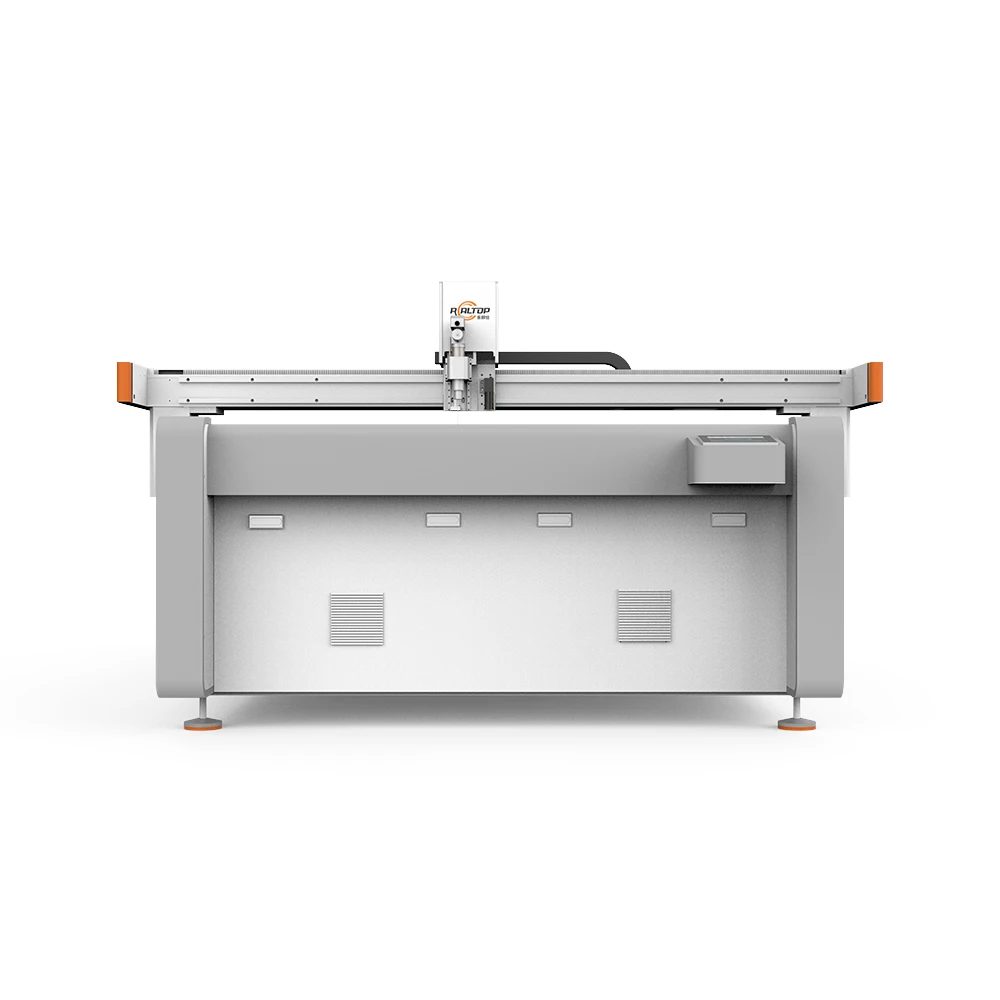
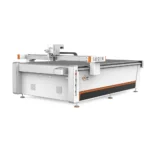
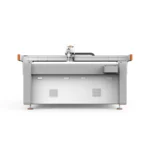
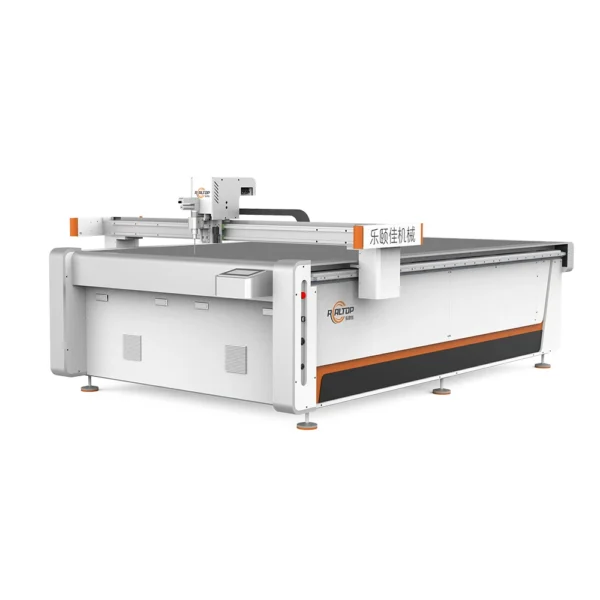
| Product Type | CNC Oscillating Knife Cutting Machine |
| Working Area | 1600×2500 mm |
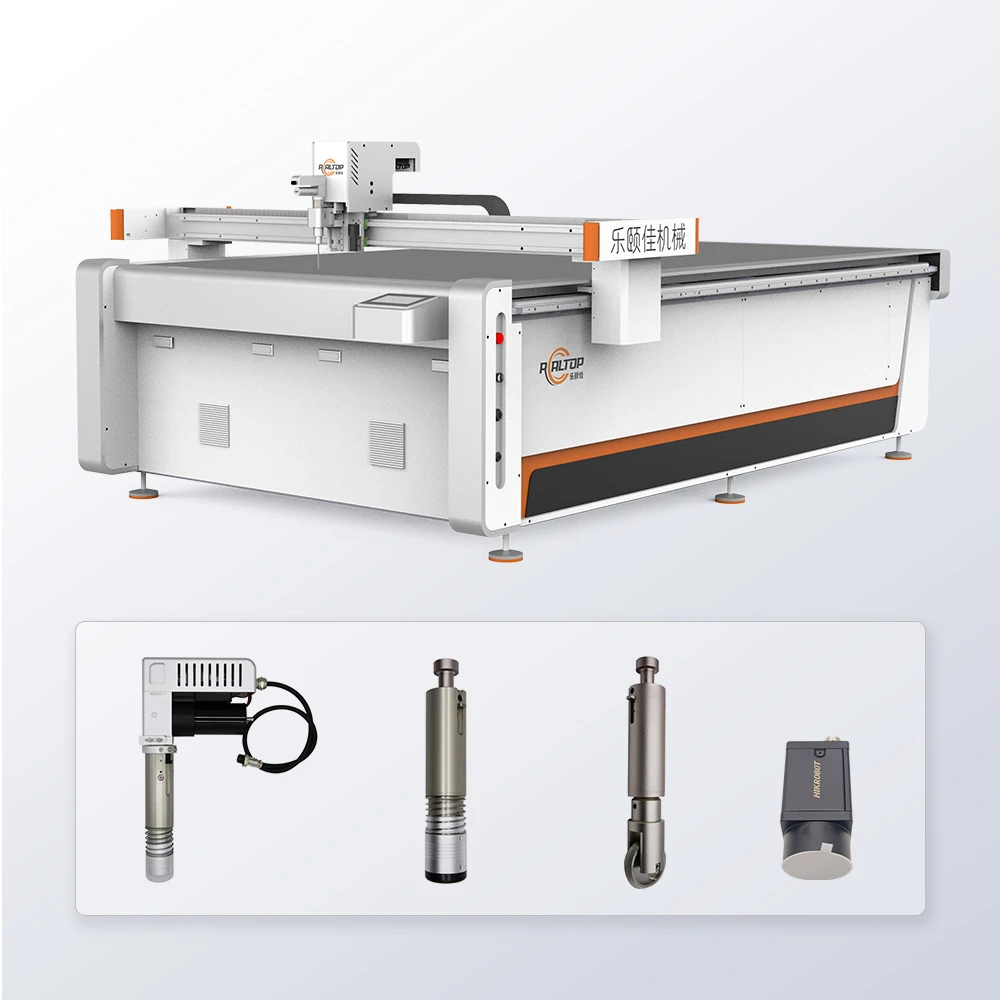
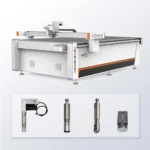
| Tool Head Options | Oscillating knife, Driven rotary knife, Creasing wheel, Kiss cutting tool, Pneumatic knife, Milling tool, V-groove knife |
| Cutting Thickness Capacity | Up to 30 mm |
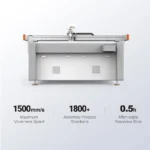
| Cutting Speed Range | 0–2000 mm/s |
| Positioning Accuracy | ±0.1 mm |
| Vacuum Table Type | Aluminum bellows vacuum table |
| Vacuum Pump Power | 9 kW |
| Voltage Options | 110V, 220V, 380V (configurable) |
| Control System | PLC control panel (source value — verify against manufacturer catalog) |
| Servo Drive Options | Panasonic, Delta, Dorna (source value — verify against manufacturer catalog) |
| File Format Compatibility | PLT, DXF, AI, PDF |
| Safety Devices | Infrared sensor, emergency stop |
| Software Language | English, Russian, Italian, Chinese (customizable) |
| Machine Dimensions | 3300×2100×1350 mm |
| Certification | CE |
Application Suitability
| Application | Material or Output |
|---|---|
| Aerospace interior and structural trim | Carbon fiber prepreg, aramid honeycomb (Nomex), fiberglass cloth, ceramic fiber blankets |
| Automotive and rail cabin components | Acoustic felt, damping pads, headliners, floor carpets, battery insulation pads, seat foam |
| Wind energy blade fabrication | Fiberglass cloth, carbon fiber cloth, vacuum infusion mesh, PET/PVC foam core |
| Sporting goods and leisure equipment | Kevlar fabric, high-performance foam, composite fabrics for helmet liners and surfboard cores |
| Industrial gasket and seal production | PTFE sheets, rubber compounds, G10 epoxy boards |
Why Cutting Speed Specs Mislead Composite Buyers
The rated 0–2000 mm/s travel speed rarely translates directly to usable cutting throughput on dense composites.
When a buyer evaluates a CNC oscillating knife cutting machine specifications sheet, the headline travel speed often sets unrealistic expectations. Carbon fiber prepreg and aramid honeycomb demand slower blade oscillation frequencies and reduced traverse rates to avoid frayed edges and delaminated layers. [NEED_CITE: composite cutting feed rate guidelines by material density] A machine running at maximum speed on soft foam will produce unacceptable edge quality on G10 epoxy boards. The actual production rate depends on material hardness, sheet thickness, profile complexity and the tool head selected for that specific job.
Oscillating Knife Mechanics for Layered Composites
The oscillating knife head vibrates at high frequency to slice through composite layers without dragging or tearing the resin matrix. This cold cutting process preserves the structural integrity of carbon fiber prepreg where thermal methods would melt or discolor the binder. For materials up to 30 mm thick, the blade amplitude and stroke rate must be matched to the composite density. The CNC oscillating knife cutting machine specifications on this 1625 model allow the operator to dial in oscillation parameters per material, which is essential when switching between soft acoustic felt and rigid fiberglass boards within the same production shift.
Vacuum Hold-Down Across Large-Format Sheets
The aluminum bellows vacuum table provides uniform suction across the full 1600×2500 mm working area, which matters when cutting aerospace wing skin profiles or wind turbine blade fabrics that span most of the bed. [NEED_CITE: vacuum table zoning requirements for large-format composite cutting] Without adequate hold-down, thin prepreg sheets lift during high-speed traverse, causing dimensional drift and scrapped parts. The 9 kW vacuum pump generates sufficient negative pressure to keep porous materials like fiberglass cloth and infusion mesh flat against the table surface throughout the cutting cycle.
Reading the Specification Sheet Against Your Material
The ±0.1 mm positioning accuracy figure assumes a properly tensioned belt drive and matched servo response, which the available Panasonic, Delta or Dorna servo options address depending on the buyer’s precision requirement. Cutting speed of 0–2000 mm/s represents the mechanical travel range; actual usable speed on aramid honeycomb may be a fraction of that maximum. The supported PLT, DXF, AI and PDF file formats cover most nesting software outputs, but buyers running specialized aerospace nesting packages should verify import compatibility before order. Tool head selection — oscillating knife for most composites, driven rotary knife for thick rubber, V-groove for folding cartons — directly determines whether the machine cuts cleanly or crushes the material.
The Cost of Wrong Tool Head Selection
A buyer cutting Nomex honeycomb with a standard oscillating knife often sees crushed cell walls and ragged edges that fail downstream bonding inspection. [NEED_CITE: tool head selection impact on composite edge quality] Switching to a driven rotary knife or pneumatic knife for that specific material resolves the edge defect but requires upfront configuration at the factory. Retrofitting the wrong tool head after shipment means production downtime, return shipping and recalibration. The same logic applies to vacuum zoning: cutting small gasket parts on a single-zone table causes part lift and scrap, whereas a multi-zone configuration holds small pieces securely.
Why Sourcing from This Facility
In-house design covers both knife and laser cutting technologies, so the cutting method is matched to your composite material rather than forced into one process. Every tool head and table configuration is specified against your material sample and daily volume, not picked from a generic catalog. CCD camera positioning is available for printed contour tracking on decorated composite panels. Software file format compatibility is confirmed against your nesting workflow before the order is finalized. Sample cutting on your actual composite sheet — carbon fiber prepreg, rubber gasket stock or fiberglass cloth — is completed and documented before shipment commitment. Voltage, plug type, control language and safety labeling are configured to your destination market standards.
Documentation & Verification
- Machine specification sheet listing all configured tool heads and vacuum zones
- Electrical schematic with confirmed voltage and phase for your facility
- Sample cutting report on your composite material with edge quality photographs
- Factory test record showing positioning accuracy verification before crating
- Software license documentation with file format compatibility confirmation
- Spare parts list matched to your selected tool head configuration
Installation, Commissioning & Support
- The 3300×2100×1350 mm footprint requires level concrete flooring with clearance for sheet loading on both long sides
- 9 kW vacuum pump plus servo and control circuits require dedicated breaker sizing confirmed against your 110V, 220V or 380V supply
- Machine ships fully assembled; rigging and placement onto foundation bolts handled at receiving dock
- First-run parameter tuning covers oscillation frequency, vacuum zone mapping and servo calibration for your material
- Operator training covers tool head changeover, blade replacement and nesting file import in your selected language
- Wear parts inventory includes oscillating blades, rotary knife discs and vacuum table seals matched to your configuration
Preparing Your Inquiry
To get a meaningful configuration recommendation, share your composite material type, sheet dimensions, thickness range and daily part count. Specify your facility voltage, frequency and preferred control panel language. If you run a specific nesting software, provide a sample output file so import compatibility is verified before quotation.
Frequently Asked Questions
Q: How do I confirm the cutting thickness capacity for rigid composites like G10 epoxy versus soft foam?
A: The 30 mm maximum applies to softer materials under optimal tool head selection. Rigid composites like G10 epoxy boards cut cleanly at lower thicknesses, and actual capacity depends on material hardness and tool head type. Request a sample cutting test on your specific board thickness to verify edge quality and achievable depth before finalizing the configuration.
Q: Which tool head works for aramid honeycomb compared to carbon fiber prepreg?
A: Aramid honeycomb typically requires a driven rotary knife or high-frequency oscillating knife to avoid crushing the cell structure. Carbon fiber prepreg cuts cleanly with a standard oscillating knife at matched stroke frequency. The correct tool head is determined by sample cutting on your actual material, and multiple heads can be configured on the same machine for mixed-material production.
Q: Is the vacuum table zoning adequate for small aerospace gasket parts?
A: The aluminum bellows table provides full-area suction, but small parts may lift if the vacuum zones are not configured for segmented hold-down. Specify your smallest part dimensions during inquiry so the table zoning is matched to your gasket profile range. Multi-zone configurations keep small pieces flat during high-speed cutting.
Q: Will the software import my existing nesting files without reformatting?
A: The system supports PLT, DXF, AI and PDF formats, covering most standard nesting outputs. If you use specialized aerospace or automotive nesting software, send a sample file before order so import and contour recognition are tested. File compatibility is confirmed and documented before the machine enters production.
Q: Can the voltage and control language be customized before shipment?
A: Yes. Voltage is configurable across 110V, 220V and 380V options to match your facility supply. Control panel language options include English, Russian, Italian and Chinese, with other languages available on request. All electrical specifications and language settings are confirmed in writing before the machine is built and tested.


商品评价
Clear filtersThere are no reviews yet.