






Fast Shipping
Carrier information

20k products
Payment methods

24/7 Support
Unlimited help desk

2-day Delivery
Track or off orders
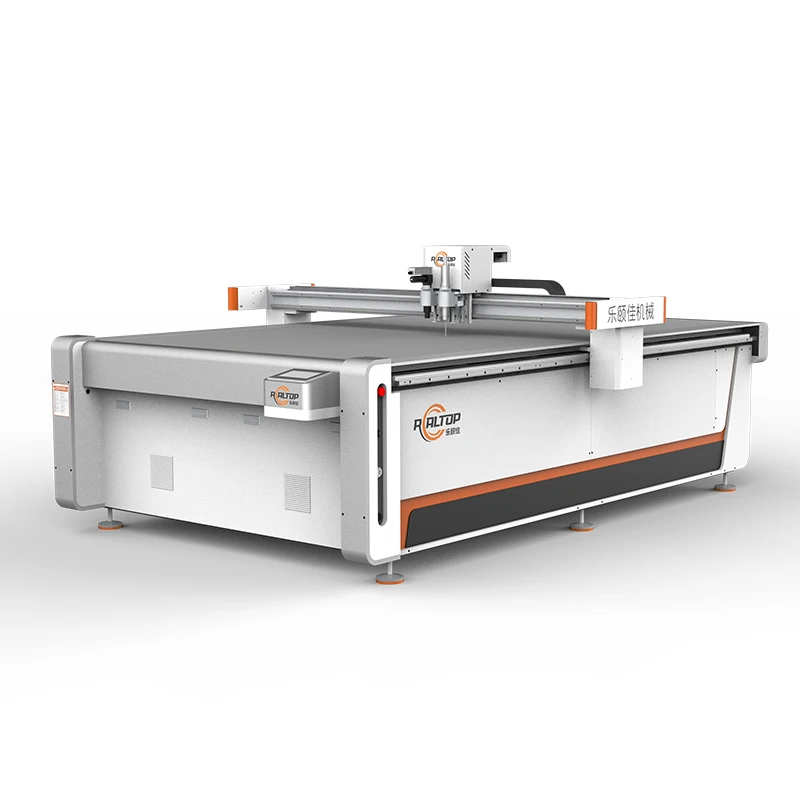
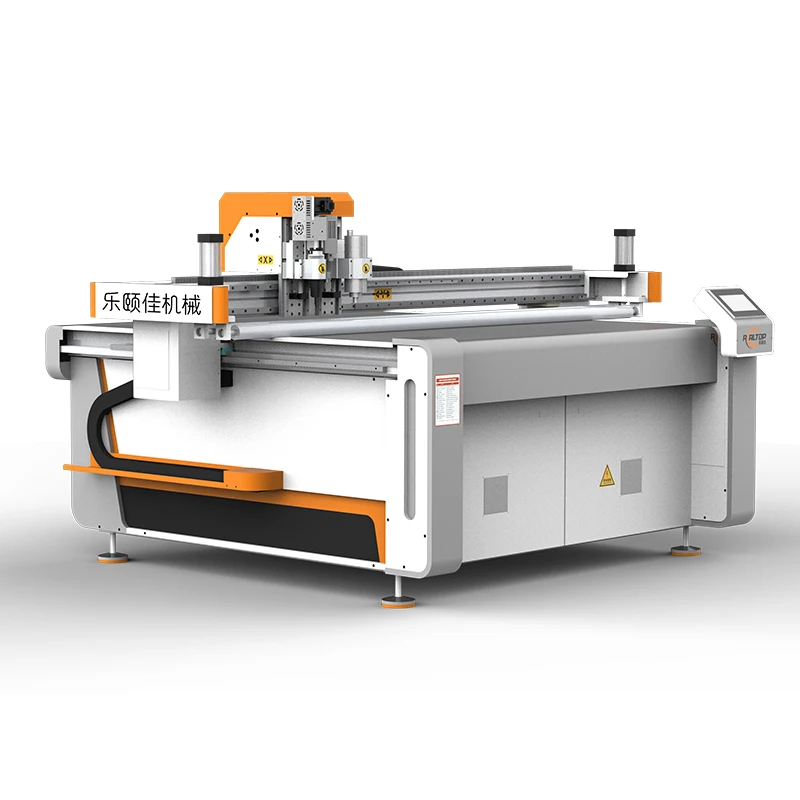
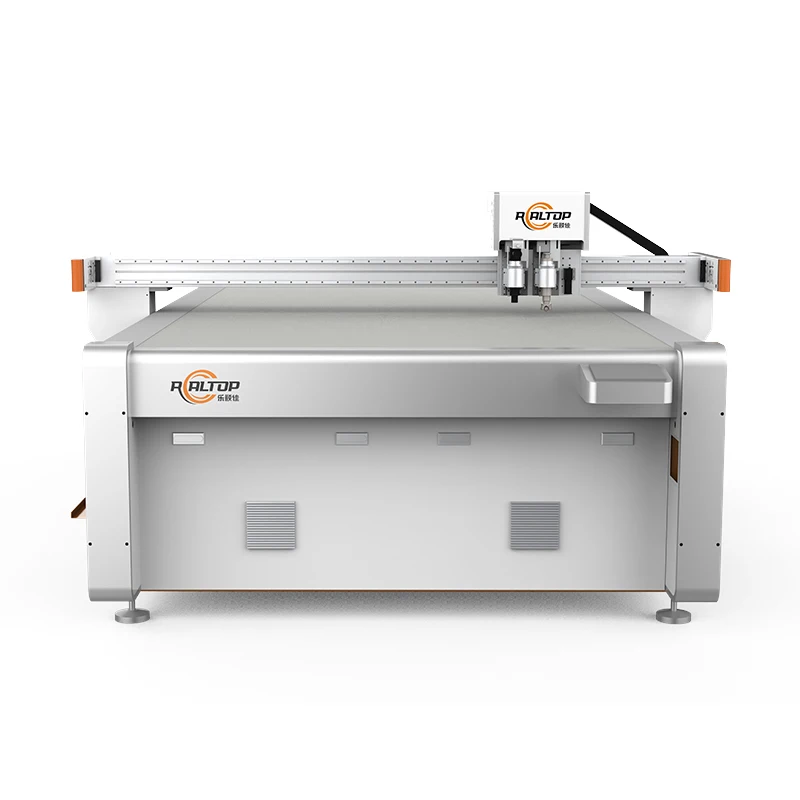
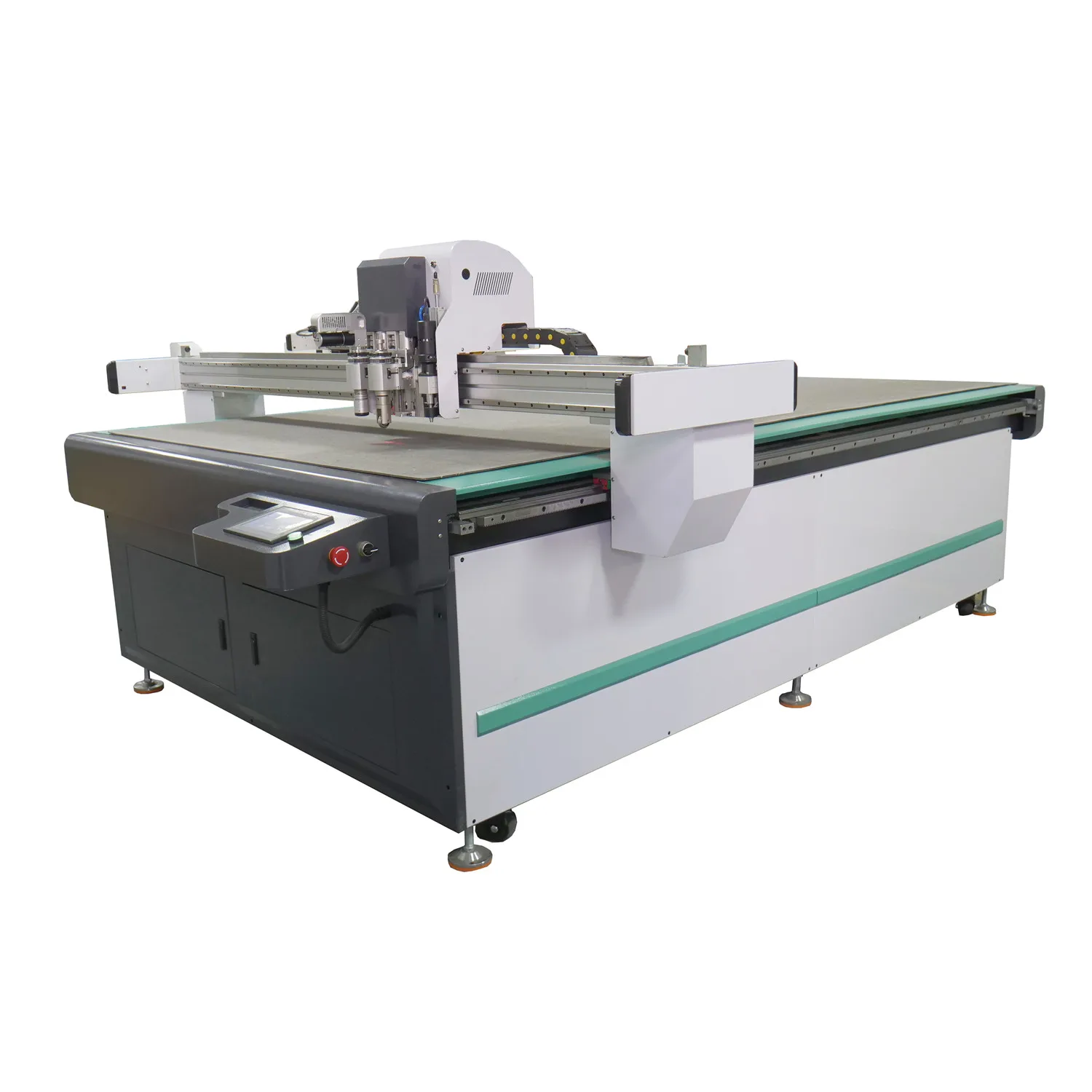
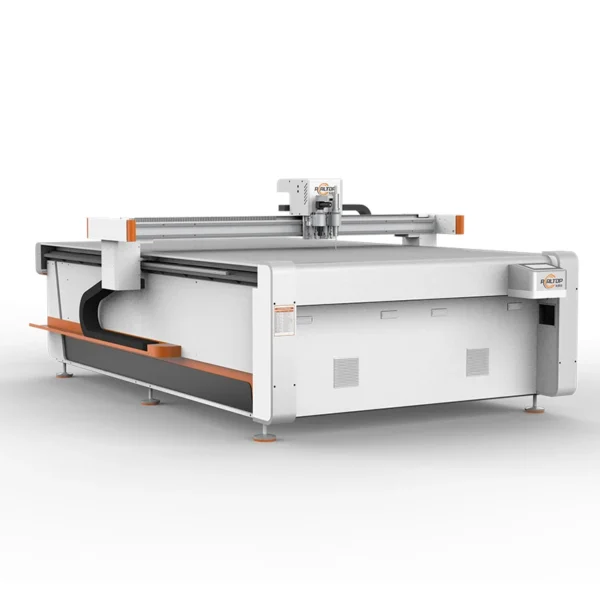
Multi-Tool Head Carriage — In-house design lets packaging and gasket producers match oscillating knife, V-cutting, creasing or drag knife tools to the exact material and fold requirement on one platform.
Technical Specifications
| Parameter | Value |
|---|---|
| Model | RT-D2516 / RT-S2516 |
| Product Type | CNC Oscillating Knife Cutting Machine |
| Working Area | 1600 × 2500 mm |
| Machine Size | 3450 × 2300 × 1250 mm |
| Rated Power | 9 kW |
| Voltage | 380V ± 10% |
| Transmission System | Digital servo motor (Delta or Panasonic optional), linear guide, synchronous belt, ball screw |
| Translational Velocity | 800–2000 mm/s |
| Cutting Speed | 200–800 mm/s (varies with material) |
| Cutting Thickness | ≤ 100 mm (varies with material) |
| Repeated Accuracy | ≤ 0.1 mm |
| Vacuum Table | Magnesium-aluminum alloy with fluorocarbon PVDF powder coating, anodic and hard oxidation |
| Vacuum Pump | 7.5 kW, aviation aluminum shell |
| Table Options | Flat working table or auto feeding table with German conveyor belt |
| Tool Head Options | Oscillating knife, pneumatic knife, high-power vibrating knife, circular knife, V-cutting knife, drag knife, creasing wheel, dotted line knife, punching tool, brush, Swiss imported knife |
| Visual Positioning Options | Small CCD camera mark point positioning, panoramic camera recognition, projection positioning |
| Control Panel | Touch screen, multi-language (English, Russian, Italian, Chinese, others customizable) |
| Software Compatibility | HP-GL compatible; supports PLT, DXF, AI; auto nesting included |
| Safety Devices | Infrared sensor stop, anti-collision sensors on beam, emergency stop |
| Assembly State | Fully assembled |
| Warranty | One year (parts free; shipping by buyer; on-site visits available) |
Application Suitability
| Application | Material or Output |
|---|---|
| Corrugated carton sample making | Single, double and multi-wall corrugated cardboard with full-cut, V-groove and crease |
| Honeycomb board packaging | Honeycomb cardboard cutting and scoring for protective packaging inserts |
| Gasket and sealing pad fabrication | Rubber, PTFE, ETFE, composite gasket stock |
| Automotive interior trim | Foam, sponge composite, PU, leather and synthetic textile |
| Footwear and leather goods | Leather, shoe material, luggage material, non-woven fabric |
| Advertising and signage | PVC foam board, sticker, film, corrugated plastic |
| Composite and foam fabrication | EVA, XPE, PP, PE, fiberglass, sponge |
Why Tool Head Specification Matters More Than Working Area
Choosing a CNC oscillating knife cutting machine tool head selection based only on bed size leaves out the variable that actually determines cut quality: whether the tool head can handle the material density and fold geometry you run every day.
Match the tool to the stock, not the other way around. I spent years on the assembly floor in Jinan before moving to technical sales. Last year a corrugated sample maker ordered a vibrating knife system after testing standard B-flute successfully, only to find the machine could not cleanly shear five-ply BC-flute at production speed — the entire first batch of cartons was scrapped. That failure was not about working area or servo power; it was about specifying a single oscillating knife where a V-cutting head and high-power vibrating knife should have been configured together [NEED_CITE: common failure modes in corrugated sample cutting operations].
Tool Head and Material Matching
The RT-D2516/RT-S2516 carriage accepts oscillating knife, drag knife, high-power vibrating knife, V-cutting knife, creasing wheel, circular knife, punching tool and dotted line knife modules on one platform. A packaging shop cutting thin card and kiss-cut sticker needs a drag knife and creasing wheel; a gasket fabricator working PTFE and rubber at full depth needs a high-power oscillating head with increased down-force. Switching between these on the same machine avoids re-fixturing and keeps registration accurate across operations.
Vacuum Zoning and Hold-Down Control
Cutting small carton blanks or intricate gasket profiles creates the same problem: once the blade separates a small piece, vacuum suction through the remaining porous stock is lost and the part lifts. The magnesium-aluminum table with fluorocarbon PVDF coating is paired with a 7.5 kW pump to maintain hold-down across the full 1600 × 2500 mm surface. When combined with zoned vacuum segments, the system keeps small parts flat through the final cuts rather than letting edges curl under the knife [NEED_CITE: vacuum hold-down requirements for porous corrugated and foam substrates].
Reading the Specs That Actually Matter
The 9 kW rated power covers servo drives, vacuum pump and control electronics together. Translational velocity of 800–2000 mm/s and cutting speed of 200–800 mm/s define two different operating modes — rapid positioning between cuts versus actual shearing speed through material. A machine that advertises only peak travel speed without separating cutting speed will disappoint on dense composites. The ≤ 100 mm cutting thickness applies to low-density foam; corrugated cardboard and rubber stock will have lower practical limits depending on ply count and durometer. Repeated accuracy of ≤ 0.1 mm ensures that multi-pass crease-and-cut sequences stay registered, which matters when a carton blank requires three tool changes in one job.
The Cost of Skipping a Material Sample
When a buyer confirms a machine on working area and price alone, the tool head, vacuum zone map and feed rate arrive at the factory as defaults rather than choices. On corrugated stock that means a standard oscillating knife chews through double-wall instead of shearing it, leaving crushed flute and ragged edges. On foam, insufficient vacuum zoning lets thin strips lift into the blade path, producing nicks that force manual trimming downstream. These are not warranty claims — they are specification errors caught too late [NEED_CITE: post-delivery rework costs from incorrect tool configuration].
What We Build Into Every Order
The design team in Jinan covers both knife cutting and laser cutting technologies, so a buyer evaluating corrugated work against acrylic engraving gets an honest comparison of methods instead of being funneled into one. Tool head and table configuration are specified per material sample, not guessed from a catalogue. CCD camera and panoramic vision options are confirmed against the buyer’s actual print contrast before order. Voltage, plug type and control language are locked in before production begins. Every machine ships with a factory test record on the buyer’s own material — the same material that caused the five-ply BC-flute failure I saw firsthand.
Documentation & Verification
- Machine specification sheet listing each configured tool head and vacuum zone
- Electrical schematic confirming voltage, frequency and plug type for destination
- Sample cutting report on buyer-supplied corrugated grade and foam density
- Factory test record with cutting speed and edge quality per material
- Software licence note with confirmed PLT, DXF and AI file import test
- Spare parts list with wear items for each selected tool head module
Installation, Commissioning & Support
- 3450 × 2300 mm footprint requires level concrete floor with clearance for sheet loading
- 9 kW rated power needs a dedicated 380V circuit with confirmed frequency
- Machine ships fully assembled; position with forklift and connect power and vacuum
- First-run commissioning covers servo tuning, vacuum zone mapping and knife depth calibration
- Operator training on tool head changeover, nesting software and touch-screen controls
- Wear parts include oscillating knife blades, creasing wheels and vacuum seals
Before You Request a Quote
Send us your actual corrugated grade and ply count, the densest foam or rubber you cut, and the smallest blank size in your typical nesting layout. Confirm your local voltage and frequency, the control language your operators need, and whether your existing PLT or DXF files use any custom line types for crease versus cut paths. If your daily volume runs high, tell us whether a flat table or auto-feeding conveyor setup fits your upstream workflow.
Frequently Asked Questions
Q: Which tool head should I use for corrugated cardboard versus foam?
A: Standard oscillating knife works for single and double-wall corrugated up to moderate thickness. For thicker multi-wall board, a high-power vibrating knife shears more cleanly. V-cutting knife is used for groove folds without cutting through. Foam above certain density needs drag knife or a dedicated oscillating head with adjusted down-force — always confirm with a sample cut on your stock.
Q: How do I prevent small carton parts from lifting during cutting?
A: The magnesium-aluminum vacuum table with 7.5 kW pump holds porous corrugated stock flat. Zoned vacuum segments direct suction only where material covers the table, preventing loss of hold-down once a small part is cut free. We configure zone layout based on your smallest blank dimensions before shipment.
Q: What print quality does the CCD camera need for contour recognition?
A: The small CCD camera reads mark points; the panoramic option recognizes full printed contours. Both require sufficient contrast between registration marks and background, and marks must fall within the camera field at production speed. We test against your actual printed artwork file and confirm tracking before the machine leaves the factory.
Q: Will my existing PLT and DXF files import without issues?
A: The system supports HP-GL compatible format along with PLT, DXF and AI files, with auto nesting included. Before order we run your sample files through the software to check layer interpretation, line weight mapping and crease-versus-cut assignment. Any incompatibility is resolved before production, not discovered at commissioning.
Q: What is the real cutting thickness limit for my material?
A: The ≤ 100 mm specification applies to low-density foam. Practical limits for corrugated cardboard, rubber and composites depend on ply count, density and tool head selected. We state the confirmed cutting depth for your specific material on the sample cutting report, not a generic catalogue maximum.


商品评价
Clear filtersThere are no reviews yet.