

Fast Shipping
Carrier information

20k products
Payment methods

24/7 Support
Unlimited help desk

2-day Delivery
Track or off orders
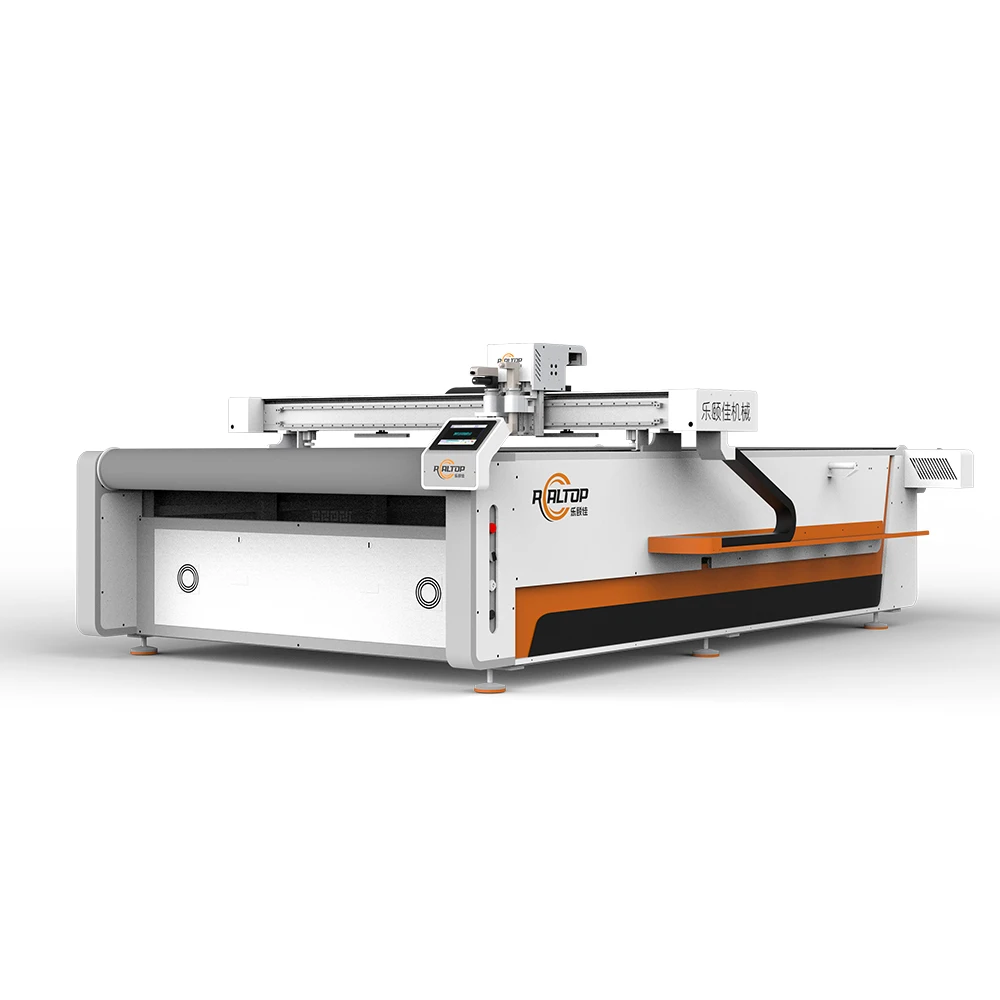
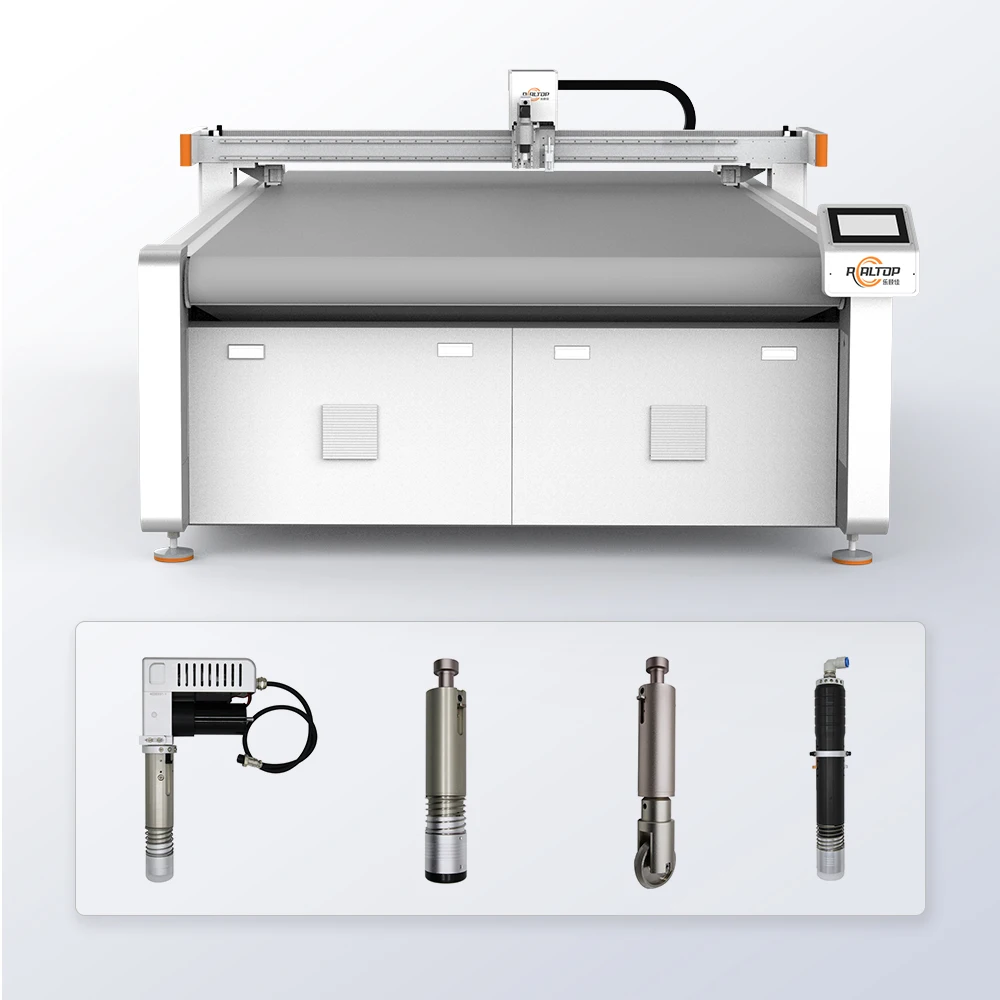
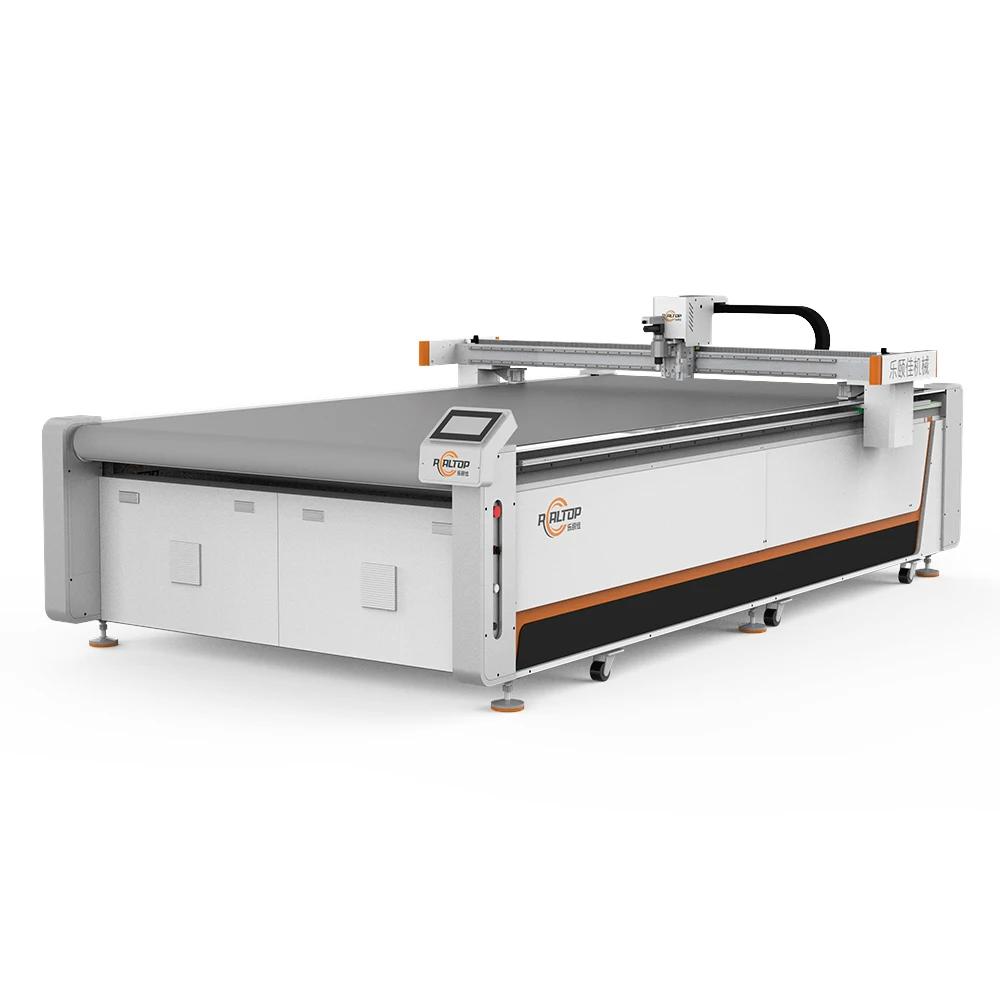
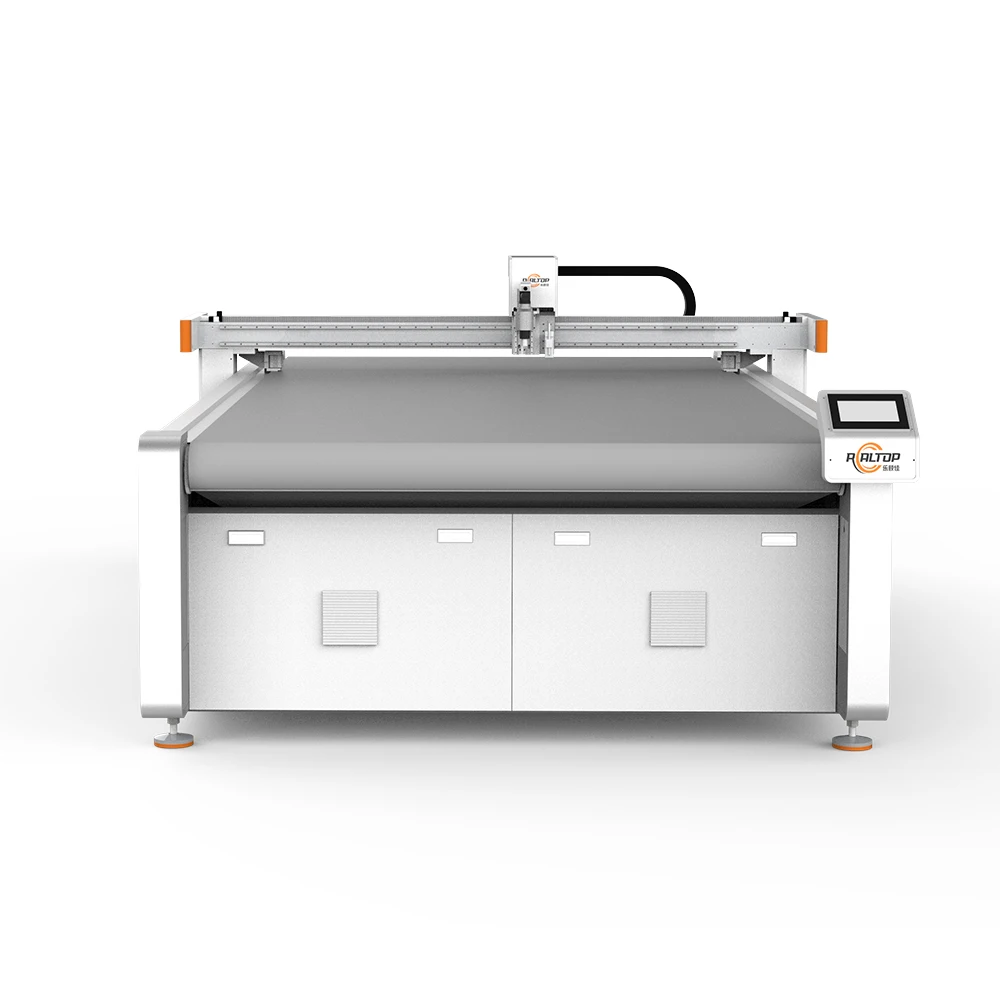
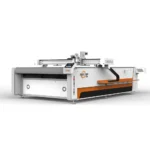
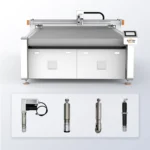
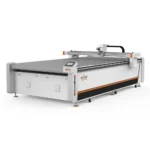
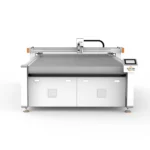
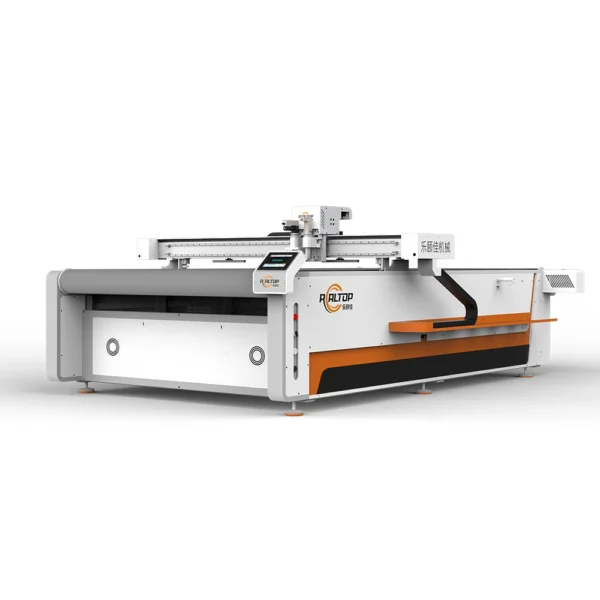
Precision tool head configuration — the 1625 CNC oscillating knife cutting machine offers seven interchangeable tool options specified against your actual denim weight and coating thickness before any order is confirmed.
Technical Specifications
| Parameter | Value |
|---|---|
| Model | 1625 |
| Product Type | CNC Oscillating Knife Cutting Machine |
| Working Area | 1600 × 2500 mm |
| Tool Head Options | Oscillating knife, Driven rotary knife, Creasing wheel, Kiss cutting tool, Pneumatic knife, Milling tool, V groove knife |
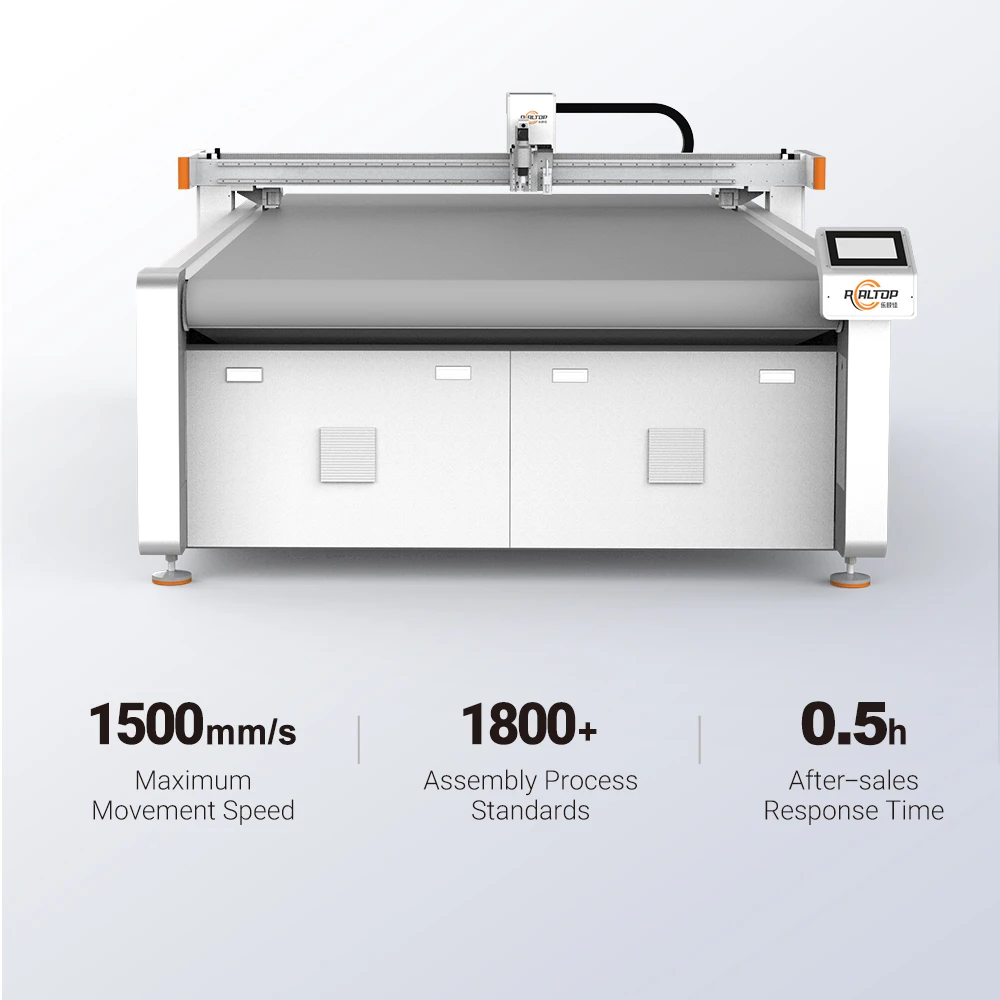
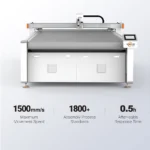
| Cutting Speed | 0 – 2000 mm/s |
| Cutting Thickness | ≤ 30 mm (basis not stated in source — confirm material density and layer count) |
| Cutting Accuracy | ±0.1 mm |
| Vacuum Pump | 9 kW |
| Vacuum Table | Aluminum bellows vacuum table |
| Control System | PLC control panel |
| Servo Motor Options | Panasonic, Delta, Dorna |
| Voltage Options | 110V / 220V / 380V (frequency to be confirmed per destination market) |
| Software & File Formats | PLT, DXF, AI, PDF; dedicated packaging box structure design software |
| Language Options | English, Russian, Italian, Chinese; custom languages available |
| Safety Devices | Infrared sensor device, emergency stop device |
| Machine Size | 3300 × 2100 × 1350 mm |
| Certification | CE |
Application Suitability
| Application | Material or Output |
|---|---|
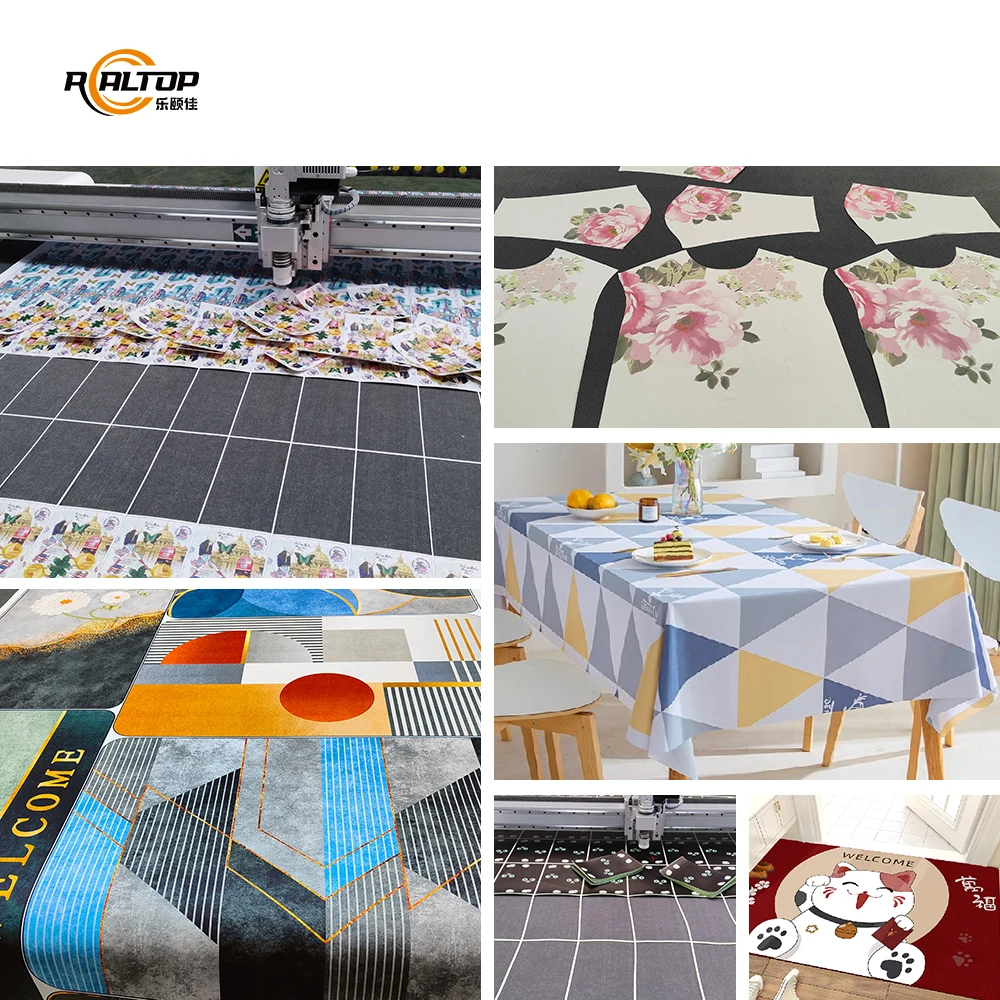
| Denim jacket and jeans production | Raw denim, selvedge denim, coated denim, stretch denim blends up to 30 mm stack height |
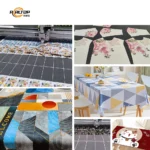
| Suit and knitwear cutting | Worsted wool, jersey, interlock, lace, multi-layer knit fabrics |
| Automotive seat and interior trimming | Seat upholstery fabrics, needlepunch carpet, PVC floor mats |
| Home textile manufacturing | Sofa upholstery, curtain blackout lining, woven rug backing |
| Composite material processing | Carbon fiber prepreg, aramid sheets, PTFE gasket stock |
Why Denim Weight Changes Everything About Your CNC Oscillating Knife Cutting Machine Specifications
The cutting force and stroke frequency that work on 10 oz denim will leave a 14 oz coated denim half-cut and frayed at the ply edges.
I have walked through workshops where the cutting machine sat idle because the oscillating knife could not penetrate a waxed canvas layer the buyer never mentioned during the initial inquiry. Standard denim samples cut cleanly, but production rolls with polyurethane coating or heavy selvedge weave behave completely differently under the blade. The knife deflection increases, the vacuum hold shifts smaller pattern pieces, and operators end up re-cutting sections by hand [NEED_CITE: material density effects on oscillating knife penetration and edge quality].
Matching the Blade Profile to Your Denim Construction
Raw selvedge denim, stone-washed blends, and elastane stretch denim each demand a different oscillating knife geometry and stroke rate. A straight oscillating blade handles straight-grain woven denim well, while a driven rotary knife produces cleaner curves on pattern pieces with tight radii like collar stands and cuff facings. The 1625 platform accepts both tool heads on the same gantry, so a denim jacket pattern mixing long panel cuts with tight curved seams runs without tool changes. Getting the CNC oscillating knife cutting machine specifications right at the tool head level prevents the ragged ply separation that shows up only after twenty layers are stacked.
Vacuum Zoning That Holds Small Denim Components Flat
Denim jacket patterns contain many small pieces — pocket flaps, belt loops, epaulettes — that lift off the table when vacuum suction is distributed across the full bed uniformly. The aluminum bellows vacuum table on the 1625 allows zone-based suction, directing the 9 kW pump output to the active cutting region. This matters when nesting pocket pieces beside full back panels; the smaller parts stay pinned under the knife instead of shifting and producing miscut bundles that waste expensive fabric [NEED_CITE: vacuum zoning principles for flatbed digital cutting tables].
Reading the Numbers That Actually Matter on the Spec Sheet
Cutting speed rated at 0 – 2000 mm/s describes the maximum travel velocity of the gantry, not the linear cutting rate through stacked denim plies. At full stack height near 30 mm, effective cutting speed drops substantially because the oscillating knife must maintain sufficient stroke frequency to shear each layer cleanly. The ±0.1 mm positioning accuracy governs how precisely nested pattern pieces follow the DXF file, which directly affects fabric yield on a material where even a 2 mm deviation per piece compounds across dozens of pattern parts. Servo motor selection — Panasonic, Delta, or Dorna — influences acceleration behavior on direction changes, which matters on intricate jacket components where the gantry reverses frequently.
What Happens When the Wrong Tool Head Meets Your Fabric
A buyer once sent us a standard denim sample that cut perfectly with the default oscillating knife. Weeks later, production started on a polyurethane-coated motorcycle jacket denim, and every cut edge showed delamination between the coating and the woven base. The oscillating stroke was tearing the coating away from the substrate instead of shearing through both layers simultaneously. Switching to a pneumatic knife with adjusted downward pressure resolved the edge separation, but the downtime and wasted yardage had already accumulated [NEED_CITE: tool head selection errors and material waste in fabric cutting operations]. These failures rarely show up on a single-ply sample.
Why Procurement Starts With Your Actual Roll of Fabric
Every configuration decision on the 1625 — from the tool head mounted on the gantry to the vacuum zone map programmed into the PLC — depends on the specific denim construction you run. Our in-house design team builds both knife and laser cutting systems, so if a particular coated denim responds better to thermal edge-sealing than mechanical cutting, that alternative gets evaluated before you commit. Tool head and table specifications are documented per your material, not pulled from a generic catalog page. Sample cutting runs on your actual production fabric, including any coating, wash treatment, or elastane content, confirm edge quality before the machine enters build. Voltage, plug type, and control language are locked in before shipment so the PLC panel reads correctly the day it powers on.
Documentation & Verification
- Machine specification sheet listing tool head and vacuum configuration matched to your denim weight and coating
- Electrical schematic with confirmed voltage, frequency, and plug type for your facility
- Sample cutting report on your actual production denim showing edge quality at full stack height
- Software licence and file format note confirming DXF and PLT nesting workflow compatibility
- Factory test record documenting cutting accuracy across the full 1600 × 2500 mm working area
- Spare parts list covering oscillating knife blades, vacuum bellows seals, and servo drive components
Installation, Commissioning & Support
- Floor space allocation for the 3300 × 2100 × 1350 mm machine envelope plus operator access clearance
- Dedicated electrical circuit matching confirmed 110V / 220V / 380V supply with correct frequency rating
- Aluminum bellows vacuum table leveling and 9 kW pump commissioning with zone-by-zone suction verification
- PLC control panel language setup and DXF / AI / PDF file import test with your existing pattern library
- Oscillating knife stroke calibration on your denim stack height with cutting speed optimization
- Operator training covering tool head changeover, vacuum zone mapping, and nesting software workflow
What We Need to Quote the Right Configuration
Send us the exact denim weight in ounces per square yard, any coating or elastane content, and the maximum number of plies you stack for production cutting. Include your target daily output in jacket units and your current nesting software or file format so we can confirm compatibility. Let us know your facility voltage and preferred control language, and whether you need sample cutting on your own fabric rolls before we finalize the tool head specification.
Frequently Asked Questions
Q: How do I choose between the oscillating knife and driven rotary knife for denim jacket production?
A: The oscillating knife handles straight panel cuts and moderate curves efficiently through multi-layer denim stacks. The driven rotary knife produces cleaner edges on tight radii such as collar stands and pocket curves where blade direction reverses frequently. Your pattern geometry and stack height determine which tool head runs as the primary cutter, and both can be mounted on the 1625 gantry for quick changeover between operations.
Q: What is the realistic cutting thickness for coated denim on this CNC oscillating knife cutting machine?
A: The specification sheet rates the 1625 at up to 30 mm cutting thickness, but actual achievable depth depends on denim density, coating type, and ply compression under vacuum. Heavier coatings and tighter weaves reduce effective stack height because the knife requires more downward force per stroke. We confirm achievable thickness through sample cutting on your specific coated denim before finalizing the configuration.
Q: Can the control panel and software interface be set to my local language before delivery?
A: The PLC control panel ships with English, Russian, Italian, or Chinese interface as standard options. Additional languages can be customized before dispatch based on your operator requirements. Voltage and plug type are confirmed simultaneously so the machine connects to your facility power without adapters, and the software license activates with your preferred language setting.
Q: Will my existing DXF nesting files import directly into the cutting software?
A: The software accepts PLT, DXF, AI, and PDF file formats. Before the order proceeds, we test import and cutting simulation using your actual pattern files to verify that layer assignments, cut lines, and nesting layouts transfer correctly. Any format incompatibility is identified and resolved at the sample stage rather than after installation on your production floor.


商品评价
Clear filtersThere are no reviews yet.