

Fast Shipping
Carrier information

20k products
Payment methods

24/7 Support
Unlimited help desk

2-day Delivery
Track or off orders
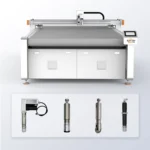
Tool-head matched to material — Every oscillating knife, rotary knife and creasing tool is specified against the buyer’s actual fabric weight, layer count and backing composition before the machine leaves the factory.
Technical Specifications
| Parameter | Value |
|---|---|
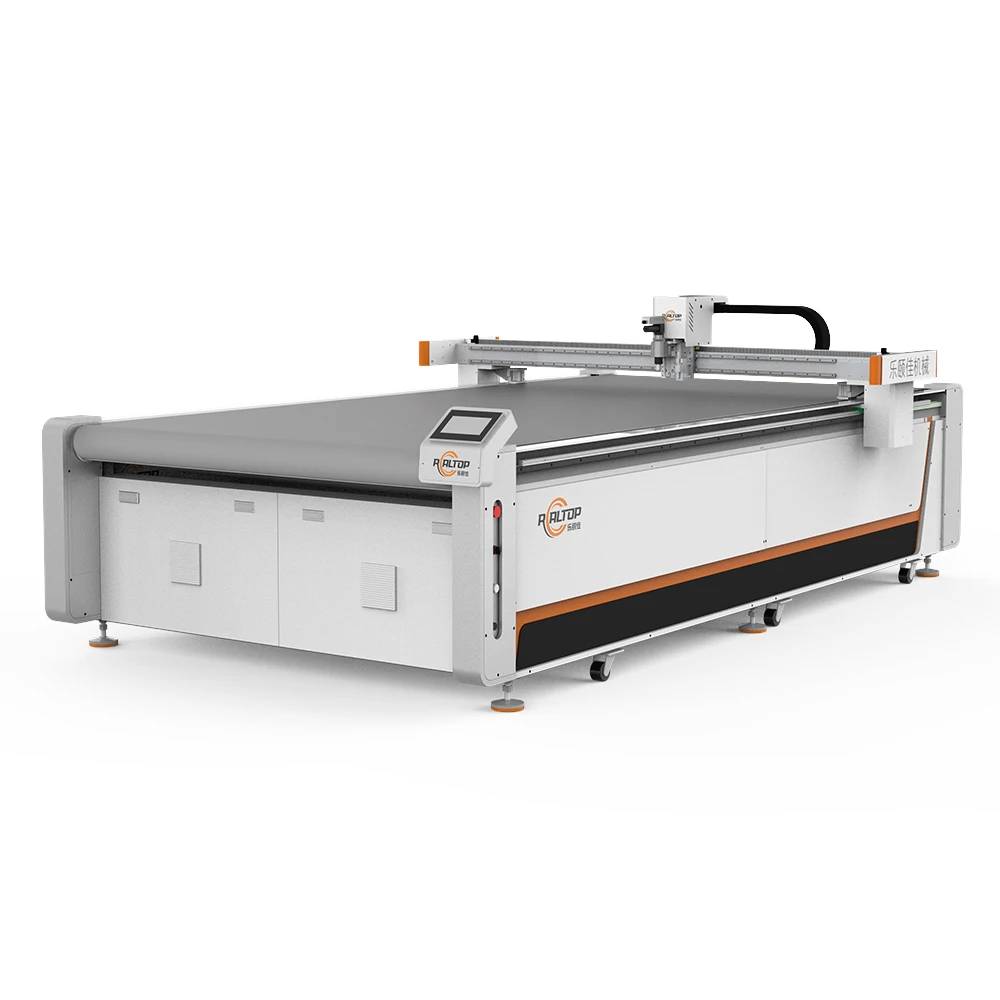
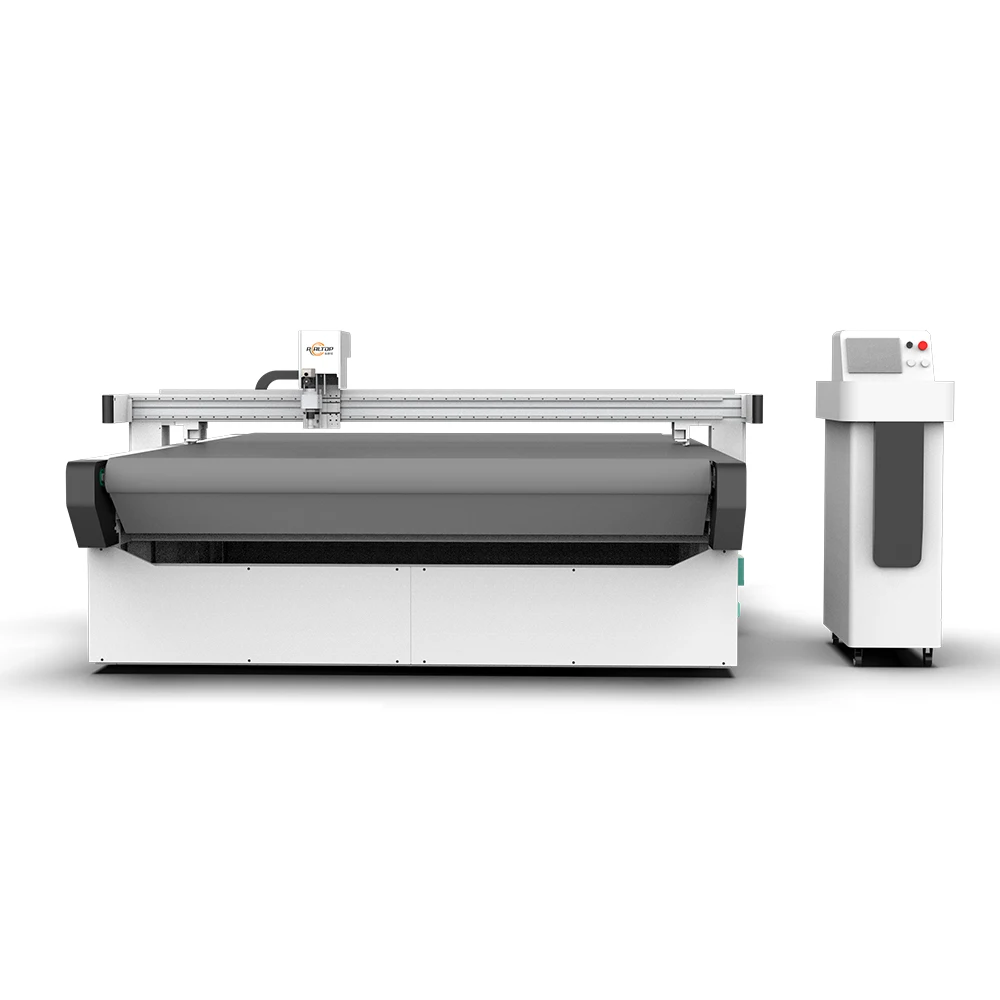
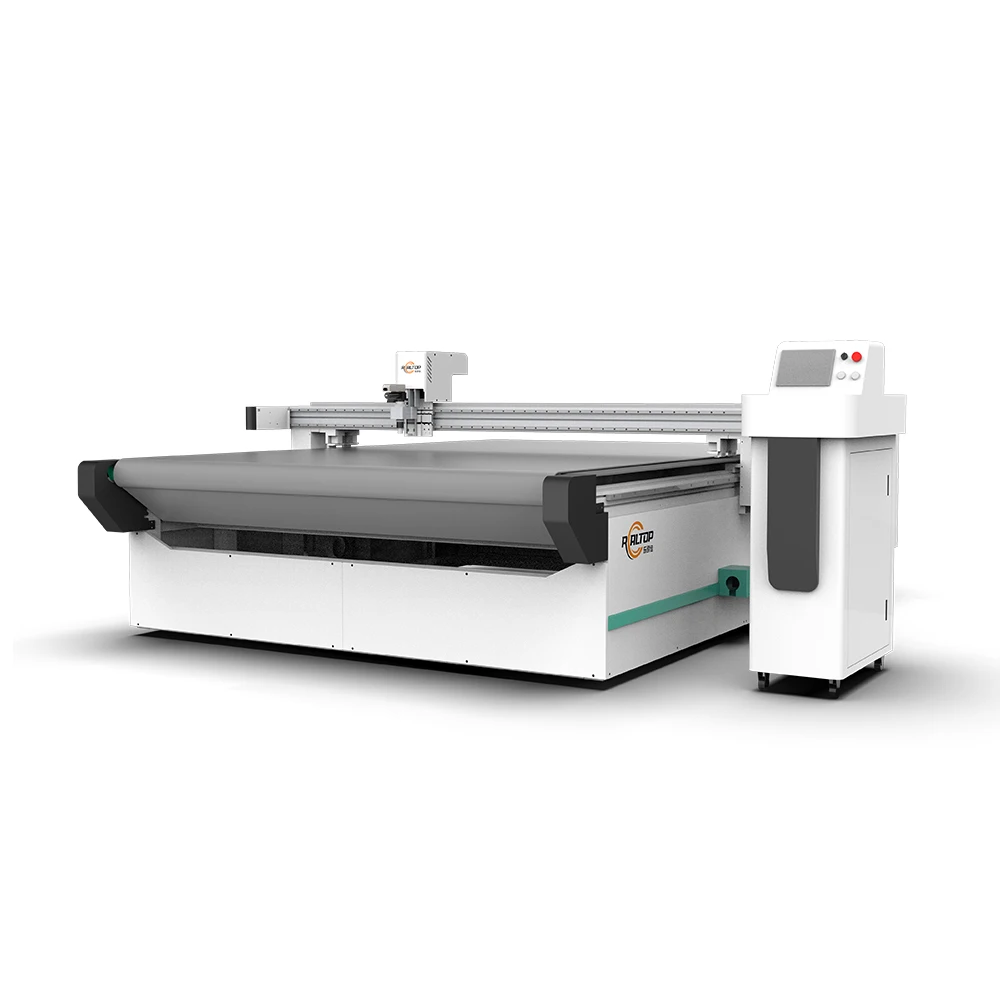
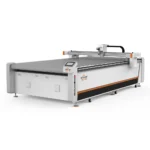
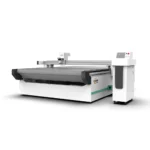
| Product Type | CNC Oscillating Knife Cutting Machine |
| Working Area | 1600 × 2500 mm |
| Cutting Speed Range | 0 – 2000 mm/s |
| Maximum Cutting Thickness | ≤ 30 mm (basis to be confirmed on buyer material) |
| Positioning Accuracy | ±0.1 mm |
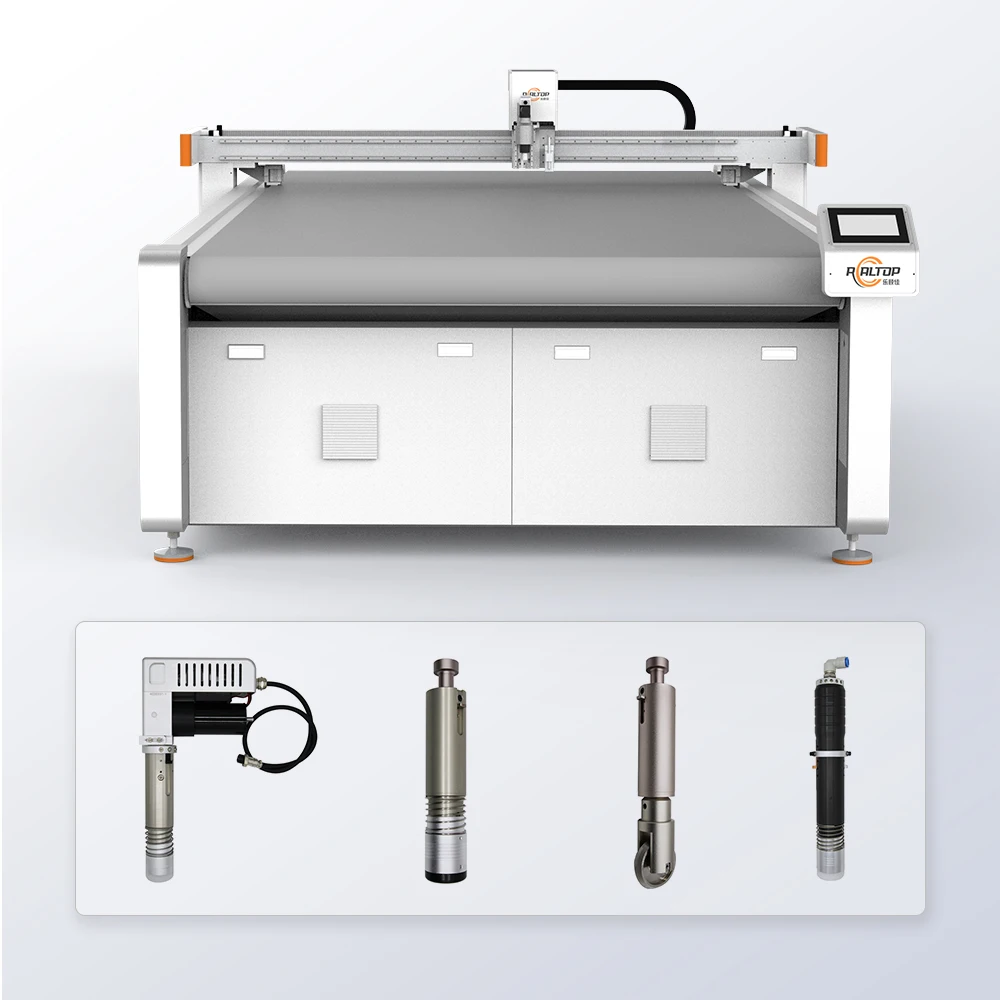
| Tool Head Options | Oscillating knife, Driven rotary knife, Creasing wheel, Kiss cutting tool, Pneumatic knife, Milling tool, V-groove knife |
| Applicable Materials | Fabric, Cardboard, Carton, Mats, PVC, EVA, Leather, Acrylic, Foam, PTFE, Rubber |
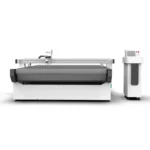
| Vacuum Table Type | Aluminum bellows vacuum table |
| Vacuum Pump Power | 9 kW |
| Control System | PLC control panel |
| Servo Drive Options | Panasonic, Delta, Dorna (source value — verify against manufacturer catalog) |
| Supported File Formats | PLT, DXF, AI, PDF |
| Software Language Options | English, Russian, Italian, Chinese, customizable |
| Voltage Options | 110V, 220V, 380V (rated or peak not specified) |
| Safety Devices | Infrared sensor, Emergency stop |
| Overall Dimensions (L × W × H) | 3300 × 2100 × 1350 mm |
| Compliance | CE |
Application Suitability
| Application | Material or Output |
|---|---|
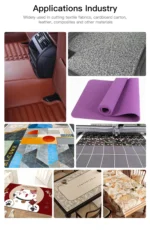
| Apparel manufacturing | Suits, knitwear, lace, complex multi-layer fabric stacks |
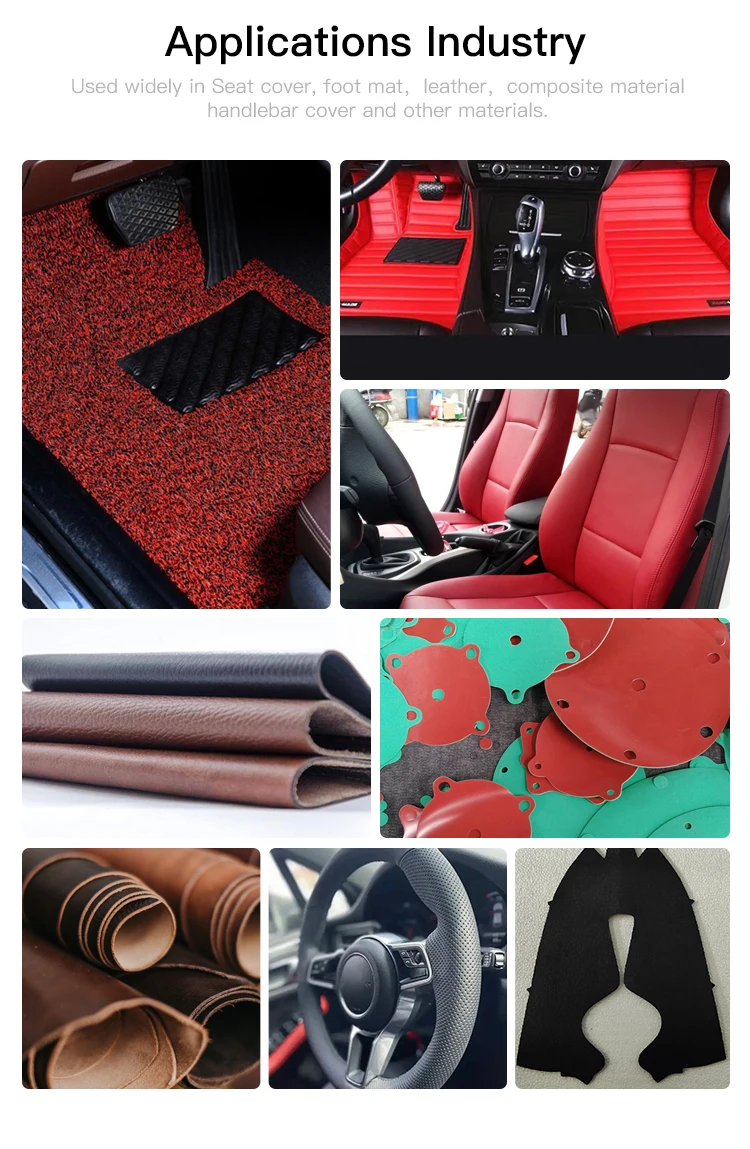
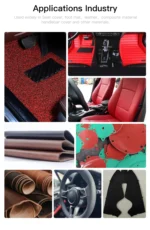
| Automotive interiors | Seat fabrics, carpets, PVC mats requiring burr-free edges |
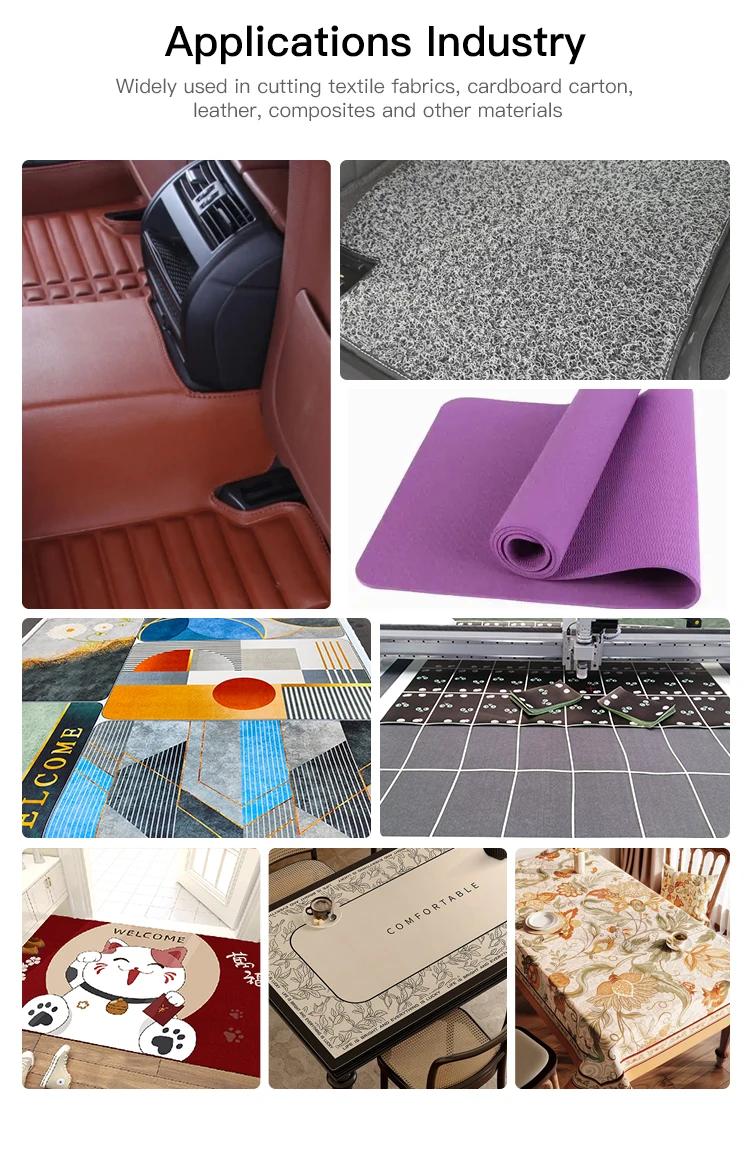
| Home textiles | Sofa fabrics, curtains, rugs, heavy woven materials |
| Composite processing | Carbon fiber prepreg, aramid, specialty reinforcement fabrics |
| Signage and packaging | Vinyl, corrugated cardboard, foam board sample making |
| Footwear and leather goods | Genuine and synthetic leather, insole board, toe puff |
What Happens When the Tool Head Is Wrong for Your Fabric
Specifying a CNC oscillating knife cutting machine on working area alone is the fastest route to a shop-floor failure.
I have walked into workshops where a brand-new cutter sat idle because the oscillating blade that handled single-layer polyester perfectly could not get through a three-layer composite with hot-melt adhesive backing. The adhesive gummed the blade, edges came out ragged, and the nesting accuracy the buyer had counted on simply vanished. Two weeks of swapping blade types, adjusting oscillation frequency and re-tuning vacuum zones followed before the line ran clean. [NEED_CITE: tool head selection criteria for multi-layer composite fabrics]
Matching the Blade to the Fabric Stack
A driven rotary knife slices woven and knitted textiles cleanly at high speed because the continuous edge avoids the micro-tears an oscillating blade can leave on loose-weave material. Switch to closed-cell foam or gasket stock and the oscillating knife takes over, its high-frequency vibration pushing through dense layers without crushing the cell structure. Kiss cutting tools handle adhesive vinyl and thin films where the blade must score the face without penetrating the backing liner. Choosing the correct CNC oscillating knife cutting machine specifications starts with the material, not the table size.
Vacuum Zoning and Small-Part Stability
The aluminum bellows vacuum table provides full-surface adsorption, but a 1600 × 2500 mm bed divided into poorly sized zones will still let small pattern pieces lift at high traverse speeds. When cutting automotive carpet or shoe uppers, the vacuum layout must match the typical part footprint so that suction holds every edge flat. We zone the table after reviewing the buyer’s nesting files, grouping suction areas to the part geometry that will actually run on the machine. [NEED_CITE: vacuum adsorption force requirements for flexible material cutting]
Reading the Specs That Matter on the Shop Floor
Positioning accuracy of ±0.1 mm matters most when nesting tight garment patterns; even a fraction of a millimetre drift across a 2.5-metre bed compounds into mismatched panels that fail downstream sewing checks. The 9 kW vacuum pump must be evaluated against the porosity of the material — a dense rubber mat holds suction easily, while open-knit lace demands higher flow to keep the fabric from shifting. Cutting speed reaches 2000 mm/s on straight runs, but real throughput depends on corner density and the number of tool changes per nest. PLC control with multi-language display means the operator can adjust oscillation frequency, blade offset and vacuum strength without needing a laptop or external software licence.
The Hidden Cost of Skipping a Sample Cut
Buyers who approve a machine on brochure specifications alone often discover that the cutting depth quoted for "foam" was based on low-density packaging foam, not the high-rebound seating foam their line actually uses. Edge quality degrades, cycle time climbs, and blade consumption doubles. [NEED_CITE: material hardness variation and its effect on oscillating knife blade life] A sample cut on the buyer’s own roll stock is the only way to confirm that the tool head, oscillation frequency and vacuum pressure combine to deliver the edge quality and speed the production plan demands.
Why This Configuration Is Built Around Your Material
In-house design covers both knife and laser cutting technologies, so the recommendation is driven by material behaviour rather than forcing one method onto every job. Tool head and table configuration are specified per material type and daily volume, not copied from a default list. CCD camera positioning can be added for printed contour work where registration marks guide the cut path. Software compatibility is verified before the order, ensuring your existing DXF, PLT, AI or PDF nesting files import without conversion errors. Voltage, plug type and control language are confirmed in writing before production begins, so the machine matches your facility on day one.
Documentation & Verification
- Machine specification sheet listing every tool head and vacuum zone option selected for your fabric type
- Electrical schematic confirming voltage, frequency and plug type match your workshop supply
- Sample cutting report on your own material documenting edge quality, achievable speed and blade wear
- Software licence and file format compatibility note for PLT, DXF, AI and PDF workflows
- Factory test record with photographs showing your material running at confirmed parameters
- Spare parts list with recommended blade types and oscillation block replacements
Installation, Commissioning & Support
- Foundation must be level within 2 mm across the 3300 × 2100 mm footprint to maintain bed flatness
- Dedicated circuit required matching confirmed voltage option (110V, 220V or 380V) and the 9 kW vacuum pump load
- Machine ships partially disassembled; table frame and gantry are bolted on site by our technician
- First-day commissioning includes oscillation frequency tuning, blade offset calibration and vacuum zone mapping
- Operator training covers PLC panel navigation, tool head changes and nesting file import in your chosen language
- Wear-part kit ships with initial order, covering oscillating blades, rotary knives and vacuum seals
What We Need to Size Your Machine Correctly
Send us the exact material type, layer count and total stack thickness you plan to cut most often. Share your typical daily volume and the nesting files you currently use so we can test file import and confirm software compatibility. Tell us your facility voltage, frequency and preferred control language so the electrical build and PLC interface match your workshop before the machine leaves our floor.
Frequently Asked Questions
Q: How do I choose the right tool head for my fabric?
A: Send a sample of your actual production material, including any adhesive backing or coating. We test oscillating, rotary and kiss-cutting heads on that sample and document edge quality, cutting speed and blade wear. The recommendation is based on your material, not a generic chart.
Q: Will small pattern pieces stay flat during high-speed cutting?
A: The aluminum bellows vacuum table is divided into zones that we configure after reviewing your nesting layout. If most of your parts are shoe uppers or garment panels under 300 mm, we adjust zone boundaries so suction covers every piece, preventing lift at full traverse speed.
Q: What cutting speed can I expect on my material?
A: Speed depends on material density, layer count and total thickness. We run your exact material during the sample phase and publish the achievable speed in the cutting report. Straight-line speed can reach 2000 mm/s, but real cycle time includes corners and tool changes.
Q: Can the software import my existing nesting files?
A: The PLC system accepts PLT, DXF, AI and PDF formats. Before order confirmation we ask for a sample file from your current workflow, import it and verify that kerf compensation, grain direction and tool-path order transfer correctly.
Q: How are voltage and control language handled before shipment?
A: We confirm your facility voltage, frequency and plug type in writing during the quotation stage. Control language is set to your preference — English, Russian, Italian, Chinese or a custom language — and verified on the PLC panel before the machine is crated.


商品评价
Clear filtersThere are no reviews yet.