

Fast Shipping
Carrier information

20k products
Payment methods

24/7 Support
Unlimited help desk

2-day Delivery
Track or off orders
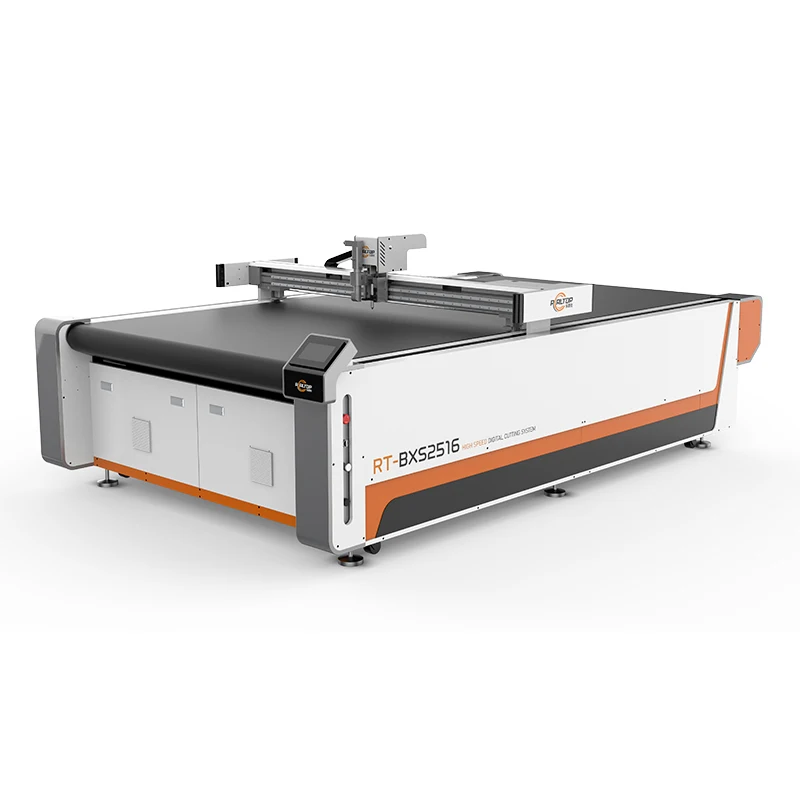
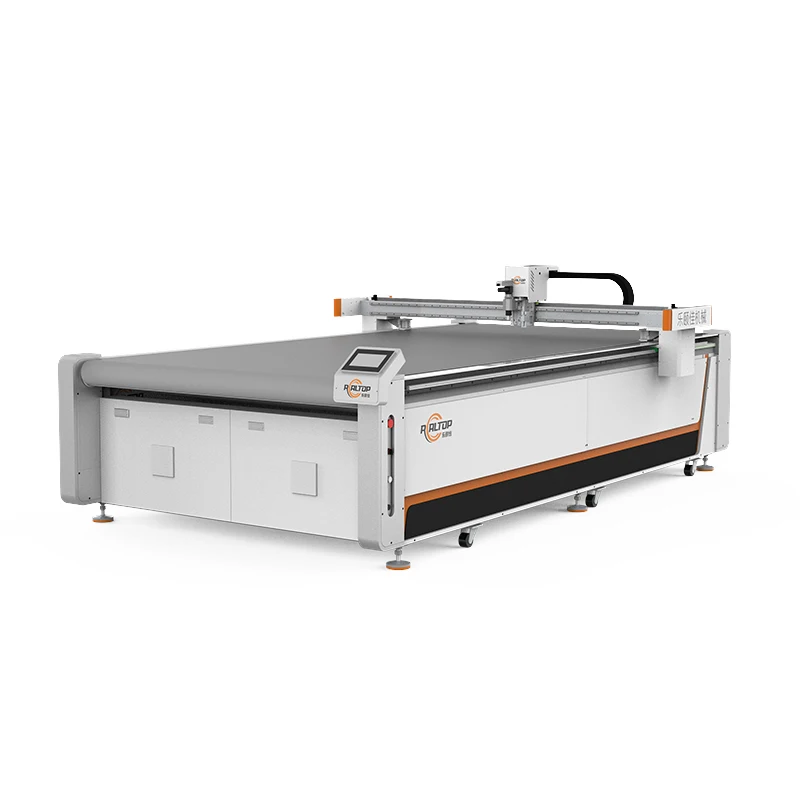
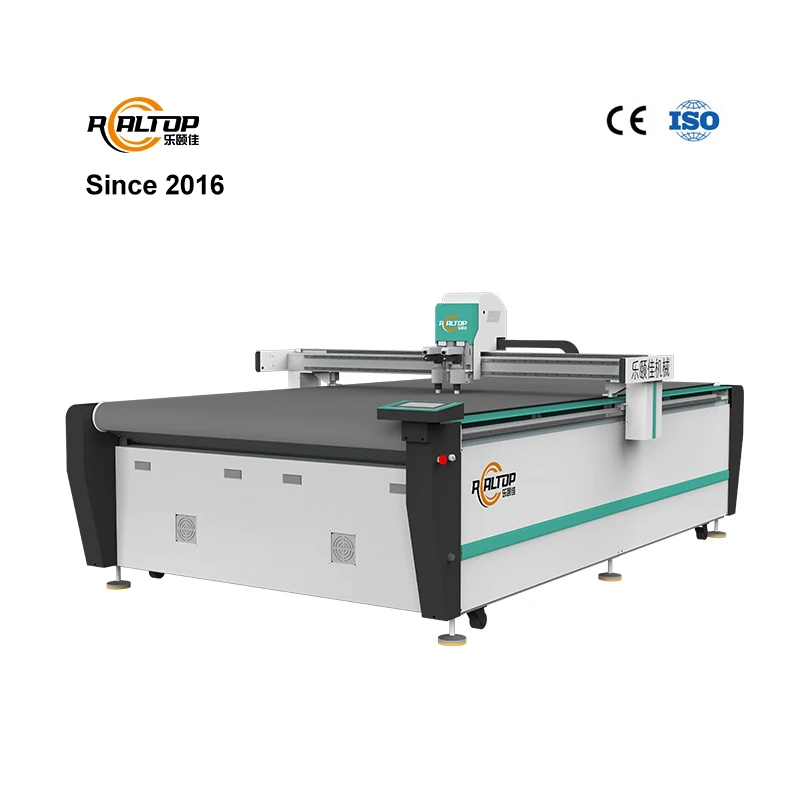
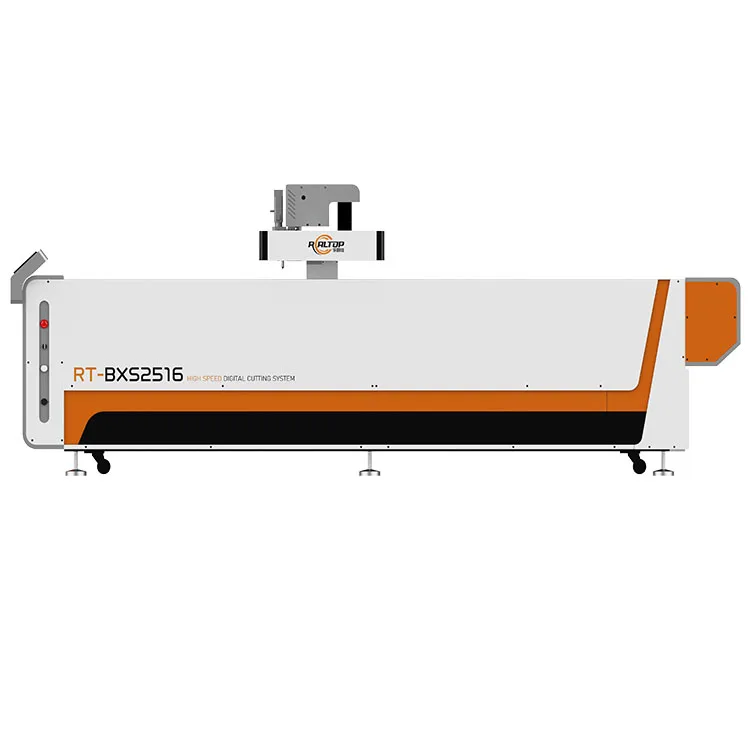
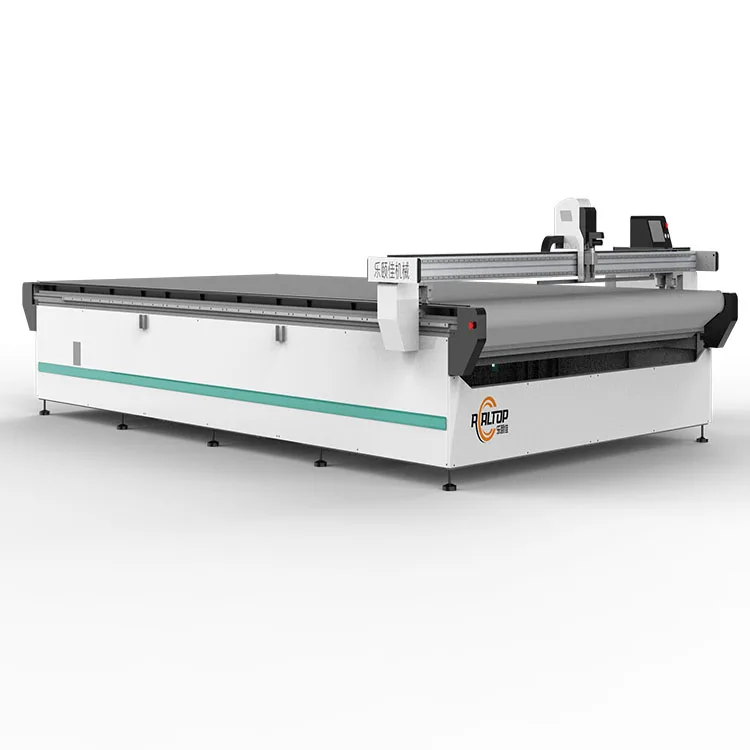
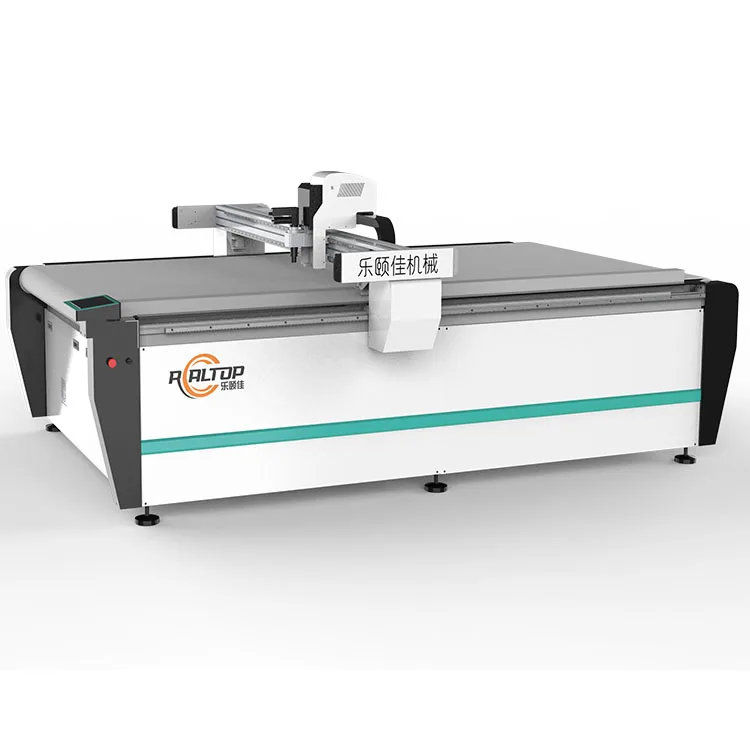
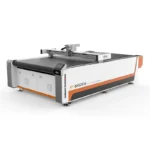
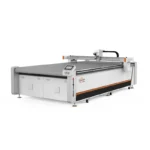
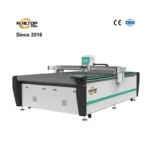
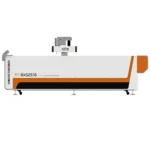
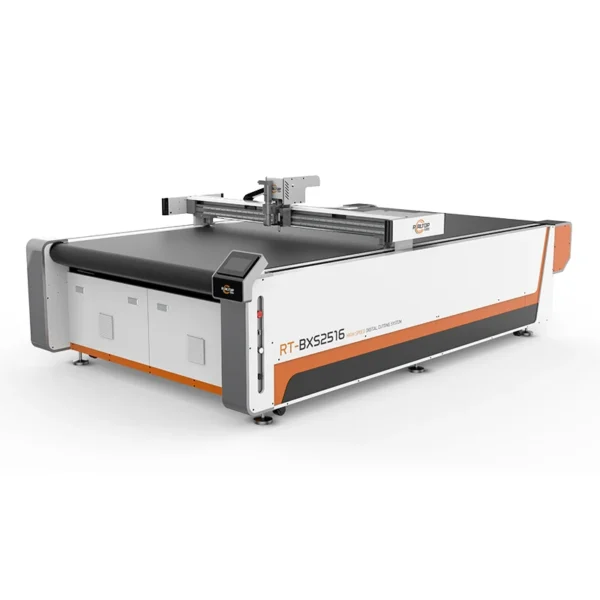
Swiss Tooling Precision — The RT-D2516/RT-S2516 CNC oscillating knife cutting table uses Swiss imported blades with vibration full-cutting and half-cutting modes to match the exact edge finish your layered textile requires.
Technical Specifications
| Parameter | Value |
|---|---|
| Model | RT-D2516 / RT-S2516 |
| Product Type | CNC Multilayer Mesh Fabric Cutting Machine |
| Working Area | 1600 × 2500 mm |
| Machine Dimensions | 3450 × 2300 × 1250 mm |
| Rated Power | 9 kW |
| Vacuum Pump | 7.5 kW |
| Translational Velocity | 800–2000 mm/s |
| Repeated Accuracy | ≤ 0.1 mm |
| Voltage | 380V ± 10% |
| Working Table | Flatbed with auto-feeding conveyor, Germany imported belt |
| Transmission System | Delta servo motor, Taiwan Hiwin linear rail, synchronous belt, ball screw |
| Safety System | Infrared sensors |
| Visual Positioning | Small CCD camera mark point positioning, panoramic camera recognition, projection positioning |
| Instruction Format | HP-GL compatible |
| Multifunctional Head | Swiss imported knife: vibration full cutting, vibration half cutting, cursor location |
| Tool Head Options | Oscillating knife, pneumatic knife, high-power vibrating knife, circular knife, V cutting knife, drag knife, creasing wheel, dotted line knife, punching, brush |
| Standards | CE declaration where applicable |
Application Suitability
| Application | Material or Output |
|---|---|
| Automotive interiors | Carpet, sponge composite leather, gasket materials |
| Footwear production | PU, EVA, XPE, shoe material, non-woven fabric |
| Garment manufacturing | Multilayer fabric, textile, clothing cloth |
| Soft home furnishings | Foam board, sponge, composite materials |
| Sealing and gaskets | PTFE, ETFE, rubber, fiberglass |
| Bags and luggage | Leather, luggage material, cardboard reinforcement |
What Tool Head Selection Really Means for Multilayer Fabric
A vibrating knife rated for single-ply textile will crush and drag when pushed through twenty layers of mesh composite. Choosing the right CNC oscillating knife cutting table specifications means matching the tool head to the stack height, density, and surface texture of your actual production material, not just the generic label on a datasheet.
I have watched buyers specify a machine by working area alone, assuming the default oscillating knife would handle any flexible material within that footprint. When the machine arrived and they loaded eight layers of automotive-grade sponge composite leather, the standard blade deflected mid-cut, producing ragged edges that required manual trimming downstream. The cutting speed dropped to a fraction of the rated translational velocity because the operator kept reducing feed rate to compensate. [NEED_CITE: material stack height effect on oscillating knife deflection]
This is why tool head selection on the RT-D2516/RT-S2516 starts with a conversation about your lay-up — how many plies, what bonding adhesive sits between them, and whether the surface has a printed registration mark that the CCD needs to track at line speed.
Tool Head Configuration for Layered Textile Stacks
The multifunctional head on this machine carries a Swiss imported blade system that supports vibration full cutting for through-ply separation and vibration half cutting for kiss-cut applications where the bottom ply must remain intact. For high-density foam composites, the high-power vibrating knife option delivers deeper stroke amplitude to prevent blade stall mid-stack. Pneumatic knife and circular knife options address different material behaviors — the pneumatic variant suits thick sponge where sustained downward pressure matters, while the circular knife handles continuous straight-line ripping on roll goods before nesting.
Vacuum Table Zoning and Multilayer Stability
When cutting small pattern pieces from a large multilayer lay-up, the vacuum zones must hold the fabric flat even after surrounding material has been removed. The RT-D2516/RT-S2516 uses a 7.5 kW vacuum pump feeding an adsorption table with zoned control. Without proper zoning, small pieces lift during the final cuts, and the oscillating knife catches the edge, pulling the entire ply out of registration. [NEED_CITE: vacuum table zoning requirements for small part retention on flatbed cutters]
The Germany imported conveyor belt works in tandem with the auto-feeding system, advancing fresh material onto the cutting zone while holding the trailing edge under tension. This matters for roll-to-roll garment and footwear operations where continuous throughput depends on the belt maintaining grip without marking delicate textile surfaces.
Reading the Specs Against Your Actual Material
Translational velocity is listed at 800–2000 mm/s, but the speed your shop will run depends on layer count and material density. A single ply of lightweight garment cloth may allow the upper range, while twenty layers of carbon fiber prepreg will demand speeds at the lower end with the high-power vibrating knife engaged. The repeated accuracy of ≤ 0.1 mm is maintained across the working area by the Delta servo motors and Taiwan Hiwin linear rails, which resist the lateral forces generated when an oscillating blade meets varying stack density. [NEED_CITE: linear rail rigidity requirements under oscillating knife lateral load]
The CCD camera mark point positioning and panoramic camera recognition options track printed contours on the top ply, correcting for material distortion introduced during spreading. Projection positioning overlays the nesting layout onto the lay-up before cutting, letting the operator verify placement against printed marks — critical when automotive interior panels must align with grain direction or logo orientation.
The Cost of Skipping the Sample Cut
Buyers who commit to a configuration without running their own material on the machine often discover the gap between catalog promises and shop floor reality after installation. Wrong tool head selection produces crushed foam cores, frayed textile edges, or incomplete cuts through the bottom ply — defects that force rework or scrap. [NEED_CITE: cost of post-installation rework due to incorrect cutting tool specification]
Insufficient vacuum zoning reveals itself only when small pattern pieces shift mid-cut, throwing off the nesting yield and wasting material. Software incompatibility with your existing HP-GL nesting workflow surfaces as a bottleneck when files must be manually rebuilt for every production run.
Why Source This Configuration Here
The design and production of both knife and laser cutting systems under one roof means the cutting method is matched to your material rather than forced into a single technology. Tool head and table configuration is specified per material type and production volume, documented before the order is released. CCD camera positioning is validated at line speed on your printed material, not just demonstrated on a static sample. Voltage, plug configuration, and control panel language are confirmed before shipment — the 380V ± 10% supply is standard, but frequency and connector type vary by destination market. [NEED_CITE: industrial voltage and frequency standards across export markets] Sample cutting on your own material is completed and reported before you commit to a production order.
Documentation & Verification
- Factory test record running your multilayer mesh fabric stack at target cutting speed
- Tool head and vacuum table configuration list matched to your material and lay-up
- Electrical schematic confirming 380V ± 10% supply, breaker rating, and wiring diagram
- Sample cutting report on your actual material documenting edge quality and achieved speed
- HP-GL compatibility note confirming file format import into your existing nesting software
Installation, Commissioning & Support
- Dedicated 380V circuit with breaker sized for 9 kW rated plus 7.5 kW vacuum pump inrush
- Level floor within tolerance across the 3450 × 2300 mm footprint to maintain rail alignment
- Hiwin rail inspection and Delta servo parameter tuning on first power-up at your facility
- Vacuum zone mapping test on your standard lay-up to confirm small-part hold-down
- Operator training on CCD camera registration workflow and tool head changeover procedure
- Spare blade inventory and conveyor belt tension adjustment schedule documented at handover
What to Send with Your Inquiry
Provide your material type, ply count per lay-up, and the thickest composite in your production range. Include your standard sheet or roll width, daily volume target, and whether your patterns rely on printed registration marks for contour alignment. Specify your workshop voltage and frequency, preferred control panel language, and any existing nesting software the machine must integrate with.
Frequently Asked Questions
Q: How do I choose the correct tool head for my multilayer fabric stack?
A: The choice depends on your stack height, material density, and whether you need full through-cutting or kiss-cutting. The Swiss imported blade on the RT-D2516/RT-S2516 supports vibration full and half cutting. For dense foam composites, the high-power vibrating knife option provides deeper stroke amplitude. We recommend a sample cut on your actual lay-up to confirm edge quality before finalizing configuration.
Q: Will the CCD camera track printed marks at full production speed?
A: The small CCD camera mark point positioning and panoramic camera recognition systems are designed to follow printed contours during continuous operation. However, tracking accuracy depends on mark contrast, ink density, and fabric surface texture. We validate camera performance on your printed material at target cutting speed during the sample cutting phase to confirm reliable registration.
Q: How does vacuum table zoning prevent small parts from lifting?
A: The 7.5 kW vacuum pump feeds zoned areas across the working table. When small pattern pieces are surrounded by removed skeleton material, active zones maintain hold-down pressure on those isolated parts. Zone configuration is planned around your typical nesting layout to ensure adequate coverage for your smallest production pieces.
Q: Is the control software compatible with our existing nesting files?
A: The instruction system accepts HP-GL compatible format. Before order confirmation, we verify that your current file format and nesting workflow import correctly into the machine software. A compatibility note is included in the documentation package so your programming team knows exactly which file types and settings are supported.


商品评价
Clear filtersThere are no reviews yet.