




Fast Shipping
Carrier information

20k products
Payment methods

24/7 Support
Unlimited help desk

2-day Delivery
Track or off orders
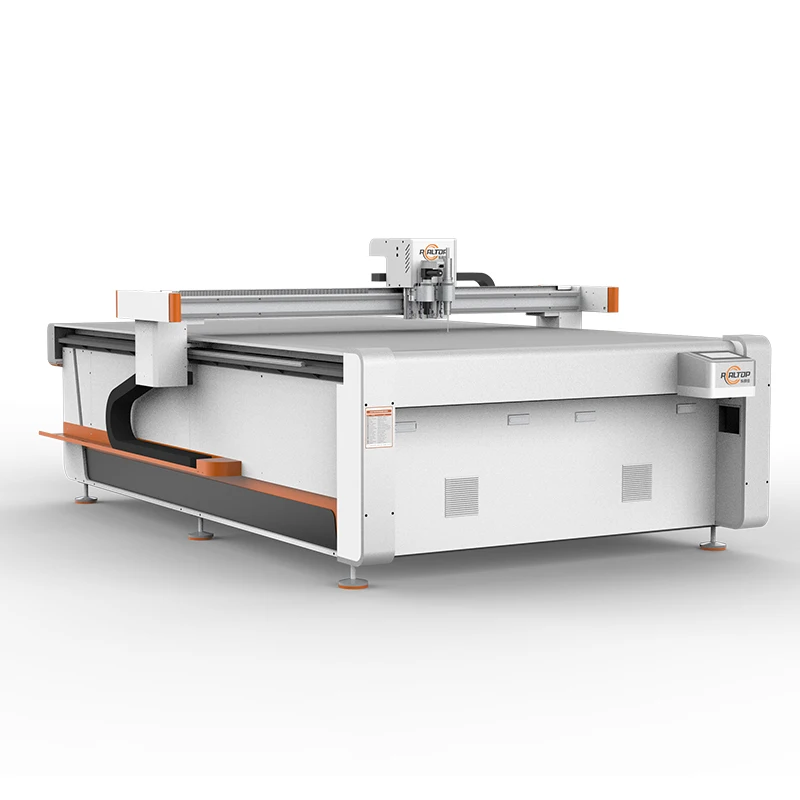
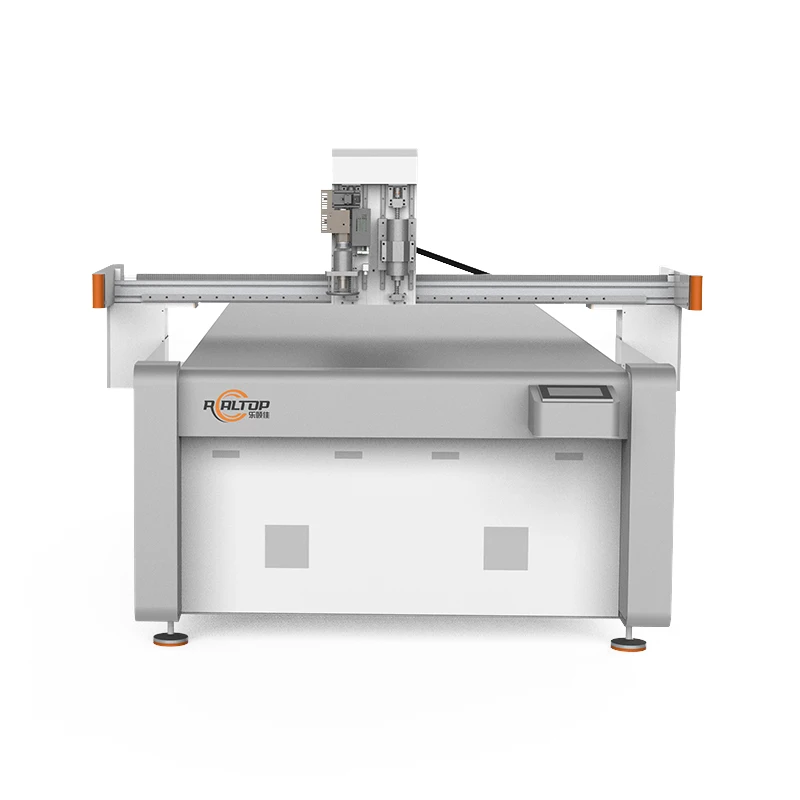
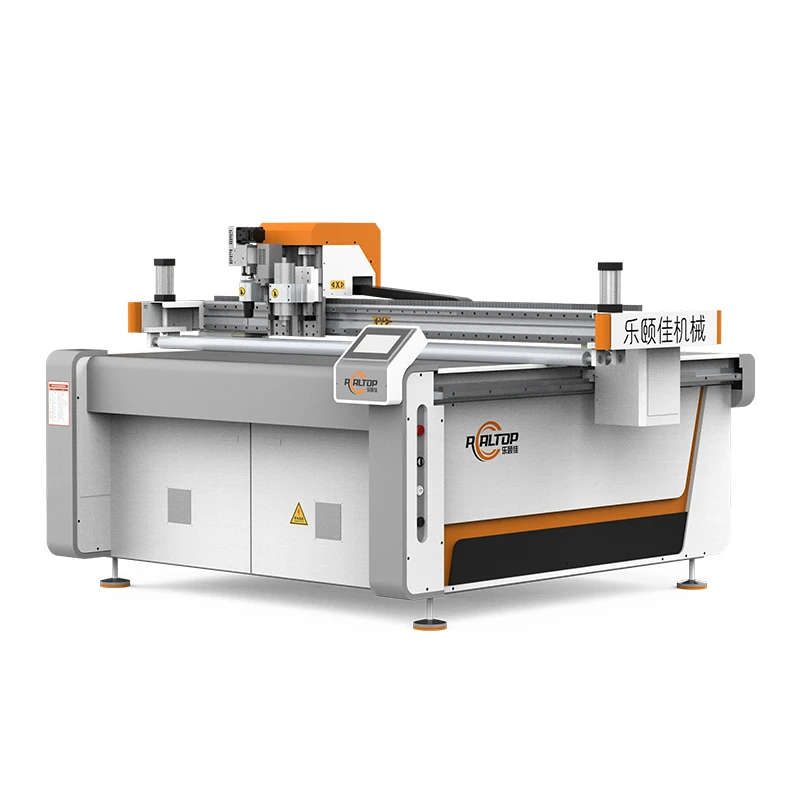
Tool Head Matched to Material — RT-D2516/RT-S2516 ships with knife, creasing and punching options selected against your actual foam density and thickness rather than a default catalogue configuration.
Technical Specifications
| Parameter | Value |
|---|---|
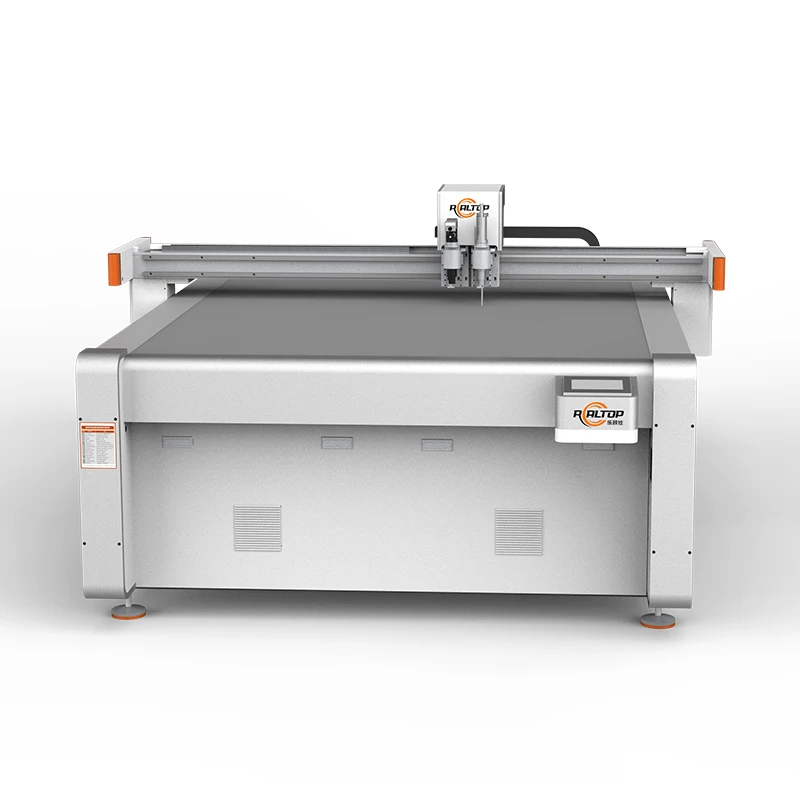
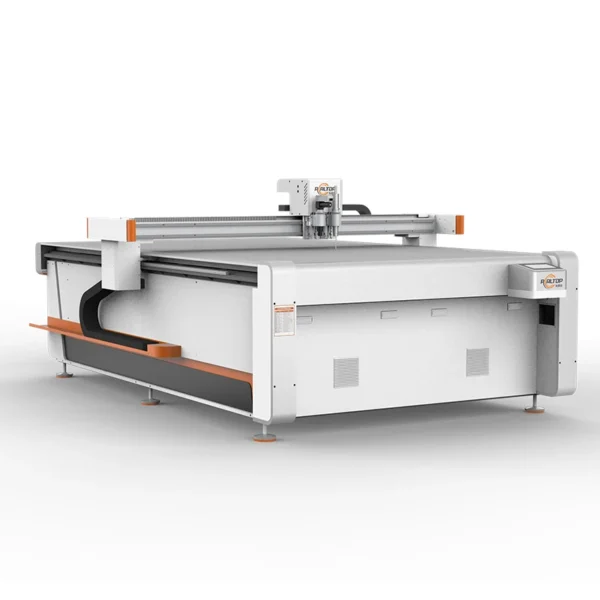
| Product Type | CNC Oscillating Knife Cutting Machine |
| Model | RT-D2516/RT-S2516 |
| Working Area | 1600 × 2500 mm |
| Machine Size | 3450 × 2300 × 1250 mm |
| Rated Power | 9 kW |
| Voltage | 380V ±10% |
| Working Table | Flat vacuum adsorption table (magnesium-aluminum alloy, fluorocarbon PVDF powder coated, anodic and hard oxidation treated) |
| Vacuum Pump | 7.5 kW (integrated aviation aluminum shell, built-in silencer sponge) |
| Tool Head Options | Swiss imported knife (vibration full cutting, vibration half cutting, cursor location); pneumatic knife, high-power vibrating knife, circular knife, V-cutting knife, drag knife, creasing wheel, dotted line knife, punching, brush |
| Visual Positioning | Small CCD camera mark point positioning; panoramic camera recognition positioning; projection positioning |
| Translational Velocity | 800–1200 mm/s |
| Cutting Thickness | 20–80 mm (basis not stated in source — confirm material type and density) |
| Repeatability | ≤0.1 mm |
| Transmission System | Digital servo motor, linear guide, synchronous belt, ball screw |
| Servo Motor | Delta (optional Panasonic), IP67 waterproof, real-time automatic gain adjustment, vibration suppression |
| Instruction System | HP-GL compatible format |
| Safety Device | Infrared induction blocking, anti-collision sensors on both sides of beam, emergency stop button with in-situ resume |
| Optional Configuration | Germany imported conveyor belt, auto feeding system, Taiwan Hiwin rail |
| Language Options | English, Russian, Italian, Chinese; custom languages available |
| Assembly State | Fully assembled |
| Standards | CE declaration |
Application Suitability
| Application | Material or Output |
|---|---|
| Automotive interior panels and gaskets | PU sponge, EVA, XPE, EPDM foam, composite sealing materials |
| Soft home furnishings and upholstery | High-resilience foam, memory foam, bonded fabric layers |
| Footwear midsole and insole cutting | EVA sheets, PE foam, rubber, non-woven fabric stacks |
| Packaging sample making and short-run inserts | Corrugated cardboard, foam board, flexible plastic sheets |
| Floor mats and carpet processing | PVC foam, carpet tiles, rubber underlay |
| Outdoor and sports protective gear | Cross-linked PE, XPE, closed-cell foam laminates |
Why the Cutting Thickness Claim Depends on Your Foam Density
A 20–80 mm thickness range only holds when the tool head, oscillation frequency and feed rate are set for a specific material density.
I spent three days in a Kenyan workshop re-tuning a vibrating knife system because the machine was commissioned on high-density EVA but the customer actually processed soft open-cell PU sponge. The same blade and frequency that produced a clean edge on EVA crushed and dragged through the PU, leaving ragged edges across every panel. Foam behaves differently at every density — the oscillation amplitude that slices through 40 kg/m³ PU will skate across 80 kg/m³ EVA without penetrating. [NEED_CITE: foam density and cutting parameter interaction] When evaluating any CNC oscillating knife cutting machine specifications, the thickness number alone is meaningless without the material context.
Matching Tool Head Geometry to Foam Cell Structure
The RT-D2516/RT-S2516 offers a Swiss imported knife with vibration full cutting, half cutting and cursor location functions, alongside pneumatic, high-power vibrating, circular, V-cutting and drag knife heads. Open-cell foams such as PU sponge tend to compress under a standard oscillating blade, requiring a narrower blade profile and higher stroke frequency. Closed-cell materials like EVA and XPE respond better to a wider blade with moderate oscillation and higher feed speed. Selecting the correct CNC oscillating knife cutting machine specifications starts with identifying which foam cell structure dominates your production schedule.
Vacuum Adsorption and Small-Part Stability on Foam
The magnesium-aluminum alloy table with PVDF coating and hard oxidation treatment provides a flat surface that maintains suction across the full 1600 × 2500 mm area. A 7.5 kW vacuum pump with integrated silencer handles the air volume needed to hold low-density foam, which has very little weight to resist the lateral force of a vibrating blade. When cutting small gaskets or intricate insole patterns from foam sheet, insufficient vacuum zoning allows parts to lift mid-cut, shifting the contour and ruining the piece. [NEED_CITE: vacuum table zoning and small-part hold-down requirements] This is the second reason a machine chosen only on working area often underperforms on the shop floor.
Reading the Specifications That Actually Matter
The Delta IP67 servo motors with real-time automatic gain adjustment and vibration suppression keep the beam stable at translational velocities up to 1200 mm/s, which matters when cutting thick foam where blade drag creates lateral load on the carriage. Repeatability of ≤0.1 mm ensures that nesting patterns produce identical parts across a full sheet, reducing scrap in high-volume runs. The HP-GL compatible instruction system integrates with common nesting software, so existing CAD files transfer without re-drawing. If your operation relies on CCD camera positioning for printed contour work, the RT-D2516/RT-S2516 supports small CCD mark point positioning, panoramic camera recognition and projection positioning — each suited to different print registration workflows.
What Happens When the Wrong Configuration Ships
A vibration knife specified for dense EVA will produce crushed edges on soft PU, and no amount of operator adjustment on-site fixes a fundamentally mismatched tool head. Buyers who skip the sample cutting step often discover that the vacuum zoning cannot hold their smallest parts, or that the CCD option quoted cannot track printed marks at the feed rate needed for daily volume. [NEED_CITE: consequences of incorrect tool head specification for flexible materials] Correcting these issues after delivery means exchanging blades, re-mapping vacuum zones and re-commissioning the machine — downtime that a simple pre-shipment sample test would have prevented.
Why Procurement Through This Channel
Tool head and table configuration are specified per material and production volume rather than sold as a fixed package — the RT-D2516/RT-S2516 arrives configured for your foam type. CCD camera positioning options are confirmed before order so that printed contour tracking matches your actual workflow. Voltage at 380V ±10%, plug type and control language in English, Russian, Italian, Chinese or custom options are locked in before the machine enters production. Sample cutting on the buyer’s own material documents edge quality, achieved speed and tool head selection before any commitment is made. In-house design covers both the knife cutting platform and the vacuum system, so responsibility for performance stays with one engineering team. [NEED_CITE: CE machinery directive compliance for industrial cutting equipment]
Documentation & Verification
- Machine specification sheet listing RT-D2516/RT-S2516 configuration exactly as ordered
- Tool head and table configuration list specifying knife type, vacuum zone layout and CCD option
- Sample cutting report on your foam type documenting tool head, speed and edge quality
- Electrical schematic with 380V ±10% voltage confirmation matching your facility supply
- Software licence and HP-GL file format compatibility note for your nesting workflow
- Factory test record captured before dispatch at the configured working area
Installation, Commissioning & Support
- 3450 × 2300 × 1250 mm machine footprint requires level concrete floor with clearance for 2500 mm stroke
- 9 kW rated power plus 7.5 kW vacuum pump require a dedicated 380V three-phase circuit
- Fully assembled delivery — no on-site frame welding or rail alignment needed
- First-run parameter tuning for your specific foam density, thickness and tool head combination
- Operator training covers blade change intervals, vacuum zone mapping and CCD calibration
- Spare parts list includes Swiss knife blades, vacuum seals and drive belt tensioning schedule
What to Send With Your Inquiry
To get an accurate configuration recommendation for the RT-D2516/RT-S2516, provide your foam material type, density in kg/m³, sheet dimensions, target cutting thickness and daily part volume. Specify your facility voltage and frequency, preferred control language, and whether your workflow requires CCD contour recognition or standard blank-sheet nesting. If you already run nesting software, note the file format so compatibility is confirmed before order.
Frequently Asked Questions
Q: How do I choose the right tool head for my foam material?
A: Open-cell PU sponge requires a narrower blade with higher oscillation frequency to avoid crushing, while closed-cell EVA and XPE cut cleanly with a wider blade at moderate stroke rates. The RT-D2516/RT-S2516 supports Swiss imported, pneumatic, high-power vibrating and circular knife options. Send a material sample so the correct head is confirmed before production.
Q: Does the 20–80 mm cutting thickness apply to all foam types?
A: That range depends on foam density and cell structure. High-density EVA at 80 mm cuts differently from soft PU sponge at the same thickness. Translational velocity and oscillation amplitude must be adjusted per material. Request a sample cutting report at your target thickness before committing.
Q: Which CCD positioning option fits printed contour cutting?
A: Small CCD mark point positioning works for sheet-by-sheet registration with printed fiducials, while panoramic camera recognition handles full-sheet contour extraction at production speed. Projection positioning assists manual alignment. The correct choice depends on your print format and daily throughput requirements.
Q: How does the vacuum table hold small foam parts during cutting?
A: The 7.5 kW pump and magnesium-aluminum table maintain suction across the full 1600 × 2500 mm area. For very small gaskets or insole components, vacuum zone layout must be specified so suction concentrates around the part footprint rather than bleeding across empty table surface.
Q: What must be confirmed before the machine ships?
A: Voltage at 380V ±10%, plug type and control language must be locked before production begins. Tool head selection, CCD option and vacuum zone configuration are confirmed against your material sample. Software file format compatibility is verified so your existing nesting files import correctly on day one.


商品评价
Clear filtersThere are no reviews yet.