







Fast Shipping
Carrier information

20k products
Payment methods

24/7 Support
Unlimited help desk

2-day Delivery
Track or off orders
Precision Tool Head Matching — Each tool configuration is validated against the buyer’s actual cardboard flute and sticker stock before the machine leaves Jinan.
Technical Specifications
| Parameter | Value |
|---|---|
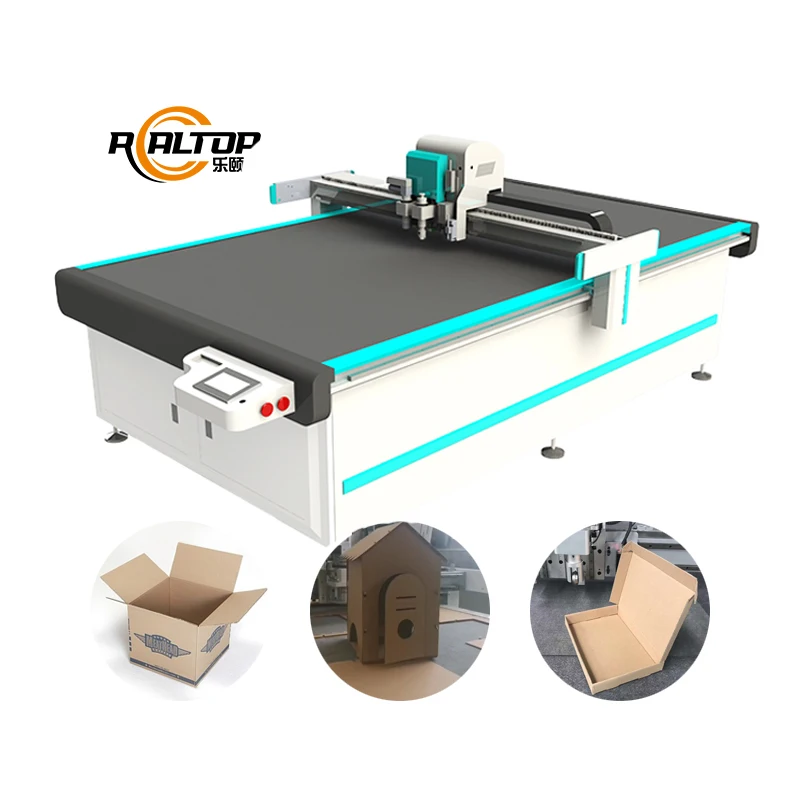
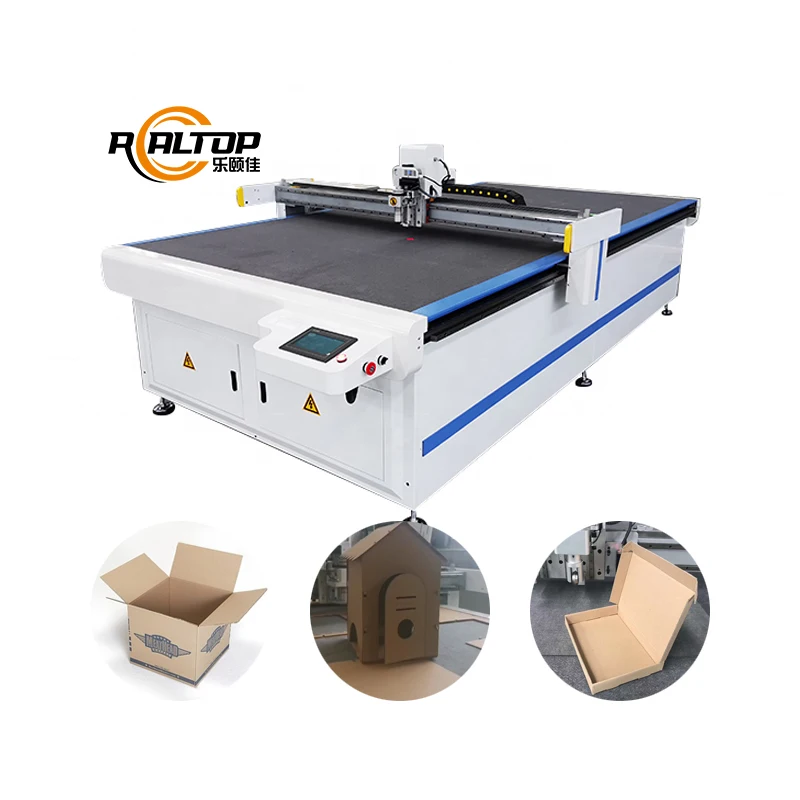
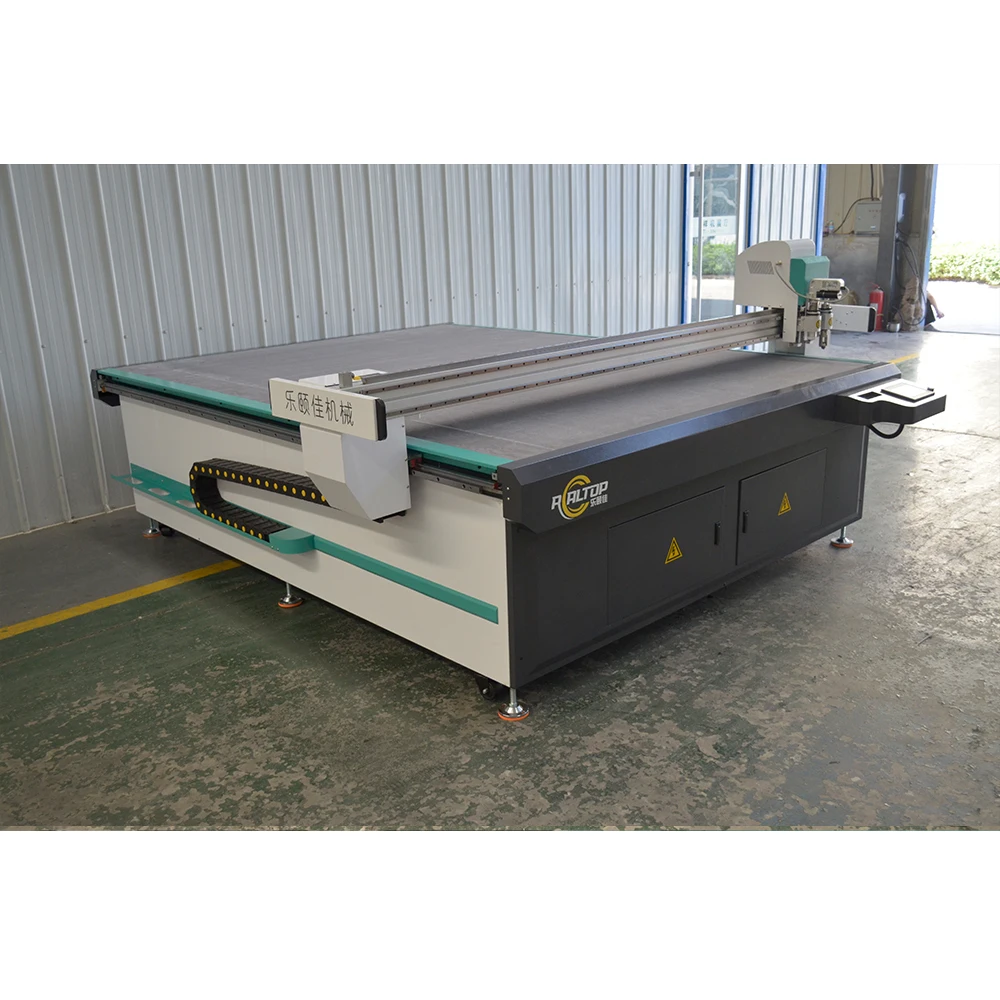
| Product Type | CNC Flatbed Digital Cutting Machine with Oscillating Knife |
| Model | RT–R2513 / RT-D2516 / RT-S2516 |
| Working Area | 2500×1300 mm (RT–R2513); 1600×2500 mm (RT-D2516 / RT-S2516) |
| Overall Dimensions | 3550×1910×1400 mm (RT–R2513); 3450×2300×1250 mm (RT-D2516 / RT-S2516) |
| Rated Power | 9 kW |
| Voltage | 380 V (frequency to be confirmed with buyer’s site supply) |
| Cutting Thickness | ≤18 mm (material-dependent; basis to be confirmed for specific flute type and density) |
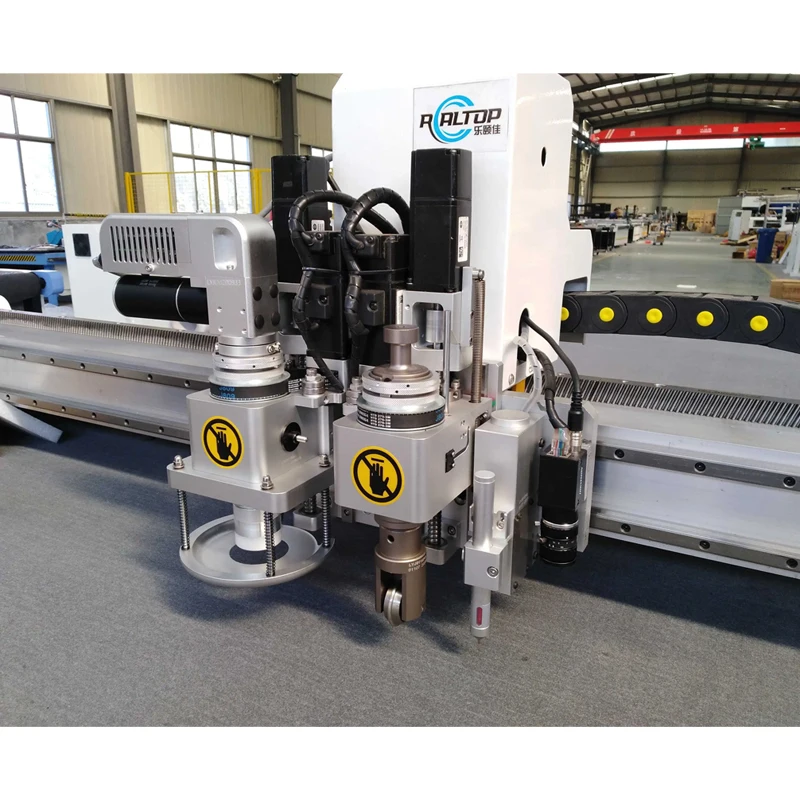
| Cutting Tools | Oscillating knife, creasing tool, kiss-cut knife tool, round punch |
| Servo Motor | Dongling servo (Delta servo motor available as alternative configuration) |
| Transmission Method | Rack transmission with imported straight-line square guide; Ethernet port communication |
| Repeated Accuracy | <0.05 mm |
| Fixing Method | Vacuum adsorption on aluminum alloy honeycomb platform; 7.5 kW vacuum pump |
| Table Surface | Wear-resistant composite fiber felt belt |
| Profile Formats | DXF, OLT, PDF, AI |
| Software | Professional carton cutting and nesting software included; language customization supported |
| Language Options | English, Russian, Italian, Chinese (special languages customizable) |
| Safety Device | Infrared sensors, emergency stop |
| Blade Supply | 10 pieces of oscillating blades included |
| Warranty | 1 year (excluding consumables: felt belt, knife blades) |
| Delivery Time | <30 working days |
| Standards | CE declaration where applicable |
Application Suitability
| Application | Material or Output |
|---|---|
| Packaging carton and box sample making | Corrugated board (single-wall, double-wall), greyboard |
| Sticker and label contour cutting | Printed vinyl, adhesive paper, PP synthetic paper |
| Cardboard box production for logistics | Express paper box board, electrical appliance packaging cardboard |
| Premium retail packaging | High-end gift box board, snack food packaging stock |
| Billboard and business card cutting | Coated paper board, PP paper |
Why "Cutting Thickness ≤18 mm" Is Only Half the Answer When Sourcing a CNC Oscillating Knife Cutting Machine
The 18 mm figure tells you nothing until the flute profile and board density are defined. I learned this the hard way in Mexico, where a packaging plant ordered two 2516-format flatbed cutters based on working area and nominal thickness ratings. Their five-wall corrugated was far denser than the standard reference material, and the first pass simply did not penetrate. Output dropped to half the expected volume before we reconfigured the tool head and adjusted the vacuum zoning. [NEED_CITE: corrugated flute profiles and edge crush test variations across regional packaging standards]
Every buyer’s board behaves differently under an oscillating blade. A B-flute single-wall at standard ECT will slice cleanly at full speed, while a double-wall BC-flute at higher basis weight demands a different oscillation frequency, a slower traverse rate, and often a deeper-cutting blade geometry. The specifications above give you the envelope; the sample cutting report on your own stock defines what actually happens on your shop floor.
Oscillating Knife, Creasing Wheel and Punch on One Carriage
The RT–R2513, RT-D2516 and RT-S2516 share a common tool carriage that accepts an oscillating knife, a creasing tool, a kiss-cut knife and a round punch. For a carton sample maker, this means cutting the outline, scoring the fold lines and punching registration or ventilation holes all happen in one setup without moving the sheet. The oscillating knife handles through-cuts on corrugated and greyboard, while the kiss-cut knife scores sticker and label stock without damaging the release liner underneath.
Vacuum Zoning and What It Means for Small Carton Parts
The aluminum alloy honeycomb vacuum platform pairs with a 7.5 kW pump to hold material flat across the full working area. On a 1600×2500 mm bed cutting large carton blanks, adsorption is rarely the problem. The real test comes when the nesting software fills the sheet with small inserts, dividers or retail display components. If the vacuum zoning cannot isolate small sections, those parts lift at the trailing edge and the oscillating knife catches them, producing ragged edges or stopping the cycle entirely. [NEED_CITE: vacuum table zoning requirements for nested small-part cutting on flatbed digital systems]
How Rack Transmission and Servo Selection Shape the Cut Edge
The imported straight-line square guide and rack transmission deliver repeated accuracy below 0.05 mm across the entire bed. In practice, this matters most on crease lines that must align with cut edges within a fraction of a millimetre for the carton to fold square. The Dongling servo drives the carriage at production speed, while the Delta servo option is available for buyers whose maintenance teams already stock parts for that ecosystem. Ethernet communication between the controller and the host PC keeps file transfer reliable even when the nesting software generates complex die-line geometries with hundreds of micro-segments.
The Cost of Skipping the Material Test
When a buyer specifies a CNC oscillating knife cutting machine on working area and price alone, the first production run often reveals the gap. A knife that slices standard B-flute cleanly may crush the top liner on a heavier C-flute, leaving a visible dent along the cut line that the customer’s QC department rejects. Creasing wheels set for one board caliper may score too shallow on another, producing cracked folds instead of clean bends. These failures do not show up on a specification sheet; they appear only when your exact board runs under the tool head. [NEED_CITE: edge quality defects in corrugated digital cutting and their root causes]
Why Packaging Buyers Source This Range From Realtop
In-house design covers both the oscillating knife mechanics and the vacuum platform engineering, so tool head selection is matched to material rather than forced onto a generic carriage. Tool head and table configuration is specified per material and production volume before the order is confirmed. The CCD camera positioning option is available for printed contour work on sticker and label stock. Software compatibility with DXF, OLT, PDF and AI is verified with the buyer’s existing nesting workflow before commitment. Voltage, language and specification details are confirmed to match the buyer’s site supply and operator preference. Sample cutting on the buyer’s own cardboard or sticker material runs before any commercial commitment is made.
Documentation & Verification
- Machine specification sheet listing confirmed tool heads, vacuum zone map and blade type for your board stock
- Electrical schematic and voltage confirmation matched to your site supply frequency and plug type
- Sample cutting report on your own corrugated, greyboard or sticker material with measured edge and crease quality
- Software licence and file format compatibility note confirming your DXF or AI nesting files import correctly
- Factory test record documenting repeated accuracy and vacuum holding performance before dispatch
- Operation and maintenance manual in your chosen control language with spare parts list
Installation, Commissioning & Support
- Foundation must support 3450–3550 mm length and 1910–2300 mm width with level floor for vacuum seal integrity
- Dedicated 380 V circuit rated for 9 kW continuous plus 7.5 kW vacuum pump inrush current
- Machine ships fully assembled; only power connection, vacuum hose and Ethernet cable required on arrival
- First-run commissioning includes oscillation frequency tuning and creasing wheel depth setting on your actual board
- Operator training covers tool change procedure, vacuum zone selection and nesting software workflow
- Ten oscillating blades included; replacement blades, felt belt segments and creasing wheels available as spares
What We Need to Quote Accurately
Send the specific board types you run — flute profile, caliper and basis weight for corrugated; GSM and finish for sticker and label stock. Confirm your daily sheet volume and the largest single blank dimension so we match the correct working area and vacuum zone layout. Let us know your site voltage and frequency, preferred control language, and whether your existing nesting files are DXF, AI or another format so we verify software compatibility before building your machine.
Frequently Asked Questions
Q: How do I verify cutting thickness capability for my specific corrugated flute type?
A: Send us samples of your actual board — single-wall, double-wall or specialty flute — and we run them on the configured machine. The sample cutting report documents edge quality, penetration depth and crease integrity so you see real results on your material before placing an order.
Q: Which tool head is specified for each material in my packaging workflow?
A: The oscillating knife handles through-cuts on corrugated and greyboard, the creasing tool scores fold lines, the kiss-cut knife processes sticker and label stock, and the round punch creates ventilation or registration holes. We specify the exact combination based on your material list before production.
Q: Is the vacuum table zoning sufficient for small carton parts to prevent lift during cutting?
A: The 7.5 kW pump and aluminum honeycomb platform are configured with zone isolation. We confirm the zone layout against your nesting pattern during the sample test to ensure small inserts and dividers remain flat throughout the cutting cycle.
Q: Can the software import my existing DXF and AI nesting files?
A: The included carton cutting and nesting software supports DXF, OLT, PDF and AI formats. We request a sample file from your current workflow and run it through the system to confirm import accuracy before the machine ships.
Q: How are voltage, plug type and control language confirmed before shipment?
A: We collect your site supply specifications — voltage, frequency and plug standard — along with your preferred operator language during the order confirmation stage, and document everything in the electrical schematic and software configuration note.


商品评价
Clear filtersThere are no reviews yet.