


Fast Shipping
Carrier information

20k products
Payment methods

24/7 Support
Unlimited help desk

2-day Delivery
Track or off orders
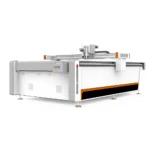
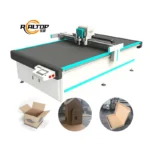
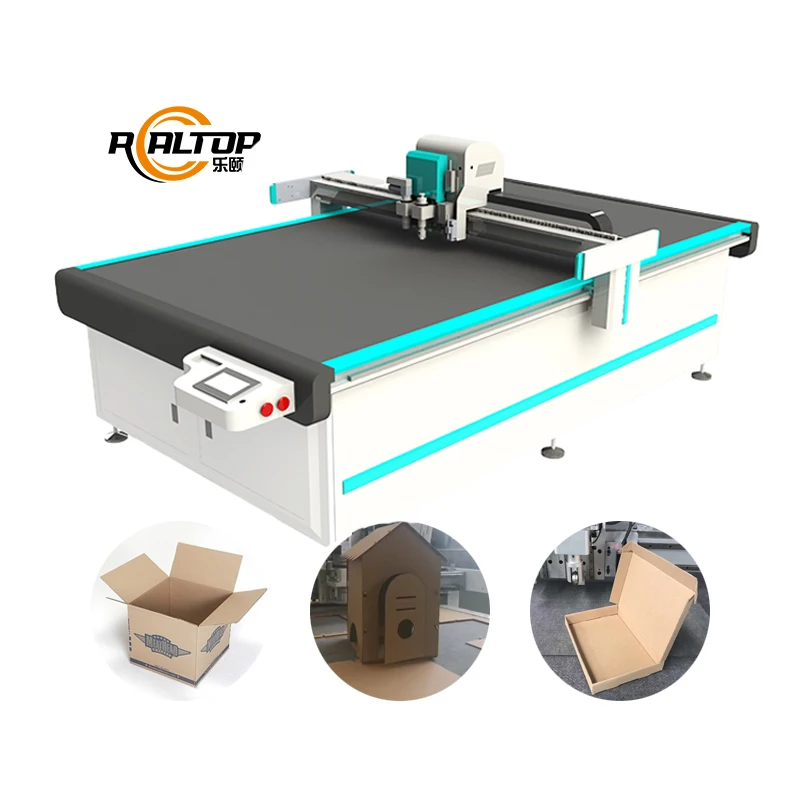
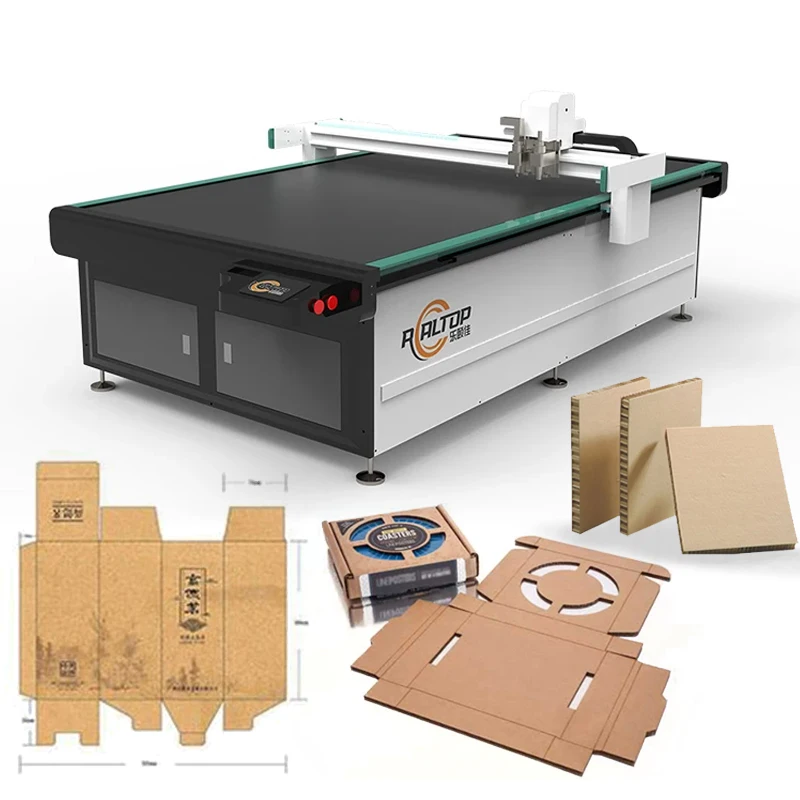
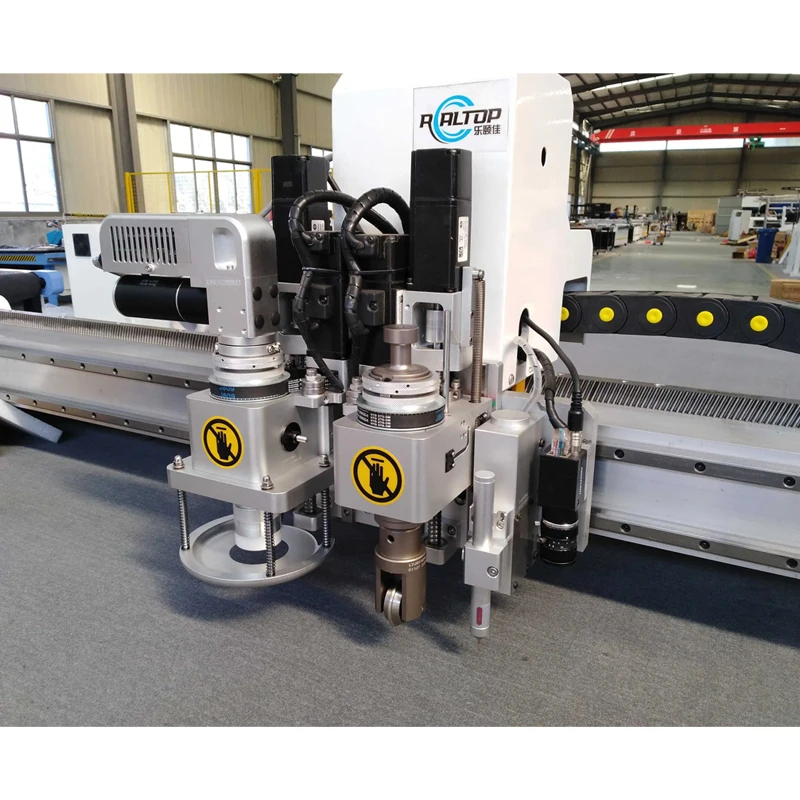
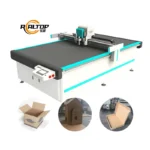
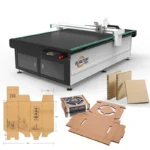
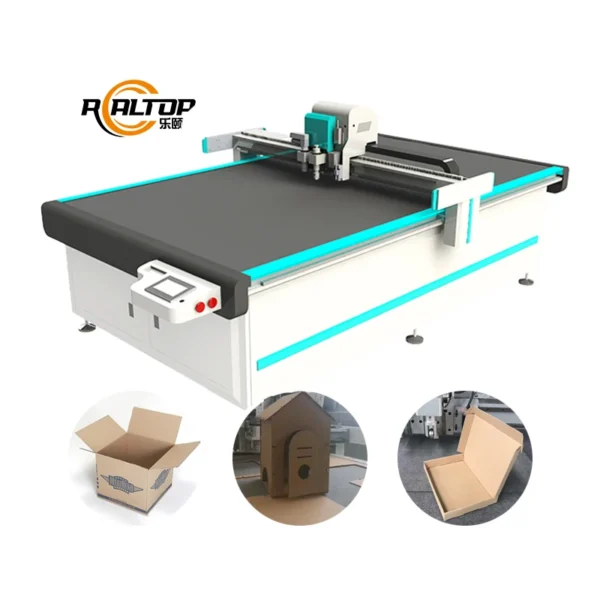
Tool head selection per material — Realtop CNC oscillating knife cutting tables are configured with specific knife types, creasing wheels and vacuum zoning based on the buyer’s actual cardboard grade, sticker laminate and production volume rather than shipping a generic setup.
Technical Specifications
| Parameter | Value |
|---|---|
| Product Type | CNC Digital Flatbed Paper and Carton Cutting Machine |
| Model | RT–R2513 / RT-D2516 / RT-S2516 |
| Working Area | 2500×1300 mm (RT–R2513) / 1600×2500 mm (RT-D2516 / RT-S2516) |
| Overall Dimensions | 3550×1910×1400 mm (RT–R2513) / 3450×2300×1250 mm (RT-D2516 / RT-S2516) |
| Rated Power | 9 kW |
| Voltage | 380 V (frequency 50/60 Hz to be confirmed per market) |
| Cutting Tools | Oscillating knife, creasing tool, kiss-cut knife, round punch |
| Cutting Thickness | ≤18 mm |
| Repeated Accuracy | <0.05 mm |
| Servo Motor | Dongling servo (Delta servo available as alternative configuration) |
| Transmission | Rack transmission with imported Taiwan Hiwin straight-line square guide |
| Fixing Method | 7.5 kW vacuum pump with aluminum alloy honeycomb zoned follow-adsorption platform |
| Conveyor Belt | Germany imported composite fiber felt (wear-resistant, anti-pull) |
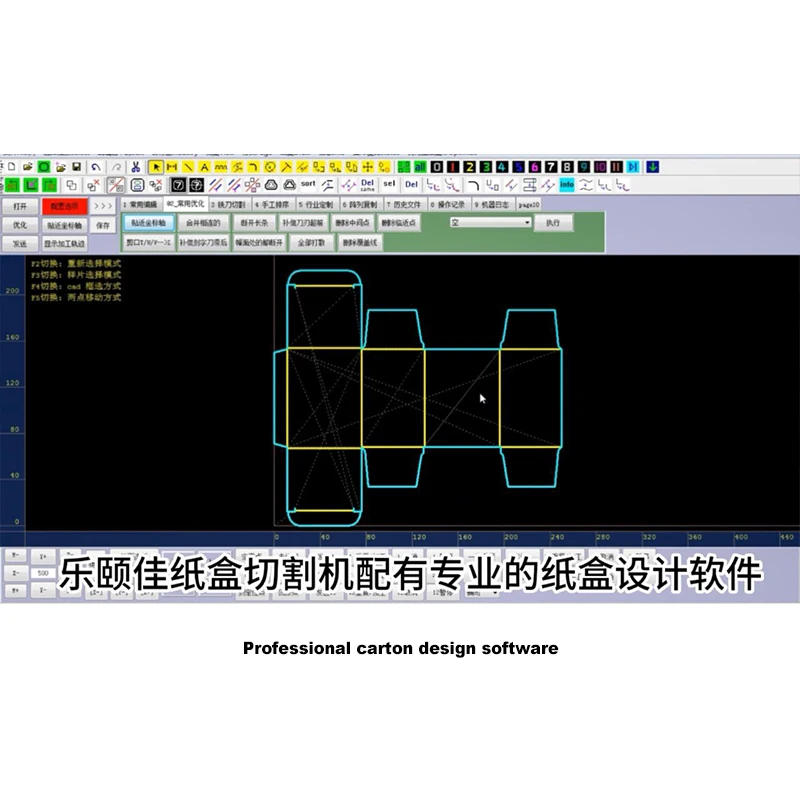
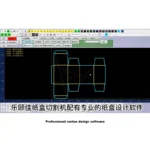
| Software & File Formats | Professional carton nesting software; supports DXF, OLT, PDF, AI |
| Language Options | English, Russian, Italian, Chinese; special languages customizable |
| Safety Device | Infrared sensors and emergency stop devices |
| Auto Feeding | Available |
| Delivery Time | <30 working days |
Application Suitability
| Application | Material or Output |
|---|---|
| Corrugated box sample making | Single, double and triple-wall corrugated board up to 18 mm |
| High-end gift box production | Grey board, art paper and laminated card stock |
| Express paper box fabrication | E-flute and B-flute corrugated with printed contour cutting |
| Sticker and label contour cutting | Vinyl, PP paper and self-adhesive laminate sheets |
| Electrical appliance packaging | Heavy-duty cardboard and honeycomb paper board |
| Snack food carton packaging | Food-grade coated cardboard and kraft paper |
Why Material Thickness Changes the Entire CNC Digital Paper and Carton Cutting Machine Specifications
The cutting depth and tool head must be matched to the exact board grade before the order is placed, not after the machine arrives.
Many buyers specify a flatbed cutter based on working area alone — a 2500×1300 mm table seems sufficient until the machine is asked to crease 3 mm grey board and the drag knife simply crushes the corrugated flute instead of producing a clean fold line [NEED_CITE: flatbed cutter tool head selection by cardboard grade]. Oscillating knives handle thick corrugated cleanly, but creasing wheels need the correct profile depth for each board type, and kiss-cut blades must be set precisely to avoid cutting through the liner on sticker sheets. A CNC digital paper and carton cutting machine that works perfectly on 200 gsm art paper can fail entirely on 5-ply corrugated if the tool head and vacuum pressure were never specified for that material.
Tool Head Matching Across Cardboard Grades and Laminates
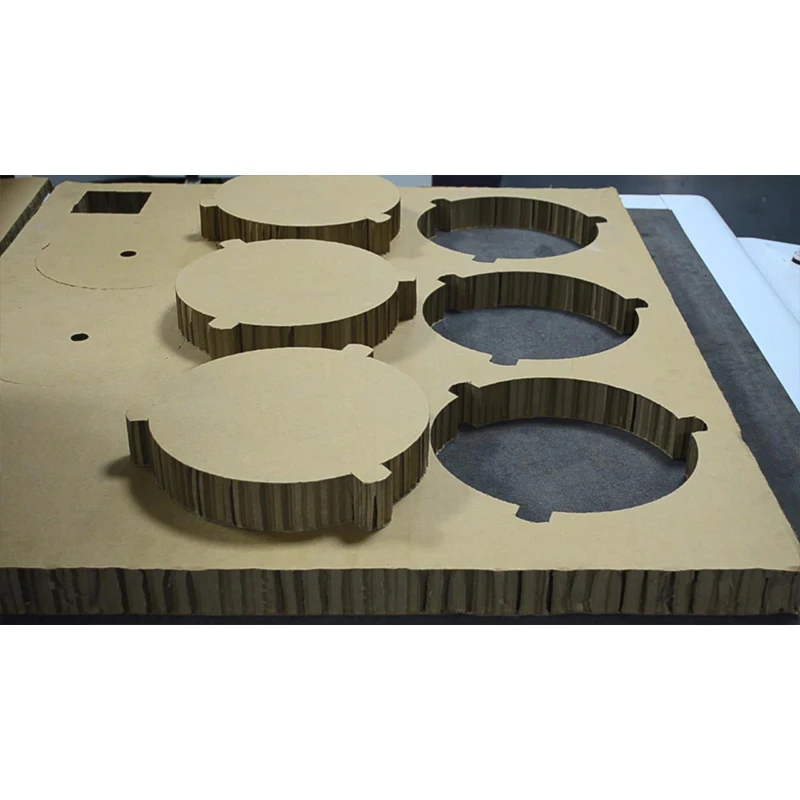
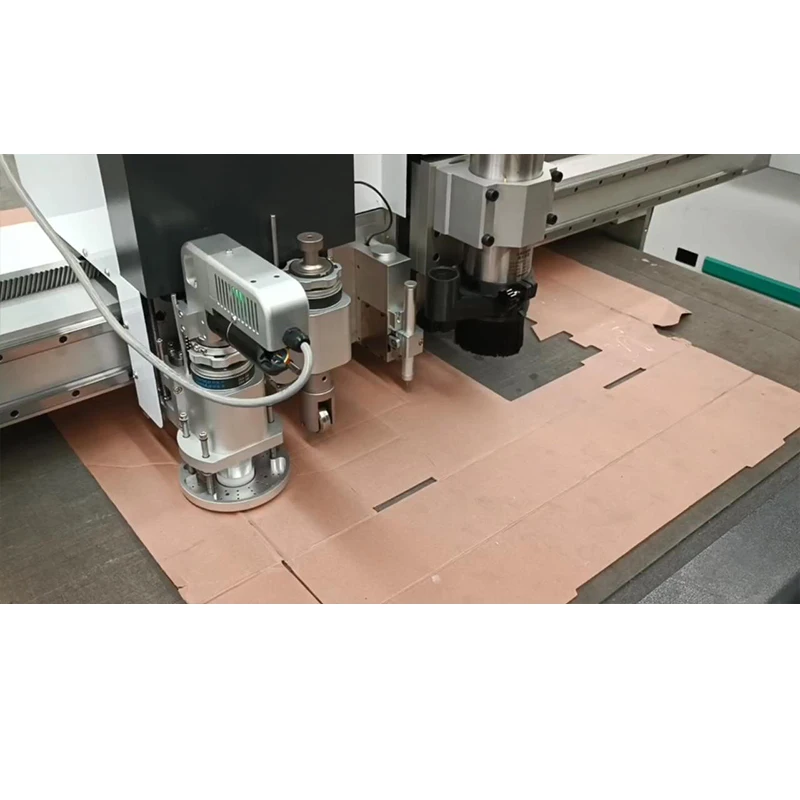
The RT–R2513 and its larger-format siblings carry up to four tools in a single head assembly — oscillating knife, creasing tool, kiss-cut knife and round punch — so cutting, creasing and punching complete in one pass without manual tool changeover. For corrugated box sample making, the oscillating knife slices through flutes without crushing, while the creasing wheel follows the same toolpath to produce fold lines at the correct depth. Sticker and label producers use the kiss-cut knife to cut through the face stock without penetrating the release liner, a tolerance that depends on both blade geometry and the Z-axis depth resolution.
Vacuum Zoning and Small-Part Holding
The aluminum alloy honeycomb platform uses zoned follow-adsorption, meaning the vacuum activates only in the area directly beneath the cutting head rather than across the entire table surface. This approach reduces the load on the 7.5 kW vacuum pump and, more importantly, maintains consistent hold-down force on small sticker and label parts that would otherwise lift at the trailing edge during high-speed contour cuts [NEED_CITE: vacuum adsorption zoning on flatbed digital cutters]. Without zoning, a 2500×1300 mm table attempting to cut dozens of small labels from a single sheet can lose suction at the edges, resulting in misregistration and scrap material.
Reading the Specs That Actually Matter for Production
The repeated accuracy of <0.05 mm is achieved through the combination of Taiwan Hiwin square guides and rack transmission driven by Dongling servo motors — this tolerance level is necessary for packaging work where crease lines must align with printed graphics within a fraction of a millimetre. The rated power of 9 kW covers the spindle, vacuum pump engagement and servo drives under typical cutting loads on materials up to 18 mm thick. Frequency must be confirmed at 50 or 60 Hz depending on the destination market, because a servo motor tuned for 50 Hz will run at incorrect speed on a 60 Hz supply, throwing off both cutting speed and path accuracy. The conveyor belt material — Germany-imported composite fiber felt — resists stretching under continuous vacuum tension, which matters when auto-feeding systems run long production shifts on carton orders.
The Cost of Skipping the Sample Cut
When a carton producer orders a machine based on working area and price without testing on their actual 5-ply corrugated stock, the consequences surface during installation. The oscillating knife may cut the outer liner cleanly but leave the inner flute ragged if the blade amplitude was not set for that wall thickness. Creasing wheels specified for thin card will barely mark the surface of heavy grey board, forcing the operator to run each sheet through a second time or accept cracked folds on finished boxes [NEED_CITE: packaging sample cutting verification before equipment purchase]. Kiss-cut depth set for vinyl stickers will cut straight through paper labels, destroying both the product and the release liner beneath.
Why This Build Approach Works for Packaging Lines
In-house design covers both the mechanical platform and the tool head configurations, so a single RT–R2513 can be specified with the exact knife profile, creasing wheel and punch diameter the buyer’s product range demands. The professional carton nesting software imports DXF, OLT, PDF and AI files directly, which means the buyer’s existing design workflow feeds into the cutter without intermediate conversion steps. Every machine ships with a tool head and table configuration list that documents exactly which blades and wheels were installed and why, making reordering of consumables straightforward. Sample cutting on the buyer’s own material happens before the order is finalized, not after delivery, so edge quality and crease depth are verified on the actual stock the machine will run in production. Voltage, plug type and control language are confirmed in writing before the build begins.
Documentation & Verification
- Machine specification sheet listing RT–R2513 tool head configuration and vacuum zone layout
- Electrical schematic with 380 V supply diagram and confirmed frequency for destination market
- Sample cutting report on buyer’s own cardboard grade and sticker laminate before order confirmation
- Software licence and file format compatibility note covering DXF, OLT, PDF and AI import
- Factory test record documenting repeated accuracy and crease depth on specified materials
- Operation and maintenance manual in confirmed control language with spare parts list
Installation, Commissioning & Support
- Floor space of 3550×1910 mm minimum for RT–R2513 plus clearance for material loading and conveyor feed
- Dedicated 380 V circuit with confirmed 50 or 60 Hz frequency and appropriate breaker rating for 9 kW total load
- 7.5 kW vacuum pump requires separate exhaust routing to manage heat and noise in enclosed workshops
- First-run calibration of oscillating knife Z-depth and creasing wheel pressure on buyer’s actual board stock
- Operator training on nesting software file import, tool offset setting and vacuum zone adjustment
- Ten oscillating blades included as initial spare set; consumable reordering documented in parts list
What to Include in Your Inquiry
Send the specific cardboard grade, flute type and maximum thickness your shop runs, along with typical sheet dimensions and daily volume. If you produce stickers or labels, include the face stock material and whether kiss-cut or through-cut is required. Confirm your workshop voltage, frequency and the control language your operators need so the RT–R2513 or RT-D2516 is configured correctly from the start.
Frequently Asked Questions
Q: How do I choose between oscillating knife and creasing wheel for my cardboard thickness?
A: Oscillating knives cut through corrugated flutes without crushing, making them the standard choice for board above 2 mm. Creasing wheels follow the same path to produce fold lines without penetrating the material. The correct wheel profile depends on board thickness and the fold angle your box design requires — both are confirmed during the sample cutting stage on your actual stock.
Q: Which file formats does the nesting software accept from my existing design tools?
A: The professional carton nesting software imports DXF, OLT, PDF and AI files directly. Before shipment, we verify that your current design output imports cleanly and that the nesting algorithm produces acceptable material yield on your typical sheet layout. File format compatibility is documented in the software licence note included with delivery.
Q: How does vacuum zoning prevent small sticker parts from lifting during cutting?
A: The zoned follow-adsorption system activates vacuum only beneath the cutting head area, concentrating hold-down force where it is needed. This prevents small labels from losing suction at the table edges during high-speed contour work, which is critical when cutting dozens of sticker pieces from a single sheet of vinyl or PP paper.
Q: What electrical details must be confirmed before the machine is built?
A: The standard supply is 380 V, but frequency must be confirmed at 50 or 60 Hz for your local grid. Plug type and control panel language are also locked in before production begins. Servo motor calibration depends on correct frequency, so shipping a 50 Hz configuration to a 60 Hz market would affect cutting accuracy and speed.
Q: How does the sample cutting process work before I commit to an order?
A: You send representative sheets of your actual material — cardboard grade, sticker laminate or paper stock — and we run test cuts using the proposed tool head configuration. The sample cutting report documents edge quality, crease depth and kiss-cut precision on your material, so you can evaluate results before the machine enters production.


商品评价
Clear filtersThere are no reviews yet.