







Fast Shipping
Carrier information

20k products
Payment methods

24/7 Support
Unlimited help desk

2-day Delivery
Track or off orders
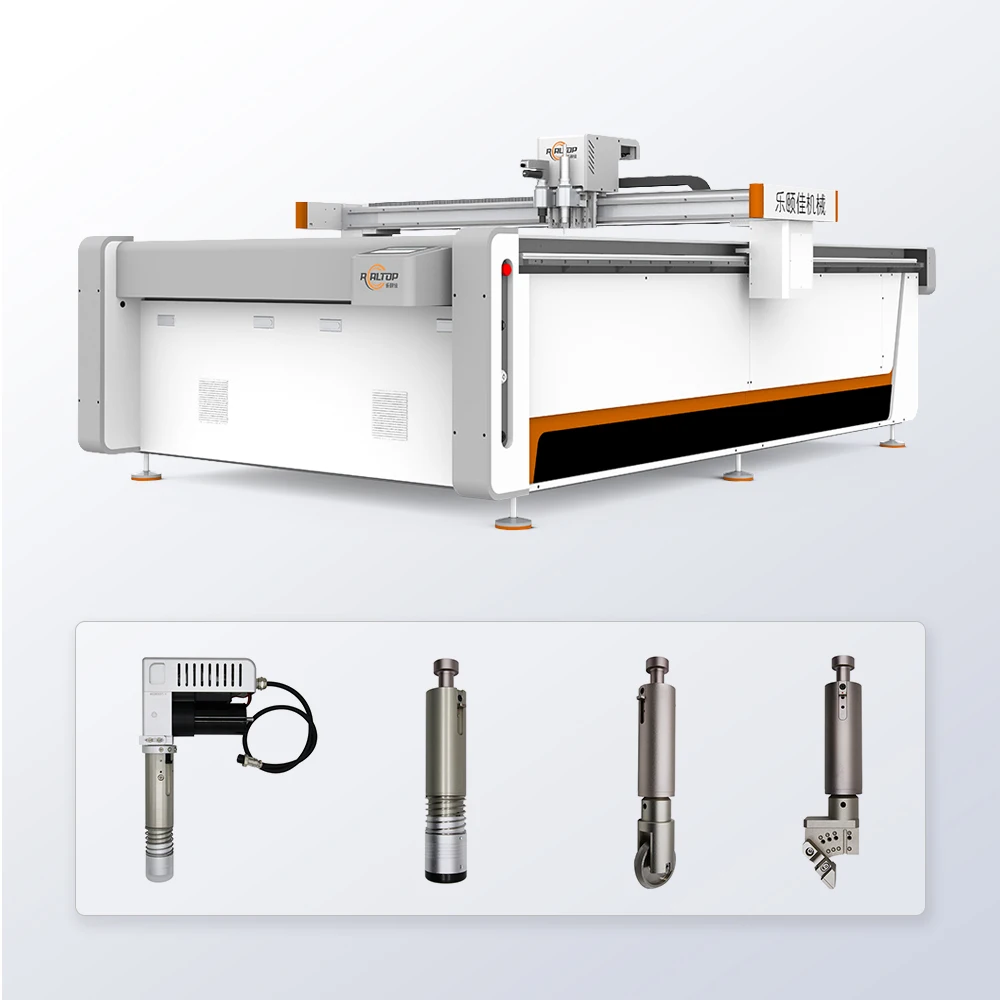
Tool Head Matching Per Substrate — Seven configurable cutting tools engineered for corrugated, greyboard, foam and composite packaging stock rather than a single forced method.
Technical Specifications
| Parameter | Value |
|---|---|
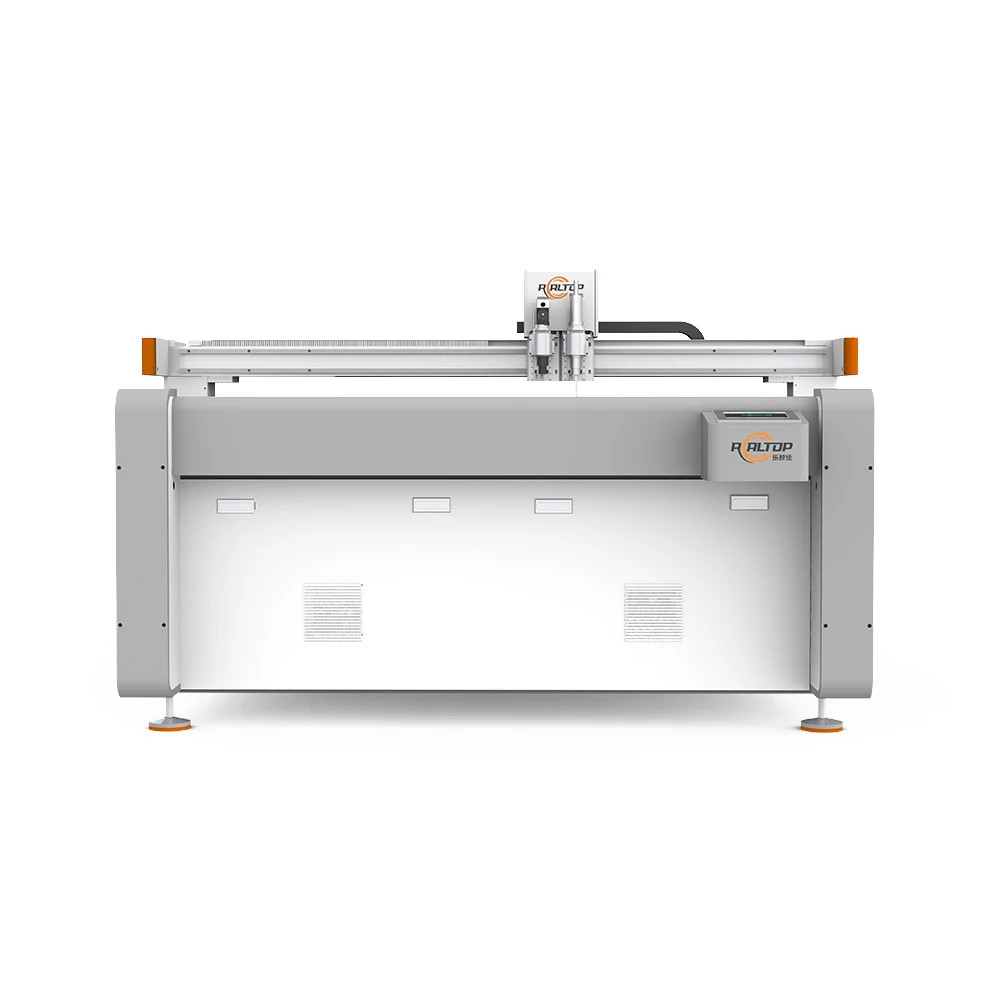
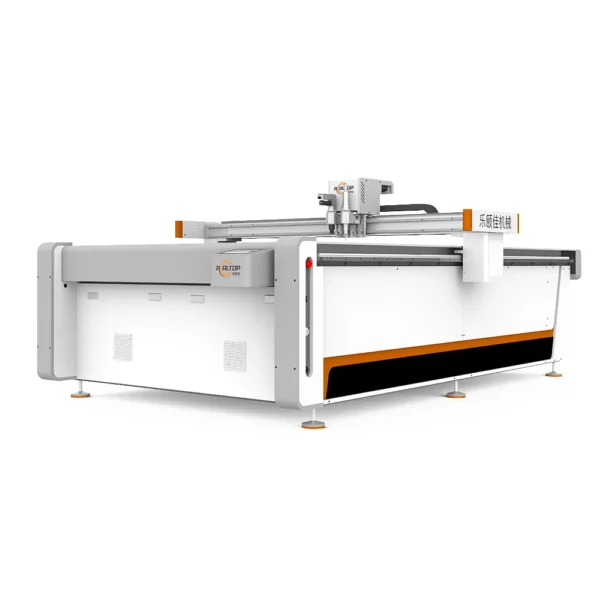
| Product Type | CNC Oscillating Knife Cutting Machine for Packaging |
| Working Area | 1600 × 2500 mm |
| Tool Head Options | Oscillating knife, Driven rotary knife, Creasing wheel, Kiss cutting tool, Pneumatic knife, Milling tool, V groove knife |
| Cutting Speed | 0–1500 mm/s |
| Cutting Thickness | ≤ 40 mm (basis not stated in source — confirm flute type, ply and density) |
| Cutting Accuracy | ±0.1 mm |
| Vacuum Pump | 9 kW |
| Vacuum Table | Aluminum bellows vacuum table |
| Machine Frame | Heavy-duty frame with precision-ground surface |
| Control System | PLC control panel |
| Servo Motors | Panasonic, Delta or Dorna options |
| Voltage Options | 110V, 220V, 380V (frequency to be confirmed per market) |
| File Formats | PLT, DXF, AI, PDF |
| Safety Devices | Infrared sensor device and emergency stop device |
| Overall Dimensions | 3300 × 2100 × 1350 mm |
| Language Options | English, Russian, Italian, Chinese, customizable |
Application Suitability
| Application | Material or Output |
|---|---|
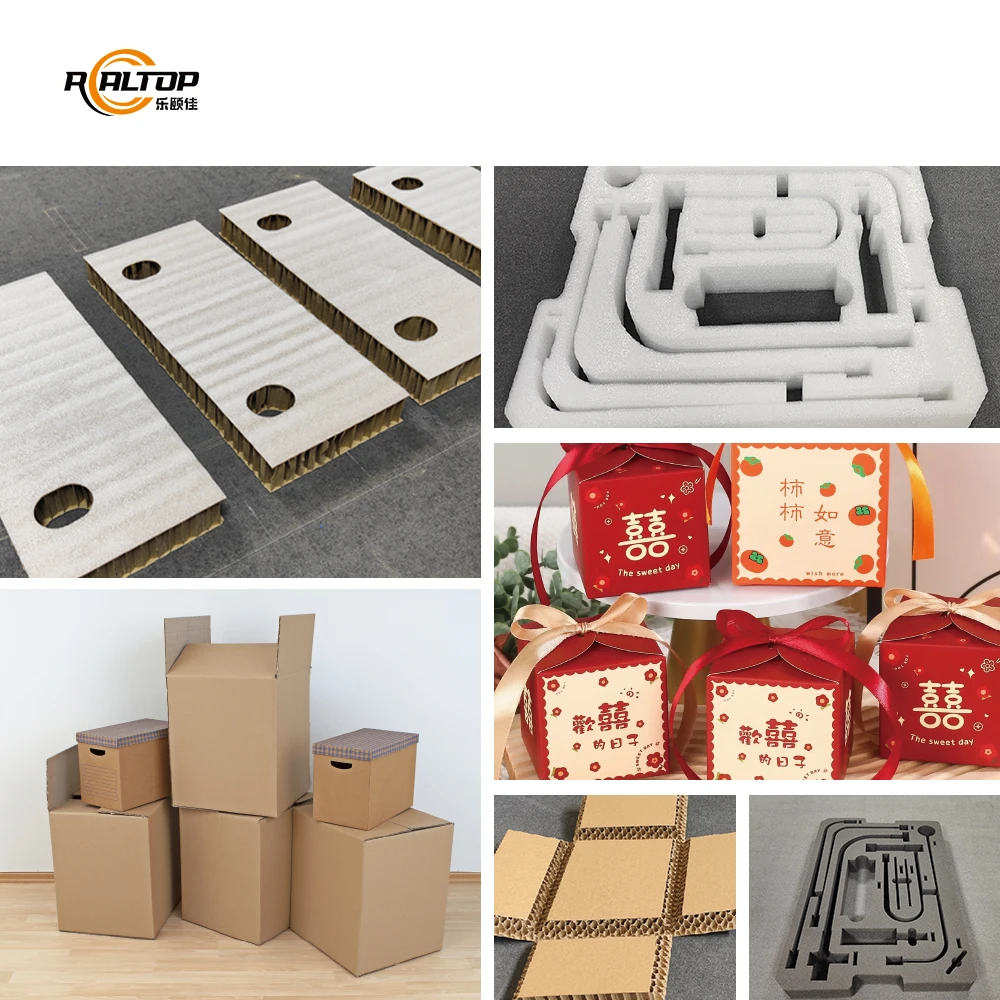
| Carton sample prototyping | Corrugated cardboard (E-flute, B-flute, BC-flute) without die-cut tooling |
| Small-batch custom packaging | Greyboard, cardstock, art paper and specialty paper |
| Protective insert cutting | EVA foam, EPE foam and PU foam for case and tray liners |
| Retail display component production | PVC, PET thin plastic sheets and adhesive-backed composites |
| Leather and textile packaging accessories | Leather, synthetic leather, velvet, fleece and non-woven fabric |
Why the Wrong Tool Head Destroys Your Corrugated Edges
Cutting quality on corrugated board is decided by tool geometry, not by motor power alone.
I have watched packaging sample rooms switch from an oscillating knife to a simple drag knife on BC-flute, only to find the flute cores crushed and the crease lines cracked during folding. The same machine platform produces a clean edge when the tool head matches the ply structure, and a rejected sheet when it does not [NEED_CITE:]. Buyers who evaluate a CNC oscillating knife cutting table specifications sheet by cutting area alone, without mapping each tool option to their daily material mix, end up replacing blades weekly and sanding edges by hand.
Seven Tools Behind One Cutting Table
A packaging sample maker typically handles three or four substrates in a single shift — rigid greyboard for luxury boxes, E-flute for shipping cartons, EVA foam for protective inserts, and art paper for sleeve wraps. This machine addresses that mix with seven tool head options, including a creasing wheel for fold lines, a V groove knife for rigid box channels and a kiss cutting tool for adhesive-backed labels. The tool change is manual but documented, so operators swap heads without recalibrating the Z-axis zero point each time.
Vacuum Zoning That Holds Small Inserts Flat
Cutting a full 1600 × 2500 mm sheet is straightforward; holding a 60 × 40 mm foam insert in place while the knife exits the cut is where many tables fail. The aluminum bellows vacuum table on this unit provides zoned suction across the bed, so the operator can isolate vacuum to the active cutting zone rather than bleeding suction across an empty table surface. Consistent hold-down prevents the small parts from lifting into the knife path and shifting position mid-cut [NEED_CITE:].
Reading the Specs Against Real Packaging Workflows
The ±0.1 mm cutting accuracy matters most on carton sample prototyping, where a half-millimeter drift on a glue tab means the assembled box will not close square. The 0–1500 mm/s speed range lets the operator slow down for tight-radius corners on retail display cutouts and open up on long straight crease lines. The dedicated packaging box structure design software accepts PLT, DXF, AI and PDF imports, removing the need to redraw buyer-supplied artwork in an unfamiliar CAD environment. The 9 kW vacuum pump generates sufficient suction for dense BC-flute boards, though lighter single-face stock may require the operator to reduce table zone count to concentrate airflow where the material actually sits.
The Hidden Cost of Skipping Material Trials
A buyer once specified a single oscillating knife head for a Middle East packaging plant that processed both corrugated and dense greyboard. The knife worked on flute board, but greyboard at the upper thickness limit dulled the edge within three months and left ragged crease channels. The root cause was not machine capacity but tool selection — a milling tool or pneumatic knife would have handled the greyboard cleanly. When the tool head and material thickness are not matched during the quotation stage, the consequence appears months after commissioning, not during the factory test [NEED_CITE:].
Why Sourcing This Equipment Here Makes Sense
The in-house design team covers both oscillating knife and creasing tool kinematics on a single frame, so packaging buyers do not need to source separate machines for cutting and scoring. Every configuration is specified against the buyer’s actual substrate list — flute type, ply count, foam density — rather than quoted as a generic platform. A sample cutting report is produced on the buyer’s own material before the order is confirmed, providing documented proof of edge quality and crease integrity. Voltage, plug type and control language are locked in writing before production begins, eliminating the shipment-day surprises that delay commissioning [NEED_CITE:].
Documentation & Verification
- Machine specification sheet listing all seven tool heads and their thickness ranges
- Electrical schematic confirming voltage, frequency and plug type for the destination market
- Sample cutting report on buyer’s own corrugated, greyboard and foam stock
- Tool head and vacuum table configuration list matched to each material on the order
- Software licence and file format compatibility note for PLT, DXF, AI and PDF workflows
- Operation and maintenance manual in the selected control language
Installation, Commissioning & Support
- Floor must support the 3300 × 2100 mm footprint plus operator clearance on three sides
- Dedicated circuit required matching the confirmed 110V, 220V or 380V supply specification
- Machine arrives partially assembled; vacuum table and gantry require on-site alignment
- First-run parameter tuning covers knife oscillation frequency, Z-axis depth and vacuum zone mapping
- Operator training includes tool head changeover procedure and software file import workflow
- Spare parts list identifies oscillating blades, creasing wheels and vacuum seals by part number
Before You Request a Quotation
Tell us which substrates you run most days — flute type and ply count for corrugated, gram weight for greyboard, density for foam inserts. Share a sample packaging file in your preferred format so we can verify software import and nesting compatibility. Confirm your workshop voltage and frequency, and we will match the electrical specification and control language before production begins.
Frequently Asked Questions
Q: How do I confirm the machine can cut my specific corrugated flute type?
A: Send a sample sheet of your BC-flute, B-flute or E-flute board along with the maximum ply count you process. We run a cutting trial using the oscillating knife and creasing wheel, document edge quality and crease integrity in a sample report, and share the results before you commit to an order.
Q: When should I use a creasing wheel instead of an oscillating knife?
A: The creasing wheel compresses the board along a fold line without cutting through the liner, producing a clean hinge for box assembly. The oscillating knife is used for the outer contour and internal cutouts. Both tools operate on the same table, and your configuration list will specify which heads are included.
Q: Will small packaging inserts stay flat during cutting?
A: The aluminum bellows vacuum table provides zoned suction, so the operator activates only the zones beneath the active workpiece. This concentrates hold-down force on small components such*e knife path during the final cut segments.
Q: Can the software read my existing packaging design files?
A: The dedicated packaging structure design software imports PLT, DXF, AI and PDF formats. Before the order is finalized, we test your actual design files on the system and confirm that dimensions, crease lines and cut paths translate correctly without manual redrawing.
Q: What voltage and language options are available for my market?
A: Voltage is configurable at 110V, 220V or 380V, with frequency confirmed per your local supply standard. The PLC control panel and software interface support English, Russian, Italian and Chinese, with additional languages customizable on request before production.


商品评价
Clear filtersThere are no reviews yet.