






Fast Shipping
Carrier information

20k products
Payment methods

24/7 Support
Unlimited help desk

2-day Delivery
Track or off orders
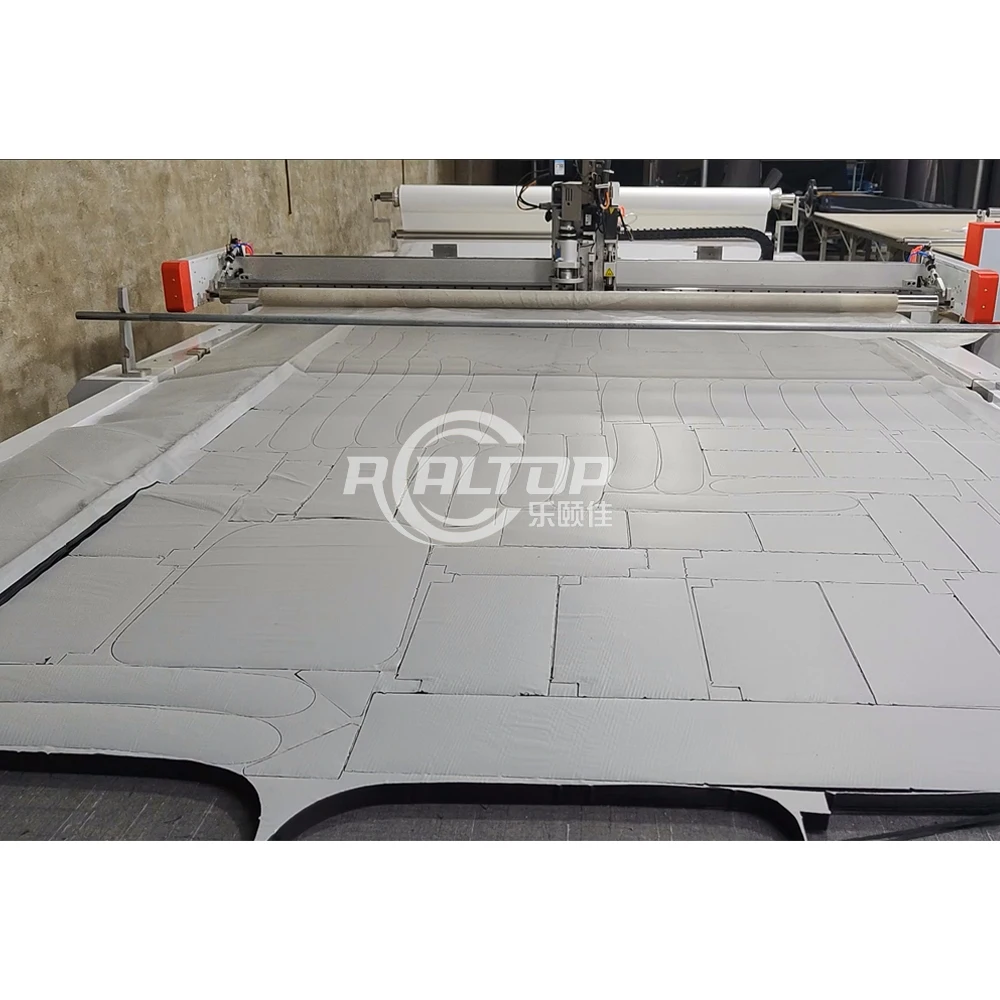
Modular tool head configuration — matching the oscillating knife, round knife or drag knife to the exact fabric density rather than forcing one blade through every material.
Technical Specifications
| Parameter | Value |
|---|---|
| Model | RT-D2516/RT-S2516 |
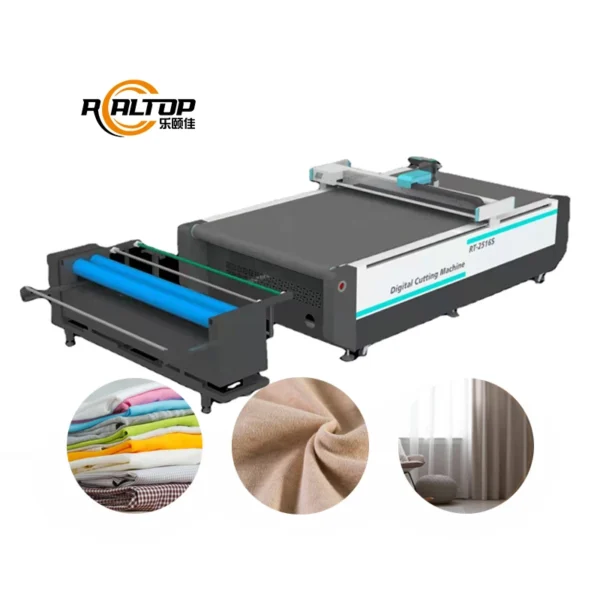
| Product Type | CNC Oscillating Knife Cutting Machine for Textile and Fabric |
| Working Area | 1600 × 2500 mm |
| Machine Size | 3450 × 2300 × 1250 mm |
| Rated Power | 9 kW |
| Translational Velocity | 800–1200 mm/s |
| Maximum Cutting Thickness | ≤50 mm (varies with material type and density) |
| Repeated Accuracy | ≤0.1 mm |
| Transmission System | Digital servo motor, Taiwan Hiwin linear guide, synchronous belt, ball screw |
| Drive Mechanism | Rack and pinion |
| Working Table Type | Flat working table with high-density felt surface |
| Vacuum Pump | 7.5 kW |
| Multifunctional Tool Head | Swiss imported knife with vibration full cutting, vibration half cutting and cursor location |
| Safety Device | Infrared sensors |
| Instruction System | HP-GL compatible format |
| Voltage | 380V ± 10% |
| Conveyor Belt | Germany imported |
| Frame Construction | Overall welding with imported milling machine processing |
| Language Options | English, Russian, Italian, Chinese (special languages customizable) |
| Assembly State | Fully assembled |
| Standards | CE |
Application Suitability
| Application | Material or Output |
|---|---|
| Garment and footwear production | Single and multi-layer woven fabric, knitted textile, denim, lining cloth |
| Automotive interior soft trim | Leather, sponge composite leather, synthetic suede for seat covers and headliners |
| Leather goods and accessories | Natural hide, PU leather, PVC for bags, belts and wallets |
| Composite and foam fabrication | Sponge, EVA foam, rubber sheets up to 50 mm depending on density |
| Signage and soft material contouring | Flexible banner, vinyl, soft glass, silicon sheets |
| Packaging sample making | Corrugated board, grey board, flexible substrate prototypes |
Why Tool Head Selection Matters More Than Working Area
Choosing an oscillating knife cutting machine based on table size alone is how fabric producers end up with ragged edges on technical textiles and crushed foam on automotive seat panels. The cutting tool head must be matched to material thickness, density and edge-quality requirement before the frame is ever bolted down. I have walked into workshops where a machine sat idle because the buyer specified a 2500 mm bed but never confirmed whether the oscillating frequency could handle 30-layer cotton lays or whether a round knife was needed for continuous vinyl runs. The wrong blade profile on a dense composite material produces frayed edges that fail downstream stitching or bonding operations. This mismatch is the single most common reason textile cutting lines get reconfigured within the first year [NEED_CITE:].
Oscillating Knife Versus Round Knife for Fabric Density
The RT-D2516/RT-S2516 platform supports a modular tool holder that accepts an oscillating knife, round knife, drag knife, marking pen and optional auto feeder. For single-layer synthetic fabrics and thin linings, a round knife delivers a continuous shearing action that keeps the blade cool and avoids the micro-vibration marks an oscillating blade can leave on delicate surfaces. Switch to the oscillating knife when cutting multi-layer lays of denim, canvas or sponge composite leather where vertical blade strokes separate plies without dragging the stack. The Swiss imported knife assembly provides vibration full cutting and half cutting modes, which matters when automotive interior producers need kiss-cuts on laminated materials without penetrating the release liner underneath.
Vacuum Zoning and Small Part Hold-Down
A 7.5 kW vacuum pump generates suction across the flat working table, but the real variable is how the table is zoned. Small garment pieces such as collar stays, pocket flaps and shoe upper components tend to lift at the trailing edge once the surrounding material has been cut away. Aviation aluminum table construction with internal wind channels distributes negative pressure more evenly than a simple plenum box, and the high-density felt surface provides grip without marking delicate textiles. When I spec a CNC oscillating knife cutting machine for a footwear factory cutting narrow strap components, I always confirm the minimum part footprint before the vacuum layout is finalized [NEED_CITE:].
Reading the Specifications That Actually Affect Production
The 1600 × 2500 mm working area handles standard fabric roll widths and allows nesting of full garment marker sets, but the usable cutting window depends on how much perimeter the vacuum frame and tool clearance consume. The ≤0.1 mm repeated accuracy figure, achieved through rack-and-pinion drive on Taiwan Hiwin linear guides, determines whether registration marks align after a multi-pass cut on printed contour work. Translational velocity of 800–1200 mm/s refers to rapid traverse; actual cutting speed drops with material density and thickness, so a 50 mm sponge composite will cut noticeably slower than a single ply of polyester lining. The HP-GL compatible instruction system accepts DXF and PLT files from most nesting software, but file format compatibility should be tested with the buyer’s existing workflow before the machine enters production [NEED_CITE:]. The 380V ± 10% supply requirement means factories in regions with 220V three-phase mains need to confirm transformer provisions or request voltage customization before the electrical cabinet is wired.
The Hidden Cost of Skipping Material Samples
When a buyer commits to a configuration without running their own fabric through the machine, the first production batch often reveals problems that specification sheets cannot predict. Foam densities vary between suppliers even at the same quoted hardness rating, and an oscillating frequency that slices cleanly through one brand’s EVA may tear another’s. Leather with a heavy topcoat can glaze the blade edge within the first hour, requiring a different tool steel or coating. I have seen automotive seat cover manufacturers discover after delivery that their sponge composite leather delaminated under the knife because the vibration amplitude was set for a material that no longer matched their supply chain.
What This Platform Delivers at the Production Level
The in-house design team covers both knife and laser cutting technologies, so the RT-D2516/RT-S2516 configuration is selected based on what the material actually needs rather than what a single-technology vendor can offer. Tool head and vacuum table combinations are specified per material type, thickness and declared daily volume. CCD camera contour recognition is available for printed pattern following where registration accuracy is non-negotiable. Software compatibility is confirmed with the buyer’s nesting workflow before the order enters production, not after the machine arrives. Voltage, plug type and control panel language are locked in during the specification review so there are no surprises at commissioning [NEED_CITE:].
Documentation & Verification
- Machine specification sheet confirming RT-D2516/RT-S2516 tool head and table configuration
- Electrical schematic with voltage and frequency matching your factory supply
- Sample cutting report on your own fabric, leather or foam before order confirmation
- Tool head and vacuum zone layout tied to your declared material and part size
- Software licence and file format compatibility note for your nesting workflow
Installation, Commissioning & Support
- Fully assembled delivery; position on level floor with clearance for the 3450 × 2300 mm footprint
- Dedicated 380V ± 10% circuit rated for 9 kW machine load plus 7.5 kW vacuum pump
- First-run parameter tuning on your fabric type, thickness and nesting layout
- Operator training covering tool head changeover, blade replacement and vacuum zone activation
- Spare blade inventory and high-density felt replacement schedule matched to your material abrasiveness
Before You Send an Inquiry
To configure the right setup, share the material types you cut most frequently along with typical thickness and the smallest part dimension in your nesting layouts. Confirm your facility voltage and whether your existing CAD or nesting software outputs HP-GL, DXF or PLT files. If your production involves printed contour work, note the registration mark style and tolerance your graphics supplier uses so the correct recognition system can be quoted.
Frequently Asked Questions
Q: How do I choose between oscillating knife and round knife for my fabric?
A: Round knife suits single-layer thin synthetics and continuous vinyl cuts where a smooth shearing edge is needed. Oscillating knife handles multi-layer lays, dense composites and thicker foams where vertical blade strokes separate material without dragging. The RT-D2516/RT-S2516 accepts both tool heads, and selection is confirmed after sample cutting on your actual material.
Q: What vacuum zone setup prevents small garment pieces from lifting?
A: Small parts lose hold-down once surrounding waste is removed. The aviation aluminum table with internal wind structure and high-density felt surface addresses this, but zone count and port placement must match your smallest part footprint. Confirm your minimum piece dimension during specification so the vacuum layout covers the entire cutting window.
Q: How does the 50 mm cutting thickness rating change across materials?
A: The rating depends on material density and structure. A 50 mm low-density sponge cuts cleanly with the oscillating knife, while a 50 mm dense rubber sheet may require reduced feed speed and multiple passes. The sample cutting report documents achievable thickness and edge quality on your specific material before you commit.
Q: Will the software accept my existing DXF or PLT nesting files?
A: The HP-GL compatible instruction system accepts DXF and PLT formats from most mainstream nesting platforms. Compatibility is tested with your actual files and nesting workflow before the order is finalized, and a file format compatibility note is included in the documentation package.
Q: What voltage and language options are confirmed before shipment?
A: The standard configuration runs on 380V ± 10%, but voltage customization is available for different mains supplies. Control panel language options include English, Russian, Italian and Chinese, with special languages configurable. Voltage, plug type and language are locked during specification review and confirmed on the electrical schematic.


商品评价
Clear filtersThere are no reviews yet.