

Fast Shipping
Carrier information

20k products
Payment methods

24/7 Support
Unlimited help desk

2-day Delivery
Track or off orders
Specified per Material — Tool head, vacuum zoning and oscillation frequency matched to your fabric type and ply count before the order is signed, not guessed from a brochure.
Technical Specifications
| Parameter | Value |
|---|---|
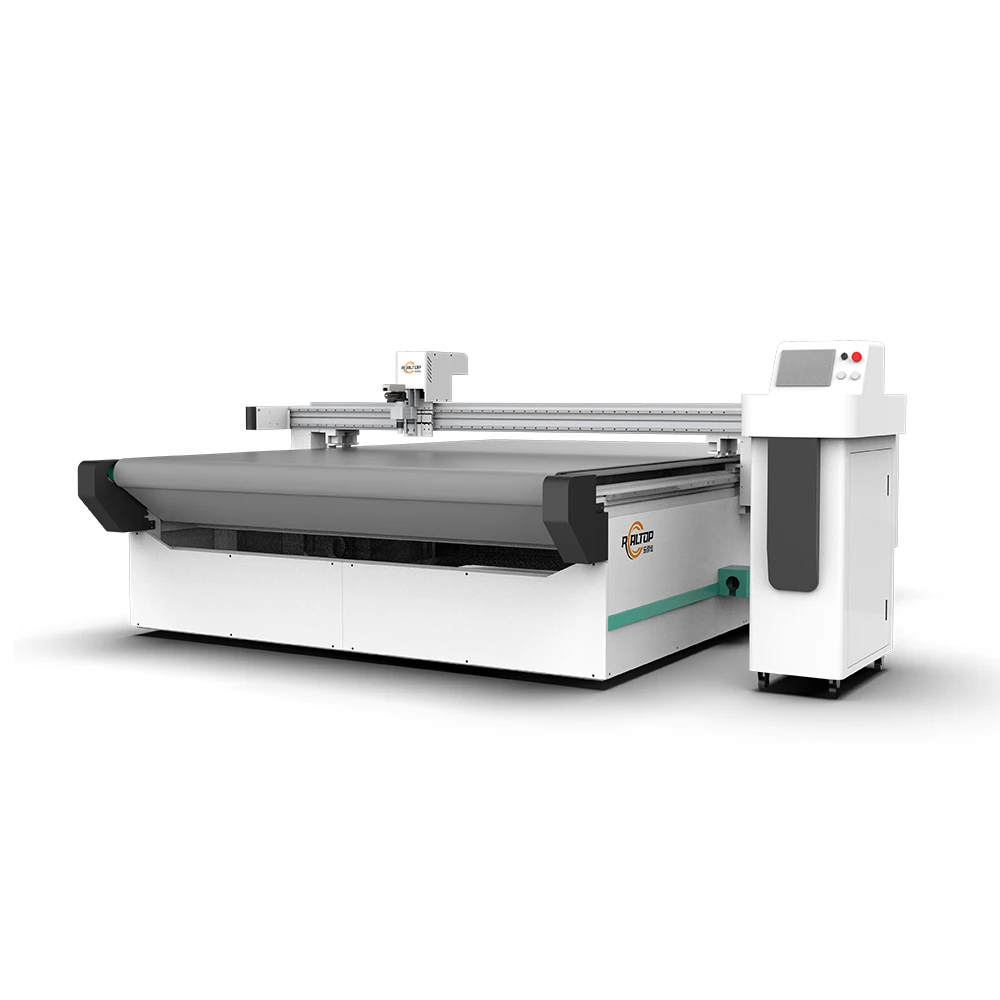
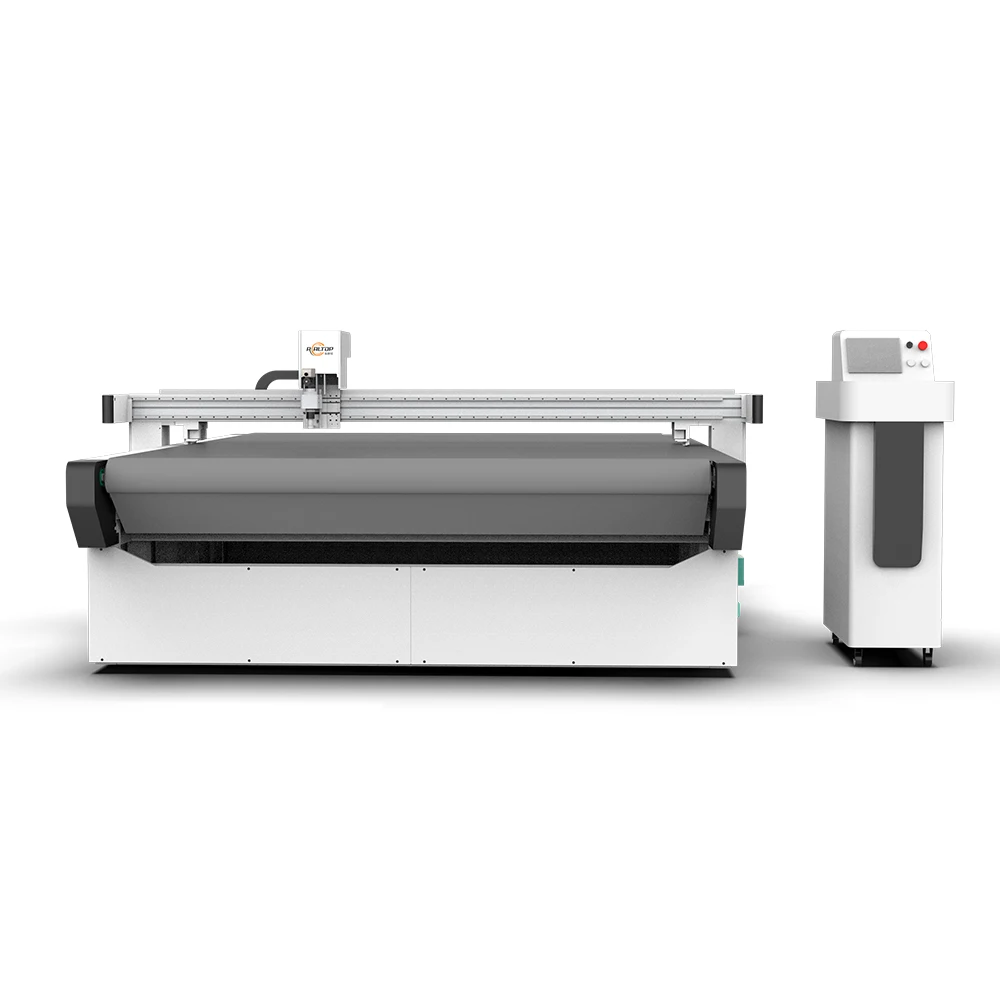
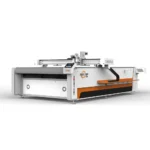
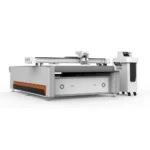
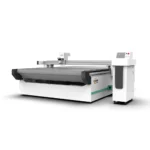
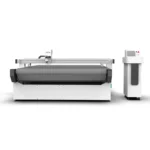
| Product Type | CNC Oscillating Knife Cutting Machine |
| Working Area | 1600 × 2500 mm |
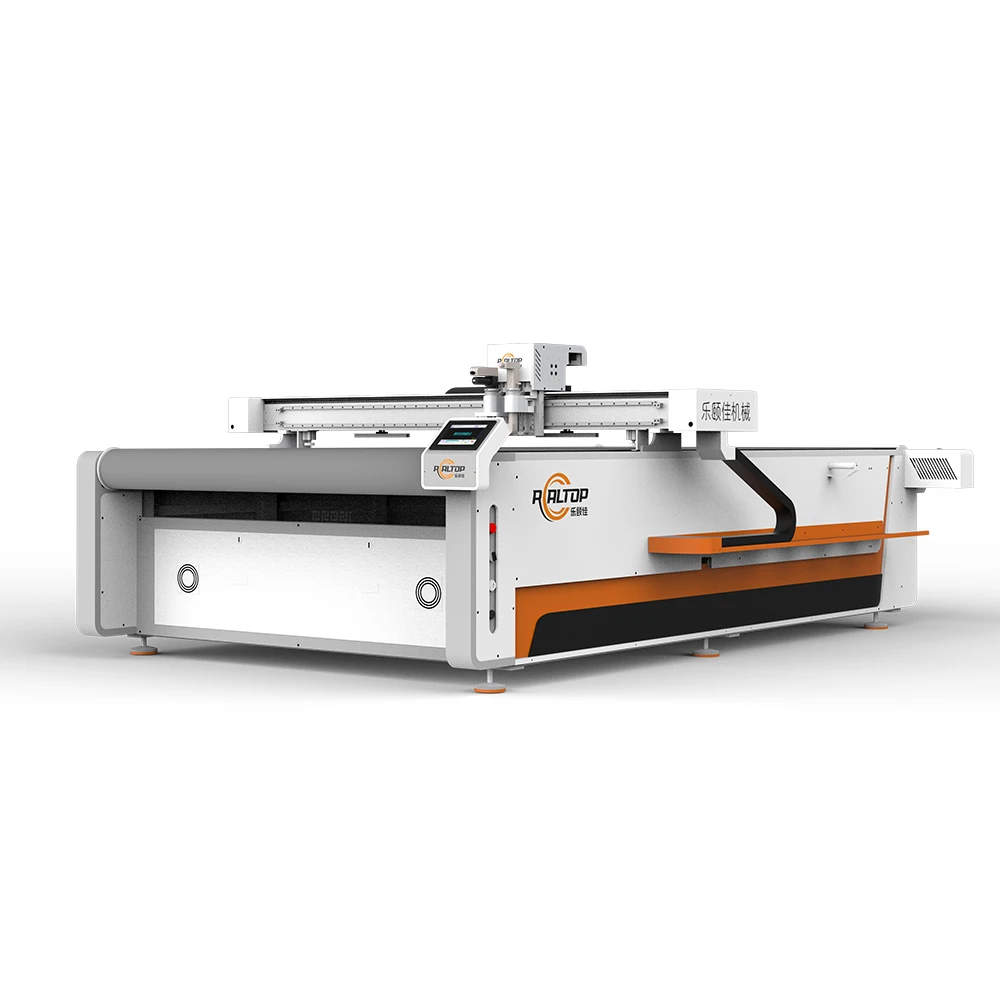
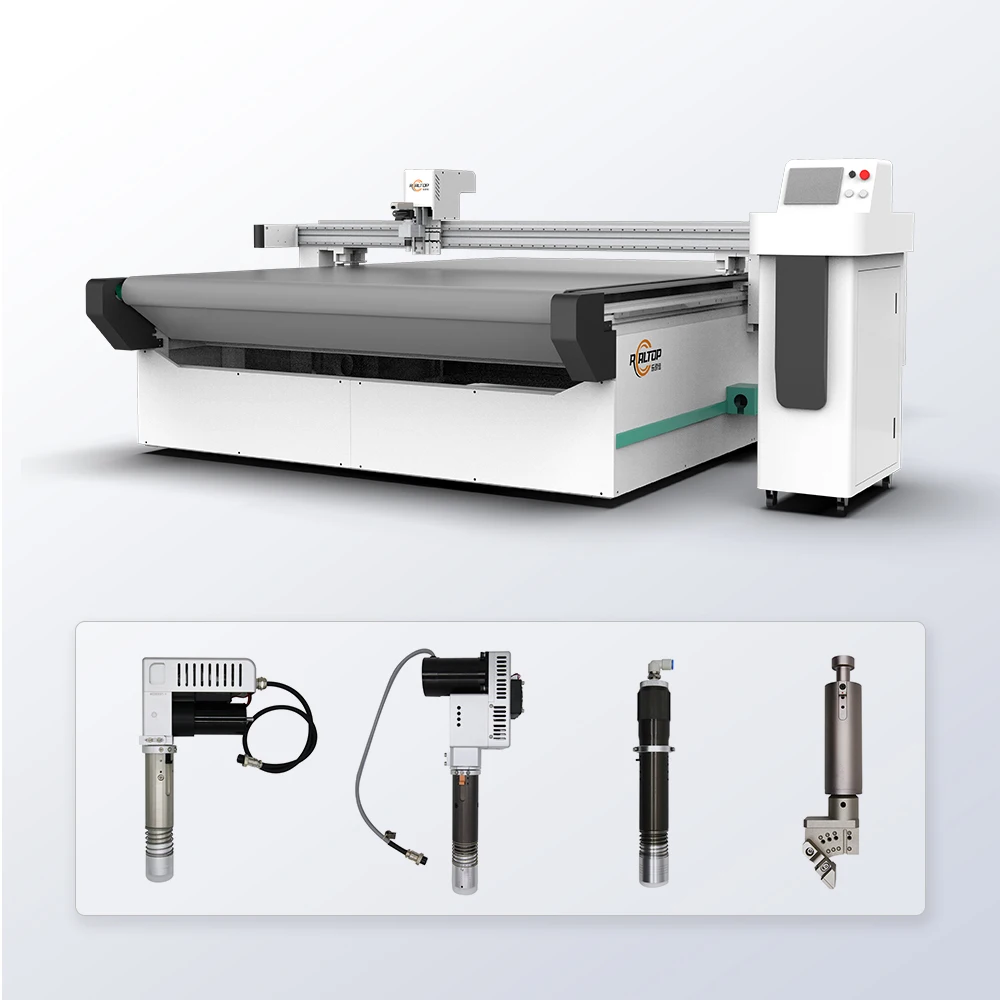
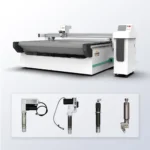
| Available Tool Heads | Oscillating knife, Driven rotary knife, Creasing wheel, Kiss cutting tool, Pneumatic knife, Milling tool, V groove knife |
| Cutting Speed | 0–2000 mm/s |
| Cutting Thickness | Up to 30 mm (basis not stated in source — confirm material type, density and layer count) |
| Cutting Accuracy | ±0.1 mm |
| Repeat Positioning Accuracy | ±0.1 mm |
| Vacuum Table | Aluminum bellows vacuum table |
| Vacuum Pump | 9 kW |
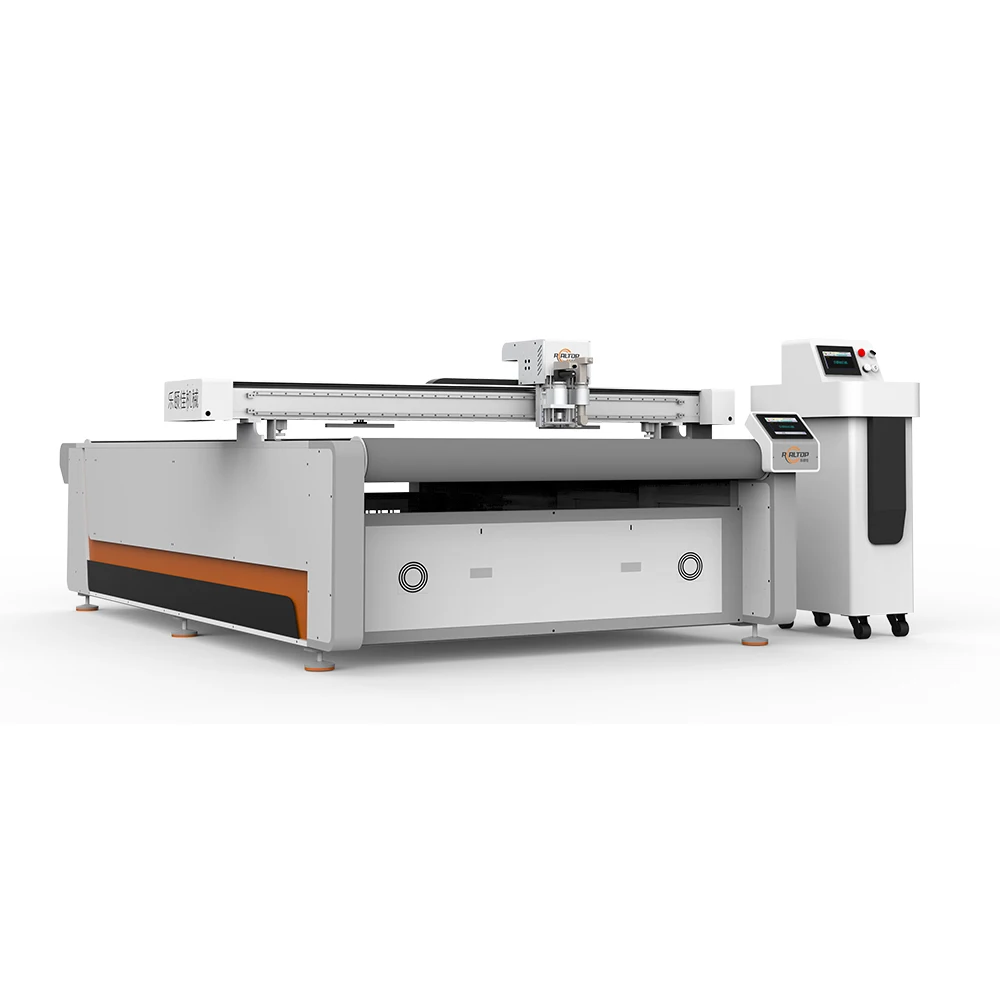
| Control System | PLC control panel with configurable display languages |
| Servo Drive Options | Panasonic, Delta, Dorna (source value — verify against current catalog) |
| Voltage Options | 110V, 220V, 380V (configurable to facility supply) |
| Accepted File Formats | PLT, DXF, AI, PDF |
| Safety Devices | Infrared sensor device, emergency stop |
| Machine Dimensions | 3300 × 2100 × 1350 mm |
| Language Options | English, Russian, Italian, Chinese, customizable |
Application Suitability
| Application | Material or Output |
|---|---|
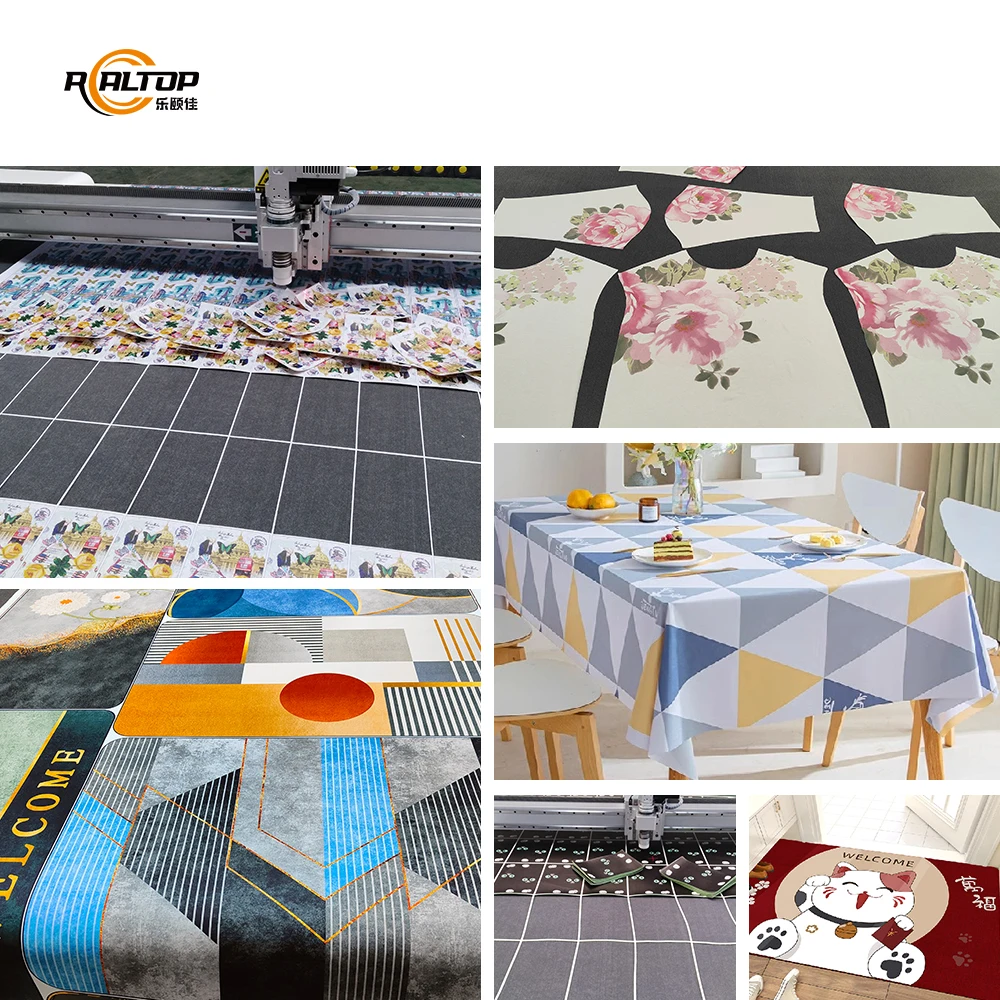
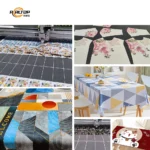
| Apparel Manufacturing | Suits, knitwear, lace, complex woven fabrics, pattern-matching layouts |
| Automotive Interiors | Seat fabrics, carpets, PVC floor mats |
| Home Textiles | Sofa fabrics, curtains, rugs, multi-layer cutting |
| Composite Material Processing | Carbon fiber prepreg, aramid, specialty technical textiles |
What Happens When Fabric Thickness Dictates the Machine Choice
The cutting method must follow the material, never the other way around.
A common failure in fabric cutting operations is specifying a machine on bed size alone, only to discover during production that the knife cannot hold a clean edge through coated or multi-layer composites. Ragged edges, crushed foam cores and delaminated plies are not operator errors — they are configuration errors that happened before the machine shipped. When a buyer commits to a CNC oscillating knife cutting machine without first testing the exact fabric stack and thickness, the cost of re-cutting and wasted material compounds across every shift. [NEED_CITE: material yield losses in garment cutting operations]
Matching the Knife to the Fabric, Not the Brochure
The seven tool heads available for this CNC oscillating knife cutting machine are not interchangeable upgrades — they are fundamentally different cutting actions. A driven rotary knife slices through single-ply woven material at high travel speed, while a pneumatic knife handles thicker, denser stacks where downward pressure matters as much as oscillation frequency. Selecting the wrong head means either crushing a delicate knit or leaving an incomplete cut through a 20 mm foam-backed automotive textile.
Vacuum Zoning Where It Matters for Small Pattern Pieces
Fabric shops cutting small garment panels or intricate automotive gasket shapes often find that a single-zone vacuum table cannot hold the material flat once the knife separates a piece from the surrounding web. The aluminum bellows vacuum table on this machine is designed for high flatness, but the real question a buyer must ask is whether the zoning is adequate for their smallest production piece. When a cut part lifts during the final passes, the knife drags and the edge is ruined. [NEED_CITE: vacuum hold-down requirements for small fabric pieces]
Reading the Numbers That Actually Reach the Shop Floor
The ±0.1 mm repeat positioning accuracy directly affects whether a patterned fabric aligns from one piece to the next across a nesting layout — a tolerance that determines whether a suit front and its matching pocket show continuous grain. The 9 kW vacuum pump is sized to maintain suction across the full 1600 × 2500 mm bed, but actual hold-down force at the far corner depends on table sealing condition and material porosity. Cutting speed of 2000 mm/s is a travel maximum; real production speed through multi-layer stacks is governed by knife oscillation frequency, material density and the number of direction changes in the cut path.
The Price of a Configuration Assumed but Not Confirmed
When a buyer assumes the standard oscillating knife will handle a coated composite, and the edge comes out frayed, the machine is not broken — it was simply never specified for that material. Production stops while a different tool head is sourced and shipped. Pattern-matching on striped or printed fabrics fails not because the machine lacks accuracy, but because the CCD contour recognition option was never discussed during the quoting stage. These are not rare edge cases; they are the most frequent cause of commissioning delays in fabric cutting installations. [NEED_CITE: common commissioning issues in textile CNC cutting]
Why This Machine Is Configured Before It Is Quoted
In-house design covering both knife tooling and table engineering means the cutting method is matched to the buyer’s fabric, not forced into a single-machine compromise. Tool head and vacuum table configurations are documented per material and production volume before the contract is signed. Software compatibility with DXF, PLT, AI and PDF formats is confirmed during the quoting stage, not discovered at installation. Voltage, control language and plug type are locked to the buyer’s facility specification. Sample cutting on the buyer’s own material is performed before commitment, so edge quality and cutting speed are verified on actual production stock rather than catalog examples.
Documentation & Verification
- Machine specification sheet listing configured tool heads and vacuum table zoning layout
- Electrical schematic with confirmed voltage, frequency and plug type for your facility
- Tool head and table configuration list matched to your fabric type and ply count
- Sample cutting report on your own material documenting edge quality and achievable speed
- Software licence with confirmed file format compatibility for your nesting workflow
- Factory test record showing positional accuracy verification before dispatch
Installation, Commissioning & Support
- Floor space planning around the 3300 × 2100 × 1350 mm machine footprint including material infeed clearance
- Dedicated circuit provision matching confirmed voltage option (110V, 220V or 380V) and the 9 kW vacuum pump draw
- Machine arrives with vacuum table and gantry pre-assembled; final leveling on your shop floor
- First-run parameter setup including knife oscillation frequency and vacuum zone mapping for your fabric
- Operator training on PLC control panel in your confirmed display language
- Spare parts list covering knife blades, vacuum seals and tool head wear components
What to Prepare Before Requesting a Quotation
Share your fabric type, typical ply count and the thickest material you plan to cut. Provide your standard nesting file format and the software your pattern department currently uses. Confirm your facility voltage, frequency and the control panel language your operators need. If you are cutting printed or patterned textiles, state whether contour recognition around registration marks is required for your workflow.
Frequently Asked Questions
Q: How do I select the correct tool head for my fabric type and thickness?
A: The right tool head depends on material composition, ply count and edge quality requirement. A driven rotary knife suits single-ply woven fabrics at high speed, while a pneumatic knife handles dense multi-layer stacks. We configure the head based on your sample material test, not a generic chart, so the selection is proven on your actual production stock before the order is finalized.
Q: Is the vacuum table zoning sufficient for small pattern pieces, and how is lift prevented?
A: The aluminum bellows vacuum table provides high flatness, but small cut pieces can lift once separated from the surrounding web if zoning does not cover their area. We review your nesting layout and smallest piece dimensions to confirm that the vacuum zones hold adequately throughout the cut cycle, preventing drag marks and edge distortion on finished parts.
Q: Can the software import my existing DXF and AI files and integrate my nesting workflow?
A: The system accepts PLT, DXF, AI and PDF formats. Before order confirmation, we verify that your specific file export from your current CAD or nesting software imports cleanly and generates correct cut paths. This compatibility check is documented, so there are no workflow surprises when your operators begin loading production files on the installed machine.
Q: What voltage, plug type and control language are confirmed before shipment?
A: Voltage is configurable across 110V, 220V and 380V to match your facility supply. The plug type and control panel language — available in English, Russian, Italian, Chinese or customized — are specified on the electrical schematic and confirmed in writing before production begins, ensuring the machine arrives ready to connect and operate without on-site electrical modification.
Q: Can I send my own material for sample cutting before placing the order?
A: Yes. We cut your actual fabric, at your production ply count and thickness, and provide a sample cutting report documenting edge quality, cutting speed and any tool head recommendation. This test locks the machine configuration to your material rather than relying on generic catalog examples, so you commit to a proven setup.


商品评价
Clear filtersThere are no reviews yet.