



Fast Shipping
Carrier information

20k products
Payment methods

24/7 Support
Unlimited help desk

2-day Delivery
Track or off orders
Precision tooling matched to your actual fabric — every oscillating knife and vacuum zone is selected after test cuts on the buyer’s own roll stock, preventing edge fraying and material lift that spec-sheet buyers only discover on the shop floor.
Technical Specifications
| Parameter | Value |
|---|---|
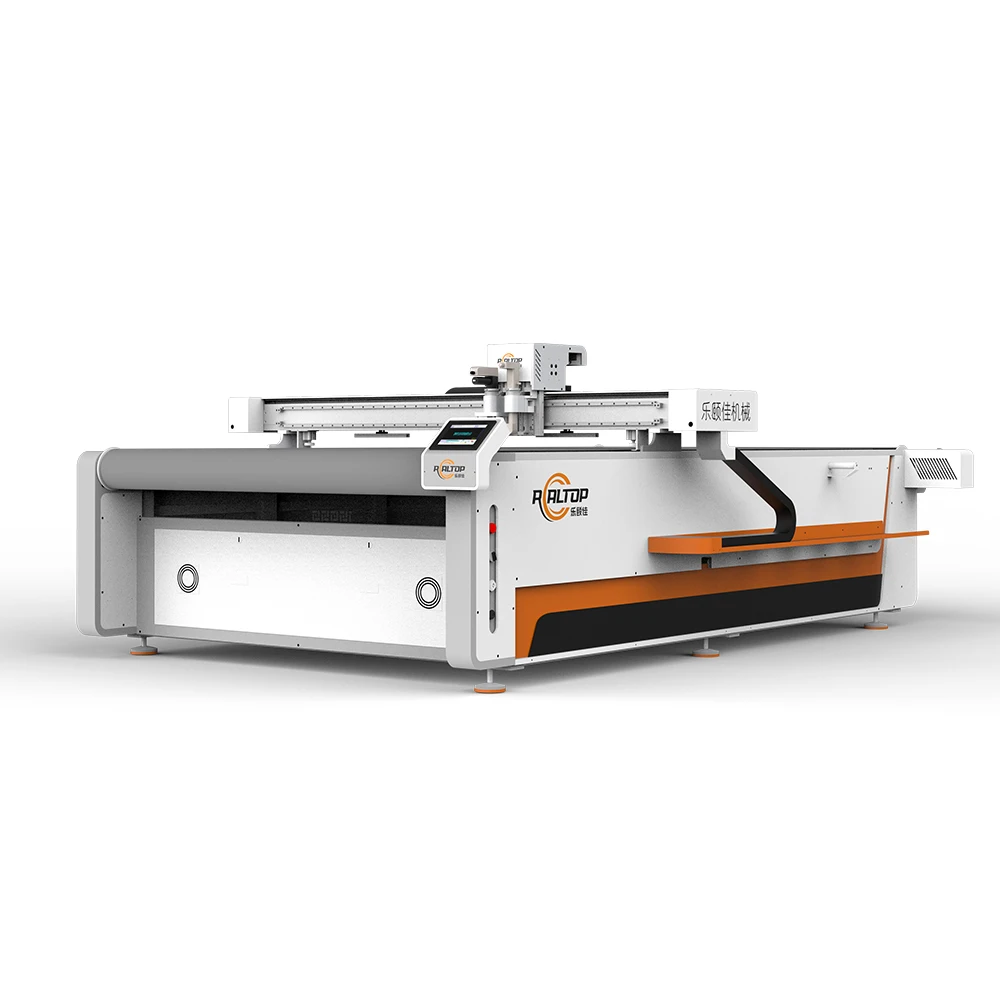
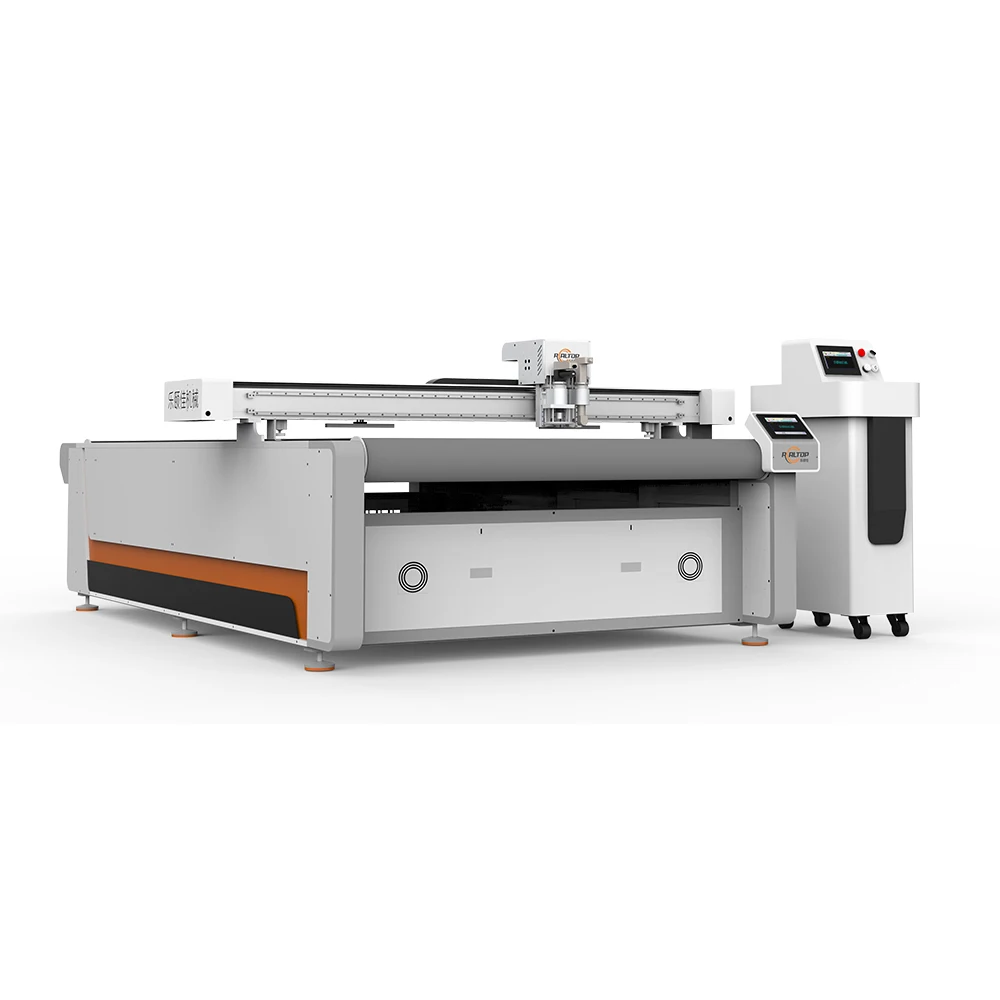
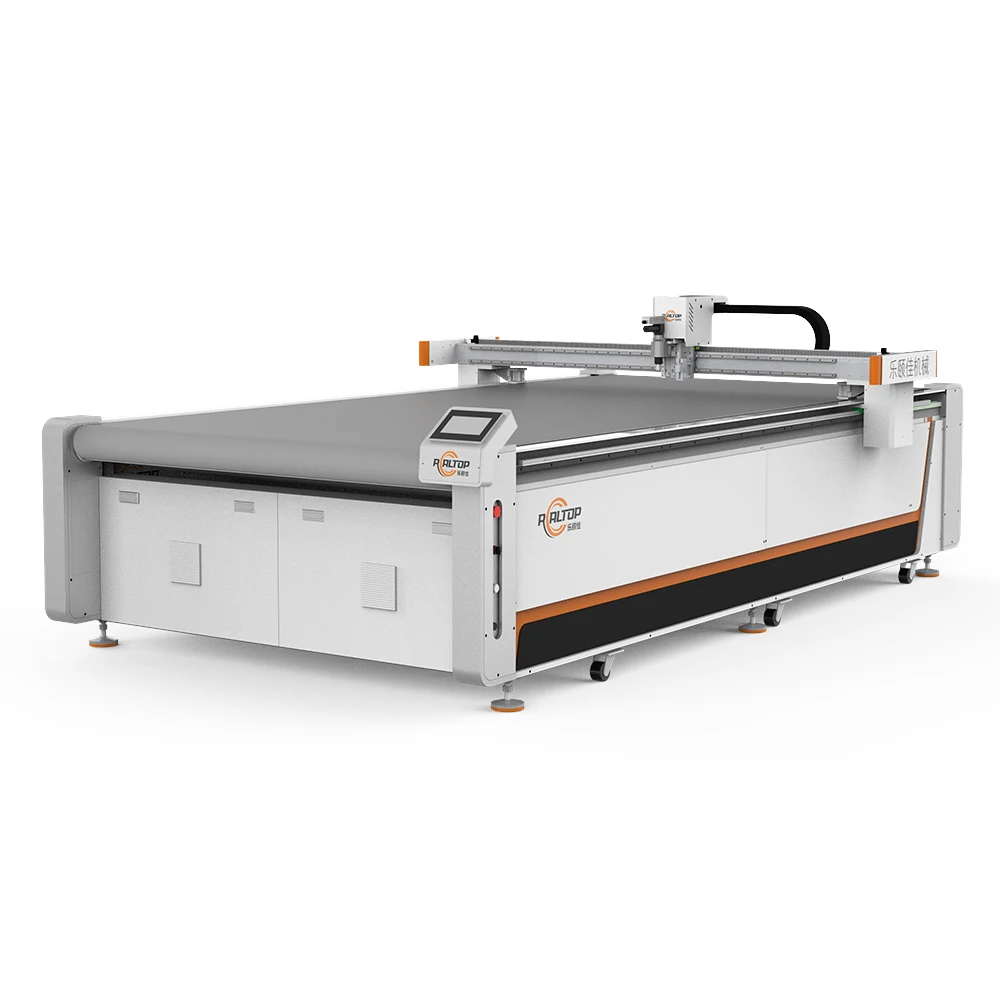
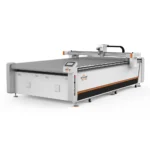
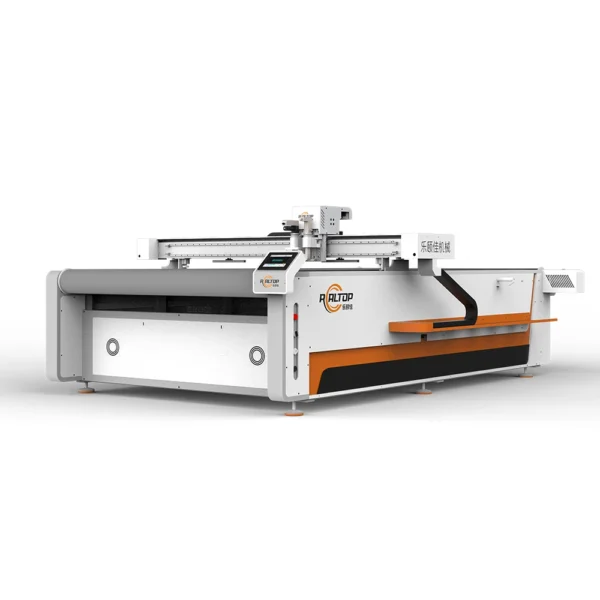
| Product Type | CNC Oscillating Knife Cutting Table |
| Working Area | 1600×2500 mm |
| Cutting Speed | 0–2000 mm/s |
| Cutting Thickness | ≤ 30 mm (basis not stated in source — confirm material type and layer count) |
| Cutting Accuracy | ±0.1 mm |
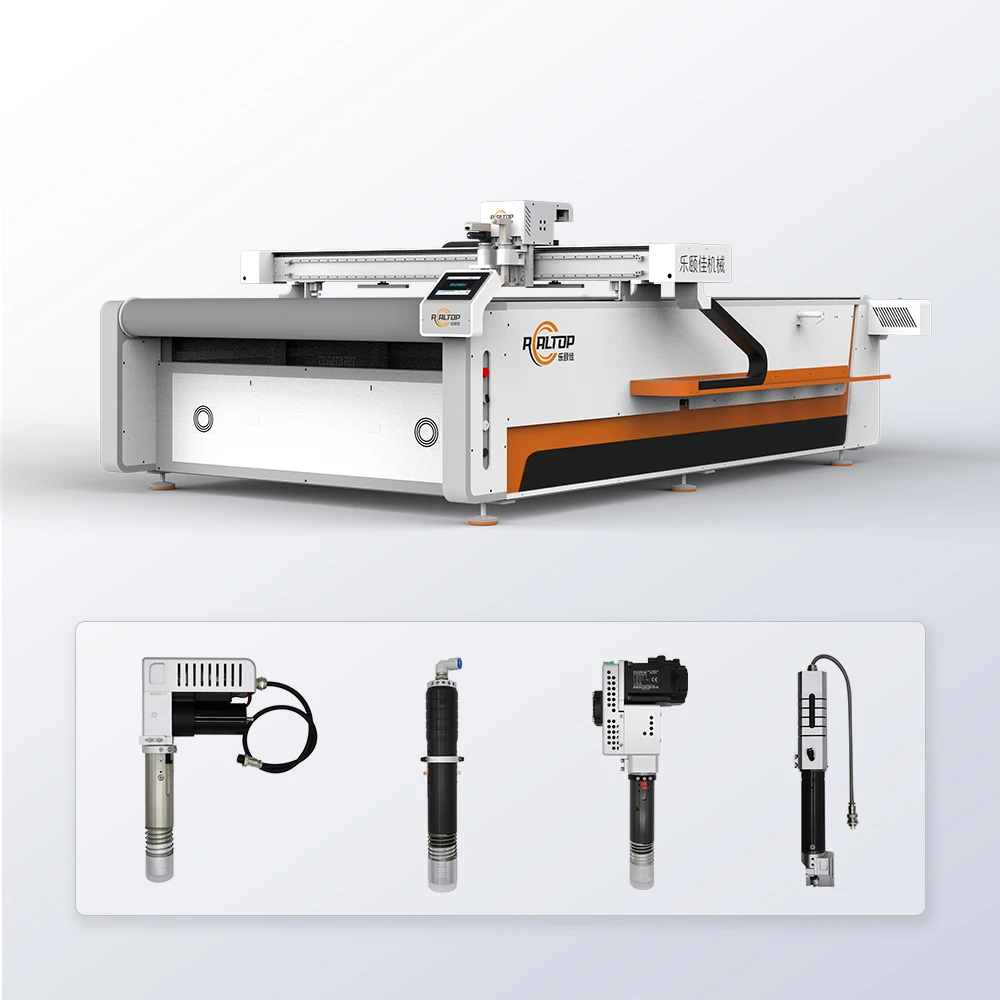
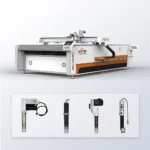
| Tool Head Options | Oscillating knife, Driven rotary knife, Creasing wheel, Kiss cutting tool, Pneumatic knife, Milling tool, V groove knife |
| Vacuum Pump | 9 kW |
| Vacuum Table | Aluminum bellows type |
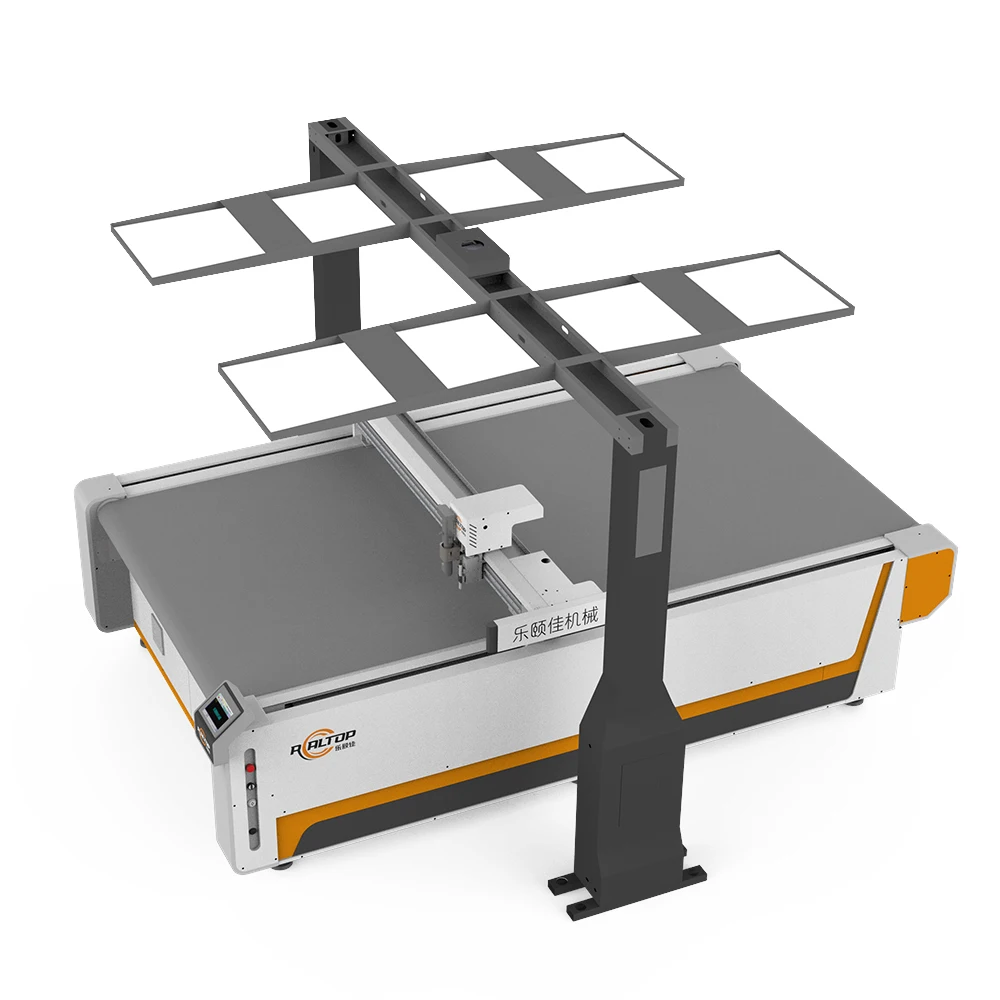
| Control System | PLC control panel |
| Servo Drive Options | Panasonic, Delta, Dorna (source value — verify against manufacturer catalog) |
| Profile Formats | PLT, DXF, AI, PDF |
| Voltage Options | 110V, 220V, 380V |
| Software Languages | English, Russian, Italian, Chinese (custom languages available) |
| Safety Features | Infrared sensor device, Emergency stop |
| Machine Frame | Heavy-duty, precision-ground surface |
| Machine Size | 3300×2100×1350 mm |
| Certification | CE (verify specific scope before order) |
Application Suitability
| Application | Material or Output |
|---|---|
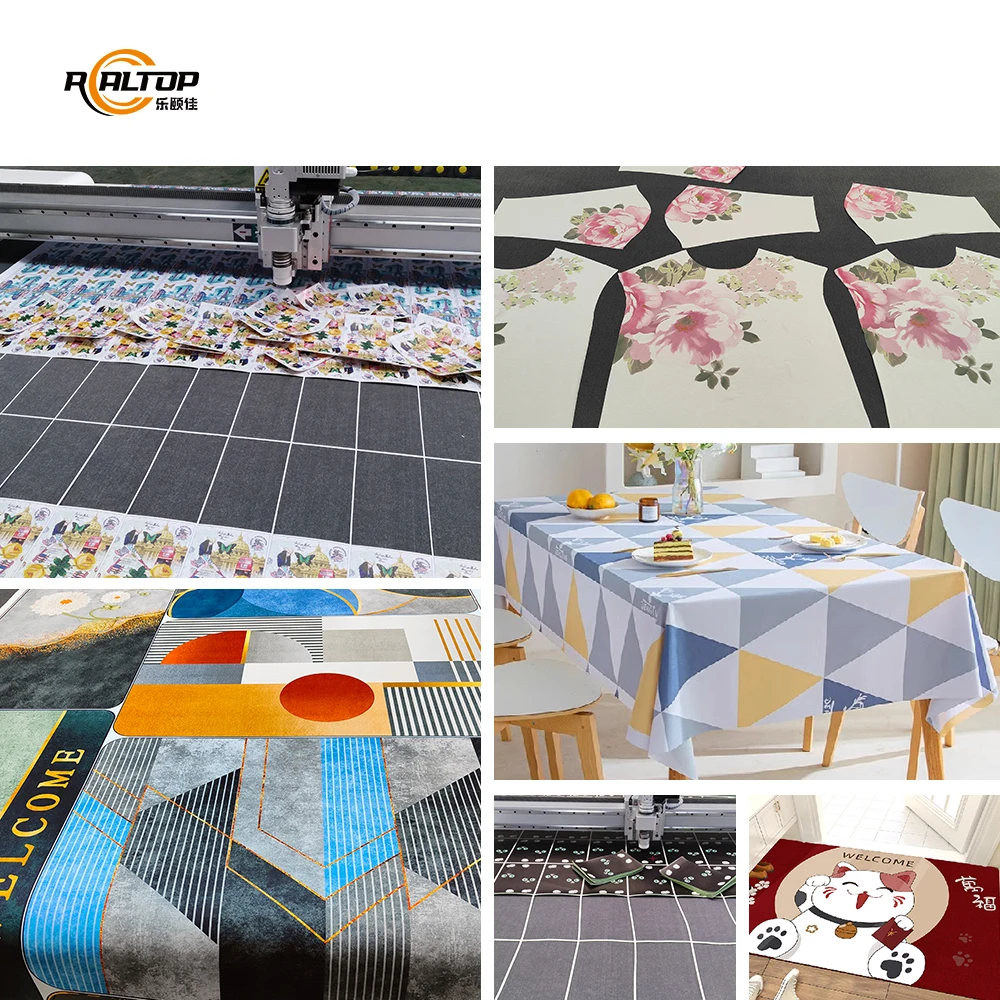
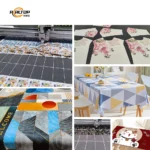
| Apparel and knitwear cutting | Multi-layer polyester, spandex blends, lace, technical sportswear fabrics |
| Automotive interior trimming | Seat cover fabrics, floor carpets, PVC floor mats, headliner textiles |
| Home textile production | Sofa upholstery fabrics, blackout curtains, woven rugs, mattress ticking |
| Composite material processing | Carbon fiber prepreg, aramid weaves, fiberglass cloth layup |
Why Cutting Thickness Claims Mean Nothing Without Your Fabric Sample
A 30 mm cutting depth on rigid foam tells you nothing about how the same blade handles a four-layer stack of coated stretch knit.
I spent a week at a sportswear factory outside Jinan re-tuning a machine that had been specified purely on working area and maximum thickness. The buyer sent standard polyester for sample testing, and the oscillating knife cut cleanly at full speed. When production started on their actual elastane-coated composite, the blade dragged and left frayed edges across every piece. The line stopped until we adjusted oscillation frequency, blade angle, and vacuum pressure together. That is why CNC oscillating knife cutting table specifications only become meaningful when tested against the exact roll stock you run [NEED_CITE: textile cutting edge quality standards for stretch and coated fabrics].
Matching Blade Behavior to Fabric Construction
Woven cotton and ripstop nylon respond completely differently to an oscillating blade. Tight weaves demand high-frequency oscillation with a straight blade to shear fibers cleanly, while loose knits require a slower stroke with a slight blade angle to avoid catching loops and pulling yarns. The seven tool options on this table let a garment factory switch from a driven rotary knife for single-ply silk to a pneumatic oscillating knife for multi-layer denim without swapping the entire head assembly. Selecting the correct tool is the single most important decision in the CNC oscillating knife cutting table specifications sheet.
Vacuum Zoning That Holds Small Pattern Pieces
Flexible fabrics lift off the table the moment the blade exits a cut, especially on small pieces like collar stands or pocket flaps. The aluminum bellows vacuum surface divides into independent zones so suction concentrates under the active cutting area. When a 1600×2500 mm bed is cutting a nest of fifty small apparel pieces, only the zones directly beneath the knife head stay at full vacuum, keeping fabric flat without wasting pump capacity on empty table space [NEED_CITE: vacuum hold-down principles for flexible sheet material cutting].
Reading the Numbers That Actually Matter
The ±0.1 mm repeat positioning accuracy governs whether pattern pieces from successive nests will align during sewing — a tolerance drift of even half a millimeter across a fifty-piece marker causes mismatched seams downstream. Cutting speed of 0–2000 mm/s is the traverse rate, not the effective production speed; actual throughput depends on marker complexity, corner count, and fabric resistance. The 9 kW vacuum pump must be matched to the porosity of your material — a tightly coated PU fabric needs far less suction than an open-weave mesh, and running the pump flat out on non-porous material only wastes energy and generates noise. Profile format support for PLT, DXF, AI, and PDF means the machine accepts output from most nesting software without an intermediate conversion step.
What Happens When the Wrong Tool Meets Your Fabric
Specifying a drag knife for a material that requires oscillation produces crushed edges on foam-backed laminates and delaminated layers on coated technical textiles. Insufficient vacuum zoning allows small cut pieces to shift during the final pass, ruining an entire nested marker. Language and voltage mismatches discovered at installation delay commissioning by weeks while transformers are sourced and manuals translated [NEED_CITE: industrial equipment voltage and frequency requirements by export destination]. These are not theoretical failures — they are the most common callbacks I handle.
Why This Configuration Process Differs
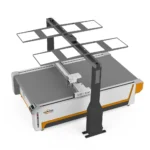
The design team in Jinan reviews your fabric samples before recommending a tool head, rather than assigning a default oscillating knife based on category alone. Tool head and vacuum table zoning are specified per material type and daily volume, not copied from a catalog page. CCD camera positioning can be added for printed contour cutting when your workflow requires matching cut lines to pre-printed registration marks. Software file format compatibility is verified against your existing nesting output before the order is confirmed. Voltage, plug type, and PLC control language are locked in writing before production begins, eliminating the arrival-day surprises that stall commissioning.
Documentation & Verification
- Machine specification sheet listing confirmed tool heads and vacuum zone layout for your fabric
- Electrical schematic showing voltage, breaker rating, and cable entry for your facility
- Sample cutting report on your actual roll stock with edge quality photographs
- Tool head and table configuration list matched to your material thickness and type
- Software license with confirmed PLT, DXF, AI, or PDF file format compatibility
- Operation manual in your selected control language with maintenance intervals
Installation, Commissioning & Support
- The 3300×2100×1350 mm frame requires a level concrete floor with anchor points at each leveling foot
- 9 kW vacuum pump draws significant current — confirm a dedicated circuit before the machine ships
- Heavy-duty frame arrives partially assembled; gantry and tool carriage are mounted on site
- PLC control panel is set to your confirmed language before dispatch, verified during first power-on
- Initial cutting parameters are tuned using your fabric stock during the commissioning visit
- Spare blade and wear-part list provided with recommended reorder intervals for your material
What We Need to Quote Accurately
Send us a sample roll or swatch of the actual fabric you cut most often, including any coating, backing, or lamination. Tell us your typical marker length, the number of plies you stack, and your daily piece output target. Confirm your facility voltage and frequency, the control language your operators read, and whether your current nesting software exports in PLT, DXF, AI, or PDF format. If printed contour recognition is part of your workflow, share a sample printed sheet so we can verify camera tracking before the order is placed.
Frequently Asked Questions
Q: How do I select the correct tool head for my fabric type?
A: The choice depends on fabric construction, ply count, and whether the material has a coating or backing. Oscillating knives suit most multi-layer woven and knit stacks, driven rotary knives work for single-ply delicate fabrics, and kiss cutting tools handle adhesive-backed materials. We test each option on your actual sample before confirming the configuration.
Q: Does vacuum table zoning affect small piece stability?
A: Yes. When cutting small apparel pieces like pocket bags or collar components, concentrated vacuum directly under the cutting zone prevents fabric lift without requiring the entire 1600×2500 mm surface to draw full suction. Proper zoning is confirmed during sample cutting on your material.
Q: What cutting speed should I expect on my fabric?
A: The 0–2000 mm/s range is the maximum traverse rate. Actual production speed depends on marker geometry, corner density, and fabric resistance. We measure real throughput during the sample cutting phase so you have a verified number for your production planning.
Q: Will the software accept my existing nesting files?
A: The control software reads PLT, DXF, AI, and PDF profiles. Before the order is placed, we request a sample file from your nesting system and run it through the machine software to confirm geometry import, layer recognition, and toolpath generation without manual correction.
Q: Can voltage and control language be customized for my country?
A: Voltage options include 110V, 220V, and 380V, and the PLC control panel can be set to English, Russian, Italian, Chinese, or other languages on request. Both are confirmed in writing before production starts so the machine matches your facility on arrival.


商品评价
Clear filtersThere are no reviews yet.