






Fast Shipping
Carrier information

20k products
Payment methods

24/7 Support
Unlimited help desk

2-day Delivery
Track or off orders
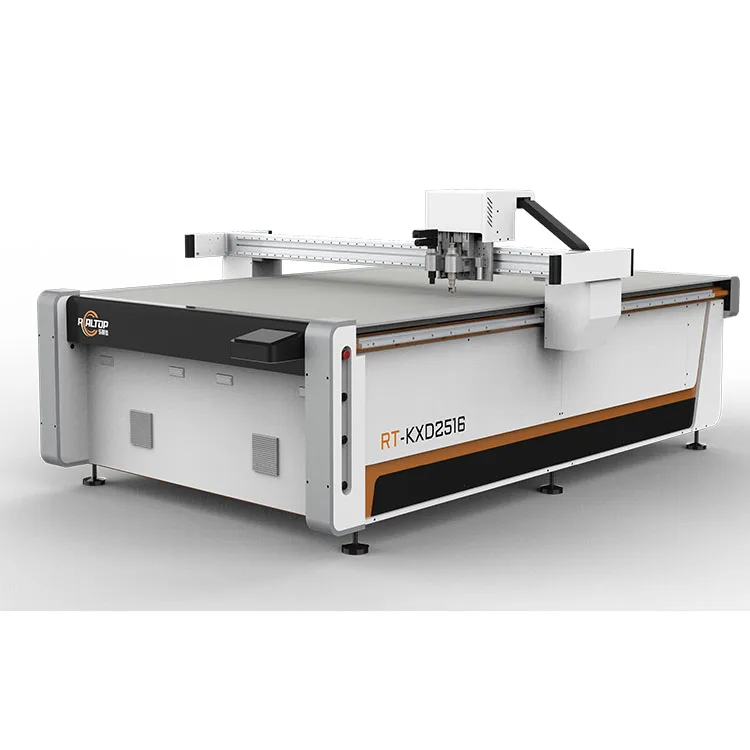
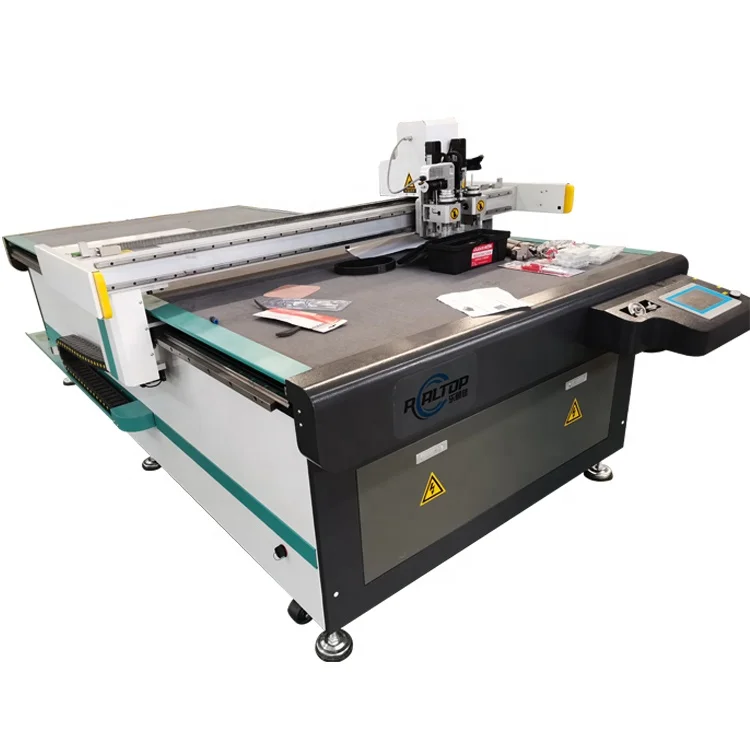
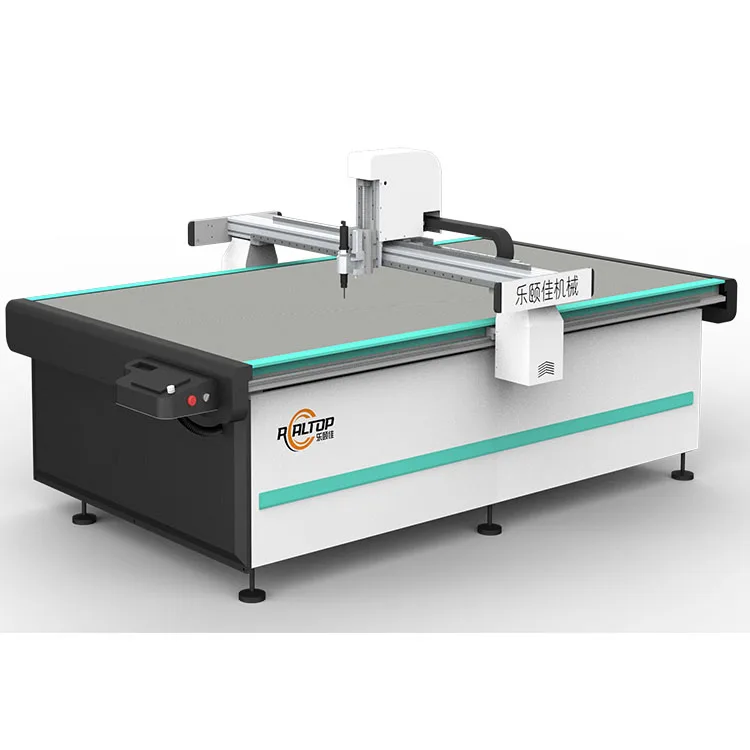
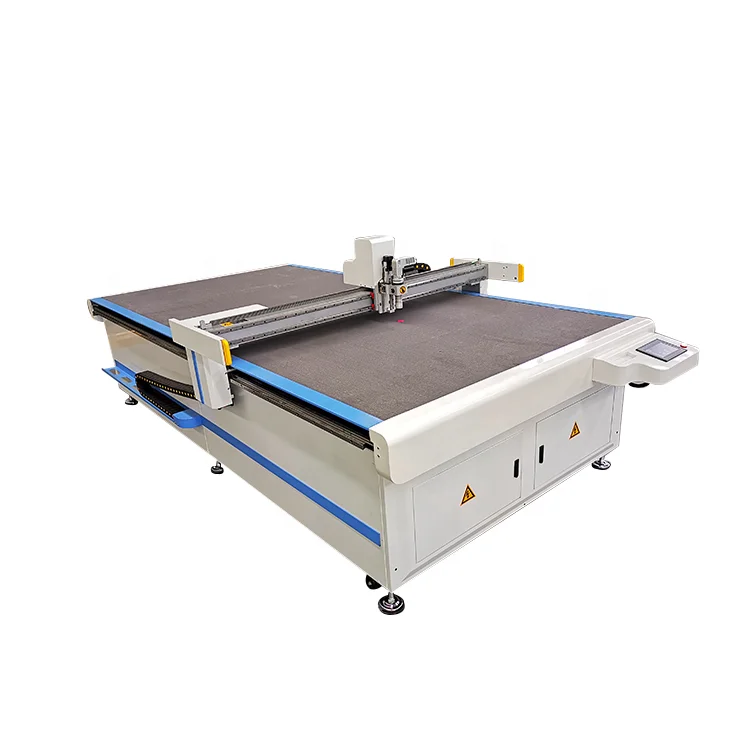
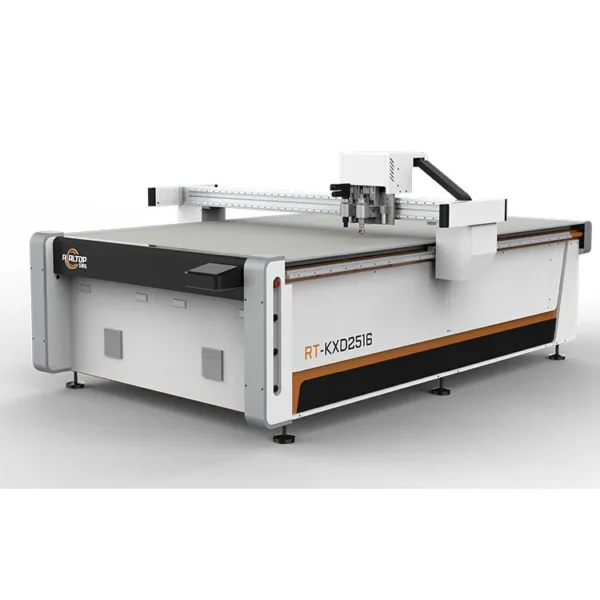
Tool Head & Table Configuration Per Material — Every packaging board, corrugated sheet, or sticker stock requires a distinct combination of oscillating knife frequency, creasing wheel pressure, and vacuum zoning, which is why this CNC oscillating knife cutting table is specified around the material rather than the machine size alone.
Technical Specifications
| Parameter | Value |
|---|---|
| Model | RT–R2513 / RT-D2516 / RT-S2516 |
| Product Type | CNC Oscillating Knife Cutting Machine for Packaging and Cardboard |
| Working Area | 2500×1300 mm (RT–R2513) / 1600×2500 mm (RT-D2516 / RT-S2516) |
| Machine Size | 3550×1910×1400 mm (RT–R2513) / 3450×2300×1250 mm (RT-D2516 / RT-S2516) |
| Cutting Tools | Oscillating knife, Creasing tool, Kiss-Cut Knife Tool, Round punch |
| Fixing Method | Vacuum system with aluminum alloy honeycomb structure platform |
| Cutting Thickness | ≤18mm (basis to be confirmed by material and flute type) |
| Repeated Accuracy | <0.05mm |
| Rated Power | 9KW (source value — verify against manufacturer catalog) |
| Voltage | 380V (source value — verify against manufacturer catalog) |
| Servo Motor | Dongling servo / Delta servo motor (configurable) |
| Transmission Method | Ethernet port |
| Guide Rail | Imported straight-line square guide |
| Vacuum Pump | 7.5kW |
| Profile Format | DXF, OLT, PDF, AI |
| Safety Device | Infrared sensors and emergency stop devices |
| Felt Belt | Wear-resistant anti-pull felt (composite fiber, tension strength increased by 35%) |
| Warranty | 1 year (except felt, knife blades) |
Application Suitability
| Application | Material or Output |
|---|---|
| Packaging carton sample making | Corrugated board (E-flute, B-flute), greyboard, folding carton stock |
| Short-run corrugated box production | Single-wall and double-wall corrugated cardboard, kraft paper board |
| Sticker and label finishing | Self-adhesive vinyl, PP paper, coated label stock, kiss-cut decals |
| Gift box and premium packaging | Greyboard, art paper, magnetic closure box materials |
| Billboard and signage substrate cutting | Foam board, honeycomb paper board, display cardboard |
Why the Vacuum Table Matters More Than the Working Area
Choosing a CNC oscillating knife cutting table based on working area alone is a common procurement mistake that surfaces only after installation, when small packaging samples lift off the table during high-speed contour cuts.
Buyers evaluating cardboard cutting plotters often focus on the maximum sheet size the machine accepts, but the real production constraint lies in how the vacuum table holds intricate die-lines, narrow flaps, and small sticker contours. A flatbed table with insufficient zoning leaves operators watching parts shift mid-cut, producing ragged edges and scrapped sheets [NEED_CITE: vacuum table zoning requirements for small packaging components]. The aluminum alloy honeycomb structure on the RT–R2513, RT-D2516, and RT-S2516 models is divided into independently controllable zones so that vacuum suction concentrates under the active cutting area, regardless of whether you are processing a full sheet of B-flute corrugated board or a small batch of business card layouts.
Multi-Tool Head Setup for Complete Packaging Workflow
A single packaging carton typically requires through-cutting, creasing, and perforating in one pass. This CNC oscillating knife cutting table carries an oscillating knife for full-depth cuts through corrugated structures, a creasing tool for precise fold lines, a kiss-cut knife for labels and stickers, and a round punch for registration or ventilation holes. The tool change happens within the same program cycle, eliminating the need for secondary operations on a separate creasing machine.
Edge Quality and Flute Integrity at Production Speed
Corrugated board demands that the oscillating knife slices cleanly through the liner and flute without compressing the structure. If the oscillation frequency is too low for the board density, the blade drags and crushes the flute profile, leaving a visible deformation along the cut edge. The imported straight-line square guide rails paired with the rack transmission system maintain <0.05mm repeated accuracy, which matters when multiple crease lines must align to within a fraction of a millimeter for the carton to fold square [NEED_CITE: edge quality standards for corrugated packaging die-cutting].
Reading the Specifications That Actually Affect Output
The rated power of 9KW drives both the tool head oscillation and the vacuum pump system, though the 7.5kW vacuum pump operates on its own circuit to maintain consistent suction under varying table loads. The cutting thickness specification of ≤18mm applies across the configured material range, but the practical depth depends on board density and flute configuration — a triple-wall corrugated sheet at 15mm will demand different oscillation parameters than a solid greyboard at the same thickness. The Ethernet transmission port allows direct file transfer from the nesting software to the machine controller, bypassing USB bottlenecks in multi-machine workshops. Software compatibility covers DXF, OLT, PDF, and AI profile formats, which addresses the workflow gap where buyers import existing CAD die-lines only to find the machine controller cannot parse them.
The Hidden Cost of an Incorrect Tool Head Match
Selecting a drag knife where an oscillating knife is needed results in the blade tearing through corrugated flute rather than slicing it, producing dust and delamination along the cut path. Operators then reduce cutting speed to compensate, which lowers throughput and increases blade wear. When the creasing wheel diameter does not match the board caliper, fold lines either score too shallow — causing the carton to crack during assembly — or press too deep, weakening the structural wall [NEED_CITE: creasing wheel selection for corrugated board thickness].
Why Sourcing from the Manufacturer Changes the Specification Conversation
In-house design and production covering both knife and laser cutting technologies means the cutting method is matched to the packaging material rather than forced into one platform. Tool head and table configuration are specified per material type and production volume before the order is confirmed, not selected from a fixed catalog page. CCD camera positioning is available for printed contour work on labels and packaging prototypes where registration marks must be tracked. Software compatibility is verified with the buyer’s existing file format before shipment, reducing integration delays. Voltage, control language, and plug configuration are confirmed to match the destination workshop, and sample cutting on the buyer’s own cardboard stock is completed before commitment.
Documentation & Verification
- Machine specification sheet listing exact tool head configuration and vacuum zone layout
- Electrical schematic confirming voltage and circuit requirements for your facility
- Sample cutting report on your specific corrugated board and label stock before dispatch
- Tool head and table configuration list matched to your material thickness range
- Software license and file format compatibility note for DXF and AI imports
- Factory test record documenting repeated accuracy and crease alignment verification
Installation, Commissioning & Support
- Confirm 380V three-phase supply with dedicated circuit for the 7.5kW vacuum pump
- Verify floor leveling within tolerance for the 3550×1910mm machine footprint (RT–R2513)
- Ethernet port setup for direct file transfer from your existing CAD workstation
- First-run parameter calibration for your specific corrugated flute type and greyboard density
- Oscillating blade replacement training with the 10 included blades for initial production
- Felt belt tension inspection and guide rail lubrication schedule for the imported square rails
What We Need to Specify Your Machine Correctly
To configure the right cutting table for your packaging workflow, share the specific board types you process — including flute profile, caliper, and whether you run coated or uncoated stock. Confirm your typical sheet size and whether you need full-sheet cutting or primarily sample-sized prototypes. Let us know your workshop voltage and frequency, the control language your operators require, and whether your existing CAD files are in DXF or another format so we can test compatibility before build.
Frequently Asked Questions
Q: How do I choose between oscillating knife and drag knife for different cardboard densities?
A: Oscillating knives slice through corrugated flute structures cleanly by vibrating the blade at high frequency, which prevents compression and dust. Drag knives are suited to thinner, non-fluted materials like sticker vinyl and PP paper where a continuous pull-cut produces acceptable edges. For mixed workflows running both corrugated board and label stock, both tools are configured on the same head.
Q: Can the vacuum table hold small intricate packaging samples without lifting at the edges?
A: The aluminum alloy honeycomb platform uses zone-based vacuum control. When cutting small parts, suction concentrates under the active cutting zone rather than distributing across the full table surface. This prevents narrow flaps and small sticker contours from lifting during high-speed passes, which is the most common cause of ragged edges on intricate die-lines.
Q: What is the maximum cutting thickness for corrugated board and does it affect cutting speed?
A: The configured cutting thickness is up to 18mm, though practical depth depends on flute profile and board density. Triple-wall corrugated at maximum thickness requires reduced feed rates and adjusted oscillation frequency to maintain flute integrity. Request a sample cutting report on your specific board to verify edge quality at your required production speed.
Q: What file formats does the included carton nesting software accept?
A: The software supports DXF, OLT, PDF, and AI profile formats. Before order confirmation, we test import of your existing CAD die-lines to verify that nesting, tool path assignment, and crease line recognition work without manual redrawing. This prevents workflow disruption when integrating the machine into your current design process.


商品评价
Clear filtersThere are no reviews yet.