

Fast Shipping
Carrier information

20k products
Payment methods

24/7 Support
Unlimited help desk

2-day Delivery
Track or off orders
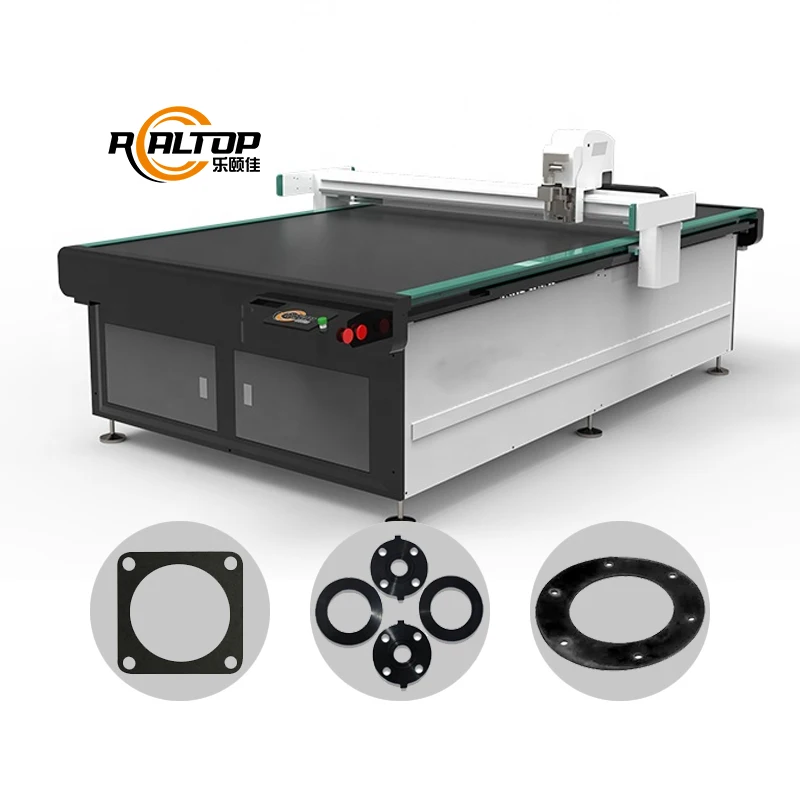
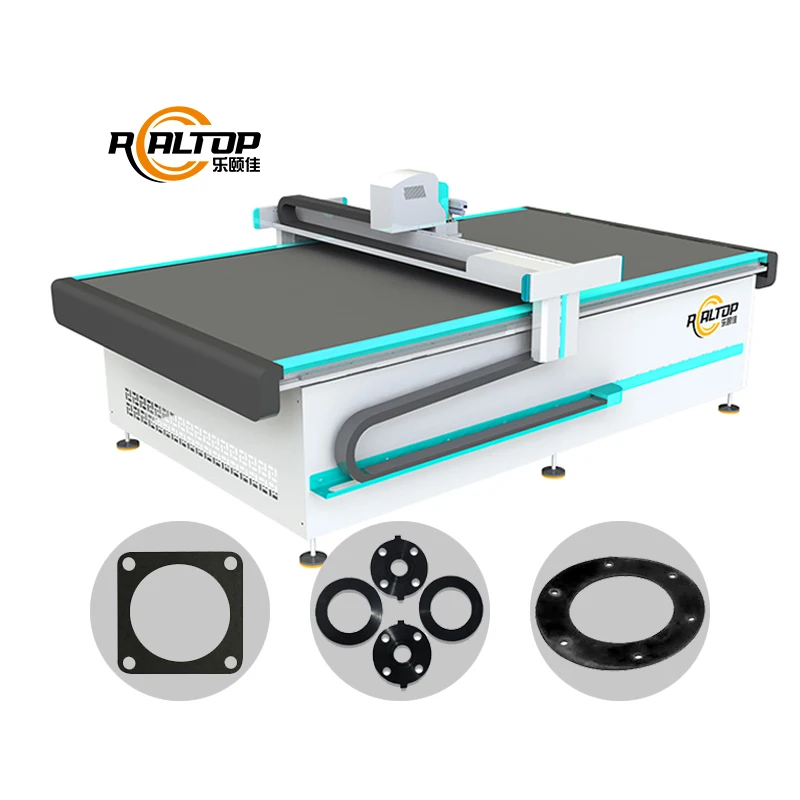
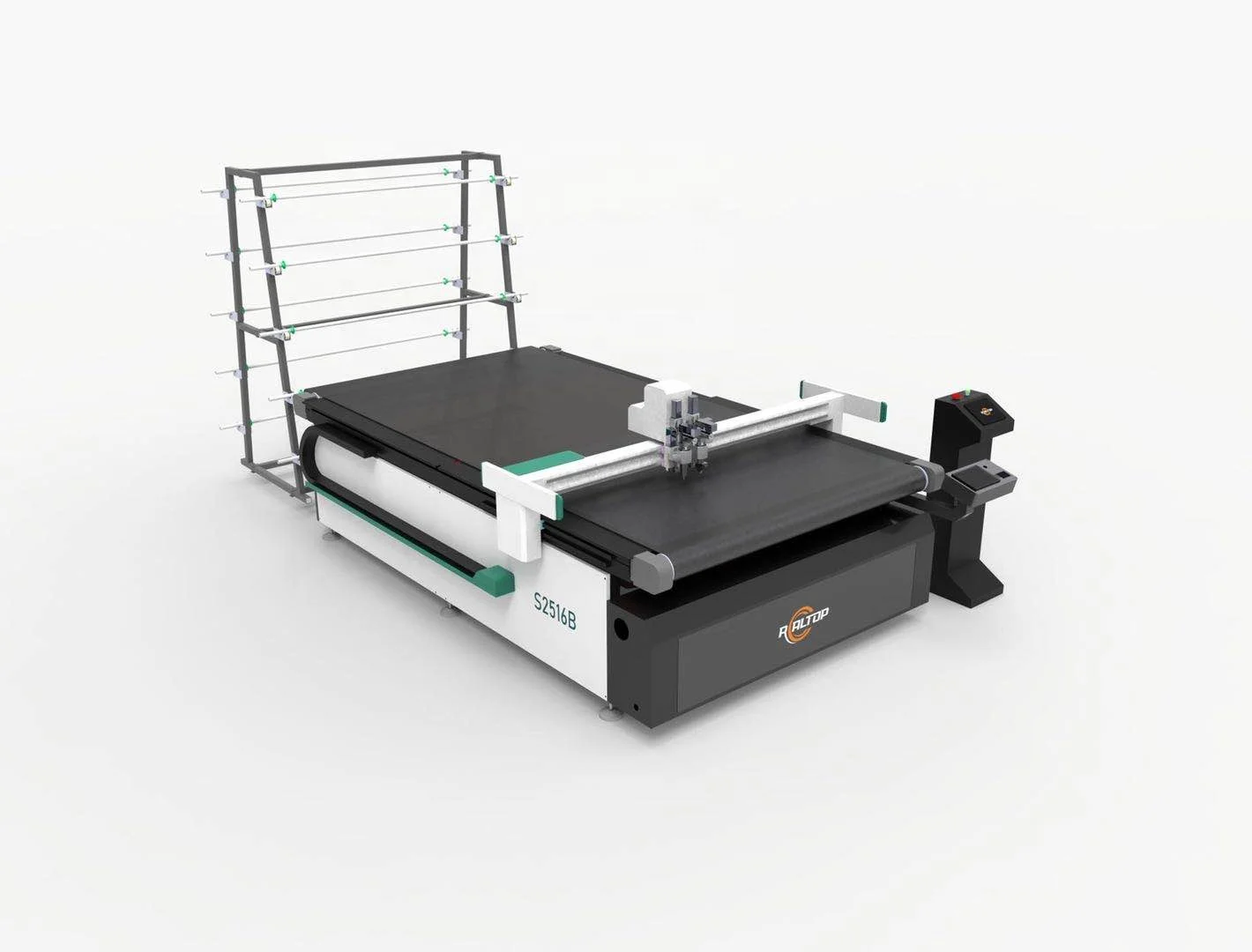
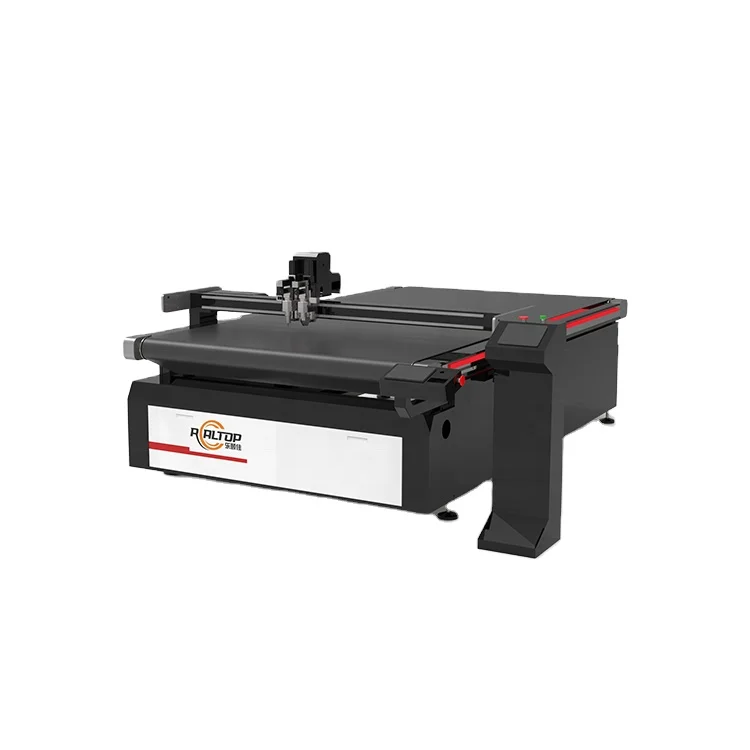
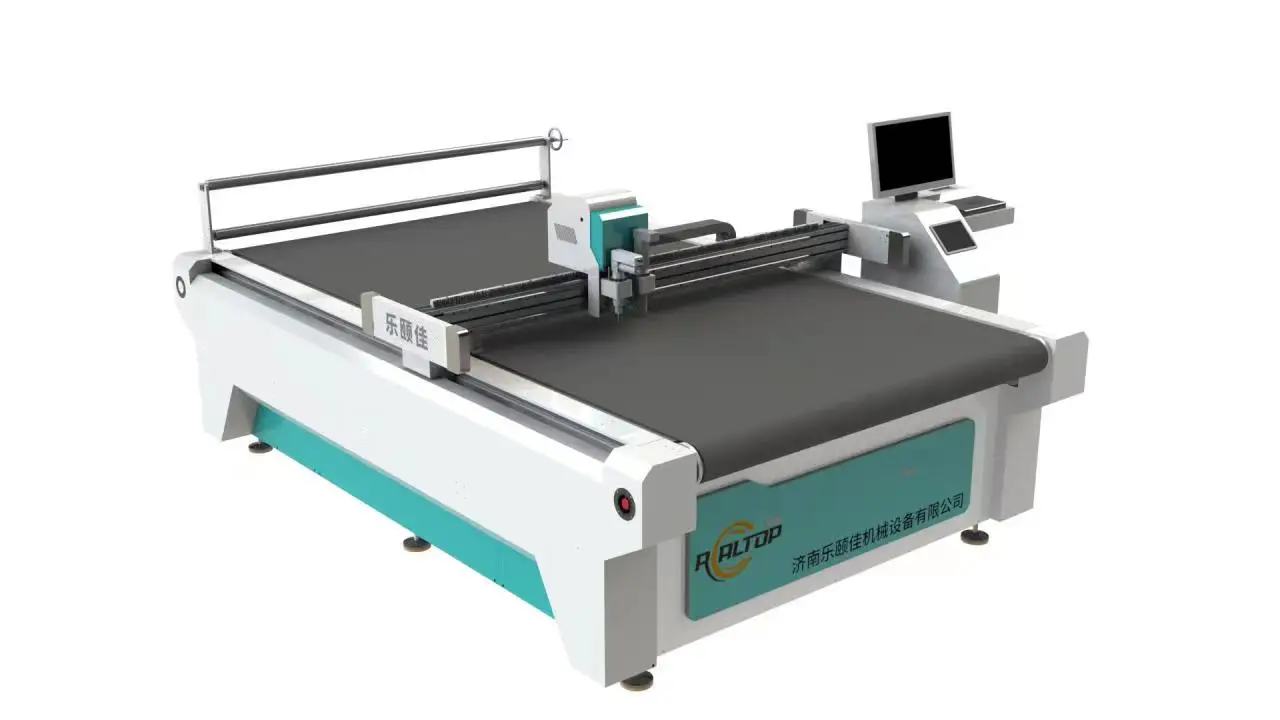
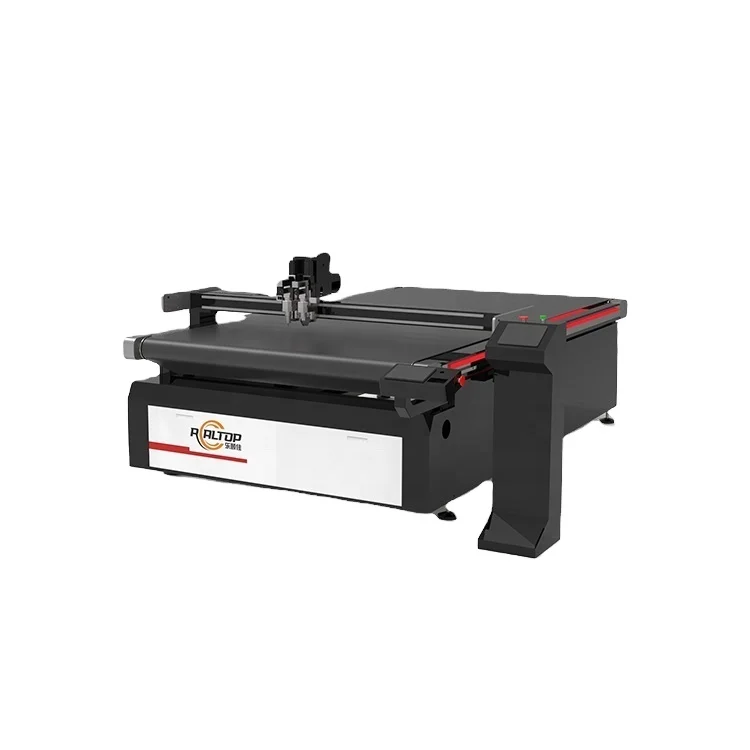
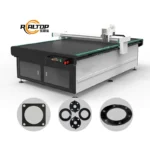
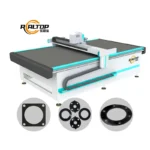
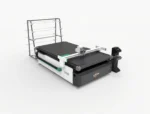
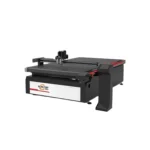
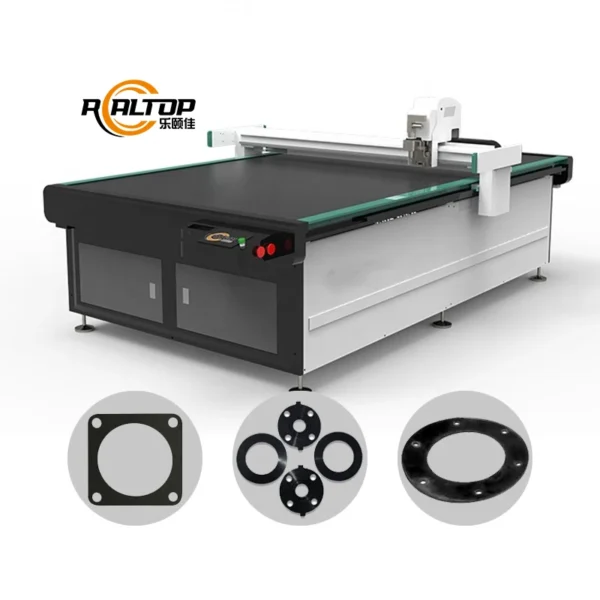
Swiss Knife System Matched to Material — The RT-D2516/RT-S2516 CNC oscillating knife cutting machine pairs a Swiss-imported vibrating blade with a 7.5 kW vacuum table to hold gasket stock flat, letting you cut rubber, silicone and composite sheets without edge crush or material lift.
Technical Specifications
| Parameter | Value |
|---|---|
| Model | RT-D2516/RT-S2516 |
| Product Type | CNC Oscillating Knife Cutting Machine |
| Working Area | 1600 × 2500 mm |
| Machine Size | 3450 × 2300 × 1250 mm |
| Rated Power | 9 kW |
| Translational Velocity | 800–1200 mm/s |
| Cutting Speed | 200–800 mm/s (basis not stated in source — confirm block format / material / thickness) |
| Repeated Accuracy | ≤0.1 mm |
| Transmission System | Digital servo motor, linear guide, synchronous belt, ball screw (imported components) |
| Vacuum Pump | 7.5 kW |
| Working Table | Flat vacuum table with Germany-imported conveyor belt, auto feeding |
| Guide Rail | Taiwan Hiwin rail |
| Servo Motor | Delta servo motor |
| Tool Head | Swiss imported knife: vibration full cutting, vibration half cutting, cursor location |
| Safety Device | Infrared sensors |
| Instruction System | HP-GL compatible format |
| Voltage | 380V ± 10% |
| Standards | CE declaration where applicable |
Application Suitability
| Application | Material or Output |
|---|---|
| Industrial gasket and seal cutting | Rubber, silicone, compressed fiber, cork-rubber composite sheets |
| Automotive interior trim production | Foam, leather, sponge composite leather for headliners and door panels |
| Flexible packaging and insulation | PVC, soft glass, silicone rubber sheets |
| Non-metallic flat stock fabrication | Leather, clothing flexible materials, composite panels |
Why "Cutting Speed" Means Nothing Without Your Material in Hand
Every gasket supplier has seen a machine quote that promises 800 mm/s cutting speed, only to discover the number came from slicing thin PVC. When the same blade hits a 6 mm graphite-steel laminate, the oscillation stalls and the edge tears. The RT-D2516/RT-S2516 CNC Oscillating Knife Cutting Machine specifications only become meaningful once your actual stock is on the table. [NEED_CITE: gasket material density and compressibility affect oscillating knife performance]
I watched a buyer specify a flatbed cutter based solely on working area, then discover the vacuum zoning could not hold small O-ring profiles down during the final pass. The parts lifted, the blade chattered, and an entire shift was lost to re-cuts. That is why sample cutting on the buyer’s own material must come before any commitment.
Blade Oscillation and Material Response
The Swiss-imported knife head on this CNC oscillating knife cutting machine delivers vibration full cutting and vibration half cutting modes. Full cutting drives the blade through the entire sheet thickness in a single pass — suited for dense rubber and compressed fiber gasket stock. Half cutting scores the surface layer without penetrating the backing, which is used for kiss-cut gasket assemblies where the release liner must stay intact. Cursor location pins the starting point so the software can register the sheet edge before the first cut.
Vacuum Hold-Down and Small Part Stability
A 7.5 kW vacuum pump pulls air through the flat table to clamp material during cutting. For large gasket sheets this is straightforward, but when the nesting software lays out dozens of small flange gaskets the suction must reach every zone. The Germany-imported conveyor belt works with the auto-feeding system to advance sheet stock between cuts, reducing manual repositioning. When zoning is insufficient for the smallest part in the nest, that part lifts and the blade produces a ragged edge instead of a clean profile. [NEED_CITE: vacuum table zoning requirements for small gasket profiles]
Reading the Specs That Actually Matter on the Shop Floor
Repeated accuracy of ≤0.1 mm means successive gasket cuts land within one-tenth of a millimeter of each other — critical when bolt-hole patterns must align with flange faces after stacking. The Delta servo motor and Taiwan Hiwin rail combination controls carriage movement along both axes, and the ball screw transmission removes the backlash that belt-only systems introduce over long runs. At a translational velocity of 800–1200 mm/s the head repositions between cut paths quickly, but actual cutting speed depends on material density and thickness. HP-GL compatible format means the instruction system accepts files from most CAD nesting software without a proprietary translator layer. Voltage at 380V ± 10% suits industrial three-phase supply in most export markets, though frequency and plug type must still be confirmed against the destination country’s standards.
The Hidden Cost of Skipping Material Trials
Choosing the wrong tool head for a composite gasket material produces crushed edges on fiber layers and delamination at the metal-reinforcement interface. A blade rated for soft silicone will chip instantly on aramid fiber, and replacing the full knife assembly mid-shift is not a five-minute job. Voltage mismatch between the machine’s 380V configuration and a 440V local supply can trip breakers or burn the servo driver before the first sheet is cut. Software that cannot import your existing DXF or PLT nesting files forces the operator to redraw every gasket profile from scratch. [NEED_CITE: tooling mismatch and material damage in oscillating knife cutting]
Why Buyers Source This Machine Here
In-house design covers both oscillating knife and laser cutting technologies, so a gasket producer can match the cutting method to the material rather than forcing one method across every stock type. Tool head and table configuration are specified per material and production volume before the order is locked. CCD camera positioning is available for printed contour work where gaskets must align with pre-printed registration marks. Software compatibility — including file format and nesting workflow — is confirmed before production starts. Sample cutting on the buyer’s own material generates a cutting report that shows edge quality, cycle time and blade wear before any commitment is made. Voltage, control language and plug configuration are customized to the destination market so the machine runs on arrival without an electrician rewiring the panel.
Documentation & Verification
- Machine specification sheet listing RT-D2516/RT-S2516 working area, tool head and vacuum configuration
- Electrical schematic and voltage confirmation matching your facility’s three-phase supply
- Tool head and table configuration list matched to your gasket material type and thickness
- Sample cutting report on your own rubber, silicone or composite stock before order
- Factory test record documenting repeatability and cut-edge quality at rated speed
- Operation and maintenance manual with spare parts list for Swiss knife assemblies
Installation, Commissioning & Support
- Floor space of at least 4000 × 3000 mm required for the 3450 × 2300 mm machine footprint plus operator clearance
- Dedicated 380V ± 10% three-phase circuit with breaker rated for the 9 kW total draw
- Machine ships as a single flatbed unit; vacuum table and carriage require on-site leveling
- First-run commissioning includes vacuum zoning test and servo calibration on your gasket stock
- Operator training covers HP-GL file import, nesting setup and Swiss knife blade change procedure
- Spare Swiss knife blades and Hiwin rail grease included in the initial parts kit
What We Need to Quote Accurately
Send us the gasket material type, sheet thickness, and maximum sheet dimensions you run daily. Tell us your local voltage and frequency so we configure the electrical panel before shipment. If you have existing nesting files in DXF, PLT or another format, share a sample so we confirm software compatibility before the order.
Frequently Asked Questions
Q: How do I choose the right knife blade for my gasket material?
A: Blade selection depends on material density, fiber content and thickness. We run sample cuts on your actual stock — rubber, silicone, compressed fiber or composite — and document which oscillation mode and blade geometry produce a clean edge without delamination or crush. That report becomes the baseline configuration for your machine.
Q: Will the vacuum table hold small gasket parts flat during cutting?
A: The 7.5 kW pump generates strong suction across the flat table, but small parts near the sheet edge can lift if zoning is not matched to the nest layout. We review your typical nesting pattern during the sample phase and adjust zone boundaries so every profile, including narrow flange gaskets, stays clamped through the final cut.
Q: Can the CCD camera track printed marks at full production speed?
A: CCD contour recognition is available for jobs that require alignment to pre-printed registration marks. We test tracking accuracy on your printed material at production cutting speed to confirm the camera reads each mark before the knife engages. If your ink density or mark size falls outside the readable range, we flag it before the order.
Q: What voltage and language options are available for export?
A: The standard configuration runs on 380V ± 10% three-phase power, but voltage, plug type and control panel language are confirmed against your local standards before production. We supply an electrical schematic showing the exact configuration so your electrician can prepare the circuit before the machine arrives.


商品评价
Clear filtersThere are no reviews yet.