


Fast Shipping
Carrier information

20k products
Payment methods

24/7 Support
Unlimited help desk

2-day Delivery
Track or off orders
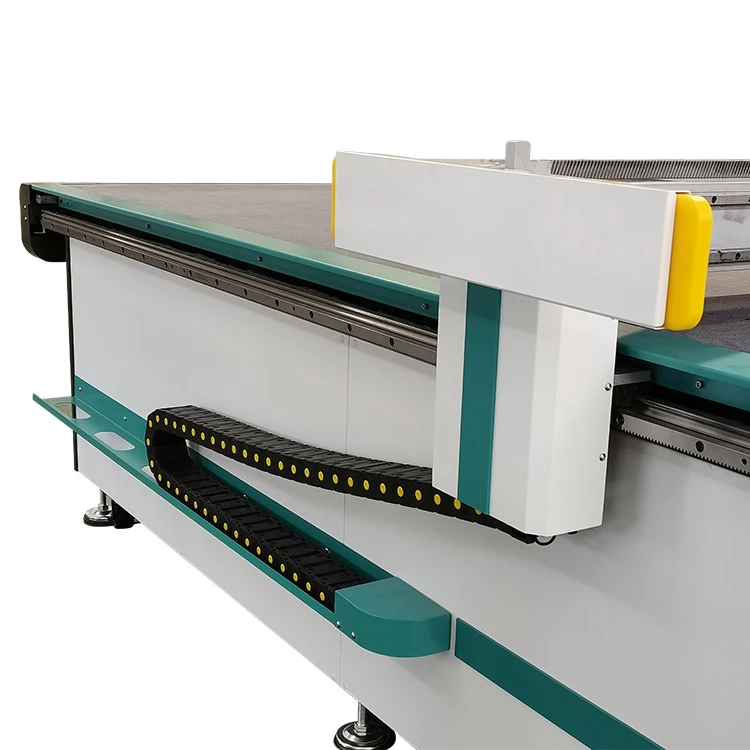
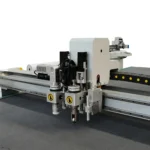
Tool Head Matched to Material — The RT-D2516/RT-S2516 ships with Swiss imported oscillating and drag knife options configured after reviewing your specific corrugated board grade, foam density or gasket compound, preventing the tool-to-material mismatch that shuts down a packaging line.
Technical Specifications
| Parameter | Value |
|---|---|
| Model | RT-D2516 / RT-S2516 |
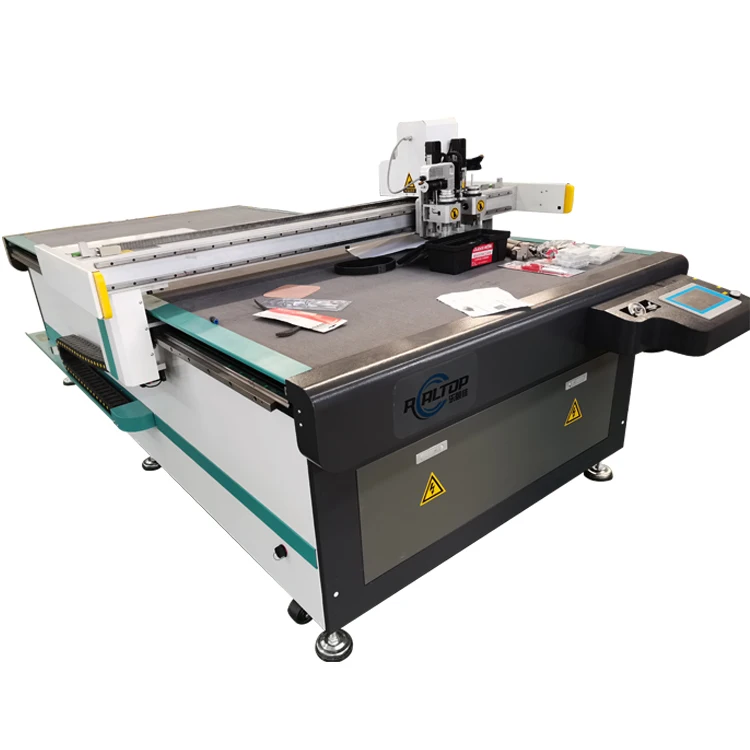
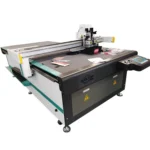
| Product Type | CNC Oscillating Knife Cutting Machine |
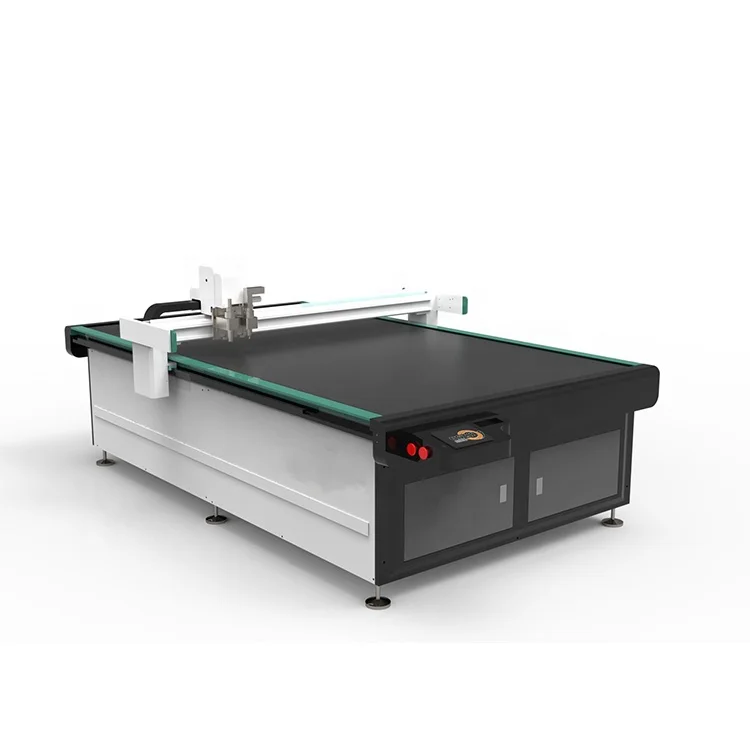
| Working Area | 1600 × 2500 mm |
| Overall Dimensions | 3450 × 2300 × 1250 mm |
| Rated Power | 9 kW |
| Vacuum Pump | 7.5 kW |
| Table Type | Flat working table with vacuum and auto feeding |
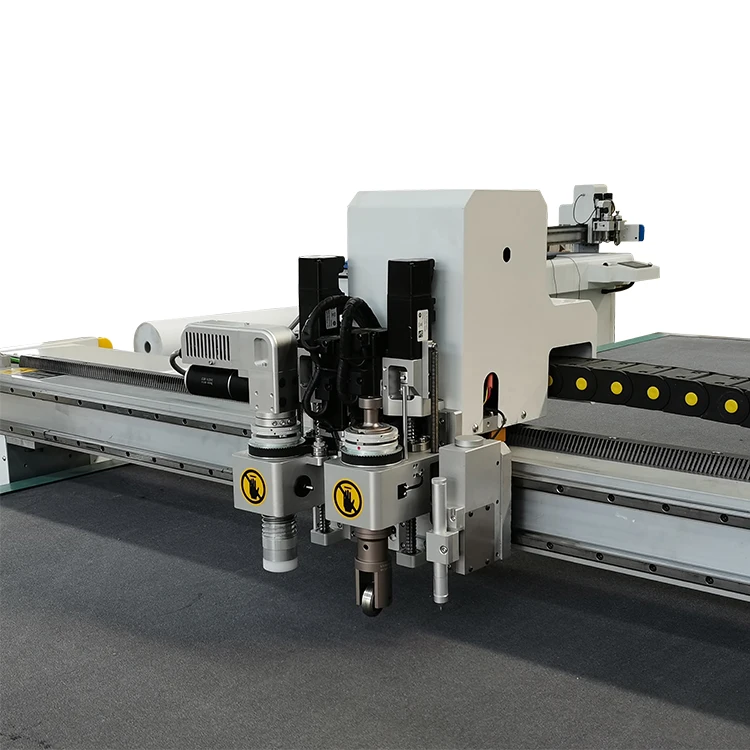
| Multifunctional Head | Swiss imported knife with vibration full cutting, vibration half cutting and cursor location |
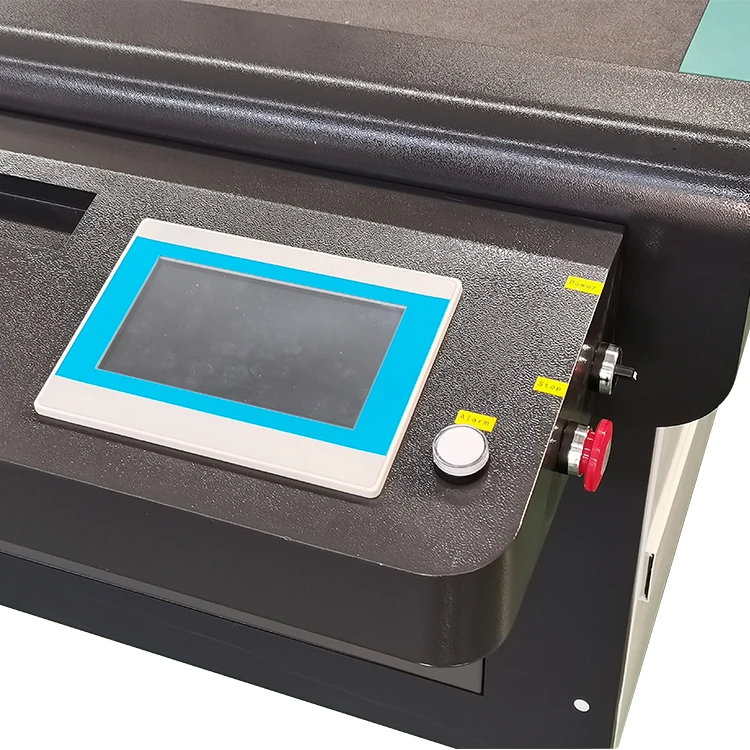
| Safety Device | Infrared sensors |
| Translational Velocity | 800–1200 mm/s |
| Cutting Speed | 200–800 mm/s (according to different cutting materials) |
| Repeated Accuracy | ≤0.1 mm |
| Transmission System | Digital servo motor, linear guide, synchronous belt, ball screw (imported) |
| Servo Motor | Japanese Yaskawa |
| Linear Rail | Taiwan Hiwin |
| Conveyor Belt | Germany imported |
| Instruction System | HP-GL compatible format |
| Voltage | 380V ± 10% |
Application Suitability
| Application | Material or Output |
|---|---|
| Packaging sample making | Corrugated board, folding carton stock, honeycomb paper panels |
| Carton and box prototyping | Single, double and triple-wall corrugated, greyboard |
| Gasket fabrication | Compressed fibre, cork-rubber, non-asbestos sheet |
| Foam and seal cutting | PE, EVA, PU foam, EPDM sponge, closed-cell insulation |
| Flexible material processing | Leather, PVC, soft glass, silicon, rubber, composite textiles |
Why a Corrugated Board Cutting Machine Fails Before It Starts
Edge crush and delamination on double-wall board are almost never the machine’s fault — they are the tool head specification’s fault.
A packaging CNC cutting machine running single-face corrugated one week and BC-flute double-wall the next cannot use the same oscillating frequency, blade angle or downward pressure. When a buyer specifies a CNC oscillating knife cutting table based purely on bed size, the default tool setup rarely survives a switch to heavier stock. The blade deflects inside the flute structure, the top liner tears before the bottom liner parts, and the vacuum table struggles to hold a warped sheet flat. In our workshop, we started refusing to lock in a tool configuration until the buyer’s actual board samples had been cut, measured and photographed [NEED_CITE: tool head selection criteria for corrugated packaging grades].
Tool Head Selection Across Packaging Substrates
The multifunctional head on this CNC oscillating knife cutting table accepts Swiss imported blades for vibration full cutting, vibration half cutting and cursor location. For single-wall corrugated, a high-frequency oscillating stroke parts the liner and medium cleanly without crushing the flute profile. When the job shifts to dense greyboard or foam-backed gasket stock, the same head switches to a drag knife or creasing wheel path, eliminating the micro-vibration that would otherwise tear composite layers.
Vacuum Hold-Down and Conveyor Feeding
A 7.5 kW vacuum pump paired with a Germany imported conveyor belt provides continuous material feed across the 1600 × 2500 mm bed. The flat working table with vacuum and auto feeding is necessary when cutting nested carton blanks, where small offcuts tend to lift at translational velocities approaching 1200 mm/s. Zoned vacuum areas allow operators to isolate suction to the active cutting region, keeping thin film and silicon sheets flat without wasting pump capacity on empty table surface [NEED_CITE: vacuum zoning practices for flatbed digital cutting].
Reading the Specification Sheet for Real Production Impact
The Japanese Yaskawa servo motors and Taiwan Hiwin linear rails deliver a repeated accuracy of ≤0.1 mm across the full working envelope. For packaging sample making, that tolerance determines whether a crease line lands on the intended score or drifts into the flap, causing misaligned folds during short-run box assembly. The 9 kW rated power covers the simultaneous load of the oscillating head, vacuum pump and conveyor drive without tripping breakers during sustained cutting cycles. An HP-GL compatible instruction system lets the machine accept nesting files directly from common packaging CAD environments, avoiding a secondary translation step that can corrupt crease-and-cut layer assignments. Cutting speed ranges from 200 to 800 mm/s depending on material density, meaning a soft EVA foam gasket runs at the upper end while thick double-wall corrugated requires a slower pass to preserve flute integrity.
The Cost of Skipping the Sample Cut
When a packaging line goes down because a blade snaps mid-run on an unexpected board grade, the downtime cost dwarfs the blade itself. Wrong tool geometry produces ragged edges on foam, crushed flutes on corrugated, and frayed perimeters on woven composite — all of which push the finished carton or gasket out of tolerance [NEED_CITE: edge quality rejection rates in dieless sample making]. A buyer who locks in a CNC oscillating knife cutting table without a sample cutting report on their own material inherits the full risk of that mismatch.
Why Buyers Route Packaging Projects Through This Workshop
In-house design and production cover both knife and laser cutting technologies, so a packaging buyer can match the cutting method to board weight and coating rather than forcing one method onto every substrate. Tool head and table configurations are specified per material and production volume, documented in a configuration list that accompanies the machine. Software compatibility is confirmed before the order is released, preventing the HP-GL or DXF import failure that otherwise surfaces on the first production morning. Sample cutting on the buyer’s own corrugated, foam or gasket stock runs before commitment, generating a report that shows edge quality, cutting depth and cycle time on real material. Voltage, control language and plug type are locked in during specification review, so the 380V ± 10% supply on the shop floor matches the machine’s electrical schematic without a last-minute transformer scramble.
Documentation & Verification
- Factory test record run on buyer-supplied corrugated board and foam samples before dispatch
- Machine specification sheet listing actual RT-D2516/RT-S2516 working area, power and vacuum rating
- Electrical schematic with 380V ± 10% wiring diagram and Yaskawa servo drive parameters
- Tool head and table configuration list matching each approved material to blade type and vacuum zone
- Software licence and HP-GL file format compatibility note verified against buyer’s nesting CAD
- Packing photographs showing crate bracing, head lock and conveyor belt protection
Installation, Commissioning & Support
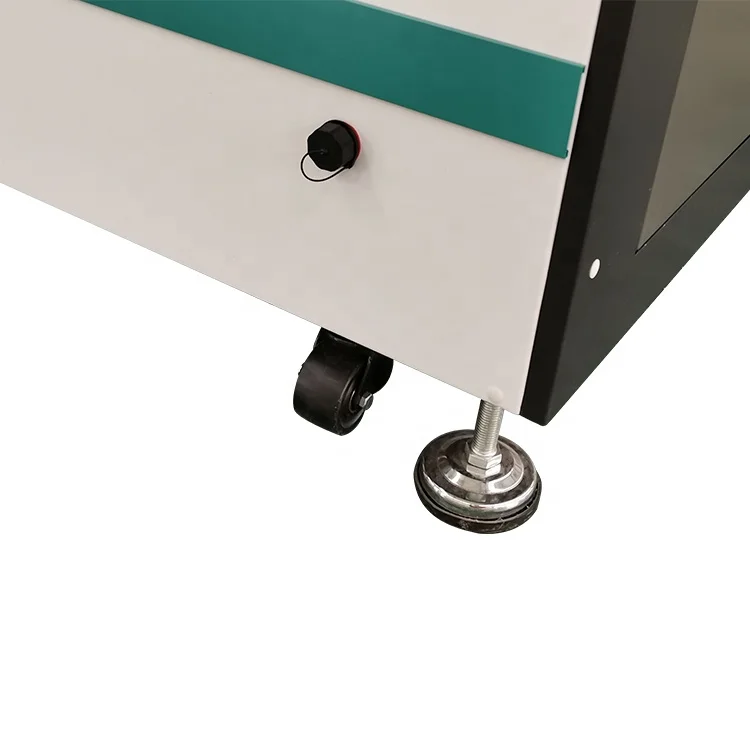
- Floor must sustain 3450 × 2300 × 1250 mm footprint plus operator clearance on three sides
- Dedicated 380V ± 10% circuit rated above 9 kW machine load plus 7.5 kW vacuum pump inrush
- Table arrives assembled; head carriage and gantry require alignment verification after transit
- First-run commissioning includes Yaskawa servo tuning and Hiwin rail preload check on-site
- Operator training covers tool change between oscillating, drag and creasing paths
- Spare blade and conveyor belt segment list provided against typical six-month consumption
- Maintenance schedule specifies Hiwin rail lubrication interval and vacuum pump filter check
What to Send With Your Inquiry
Share the board flute profile, gasket compound data sheet or foam density you actually run, along with the maximum sheet size and daily blank volume. Confirm the local voltage and frequency at the installation site, and the control language your operators need. If your existing CAD outputs a format other than HP-GL, include a sample file so nesting and crease-layer compatibility can be verified before quotation.
Frequently Asked Questions
Q: How do I decide between oscillating knife and drag knife for my board grade?
A: Oscillating knife suits thick corrugated and foam where a reciprocating stroke parts the material without crushing the core. Drag knife handles thin carton stock, gasket fibre and vinyl where a continuous pull yields a clean perimeter. The tool head selection is finalised after sample cutting on your actual substrate, not from a generic chart.
Q: Will the vacuum table hold small nested carton blanks flat at high speed?
A: The 7.5 kW pump feeds zoned vacuum areas across the 1600 × 2500 mm bed. Zoning lets the operator concentrate suction under the active sheet region, keeping small blanks from lifting at translational velocities up to 1200 mm/s. Zone configuration is confirmed during the sample cutting stage for your specific nesting layout.
Q: Can the CNC oscillating knife cutting table accept my existing packaging CAD files?
A: The instruction system reads HP-GL compatible format natively. If your CAD outputs DXF, PLT or another vector format, we verify import and crease-layer mapping before order confirmation. A software licence and file format compatibility note ships with the machine to document what was tested.
Q: What voltage and control language options are confirmed before shipment?
A: The standard supply is 380V ± 10%, which we match against your site electrical specification. Control language is selected during the quotation stage and recorded on the electrical schematic. Any deviation in local frequency or plug type is addressed before the machine leaves the factory.


商品评价
Clear filtersThere are no reviews yet.