


Fast Shipping
Carrier information

20k products
Payment methods

24/7 Support
Unlimited help desk

2-day Delivery
Track or off orders
Tool Head Flexibility — A single flatbed chassis configured with oscillating, rotary, pneumatic or kiss cutting tools matched to the buyer’s leather thickness and edge quality requirement rather than a fixed setup.
Technical Specifications
| Parameter | Value |
|---|---|
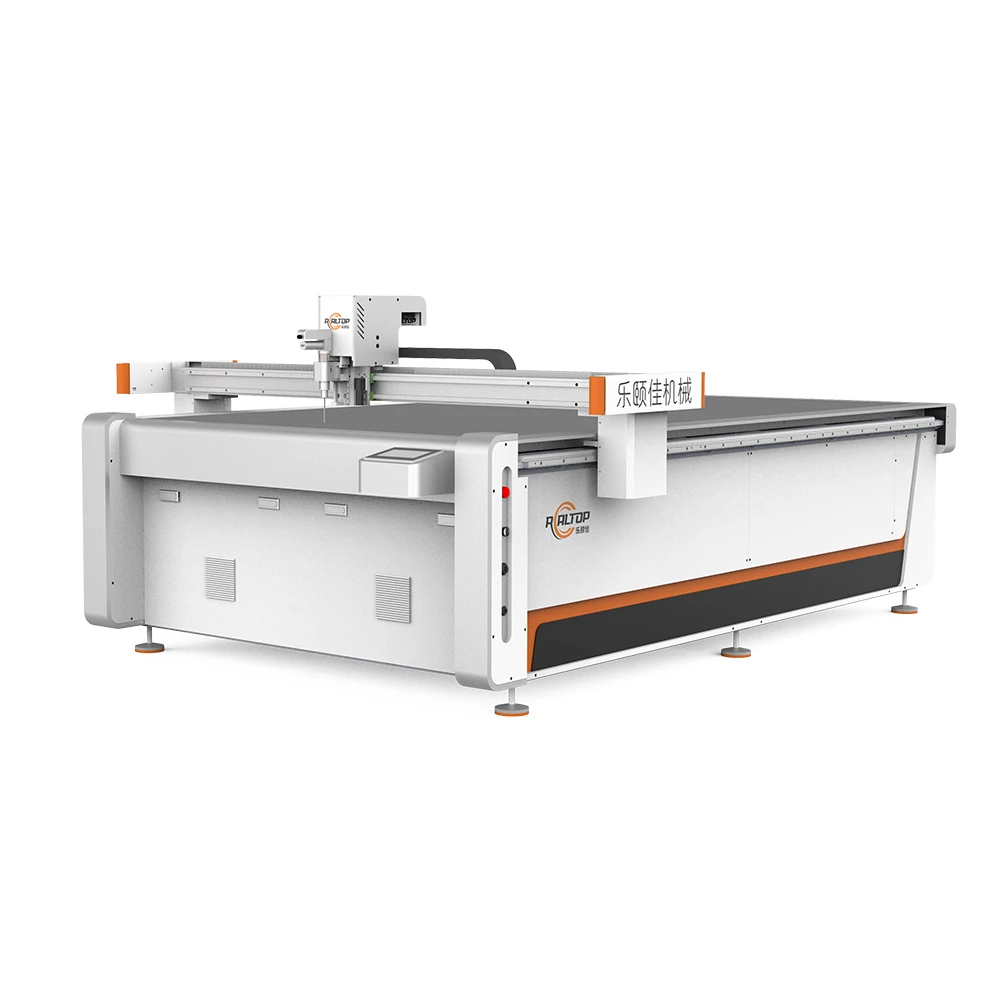
| Product Type | CNC Oscillating Knife Cutting Machine |
| Model | 1625 |
| Working Area | 1600 × 2500 mm |
| Machine Dimensions | 3300 × 2100 × 1350 mm |
| Tool Head Options | Oscillating knife, Driven rotary knife, Creasing wheel, Kiss cutting tool, Pneumatic knife, Milling tool, V groove knife |
| Cutting Speed | 0 – 2000 mm/s |
| Cutting Thickness | Up to 30 mm (basis to be confirmed by material density) |
| Cutting Accuracy | ±0.1 mm |
| Vacuum Pump | 9 kW |
| Vacuum Table | Aluminum bellows vacuum table |
| Servo Motor Options | Panasonic, Delta, Dorna |
| Control System | PLC control panel with optional display languages |
| CCD Camera | Available for contour recognition and positioning |
| File Format Support | PLT, DXF, AI, PDF |
| Voltage Options | 110V, 220V, 380V |
| Safety Device | Infrared sensor device and emergency stop device |
| Software Feature | Dedicated packaging box structure design software, Auto-Nesting System with camera-based defect detection |
| Certification | CE (declaration where applicable) |
Application Suitability
| Application | Material or Output |
|---|---|
| Leather goods and footwear | Genuine leather, synthetic leather, PU, PVC for shoe uppers, bags, and apparel |
| Automotive interiors | Car mats, seat covers, headliners, gaskets, and interior trim components |
| Furniture and upholstery | Sofa fabrics, home composite materials, soft furnishing panels, and lampshades |
| Advertising and signage | Foam boards, adhesive stickers, vehicle wraps, PVC sheets, and acrylic panels |
| Packaging sample making | Cardboard, carton, corrugated board, gift boxes, and folding cartons |
| Industrial gaskets | PTFE, rubber, EVA, foam, and insulating materials |
Why the Voltage Question Should Come Before the Price
A machine that cannot connect to the workshop power supply on day one is a machine that does not cut, regardless of how well the tool head performs on the sample table.
Buyers often spend weeks negotiating working area size, servo brand, and vacuum pump rating, then treat voltage as a line item to be filled in later. For a CNC oscillating knife cutting machine specifications sheet to be actionable, the local grid frequency and plug standard must be locked before the electrical cabinet is wired. I have seen units arrive at European workshops with a 380V/50Hz configuration when the site ran a different phase arrangement, resulting in idle equipment while transformers were sourced locally [NEED_CITE: voltage and frequency standards by export market].
The 1625 platform supports 110V, 220V, and 380V options, but the correct selection depends on the buyer’s facility, not the factory default. Confirming the electrical schematic before production avoids weeks of downtime.
Matching Tool Heads to Leather Density and Edge Quality
Selecting the correct tool head is the single most consequential decision when configuring a leather cutting table. An oscillating knife handles most genuine and synthetic leathers up to the stated thickness range with a clean vertical edge, while a driven rotary knife suits thinner, more pliable hides where drag marks must be avoided. For layered materials or automotive gasket work, a pneumatic knife provides the downward force needed to shear through denser composites without crushing the top surface. The CNC oscillating knife cutting machine specifications list seven tool options, and each addresses a different failure mode that occurs when the wrong tool meets the wrong material.
Vacuum Zoning and Small-Part Hold-Down
A 9 kW vacuum pump paired with an aluminum bellows table generates substantial hold-down force across the 1600 × 2500 mm bed. The critical variable for leather and gasket producers is not total suction but zoning granularity. When cutting small shoe upper components or intricate gasket profiles, un-zoned vacuum tables lose effective suction at the cut boundary, allowing material edges to lift into the oscillating knife path. This produces ragged edges and, in worst cases, pulls the hide into the tool head, damaging both blade and material. Confirming vacuum zone layout against the buyer’s typical part size is a necessary step before the table is assembled [NEED_CITE: vacuum hold-down requirements for small leather parts].
Reading the Specification Sheet Beyond Working Area
The working area of 1600 × 2500 mm defines the maximum sheet or hide dimension, but the parameters that govern daily output are cutting speed, servo response, and software nesting logic. The 0 – 2000 mm/s speed range applies under optimal straight-line conditions; actual throughput on contoured leather patterns depends on the Auto-Nesting System’s ability to arrange pieces around natural hide defects detected by the CCD camera. File format compatibility — PLT, DXF, AI, PDF — must be verified against the buyer’s existing design workflow to prevent a situation where files export correctly but import with broken contours. The PLC control panel with optional display languages ensures that operators in different markets can navigate parameters without translation delays.
The Hidden Cost of Underspecified Configuration
When a buyer selects a machine based on working area alone and defers tool head, vacuum zoning, and software decisions to the shipping stage, the consequences surface during the first production week. Ragged edges on thick leather force secondary trimming, eliminating any time savings from the automated cut. Insufficient vacuum zoning causes small gasket parts to shift mid-cut, producing scrap batches. A control panel in an unsupported language slows operator training and increases parameter-entry errors. Each of these outcomes traces back to a configuration conversation that did not happen before the purchase order was signed [NEED_CITE: common CNC knife cutting configuration mismatches].
Why Buyers Source This Platform Here
The 1625 is designed and built in-house, covering both knife and CCD contour systems under one roof, which means a buyer cutting printed leather can verify camera tracking and knife path accuracy on the same machine before it ships. Tool head and table configurations are specified per material and production volume rather than offered as a default package. Sample cutting on the buyer’s own leather or gasket stock is completed before commitment, generating a report that documents blade selection, speed settings, and edge quality achieved. Voltage, plug standard, control language, and software file compatibility are confirmed in writing before production begins, removing the most common post-delivery disputes. Documentation ships with every unit, not as a separate request after installation problems arise.
Documentation & Verification
- Machine specification sheet with confirmed tool head and table configuration for your material
- Electrical schematic reflecting your voltage, phase, and plug standard
- Sample cutting report on your leather or gasket stock documenting edge quality and tool selection
- Software license and file format compatibility note for PLT, DXF, AI, and PDF workflows
- Factory test record showing cutting accuracy and vacuum performance before dispatch
- Spare parts list identifying consumable blades and belts with replacement intervals
Installation, Commissioning & Support
- Floor space of approximately 3300 × 2100 mm with level concrete substrate required for the 1625 frame
- Dedicated electrical circuit matching confirmed voltage (110V/220V/380V) with correct breaker rating for the 9 kW vacuum pump and servo drives
- Machine ships as a single assembled frame; vacuum table and gantry require on-site leveling and calibration
- First-run commissioning includes PLC parameter loading, servo tuning, and CCD camera registration on your printed material
- Operator training covers tool head changeover, nesting software workflow, and vacuum zone adjustment
- Consumable blade stock and belt spares supplied with the initial shipment to cover the first maintenance cycle
What We Need to Quote Accurately
To move from a general inquiry to a firm specification and lead time, provide the material type, maximum thickness, and typical sheet or hide dimensions you will be processing. Confirm your facility voltage, phase, and frequency, along with the preferred control panel language. If you work with printed leather or patterned rolls and require CCD contour recognition, share a sample of the printed mark and your target cutting speed. With these inputs, a sample cutting test and detailed configuration proposal can be prepared.
Frequently Asked Questions
Q: How do I choose between oscillating knife, rotary knife, and pneumatic knife for my leather products?
A: Oscillating knives suit most genuine and synthetic leathers with clean vertical cuts. Driven rotary knives handle thin, pliable hides where drag marks must be avoided. Pneumatic knives provide extra downward force for dense layered composites or thick gasket materials. The choice depends on your material density, thickness, and required edge finish — a sample cut on your stock confirms the correct tool.
Q: Does the vacuum table hold down small gasket pieces without lifting?
A: The aluminum bellows vacuum table with a 9 kW pump delivers strong full-surface suction. For small parts, zoning configuration is the deciding factor. The table layout should be matched to your typical piece size so that vacuum zones remain active at the cut boundary, preventing lift during high-speed oscillating knife passes.
Q: What printed mark quality does the CCD camera need for reliable contour recognition?
A: The CCD system tracks printed registration marks to align cut paths on patterned leather or fabric. Reliable tracking requires adequate contrast between the mark and background, consistent mark size, and sufficient lighting at the camera position. Testing with your actual printed material before shipment confirms the system can register marks at your production speed.
Q: How is voltage and plug standard confirmed before the machine ships?
A: Voltage, phase, frequency, and plug type are confirmed during the specification stage and recorded on the electrical schematic. The PLC control panel language is also set at this point. These details are locked before production begins, ensuring the machine connects directly to your workshop supply on arrival.
Q: Can I send my own leather or gasket material for a sample cutting test before ordering?
A: Yes. You send a representative sample of your material, and a cutting test is performed using the recommended tool head and speed settings. The resulting sample cutting report documents the tool chosen, edge quality, and cutting parameters, giving you a verified reference before any purchase commitment is made.


商品评价
Clear filtersThere are no reviews yet.