




Fast Shipping
Carrier information

20k products
Payment methods

24/7 Support
Unlimited help desk

2-day Delivery
Track or off orders
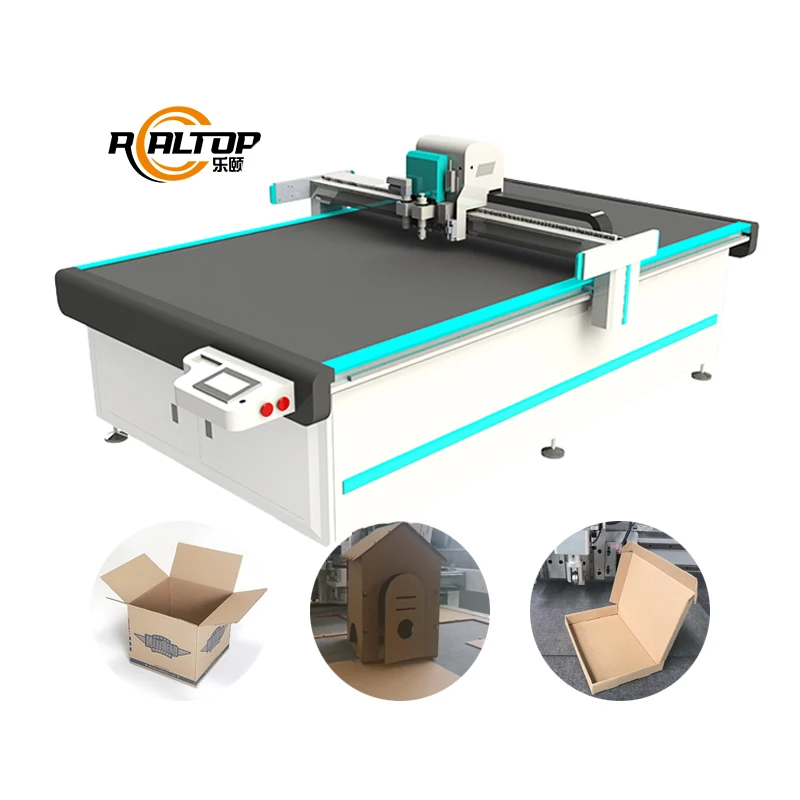
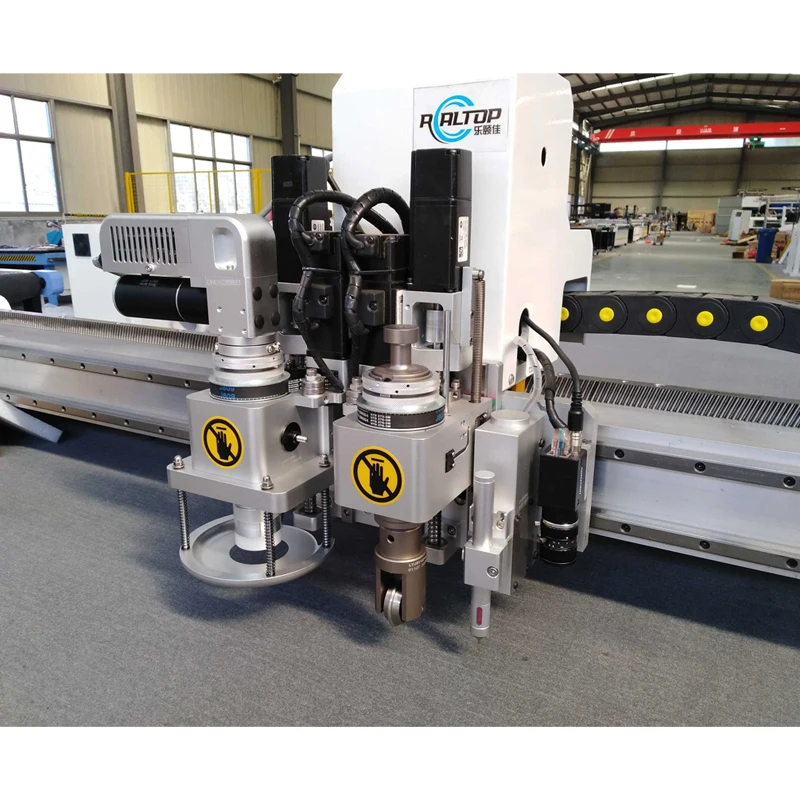
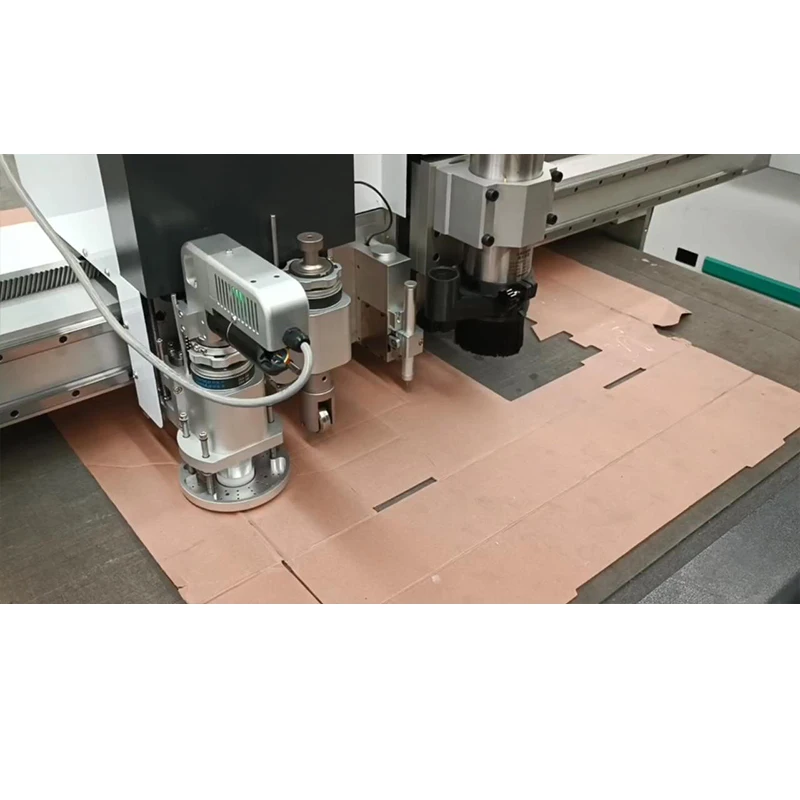
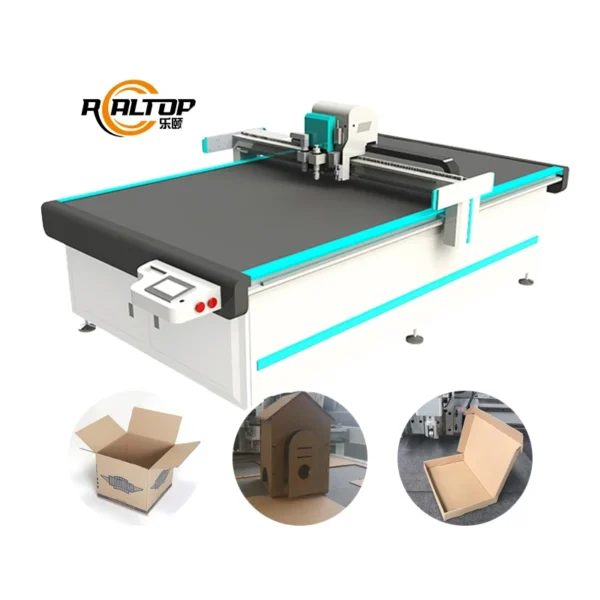
Multi-Tool Head Versatility — Oscillating knife, creasing wheel, kiss-cut blade and round punch mount on one carriage so corrugated, card stock and sticker runs change over without swapping machines.
Technical Specifications
| Parameter | Value |
|---|---|
| Product Type | CNC Oscillating Knife Digital Plotter Cutter |
| Model | Realtop-0604pas |
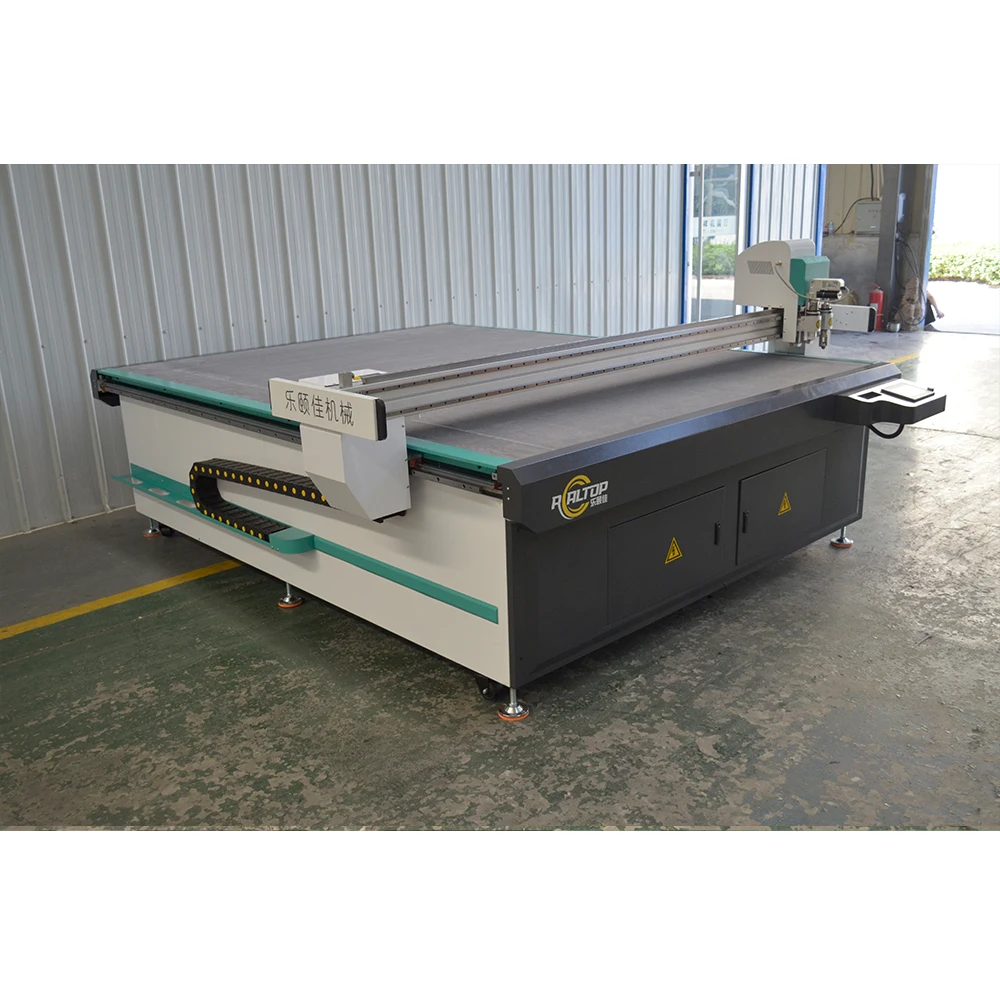
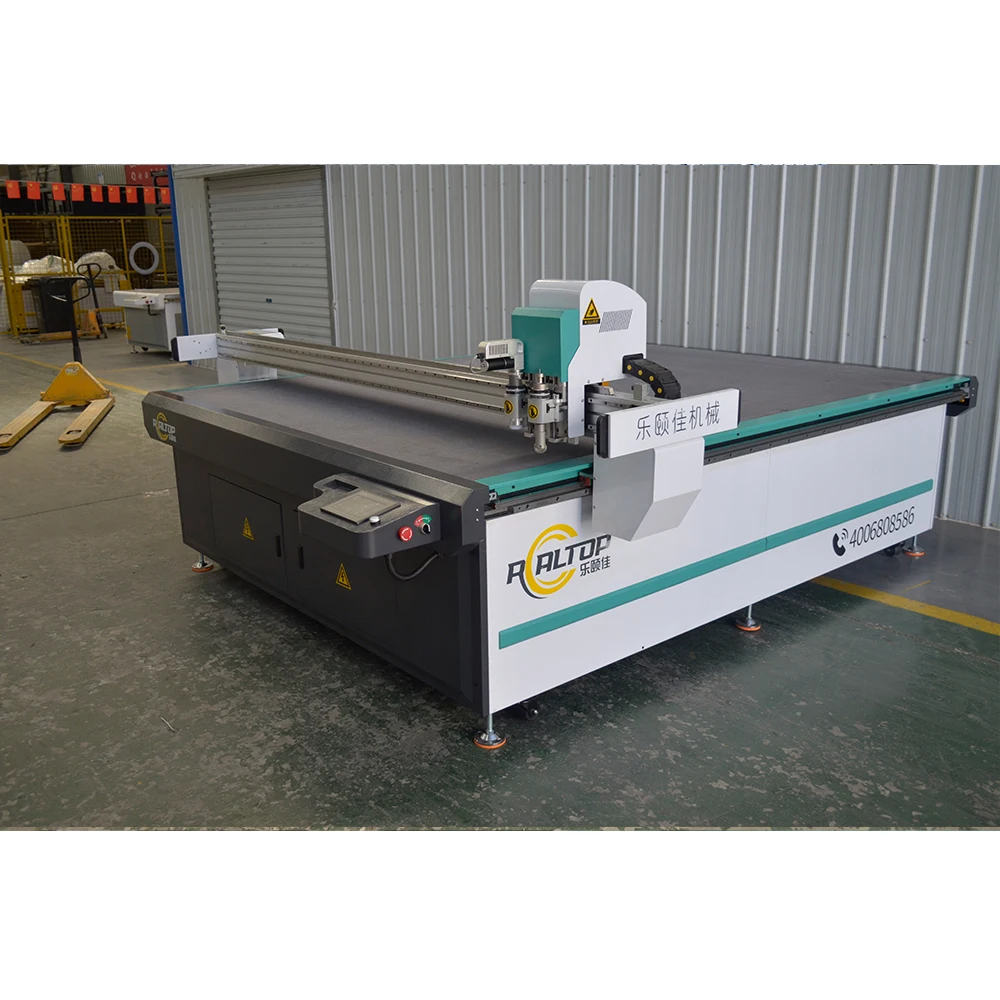
| Working Area | 2500×1300 mm (RT-R2513) / 1600×2500 mm (RT-D2516 / RT-S2516) |
| Machine Size | 3550×1910×1400 mm (RT-R2513) / 3450×2300×1250 mm (RT-D2516 / RT-S2516) |
| Rated Power | 9 kW |
| Cutting Thickness | ≤18 mm |
| Repeated Accuracy | <0.05 mm |
| Voltage | 380 V |
| Servo Motor | Dongling servo (Taiwan Delta servo optional) |
| Transmission Method | Ethernet port |
| Profile Format | DXF, OLT, PDF, AI |
| Vacuum Table | Aluminum alloy honeycomb structure |
| Vacuum Pump | 7.5 kW |
| Guide Rail | Imported straight-line square guide (Taiwan Hiwin optional) |
| Safety Device | Infrared sensors and emergency stop |
| Warranty | 1 year (excluding felt and knife blades) |
| Delivery Time | <30 working days |
Application Suitability
| Application | Material or Output |
|---|---|
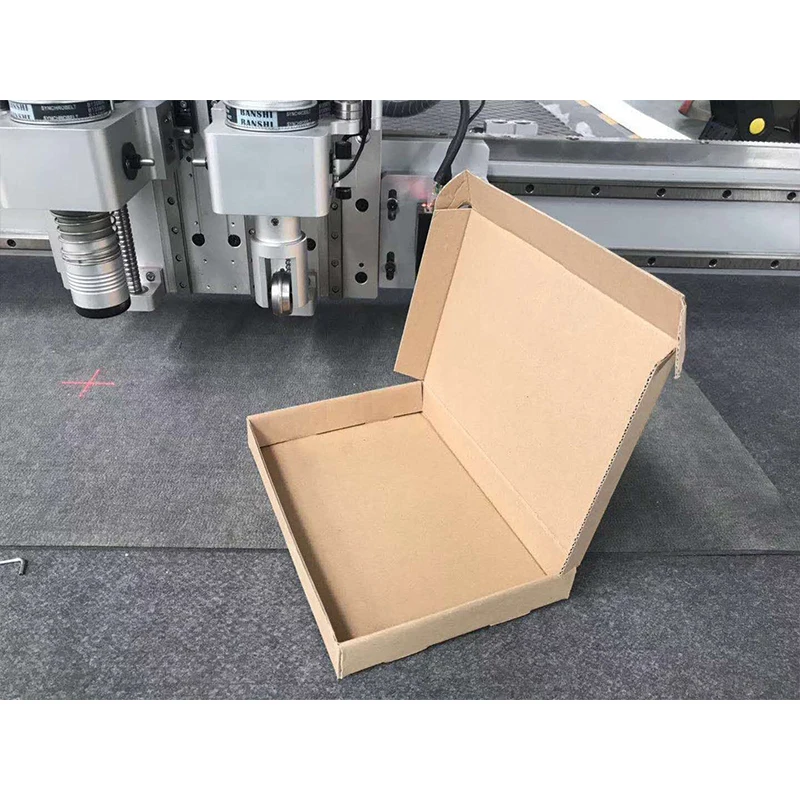
| Carton sample making | Corrugated board, grey board, coated card stock up to 18 mm |
| Sticker and label cutting | Self-adhesive vinyl, PP paper, synthetic label stock |
| Short-run packaging | Folding carton, micro-flute, honeycomb paper board |
| Paper processing | Art paper, kraft paper, specialty packaging sheets |
| Leather component cutting | Split leather, PU leather for packaging inserts |
Why the Material Density Question Matters Before You Sign
A machine rated on standard corrugated will stall on high-density board if nobody asks the density question first.
Buyers often send a working area size and a daily sheet count, and the quote goes out the same day. I once watched a packaging house in Jinan install a plotter table specified only on the 2500 mm bed, then spend weeks fighting crushed edges on a heavier flute profile their customer insisted on. The tool head was wrong for the board density, the vacuum zoning was too broad for the small carton blanks, and the nesting software refused their existing DXF workflow. That shop lost two months of production while we reconfigured the knife angle, vacuum zones and software import chain [NEED_CITE: typical corrugated density ranges across packaging grades]. Matching CNC oscillating knife cutting machine specifications to the actual board flute and density — not just the sheet dimensions — is what separates a first-run success from a prolonged commissioning headache.
Tool Head Selection by Board Grade and Flute Profile
An oscillating knife slices through corrugated and foam-core boards without crushing the flute structure, while a creasing wheel compresses fold lines in the same pass. When the job involves sticker contour cutting, the kiss-cut tool scores the adhesive layer without penetrating the backing paper. Round punch tools handle registration holes or ventilation cut-outs on carton blanks. Choosing the right combination before the machine is built prevents the edge-quality complaints that usually surface only after the first production week.
Vacuum Zoning for Small Carton Blanks
A full-sheet vacuum pull holds large boards flat, but small packaging blanks near the sheet edge tend to lift when the knife exits the cut. The aluminum honeycomb table on the Realtop-0604pas can be configured with segmented zones so only the active cutting area draws vacuum. This zoning keeps small carton samples firmly seated, especially on low-weight card stock where the material has less mass to resist the cutting force [NEED_CITE: vacuum hold-down requirements for lightweight packaging substrates].
Reading the Specs That Actually Affect Output
The 7.5 kW vacuum pump provides the suction needed across the 2500×1300 mm or 1600×2500 mm bed; undersizing the pump on a large-format table causes material drift mid-cut. Repeated accuracy below 0.05 mm, maintained by the imported linear square guide and servo drive, ensures that crease lines and cut lines register correctly on folding carton designs where a half-millimetre offset ruins the fold. The 380 V supply requirement means the buyer must confirm three-phase availability at the installation site, because rewinding a motor after arrival is neither quick nor cheap. Ethernet-based transmission avoids the driver conflicts that still plague USB-connected plotters in Windows-heavy design offices. Profile format support for DXF, OLT, PDF and AI covers the files most packaging designers already export, so no intermediate conversion step introduces geometry errors.
The Hidden Cost of a Mismatched Configuration
When the tool head is specified for generic "cardboard" rather than the buyer’s actual flute profile, the oscillating knife can leave ragged edges on double-wall corrugated or fail to penetrate grey board cleanly. I have seen shops discard stacks of sample cartons because the crease wheel depth was set for one board weight and the next job used a heavier stock. Small carton blanks cut without proper vacuum zoning lift during the final pass, producing dimensional errors that only show up when the customer tries to fold and glue the sample. These issues are never caught by reading a spec sheet; they appear only during the first real production run [NEED_CITE: common first-run quality issues in digital packaging sample making].
Why Source This Machine From Realtop
Realtop runs an in-house design team that covers both knife cutting and laser cutting technologies, so the cutting method is matched to the material rather than forced into one platform. Tool head and table configuration are specified per material type and production volume before the order is locked. CCD camera positioning is available for printed contour work on sticker and label jobs. Software compatibility with the buyer’s existing file format and nesting workflow is confirmed before shipment, not discovered during installation. Voltage, plug type and control language are customised per destination, and sample cutting on the buyer’s own material is performed before commitment so edge quality and cutting depth are verified on the actual substrate.
Documentation & Verification
- Machine specification sheet listing confirmed tool head and vacuum zone layout
- Electrical schematic and 380 V three-phase wiring confirmation for your facility
- Tool head configuration list matching your board grade and flute profile
- Sample cutting report on your own corrugated or card stock material
- Software licence key and DXF, OLT, PDF, AI file format compatibility note
- Factory test record with repeated accuracy measurement before dispatch
Installation, Commissioning & Support
- Confirm three-phase 380 V supply with dedicated 9 kW circuit breaker for the cutting head drive
- Allow floor space matching the 3550×1910 mm or 3450×2300 mm machine footprint plus operator clearance
- 7.5 kW vacuum pump requires separate electrical circuit and exhaust ducting to exterior
- First-run parameter setting includes knife angle, oscillation frequency and vacuum zone mapping
- Operator training covers tool change procedure, blade replacement and nesting software workflow
- Ten oscillating blades included; spare blade and felt ordering list provided at handover
What to Include in Your Inquiry
Send the specific board grade, flute profile and maximum thickness you plan to cut, along with typical carton blank dimensions and daily sheet volume. If you already run nesting software, share a sample file so we can verify DXF or AI import before quoting. Confirm your facility voltage, frequency and preferred control language so the electrical package and interface are built to match.
Frequently Asked Questions
Q: How do I choose the correct tool head for different packaging materials?
A: Oscillating knife handles corrugated and foam board up to 18 mm without crushing flutes. A creasing wheel forms fold lines on carton stock. Kiss-cut tools score self-adhesive labels without penetrating the liner. The tool combination is specified during inquiry based on your actual material stack, not a generic board category.
Q: Which file formats does the nesting and cutting software accept?
A: The included carton nesting software imports DXF, OLT, PDF and AI files directly. If your design team works in a different format, share a sample file during the inquiry stage so compatibility can be confirmed before the machine ships, avoiding conversion errors on the shop floor.
Q: How is vacuum zoning handled for small carton blanks?
A: The aluminum honeycomb table supports segmented vacuum zones so only the active cutting area draws suction. This prevents lightweight card stock and small carton pieces from lifting when the knife exits the cut path, maintaining dimensional accuracy on short-run packaging samples.
Q: What electrical and language options are confirmed before shipment?
A: Voltage is set to 380 V three-phase by default, configurable for your local supply. Plug type matches your country standard. Control language defaults to English, Russian, Italian or Chinese, with special languages available on request. All electrical details are confirmed in writing before production begins.
Q: How do I verify cutting accuracy before committing to the order?
A: Send us a sheet of your own material — the exact corrugated grade or card stock you run daily. We perform sample cutting and return the pieces along with a report covering edge quality, crease depth and dimensional accuracy so you can evaluate results on the substrate you actually use.


商品评价
Clear filtersThere are no reviews yet.