

Fast Shipping
Carrier information

20k products
Payment methods

24/7 Support
Unlimited help desk

2-day Delivery
Track or off orders
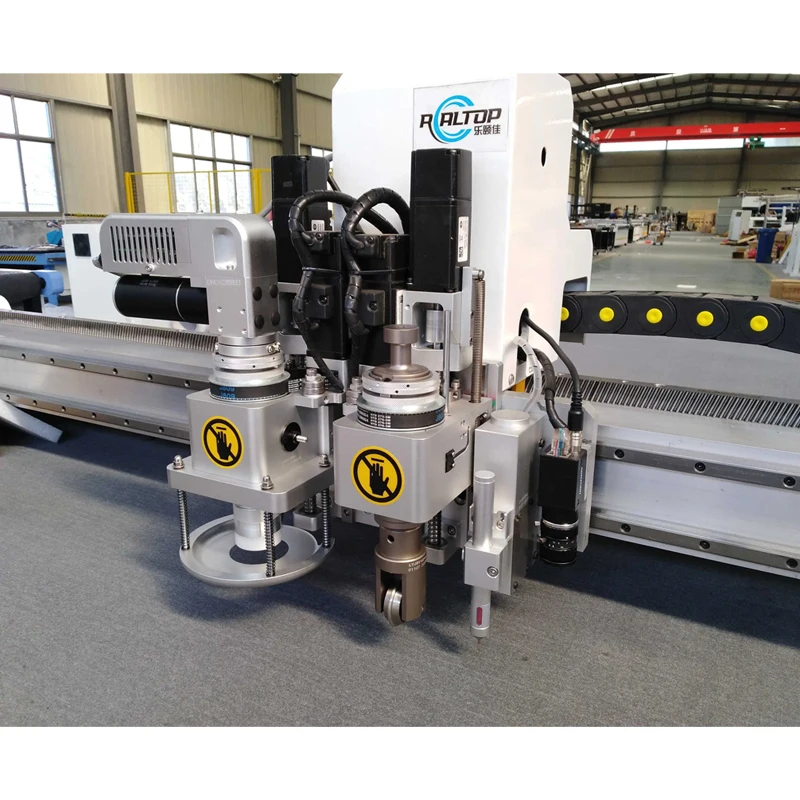
Tool Head Versatility — We match oscillating, creasing and kiss-cut tooling to the flute profile and ply count of your actual corrugated stock before the machine ships, not after it arrives.
Technical Specifications
| Parameter | Value |
|---|---|
| Model | RT–R2513 / RT-D2516 / RT-S2516 |
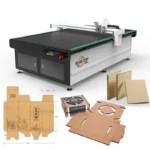
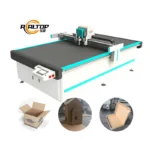
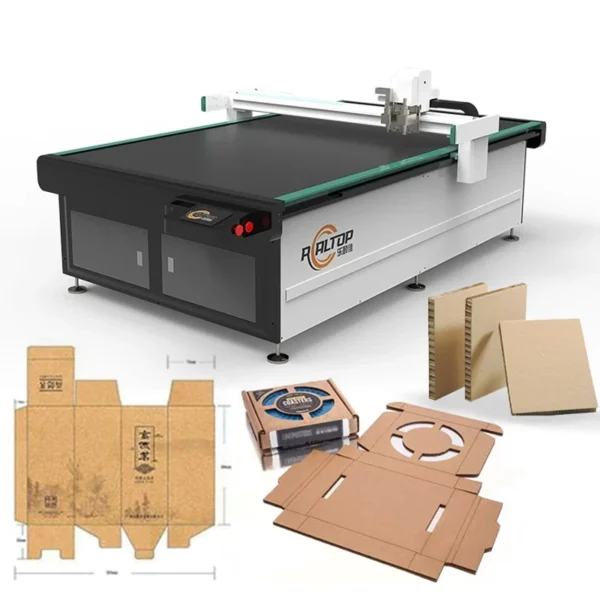
| Product Type | CNC Oscillating Knife Cutting Machine for Packaging |
| Working Area | 2500×1300mm (RT–R2513) / 1600×2500mm (RT-D2516 / RT-S2516) |
| Machine Size | 3550×1910×1400mm (RT–R2513) / 3450×2300×1250mm (RT-D2516 / RT-S2516) |
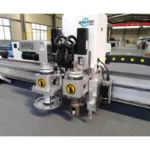
| Cutting Tools | Oscillating knife, creasing tool, kiss-cut knife, round punch |
| Fixing Method | Vacuum adsorption system |
| Rated Power | 9 kW |
| Cutting Thickness | ≤18 mm |
| Repeated Accuracy | <0.05 mm |
| Voltage | 380 V (configurable per destination market) |
| Servo | Dongling servo (Delta servo motor available in alternate configuration) |
| Transmission | Rack and pinion with imported straight-line square guide rails |
| Table Surface | Aluminum alloy honeycomb vacuum platform |
| Frame | Welded thick square seamless steel structure, high-temperature treated |
| Vacuum Pump | 7.5 kW |
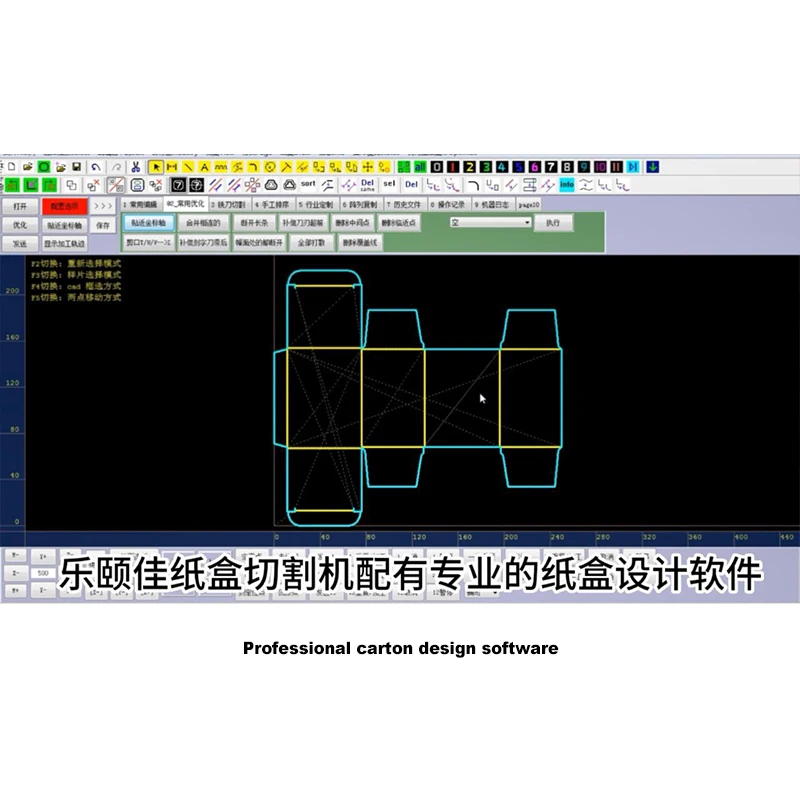
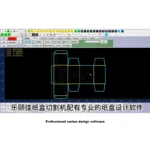
| Profile Formats | DXF, OLT, PDF, AI |
| Data Transmission | Ethernet port |
| Safety Devices | Infrared sensors, emergency stop |
| Control Language | Customizable (English, Russian, Italian, Chinese options) |
| Conveyor Belt | Germany-imported belt material |
| Blade Supply | 10 pieces oscillating blades included |
| Warranty | 1 year (excludes felt and knife blades) |
| Delivery Time | <30 working days |
| Standards | CE declaration where applicable |
Application Suitability
| Application | Material or Output |
|---|---|
| Packaging carton sample making | Single, double and triple-wall corrugated cardboard up to 18 mm |
| Short-run corrugated box production | E-flute, B-flute, C-flute and BC-flute board for electrical, express, food and gift box packaging |
| Sticker and label die-cutting | Paper, vinyl and PP sticker stock with printed contour recognition |
| Paper-based advertising materials | Billboards, business cards, display tags on cardstock and PP paper |
| Leather and fabric gasket cutting | Leather sheets and non-metal composites within thickness range |
Why Board Thickness Alone Is Not Enough to Specify a CNC Oscillating Knife Cutting Machine Manufacturer
Confirming flute type, ply count and actual board density prevents the most common corrugated cutting failure: ragged edges on material the machine was never set up to handle.
A buyer once sent us a purchase order specifying only the working area. The machine arrived, ran standard three-layer corrugated perfectly, then choked on the five-layer reinforced board they actually used in production. The knife head pressure was insufficient, edges came out crushed and torn, and we spent four days on-site re-tuning parameters before the machine could be accepted. Since then, every corrugated cutting project we handle starts with a physical sample of the buyer’s actual board — not a catalogue description. The cutting force, oscillation frequency and vacuum zoning all shift depending on whether you are running thin E-flute or heavy BC-flute, and a generic specification leaves those variables to chance [NEED_CITE: common causes of edge quality failure in corrugated digital cutting].
Multi-Tool Head Setup for One-Pass Corrugated Processing
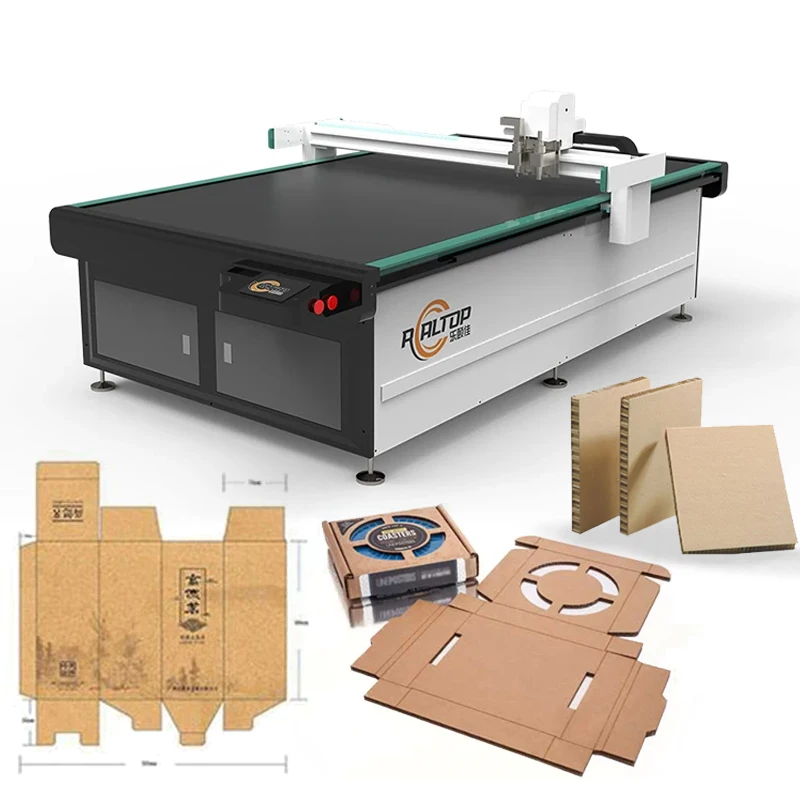
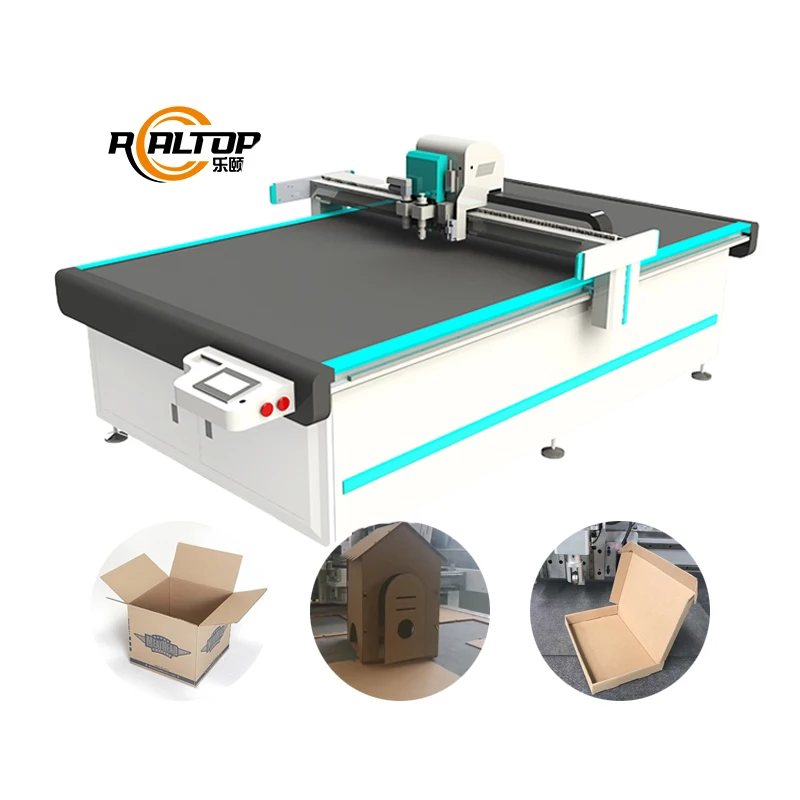
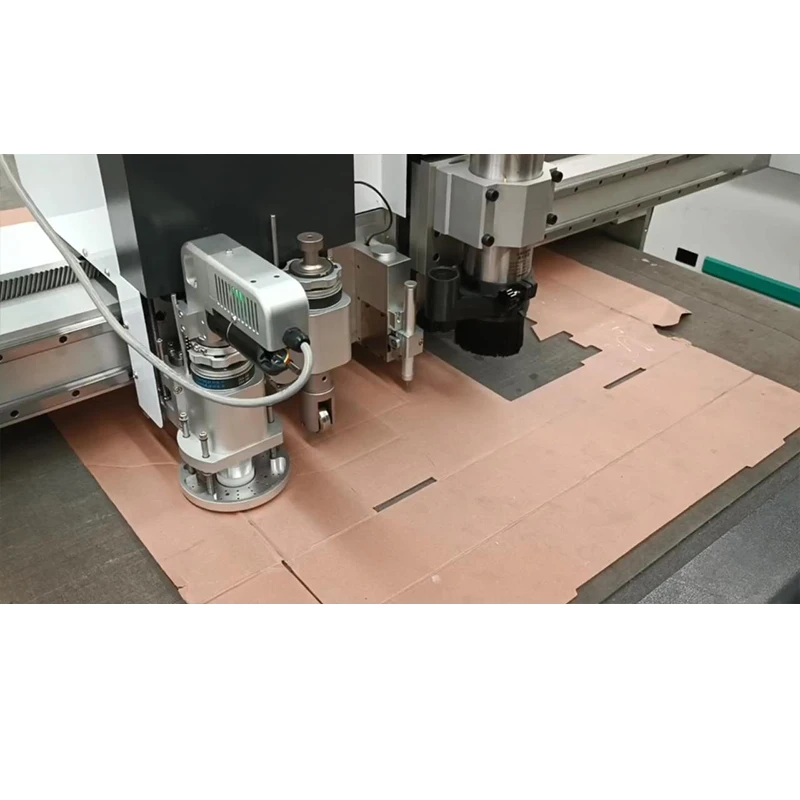
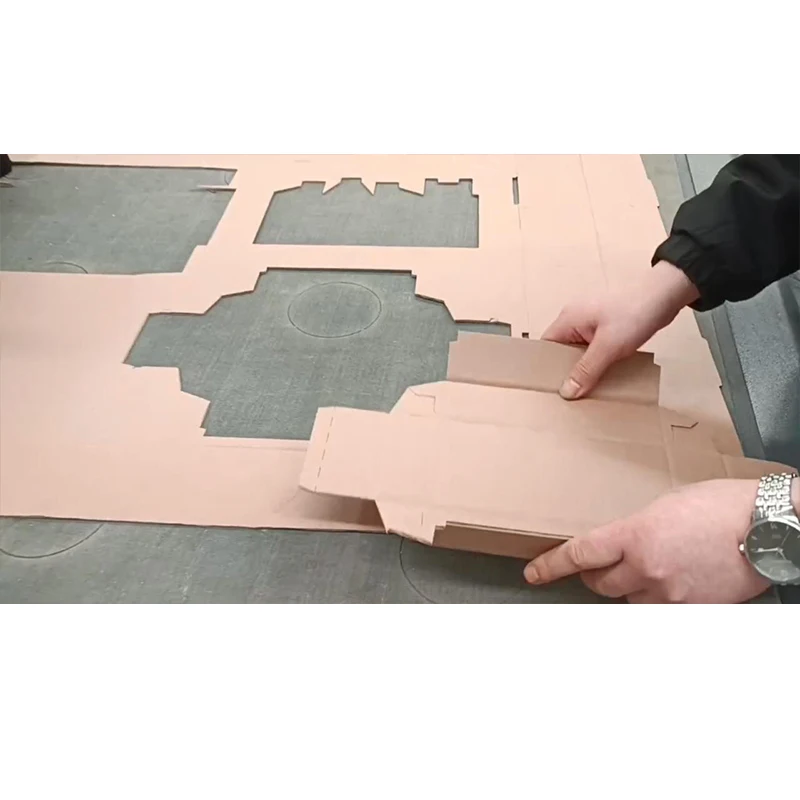
A packaging sample maker rarely needs just a straight cut. Most carton designs require creasing for fold lines, kiss-cutting for perforated tear strips and full through-cutting for the outer profile. The RT–R2513 and its larger-format siblings support oscillating knife, creasing wheel, kiss-cut knife and round punch tooling on a single carriage. This means a complete die-line proof — cuts, scores and punch-outs — finishes in one work cycle without manual tool changes or sheet repositioning, which is where registration drift typically occurs on single-tool setups.
Vacuum Zoning That Holds Flute Structure Without Crushing It
Corrugated board is not flat stock. The flute structure gives it rigidity but also makes it vulnerable to uneven suction. The aluminum alloy honeycomb vacuum table on this CNC oscillating knife cutting machine manufacturer platform uses zoned adsorption areas. Operators activate only the zones covered by the sheet, concentrating suction where the material sits rather than bleeding vacuum across an empty table. This approach holds small carton blanks firmly during cutting without applying enough downward force to collapse the flute profile — a balance that becomes critical on double and triple-wall board where structural integrity matters for the finished box.
Reading the Specification Sheet Against Your Actual Production Job
The ≤18 mm cutting thickness rating covers a wide range of corrugated grades, but real cutting quality depends on how knife oscillation speed, downward pressure and feed rate interact with the specific board. The rack and pinion transmission paired with imported linear square guide rails keeps the tool head stable across the full 2500×1300 mm or 1600×2500 mm working area, which directly affects crease-to-cut registration accuracy. The <0.05 mm repeatability figure matters most on printed carton stock where a crease line must land precisely on a pre-printed fold mark — even a small drift across a long sheet run produces visible misalignment on the finished box [NEED_CITE: registration tolerance requirements in packaging sample making].
The 9 kW rated power and 7.5 kW vacuum pump together define the machine’s duty envelope. The vacuum pump must maintain consistent suction across the honeycomb table while the oscillating knife motor delivers enough force to shear through dense, multi-ply board at production feed rates. The welded steel frame with high-temperature treatment resists deflection under these combined loads, which is the mechanical foundation that makes the stated repeatability achievable over long production runs rather than only on the first few sheets of the day.
The Cost of Skipping Material-Specific Configuration
When a machine arrives with a generic tool head and default vacuum settings, the buyer faces a choice: run at reduced speed to maintain edge quality, or push production speed and accept rejected parts. On corrugated board specifically, the wrong creasing wheel diameter produces fold lines that crack the liner rather than bending it cleanly. Incorrect kiss-cut depth leaves either a perforation too weak to hold the sheet together during handling or too strong to tear along the intended line. These are not warranty issues — they are configuration gaps that fall entirely on the buyer to resolve after delivery [NEED_CITE: post-delivery configuration costs in digital cutting installations].
What Distinguishes This Procurement Path
In-house design and production across both knife and laser cutting means the cutting method is matched to the corrugated material, not forced into whatever technology a single-product supplier offers. Tool head and table configuration are specified per board thickness and flute profile, pulled from the buyer’s sample cutting results rather than a standard catalogue build. The software accepts DXF, OLT, PDF and AI files, and format compatibility is verified against the buyer’s existing design workflow before the order is confirmed. Voltage and control language are documented and locked in the specification sheet prior to production, eliminating the shipment-day surprises that delay commissioning. Sample cutting on the buyer’s own corrugated material is completed before commitment, with edge quality, crease depth and cutting speed recorded in a written report.
Documentation & Verification
- Machine specification sheet listing tool head and vacuum zone configuration matched to your flute type
- Sample cutting report on your own corrugated board confirming edge finish and crease accuracy
- Electrical schematic with voltage and frequency confirmation for your facility supply
- Software licence and DXF, OLT, PDF, AI file format compatibility note before order
- Factory test record documenting repeatability measurement across the full working area
- Operation and maintenance manual with customized control language
Installation, Commissioning & Support
- Foundation must support 3550×1910 mm machine footprint (RT–R2513) on level concrete with anchor provisions
- Dedicated 380 V circuit required for 9 kW total rated load including 7.5 kW vacuum pump
- Machine ships partially assembled; table platform and gantry require on-site alignment and calibration
- First-run parameter tuning conducted on buyer’s corrugated stock to set oscillation and feed rates
- Operator training covers tool head changeover, vacuum zone selection and software nesting workflow
- Ten oscillating blades included; felt and blade replacement schedule documented in maintenance manual
Preparing Your Inquiry
To move past generic specifications, we need the actual corrugated board you run — flute type, ply count, maximum thickness and typical sheet dimensions. Share your local voltage and frequency so the electrical system is configured before assembly begins, and let us know which file formats your design team currently uses so we verify software compatibility at the quotation stage.
Frequently Asked Questions
Q: How is cutting thickness confirmed for different corrugated flute types and ply counts?
A: We request physical samples of your actual board and run test cuts before the order is finalized. Oscillation speed, knife pressure and feed rate are adjusted to the specific flute profile — E-flute, B-flute, C-flute or BC-flute — and the results are documented in a sample cutting report showing edge quality and achievable speed on your material.
Q: Which tool head combination handles cutting and creasing on the same carton sheet?
A: The machine supports oscillating knife, creasing wheel, kiss-cut knife and round punch on one carriage. For standard carton sample making, we typically configure oscillating knife for through-cuts and creasing wheel for fold lines, with kiss-cut added if perforated tear strips are part of the design. All tools operate in a single work cycle.
Q: How does vacuum table zoning prevent small carton parts from lifting?
A: The aluminum honeycomb table is divided into independent adsorption zones. Operators activate only the zones directly under the sheet, concentrating vacuum force on the material footprint. This holds small blanks securely without requiring full-table suction, which would waste pump capacity and reduce holding pressure on the active area.
Q: What file formats does the software accept for packaging die-lines?
A: The system imports DXF, OLT, PDF and AI profile formats. Before the order is confirmed, we verify compatibility with your existing design software and nesting workflow to ensure files transfer without manual re-drawing. Any format conversion requirements are addressed during the pre-order software configuration stage.
Q: What voltage and control language options are confirmed before shipment?
A: Standard configuration is 380 V, but voltage is configurable based on your facility supply. Control language options include English, Russian, Italian and Chinese. Both specifications are documented in the electrical schematic and confirmed in writing before production begins, so no adjustments are needed after the machine arrives at your facility.


商品评价
Clear filtersThere are no reviews yet.