




Fast Shipping
Carrier information

20k products
Payment methods

24/7 Support
Unlimited help desk

2-day Delivery
Track or off orders
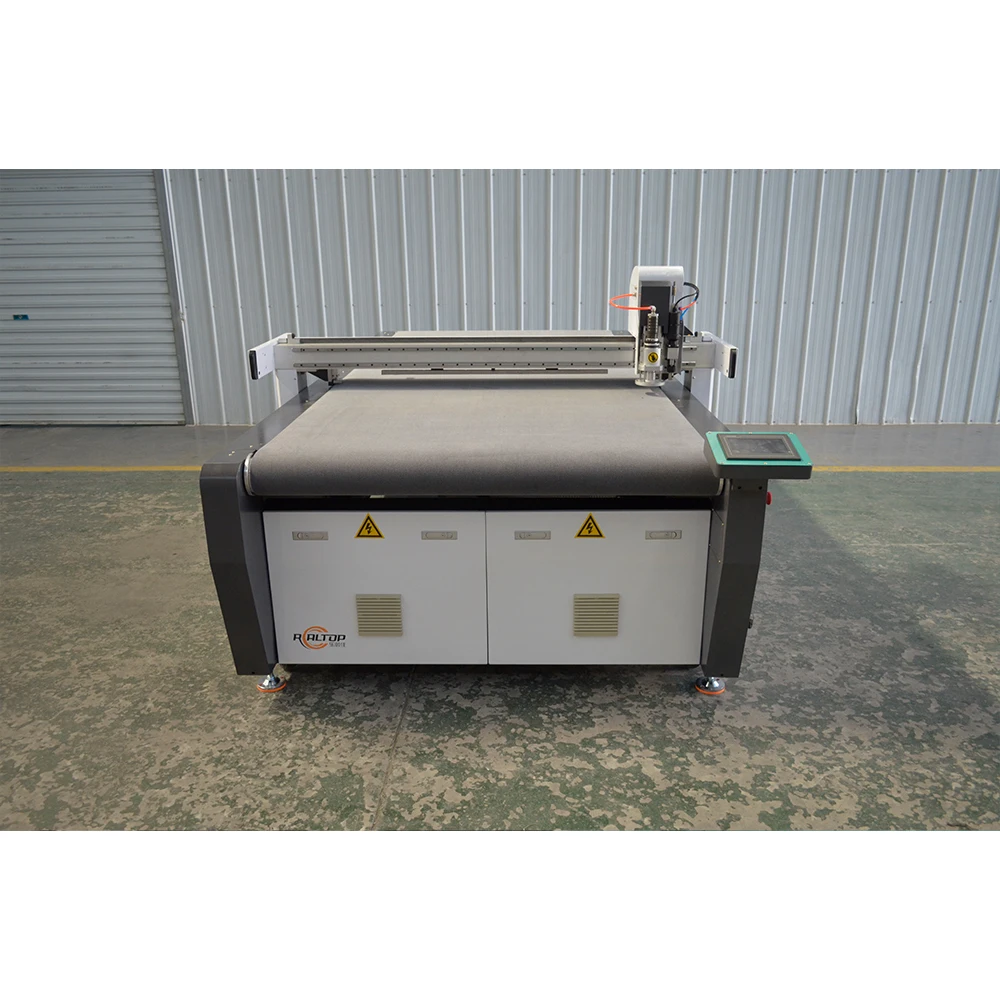
Tooling matched to material — A fabric producer cutting TPU-coated textiles needs a different oscillating frequency and blade geometry than a gasket shop cutting compressed fiber, so the RT-D2516/RT-S2516 ships with a documented tool head and vacuum zone list specified against your actual stock, not a generic catalogue page.
Technical Specifications
| Parameter | Value |
|---|---|
| Model | RT-D2516 / RT-S2516 |
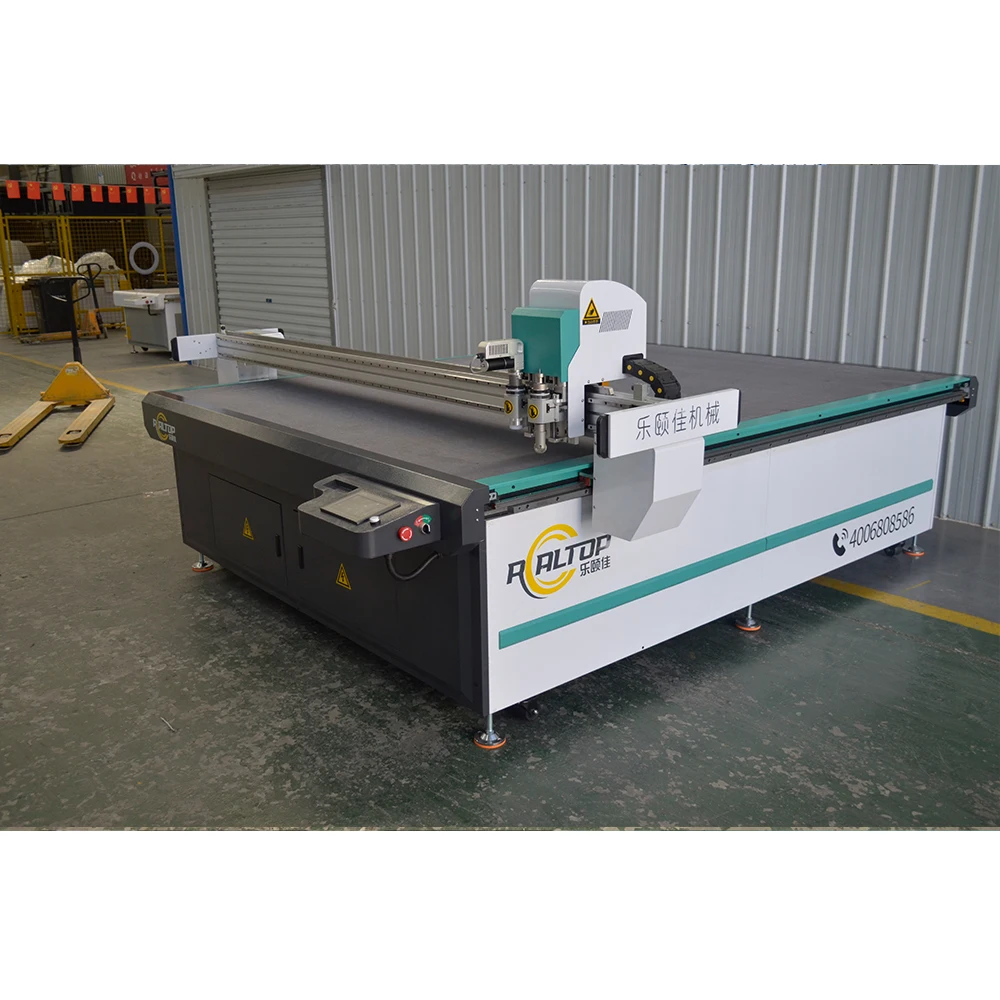
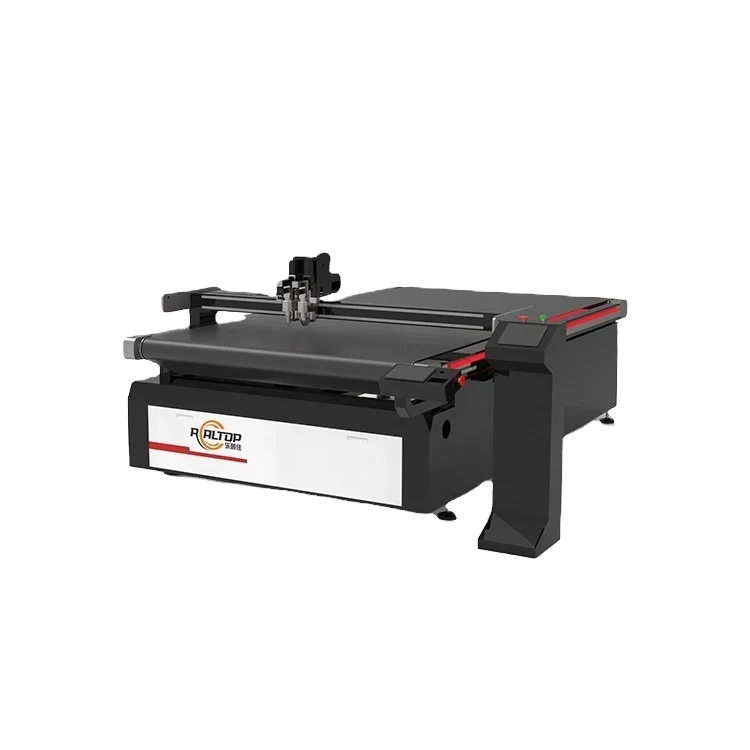
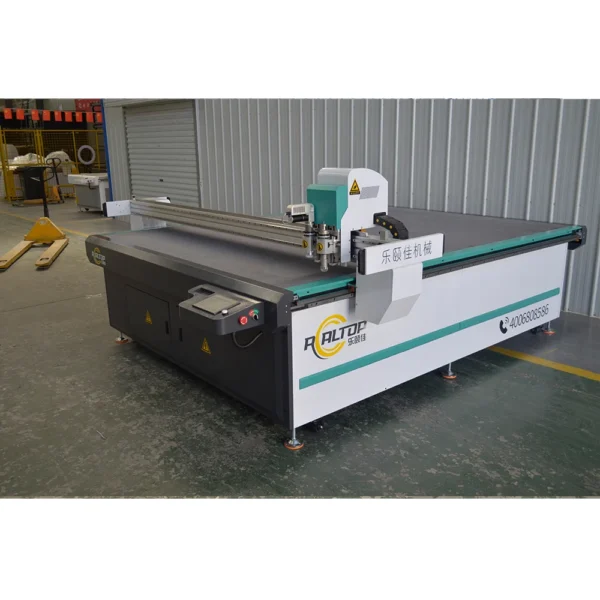
| Product Type | CNC Oscillating Knife Cutting Machine |
| Working Area | 1600 × 2500 mm |
| Machine Size | 3450 × 2300 × 1250 mm |
| Rated Power | 9 kW |
| Translational Velocity | 800–2000 mm/s |
| Cutting Speed | 200–800 mm/s (basis not stated in source — confirm material type, density and layer count) |
| Repeated Accuracy | ≤ 0.1 mm |
| Table Type | Flat working table or auto-feeding conveyor table |
| Vacuum Platform | Aluminum air box with PVDF coating, integrated or split zoning |
| Vacuum Pump | 7.5 kW |
| Transmission System | Digital servo motor, linear guide, synchronous belt, ball screw |
| Guide Rail | Taiwan Hiwin linear rail |
| Conveyor Belt | Germany-imported belt (on auto-feeding variant) |
| Servo Motor | Delta (standard) or Panasonic (optional) |
| Control Panel | Touch screen, multi-language support |
| Instruction Format | HP-GL compatible |
| Software Input | PLT, DXF, AI |
| Voltage | 380 V ± 10 % |
| Safety Device | Infrared sensor, anti-collision, emergency stop |
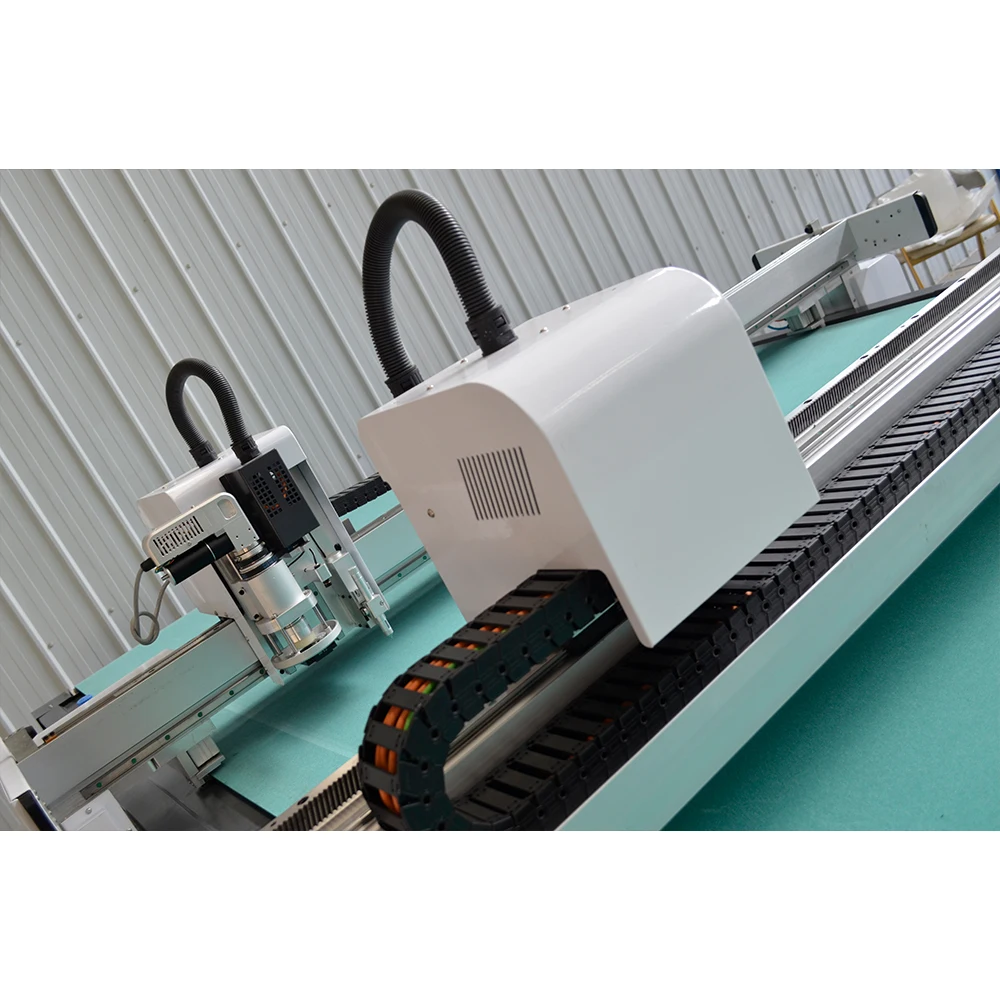
| Tool Head Options | Oscillating knife, pneumatic knife, high-power vibrating knife, circular knife, V-cutting knife, drag knife, creasing wheel, dotted-line knife, punching, brush |
| Visual Positioning Options | Small CCD mark-point, panoramic camera recognition, projection positioning |
| Certification | CE (source value — verify against manufacturer catalog) |
Application Suitability
| Application | Material or Output |
|---|---|
| Garment and footwear panel cutting | Woven fabric, non-woven, PU, EVA, sponge composite leather, shoe material |
| Automotive interior trimming | Carpet, floor mat, headliner fabric, gasket material, XPE foam |
| Soft home furnishing production | Upholstery textile, curtain cloth, sofa foam, leather hide |
| Packaging and carton sample making | Corrugated cardboard, card stock, plastic box sheet, sticker film |
| Sports and outdoor gear | TPU-coated fabric, nylon, PVC sheet, silicone, rubber |
| Advertising and signage | Vinyl, flexible banner, foam board, PP, PE sheet |
Why "Working Area" Alone Fails Fabric and Leather Shops
A 1600 × 2500 mm table only solves half the problem — the other half is whether the knife head, vacuum zoning and feed mechanism can actually hold and cut your material at production speed without ragged edges or lifted layers.
When a cutting machine is specified purely on bed size, the first failure usually appears on the shop floor within the initial production run. A garment factory cutting multi-layer TPU-coated sportswear fabric may find the standard oscillating blade melts the coating at high frequency, leaving fused edges that require manual trimming. An automotive gasket producer cutting thin PTFE sheets on a single-zone vacuum table will watch small contours lift mid-cut, destroying nesting yield. These are not machine defects; they are configuration mismatches that could have been caught before the order was placed [NEED_CITE: CNC knife cutting configuration mismatch causes in flexible material production].
Selecting the right CNC oscillating knife cutting machine specifications means matching tool head, blade type, vacuum zone layout and feeding method to the thickest, most difficult material in your product mix — not the easiest one.
Multi-Tool Head Logic for Mixed Material Floors
The RT-D2516/RT-S2516 supports up to ten tool head options on a single gantry, including oscillating knife, pneumatic knife, drag knife, creasing wheel and punching. This matters when a single shop cuts both woven garment fabric and compressed fiber gasket within the same shift. Switching from a high-frequency vibrating knife for thin textile to a pneumatic knife for thicker sponge composite leather changes the cutting force and blade stroke, preserving edge quality across both materials without requiring a second machine. The CNC oscillating knife cutting machine specifications sheet documents which tool head ships against each material line item, so there is no ambiguity at commissioning.
CCD and Panoramic Vision for Printed Contour Work
Printed fabric panels — sportswear logos, automotive seat covers with registered graphics, advertising banners — require the cutting path to follow printed registration marks rather than a fixed digital outline. The small CCD camera handles mark-point positioning for standard repeat patterns, while the panoramic camera option captures the entire printed sheet for full-frame contour recognition. Without this, a slight stretch in the fabric during feeding shifts every cut by several millimeters, and the entire panel becomes scrap [NEED_CITE: CCD vision positioning accuracy on stretchable textile substrates].
Vacuum Zoning, Frame Rigidity and Long-Term Flatness
The aluminum air box vacuum platform with PVDF coating is available in integrated or split-box zoning. Split zoning allows the operator to activate only the sections of the table where material is present, maintaining suction pressure on small parts that would otherwise lift on a fully open table. Underneath, the welded thick-walled seamless steel frame undergoes high-temperature tempering and CNC machining center finishing. This process relieves welding stress and maintains table flatness over years of continuous vibration, which directly supports the ≤ 0.1 mm repeated accuracy claim. A frame that warps under its own vibration load will drift the knife path regardless of servo quality.
Reading the Numbers That Actually Matter
The 800–2000 mm/s translational velocity describes gantry travel between cuts, not the cutting speed through material. The 200–800 mm/s cutting speed range is material-dependent: a single layer of woven polyester allows the upper end, while a five-layer layup of sponge composite leather pushes toward the lower bound. The 7.5 kW vacuum pump must be matched to the table zoning configuration — a split platform with six independently valved zones needs higher static pressure than a single-zone layout to maintain the same holding force per square centimeter. Servo motor selection between Delta and Panasonic affects closed-loop response; Panasonic servos offer tighter positional feedback, which becomes relevant when cutting tight-radius contours on stiff gasket material where a following error of even a fraction of a millimeter produces a visible flat spot.
The Cost of Skipping the Sample Cut
Factories that approve a configuration based on a brochure cut sample — typically run on easy material like plain polyester — and then ship production stock with TPU coating, silicone backing or fiberglass reinforcement often discover edge quality problems only after the machine is installed. The coating melts, the fiberglass shreds the blade within meters of cut, or the silicone backing sticks to the conveyor. By then, the machine is already paid for, and reconfiguring tool heads, vacuum zones and blade types on-site takes days of lost production [NEED_CITE: post-installation reconfiguration downtime in CNC cutting operations].
Why Source This Platform Here
The design team covers both knife and laser cutting technologies in-house, so when a buyer’s material sits on the boundary — such as thin acrylic that could go either way — the recommendation is based on edge quality data rather than forcing one method. Every RT-D2516/RT-S2516 order ships with a tool head and table configuration list that names the exact knife type, vacuum zone layout and conveyor variant. Sample cutting runs on the buyer’s own material before the order is finalized, producing a report that documents edge quality, achievable speed and blade wear rate. Software license and file format compatibility for PLT, DXF and AI workflows is confirmed in writing before production begins. Voltage and control language customization is locked in at the electrical schematic stage, not left to a packing-day checklist.
Documentation & Verification
- Machine specification sheet listing exact tool head and vacuum zone configuration per order
- Electrical schematic with voltage confirmation matched to facility supply before shipment
- Sample cutting report on buyer’s own material showing edge quality and speed data
- Software license and PLT, DXF, AI file format compatibility note included at delivery
- Factory test record documenting positional accuracy and cut quality before dispatch
- Spare parts list covering blades, vacuum pump consumables and wear components
Installation, Commissioning & Support
- Floor space planning around the 3450 × 2300 × 1250 mm footprint plus operator access clearance
- Dedicated 380 V ± 10 % circuit rated for the 9 kW load plus 7.5 kW vacuum pump inrush
- Auto-feeding conveyor variant requires upstream material roll stand alignment at commissioning
- First-run parameter setting covers knife frequency, vacuum zone mapping and servo tuning
- Operator training on tool head changeover, nesting software and CCD mark-point calibration
- Documented spare blade and vacuum pump maintenance schedule with recommended intervals
What to Include in Your Inquiry
Send the specific material types, thickness range and whether you run single-ply or multi-layer layups, along with your typical sheet or roll width. Note your local voltage and frequency standard, preferred control panel language, and whether your workflow relies on DXF nesting from existing CAD or requires camera-based contour recognition on printed fabric. If your material includes coatings, composites or fiberglass reinforcement, request a sample cut on your actual stock before configuration is finalized.
Frequently Asked Questions
Q: How do I choose between oscillating knife, drag knife and pneumatic knife for my material?
A: Oscillating knives suit woven fabric and thin foam where clean edge separation matters. Drag knives work on vinyl, sticker film and thin card where the blade follows the contour without vertical stroke. Pneumatic knives handle thicker sponge composite leather and multi-layer layups by increasing downward force. The correct choice depends on your thickest, stiffest material, not the easiest one, and is documented in the configuration list before order.
Q: How does cutting speed translate to actual daily throughput?
A: The 200–800 mm/s cutting speed range is material-dependent and does not account for gantry repositioning, tool head changes, material loading or nesting layout efficiency. Real throughput depends on layer count, part geometry complexity and the nesting pattern your software generates. Request a sample cutting report on your own material, which documents achievable speed under conditions matching your production setup.
Q: Can the voltage and control language be customized for my country?
A: The standard voltage is 380 V ± 10 %, but alternative voltage and frequency configurations are available to match local supply standards. Control panel language is set during production, not after shipment. Both the electrical schematic and language setting are confirmed in writing before the machine enters assembly, preventing costly rewiring or interface confusion at installation.
Q: What does the sample cutting test cover before I commit?
A: You send your actual production material — including any coatings, backing layers or reinforcement — and the test documents edge quality, achievable cutting speed, blade wear rate and vacuum holding performance. The resulting report lets you compare configuration options on your own stock rather than relying on a generic demonstration cut run on standard polyester or cardboard.
Q: Which spare parts should I stock from day one?
A: Blade consumption is the primary ongoing cost and varies by material abrasiveness — fiberglass and carbon fiber wear blades noticeably faster than plain textile. The shipped spare parts list covers oscillating blades, vacuum pump filters and seals, conveyor belt wear strips and sensor components. A recommended initial stock quantity is calculated based on your sample cut report and projected daily running hours.


商品评价
Clear filtersThere are no reviews yet.