






Fast Shipping
Carrier information

20k products
Payment methods

24/7 Support
Unlimited help desk

2-day Delivery
Track or off orders
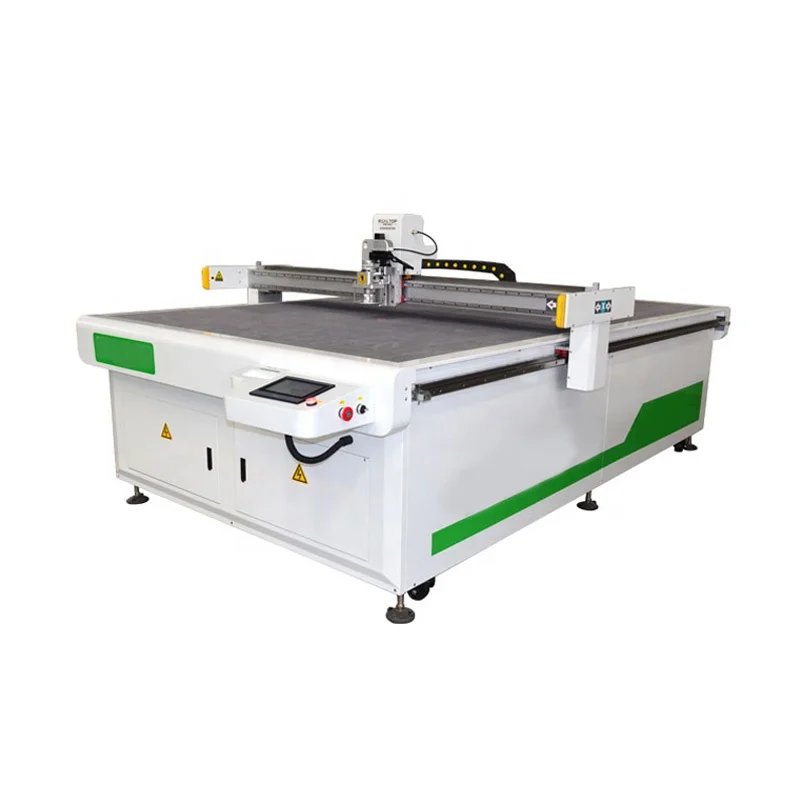
Tool Head Matched to Material — Every oscillating knife cutting table we ship is configured after testing the buyer’s actual stock, not quoted on working area alone.
Technical Specifications
| Parameter | Value |
|---|---|
| Model | RT-D2516/RT-S2516 |
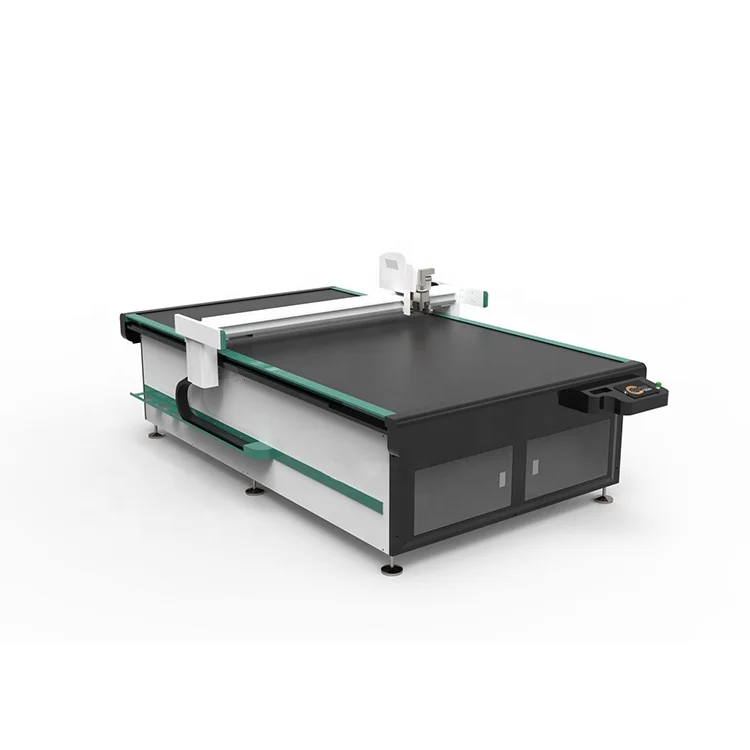
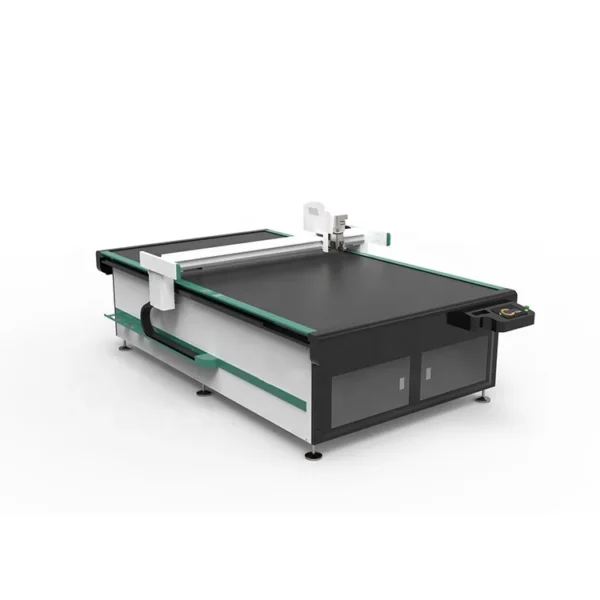
| Product Type | CNC Flatbed Digital Cutting Table |
| Working Area | 1600 × 2500 mm |
| Machine Size | 3450 × 2300 × 1250 mm |
| Rated Power | 9 kW |
| Work Table | Flat vacuum table (zone count to be confirmed per job) |
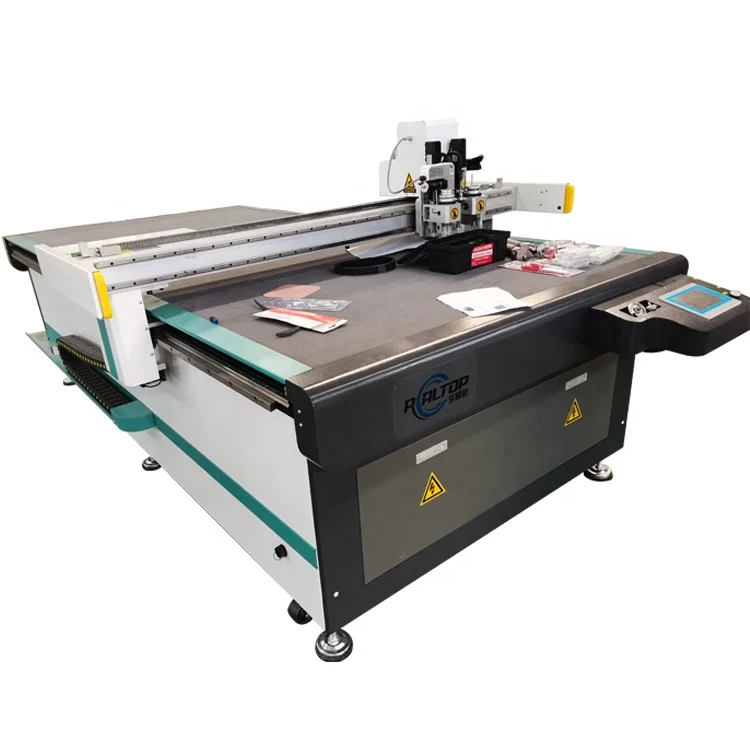
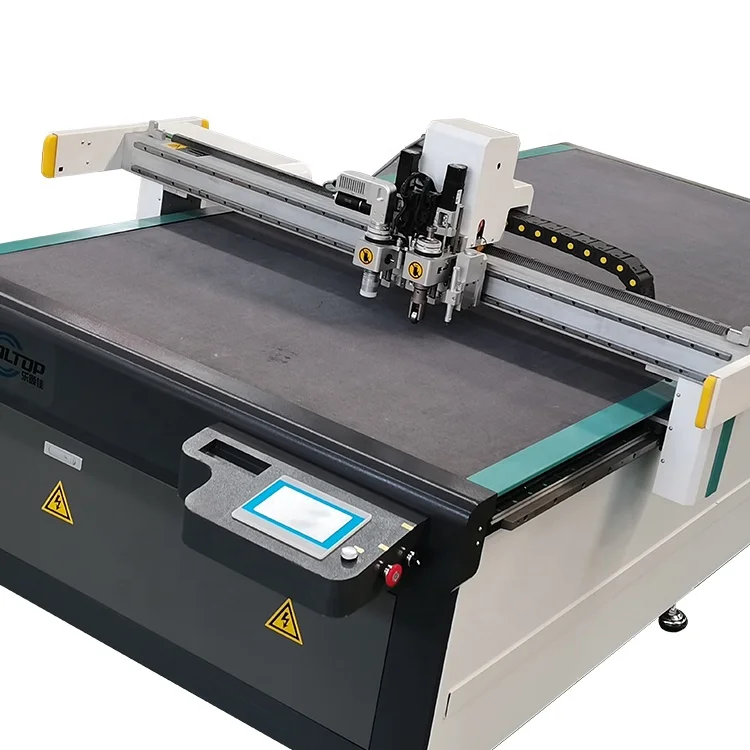
| Tool Head | Swiss imported oscillating knife — full cut, half cut, cursor location |
| Safety Device | Infrared sensors |
| Translational Velocity | 800–1200 mm/s |
| Cutting Speed | 200–800 mm/s (basis not stated in source — confirm material / thickness) |
| Repeatability | ≤ 0.1 mm |
| Transmission System | Digital servo motor, linear guide, synchronous belt, ball screw (imported) |
| Servo Motor | Japanese Yaskawa |
| Linear Rail | Taiwan Hiwin |
| Conveyor Belt | Germany imported |
| Auto Feeding | Yes |
| Instruction System | HP-GL compatible format |
| Voltage | 380V ±10% |
| Vacuum Pump | 7.5 kW |
| Assembly State | Fully assembled |
| Warranty | 12 months whole machine; 3 months consumables |
Application Suitability
| Application | Material or Output |
|---|---|
| Packaging sample making and carton prototyping | Grey board, corrugated board, sticker and label stock |
| Box making and gift box production | Cardboard, specialty coated paper, foam board |
| Flexible material cutting for garment and footwear | Leather, composite leather, PVC, sponge |
| Gasket and seal production | Silicon, rubber, soft glass |
Why Your Stated Cutting Speed May Not Hold on Real Stock
A published 200–800 mm/s range is only valid when the material type, thickness and cut geometry are defined together.
I have watched customers take a quoted cutting speed at face value, then discover on their first production day that coated label stock or multi-layer corrugated board demands a completely different feed rate. When the material is not matched to the knife oscillation frequency and vacuum hold-down force, edges come out ragged or the sheet shifts mid-cut [NEED_CITE: cutting speed validation against material thickness and geometry]. The CNC Oscillating Knife Cutting Table must be proven on your exact stock before any throughput expectation is set. This is why we treat sample cutting on the buyer’s own material as a non-negotiable step, not an optional courtesy.
Oscillating Knife Configuration for Layered and Flexible Materials
The Swiss imported oscillating knife head on this CNC Oscillating Knife Cutting Table supports full cut, half cut and cursor location modes. Full cut handles single-layer corrugated and sticker runs cleanly through the liner. Half cut is essential for label die-cutting where the backing paper must remain intact. Cursor location enables registration against printed marks when combined with a CCD camera system configured at order. Selecting the right mode per job prevents the crushed edges and delamination that operators often blame on the material itself.
Transmission Components That Hold Repeatability Under Continuous Use
Yaskawa digital servo motors paired with Hiwin linear rails and imported ball screws give the RT-D2516/RT-S2516 a repeatability of ≤ 0.1 mm across the full 1600 × 2500 mm working area. In packaging sample making, that tolerance means a box prototype folds identically on the fiftieth piece as on the first. For label producers running long contour cuts, drift beyond a fraction of a millimetre accumulates into visible registration errors by the end of the sheet [NEED_CITE: linear rail and servo tolerance standards for CNC flatbed tables]. The transmission package is specified to sustain this accuracy through multi-shift operation, not just during a brief factory demo.
Reading the Spec Sheet Against Your Production Reality
The 7.5 kW vacuum pump on a flat working table provides the hold-down force, but the number of vacuum zones determines whether small label parts stay flat at 800 mm/s translational speed. A single-zone table will lose suction on nested small parts while the rest of the area bleeds air. The 9 kW rated power covers the spindle, vacuum and conveyor together, so buyers should confirm their site supply can sustain continuous draw without voltage sag. The HP-GL compatible instruction system accepts standard plotter files, yet nesting software integration depends on the buyer’s existing workflow — this must be verified before the machine enters production. Auto feeding via the German imported conveyor belt supports roll-to-sheet and sheet-to-sheet loading, reducing manual handling on longer runs.
What Insufficient Vacuum Zoning Costs You on Small Parts
When vacuum zones are too broad for the part geometry, small sticker and label pieces lift off the table during high-speed contour cuts. The oscillating knife catches the lifted edge, producing a ragged tear or pulling the sheet out of register entirely. Operators slow the machine down to compensate, and the quoted cutting speed becomes meaningless. This problem surfaces most often when buyers specify a machine on working area alone without disclosing their typical nest layout and smallest part dimension [NEED_CITE: vacuum zoning requirements for small-part CNC cutting].
Why Configuration Verification Matters Before the Crate Is Sealed
Every RT-D2516/RT-S2516 leaves the workshop with a tool head and table configuration list matched to the buyer’s declared material range, not a generic build. We run sample cuts on the buyer’s own stock and document knife type, oscillation frequency and vacuum zone setup before the order is confirmed. Our in-house design team covers both knife and laser cutting technologies, so the cutting method is chosen to suit the material rather than forced into one approach. Voltage, plug type and control language are confirmed against the destination market before shipment. Software compatibility with the buyer’s nesting workflow is checked and recorded, eliminating file-format surprises on day one.
Documentation & Verification
- Factory test record cutting your exact packaging stock before dispatch
- Tool head and vacuum zone configuration list matched to your material range
- Electrical schematic confirming voltage and plug type for your market
- Software licence and file format compatibility note for your nesting workflow
- Sample cutting report with edge quality photographs on your material
- Operation and maintenance manual with consumables replacement schedule
Installation, Commissioning & Support
- Confirm floor load capacity for the 3450 × 2300 mm machine footprint before delivery
- Provide a dedicated 380V ±10% circuit rated for the 9 kW continuous draw
- Machine ships fully assembled; position and level on your prepared floor
- First-run parameter tuning on your packaging stock included during commissioning
- Oscillating knife blade and conveyor belt spare parts list provided at handover
- Vacuum pump filter and seal inspection schedule set at monthly intervals
What We Need From You to Build the Right Configuration
Send us your typical material types with thickness range and the largest sheet size you process. Tell us your daily volume expectation so we can confirm whether the auto-feeding conveyor cycle matches your output target. Specify your local voltage and frequency, preferred control language, and whether your existing nesting software exports HP-GL or requires a different driver. If you have coated or specialty stock that has caused problems on previous machines, ship a roll or sheet sample so we can test it on the RT-D2516/RT-S2516 before any commitment is made.
Frequently Asked Questions
Q: How is cutting speed verified before I commit to an order?
A: We cut your own material at our workshop and record the feed rate, knife oscillation setting and edge quality. The 200–800 mm/s range is only confirmed once your specific stock thickness and cut geometry have been tested. You receive a sample cutting report with photographs before production begins.
Q: Will small label parts lift off the table during high-speed cutting?
A: That depends on vacuum zone count and layout, which we configure after reviewing your typical nest pattern. Small parts on a broad single-zone table will lose suction at higher speeds. We confirm zone spacing against your smallest part dimension before finalizing the build.
Q: Can the software import my existing nesting file format?
A: The instruction system supports HP-GL compatible format. If your current workflow uses a different output, we verify compatibility and document the result in a software licence and file format note before the order is confirmed.
Q: Is voltage and control language confirmed before shipment?
A: Yes. We confirm your local voltage, frequency, plug type and preferred control language in writing before the machine enters assembly. The baseline is 380V ±10%, and the electrical schematic is updated to match your destination market.
Q: Can I send my own material for a sample test before ordering?
A: This is our standard procedure, not an exception. Ship your actual production stock and we run it on the RT-D2516/RT-S2516, then share the cutting report with speed, tool head and edge quality data so you can evaluate before committing.


商品评价
Clear filtersThere are no reviews yet.