

Fast Shipping
Carrier information

20k products
Payment methods

24/7 Support
Unlimited help desk

2-day Delivery
Track or off orders
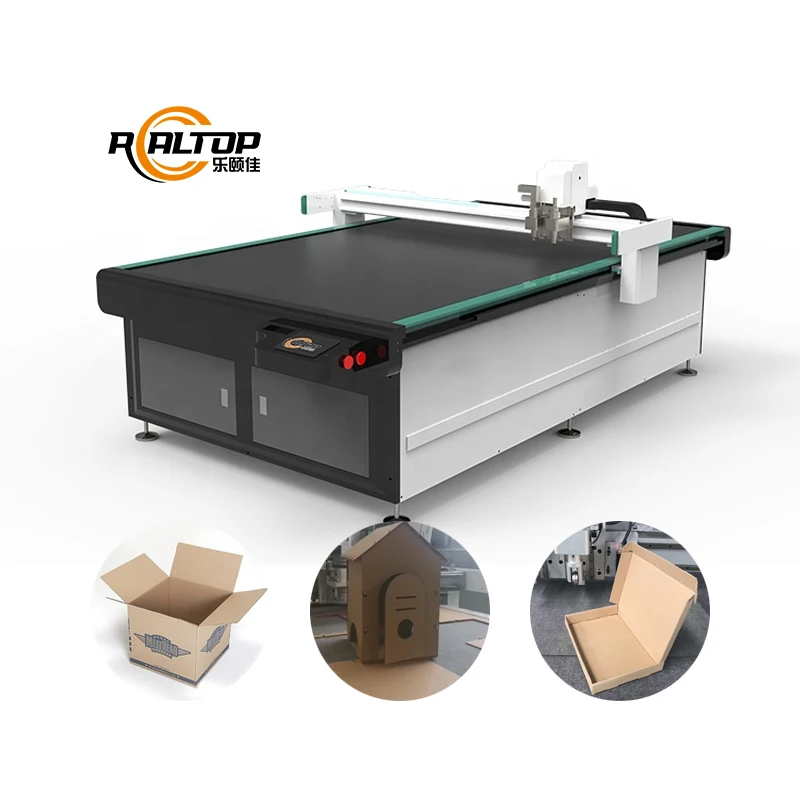
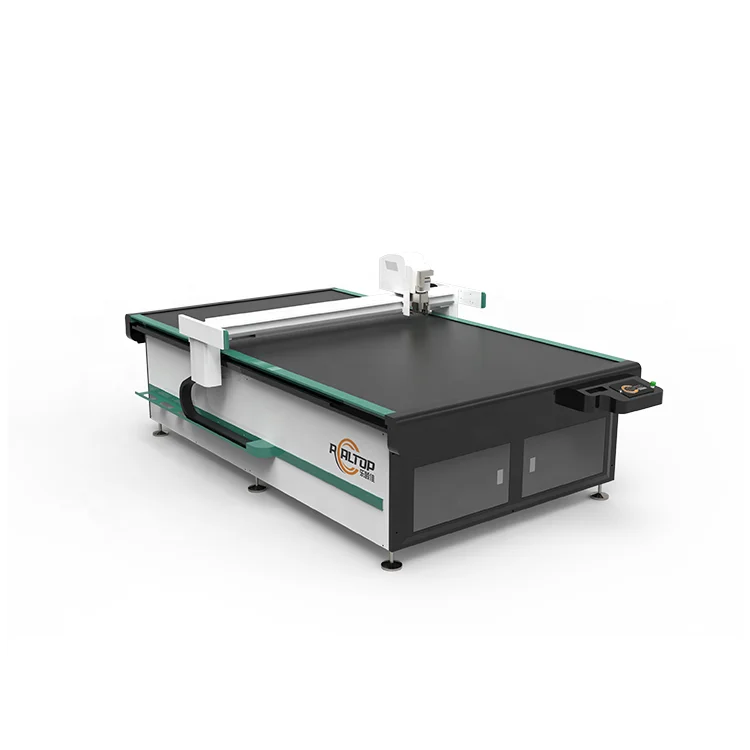
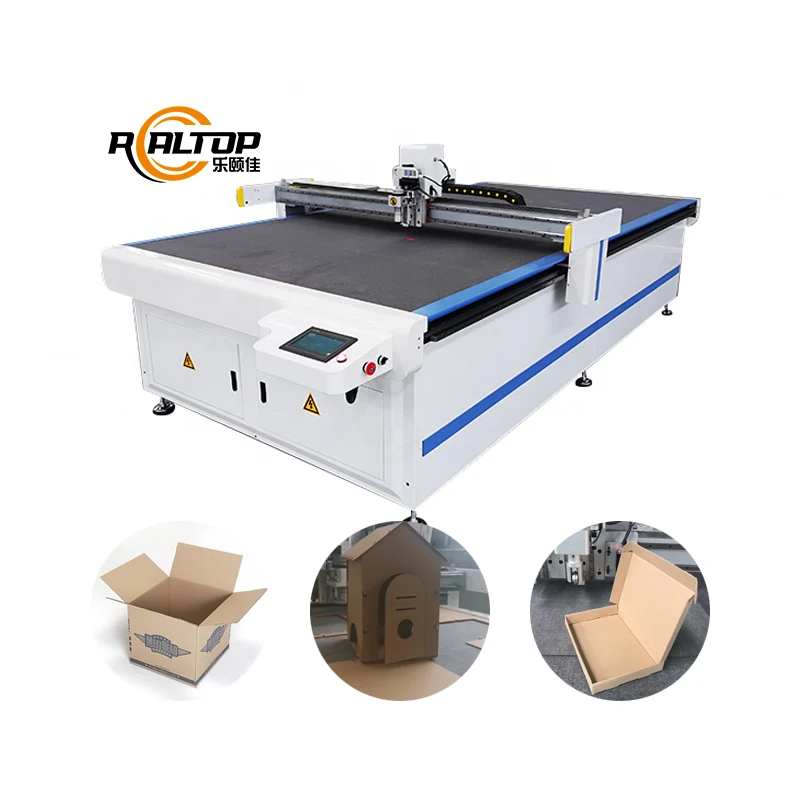
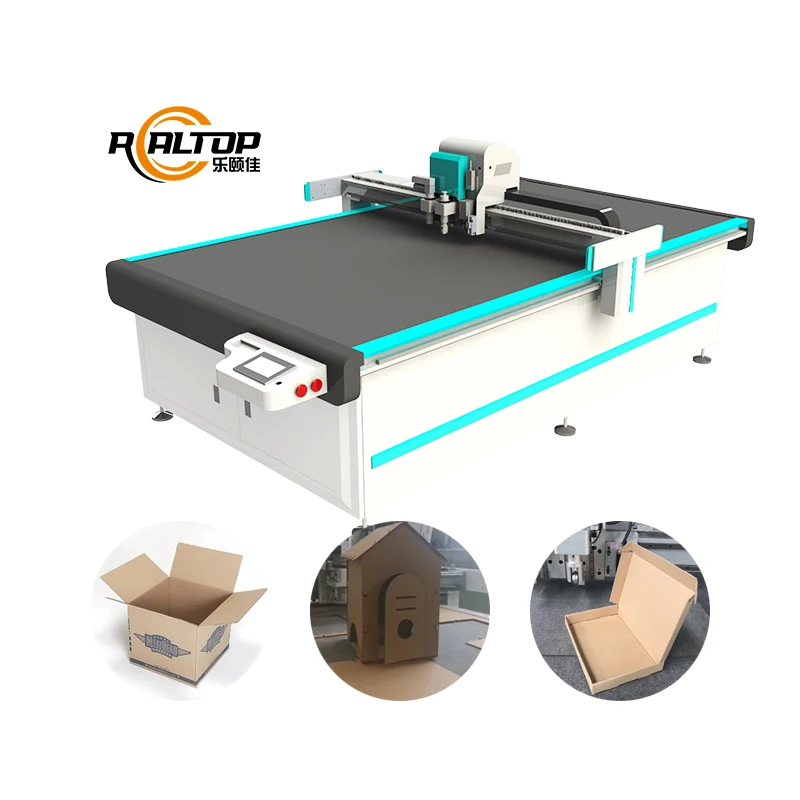
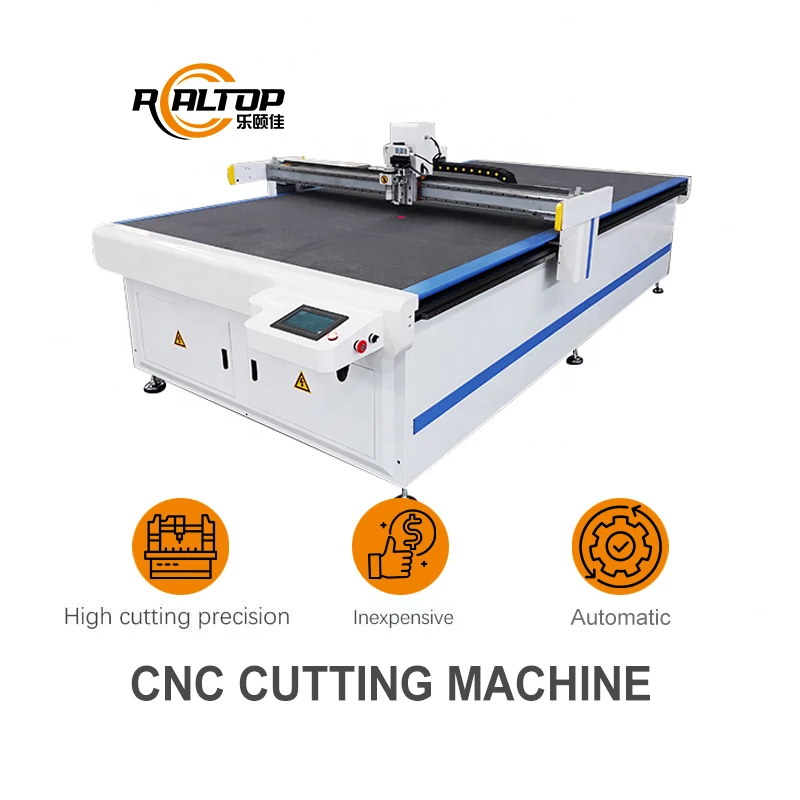
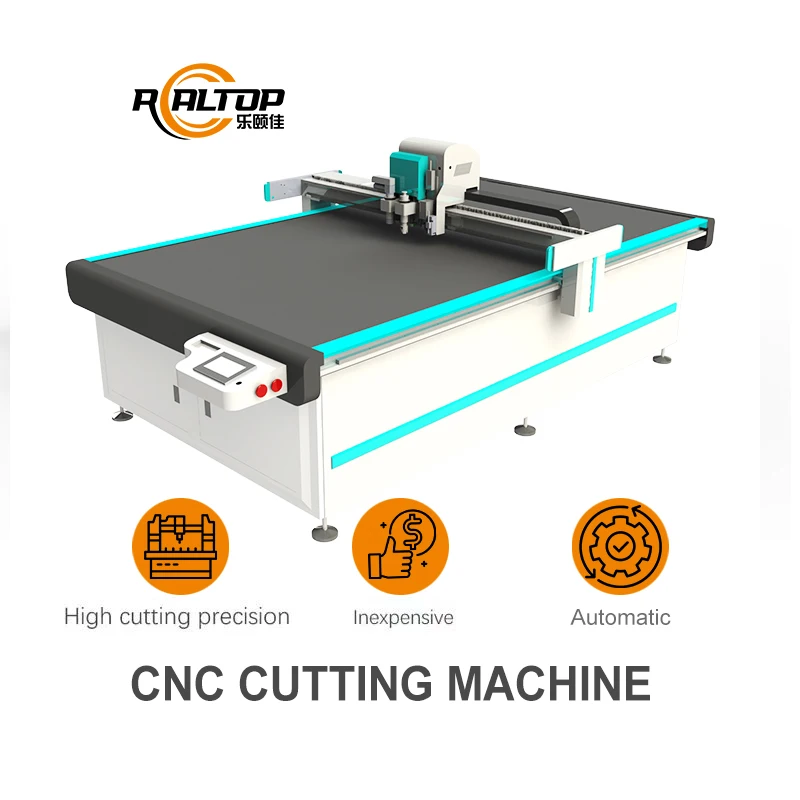
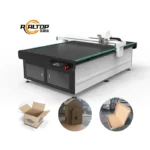
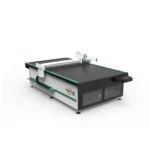
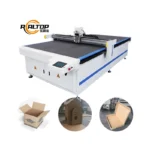
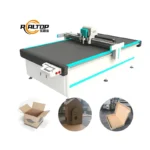
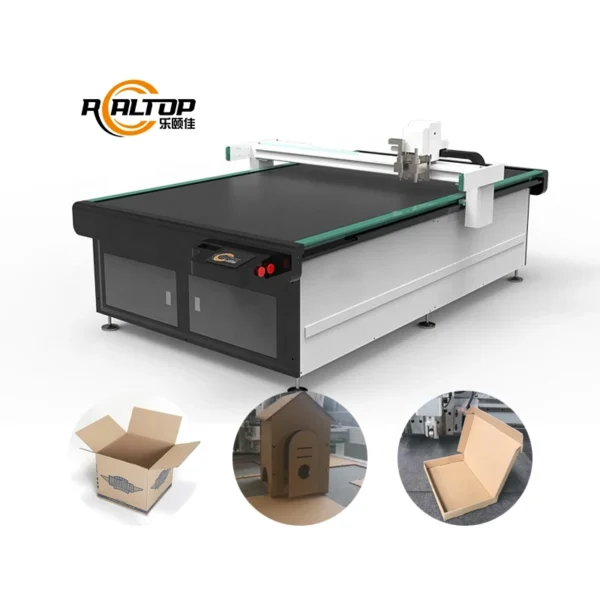
Configured Cutting Tools — A packaging CNC cutting table where oscillating knife, drag knife, and creasing wheel are assigned based on flute profile, board weight, and sample volume, not bundled as a standard package.
Technical Specifications
| Parameter | Value |
|---|---|
| Model | RT-D2516 |
| Product Type | CNC Flatbed Digital Cutting Table |
| Working Area | 1600×2500 mm |
| Overall Dimensions | 3450×2300×1250 mm |
| Rated Power | 9 kW |
| Voltage | 380V±10% |
| Table Type | Flat working table with vacuum and auto feeding |
| Tool Head | Swiss imported oscillating knife (vibration full cutting, vibration half cutting, cursor location) |
| Safety Device | Infrared sensors |
| Translational Velocity | 800–1200 mm/s |
| Repeated Accuracy | ≤0.1 mm |
| Transmission System | Digital servo motor, linear guide, synchronous belt, ball screw |
| Instruction System | HP-GL compatible format |
| Vacuum Pump | 7.5 kW |
| Servo Motor | Japanese Yaskawa |
| Linear Guide | Taiwan Hiwin rail |
| Conveyor Belt | Germany imported |
| Pneumatic Cutting Tool Capacity | Up to 70 mm thickness |
| Operations | Cutting, creasing, marking |
| Assembly State | Fully assembled |
| Warranty | 12 months whole machine, 3 months consumables |
Application Suitability
| Application | Material or Output |
|---|---|
| Corrugated cardboard packaging sample making | Single-wall, double-wall, and E-flute corrugated board |
| Carton and box prototyping | Grey board, white card stock, coated folding carton |
| Sticker and label cutting | Adhesive-backed vinyl, PVC film, synthetic paper |
| Gift box sample production | Art paper, specialty board, magnetic closure box stock |
| Flexible material cutting | Leather, sponge composite leather, soft glass, silicone, rubber |
What a Working Area Figure Hides About Flute Integrity
A CNC oscillating knife cutting table specifications sheet that lists only bed size tells you nothing about how the machine handles an E-flute sheet versus a BC-double-wall blank. The edge crush and flute structure survive or collapse depending on knife frequency, downward pressure, and vacuum zoning — factors that change from one board grade to the next. Tool head, vacuum layout, and creasing wheel selection must be confirmed against the buyer’s actual flute profile and board weight before the machine ships. I have watched packaging sample rooms accept a flatbed cutter on working area alone, only to find the single-zone vacuum lifts small partition inserts mid-cut, or the drag knife compresses a B-flute edge into a ragged line that fails the crease-fold test [NEED_CITE: corrugated flute crush resistance standards for packaging samples]. The cost is not the blade — it is the two days spent reprogramming tool paths and waiting for a creasing wheel that should have been in the original configuration list.
Oscillating Knife Frequency and Flute Preservation
The Swiss imported oscillating knife head on the RT-D2516 performs vibration full cutting and half cutting, which separates corrugated fibers cleanly rather than tearing through the medium. On E-flute and F-flute micro-corrugated, where the flute pitch is below 3 mm, a standard drag knife tends to drag the top liner and delaminate the sheet. Oscillation at high frequency keeps the blade edge perpendicular to the board surface, producing an edge that passes visual inspection without secondary trimming. This CNC oscillating knife cutting table configuration is specified per material — the same head that handles 3 mm grey board cleanly may need a different blade geometry for 12 mm honeycomb composite [NEED_CITE: oscillating knife blade geometry selection for composite and corrugated materials].
Creasing Wheel, Marking Pen, and the Three-Step Sample Workflow
Packaging sample making requires cutting, creasing, and marking on a single sheet in one pass. The RT-D2516 accommodates a creasing wheel alongside the oscillating knife, so a carton blank can be cut to outline, creased at fold lines, and marked with registration or glue-tab indicators without repositioning the sheet. Separate sample-making steps — cutting on one machine, creasing on another, marking by hand — introduce registration drift that accumulates across a short run. When the buyer’s CAD file drives all three tools from one coordinate origin, the finished sample matches the dieline within the table’s ≤0.1 mm repeated accuracy.
Servo Drive, Linear Rail, and What Repeated Accuracy Means at Production Speed
The Japanese Yaskawa digital servo motor paired with Taiwan Hiwin linear guide rails maintains positioning at translational velocities up to 1200 mm/s. On a 1600×2500 mm work area, a packaging sample sheet may contain dozens of small carton blanks, partition inserts, and label outlines — each cut requiring the head to accelerate, decelerate, and reposition within fractions of a millimeter. The synchronous belt and ball screw transmission system transfers servo torque to linear motion without the backlash that accumulates in rack-and-pinion setups over time. A stated repeated accuracy of ≤0.1 mm means a crease line lands in the same position whether it is the first blank or the fiftieth on the conveyor feed, which matters when sample approval leads directly to mass die production.
When Vacuum Zoning Fails Small Packaging Inserts
A 7.5 kW vacuum pump delivers enough suction to hold a full sheet of BC-flute corrugated flat against the conveyor belt. The failure mode appears when the same pump feeds a single undivided zone and the sheet is cut into small partition inserts or label shapes — once the outline is cut, the surrounding skeleton loses vacuum contact, and air bleeds through the kerf, lifting the small part into the knife path. The result is a stalled head, a ruined sheet, and a manual restart. Confirming vacuum zone count and layout against the buyer’s smallest finished part dimension prevents this stoppage before the machine ships [NEED_CITE: vacuum table zoning requirements for small-part digital cutting].
Why the File Format Question Comes Before the Quotation
The HP-GL compatible instruction system on the RT-D2516 accepts industry-standard plotter files, but packaging sample rooms typically work in dedicated CAD environments — ArtiosCAD, EngView, Picador — that export in proprietary or layered formats. If the buyer’s nesting workflow produces a DXF with separate layers for cut, crease, and mark, the control software must recognize and assign each layer to the correct tool head without manual remapping. Confirming software licence scope and file format compatibility before order avoids the situation where the machine arrives, the operator loads a sample dieline, and the crease lines execute as through-cuts because the layer mapping was never resolved.
Documentation That Matches the Machine on the Floor
- Factory test record on buyer’s corrugated flute type and board weight before dispatch
- Tool head and table configuration list specifying oscillating knife, creasing wheel, and marking pen assignments
- Software licence and file format compatibility note for buyer’s existing CAD or nesting workflow
- Electrical schematic with 380V±10% confirmation, target market plug type, and control panel language
- Sample cutting report on buyer’s own board stock confirming edge quality and crease depth
- Operation and maintenance manual with spare parts list matched to the shipped configuration
Installation, Commissioning & Support
- 3450×2300×1250 mm footprint requires level concrete floor with clearance for auto-feeding conveyor infeed and outfeed
- 9 kW rated power plus 7.5 kW vacuum pump demands dedicated 380V±10% three-phase circuit with confirmed plug type
- Machine ships fully assembled — rigging plan must account for 3450 mm length through workshop door clearance
- First-power commissioning includes servo calibration, vacuum zone mapping, and tool head offset verification
- Operator training covers crease depth adjustment per flute profile and file layer-to-tool assignment
- Consumable blade and creasing wheel stock list provided for twelve-month operational planning
Preparing an Inquiry That Prevents Configuration Drift
A packaging sample room evaluating the RT-D2516 CNC oscillating knife cutting table should submit the specific flute profiles in use, the board weight range in GSM, the smallest finished part dimension, and the CAD platform currently producing dielines. Target market voltage and frequency, control panel language preference, and whether existing nesting software must integrate directly all affect the configuration that ships. Material samples sent for test cutting before order confirmation resolve edge quality questions that no specification sheet can answer in advance.
Frequently Asked Questions
Q: How is cutting capacity verified for my specific corrugated flute and board weight?
A: The buyer sends representative board samples — including the thickest double-wall and the thinnest E-flute in the production mix. A test cutting report documents knife type, oscillation frequency, vacuum setting, and crease depth achieved, so edge quality and flute integrity are confirmed before the machine enters production.
Q: Which tool head configuration suits a mix of cutting, creasing, and marking jobs?
A: A typical packaging sample configuration pairs the Swiss oscillating knife for outline cutting with a creasing wheel for fold lines and a marking pen for glue-tab and registration indicators. The exact combination depends on board thickness range and whether half-cut tear strips are required.
Q: Will my existing CAD or nesting software export files this table can read directly?
A: The HP-GL compatible system accepts standard plotter output, but layered DXF or proprietary CAD formats require a file compatibility check. Submitting a sample file before order confirms that cut, crease, and mark layers map to the correct tool heads without manual conversion.
Q: How many vacuum zones does the table have, and will small parts stay flat?
A: Zone count and layout vary by configuration. The buyer’s smallest finished part dimension determines whether the standard zone layout holds adequately or a custom multi-zone arrangement is needed to prevent lift during cutting of small inserts and labels.


商品评价
Clear filtersThere are no reviews yet.