

Fast Shipping
Carrier information

20k products
Payment methods

24/7 Support
Unlimited help desk

2-day Delivery
Track or off orders
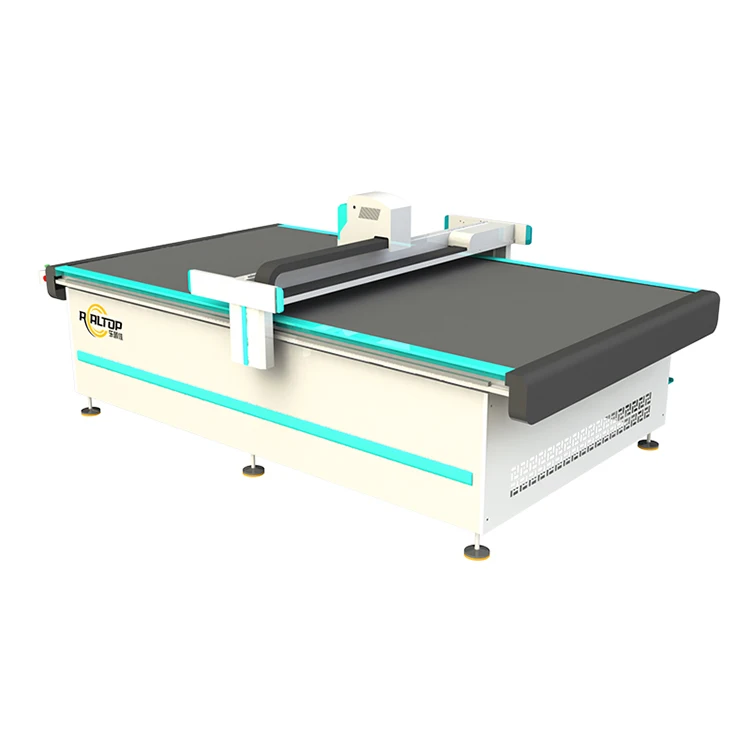
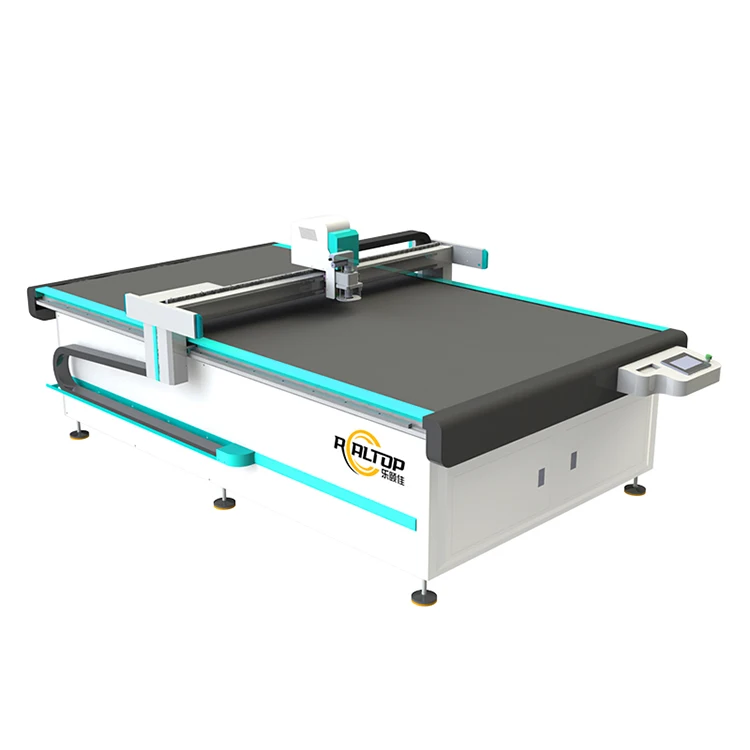
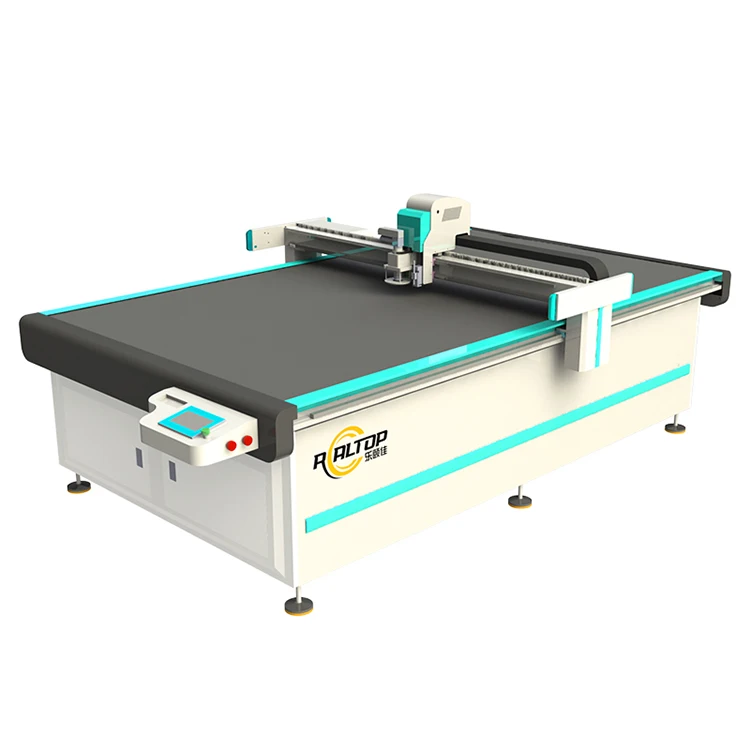
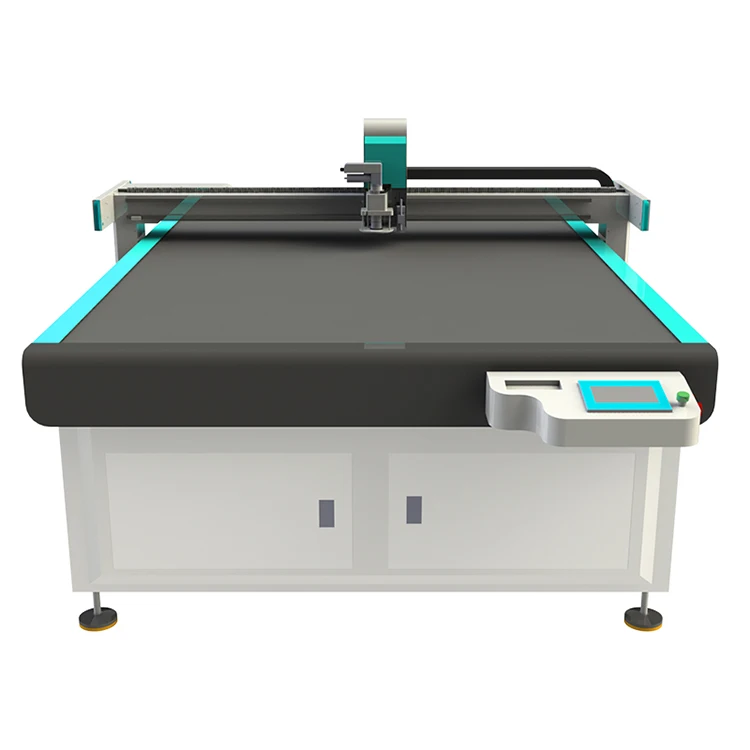
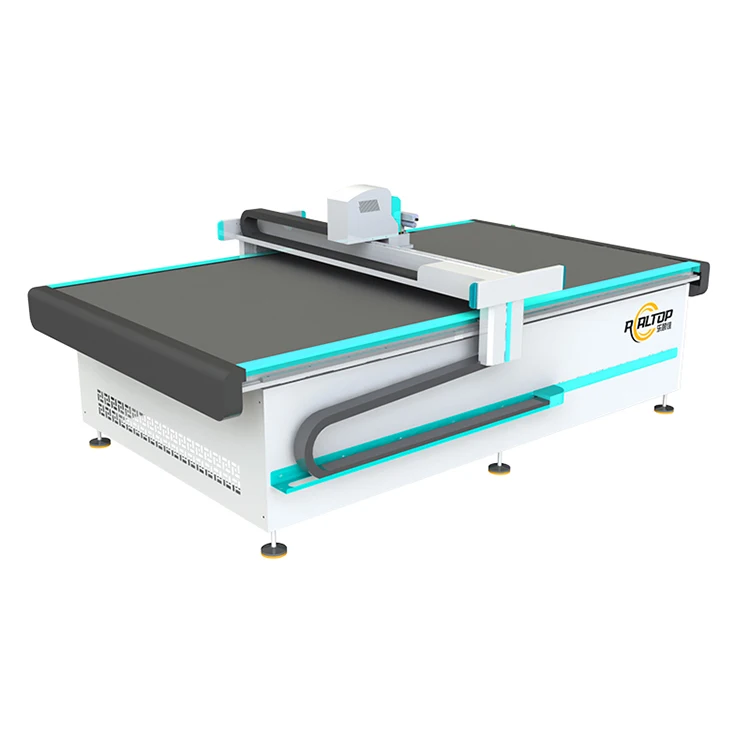
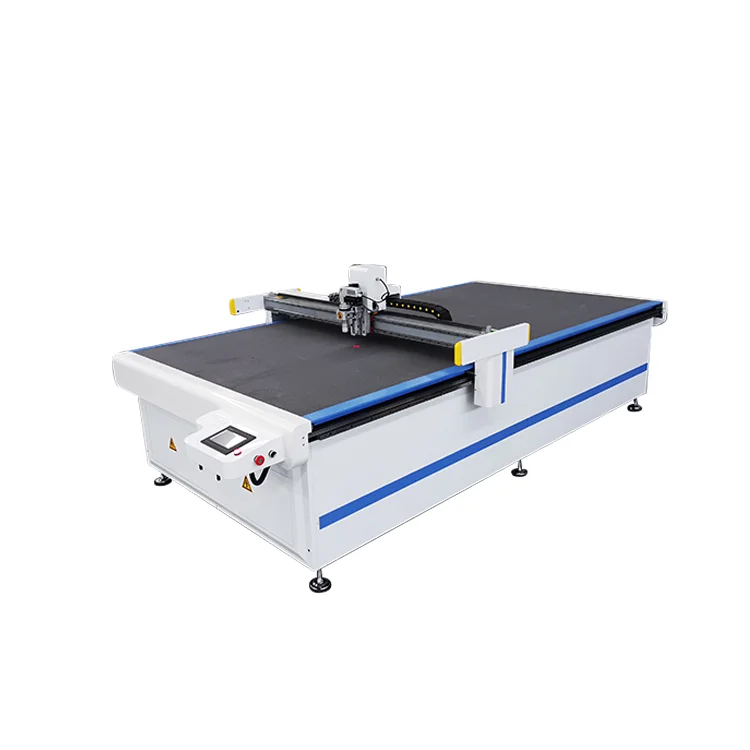
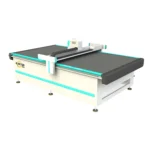
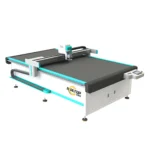
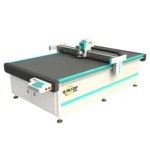
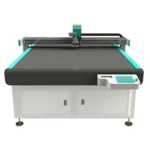
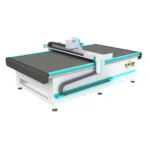
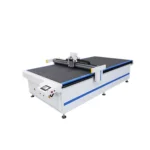
Precision Tooling Matched to Material — the multifunctional head on this flatbed cutter pairs Swiss oscillating knife technology with zoned vacuum and servo motion, specified against your fabric weight and elastane content rather than working area alone.
Technical Specifications
| Parameter | Value |
|---|---|
| Model | RT-D2516/RT-S2516 |
| Product Type | CNC Oscillating Knife Cutting Machine |
| Working Area | 1600×2500mm |
| Overall Dimensions | 3450×2300×1250mm |
| Rated Power | 9kW |
| Table Type | Flat working table with conveyor belt and vacuum |
| Tool Head | Multifunctional head with Swiss imported oscillating knife (full cutting, half cutting, cursor location) |
| Translational Velocity | 800-1200mm/s |
| Cutting Speed | 200-800mm/s (basis not stated in source) |
| Repeated Accuracy | ≤0.1mm |
| Transmission System | Digital servo motor, linear guide, synchronous belt, ball screw |
| Servo Motor | Japanese Yaskawa |
| Conveyor Belt | Germany imported |
| Linear Rail | Taiwan Hiwin |
| Vacuum Pump | 7.5kW |
| Instruction System | HP-GL compatible format |
| Voltage | 380V±10% |
| Safety Device | Infrared sensors |
Application Suitability
| Application | Material or Output |
|---|---|
| Garment panel cutting | Multi-layer woven and knit fabrics, stretch blends with elastane |
| Footwear and leather goods | Natural leather, PU synthetic, sponge composite leather |
| Gasket and seal production | Rubber, silicon, compressed fiber sheets |
| Signage and sticker fabrication | PVC, vinyl, soft films and self-adhesive sheets |
| Automotive interior soft trim | Composite foam, laminated textiles, soft glass |
What "200-800mm/s Cutting Speed" Leaves Out
The published speed range is only meaningful when tied to the material type, ply count, and fabric composition you actually run.
I have watched cutting lines deliver flawless panels on plain-weave cotton samples, then produce warped, out-of-tolerance pieces once production fabric with elastane or TPU coating hit the table. The cutting speed figure above does not state which material or thickness it references, and quoting it without that context sets unrealistic expectations [NEED_CITE: industrial cutting speed benchmarks by material type]. Before any CNC oscillating knife cutting machine specification is finalized, the speed must be validated against your actual roll goods under production conditions.
Knife Oscillation and the Edge Quality Question
The Swiss imported oscillating knife on the multifunctional head handles full cutting, half cutting, and cursor location within a single work cycle. For woven fabrics and leather, the high-frequency vibration reduces drag through the material stack, which is where drag knives tend to fray edges or require excessive downward force. This matters especially when cutting stretch materials where lateral pull distorts the panel before the blade exits the ply.
Vacuum Zoning and the Small-Part Lift Problem
A 7.5kW vacuum pump paired with a flat conveyor table holds flexible sheets during high-speed traverse. The critical factor for garment producers is whether the table zoning can isolate suction to the area under active cutting. Without proper zoning, lightweight linings and small pattern pieces lift at the trailing edge as the head passes at translational velocities approaching 1200mm/s, introducing dimensional drift that only shows up during sewing assembly [NEED_CITE: vacuum table zoning standards for textile cutting].
Servo Motion and Repeatability Across a 1600×2500mm Bed
The transmission combines Yaskawa digital servo motors with Hiwin linear rails and ball screws across the full working area. The stated ≤0.1mm repeated accuracy is relevant when nesting dozens of pattern pieces that must align during downstream stitching. On long beds, thermal expansion and belt stretch can degrade positional accuracy over a shift, which is why the linear rail and ball screw pairing is specified here rather than relying solely on synchronous belt drives.
How Specs Translate to Production Reality
The HP-GL compatible instruction system lets the cutter accept files directly from common nesting and marker-making software used in garment factories. The 9kW rated power accounts for the vacuum pump, servo drives, and oscillating mechanism running simultaneously under load. The Germany-imported conveyor belt enables auto-feeding from a roll, which reduces manual lay-up time when cutting high-volume basic styles. Voltage at 380V±10% is standard for industrial facilities across most of Southeast Asia and needs confirmation against local supply before shipment.
The Cost of Choosing the Wrong Tool Head
A buyer specifying solely on working area often discovers mid-production that the knife type is mismatched to the material. Drag knives on foam composites crush the core instead of shearing cleanly. Oscillating knives set at the wrong stroke frequency on coated textiles leave delaminated edges. These defects accumulate silently through a shift and surface as fit problems in the sewing department, long after the cutting line has signed off [NEED_CITE: tool head selection guidelines for flexible material cutting].
Why Source This Configuration Here
In-house design covers both the knife tooling and the table configuration, so the oscillating stroke, blade profile, and vacuum zoning are matched to your declared material rather than selected from a generic menu. Sample cutting runs on your actual fabric roll confirm edge quality and achievable depth before the machine ships. CCD contour recognition, when specified, is validated against your printed registration marks at production speed. Software compatibility and file format import are verified against your existing nesting workflow. Electrical schematics and voltage are confirmed for your facility before production begins.
Documentation & Verification
- Factory test record using your fabric type and declared ply height
- Tool head and vacuum zone configuration list matched to your material spec
- Electrical schematic with voltage and plug type confirmed for your market
- Software licence with HP-GL file format compatibility statement
- Operation and maintenance manual covering oscillating knife blade replacement intervals
Installation, Commissioning & Support
- 3450×2300mm footprint requires level concrete floor with clearance for roll feed access
- 9kW rated power demands a dedicated 380V circuit with proper earth bonding
- Machine ships partially assembled; conveyor belt and vacuum table leveled on site
- First-run parameter tuning against your actual material thickness and stretch content
- Oscillating knife blade change procedure and Hiwin rail lubrication schedule covered in training
- Spare parts list includes Swiss knife blades, conveyor belt segments, and vacuum seals
What We Need to Quote Accurately
Send your primary material types with composition details including any elastane or coating percentage, the maximum lay height you plan to cut, and your daily panel volume. Confirm your facility voltage and frequency, and share a sample nesting file so we can verify software import and HP-GL compatibility before building the configuration.
Frequently Asked Questions
Q: What material is the 200-800mm/s cutting speed based on?
A: The published range does not state a reference material or thickness. Actual cutting speed depends on your fabric composition, ply count, and whether the material contains stretch fibers or coatings. We validate speed on your own material during sample cutting and document the result before the machine is finalized.
Q: Which tool head fits my specific material?
A: The multifunctional head includes a Swiss oscillating knife for woven fabrics, leather, and composites. Drag knives suit thin vinyl and sticker films. Creasing wheels handle carton sample work. We specify the tool head based on your declared material type and thickness, then confirm edge quality during sample cutting.
Q: Does the vacuum table hold small pattern pieces without lifting?
A: The 7.5kW pump provides suction across the flat conveyor bed, but zoning determines whether small parts stay fixed during high-speed cutting. We configure vacuum zones to match your typical pattern layout and verify hold-down on your lightest material during the pre-shipment test.
Q: Is the CCD camera included, and does it track at full speed?
A: CCD contour recognition is an available configuration for printed contour work on garment panels and signage. Tracking performance at full translational velocity depends on mark contrast and print quality. We test the system on your printed material to confirm reliable recognition before shipment.
Q: Will my existing nesting software files import correctly?
A: The instruction system accepts HP-GL compatible format, which covers most marker and nesting platforms used in garment production. We request a sample file from your current workflow and verify import, nesting, and output before the machine configuration is locked.


商品评价
Clear filtersThere are no reviews yet.