






Fast Shipping
Carrier information

20k products
Payment methods

24/7 Support
Unlimited help desk

2-day Delivery
Track or off orders
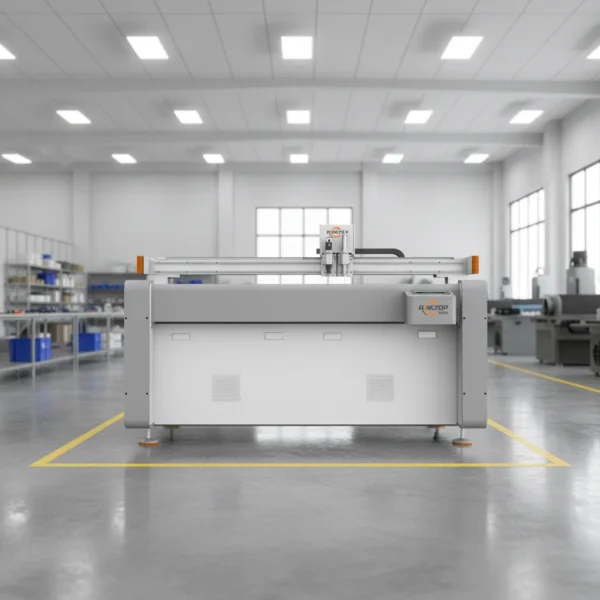
Configured Per Ply Count — Every oscillating knife frequency and creasing wheel pressure is matched to your corrugated flute profile on our Jinan factory floor before the machine ships.
Technical Specifications
| Parameter | Value |
|---|---|
| Product Type | CNC Oscillating Knife Cutting Machine |
| Working Area | 1600 × 2500 mm |
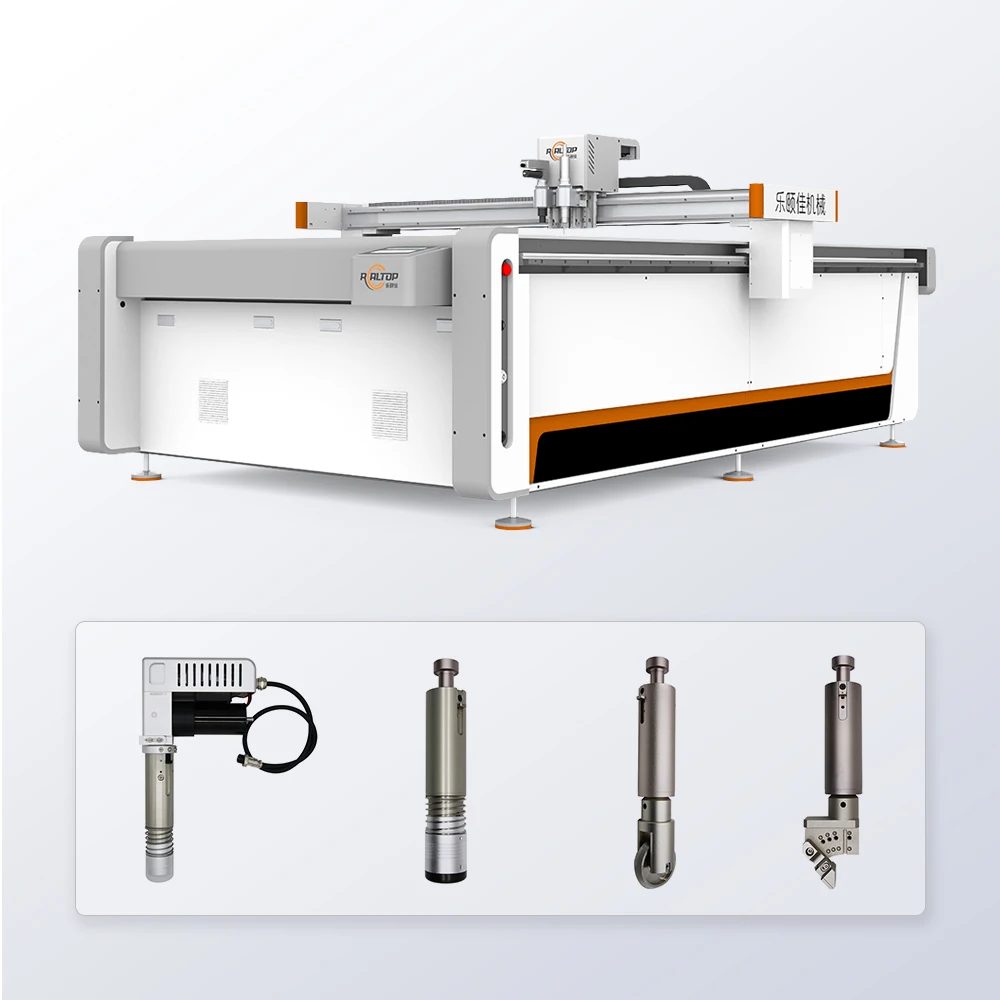
| Tool Head Options | Oscillating knife, Driven rotary knife, Creasing wheel, Kiss cutting tool, Pneumatic knife, Milling tool, V-groove knife |
| Cutting Thickness Capacity | Up to 40 mm (material dependent) |
| Cutting Speed Range | 0 – 1500 mm/s (basis to be confirmed) |
| Cutting Accuracy | ±0.1 mm |
| Vacuum System | 9 kW pump with aluminum bellows vacuum table |
| Control Interface | PLC control panel |
| Software | Dedicated packaging box structure design software |
| Supported File Formats | PLT, DXF, AI, PDF |
| Servo Drive Options | Panasonic, Delta, or Dorna servo motors |
| Voltage Options | 110V, 220V, or 380V (configurable per destination market) |
| Safety Systems | Infrared sensor device and emergency stop |
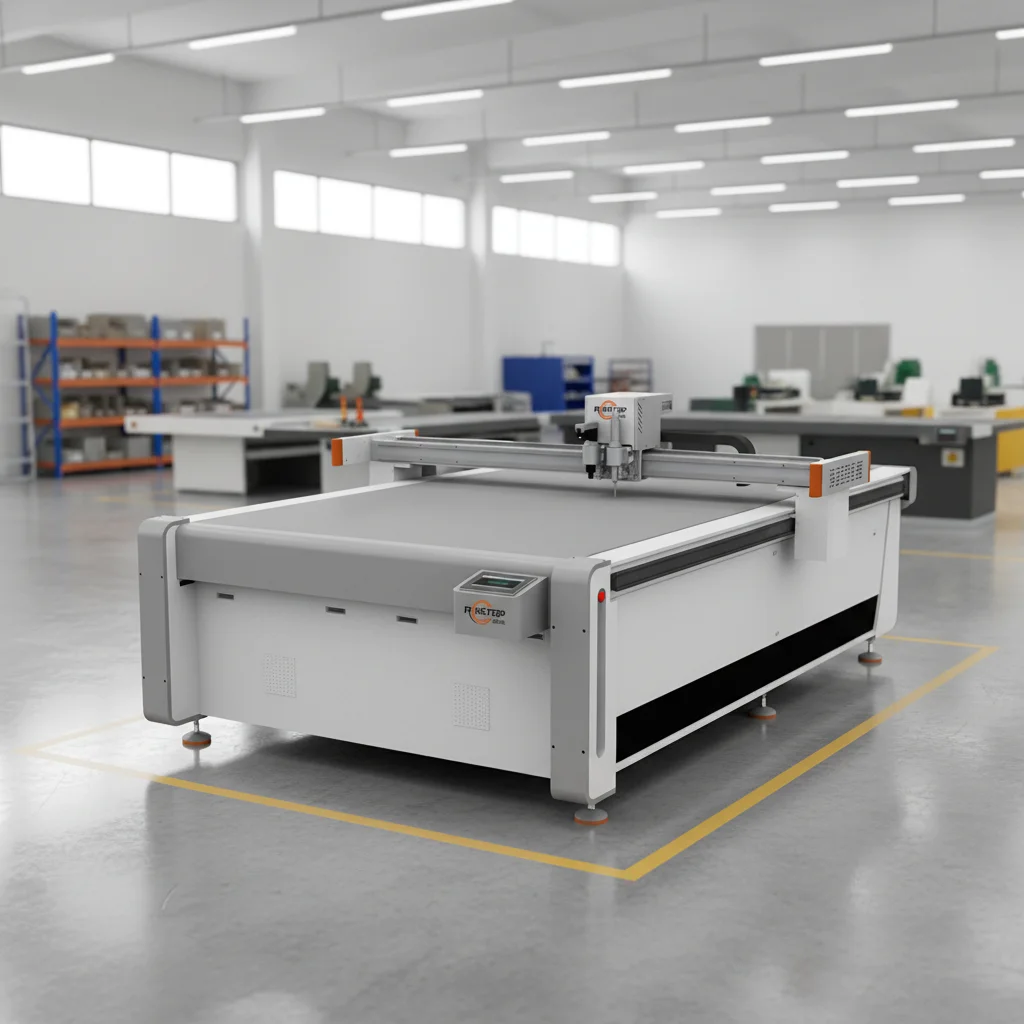
| Machine Dimensions | 3300 × 2100 × 1350 mm |
| Frame Construction | Heavy-duty frame with precision-ground surface |
| Control Language Options | English, Russian, Italian, Chinese (special languages customizable) |
| Compliance | CE (source value — verify against manufacturer catalog) |
Application Suitability
| Application | Material or Output |
|---|---|
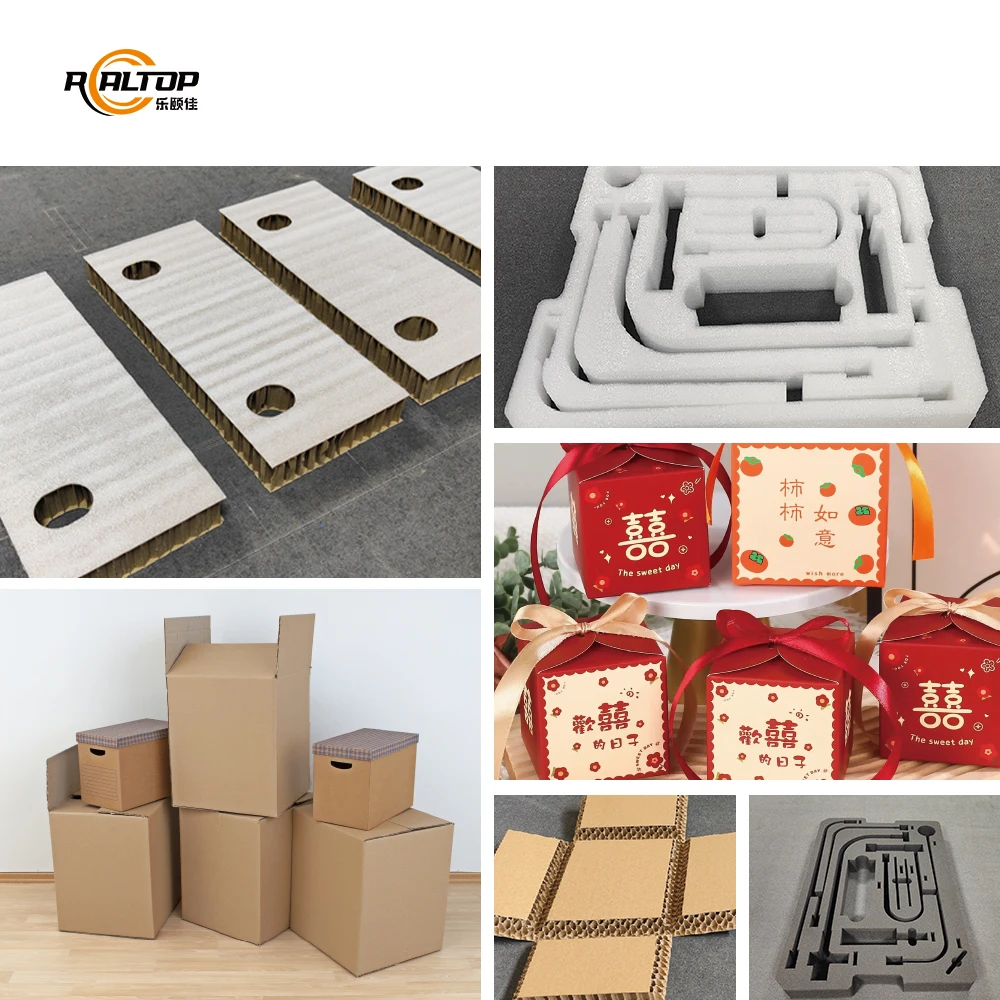
| Packaging sample making and carton prototyping | E-flute, B-flute, and BC-flute corrugated board without die-cut molds |
| Corrugated board short-run converting | Greyboard, cardstock, art paper, and specialty paper stock |
| Protective foam insert fabrication | EVA foam, EPE foam, and PU foam sheets |
| Gasket and seal prototyping | Rubber mats and composite sealing materials |
| Textile and leather packaging components | Velvet, fleece fabric, non-woven fabric, and synthetic leather |
| Thin plastic sheet processing | PVC and PET sheets for blister pack prototypes |
What Flute Depth Really Means for Your CNC Oscillating Knife Cutting Table Specifications
The blade must clear the full flute height without dragging the medium, or the cut edge collapses before the creasing wheel even touches the board.
I learned this the hard way when a carton sample maker in Poland sent us E-flute board specs and we ran our initial tests on standard B-flute stock. When their CNC vibrating knife cutter arrived on-site, the oscillating blade tore through the corrugated medium, leaving ragged edges across every sample. The cutting parameters had to be rebuilt entirely from scratch because the flute geometry changed everything about blade frequency, downward pressure, and travel speed [NEED_CITE: corrugated flute geometry and knife cutting parameters]. Matching the CNC oscillating knife cutting table specifications to your actual ply count and flute type is the only way to avoid this kind of on-site rework.
Tool Head Selection Across Flute Profiles
E-flute board at roughly 1.5 mm thickness cuts cleanly with a standard oscillating knife at moderate frequency, while B-flute at 3 mm demands higher oscillation amplitude to shear through the taller medium without crushing it. BC-flute double-wall board pushes past 6 mm and often requires the pneumatic knife option for the initial through-cut, followed by the creasing wheel on a separate pass. The multi-tool configuration on this CNC oscillating knife cutting table lets you switch between these heads within a single job file, so a complex carton design with both cut lines and fold lines runs without manual tool changes.
Vacuum Hold-Down and Small Part Stability
Corrugated board warps naturally, and a sheet that lifts even slightly during cutting will produce dimensionally inaccurate blanks. The aluminum bellows vacuum table on this machine provides a flat reference surface, and the 9 kW pump generates sufficient suction to hold warped sheets without mechanical clamps [NEED_CITE: vacuum hold-down requirements for corrugated digital cutting]. For nested layouts where small packaging components are cut from a larger sheet, the zoning capability of the table matters because full-sheet vacuum across an already-cut part can pull air through the kerf and reduce hold on adjacent uncut sections.
Reading the Specs That Matter for Packaging Work
The 1600 × 2500 mm working area accommodates most standard corrugated sheet sizes used in packaging prototyping, but the real value lies in how the cutting accuracy of ±0.1 mm translates to fold-line registration. When a creasing wheel must land precisely on a printed score line, that tolerance determines whether the finished box folds square or twists. The dedicated packaging box structure design software handles parametric box templates directly, which eliminates the file conversion step that often introduces dimensional drift when moving from CAD to machine. Servo drive selection across Panasonic, Delta, and Dorna options allows buyers to align the motion system with their local service infrastructure, since servo availability varies considerably by region.
When the Wrong Configuration Reaches Your Floor
A machine specified only on working area and price will almost certainly arrive with a tool head that does not match your material stack. I have seen oscillating knives specified for foam producers who actually needed a drag knife for their gasket material, resulting in crushed edges and rejected parts. Buyers who skip the sample cutting step on their own corrugated stock often discover the problem only after the machine is installed and production deadlines are already slipping [NEED_CITE: material testing before CNC cutting machine purchase]. The cost of reconfiguring tool heads and rebuilding parameter libraries on-site far exceeds the time invested in pre-shipment material trials.
Why Procurement Through This Channel Works
Our Jinan factory runs both knife and laser cutting lines under one roof, which means the cutting method is chosen based on your material rather than forced into whichever technology a single-technology supplier happens to sell. Every tool head and table configuration is specified against your documented material type and thickness before the order is confirmed. The CCD camera positioning option addresses printed contour work on corrugated board where registration marks guide the cut path. Software compatibility with your existing file formats is verified during the pre-order stage, not discovered after delivery. Voltage, plug type, and control panel language are confirmed against your destination market requirements so the machine powers up correctly on day one.
Documentation & Verification
- Machine specification sheet listing every configured tool head and vacuum zone
- Electrical schematic with voltage and frequency matched to your facility supply
- Sample cutting report produced on your actual corrugated board before shipment
- Software license documentation with confirmed file format compatibility list
- Factory test record showing cutting accuracy measured on your material thickness range
- Operation and maintenance manual in your selected control language
Installation, Commissioning & Support
- Floor space planning based on the 3300 × 2100 mm machine footprint plus operator clearance
- Dedicated electrical circuit sized for the 9 kW vacuum pump and servo load combined
- Assembly of the heavy-duty frame and precision-ground table surface on your shop floor
- First-run parameter tuning on your corrugated material with all configured tool heads
- Operator training on the PLC control panel in your chosen language option
- Spare parts list covering oscillating blades, creasing wheels, and vacuum table seals
What We Need From Your Inquiry
Send us your corrugated flute type, board thickness, and maximum sheet dimensions so we can configure the correct tool head and vacuum zoning. Let us know your local voltage and frequency standard along with your preferred control language. If you are currently using specific packaging design software, share the file formats so we confirm compatibility before building your machine.
Frequently Asked Questions
Q: How do I choose between oscillating knife and drag knife for my corrugated board?
A: Oscillating knives suit thicker flutes like B-flute and BC-flute where the blade must shear through a tall corrugated medium without crushing it. Drag knives work better on single-face or thin E-flute where a clean pull-cut produces the edge. We test both methods on your actual board during the sample cutting stage before recommending the final tool head configuration.
Q: Will the vacuum table hold small packaging components during nested cutting?
A: The aluminum bellows vacuum table features zoning capability, so suction is concentrated on the uncut portion of the sheet rather than wasted across already-separated parts. This prevents small carton blanks from lifting during the final cuts in a nested layout. We configure the zone count based on your typical nesting patterns and smallest part size.
Q: Can the CCD camera track printed registration marks on corrugated board at full speed?
A: The CCD camera positioning option reads printed contour marks on corrugated surfaces and adjusts the cut path in real time. Performance depends on mark contrast, print quality, and board surface texture. We validate contour recognition accuracy on your printed samples during pre-shipment testing to confirm reliable tracking at your target cutting speed.
Q: Is the packaging design software compatible with my existing workflow?
A: The dedicated packaging box structure design software imports PLT, DXF, AI, and PDF formats directly. If you use proprietary packaging CAD systems, we verify file import and nesting compatibility before your order is finalized. This step prevents workflow disruption when the machine arrives at your facility.
Q: Can the control panel and documentation be provided in my local language?
A: Standard language options include English, Russian, Italian, and Chinese. Special languages are customizable for the PLC control panel interface and the operation manual. We confirm your language requirement during the specification stage so all documentation and on-screen text are ready at delivery.


商品评价
Clear filtersThere are no reviews yet.