






Fast Shipping
Carrier information

20k products
Payment methods

24/7 Support
Unlimited help desk

2-day Delivery
Track or off orders
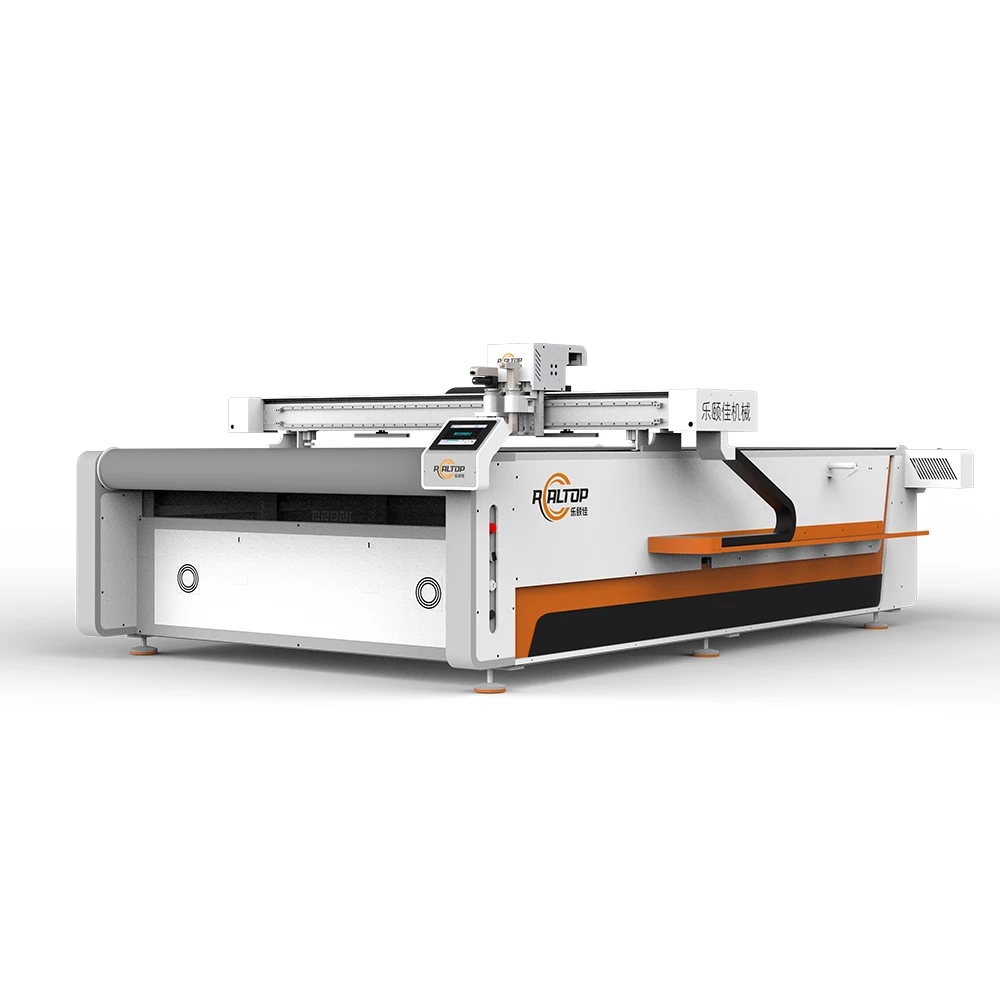
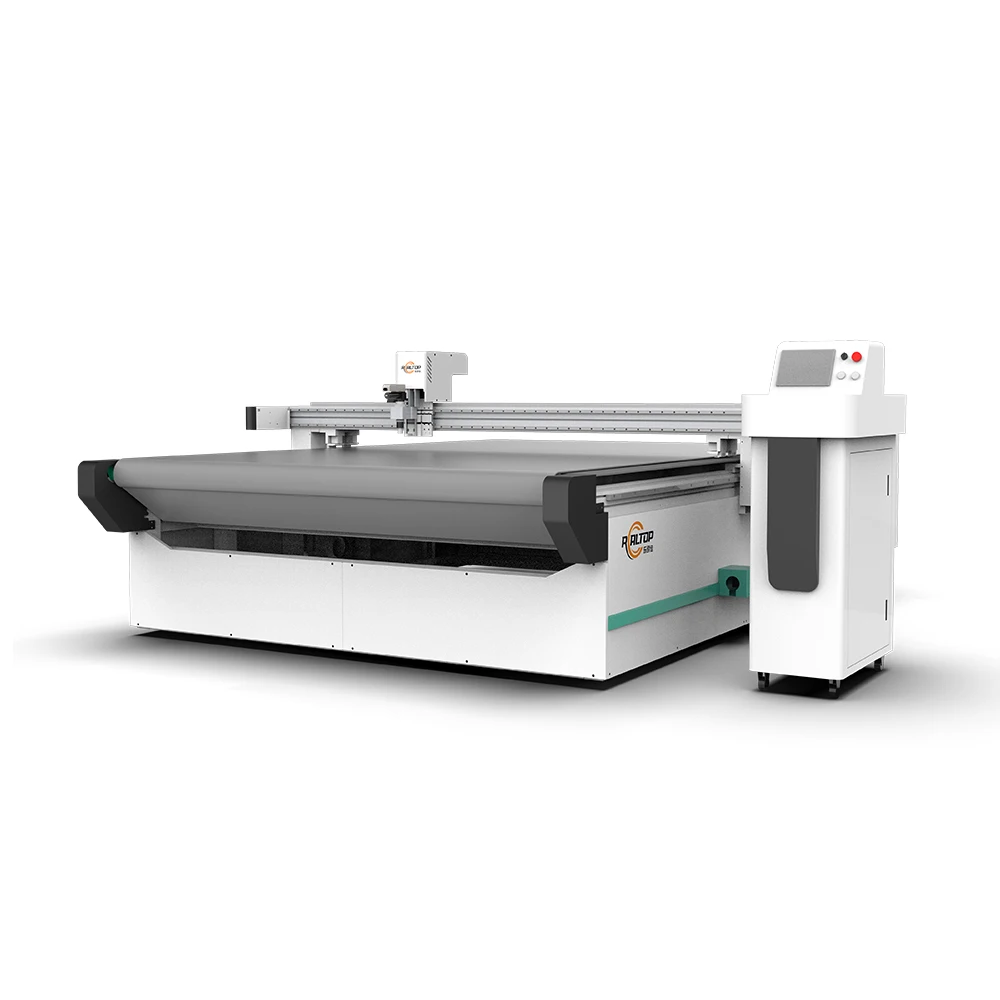
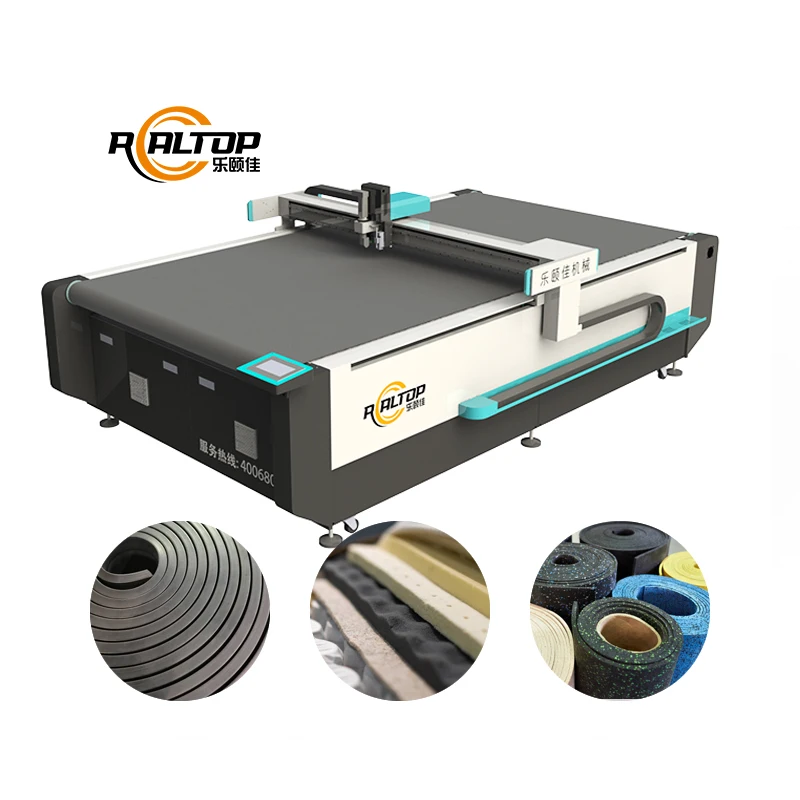
Configurable tool head and vacuum platform — the RT-D2516/RT-S2516 lets fabric, leather and foam processors match oscillating knife, drag knife or creasing wheel to their actual material stack rather than forcing a single cutting method across varied production runs.
Technical Specifications
| Parameter | Value |
|---|---|
| Product Type | CNC Oscillating Knife Cutting Machine |
| Model | RT-D2516 / RT-S2516 |
| Working Area | 1600 × 2500 mm |
| Machine Dimensions | 3450 × 2300 × 1250 mm |
| Rated Power | 9 kW |
| Cutting Thickness | ≤100 mm (varies with material) |
| Cutting Speed | 200–800 mm/s (according to different cutting materials) |
| Translational Velocity | 800–2000 mm/s |
| Repeated Accuracy | ≤0.1 mm |
| Table Type | Flat working table or auto-feeding table (configurable) |
| Multifunctional Head | Swiss imported knife with vibration full cutting, half cutting and cursor location |
| Servo Motor | Delta (Panasonic optional) |
| Transmission System | Digital servo motor, linear guide, synchronous belt, ball screw |
| Guide Rail | Taiwan Hiwin rail |
| Vacuum Pump | 7.5 kW |
| Conveyor Belt | Germany imported |
| Safety Device | Infrared sensors, anti-collision, emergency stop |
| Voltage | 380V ±10% (customizable) |
| Instruction System | HP-GL compatible format |
| Software File Formats | PLT, DXF, AI |
| Control Panel | Touch screen, multiple language supported |
| Language Options | English, Russian, Italian, Chinese (special languages customizable) |
| Certification | CE (declaration where applicable) |
Application Suitability
| Application | Material or Output |
|---|---|
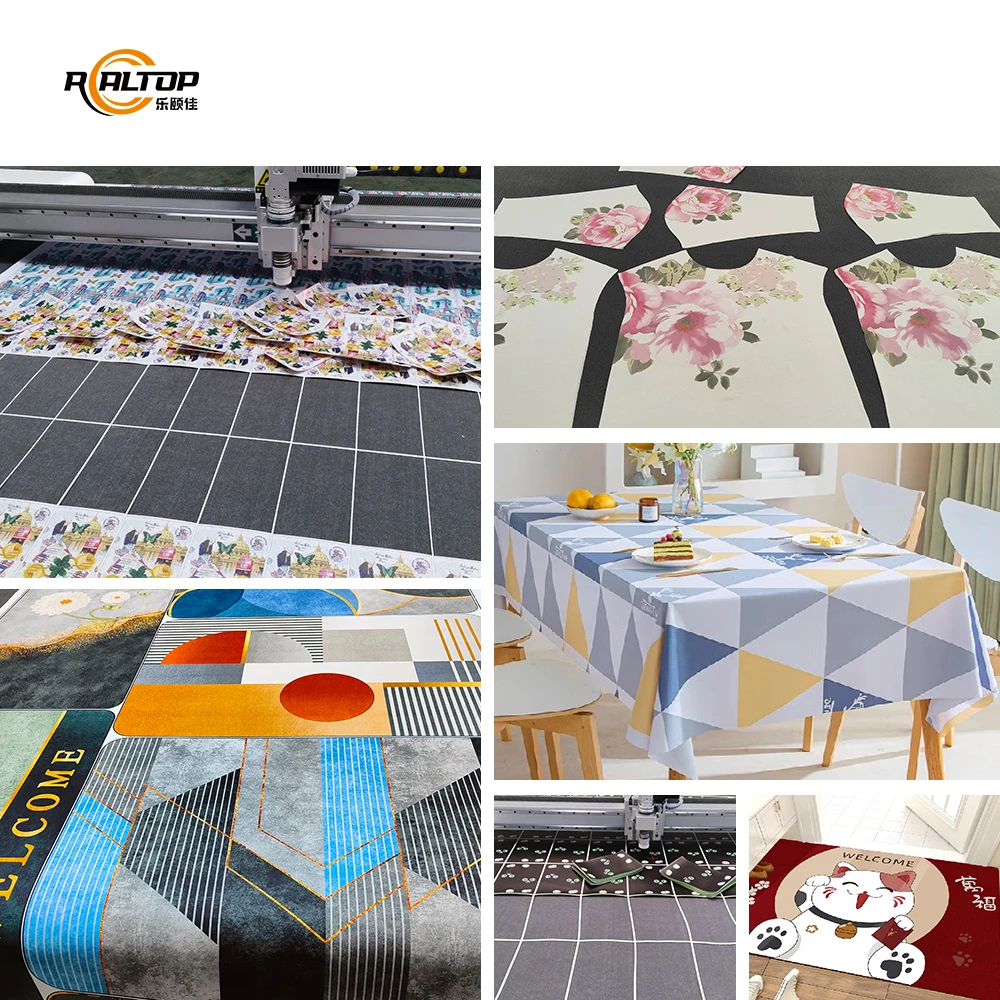
| Garment and footwear production | Fabric, textile, leather, shoe material, luggage material, non-woven fabric |
| Automotive interior and gasket fabrication | Sponge composite leather, rubber, carbon fiber, sealing pad material, PU, EVA |
| Packaging and carton sample making | Corrugated cardboard, sticker, film, cardboard |
| Soft home furnishings and carpets | Carpet, sponge, foam board, cloth, XPE |
| Advertising and graphic printing | PVC, PP, PE, vinyl, sticker, film |
| Sports and outdoor products | Composite materials, fiberglass, PTFE, ETFE |
Why Working Area Alone Is Not Enough When Choosing CNC Oscillating Knife Cutting Machine Specifications
A 1600 × 2500 mm bed tells you nothing about whether the machine will hold a 3 mm foam sheet flat or cut through a five-layer carbon fiber layup without delamination.
I have watched buyers specify a flatbed cutter purely on table dimensions, then discover during commissioning that the vacuum zoning cannot hold small gasket pieces in place, or the oscillating knife frequency is too low for the composite they actually run in production. The cutting thickness ceiling of ≤100 mm shifts dramatically depending on whether you are slicing single-ply garment fabric or multi-layer sponge composite leather. Without seeing the buyer’s actual material stack and daily volume, no configuration recommendation holds up past the first production shift [NEED_CITE: material thickness and density effects on oscillating knife cutting performance].
Tool Head Selection Drives Edge Quality More Than Motor Power
The multifunctional head on the RT-D2516 and RT-S2516 accepts a Swiss imported knife configured for vibration full cutting, vibration half cutting and cursor location. For garment fabric and woven textile, a high-frequency oscillating knife delivers clean edges without fraying, while a drag knife suits thinner sticker and film materials where through-cutting is the only requirement. Creasing wheels handle corrugated cardboard and packaging sample work without penetrating the material surface. Choosing the wrong tool head for the material produces ragged edges on leather or crushed cells in foam board — defects that show up at the sewing station, not at the machine.
Vacuum Zoning and Table Flatness Determine Small-Part Yield
The magnesium-aluminum alloy vacuum adsorption table carries a fluorocarbon PVDF coating with hard oxidation treatment, giving the surface high flatness and uniform suction distribution across the 1600 × 2500 mm working area. For automotive gasket producers cutting dozens of small sealing pads from a single sheet, zoned vacuum control prevents parts from lifting mid-cut — a failure mode that destroys both the part and the knife blade. The integrated aviation aluminum shell pump with built-in silencer reduces operational noise by 35%, which matters in workshops running multiple CNC knife cutting tables side by side [NEED_CITE: vacuum hold-down requirements for small-part CNC cutting].
How Transmission and Servo Components Affect Repeated Accuracy
The ≤0.1 mm repeatability specification is achieved through a digital servo motor (Delta standard, Panasonic optional) paired with Taiwan Hiwin linear guide rails and ball screw transmission. In garment nesting workflows where hundreds of pattern pieces are cut from a single fabric lay, cumulative positioning error across the 2500 mm travel length separates acceptable yield from costly re-cuts. The synchronous belt component handles high-speed traversing at 800–2000 mm/s translational velocity, while the ball screw governs precision movements during contour cutting at 200–800 mm/s depending on material resistance.
The Hidden Cost of Skipping Material-Specific Configuration
When a buyer locks in a CNC oscillating knife cutting machine based on a brochure spec sheet without confirming the tool head, vacuum zoning and conveyor setup against their actual material, the consequences surface within the first week of production. Knife blades wear prematurely against fiberglass-reinforced composites because the oscillation frequency was set for standard PU leather. Small gasket pieces drift on the table because the vacuum zones were configured for full-sheet garment fabric rather than nested small parts. Software that accepts DXF files may still fail to import the buyer’s nesting layout if the file structure uses layer conventions the controller does not recognize [NEED_CITE: CNC cutting software file format compatibility issues].
Why Source This Configuration From REALTOP
In-house design covers both oscillating knife and drag knife cutting technologies on the same platform, so a buyer running mixed materials does not need two separate machines. Tool head and table configuration is specified per material type and production volume before the order is confirmed, not pulled from a default list. CCD camera positioning is available for printed contour work where registration marks must be tracked at production speed. Software compatibility covering PLT, DXF, AI and HP-GL formats is verified against the buyer’s existing workflow before shipment. Voltage, plug type and control panel language — including English, Russian, Italian, Chinese and customizable options — are locked in during the specification stage so the machine arrives ready to run in the target market.
Documentation & Verification
- Machine specification sheet listing confirmed tool head and vacuum table configuration
- Electrical schematic with voltage, plug type and frequency matched to destination market
- Sample cutting report on buyer’s own material with edge quality and speed documentation
- Tool head and table configuration list tied to specific material type and thickness
- Software licence and file format compatibility note covering PLT, DXF, AI and HP-GL
- Factory test record with repeatability measurement before dispatch
Installation, Commissioning & Support
- 3450 × 2300 mm footprint requires level concrete floor with clearance for auto-feeding conveyor
- 9 kW rated power plus 7.5 kW vacuum pump needs dedicated 380V ±10% three-phase circuit
- Machine ships with touch screen control panel pre-loaded in confirmed language
- First-run parameter setting covers oscillation frequency, vacuum zone mapping and cutting speed
- Operator training addresses tool head changeover between oscillating knife and drag knife
- Spare parts list includes Swiss knife blades, conveyor belt segments and vacuum seals
What to Prepare Before Requesting a Quotation
Send the material type, maximum thickness, sheet dimensions and estimated daily volume so the tool head and vacuum configuration can be matched to the actual production job. Confirm the local voltage standard, plug type and preferred control panel language before the specification is finalized. If the workflow relies on printed contour cutting or a specific nesting software, provide sample files in PLT, DXF or AI format so compatibility is verified before the machine enters production.
Frequently Asked Questions
Q: How do I select the right tool head for my material type and thickness?
A: Oscillating knives suit fabric, leather and foam where high-frequency vibration produces clean edges. Drag knives handle thin film, sticker and vinyl where simple through-cutting is sufficient. Creasing wheels score corrugated cardboard without penetrating the surface. The selection depends on material density, thickness and the edge finish your downstream process requires. We confirm the tool head against a sample of your actual material before building the machine.
Q: How is cutting speed verified against my specific material and thickness?
A: The 200–800 mm/s cutting speed range shifts depending on material density and layer count. We run a sample cut on the buyer’s own material at production-relevant thickness, documenting the achievable speed alongside edge quality. This report accompanies the quotation so the buyer can evaluate throughput expectations against real test data rather than published maximums.
Q: Is the vacuum table zoning sufficient for small parts to prevent material lift?
A: The magnesium-aluminum vacuum table with PVDF coating provides uniform suction across the full 1600 × 2500 mm area. For small-part work such as gaskets or shoe components, zone configuration is adjusted during setup so suction concentrates under the active cutting region. We verify hold-down performance during the sample cutting test using the buyer’s actual part geometry and nesting layout.
Q: Can the CCD camera track printed marks at production speed for contour cutting?
A: CCD camera contour recognition is available as a configuration option on this platform. Tracking reliability at production speed depends on print mark contrast, size and placement relative to the cutting path. We test the camera against the buyer’s printed material sample to confirm registration accuracy before the configuration is finalized for the order.
Q: How are voltage, plug type and control language confirmed before shipment?
A: The standard 380V ±10 supply is configurable to match destination market requirements. Plug type, control panel language and software interface language — from English, Russian, Italian and Chinese to custom options — are locked into the specification sheet before production begins. The electrical schematic documents every confirmed parameter so there are no surprises at commissioning.


商品评价
Clear filtersThere are no reviews yet.