







Fast Shipping
Carrier information

20k products
Payment methods

24/7 Support
Unlimited help desk

2-day Delivery
Track or off orders
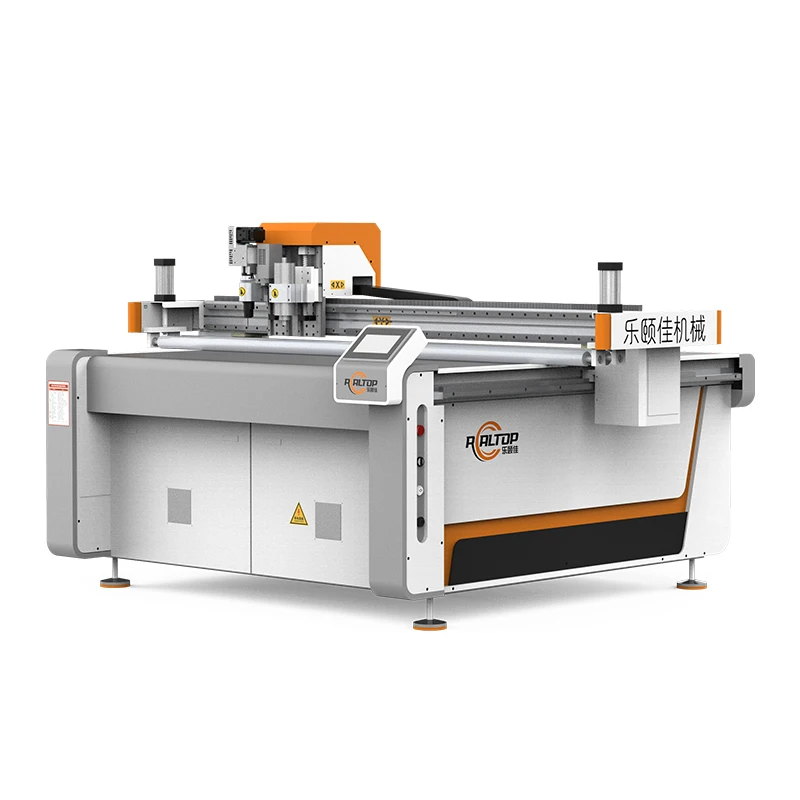
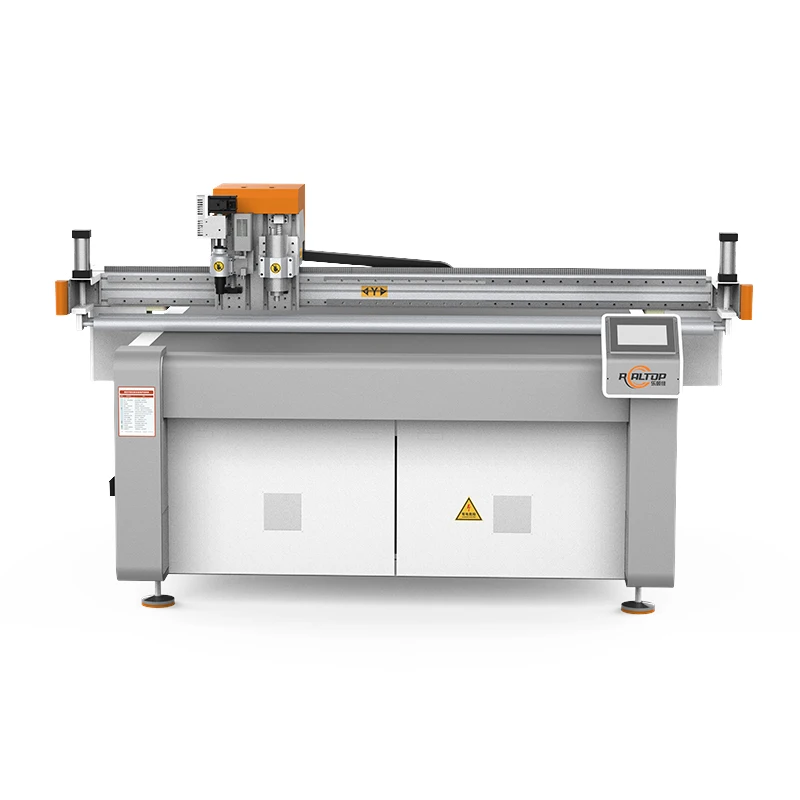
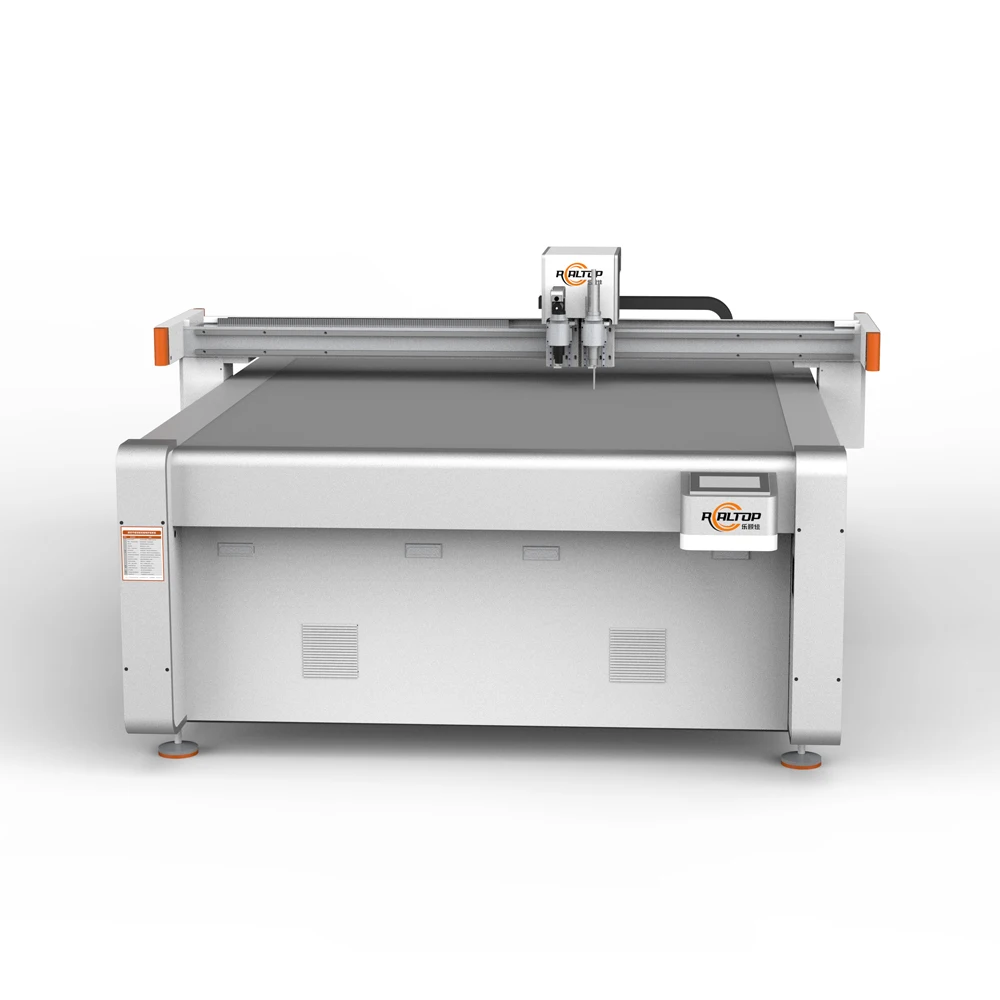
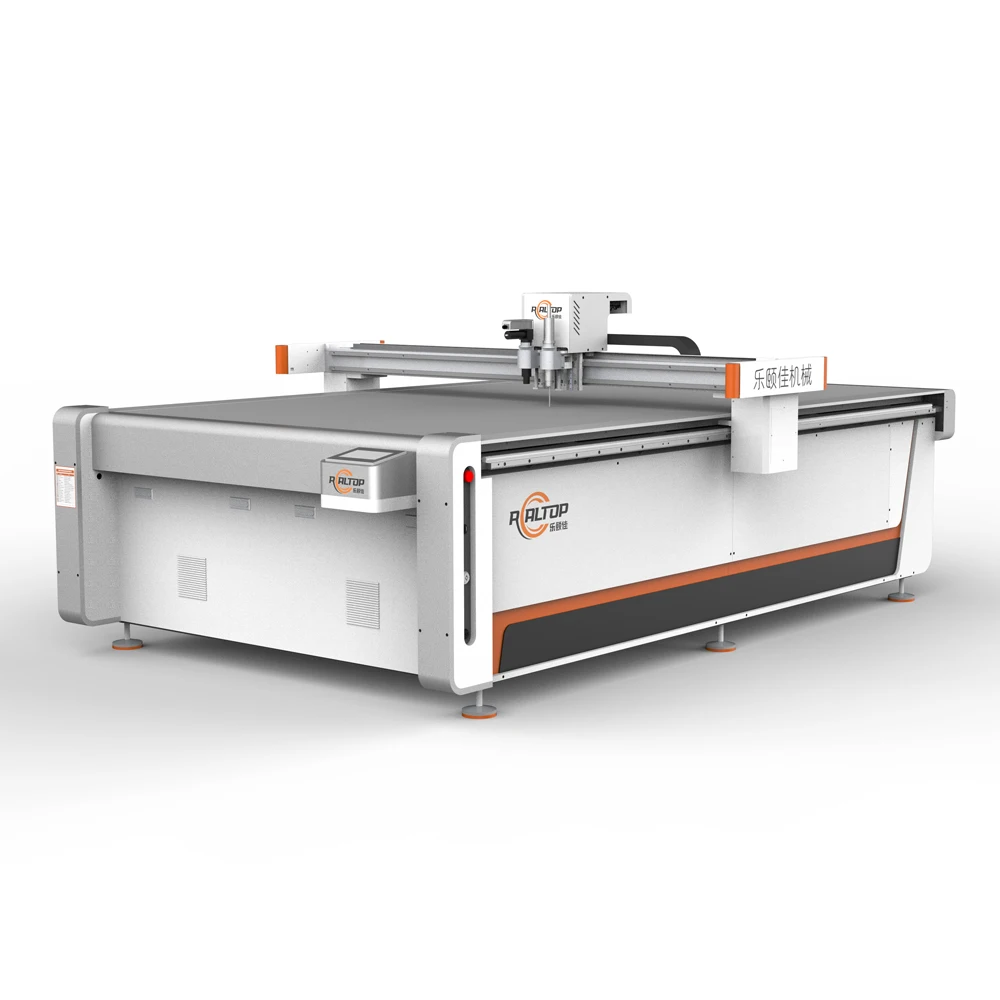
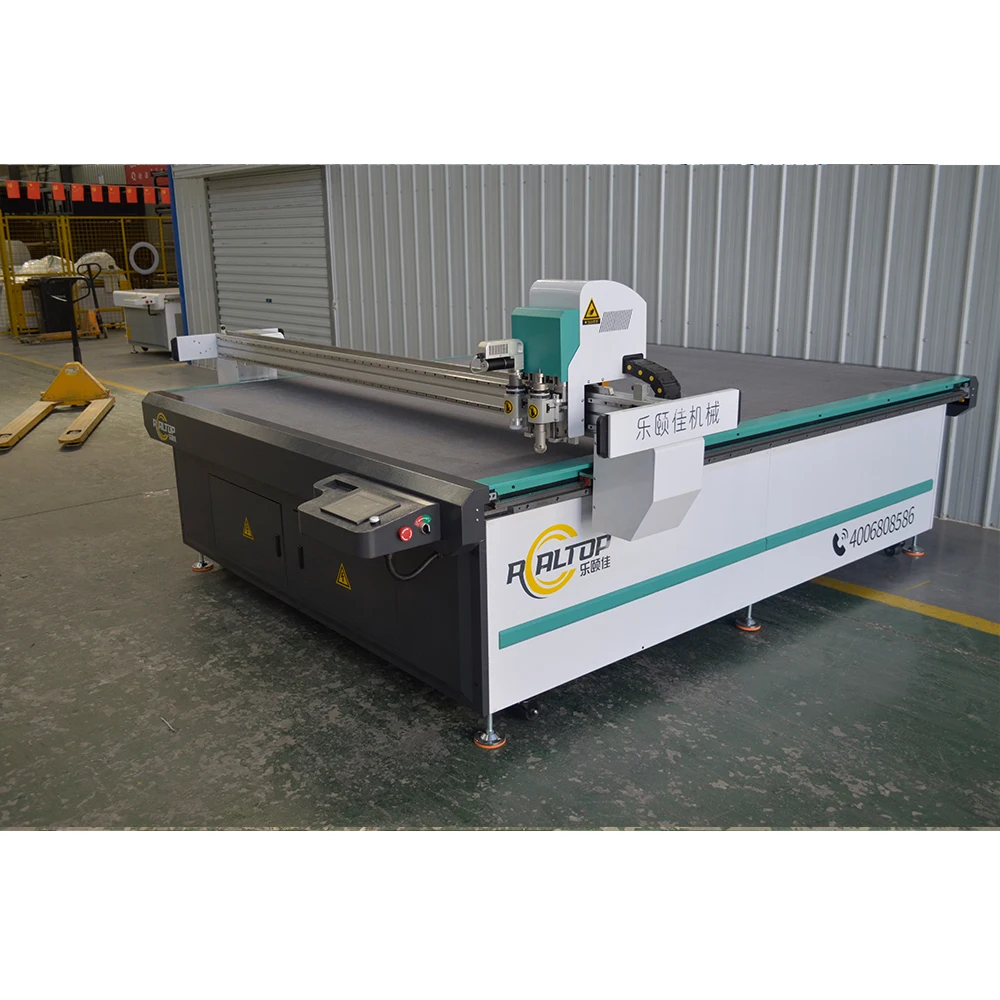
Configuration Matched to Material — Every tool head and vacuum zone on the RT-D2516/RT-S2516 is specified against your actual gasket stock, not assumed from a general catalog.
Technical Specifications
| Parameter | Value |
|---|---|
| Model | RT-D2516 / RT-S2516 |
| Product Type | CNC Oscillating Knife Gasket Cutting Machine |
| Working Area | 1600 × 2500 mm |
| Machine Size | 3450 × 2300 × 1250 mm |
| Rated Power | 9 kW |
| Cutting Thickness | 20 mm – 80 mm (varies by material density) |
| Translational Velocity | 800 – 1200 mm/s |
| Repeated Accuracy | ≤ 0.1 mm |
| Table Type | Flat working table, magnesium-aluminum alloy with PVDF coating |
| Vacuum Pump | 7.5 kW |
| Tool Head | Swiss imported knife with vibration full cut, half cut, and cursor location |
| Multifunctional Head Options | Oscillating knife, pneumatic knife, high-power vibrating knife, circular knife, V-cut, drag knife, creasing wheel, dotted line, punching, brush |
| Transmission System | Digital servo motor, linear guide, synchronous belt, ball screw |
| Servo Motor | Delta (Panasonic optional), IP67 rated |
| Rail | Taiwan Hiwin |
| Instruction System | HP-GL compatible format |
| Voltage | 380V ± 10% |
| Visual Positioning Options | Small CCD mark point, panoramic camera recognition, projection positioning |
| Safety Devices | Infrared sensors, anti-collision, emergency stop |
| Control Language | English, Russian, Italian, Chinese (customizable) |
| Welding Structure | Thick-walled seamless steel, high-temperature tempering, CNC machined |
Application Suitability
| Application | Material or Output |
|---|---|
| Automotive cylinder head gaskets | Rubber moulding compounds, silicone sheets, composite fibre |
| Industrial sealing pads | PTFE, ETFE, PP, PE stock at varying thicknesses |
| Exhaust and manifold gaskets | Graphite composite, reinforced fibre, soft metal laminates |
| Aftermarket short-run fabrication | Mixed materials with frequent contour and thickness changes |
| General soft material cutting | Leather, PVC, sponge composite, silicon, PU, EVA, XPE, foam |
Why Blade Choice Matters More Than Working Area for CNC Oscillating Knife Gasket Cutting Machine Specifications
A machine sized only by table area will fail the moment the knife meets a denser gasket compound. I learned this the hard way at a German trade fair a couple of years back. A gasket manufacturer sent 1 mm standard asbestos board for the sample test, and the machine ran flawlessly on the show floor. When the unit arrived at their plant, they loaded 3 mm steel-reinforced sheet. The blade shattered on the first contour, and the entire batch went back for a spindle swap.
That single incident reshaped how I approach every quotation. Gasket materials range from soft silicone to fibre-reinforced composites with embedded wire mesh, and the cutting resistance differs by an order of magnitude between them [NEED_CITE: cutting force variation across gasket material densities]. Selecting the correct oscillating, pneumatic or drag knife head before the frame is even welded is the only way to avoid ragged edges, delaminated layers, or destroyed tooling. The CNC oscillating knife gasket cutting machine specifications you review must always pair a stated material and thickness with the tool head, never just a working area.
Oscillating, Pneumatic and Drag Knife Mapping
Each knife option on the RT-D2516/RT-S2516 suits a specific density band. The Swiss imported oscillating head handles mid-range fibre and rubber up to the thicker end of the cutting envelope, delivering a full cut and half cut in one pass without fraying the edges. Pneumatic knife options apply downward air pressure for dense composites where mechanical oscillation alone would deflect. Drag knives sit flat against thin PTFE or PE films, scoring clean outlines at high translational speed. Matching the head to the material prevents crushed layers on soft foam and broken tips on reinforced stock.
Vacuum Zoning and Small-Part Hold-Down
Gasket production generates hundreds of small sealing rings and irregular off-cuts in a single sheet. The magnesium-aluminum alloy table with PVDF coating and hard oxidation maintains flatness across the 1600 × 2500 mm surface, but flatness alone does not keep a 30 mm diameter O-ring from lifting at 1200 mm/s traversal. The 7.5 kW vacuum pump must be routed through independent zones so that suction concentrates under the active cutting area [NEED_CITE: vacuum table zoning standards for small-part retention]. Without zone control, the knife drags the part, ruins the contour, and forces an operator to hand-hold material — a safety risk and a throughput loss.
Reading the Core Specifications for Real Output
The 800 – 1200 mm/s translational velocity figure governs how fast the head moves between cuts, but the actual cycle time depends on contour complexity and knife plunge depth. A simple rectangular flange gasket cuts much faster than an intricate multi-port cylinder head shape with bolt-hole windows. The IP67-rated Delta servo motors maintain ≤ 0.1 mm repeated accuracy even when vibration from thick stock travels back through the gantry. The thick-walled seamless steel frame, finished on a CNC machining center after high-temperature tempering, absorbs that vibration so positional drift does not accumulate over a long production run. Hiwin linear rails carry the carriage smoothly, keeping edge quality consistent from the first sheet to the last.
The Hidden Cost of Skipping the Material Sample
Sending a generic sample and accepting the result is the most common mistake I see from gasket buyers. The machine runs perfectly on the supplier’s demo stock, but the buyer’s actual reinforced sheet delaminates or leaves a ragged kerf that fails the sealing test [NEED_CITE: gasket edge quality standards for fluid sealing applications]. Tooling replacement, return freight, and weeks of downtime follow. Always require a sample cutting report on your own material at full production thickness before signing off on the configuration.
Why Source This Configuration Here
In-house design covers both knife and laser cutting technologies, meaning the engineering team selects the method that fits the gasket material rather than forcing every job through one process. Tool head and vacuum table configurations are specified per material type and production volume, not picked from a default list. CCD camera positioning options confirm printed contour accuracy for registered gasket sheets. Software compatibility with HP-GL format and nesting workflows is verified before the order is locked. Buyers receive a factory test record on their own gasket stock, not a generic demonstration video.
Documentation & Verification
- Machine specification sheet listing every confirmed tool head and table zone
- Electrical schematic matching the 380V ± 10% supply and facility frequency
- Sample cutting report run on your gasket material at production thickness
- Software licence and HP-GL file format compatibility confirmation note
- Spare parts list covering knife blades, vacuum seals, and drive belts
- Packing photographs documenting crate condition before container loading
Installation, Commissioning & Support
- Level foundation required to support the 3450 × 2300 mm footprint and dynamic load
- Dedicated 380V circuit with breaker sized for the combined 9 kW machine and 7.5 kW vacuum pump draw
- Machine ships as a single assembly; gantry alignment verified on arrival before power-on
- First-run parameter tuning on your gasket stock thickness to set oscillation frequency and vacuum zone balance
- Operator training covers tool head changeover between oscillating, pneumatic, and drag knife options
- Daily maintenance checklist for Hiwin rail lubrication and PVDF table surface inspection
What We Need to Quote Accurately
Share your gasket material type, maximum thickness, and the largest sheet size you run. Let us know your daily volume and whether contours change between batches or stay fixed. Confirm the voltage and frequency at your facility so the electrical package matches before production starts.
Frequently Asked Questions
Q: How do I choose between oscillating, pneumatic and drag knife for my gasket material?
A: Oscillating heads cut mid-density fibre and rubber cleanly at full and half depth. Pneumatic options add downward air pressure for dense composites with wire reinforcement. Drag knives score thin PTFE or PE films at high speed. The correct choice depends on your material density and thickness, confirmed through a sample cut on your actual stock before the machine ships.
Q: What vacuum table zoning do I need for small gasket parts?
A: Small sealing rings and O-rings lift off the table at high traversal speed if suction is spread evenly. The RT-D2516/RT-S2516 vacuum table routes the 7.5 kW pump through independent zones so suction concentrates under the active cutting path. Zone count and layout are configured to match your typical gasket contour size and nesting pattern.
Q: How does CCD contour recognition perform on printed marks at production speed?
A: The optional CCD positioning system tracks printed registration marks on gasket sheets to align cuts with pre-printed contours. Accuracy depends on mark contrast, print quality, and camera calibration. The panoramic camera option covers the full working area, while the small CCD reads individual mark points. Performance is validated on your printed sheets before order confirmation.
Q: Which software file formats are compatible with this machine?
A: The instruction system accepts HP-GL compatible format, which covers output from most mainstream CAD and nesting software. Before placing the order, we confirm your existing file format, nesting workflow, and any custom post-processor requirements so that production files import directly without manual conversion.
Q: What voltage and control language options are confirmed before shipment?
A: The standard electrical package runs on 380V ± 10%, configurable for other voltages depending on the destination market. Control language options include English, Russian, Italian, and Chinese, with special languages available on request. Voltage, plug type, frequency, and interface language are all confirmed in the specification sheet before the machine enters production.


商品评价
Clear filtersThere are no reviews yet.