





Fast Shipping
Carrier information

20k products
Payment methods

24/7 Support
Unlimited help desk

2-day Delivery
Track or off orders
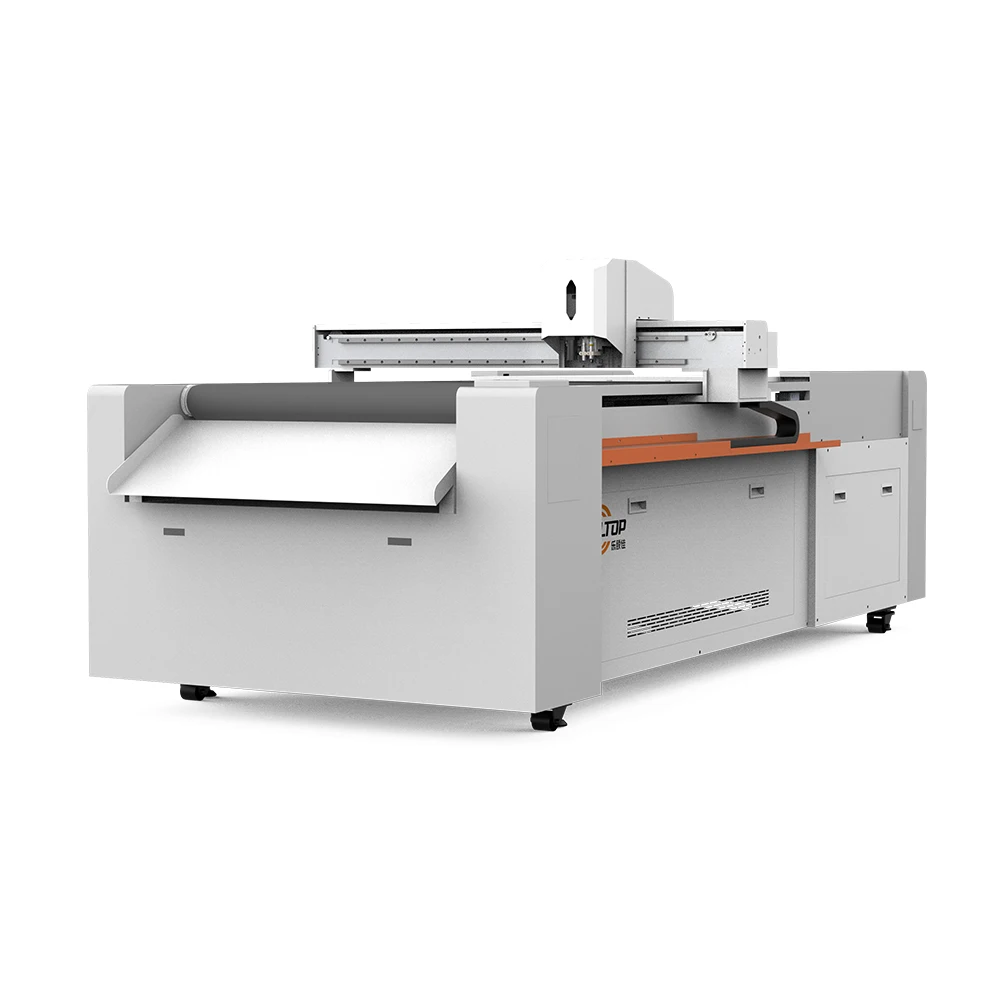
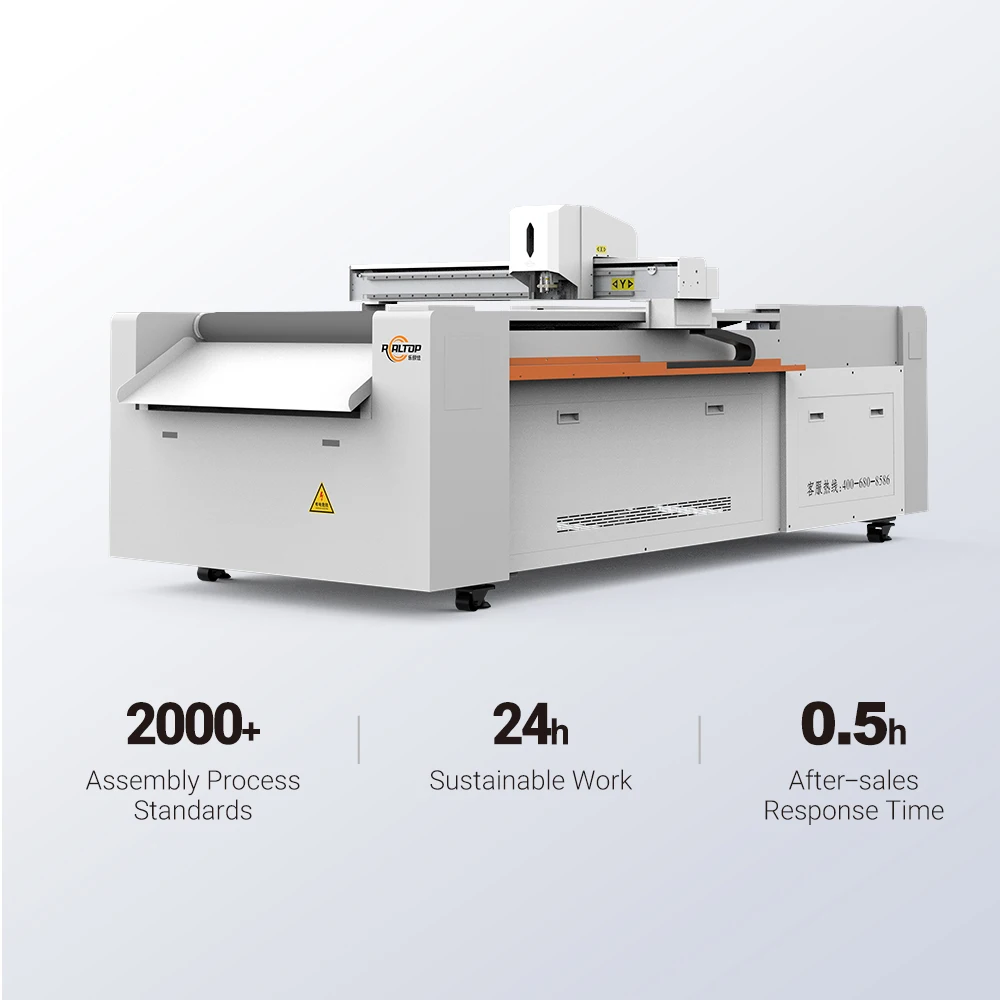
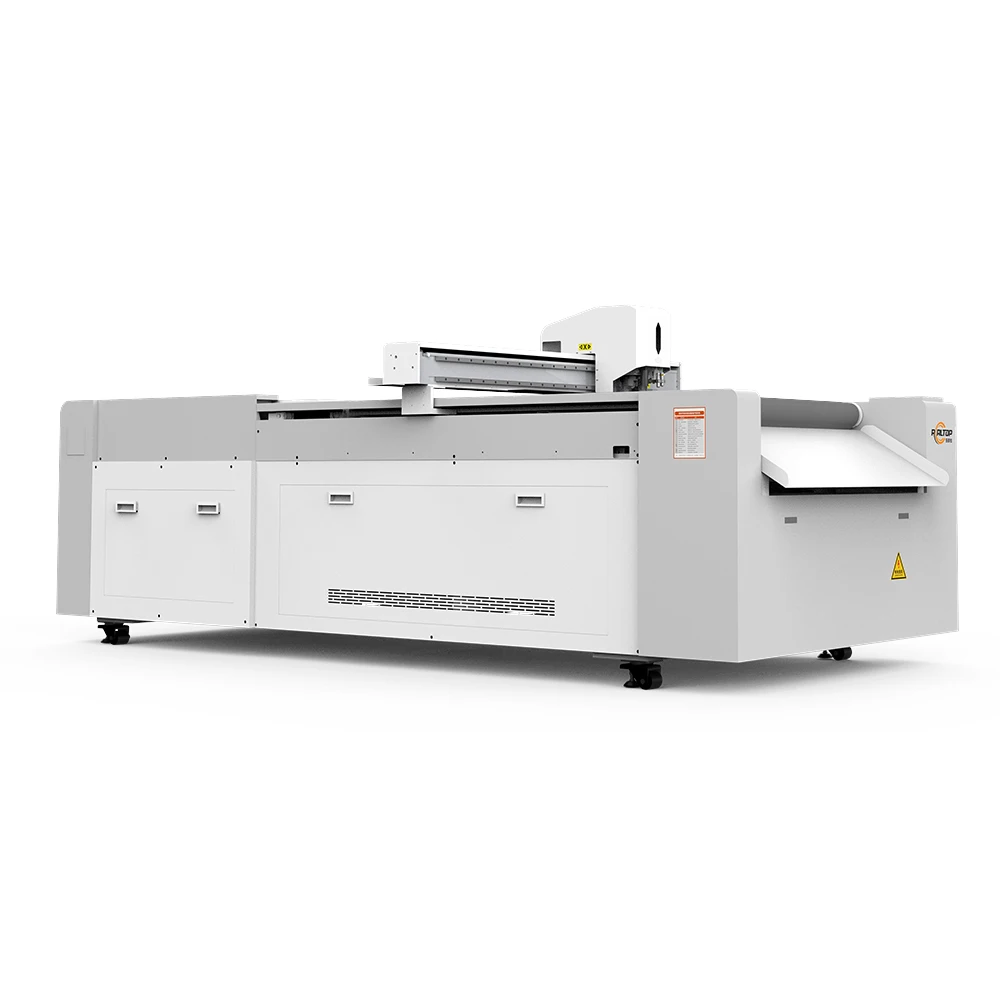
CNC Oscillating Knife Cutting Table with CCD – Specifications
Configured per material reality — we test your actual stock on the cutting bed before finalizing tool head selection, vacuum zoning, and feed parameters.
Technical Specifications
| Parameter | Value |
|---|---|
| Product Type | CNC Oscillating Knife Cutting Table |
| Working Area | 400×600 / 600×800 / 900×1200 mm |
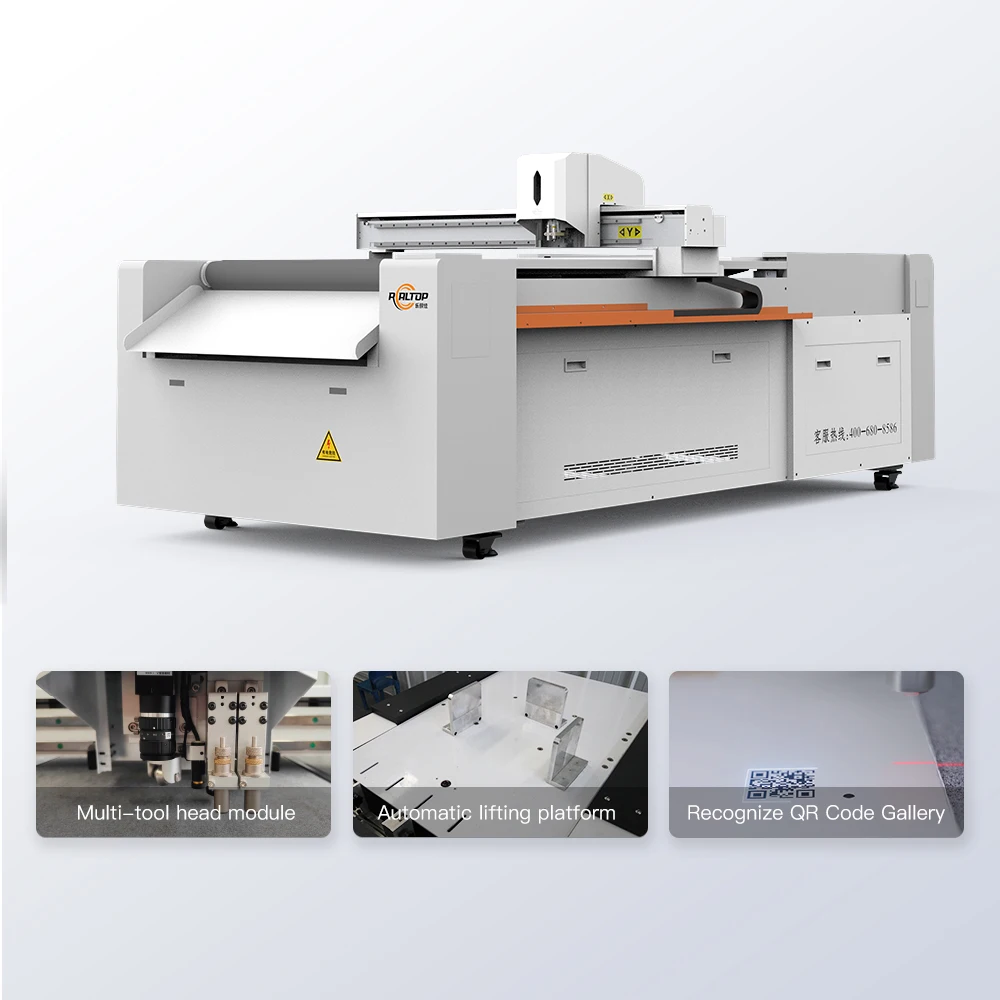
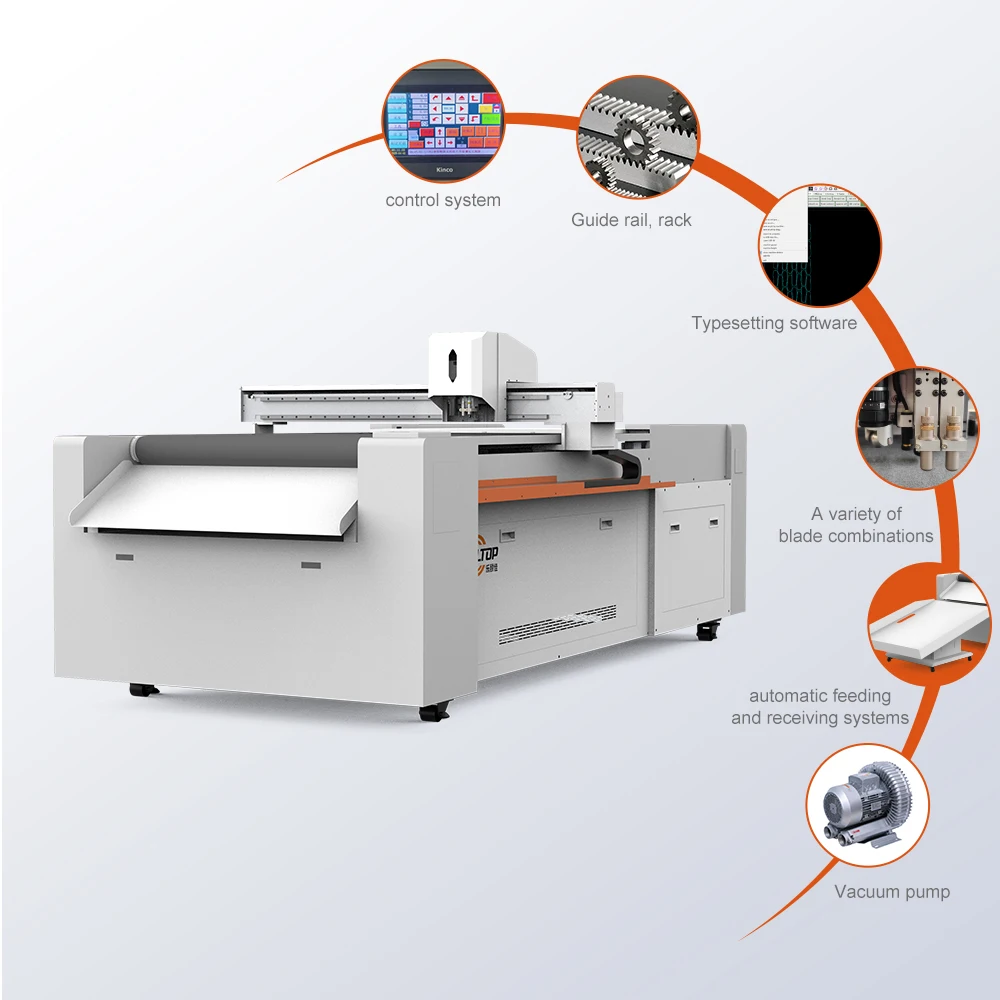
| Tool Head Type | Oscillating knife, Creasing wheel, Kiss cutting tool, CCD camera, Marking pen |
| Cutting Speed | 0–1500 mm/s |
| Cutting Thickness | ≤ 20mm (basis not stated in source — confirm material / density) |
| Cutting Accuracy | ±0.1 mm |
| Vacuum Pump Power | 2.5 kW / 3.2 kW |
| Voltage | 110V / 220V (frequency to be confirmed) |
| Supported File Formats | PLT, DXF, AI, PDF |
| Safety Device | Infrared sensor device and emergency stop device |
| Language Options | English, Russian, Italian, Chinese (special languages customizable) |
| Standards | CE |
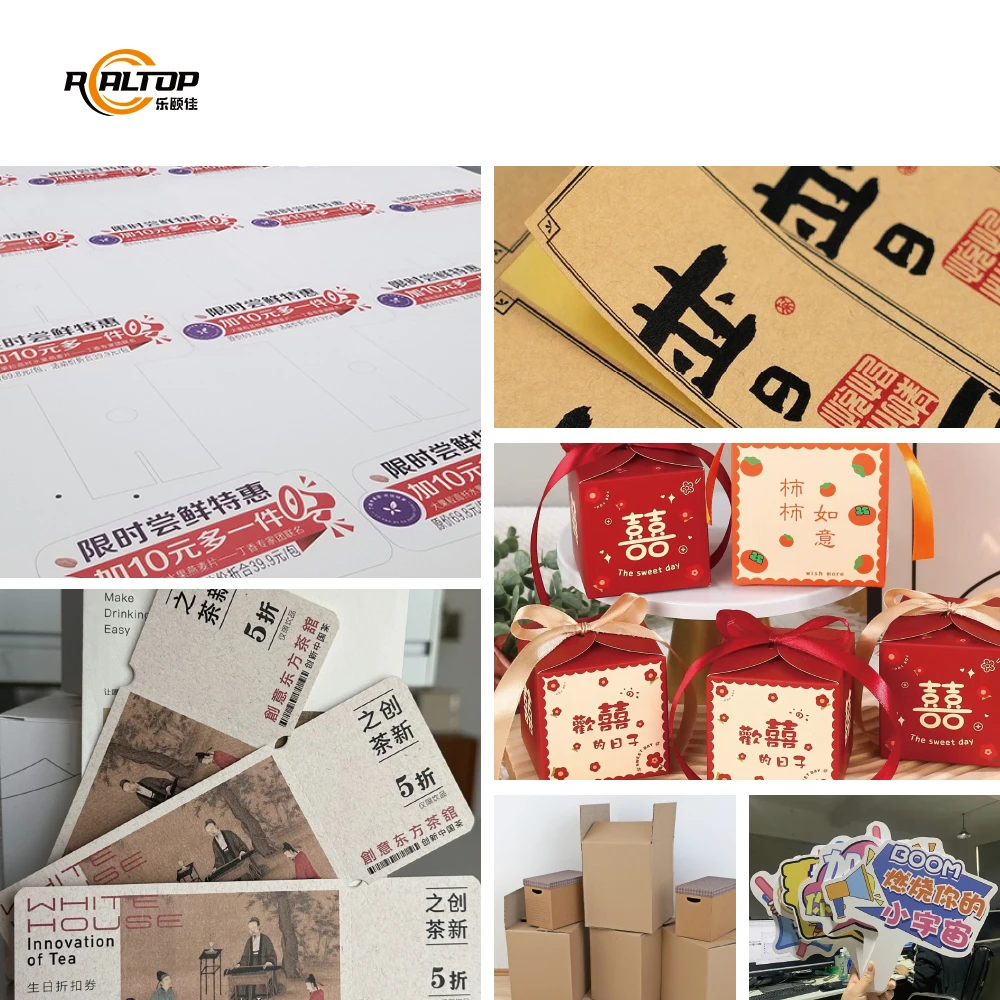
Application Suitability
| Application | Material or Output |
|---|---|
| Packaging prototype sampling | Corrugated board, grey board, folding carton stock |
| Store logo and decal cutting | Self-adhesive vinyl, PVC sheet, cardstock |
| Custom car decals and window clings | Reflective vinyl, adhesive film, magnetic sheet |
| Education and craft templates | Cardboard, foam sheet, craft paper |
| Cultural paper-cut design | Decorative paper, synthetic leather, thin card |
| Electronic foam gaskets | PE foam, EVA, rubber sheet |
| Leather bookmarks and tags | Genuine leather, PU leather, PU sheet |
What the CCD Camera Promise Often Misses in Production
Printed registration marks must be tracked at full cutting speed, not just during slow test runs.
When buyers evaluate CNC oscillating knife cutting table specifications, the CCD camera often looks impressive in a short demo. The camera reads a printed mark, the head adjusts, and the cut lands perfectly. But run that same system across a full sheet of printed packaging samples at production speed, and the story changes. The camera needs to detect marks reliably under varying ink densities, gloss levels, and ambient light — conditions that a five-minute sample does not expose. [NEED_CITE:CCD contour recognition performance under variable print quality]
We have seen situations where a carton sample maker invested in a machine that performed well on white card but failed to maintain registration on short-run digital prints with low-contrast marks. The waste rate climbed once real orders started. That is why we verify CCD tracking on the buyer’s own printed material at intended cutting speeds before any order is confirmed.
Matching Tool Heads to Your Actual Stock, Not a Catalog Assumption
A CNC oscillating knife cutting table can carry multiple tool heads, but selecting the right one depends on material composition, thickness, and edge quality requirements. Oscillating knives handle corrugated board and dense foam without crushing the flute structure. Creasing wheels score folding carton stock along hinge lines without breaking the surface fiber. Kiss cutting tools slice through vinyl face stock while leaving the backing liner intact — critical for decal and sticker production. Each tool head produces a different edge profile, and choosing incorrectly shows up immediately as ragged cuts, crushed edges, or incomplete penetration.
Why Vacuum Table Zoning Decides Whether Small Parts Stay Flat
Holding material flat across the entire bed is straightforward when cutting large panels. The challenge appears when nesting small parts — gaskets, tags, packaging corner samples — where localized suction matters more than total pump capacity. The 2.5 kW and 3.2 kW vacuum pump options address different production profiles. A board with multiple zoning channels directs suction only where the cutter head is working, preventing small cut pieces from lifting and shifting mid-cut. [NEED_CITE:vacuum table zoning principles for CNC flatbed cutters] Without adequate zoning, a part that moves even a fraction of a millimeter during the final pass ruins the entire piece. This is particularly visible in intricate paper-cut patterns and leather bookmark production where internal cutouts are narrow and closely spaced.
Reading Between the Specification Lines
Cutting accuracy at ±0.1 mm matters most when producing packaging prototypes with interlocking tab-and-slot structures — a half-millimeter drift and the assembled box will not close square. The 0–1500 mm/s speed range covers everything from delicate craft paper to dense foam, but actual usable speed depends on material resistance and contour complexity; tight curves in leather tags require slower passes than straight cuts across corrugated board. The working area options from 400×600 mm to 900×1200 mm reflect different prototyping volumes: smaller beds serve educational template shops and boutique leather workshops, while the 900×1200 format handles full packaging sample sheets. File format support across PLT, DXF, AI, and PDF means existing design workflows carry over without an intermediate conversion step, reducing preparation time between design approval and physical sampling. The infrared sensor and emergency stop system provides operator protection during loading and unloading cycles.
The Cost of Skipping a Material Trial Run
Selecting a machine based on working area alone, without testing your specific material, leads to predictable problems. Foam that looks clean-cut in a brief demo may show crushed edges when the oscillation frequency does not match the foam density. Corrugated board with heavy print coverage may confuse the CCD sensor if the mark contrast falls below the camera’s detection threshold. [NEED_CITE:material-specific cutting challenges in packaging sample production] Buyers who skip the trial run often discover these issues only after the machine arrives and production deadlines press. The waste material and downtime cost more than the time invested in upfront sampling.
Why Buyers Source This Equipment Here
Tool head configuration is specified per material and production volume rather than sold as a standard package — an oscillating knife for foam gaskets, a creasing wheel for carton folding lines, and a kiss cutting tool for vinyl decals each require different mounting and calibration. Sample cutting on the buyer’s own material is completed before order confirmation, producing a documented report with edge quality assessment and achievable parameter ranges. Voltage and control language are confirmed against the destination market’s electrical standards before production begins, avoiding on-site rewiring. [NEED_CITE:industrial voltage standards for export machinery] Software compatibility is verified with the buyer’s existing AI, PLT, DXF, or PDF files so that nesting workflows transfer directly. The in-house design team covers both knife cutting technologies, allowing a buyer to match the cutting method to the material rather than forcing one method across incompatible stocks.
Documentation & Verification
- Sample cutting report on buyer’s own material with edge quality photos
- Tool head and table configuration list matched to material type and thickness
- Electrical schematic and voltage confirmation for destination market
- Software licence and file format compatibility note for AI, PLT, DXF, PDF
- Factory test record showing CCD tracking accuracy on printed stock
- Packing photographs documenting machine condition before crating
Installation, Commissioning & Support
- Power circuit rated for 2.5 kW or 3.2 kW vacuum pump plus spindle draw
- Bed leveling check on 900×1200 mm format to maintain ±0.1 mm across full travel
- CCD camera calibration against buyer’s printed marks during first production run
- Tool head offset setup for each installed head type on site
- Operator training on file import workflow in buyer’s confirmed language
- Spare oscillating knife blades and creasing wheel tips included at delivery
Preparing Your Inquiry
Send material type, thickness, and a representative printed sample if CCD contour recognition is part of your workflow. Confirm your local voltage and frequency so electrical specifications match your workshop supply. Share your typical file formats and nesting software so we verify compatibility before building. If daily volume or sheet size varies, describe the range so the working area and vacuum zoning are sized correctly.
Frequently Asked Questions
Q: Which tool head fits my material thickness and edge quality requirement?
A: Oscillating knives handle foam, corrugated board, and thicker stocks up to the stated cutting depth without crushing internal structure. Creasing wheels score folding carton along fold lines. Kiss cutting tools slice vinyl face stock while preserving the backing liner. We test your actual material and recommend the specific tool head combination based on observed edge quality rather than general material categories.
Q: Will the CCD camera track printed marks reliably at production speed?
A: Tracking depends on mark contrast, ink density, and surface gloss of your specific print stock. We run your printed material through the CCD system at intended cutting speeds before order confirmation. If registration drifts at speed, we adjust camera sensitivity or recommend print adjustments before finalizing the configuration.
Q: Is vacuum zoning sufficient for small parts, or will pieces lift during cutting?
A: The vacuum table offers zoning channels that direct suction to the active cutting area. Small nested parts such as gaskets and tags require adequate localized hold-down. We configure zone layout based on your typical nesting pattern and verify hold-down performance during the material trial before shipment.
Q: Does the software import my existing AI, PLT, DXF, and PDF files?
A: The system accepts PLT, DXF, AI, and PDF formats directly. We verify compatibility with your specific design files and nesting workflow before order. If your files use particular layer conventions or font embedding, we confirm that these carry through correctly during the pre-order software check.
Q: Are voltage, plug type, and control language confirmed before shipment?
A: Voltage options include 110V and 220V, with frequency confirmed against your local supply. Control interface language is selectable from English, Russian, Italian, Chinese, or customizable options. All electrical specifications are locked in writing before production begins to avoid on-site adaptation work after delivery.


商品评价
Clear filtersThere are no reviews yet.