



Fast Shipping
Carrier information

20k products
Payment methods

24/7 Support
Unlimited help desk

2-day Delivery
Track or off orders
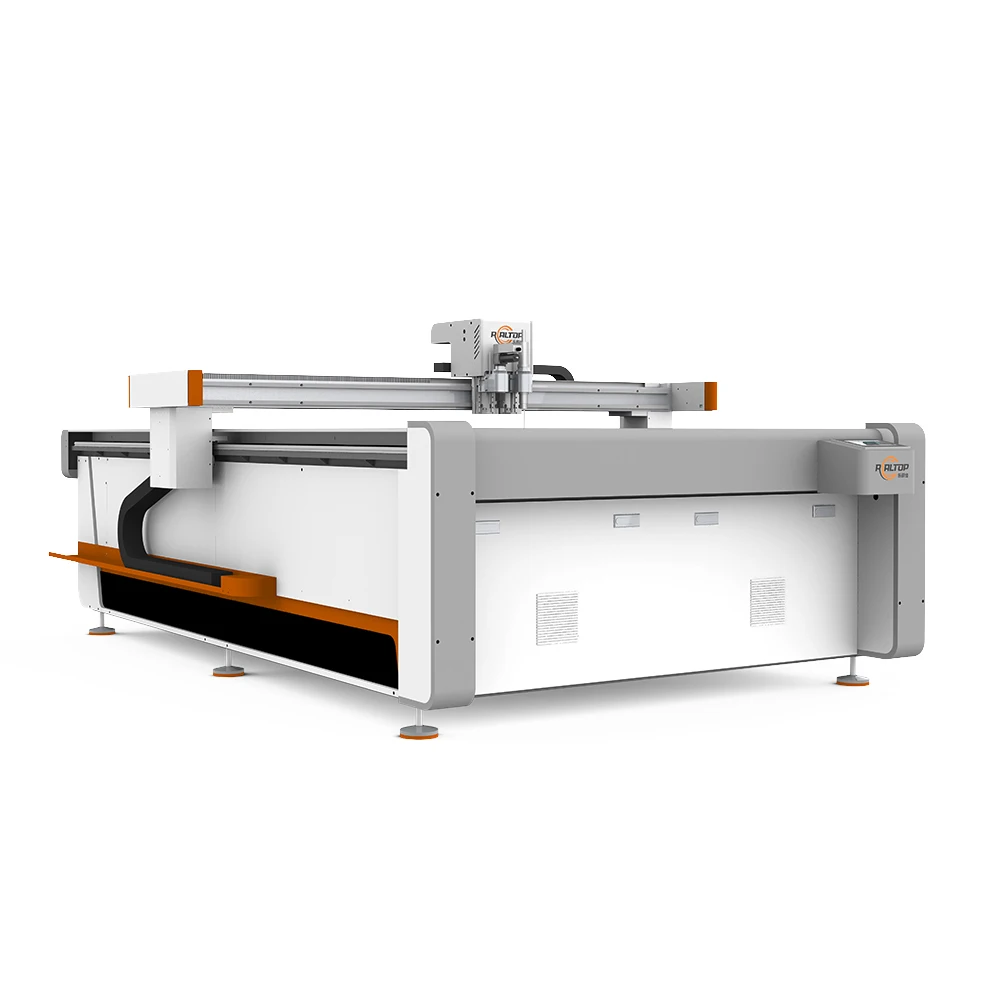
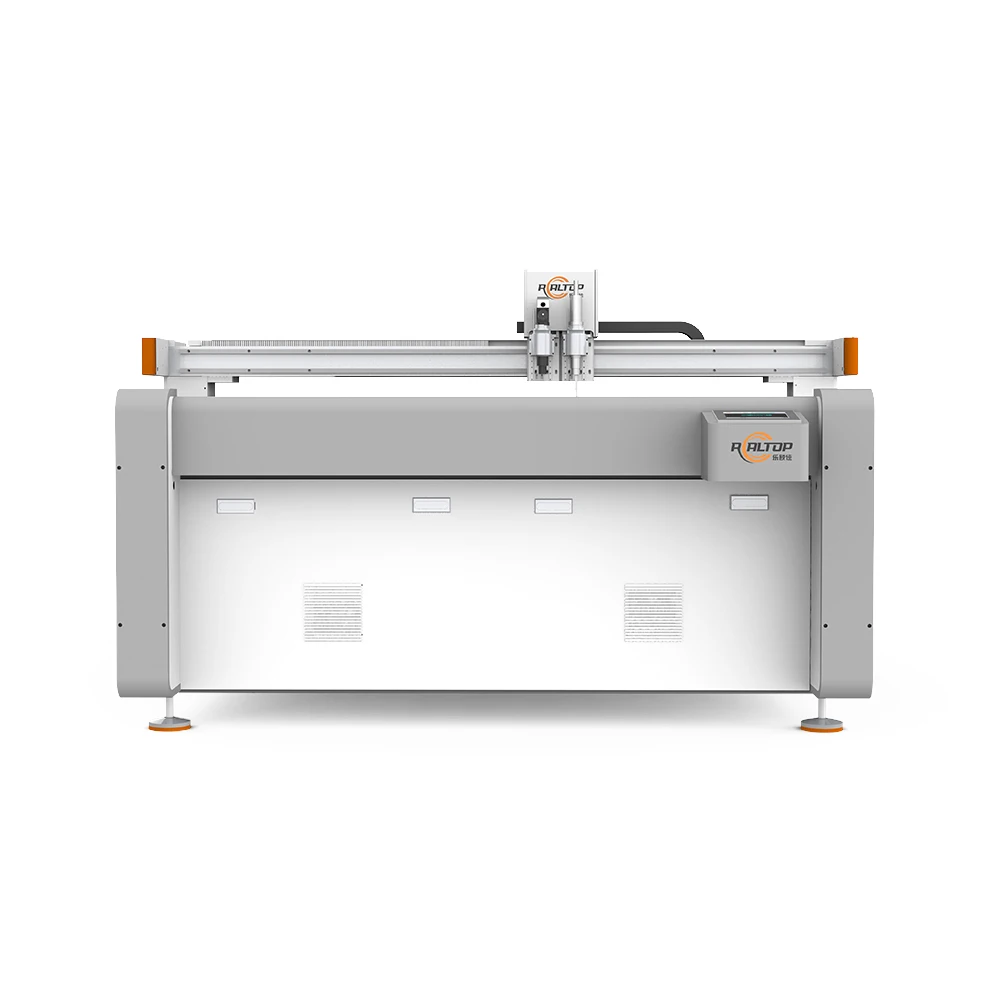
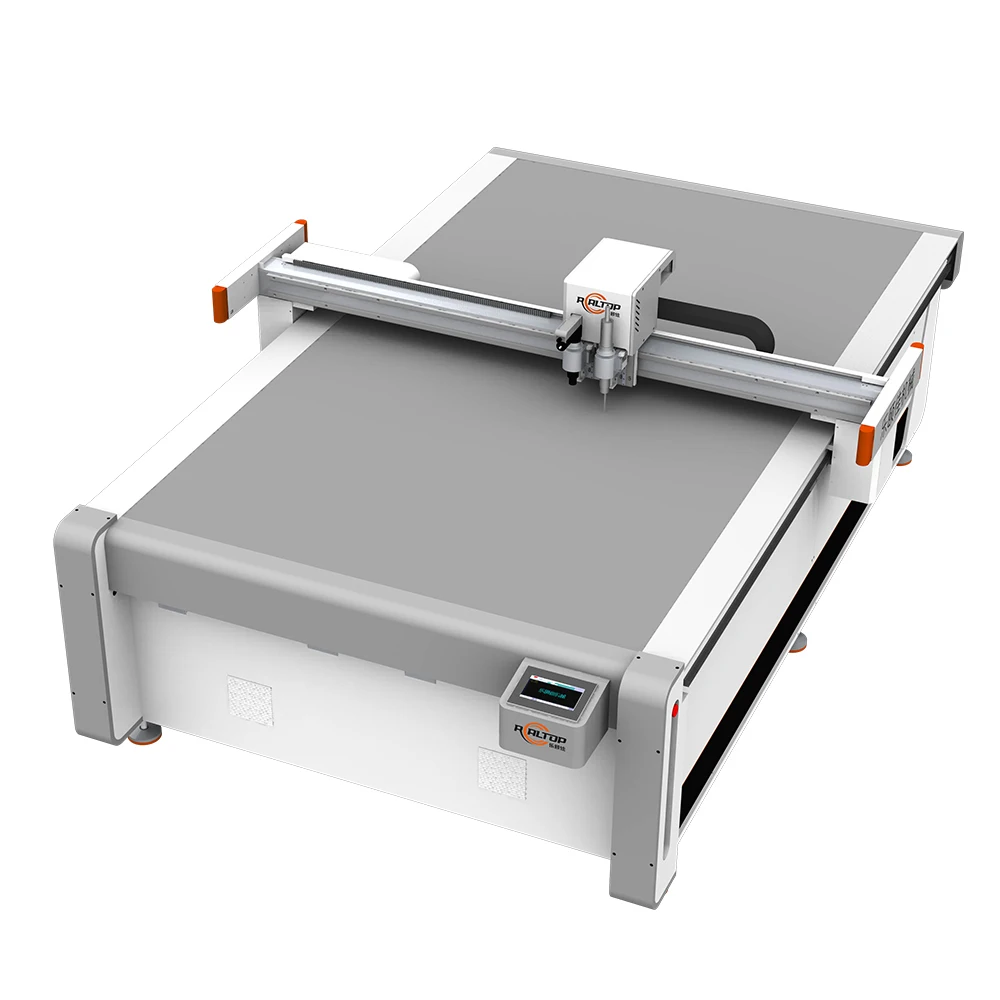
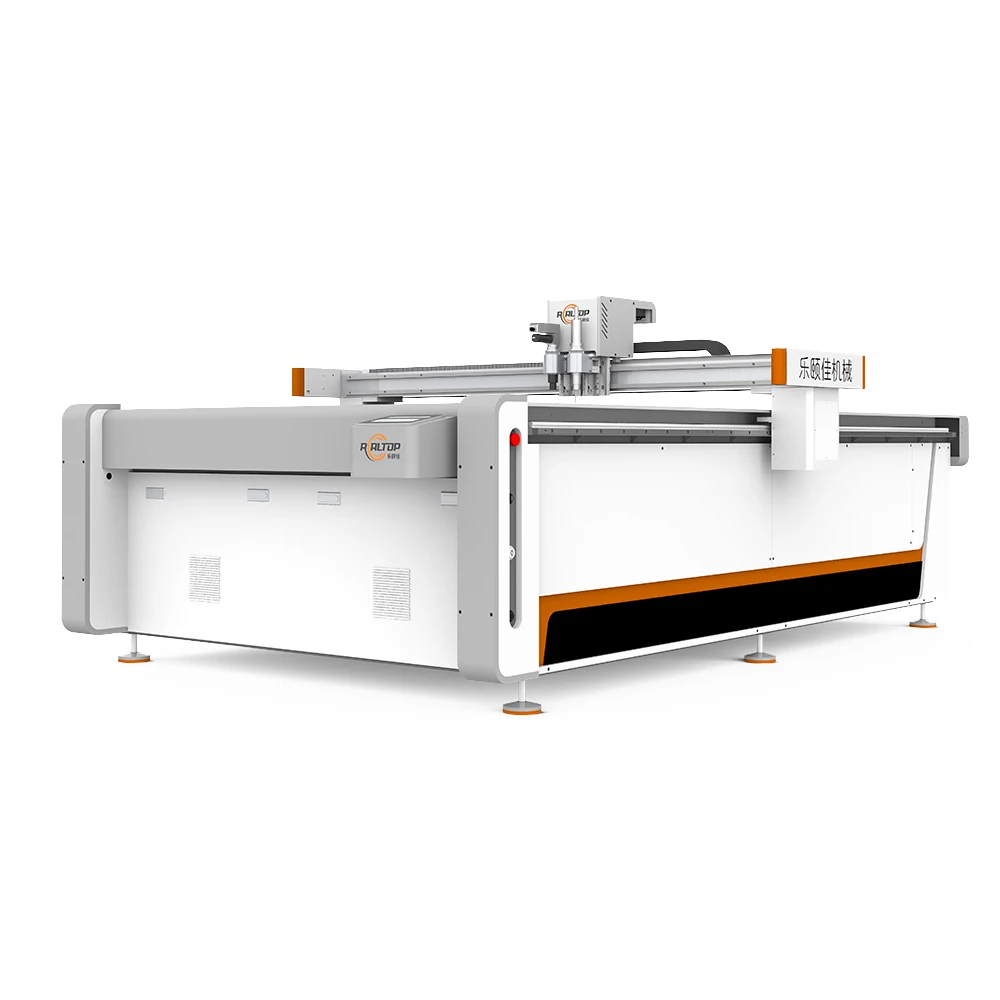
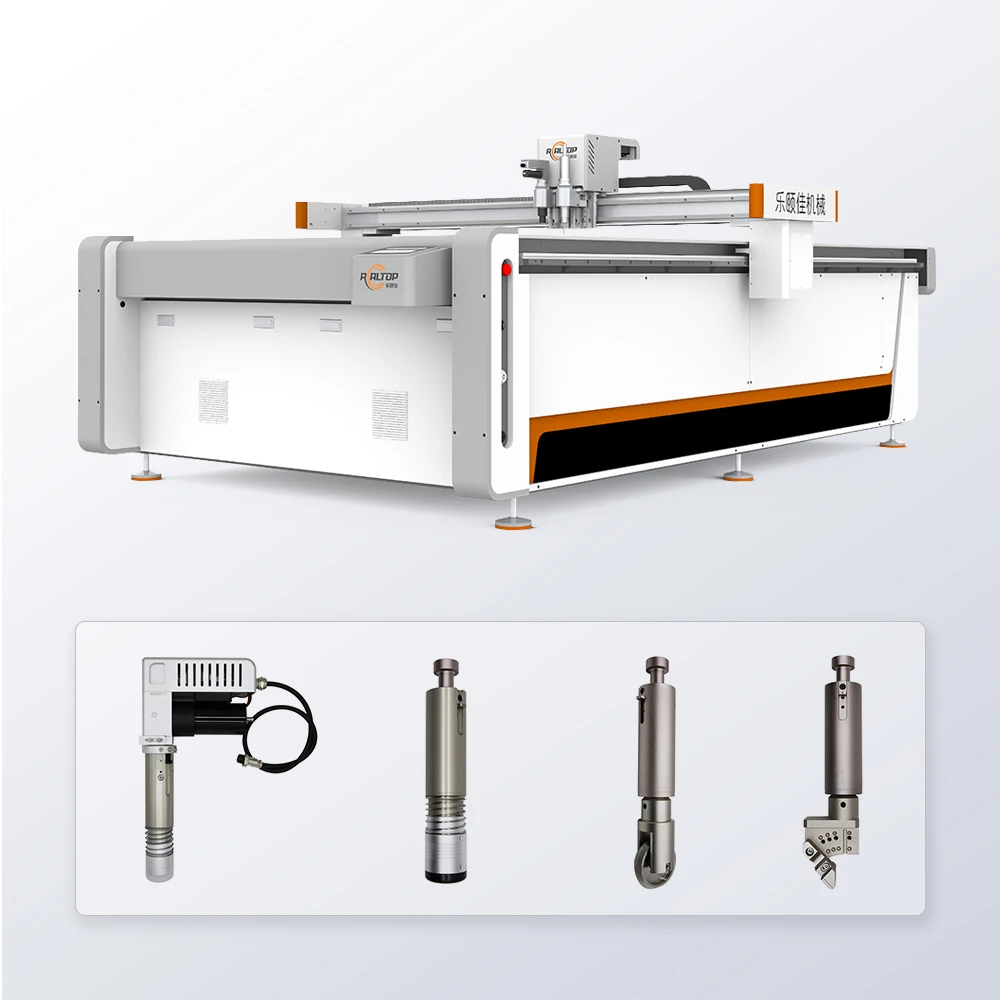
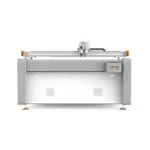
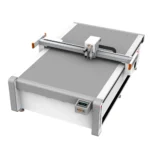
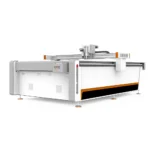
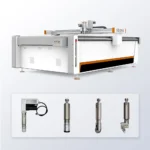
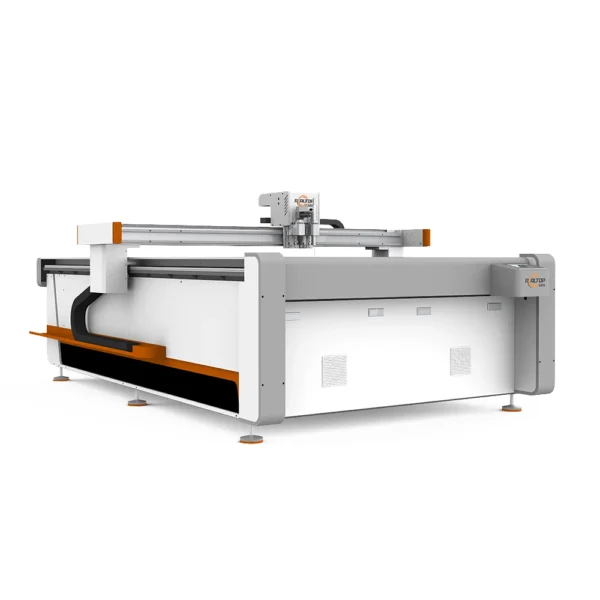
Swiss Knife Versatility — The RT-D2516/RT-S2516 pairs oscillating, creasing, and V-cut tool heads on one flatbed, configured against your actual board density before order confirmation.
Technical Specifications
| Parameter | Value |
|---|---|
| Product Type | CNC Oscillating Knife Cutting Machine |
| Model | RT-D2516/RT-S2516 |
| Working Area | 1600×2500 mm |
| Machine Size | 3450×2300×1250 mm |
| Rated Power | 9 kW |
| Voltage | 380V ±10% (frequency to be confirmed 50/60 Hz) |
| Table Configuration | Flat working table or Auto feeding table |
| Tool Head | Swiss imported knife (vibration full cutting, half cutting, cursor location) |
| Translational Velocity | 800–2000 mm/s |
| Cutting Speed | 200–800 mm/s (basis to be confirmed per material and thickness) |
| Cutting Thickness | ≤100 mm (varies with material) |
| Repeated Accuracy | ≤0.1 mm |
| Transmission System | Digital servo motor, linear guide, synchronous belt, imported ball screw |
| Servo Motor Options | Delta (China) or Panasonic (Japan) |
| Instruction System | HP-GL compatible format |
| Software File Formats | PLT, DXF, AI |
| Vacuum Platform | Aluminum air box, integrated or split box adsorption, fluorocarbon PVDF coating |
| Vacuum Pump | 7.5 kW, aviation aluminum shell, built-in silencer sponge |
| Conveyor Belt | Germany imported |
| Linear Rail | Taiwan Hiwin |
| Safety Devices | Infrared sensors, beam anti-collision, emergency stop |
| Control Panel | Touch screen, multiple languages (English, Russian, Italian, Chinese; customizable) |
Application Suitability
| Application | Material or Output |
|---|---|
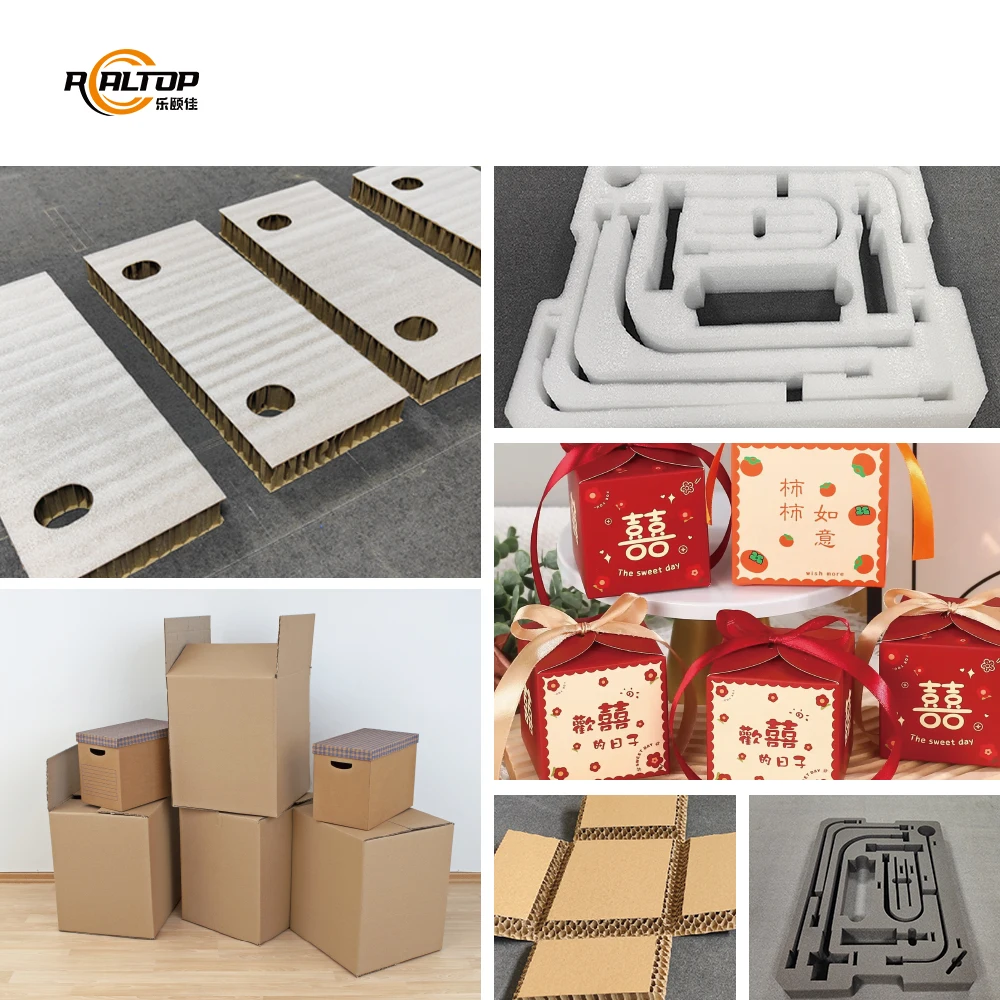
| Carton and packaging sample making | Corrugated cardboard, honeycomb board, plastic corrugated boxes |
| Gasket and sealing pad production | Rubber, PTFE, ETFE, silicone, composite sheets |
| Automotive interior processing | PU, EVA, XPE foam, fiberglass, composite fabrics |
| Signage and display fabrication | PVC foam board, acrylic, soft glass, sticker films |
| Footwear and luggage material cutting | Leather, non-woven fabric, synthetic textiles |
Why Honeycomb Board Cutting Often Fails After Delivery
A machine specified on working area alone, then found unable to handle the material thickness — wrong tool head chosen for the board density, producing crushed cores and ragged edges at the cut line.
Cut quality on honeycomb and corrugated depends on tool head selection matched to the buyer’s actual board density, not the manufacturer’s sample stock.
I once set up an oscillating knife system for a packaging plant where the sample cuts ran perfectly on standard-density honeycomb. On site, their production stock had a noticeably denser core structure, and the knife was tearing rather than slicing through the flutes. We spent days adjusting amplitude and feed rate before achieving clean edges. [NEED_CITE: oscillating knife amplitude and frequency settings for varying board densities] That experience reinforced one rule: always trial on the exact material that will run in daily production.
Matching Tool Heads to Board Structure
The multifunctional tool head system on this CNC oscillating knife cutting machine supports full-cut oscillating, half-cut kiss-cutting, creasing wheels for fold lines, and V-knives for slotting. Corrugated board typically needs a high-frequency oscillating blade to slice through flutes cleanly, while honeycomb cores demand sufficient downforce and amplitude to penetrate the cell walls without crushing them. Selecting the correct tool head and tuning parameters against your specific substrate is the difference between clean sample edges and rejected batches.
Vacuum Hold-Down for Thin and Lightweight Sheets
The aluminum air box vacuum platform uses an integrated box design with fluorocarbon PVDF powder coating and anodic oxidation treatment for flatness under continuous operation. The 7.5 kW vacuum pump with a built-in silencer sponge maintains adsorption pressure while reducing ambient noise. [NEED_CITE: vacuum adsorption requirements for thin corrugated and film materials during high-speed cutting] Small packaging components and thin sticker films tend to lift at cutting speeds if the vacuum zoning is not configured to match the part geometry.
What Repeatability and Drive Components Mean for Long Runs
The ≤0.1 mm repeated accuracy relies on imported digital servo motors, Taiwan Hiwin linear rails, and ball screws driving the gantry and cutting head. When producing hundreds of identical carton samples or gasket profiles in a single shift, even minor backlash in the drive train accumulates into visible registration drift. Choosing between Delta and Panasonic servo options allows buyers to align the drive package with their precision requirements and service availability in the destination market.
The Cost of Skipping Material Trials Before Shipment
Buyers who approve a CNC oscillating knife cutting machine based on brochure specifications alone often discover gaps only when production begins. A vacuum table zoned for large sheets may leave small die-cut pieces lifting during high-speed contour work. A voltage mismatch discovered after energizing the cabinet can delay commissioning by weeks while transformers are sourced locally. [NEED_CITE: common commissioning delays from unconfirmed voltage and frequency specifications] Software that cannot import the buyer’s existing DXF or PLT nesting files forces a manual redraw of every pattern, negating any throughput advantage the machine was supposed to deliver.
Why Procurement Through This Channel Works
In-house design covers both the knife cutting head mechanics and the vacuum platform engineering, so tool head and table configurations are specified together rather than sourced from separate suppliers. Each machine is configured with the buyer’s confirmed tool head selection, vacuum zone layout, and table type — flat or auto-feeding — based on material type and daily volume. Sample cutting on the buyer’s own material is completed before order commitment, documenting edge quality and achievable cutting depth. Electrical schematics confirm voltage, frequency, and plug type before the cabinet is wired. Control panel language is set to the operator’s requirement during factory testing, not left as a default to be changed on site.
Documentation & Verification
- Machine specification sheet listing confirmed tool heads, vacuum zones, and table type
- Electrical schematic with voltage, frequency, and plug type documented before wiring
- Sample cutting report on buyer-supplied honeycomb or corrugated stock with edge photographs
- Software licence and file format compatibility note for PLT, DXF, and AI imports
- Factory test record capturing repeatability measurements and servo motor brand verification
- Operation manual in confirmed control language with maintenance intervals
Installation, Commissioning & Support
- 3450×2300 mm machine footprint requires level concrete floor with clearance for material loading on all sides
- 9 kW rated power plus 7.5 kW vacuum pump requires dedicated 380V circuit with confirmed 50 or 60 Hz supply
- Flat table model ships fully assembled; auto-feeding model may require conveyor belt tensioning on site
- First-run parameter tuning performed on buyer’s actual board stock to set oscillation amplitude and cutting speed
- Touch screen operator training covers file import, nesting workflow, and tool head changeover procedures
- Swiss imported knife blades and silencer sponge listed as consumables with recommended replacement intervals
Starting a Technical Evaluation
Share your specific board type — corrugated flute profile, honeycomb cell size and core density — along with maximum sheet dimensions and the daily cut volume you need to sustain. Confirm your facility voltage and frequency, and let us know which file formats your design team currently uses for nesting. If your production includes fold lines or V-slots, specify those requirements so the creasing wheel and V-knife tool heads are included in the configuration proposal from the start.
Frequently Asked Questions
Q: How do I choose between oscillating knife, creasing wheel, and V-knife for my packaging materials?
A: Oscillating knife handles through-cutting of corrugated and honeycomb board. The creasing wheel scores fold lines without cutting through the liner. The V-knife removes material for slot-and-tab joints. Your configuration depends on which operations your carton designs require in a single setup.
Q: How can I confirm realistic cutting speed before placing an order?
A: Provide samples of your actual production material with thickness and density specifications. A trial cut documents the achievable speed and edge quality on your specific stock, since published ranges assume conditions that may not match your board composition.
Q: Will the vacuum table hold small packaging parts during high-speed cutting?
A: The aluminum air box platform supports split zone adsorption. Confirm your smallest part dimensions during specification so the vacuum zones can be configured to maintain hold-down on pieces that would otherwise lift at translational speeds above 800 mm/s.
Q: What electrical details must be confirmed before the machine ships?
A: Voltage tolerance, frequency (50 or 60 Hz), plug type, and servo motor brand selection should all be documented in the electrical schematic. This prevents on-site mismatches that delay commissioning and may require local transformer procurement.
Q: Can my existing nesting files import directly into the control software?
A: The system supports PLT, DXF, and AI file formats. Share sample files during the specification phase so compatibility and nesting workflow can be verified before the machine enters production, avoiding manual redraws of existing pattern libraries.


商品评价
Clear filtersThere are no reviews yet.