





Fast Shipping
Carrier information

20k products
Payment methods

24/7 Support
Unlimited help desk

2-day Delivery
Track or off orders
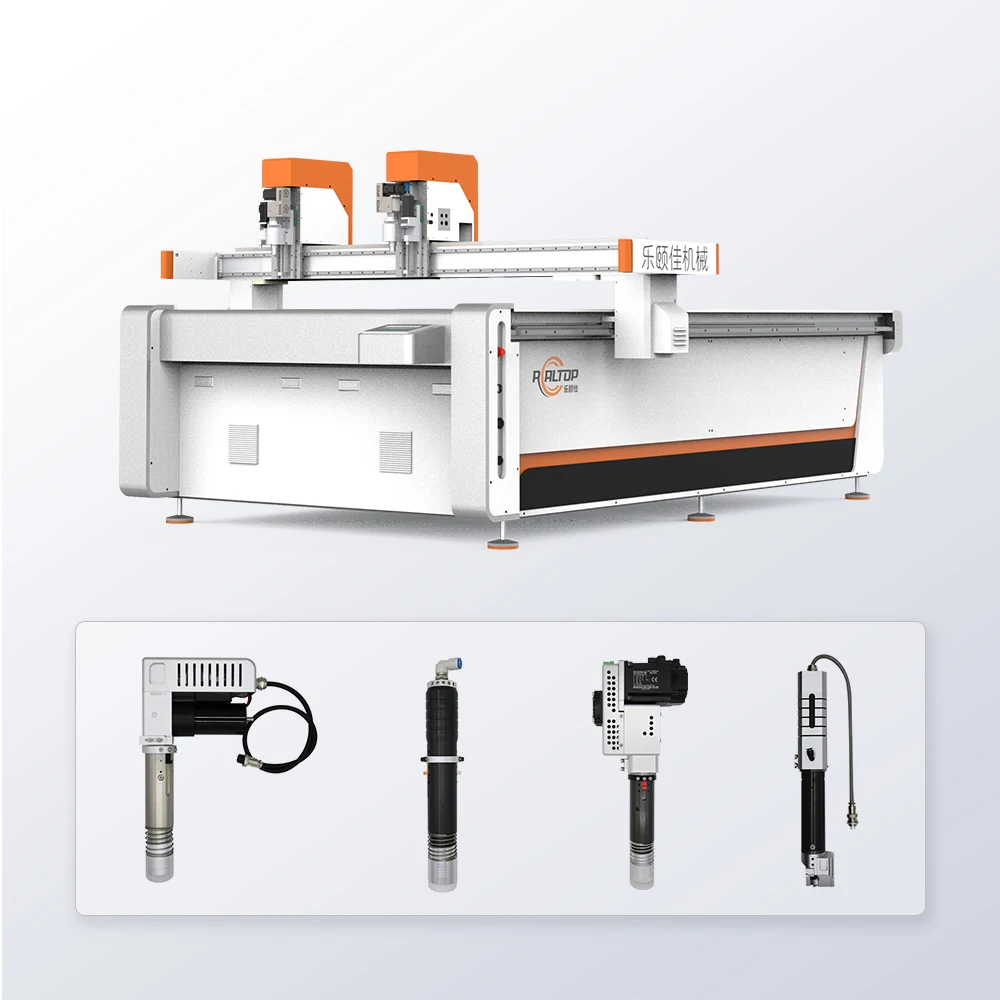
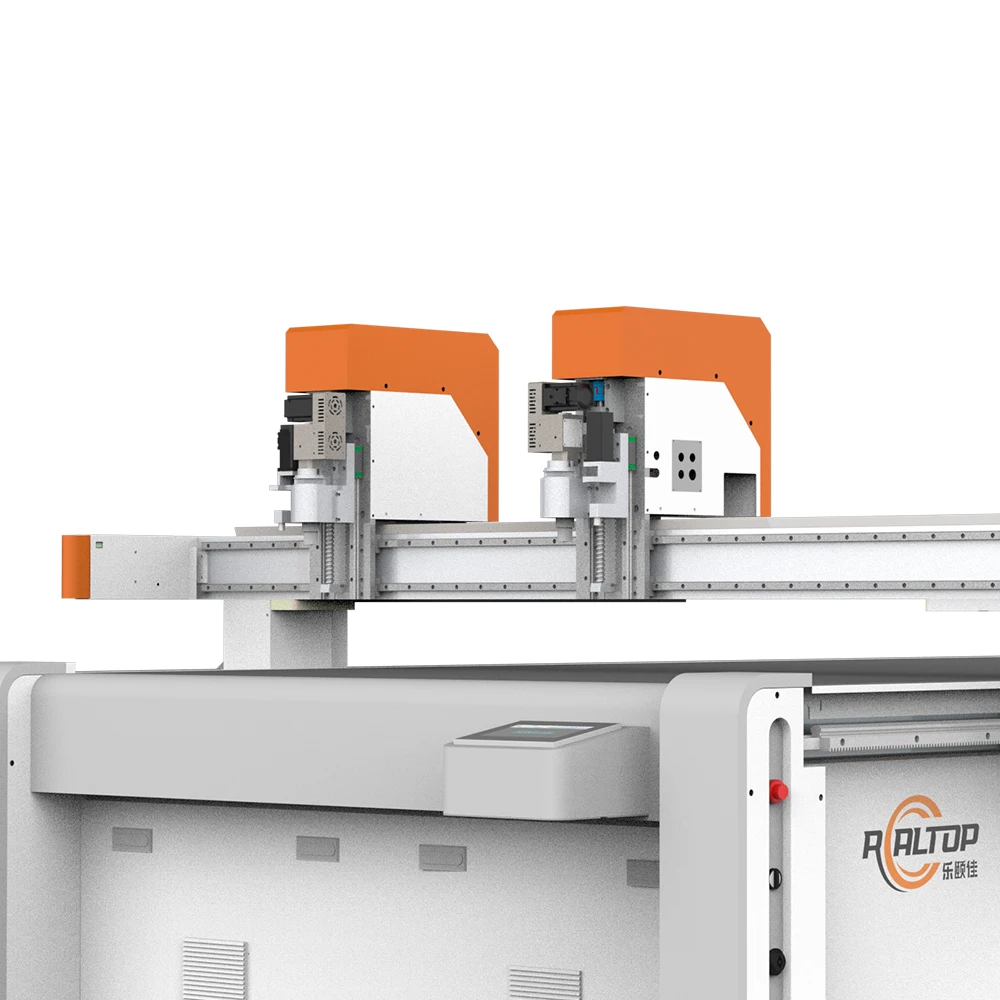
Tool Head Modularity — cold-cutting configuration matched to resin sensitivity, avoiding thermal damage across carbon fiber prepreg, aramid honeycomb and foam core layups.
Technical Specifications
| Parameter | Value |
|---|---|
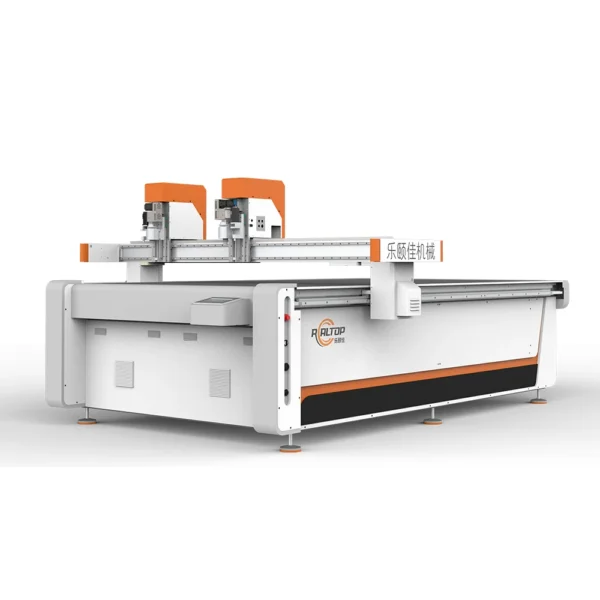
| Product Type | CNC Oscillating Knife Cutting Machine for Composites |
| Model | 1625 |
| Working Area | 1600 × 2500 mm |
| Overall Dimensions (L × W × H) | 3300 × 2100 × 1350 mm |
| Cutting Speed | 0 – 2000 mm/s |
| Cutting Accuracy | ±0.1 mm |
| Tool Head Options | Oscillating knife, Driven rotary knife, Pneumatic knife, V groove knife, Milling tool, Creasing wheel, Kiss cutting tool |
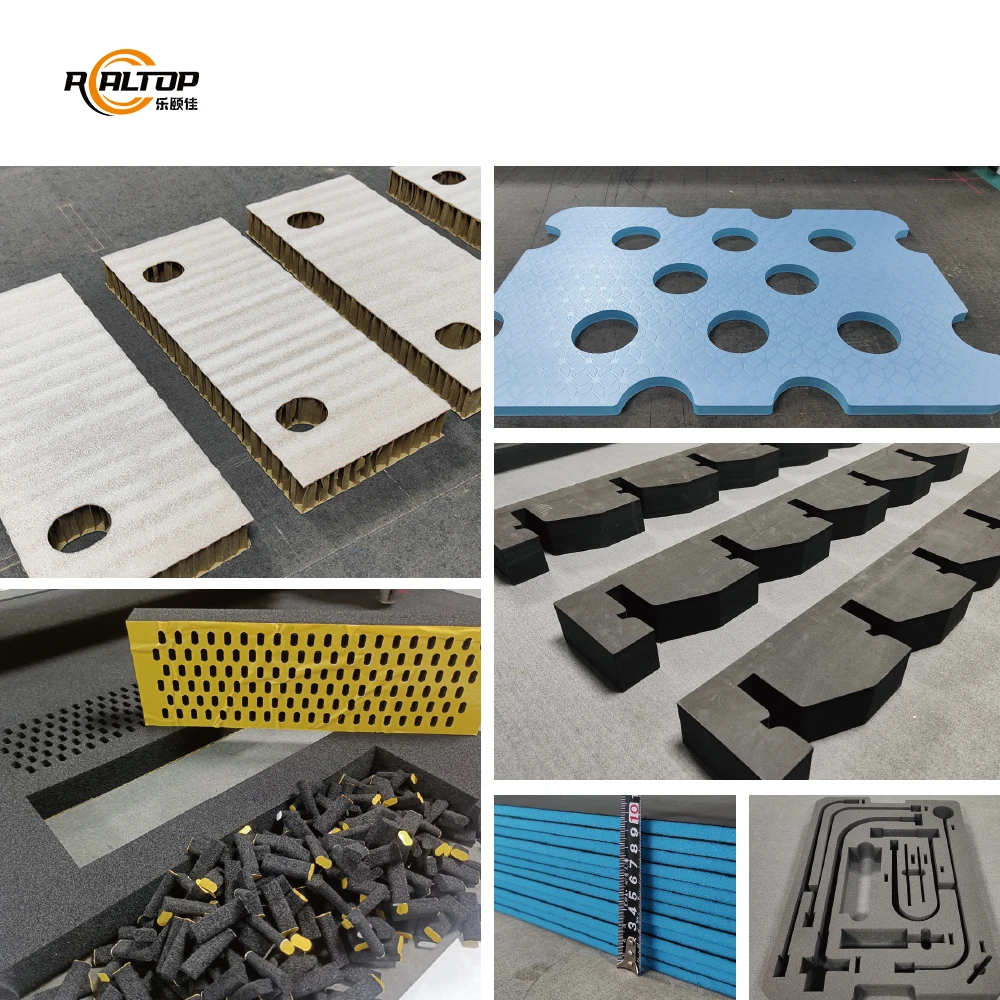
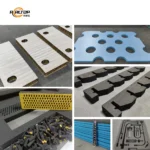
| Applicable Materials | Carbon fiber prepreg, Fiberglass cloth, Aramid honeycomb, G10 epoxy, PVC/EVA/PET foam core, PTFE, Rubber, Fabric, Leather, Cardboard |
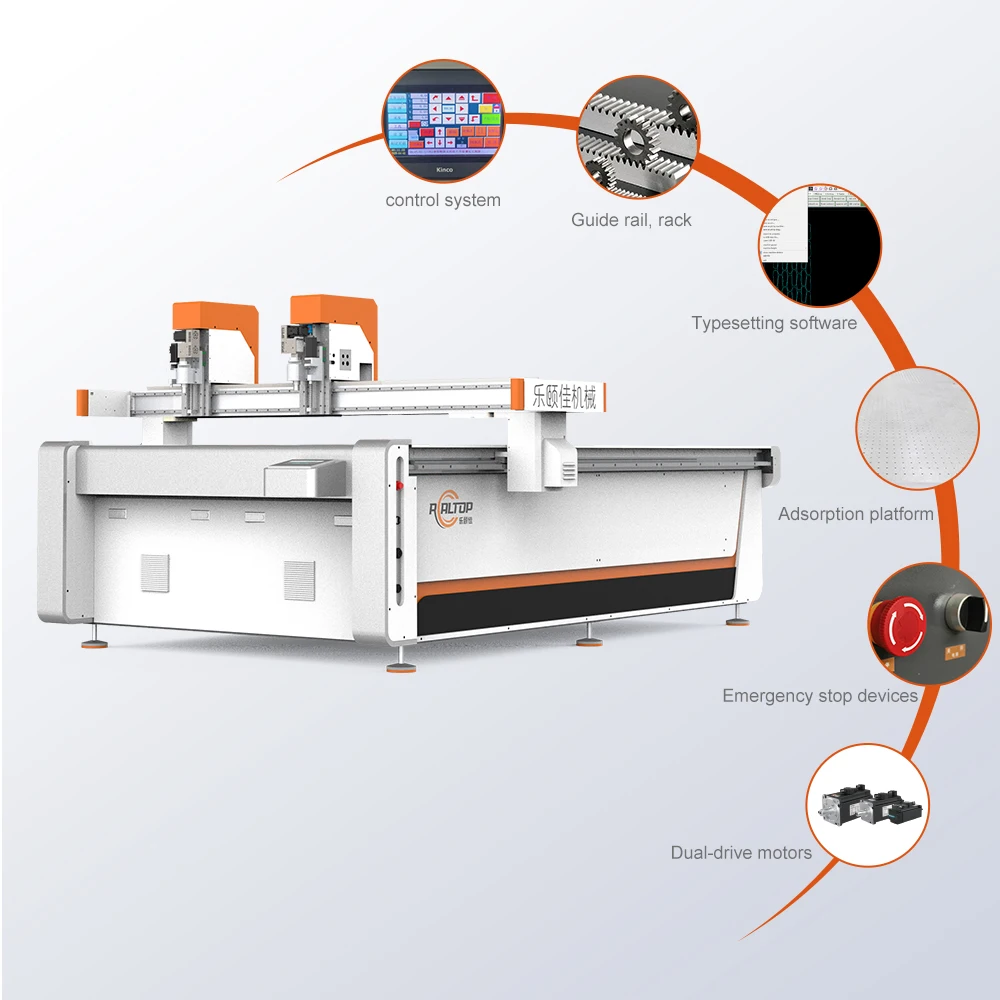
| Vacuum Pump | 9 kW, high-efficiency cast aluminum |
| Vacuum Table | Aluminum bellows vacuum table |
| Control System | PLC control panel |
| Servo Motors | Panasonic / Delta / Dorna (selectable) |
| Voltage | 110V / 220V / 380V (configurable) |
| Profile Formats | PLT, DXF, AI, PDF |
| Safety Devices | Infrared sensor, Emergency stop |
| Language Options | English, Russian, Italian, Chinese (additional languages customizable) |
| Certification | CE declared |
| Cutting Thickness | Up to 30 mm (basis not stated in source — confirm by material and block format) |
Application Suitability
| Application | Material or Output |
|---|---|
| Aerospace skin panels and gaskets | Carbon fiber prepreg, Nomex aramid honeycomb, ceramic fiber blanket |
| Automotive interior trim and lightweight body panels | FRP sheets, acoustic felt, damping pads, carpet, battery insulation |
| Wind turbine blade material processing | Fiberglass cloth, PET and PVC foam core, vacuum infusion mesh |
| Sporting goods fabrication | Carbon fiber sheets, Kevlar fabric, high-performance foam for helmets and surfboards |
Why "30 mm Cutting Depth" Can Mean Nothing on Composite Layups
Actual cutting depth depends on tool head selection, material density and blade oscillation frequency — not a single number on a brochure.
When I first saw a datasheet quote a blanket thickness figure across every composite material, I knew that buyer would run into trouble the moment they loaded a block of cross-linked polyethylene or a honeycomb core. The 1625 CNC oscillating knife cutting machine specifications list a maximum of 30 mm, but that value carries no stated basis for material type or block format. A rigid G10 epoxy sheet and a soft EVA foam pad behave completely differently under the blade — one demands a high-frequency oscillating knife at slow feed, the other a pneumatic knife with deeper stroke and wider vacuum zoning. [NEED_CITE: composite material density and hardness variation across aerospace layup schedules]
This is why I always ask for a sample cutting report on the buyer’s exact material before any order goes to production. Edge quality, delamination and dimensional drift all surface during that test, not on the factory floor in Bremen or Dubai.
Cold-Cutting Advantage Over Thermal Methods in Resin Systems
Thermal cutting methods — laser, plasma, hot wire — introduce heat into resin matrices. On carbon fiber prepreg and aramid honeycomb, that heat can soften the binder, char the edge and release volatile compounds that require extraction systems. The oscillating knife process on this table stays cold throughout the cut. The blade vibrates at high frequency to shear through fiber and foam mechanically, leaving the resin chemistry undisturbed. For aerospace gasket cutting and automotive acoustic felt, this means no edge sealing step and no fume extraction ductwork to install above the machine.
Vacuum Zoning for Flexible Composite Fabrics and Small Parts
Composite layup shops cut everything from full-width prepreg rolls to small gasket profiles. A single-zone vacuum table struggles to hold narrow strips and small pieces because air leaks around the edges and breaks the seal. The aluminum bellows table on the 1625 platform uses zoned vacuum regions so you can activate only the area under the cutting path. Combined with the 9 kW cast aluminum pump, this keeps flexible fiberglass cloth and infusion mesh flat against the bed even when the part geometry is small or irregular. [NEED_CITE: vacuum hold-down requirements for flexible composite textile cutting]
Reading the Specs That Actually Matter for Your Material
Servo motor selection directly affects path accuracy on long cutting runs. Panasonic, Delta and Dorna servo options are available on this platform, and the choice influences how well the machine maintains ±0.1 mm accuracy over a full 2500 mm stroke — especially when cutting dense materials like G10 epoxy that generate higher lateral resistance on the blade. The PLC control panel processes PLT, DXF, AI and PDF file formats, which covers most nesting software outputs used in composite part programming. If your shop uses a proprietary nesting suite, format compatibility should be confirmed with a test file before the order is finalized. The oscillating knife, driven rotary knife and V groove knife each serve different material families: oscillating for rigid sheets and honeycomb, rotary for woven fabrics and soft foams, and V groove for creating fold lines in sandwich panel cores.
What Happens When the Wrong Tool Head Meets Your Composite
I once watched a line in an automotive interior plant burn through blades every forty minutes because the supplier had specified a standard oscillating knife for a high-density acoustic damping pad. The material was too tough for that blade geometry, and the edge came out crushed rather than sheared. After switching to a pneumatic knife with a heavier stroke and adjusting the vacuum zone map, the edge quality stabilized and blade life extended to a normal interval. [NEED_CITE: tool head selection criteria for composite material hardness ranges]
Choosing the wrong blade on a composite cutting table does not just produce bad edges — it shifts dimensions, accelerates wear on the tool holder and forces operators to slow the feed rate well below the machine’s rated speed. That lost throughput compounds across a production shift.
Why Source This Platform From the Manufacturer
The design team builds both knife and laser platforms in-house, so the recommendation for your composite material comes from comparing both methods rather than defaulting to whichever machine is in stock. Every tool head and table configuration is specified against your material sample, not a generic catalog page. A factory test record documents cutting performance on your actual composite before shipment, with edge photos and dimensional checks included. Voltage, control language and plug configuration are confirmed at order stage — I have seen too many machines arrive in a Gulf workshop with a European plug and a Chinese-language interface because nobody asked. CE documentation is prepared where applicable for markets that require it.
Documentation & Verification
- Sample cutting report on your specific composite material with edge photos
- Tool head and vacuum table configuration list matched to your material and volume
- Electrical schematic with confirmed voltage, frequency and plug type for your site
- File format compatibility note covering your nesting software output
- Operation and maintenance manual in your specified control language
- Spare parts list with blade and tool holder consumable identifiers
Installation, Commissioning & Support
- Foundation must be level within tolerance to maintain ±0.1 mm accuracy across the 2500 mm working area
- Dedicated circuit required for 9 kW vacuum pump plus servo drives and PLC control panel
- Machine ships partially assembled; table frame and gantry require on-site alignment
- First-run commissioning includes vacuum zone mapping and tool head calibration on your material
- Operator training covers blade change procedure, nesting file import and emergency stop protocols
- Consumable blade and tool holder spare parts identified for local procurement planning
Before You Request a Quote
Send the material type, layup schedule and maximum thickness you intend to cut, along with your typical sheet size and daily part volume. Confirm your facility voltage, frequency and the control interface language your operators need. If you already run nesting software, share a sample output file so we can verify format compatibility before the order is placed.
Frequently Asked Questions
Q: Which tool head handles carbon fiber prepreg versus aramid honeycomb?
A: Carbon fiber prepreg typically runs on the oscillating knife with high-frequency vibration to shear through fiber layers cleanly. Aramid honeycomb, being a rigid cellular structure, often requires the same oscillating knife but with adjusted stroke length and feed rate. The driven rotary knife suits soft woven fabrics and foam cores. Tool head selection is confirmed during sample cutting on your exact material before any order commitment.
Q: Is the vacuum table strong enough to hold small composite gasket parts flat?
A: The aluminum bellows table divides into vacuum zones, so you activate only the region under the cutting path. This prevents air leakage around small parts and maintains hold-down force on profiles as narrow as a few centimeters. The 9 kW pump provides sufficient suction for flexible prepreg sheets and infusion mesh across the full 1600 × 2500 mm working area.
Q: Can I confirm voltage and control language before the machine ships?
A: Yes. The platform supports 110V, 220V and 380V configurations, and the PLC interface is available in English, Russian, Italian and Chinese, with additional languages customizable. Electrical schematic and plug type are confirmed at order stage, and a sample cutting report on your composite material is produced before dispatch to verify cutting performance.
Q: What does sample cutting prove before I commit to an order?
A: Sample cutting runs your actual composite material through the configured tool head and vacuum zone setup. The report documents edge quality, any delamination, dimensional accuracy against the input file and achievable cutting speed. This eliminates guesswork about whether the machine handles your specific layup thickness and resin type before production begins.


商品评价
Clear filtersThere are no reviews yet.